
New Proxy Browser Links Every Week: How to Stay Updated
One proxy link is never enough. Here's how to ensure you always have a fresh, reliable endpoint ready for your testing, research, or browsing needs.
If you have ever sat down to conduct localized web testing, scrape public data, or access geographically restricted academic resources, only to find that your go-to proxy link has been blocked overnight, you already understand the frustration at the center of this guide. The problem is not that proxy browsers stop working. The problem is that many users and junior developers build their entire strategy around a single link, treat it like a permanent infrastructure solution, and find themselves completely stuck the moment a network filter goes dark.
A blocked proxy is not a crisis; it is an expected part of the web scraping and networking lifecycle. The real skill is knowing how to replace it within minutes, every single time, without starting your research from scratch.
This guide is not about giving you one more static link to copy and paste. It is about teaching you a repeatable system, a genuine technical habit, so that you always have fresh, active options ready before you ever actually need them.
Upgrade to LycheeIP Proxies
Where Fresh Proxy Links Actually Come From
To stay ahead of network filters, you must first understand the ecosystem that generates and distributes these links.
Understanding the Content Creator and Open-Source Ecosystem
The proxy link ecosystem is largely driven by a consistent community of open-source developers, privacy advocates, and YouTube creators who make it their business to find, test, and publish working proxy browser links on a regular schedule. Creators in this space (such as Woof Bite and Gd7 OS) have built large audiences around users who need reliable, up-to-date access to circumvent strict local firewalls.
But how do these curators keep finding new endpoints week after week? The process is highly systematic:
- They monitor proxy aggregator sites: There are websites and forums that continuously compile lists of active proxy mirrors. These aggregators pull from developer communities, open-source repositories, and user submissions. Curators check these regularly, filtering out endpoints that suffer from high latency, malicious payloads, or poor proxy servers and tunneling architecture.
- They track GitHub repositories: Many proxy browser projects—tools like Ultraviolet, Holy Unblocker, and similar node-based web proxies—are actively maintained on GitHub. When a developer pushes a new deployment or mirror link to platforms like Vercel or Netlify, it shows up in the repository's activity feed. Savvy curators track these repos to catch new URLs the moment they go live.
- They utilize community sourcing: A creator or developer with tens of thousands of subscribers possesses a built-in intelligence network. Viewers and contributors submit links they have discovered, which are then verified and republished. This crowd-sourced pipeline ensures high turnover.
- They rotate on a strict schedule: Because network filters (like enterprise firewalls and school IT blocks) operate on blocklists that update regularly—often weekly—these creators publish on a matching cadence. Posting new links every five to seven days keeps their communities just ahead of the filtering curve.
The takeaway here is simple: this community is doing the systematic research and health-checking for you. If you plug into their workflow, you inherit the benefits of that research for free.
Setting Up Your Notification System
Knowing that developers and creators publish fresh links regularly is only useful if you actually capture those updates when they happen. Relying on passive discovery means you will only look for a link when you are already blocked. That reactive approach stalls productivity.
Here is a simple framework to flip this into a proactive alerting system.
Step 1: Optimize YouTube and GitHub Notifications
If you follow proxy creators on YouTube, do not rely on personalized algorithm feeds. Switch your subscription settings to All Notifications. This ensures you receive an alert every time the creator posts a new mirror. Similarly, if you are tracking proxy projects on GitHub, use the "Watch" feature to receive email alerts for "Releases" or "Custom" push events.
Step 2: Monitor the Community Tabs and Webhooks
Many creators use the YouTube Community Tab to drop quick link updates between full video uploads. A text post takes thirty seconds to publish, allowing them to share a new mirror immediately. If you are an advanced user, consider setting up an RSS reader or a Discord webhook to aggregate posts from your favorite creators' community pages automatically.
Step 3: Implement a Weekly Maintenance Routine
Set a repeating reminder on your calendar for Sunday evening or Monday morning to spend five minutes checking your key channels and repos for new links. You are not waiting until your current proxy fails; you are actively pulling fresh nodes into your personal backup list before you need them.
Step 4: Join Associated Discord Servers
Several developers and curators in this niche run Discord communities where they post automated uptime alerts and link updates in real time. Discord notifications are significantly faster and more reliable than browser alerts. Joining these servers gives you the fastest possible access to fresh domains.
Upgrade to LycheeIP Proxies
Building Your Personal Backup List
Having a notification system is excellent, but maintaining a personal, highly available backup list is essential. Your notification system keeps your list fresh, while your list ensures you are never dependent on an external service in a moment of urgent need.
The Five-to-Ten Proxy Rule
Here is the core principle: maintain a personal list of five to ten currently active proxy links at all times. Not links you used six months ago—links you have personally verified within the last two weeks.
How to structure and contextualize your list:
Not all proxy links are equal. Organize your list with technical context. Note the latency, platform compatibility, and underlying protocol. A simple framework might look like this:
- Node Alpha: Verified [Date] — Fast response time, supports WebSocket connections.
- Node Beta: Verified [Date] — Slower but highly reliable; good for mobile testing.
- Node Gamma: Verified [Date] — Operates on the SOCKS5 proxy protocol (RFC 1928), ideal for non-HTTP traffic.
- Node Delta: Verified [Date] — Unverified past one week; run a cURL test before deploying.
Why five to ten specifically?
Fewer than five gives you almost no buffer. One or two domains being blacklisted in a single week—which happens constantly—can leave you with zero redundancy. More than ten becomes difficult to maintain manually and yields diminishing returns. Five to ten is the practical sweet spot for manual failover.
The Golden Habit:
Keep your top three endpoints somewhere immediately accessible, such as a secure notes app, a pinned Slack message, or an environment variable file (.env). When your primary node goes down, your goal is to seamlessly rotate to a backup in under sixty seconds.
LycheeIP (Developer-First Proxy Infrastructure)
LycheeIP is a developer-first proxy and data infrastructure provider designed to help engineering, QA, and growth teams securely route their web traffic at scale.
While maintaining a manual list of free proxy links is useful for casual browsing, personal testing, or basic academic research, professional technical teams require robust, enterprise-grade reliability. When a QA team needs to verify localized application features, or a data engineering unit must securely scrape public datasets without triggering IP rate limits, manually rotating YouTube proxy links isn't a viable strategy. Instead, integrating enterprise-grade proxy infrastructure directly into your automated workflows ensures continuous uptime and compliance. For instance, testing region-specific checkout flows or ad verification might require dynamic IP routing to accurately simulate real user sessions across different global ISPs. For more permanent, stable connections required in backend QA testing, utilizing datacenter proxies or dedicated static IP pools provides the necessary stability. Ultimately, partnering with a reliable proxy partner allows developers to focus on building and shipping features rather than endlessly hunting for active network endpoints.
Conclusion
The technical operators and researchers who never seem to struggle with blocked proxies are not lucky, nor have they found a magical, unblockable link. They have simply built a resilient system: they follow the right open-source creators, they have automated notifications configured correctly, they run weekly health checks, and they maintain a structured backup list.
That system takes about thirty minutes to set up and ten minutes a week to maintain. One proxy link is never enough—but with the right network habits in place, you will always have a fresh one ready before your connection drops.
Upgrade to LycheeIP Proxies
Frequently Asked Questions
Q: Who are Woof Bite and Gd7 OS, and why are they mentioned?
A: Woof Bite and Gd7 OS are examples of YouTube creators who specialize in finding, testing, and sharing new proxy browser links on a consistent weekly schedule. They monitor aggregator sites, GitHub repositories, and community submissions to source fresh links ahead of typical network filter updates. Tracking curators like them saves you from doing manual discovery.
Q: How often do proxy links get blocked by network filters?
A: Enterprise and school network filters typically update their DNS and IP blocklists on a weekly—if not daily—basis. A proxy URL that worked perfectly on Monday may be blocked by Friday. Building a habit of checking for new links at the start of each week keeps you consistently ahead of these security updates.
Q: What is the YouTube Community Tab and how do I use it for proxy updates?
A: The Community Tab is a section on a YouTube channel page where creators can post quick text updates and links without publishing a full video. Many proxy curators use it to share emergency mirror links when a primary node goes down.
Q: How many proxy links should I keep in my personal backup list?
A: Maintaining a list of five to ten currently verified proxy links is the recommended range for manual failover. Fewer than five leaves you vulnerable to sudden, widespread blocklist updates. Every link on your list should be health-checked and verified at least once every two weeks.
Q: How do I verify whether a proxy link is still working?
A: The simplest manual method is to visit the link directly and confirm it loads the proxy interface and successfully routes a test query. For developers, writing a basic script that pings the endpoint and checks for a 200 OK status code is an efficient way to automate this verification.
Q: Do I need to join a Discord server to stay updated on proxy links?
A: It is not strictly required, but it is one of the fastest ways to receive real-time updates. YouTube and GitHub email notifications can sometimes be delayed or filtered to spam, whereas Discord webhooks and push notifications are nearly instant.
Q: Is it safe to use these free proxy links?
A: Using public, free web proxies always carries a level of risk. Your data passes through an unverified third-party server, meaning unencrypted payloads could potentially be intercepted. Always ensure you are accessing sites via HTTPS, and never use public proxy links to log into sensitive platforms (like banking, corporate infrastructure, or private email accounts). Furthermore, always ensure your proxy usage complies with your organization's IT policies and local laws.

Recommended Articles
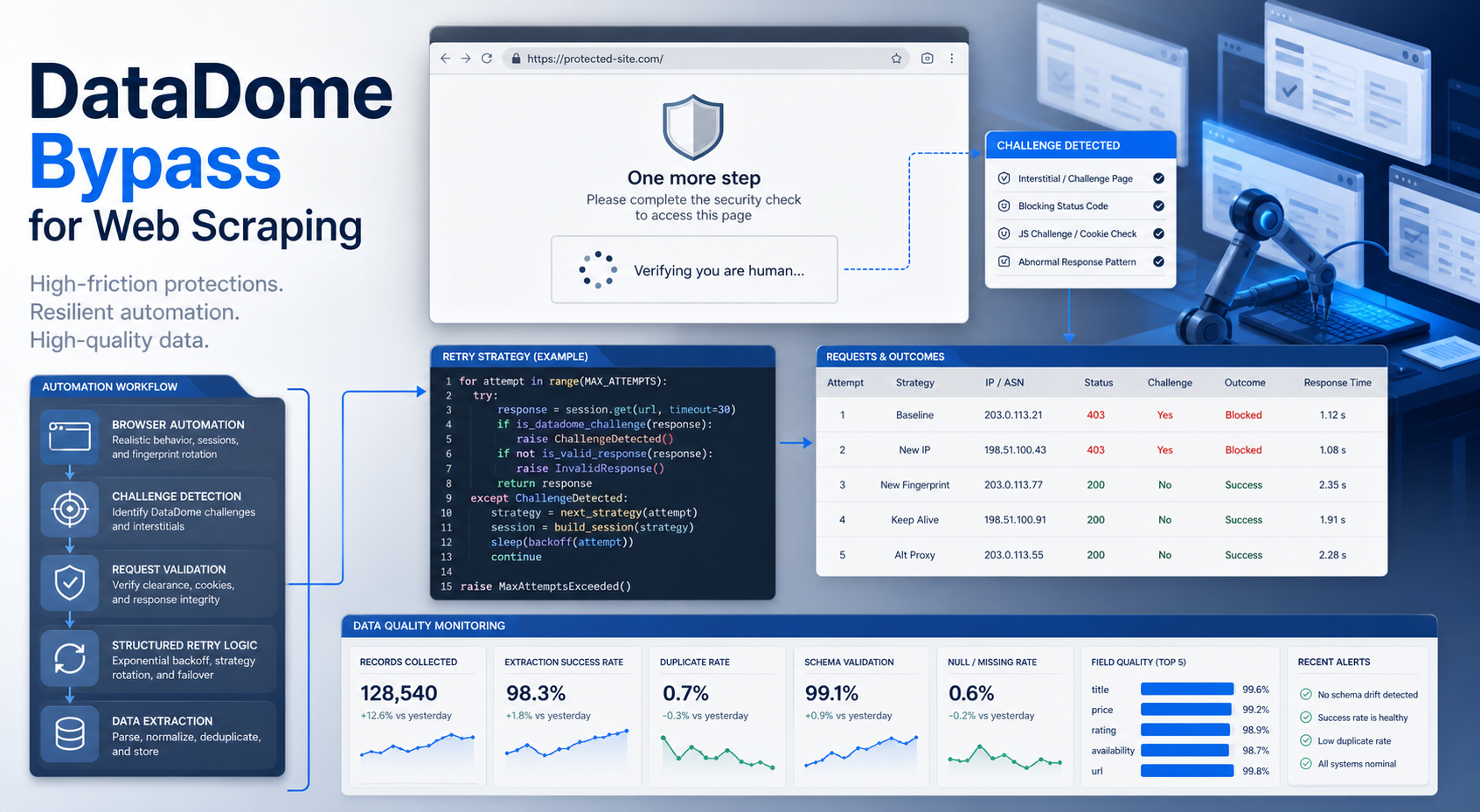
DataDome Bypass for Web Scraping
DataDome Bypass for Web Scraping
View Details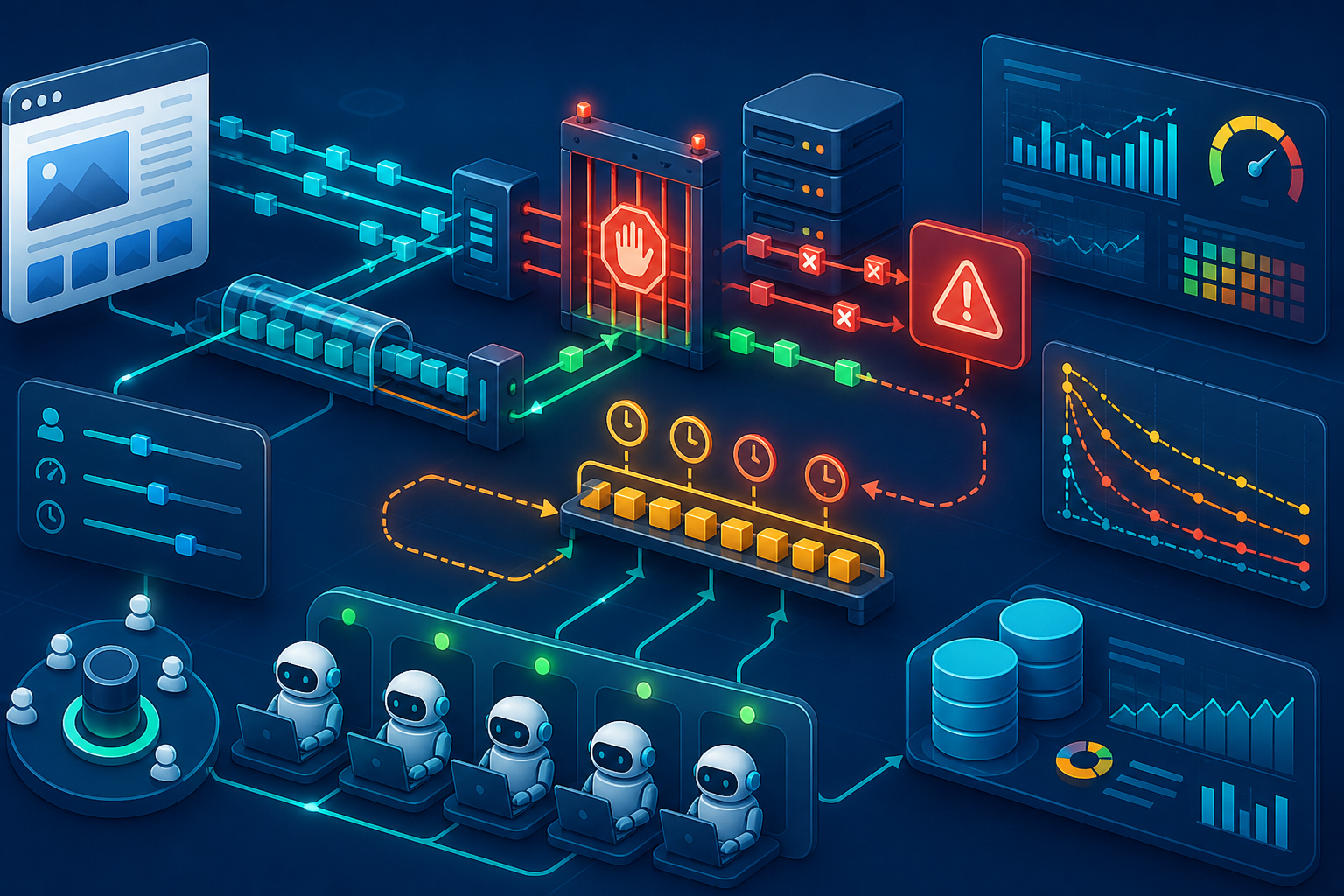
Web Scraping Rate Limiting: How to Handle 429s, Backoff, and Concurrency
Web scraping rate limiting is the engineering discipline of keeping an authorized collection workload inside a target service's acceptable request envelope. When that envelope is exceeded, a server may respond with HTTP 429 Too Many Requests, delay responses, or apply other controls.
View Details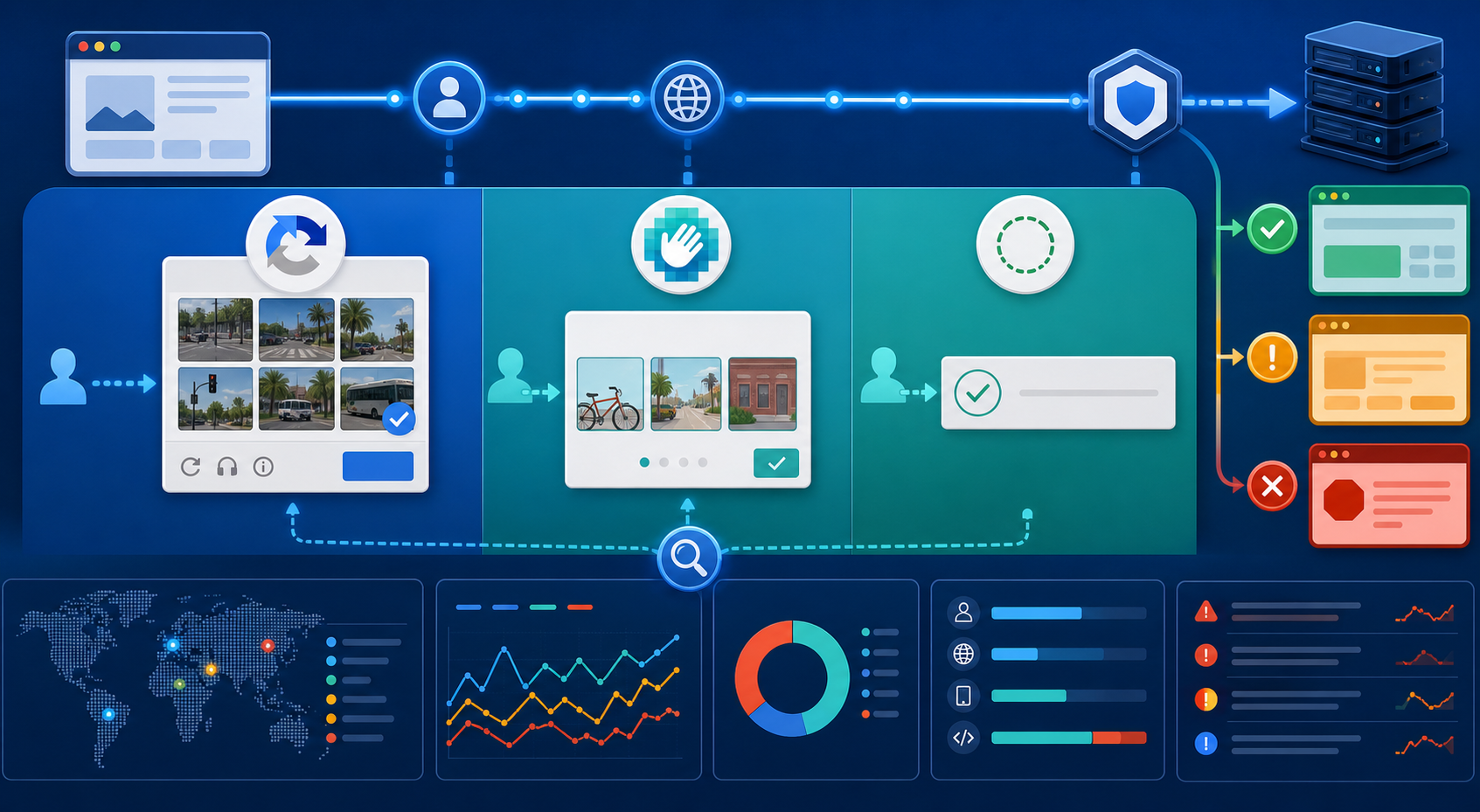
reCAPTCHA vs hCaptcha vs Cloudflare Turnstile: What Scraping Teams Need to Know
If an authorized data-collection workflow suddenly stops at a verification screen, identifying the protection system matters before you change code, browser settings, or proxy infrastructure. reCAPTCHA vs hCaptcha vs Turnstile is not simply a branding comparison. The three systems can expose different browser flows, token models, risk decisions, and failure symptoms.
View Details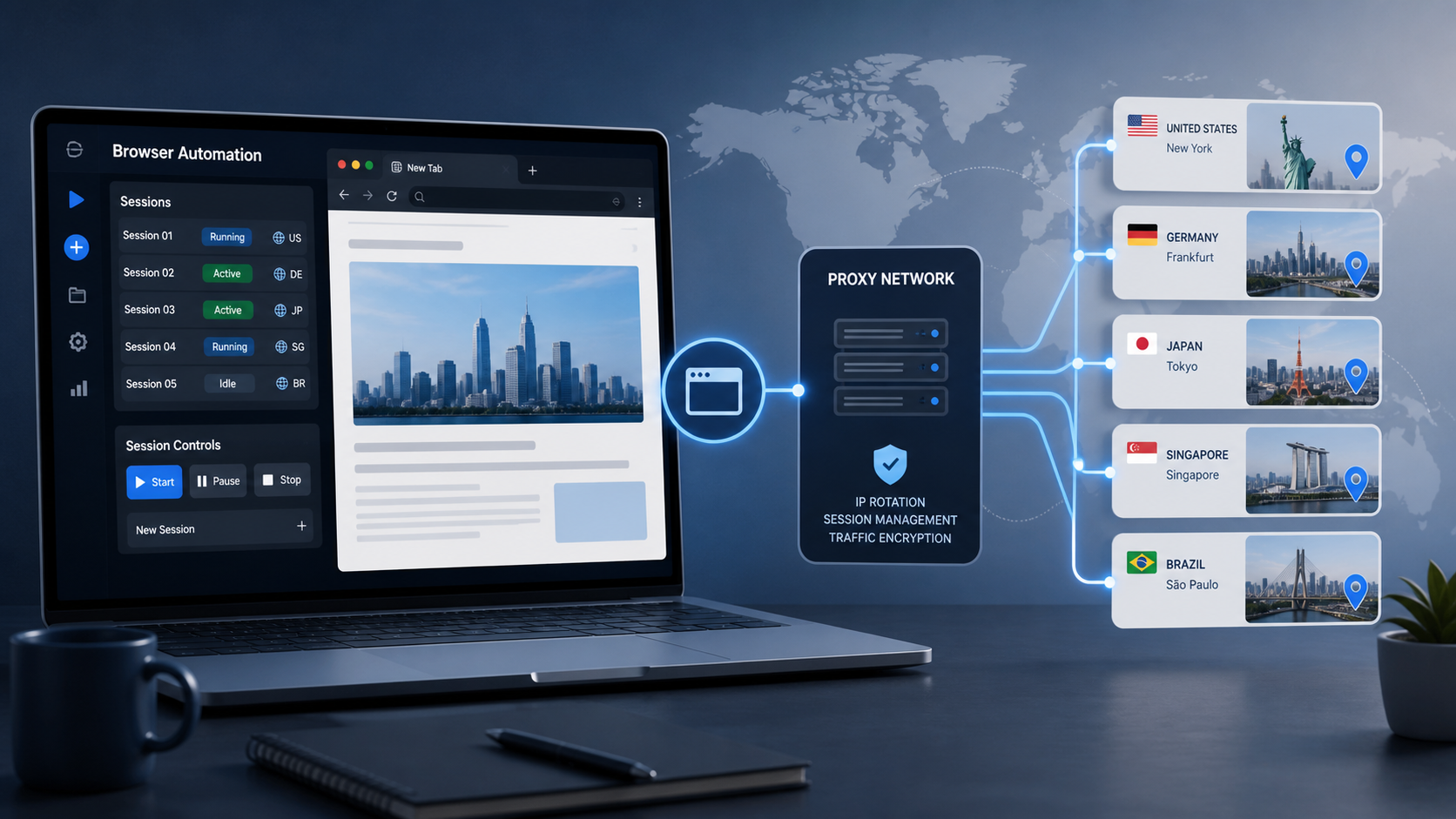
Browser Automation Proxies: IPs, Geo-Targeting, Sessions, and AI Agents
A browser automation proxy belongs to the network layer of Playwright, Selenium, cloud-browser, and AI-agent workflows. It changes how browser traffic is routed and can affect the source IP address, geographic egress, and session continuity seen by a destination site. It does not improve an AI model's reasoning, repair browser logic, or guarantee that a website will accept the session.
View Details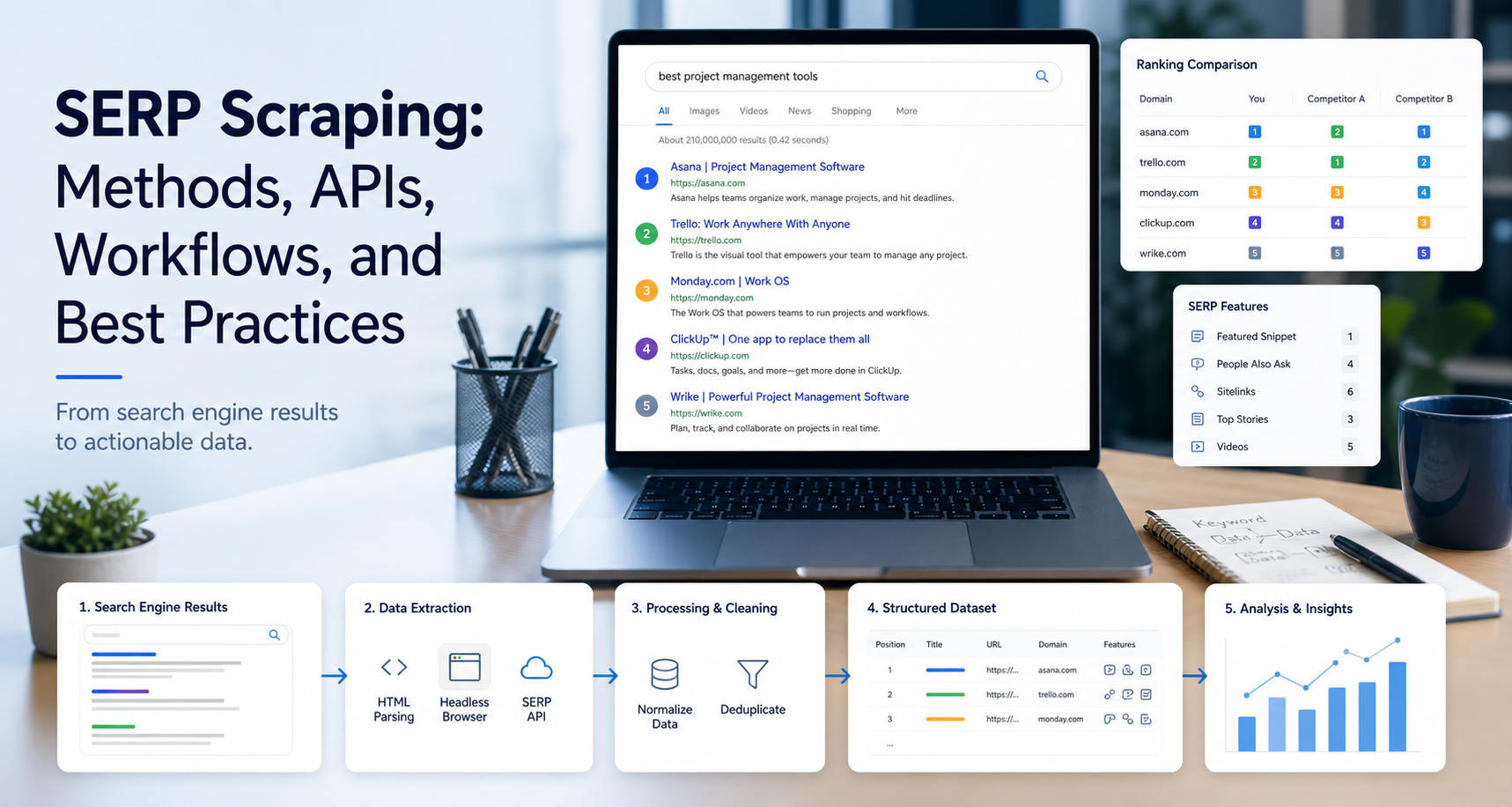
SERP Scraping: Methods, APIs, Workflows, and Best Practices
SERP scraping is the automated collection of information from search engine results pages. A SERP scraper can capture organic rankings, advertisements, featured snippets, People Also Ask questions, local results, shopping listings, images, and other search features, then convert them into structured data for analysis.
View Details