
Free Residential Proxies vs School Proxy Browsers: What's the Difference and Which One Should You Use?
Not all proxies are engineered the same, deploying the wrong infrastructure for your use case can result in blocked IP addresses, broken testing environments, or exposed data.
Whether you are a developer attempting to QA localized content, a data team collecting region-specific web data, or just an end-user trying to bypass a local network filter, you have likely encountered the term "proxy." However, a critical misconception exists, particularly among beginners: the assumption that all proxies serve the identical function. They do not. Picking the wrong proxy architecture can trigger aggressive anti-bot flags, break your scripts, or leave your network requests entirely traceable.
Understanding the technical differences between residential proxies and simple web proxy browsers is not just a lesson in networking, it is the difference between seamless data collection and constant network timeouts.
This article breaks down both architectures, explains how each one handles HTTP requests under the hood, and provides practical guidance on which to implement based on your actual networking goals.
Explore LycheeIP Proxy Solutions
What Are Residential Proxies and Why Are They Harder to Detect?
The Basics of Residential IP Architecture
A residential proxy routes your web requests through an IP address assigned to a real physical device—usually a consumer home router, smartphone, or desktop computer—by a legitimate Internet Service Provider (ISP). When you route your internet traffic through a residential node, the target server perceives the request as originating from a standard household connection.
Think of it like borrowing an authentic physical address to register a package. To the postal service, the address looks completely legitimate because it exists on a recognized residential street.
Why Residential Proxies Are Harder to Detect
This is where residential proxies earn their reputation among developers and technical operators. Most modern detection systems—whether it's an enterprise firewall, a streaming platform's geo-fence, or sophisticated anti-bot software (like Cloudflare or Akamai)—maintain extensive databases of known datacenter IP ranges. These are IPs associated with commercial cloud providers (AWS, Google Cloud) or basic VPNs. Because they are easy to identify via Autonomous System Numbers (ASNs), datacenter IPs are often blanket-blocked.
Residential IPs, on the other hand, belong to standard internet users. Blocking an entire residential ASN would mean blocking thousands of legitimate human customers, which most platforms cannot afford to do.
Here is what gives residential proxies their stealth advantage:
- Authentic ISP assignments: These IPs pass the rigorous trust-score checks that datacenter IPs fail.
- Granular geo-targeting: Developers can select endpoints down to the city or zip-code level, allowing for hyper-accurate localization testing.
- Dynamic rotation: Modern proxy infrastructure automatically rotates the IP address per request or session, making it virtually impossible for anti-bot systems to establish a blocking pattern.
- High success rates: Because the traffic mimics real human browsing, target servers rarely flag the connection.
The Trade-Off: Cost and Complexity
Residential proxy networks are incredibly resource-intensive to operate. While "free" residential proxy lists exist on public forums, they carry severe operational caveats:
- Abysmal uptime: Free nodes go offline constantly, breaking automated scripts.
- Security liabilities: Free public proxies are often harvested from compromised IoT devices. Sending payload data through them is a massive security risk.
- Latency: Shared free nodes suffer from severe bandwidth throttling.
For developers, growth teams, or data engineers running scraping tasks or QA, a dedicated, paid residential proxy service is the gold standard.
How School Proxy Browser Links Work — No Install Required
What Is a School Proxy Browser?
A school proxy browser—often referred to as a web proxy—is simply a website acting as a forwarder. You navigate to the proxy's URL, paste your target destination into its search bar, and the proxy server fetches the HTML content, rewriting the internal links so the content loads within your current browser tab.
Common examples include legacy sites like CroxyProxy or student-shared "unblocked" links.
How It Works Technically
The request flow is rudimentary:
- You visit the web proxy site (e.g., proxy-site.com).
- You input the target URL (youtube.com).
- The web proxy server sends an HTTP GET request to YouTube on your behalf.
- The proxy receives the DOM, rewrites the assets (CSS, JS, images) to route through its own domain, and displays the result to you.
To the local network administrator (or school firewall), the traffic logs only show a connection to proxy-site.com, not the actual destination.
No Installation, No Configuration
The primary advantage of web proxies is friction-free access. You do not need to alter OS-level network settings or install extensions. If you can open a browser, you can utilize the tool. This makes them popular for students or users operating on highly restricted, managed devices.
The Technical Limitations You Need to Know
Web proxy browsers are extremely fragile and unsuitable for professional technical tasks:
- Zero Anonymity: Network administrators can still see that you are connected to a proxy site.
- Lack of Encryption: Many basic web proxies do not enforce end-to-end TLS encryption, leaving your request headers and payloads vulnerable to interception.
- Broken DOMs: Because the proxy must dynamically rewrite URLs to function, JavaScript-heavy Single Page Applications (SPAs) frequently break.
- High Burn Rate: Network filters constantly update their blocklists; a proxy URL that works today will likely be blackholed tomorrow.
In short, web proxy browsers are built for temporary, rudimentary access. They are not built for secure data routing.
Explore LycheeIP Proxy Solutions
The Verdict — When to Use Each Type Depending on Your Goal
Goal 1: You Just Want to Unblock a Website Temporarily
Use a web proxy browser.
If the objective is simply to read an article or bypass a basic content filter on a managed device, a web proxy requires zero technical knowledge and works instantly. However, recognize that you are trading security for convenience. Never pass authentication tokens through these sites.
Goal 2: You Want Secure, High-Success-Rate Data Collection or Testing
Use a residential proxy.
If your objective involves QA testing a global web application, running secure competitive analysis, or gathering localized pricing data, residential proxies provide the necessary trust scores to bypass bot mitigation. Because the IPs belong to real consumer devices, your automation scripts will not trigger CAPTCHAs or IP bans.
Goal 3: You Need Stable, Long-Term Infrastructure Connections
Use a datacenter or static proxy.
For backend testing where maintaining a consistent session state is more critical than appearing as a consumer, dedicated datacenter IPs are faster and more cost-effective than residential rotation.
LycheeIP (Developer-First Proxy Infrastructure)
For engineering and data teams, relying on fragile web proxies or untrusted free IP lists is not a viable strategy; enterprise workflows require dedicated, high-performance architecture. LycheeIP is a developer-first proxy and data infrastructure provider engineered to seamlessly route your web traffic for automated testing, scraping, and security verification.
When your team needs to accurately simulate global user traffic to verify localized content or bypass strict rate limits during data extraction, you need infrastructure that integrates directly into your codebase. By utilizing reliable data infrastructure, developers can execute parallel requests without fear of IP bans. For tasks requiring high-frequency scraping or bypassing advanced bot-protection, dynamic IP routing leverages a massive pool of rotating residential IPs to ensure every request appears organic. Alternatively, if your QA environment requires blazing-fast speeds and consistent session maintenance, implementing datacenter proxies or dedicated static IPs provides the ultimate stability. By shifting to a professional proxy network, your team eliminates infrastructure bottlenecks and focuses purely on development.
Final Thoughts
The confusion between residential proxies and simple web proxies is understandable, both theoretically reroute your traffic. But their architecture, stability, and use cases are fundamentally different.
Web proxy browsers are the duct-tape solution: fast, accessible, but technically fragile and insecure. Residential proxies are the enterprise-grade tools: harder to detect, highly programmable, and necessary for accurate, large-scale web interaction.
Understanding which architecture fits your technical requirements ensures that your automation scripts run smoothly and your data remains secure.
Explore LycheeIP Proxy Solutions
Frequently Asked Questions
Q: Are residential proxies completely free to use?
A: While scattered lists of free residential IPs exist online, they are heavily abused, extremely slow, and often pose severe security risks (such as operating via malware-infected devices). Reputable residential infrastructure is almost always a paid, enterprise service.
Q: Can a network administrator see that I'm using a web proxy browser?
A: Yes. While the proxy obfuscates your final destination (e.g., YouTube), your local network logs clearly show a persistent connection to the proxy's domain. Most enterprise and academic firewalls actively monitor for and block these domains.
Q: What is the difference between a proxy and a VPN?
A: A proxy reroutes specific application traffic (like an HTTP request from a script or browser) through an intermediary server. A VPN (Virtual Private Network) operates at the operating system level, creating an encrypted tunnel that routes all device traffic (TCP/UDP) through the intermediary server.
Q: Why do school proxy browser links stop working so quickly?
A: Network firewalls utilize dynamic content filtering systems. When a new web proxy URL experiences a sudden spike in traffic, the firewall's heuristics flag the domain and add it to a global blocklist, instantly severing access for the entire network.
Q: Is it safe to log into my personal accounts through a free web proxy browser?
A: No. Many basic web proxies do not support , and even if they do, the proxy operator can intercept the decrypted traffic before forwarding it. Never transmit passwords, API keys, or session tokens through unverified web proxies.
Q: Which is better for automated scraping—a residential proxy or a web proxy?
A: Residential proxies are mandatory for automated scraping. Web proxies cannot integrate with headless browsers (like Puppeteer or Playwright), they break JavaScript execution, and they cannot rotate IPs programmatically. Residential proxies allow developers to automate requests cleanly without triggering CAPTCHAs.

Recommended Articles
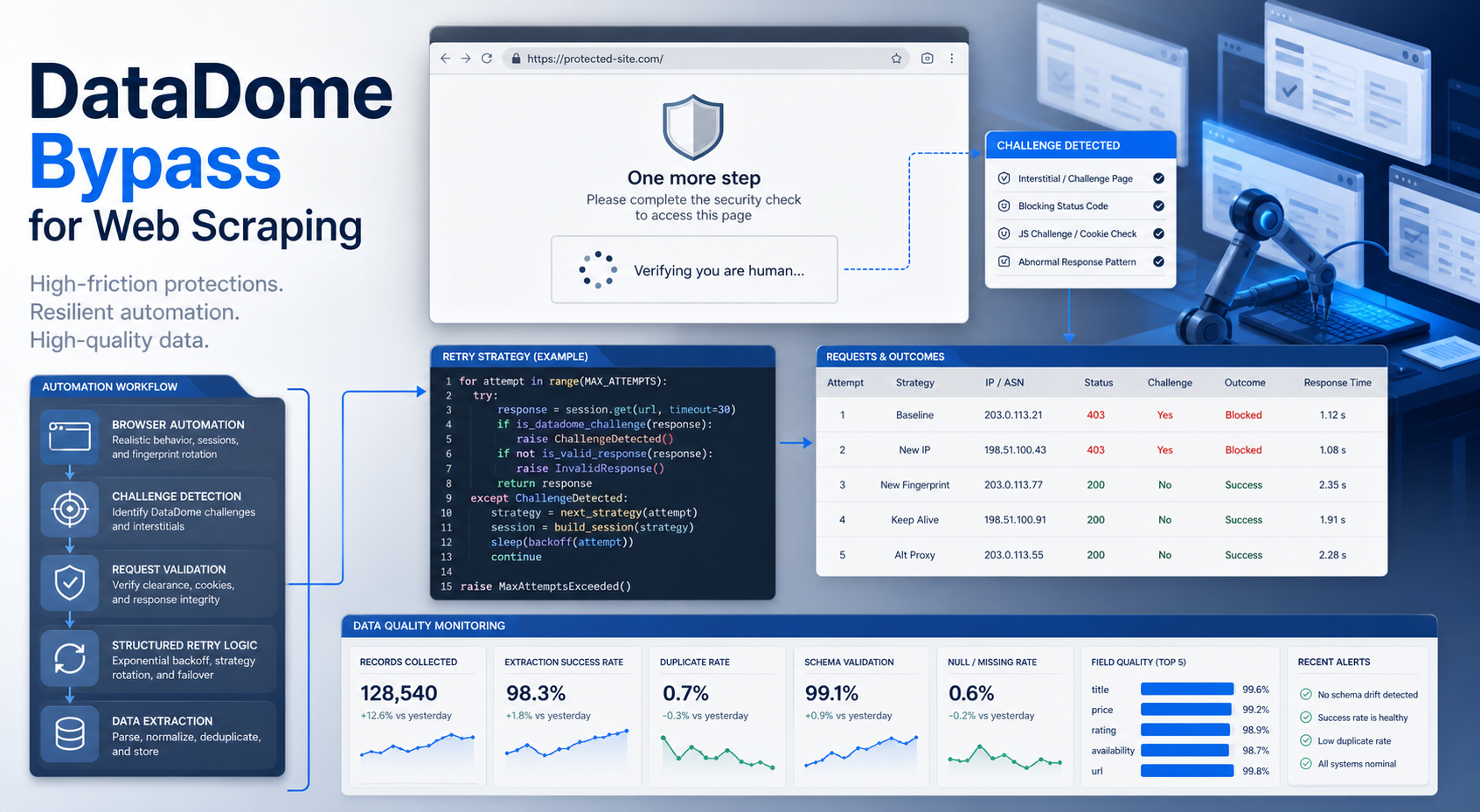
DataDome Bypass for Web Scraping
DataDome Bypass for Web Scraping
View Details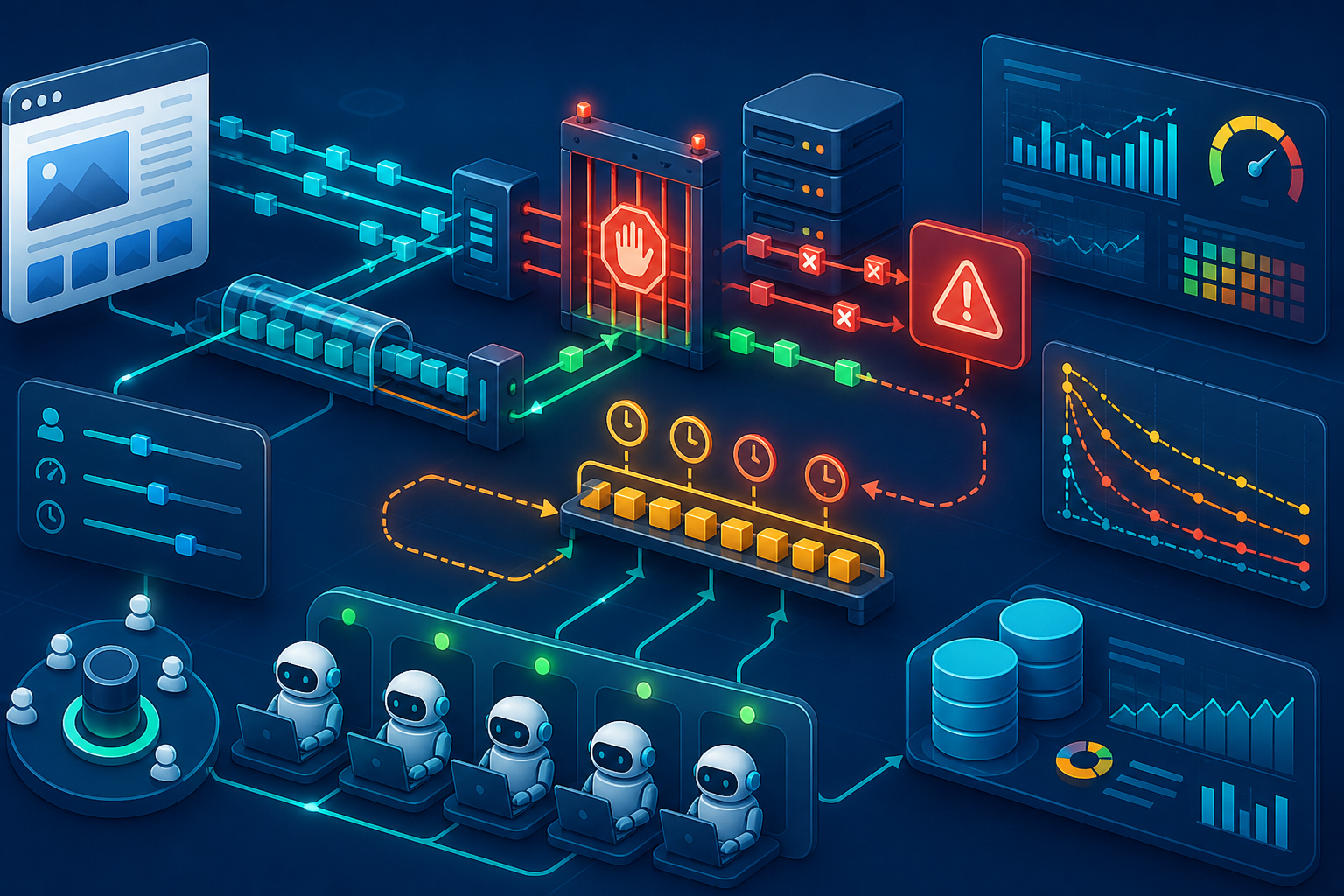
Web Scraping Rate Limiting: How to Handle 429s, Backoff, and Concurrency
Web scraping rate limiting is the engineering discipline of keeping an authorized collection workload inside a target service's acceptable request envelope. When that envelope is exceeded, a server may respond with HTTP 429 Too Many Requests, delay responses, or apply other controls.
View Details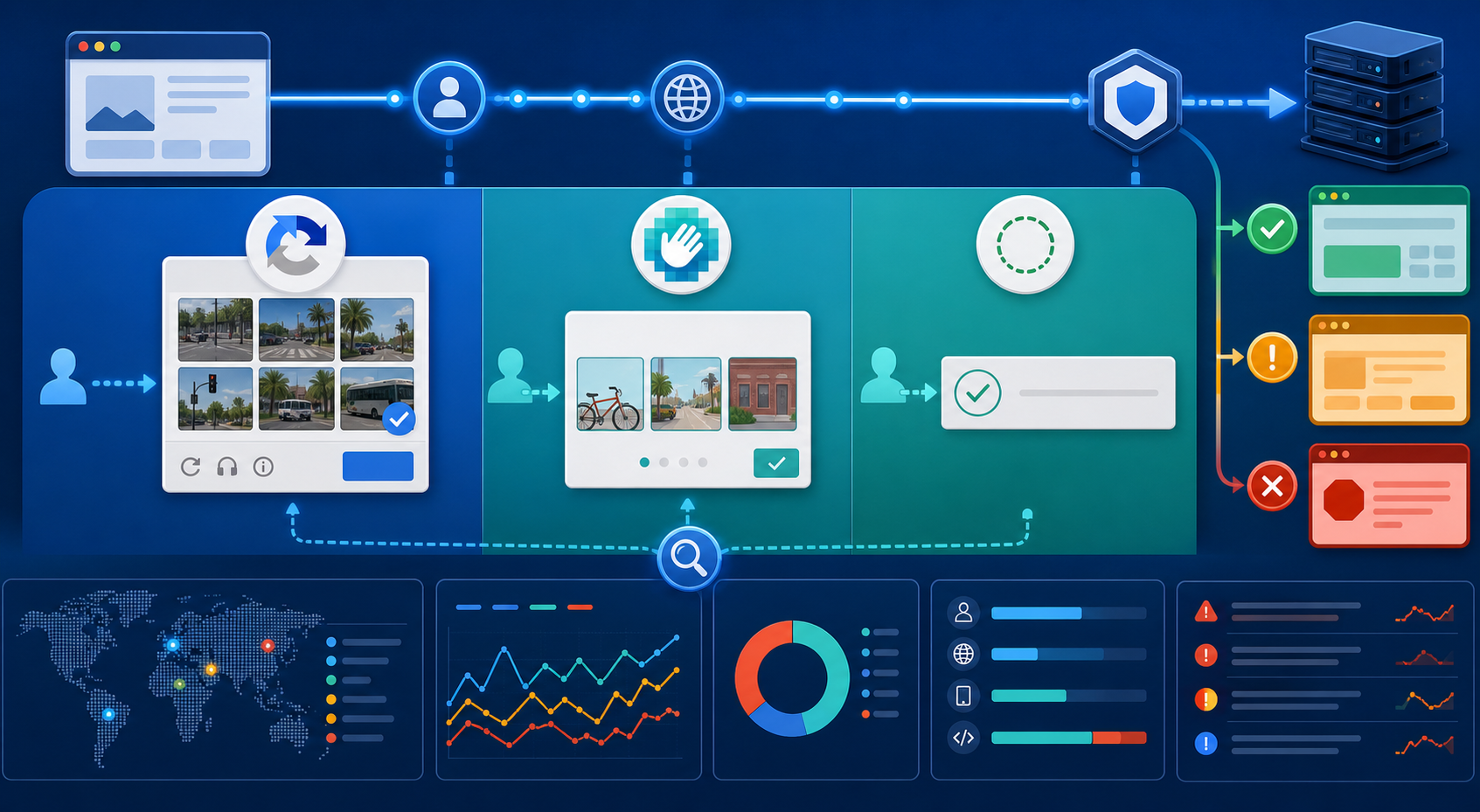
reCAPTCHA vs hCaptcha vs Cloudflare Turnstile: What Scraping Teams Need to Know
If an authorized data-collection workflow suddenly stops at a verification screen, identifying the protection system matters before you change code, browser settings, or proxy infrastructure. reCAPTCHA vs hCaptcha vs Turnstile is not simply a branding comparison. The three systems can expose different browser flows, token models, risk decisions, and failure symptoms.
View Details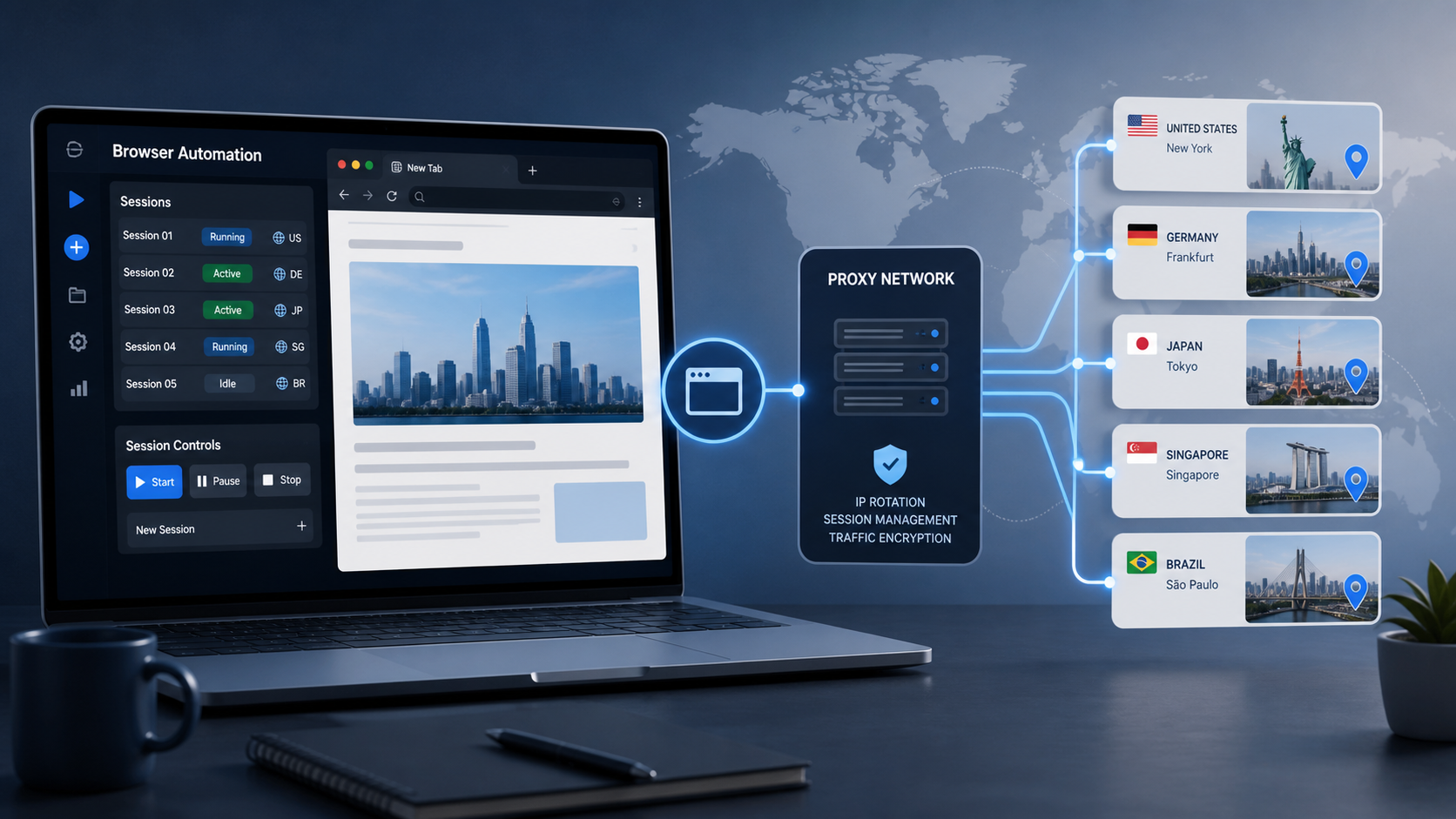
Browser Automation Proxies: IPs, Geo-Targeting, Sessions, and AI Agents
A browser automation proxy belongs to the network layer of Playwright, Selenium, cloud-browser, and AI-agent workflows. It changes how browser traffic is routed and can affect the source IP address, geographic egress, and session continuity seen by a destination site. It does not improve an AI model's reasoning, repair browser logic, or guarantee that a website will accept the session.
View Details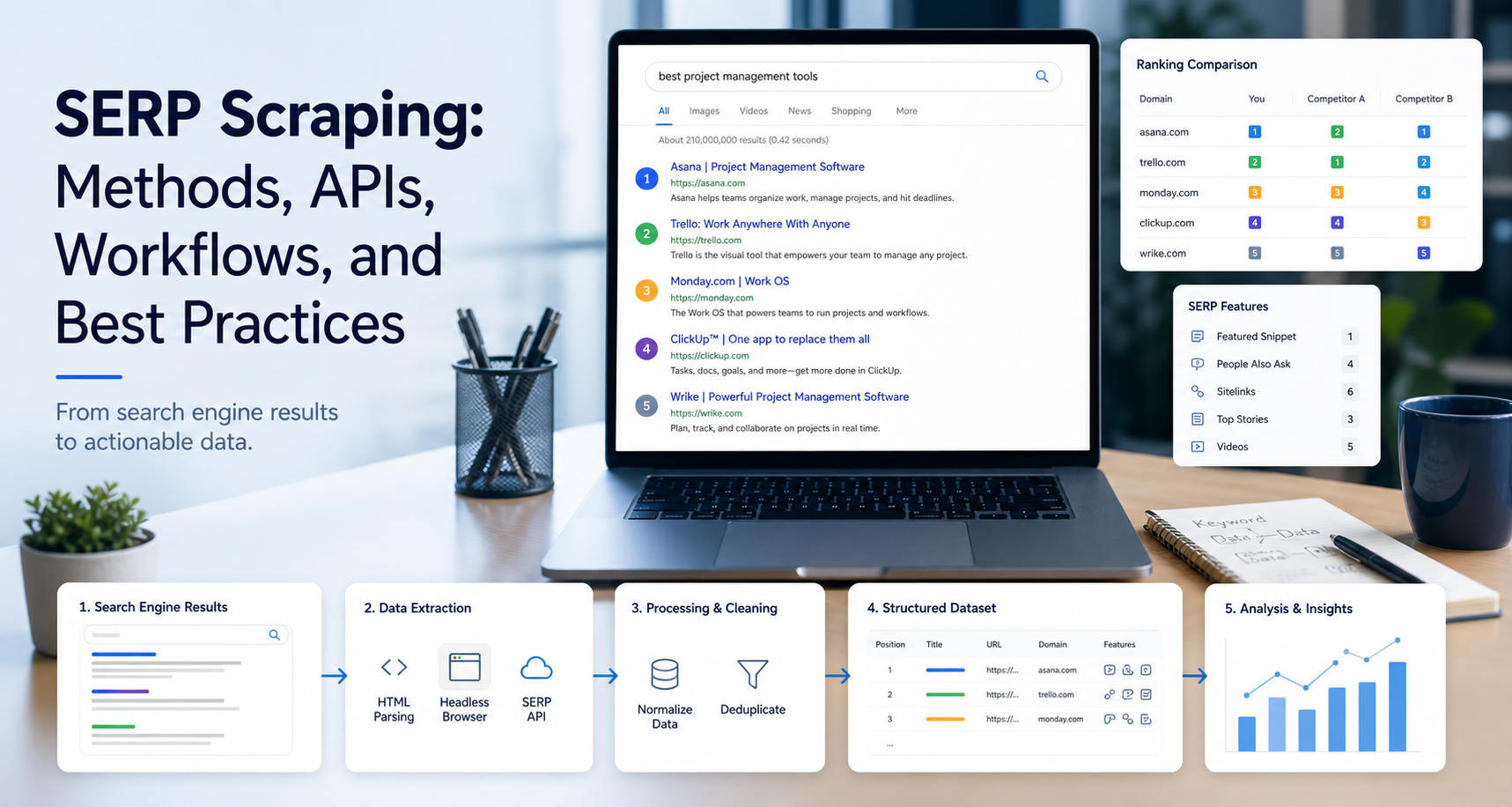
SERP Scraping: Methods, APIs, Workflows, and Best Practices
SERP scraping is the automated collection of information from search engine results pages. A SERP scraper can capture organic rankings, advertisements, featured snippets, People Also Ask questions, local results, shopping listings, images, and other search features, then convert them into structured data for analysis.
View Details