
Brave vs Chrome: Which Browser Actually Protects You?
Both browsers say they protect you. Only one of them means it.
That's a bold claim, and it deserves a rigorous unpacking—because the difference between Brave and Chrome isn't just a matter of preference or aesthetics. For developers, data teams, and privacy-conscious operators, it's a fundamental disagreement about what a browser is fundamentally built to do. Chrome is a product engineered by the world's largest advertising company. Brave was built, at least in its original vision, as a direct technical rejection of that model.
But marketing language is cheap, and privacy claims are easy to make. What actually happens when you install each browser and open it for the first time?
This comparison cuts through the noise. No vague promises, no extension wishlist fantasies—just what these two browsers do by default, how their architectures differ under the hood, and where each one quietly works against you.
Power Global Routing With LycheeIP
What Happens Before You Change a Single Setting
Chrome's Data Collection Pipeline
"Chrome is free because you are the product"—that phrase has become so worn it barely registers anymore. Let's be specific about what that means from a technical standpoint.
Out of the box, a fresh Chrome installation on any platform begins sending data to Google servers almost immediately. This pipeline includes:
- Usage statistics and crash reports: Enabled by default. Chrome transmits diagnostic data about how you use the browser, which features you interact with, and when processes fail. Opting out requires navigating deep into settings manually.
- Search and browsing activity: Chrome's default search engine is Google. Every keystroke you type into the address bar—even before you hit Enter—is transmitted to Google's servers for autocomplete suggestions. This is called the omnibox, and it is a passive data stream most users never think to disable.
- Safe Browsing (Standard Mode): Chrome checks URLs against a Google-maintained blocklist. In Standard Mode, this involves sending partial browsing data to Google. The Enhanced Mode sends significantly more—essentially creating a real-time feed of your DOM navigation to Google's servers.
- Sign-in prompt and sync: Chrome aggressively prompts you to authenticate with a Google account. Once signed in, your history, bookmarks, passwords, and open tabs are synced to Google's cloud infrastructure by default.
- Ad measurement APIs: Chrome has rolled out its Privacy Sandbox initiative—a set of browser-level APIs including the Topics API, which tracks your interest categories locally and shares them with advertisers. This is active by default in recent builds.
The cumulative picture is significant. Chrome isn't just a passive conduit to the web; it is an active participant in building an overarching profile of who you are and what you do online.
Brave's Default Configuration
Brave is built on Chromium—the same open-source engine that powers Chrome. This means it inherits Chrome's V8 JavaScript rendering capabilities, DevTools, and extension compatibility. But the Brave engineering team strips out Google's telemetry infrastructure at the source code level before compiling.
Here is what Brave strictly disables by default:
- No usage statistics or crash reports are transmitted to Google.
- No keystrokes are forwarded to any search engine via the address bar (Brave's default search engine is Brave Search, which does not track queries).
- No Safe Browsing requests are routed through Google (Brave implements a local, privacy-preserving version of safe browsing lookups).
- No account sign-in prompts or cloud syncs tied to a third-party identity provider.
- No Privacy Sandbox or Topics API (Brave has explicitly disabled Google's ad measurement APIs at the browser level).
From a cold-start perspective, Brave's data footprint is dramatically smaller. Independent network traffic analyses—including research from Professor Douglas Leith at Trinity College Dublin—have confirmed that Brave makes zero connections to Google's servers on startup, while Chrome establishes multiple connections before the user has typed a single character.
This is the most important baseline truth of this comparison: Brave's defaults are inherently private. Chrome's defaults are not.
Ad Blocking and Tracker Prevention — Built-In vs. Bolted On
The Extension Approach (Chrome)
Chrome does not block ads or trackers natively. Its stock configuration allows every third-party tracker, tracking pixel, fingerprinting script, and behavioral analytics tool to execute freely on every page you visit. The standard technical workaround is installing extensions—most commonly uBlock Origin.
uBlock Origin is an excellent tool, but relying on extensions inside Chrome comes with structural caveats:
- The Manifest V3 problem: Google has transitioned Chrome extensions to the Manifest V3 standard. This transition severely limits how extensions can intercept and block network requests (specifically by deprecating the blocking webRequest API). Under MV3, extensions cannot use the dynamic blocking approach that made uBlock Origin so powerful. This is a technical limitation Google built into its own platform, which conveniently protects its advertising revenue.
- Extensions can be compromised: Browser extensions operate with significant DOM permissions and are a common vector for supply-chain attacks. Even well-maintained extensions expand your browser's attack surface.
- Extensions don't protect at the network level: A browser extension only sees what the browser renders. It cannot intercept tracking that happens at the DNS level.
Brave Shields
Brave's tracker and ad blocking is built directly into the core browser application (written in Rust and C++), not layered on top as an extension. This is a meaningful architectural advantage.
Brave Shields, enabled by default, blocks:
- Third-party trackers and ads: Using internal filter lists comparable to uBlock Origin, applied directly at the network request level.
- Cross-site cookies: Brave prevents third-party cookies from following state across domains.
- Browser fingerprinting: Brave randomizes low-level browser fingerprinting surfaces—like Canvas, WebGL, Audio Context, and font enumeration—on a per-session basis, making it significantly harder to track you across sites even without cookies.
- Bounce tracking: A technique where sites briefly redirect you through a tracking domain. Brave strips tracking parameters from URLs during these hops.
- HTTPS upgrades: Automatically forces secure connections where available.
The key difference from Chrome-plus-extensions is that Brave's protection is on by default, not subject to MV3 restrictions, and more comprehensive across vectors that DOM-level extensions cannot reach.
Power Global Routing With LycheeIP
Where Brave Gets Complicated
Brave is better than Chrome on privacy by almost every measurable default metric. But "better than Chrome" is not the same as "privacy-perfect." As Brave has scaled, it has accumulated a set of commercial features that deserve serious scrutiny from technical users.
The Crypto Wallet
Brave ships with a built-in cryptocurrency wallet (Brave Wallet) enabled by default. This is not a neutral feature. Integrating a Web3 wallet into your browser creates a persistent identity layer. If utilized, transaction data and DeFi interactions become associated with your browser profile.
More concerning is Brave's past missteps: in 2020, Brave was caught autocompleting cryptocurrency exchange URLs with their own affiliate codes—meaning Brave financially benefited from users visiting those sites. While they quickly reverted the behavior, it revealed that the browser was willing to quietly modify address bar inputs for commercial gain.
Leo — Brave's Built-In AI Assistant
Brave has integrated an AI assistant called Leo, powered by LLMs like Meta's Llama and Anthropic's Claude. It can summarize pages, answer questions, and read the active DOM.
While Brave states that Leo conversations are not logged, routing requests to third-party model providers means your data is subject to those providers' external policies. An AI assistant with deep access to everything you render creates an expanded privacy surface that requires careful auditing.
Brave Rewards — The Attention Economy Inside the Privacy Browser
Brave Rewards is philosophically contradictory. Users opt-in to view "privacy-respecting" ads served by Brave's own network in exchange for BAT (Basic Attention Token) cryptocurrency.
- The complication: To serve relevant ads, Brave's system must build a model of your interests. Even if that model lives locally on your device, you are still being profiled. Furthermore, tying browser behavior to financial incentives creates a conflict of interest for a company claiming to champion privacy.
What This Means in Practice (A Quick Lockdown Checklist)
For users who want maximum privacy, Brave's commercial ecosystem is entirely optional. To optimize your installation:
- Disable Brave Rewards completely upon installation.
- Hide the Brave Wallet icon and do not initialize a seed phrase.
- Turn off Leo AI integrations in the settings if you deal with sensitive proprietary data.
In this stripped-down configuration, Brave remains dramatically more private than Chrome.
LycheeIP (Developer-First Proxy Infrastructure)
While browser-level protections like Brave Shields safeguard an individual user's local browsing session, technical teams operating at scale require infrastructure that works at the network level. LycheeIP is a developer-first proxy and data infrastructure provider designed to seamlessly route global web traffic for automated testing, secure data collection, and QA.
When a growth or data team needs to verify localized web assets, conduct authorized security testing, or scrape public data without triggering IP rate limits, adjusting browser settings isn't enough. By integrating dynamic IP routing to simulate real, distributed user requests, or implementing datacenter proxies for lightning-fast, persistent testing sessions, engineering teams can execute their tasks reliably. Utilizing reliable proxy infrastructure from a dedicated developer-first proxy and data infrastructure provider ensures that your team's network operations are robust, compliant, and untethered by restrictive geographical blocks.
The Verdict
If you install both browsers today, open them without changing any settings, and browse the web for a week, the difference in data exposure is not marginal—it's structural. Chrome feeds a Google-shaped data pipeline. Brave does not.
For privacy-aware users, developers, and operators, the practical recommendation is clear: Brave is the superior default choice. Its built-in tracker blocking, aggressive fingerprinting resistance, and clean telemetry defaults place it in a completely different category from Chrome, regardless of what extensions you bolt onto the latter.
Chrome is not a privacy browser. It was never designed to be one. Brave was—and despite the commercial crypto and AI features that have accumulated around its edges, the core privacy design holds firm.
Power Global Routing With LycheeIP
Frequently Asked Questions
Q: Is Brave actually private, or is it just marketing?
A: Brave's privacy defaults are substantively different from Chrome's, which has been verified by independent network traffic research. Out of the box, Brave makes zero connections to Google servers, blocks third-party trackers natively, and randomizes hardware fingerprinting. However, optional features like Brave Rewards and the Leo AI assistant introduce privacy trade-offs that technical users should evaluate before enabling.
Q: Can't I just use Chrome with uBlock Origin and get the same protection as Brave?
A: Partially, but not fully. uBlock Origin on Chrome is effective for ad blocking, but it cannot spoof system-level fingerprinting the way Brave's built-in shields do. Critically, Google's Manifest V3 transition actively limits how extensions can block network requests in Chrome, making future extension-based blocking much weaker. Brave operates at the browser source-code level and ignores these restrictions.
Q: What is Chrome's Privacy Sandbox and should I be worried about it?
A: Privacy Sandbox is Google's replacement for third-party cookies. Instead of advertisers tracking you across sites, the browser itself tracks your interests and shares them with websites. This facilitates targeted advertising by making the browser an active participant in the ad ecosystem. Brave explicitly disables these APIs; Chrome enables them by default.
Q: Does Brave's built-in ad blocker break websites?
A: Occasionally, yes. Brave Shields uses aggressive default settings that can interfere with complex login flows (like enterprise SSO) or pages heavily reliant on ad-supported video players. However, you can easily toggle Shields off on a per-site basis by clicking the Lion icon in the address bar.
Q: Is Brave's cryptocurrency integration a privacy risk if I don't use it?
A: If you don't enable Brave Wallet or Brave Rewards, the crypto features do not actively collect or transmit your data. The concern is more philosophical: Brave's commercial interests are tied to its crypto ecosystem, which creates incentive structures that could influence future product decisions.
Q: Which browser is better for security, not just privacy?
A: Both Brave and Chrome are built on Chromium, meaning they share the exact same underlying security architecture, including sandboxing, site isolation, and regular security patching. Chrome's update cadence can be slightly faster due to Google's resources, but Brave typically integrates upstream Chromium security patches within days. For most users, the security differences are negligible—the real gap is in data privacy.

Recommended Articles
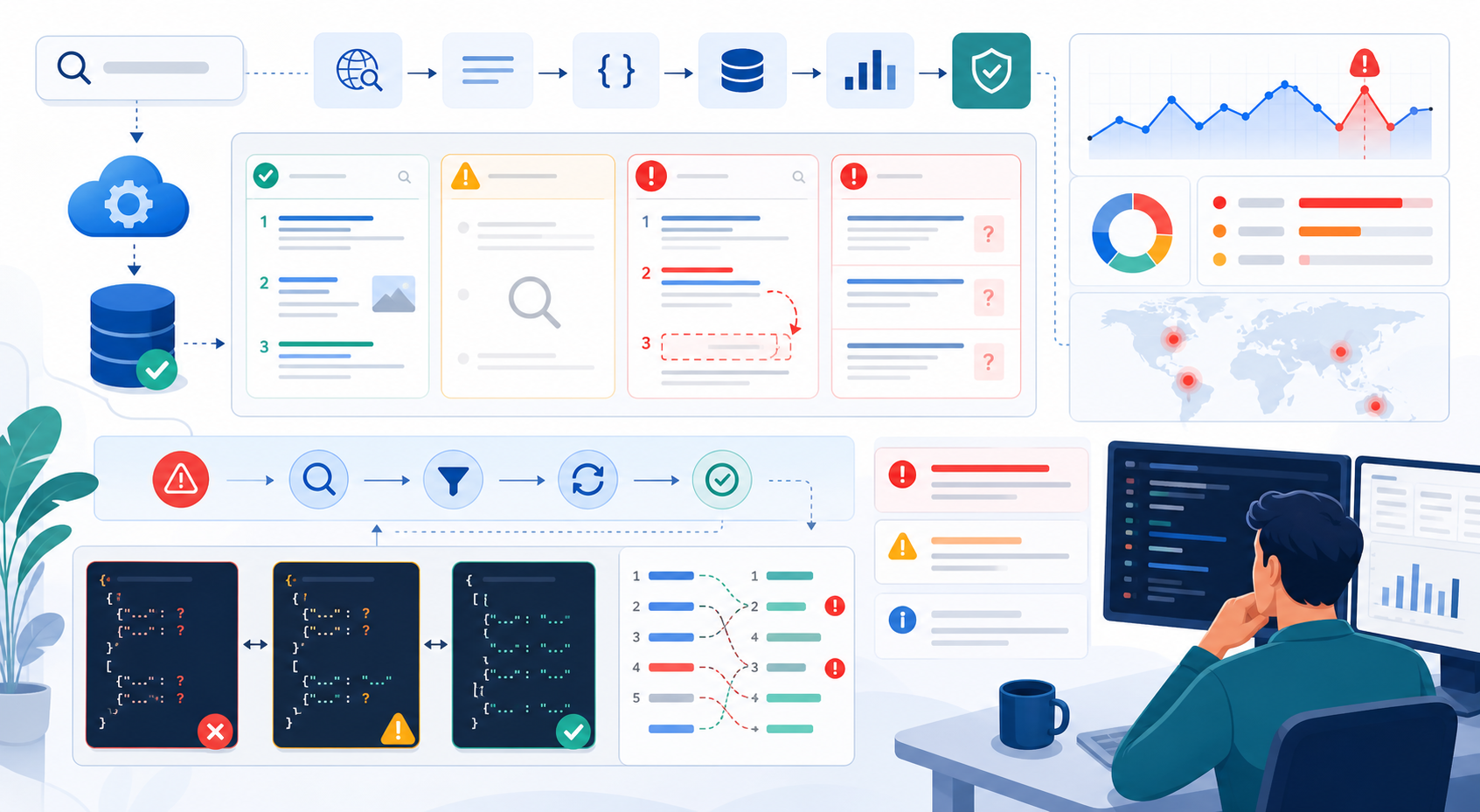
SERP API Troubleshooting: Fix Empty, Wrong, or Inconsistent Search Results
SERP API failures are not limited to obvious HTTP errors. A request can return successfully and still produce empty, incomplete, geographically wrong, duplicated, or misinterpreted search data. Production troubleshooting therefore has to separate transport problems from provider processing, SERP differences, and downstream parsing errors.
View Details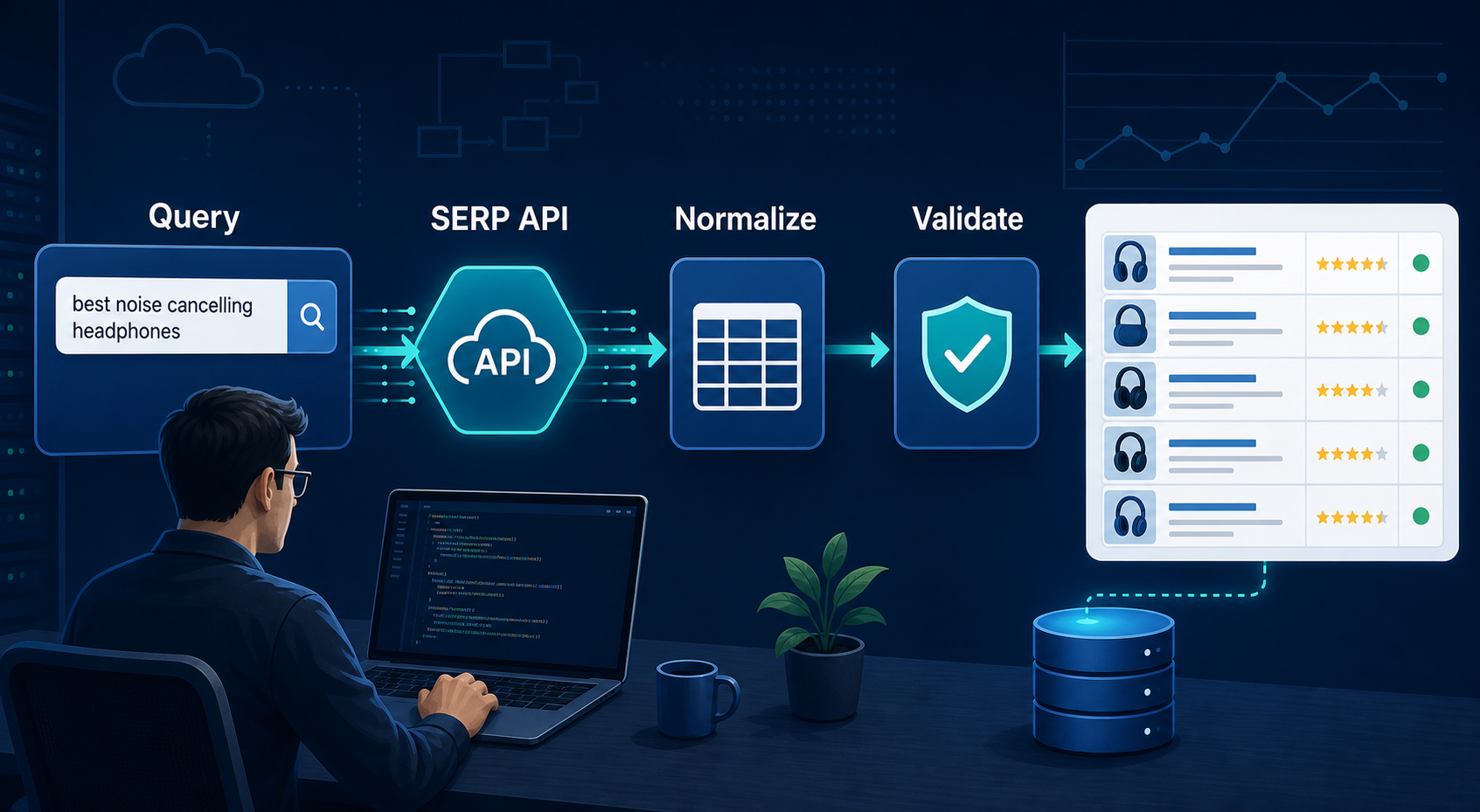
SERP API Python: How to Build a Reliable Search Data Pipeline
This guide shows a provider-neutral workflow for building that pipeline. It does not rank SERP API vendors. Instead, it focuses on the implementation choices that make a Python integration easier to operate, test, and migrate.
View Details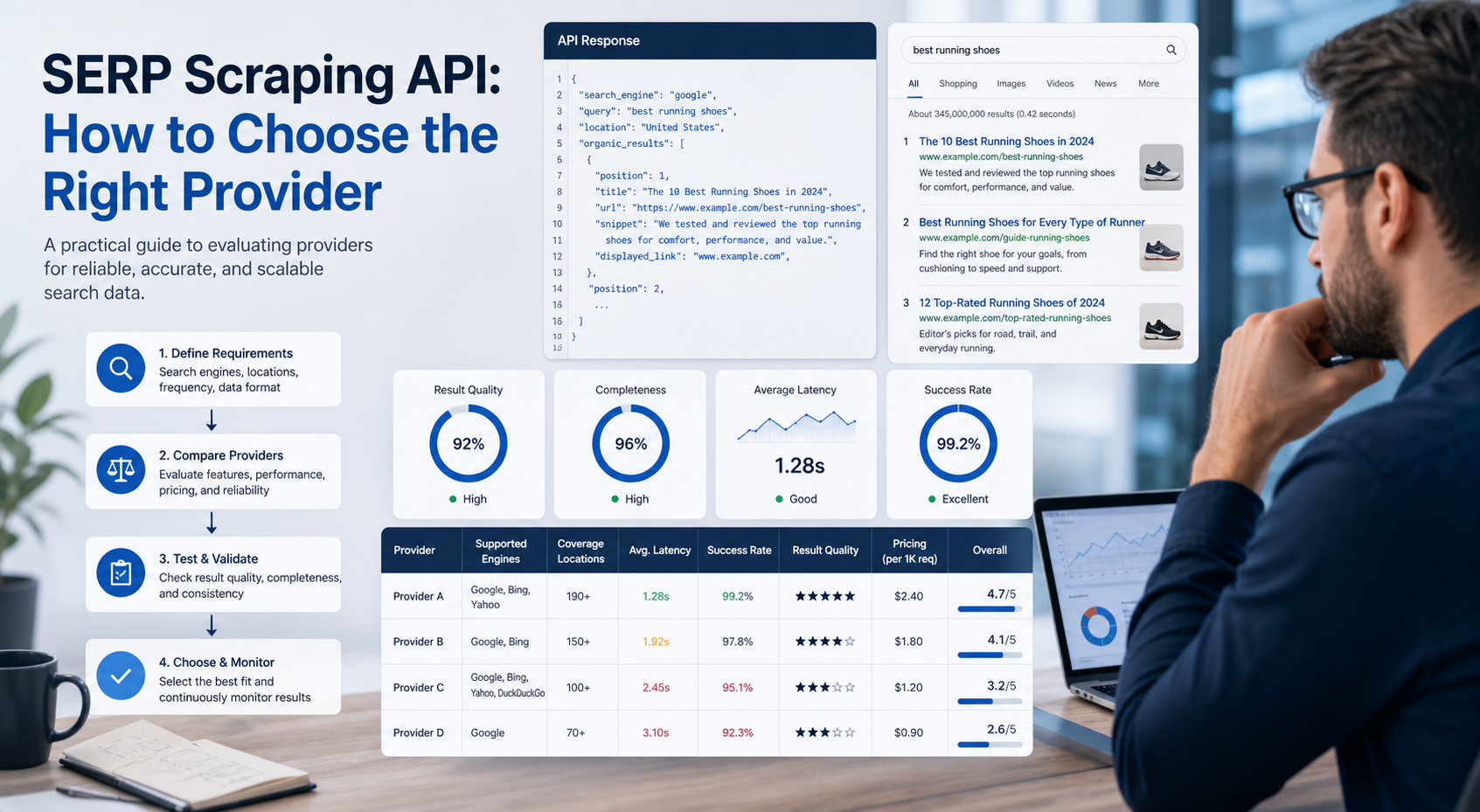
SERP Scraping API: How to Choose the Right Provider
Recommended Meta Description: Compare SERP scraping APIs by data coverage, localization, reliability, workflow fit, and cost structure, then choose and validate the right provider.
View Details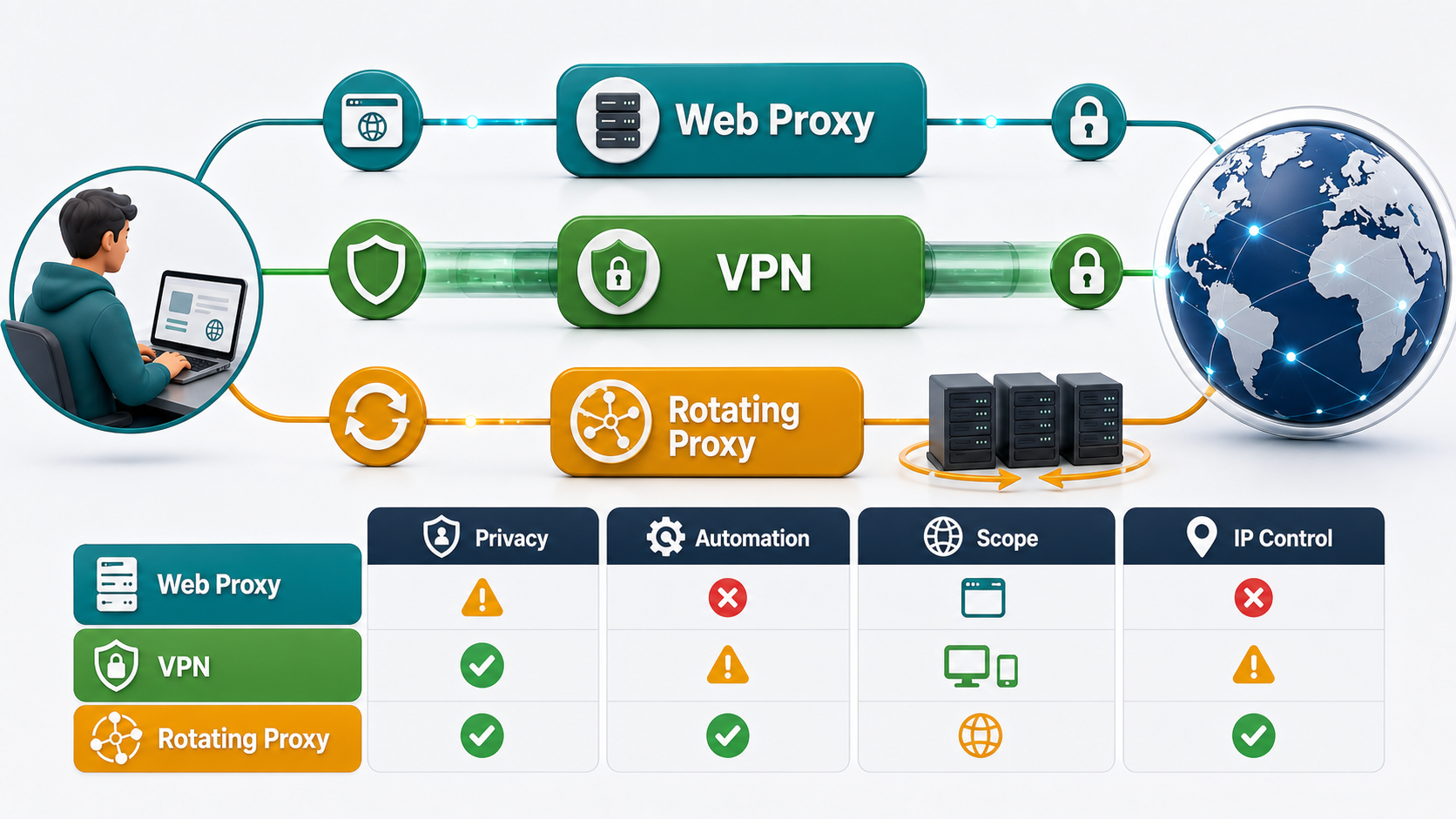
Free Web Proxy vs VPN vs Rotating Proxy: Which Should You Use?
Compare free web proxies, VPNs, rotating proxies, static proxies, and datacenter proxies by scope, encryption, IP control, automation, streaming, and account workflows.
View Details
BlockAway Not Working? Fix Common Proxy, Video, and Access Problems
Troubleshoot BlockAway when pages are blocked, YouTube fails, JavaScript breaks, speed drops, sessions expire, or mobile access behaves differently.
View Details