
Why Proxy Links Keep Getting Blocked at School
You found a proxy that worked yesterday — why is it blocked today?
It is a uniquely frustrating experience that almost every technical operator remembers from their early digital life. You spend fifteen minutes hunting for a working proxy browser to bypass a restrictive school network, finally crack one open, share it with three friends, and by the next morning, it is dead. The filter page stares back at you like a brick wall.
While it feels personal, the reality is that the "school filter" is actually a sophisticated, automated enterprise-grade firewall. Understanding why these proxy links die so quickly isn't just satisfying trivia for students; it is a masterclass in modern network security, bot detection, and traffic analysis. For developers, data teams, and QA engineers navigating modern IP blocks today, the mechanics of how school networks filter traffic provide the foundational blueprint for how the modern internet regulates access.
Build with stable proxies
How School Content Filters Actually Work
Most people imagine internet filtering as a simple blocklist — a human IT administrator manually adding bad URLs to a spreadsheet. That picture is decades out of date. Modern content filtering systems are sophisticated, layered, and largely automated. They operate on several simultaneous detection methods, and public proxy browsers trigger nearly all of them.
Domain Reputation Scoring
Every domain on the internet has a reputation score maintained by major cybersecurity and filtering companies (such as Cisco Umbrella, Fortinet, and Lightspeed Systems). These scores are built from a combination of factors:
- Domain Age: Newly registered domains are treated with immediate suspicion.
- Hosting Origins: IP blocks associated with cheap or anonymous hosting are heavily penalized.
- Traffic Spikes: How many users on filtered networks are trying to access it simultaneously.
When a new proxy site spins up, it often starts with a neutral or "unknown" reputation. That brief window of ambiguity is exactly when a proxy feels like it is "working." The moment a filtering company’s crawler categorizes the site as an anonymizer—or enough flagged traffic touches it—the score drops, and the block propagates to hundreds of other school districts within hours.
DNS Filtering and SSL Inspection
School networks frequently deploy DNS-level filtering. When you type a URL, your device asks a DNS server to translate that address into an IP. Schools route this process through their own controlled DNS servers, returning a block page instead of the real address.
More advanced enterprise and academic networks perform SSL/TLS inspection. Even with encrypted HTTPS traffic, network filters can often read the destination domain in plain text via the Server Name Indication (SNI) extension, a standard defined in IETF RFC 6066, before the secure tunnel is fully established. If the SNI data matches a known proxy, the connection is dropped immediately.
Traffic Pattern Detection
Filters do not just look at what site you are visiting — they analyze how the traffic behaves. Proxy browsers generate unusual request headers, relay content in anomalous ways, and show patterns of accessing a wide range of unrelated domains through a single endpoint. Behavioral analysis systems can identify a device browsing through an intermediary even if the destination domain is brand new and unscored. The traffic pattern itself becomes the evidence.
Why Obscure Links Survive Longer — The Visibility Paradox
Here is the cruel irony at the heart of public proxies: the moment a link becomes useful enough to share, it begins its countdown to death.
A proxy link used quietly by a single person might survive for weeks. It flies under the radar because it generates minimal anomalous traffic, giving the behavioral detection systems zero signal to raise an alarm. The second that link gets posted in a public forum or group chat, the calculus changes entirely.
The Surge Effect
When fifty devices on the same local network suddenly start hitting the exact same unfamiliar domain within the same hour, anomaly detection systems treat it like a fire alarm. The domain gets escalated for immediate automated review. This type of heuristic monitoring aligns with the defensive strategies outlined in the OWASP Automated Threat Handbook, where blocking relies on usage anomalies and traffic velocity rather than static lists alone.
The Popular-Equals-Dead Rule
This creates a paradox that makes community knowledge nearly useless in real time. By the time a proxy link is popular enough to appear in a "working proxies 2026" search result, it is already dead. Filtering vendors actively run automated scrapers across Reddit, Discord, and Telegram to harvest and blacklist these URLs before students even click them.
Vendor Threat Intelligence Cycles
Cybersecurity vendors push threat intelligence updates to client schools on near real-time cycles. A proxy that technically hasn't been blocked yet might survive Friday afternoon only to be swept up in a weekend update push. The link hasn't changed, but the global filter database has.
Build with stable proxies
Strategies for Finding Fresh Links Before They Die
Given the mechanics of deep packet inspection and reputation scoring, relying on public proxy links is a fundamentally flawed strategy. If you are operating in an environment that requires finding temporary workarounds, you have to think differently about the problem.
Prioritize Freshness Over Familiarity
Discard any public list compiled more than 48 hours ago. The only links worth pursuing are newly deployed ones shared in small, private, low-traffic communities. Once a URL hits mainstream visibility, the filtering vendors have already indexed it.
Understand the Timing Window
If you find a link that works, assume its lifespan is measured in hours, not days. If you need a resource for an ongoing project, download what you need immediately. Do not rely on public, unverified infrastructure to be there tomorrow.
Consider Why You Need the Proxy
A lot of proxy use is simply about accessing specific web content. For legitimate academic or professional needs, there are often official workarounds: submitting a whitelist request to IT, utilizing mobile data to bypass the local Wi-Fi, or using approved educational VPNs. If your need is genuine, working with the network administrator is always more durable than fighting the firewall.
LycheeIP (Developer-First Proxy Infrastructure)
For technical operators, growth teams, and developers, relying on fragile, public proxy links is not a sustainable operational strategy. LycheeIP is a developer-first proxy and data infrastructure provider designed to seamlessly integrate into your professional networking stack.
When a team needs to perform localized QA testing, verify international ad placements, or conduct authorized public-data collection, they require infrastructure that won't randomly disappear like a blocked school link. By integrating a stable proxy network directly into your testing environments, you can simulate global user traffic reliably and securely. For highly distributed tasks like testing geo-fenced applications, dynamic IP routing allows your requests to mimic organic, residential traffic patterns, significantly reducing the likelihood of triggering rate limits or automated firewalls. Conversely, when maintaining stable, long-running sessions is critical for internal security auditing, high-performance datacenter proxies provide the speed and uptime required. Ultimately, partnering with a professional developer-first proxy and data infrastructure provider ensures your team can execute their technical objectives without the friction of unpredictable network blocks.
The Bigger Picture
The cat-and-mouse dynamic of network filtering isn't going to resolve cleanly in either direction. Filtering technology is getting faster, leveraging machine learning to analyze behavioral patterns in real-time. This means even brand-new, obscure domains get shorter survival windows than they did a few years ago.
What has genuinely changed is the speed of the cycle. Links that might have survived weeks in the past now last days or hours. The system isn't broken — it's working exactly as designed, efficiently enforcing policies at scale.
Understanding why the cycle happens is the first step to navigating it. The filter isn't personal; it is pattern-matching at scale. Whether you are a student trying to understand network fundamentals, or a developer configuring automated test suites, managing your network requests intelligently is the only way to ensure consistent access.
Build with stable proxies
Frequently Asked Questions
Q: Why does a proxy site work on my phone's cellular data but not on school Wi-Fi?
A: Content filters operate strictly at the local network level. When you switch to mobile data, your traffic routes through your cellular carrier's infrastructure, completely bypassing the school's firewall rules. It is the network's specific policy blocking the site, not the site itself being down.
Q: Do IT staff manually block proxy sites, or is it automatic?
A: It is almost entirely automatic. Networks subscribe to enterprise filtering services that maintain constantly updated databases of categorized domains. When a domain is flagged as an anonymizer globally, it gets pushed out to all subscribing networks instantly without any local IT staff needing to intervene.
Q: How do content filters know a site is a proxy if the domain was just created today?
A: Security vendors use proactive heuristics. If a newly registered domain is hosted on an IP address known for proxy activity, or if the traffic flowing to it exhibits classic proxy tunneling patterns (like mismatched HTTP headers or massive encrypted payloads), the firewall will block it based on behavior alone, regardless of the domain's age.
Q: Why do proxy links shared in group chats die faster than ones I find myself?
A: Anomaly detection relies on traffic volume. When a link is shared in a chat, dozens of devices on the same local network hit an unknown domain simultaneously. This creates a massive, anomalous traffic spike that immediately triggers the firewall's defensive protocols for manual or automated review.
Q: Is there a specific type of proxy that lasts longer than others?
A: Private, dedicated infrastructure always outlasts public links. Domains that are not indexed by Google, not shared on social media, and restricted to a single user generate very little "noise." The moment a link gains significant visibility, its longevity drops to zero.
Q: Can a network block a proxy browser they have never seen before?
A: Yes, through deep packet inspection and behavioral analysis. Advanced firewalls do not just read URLs; they analyze how data flows through the connection. If a connection looks like an encrypted tunnel bypassing standard protocols, the filter will drop the connection based entirely on its traffic signature.

Recommended Articles
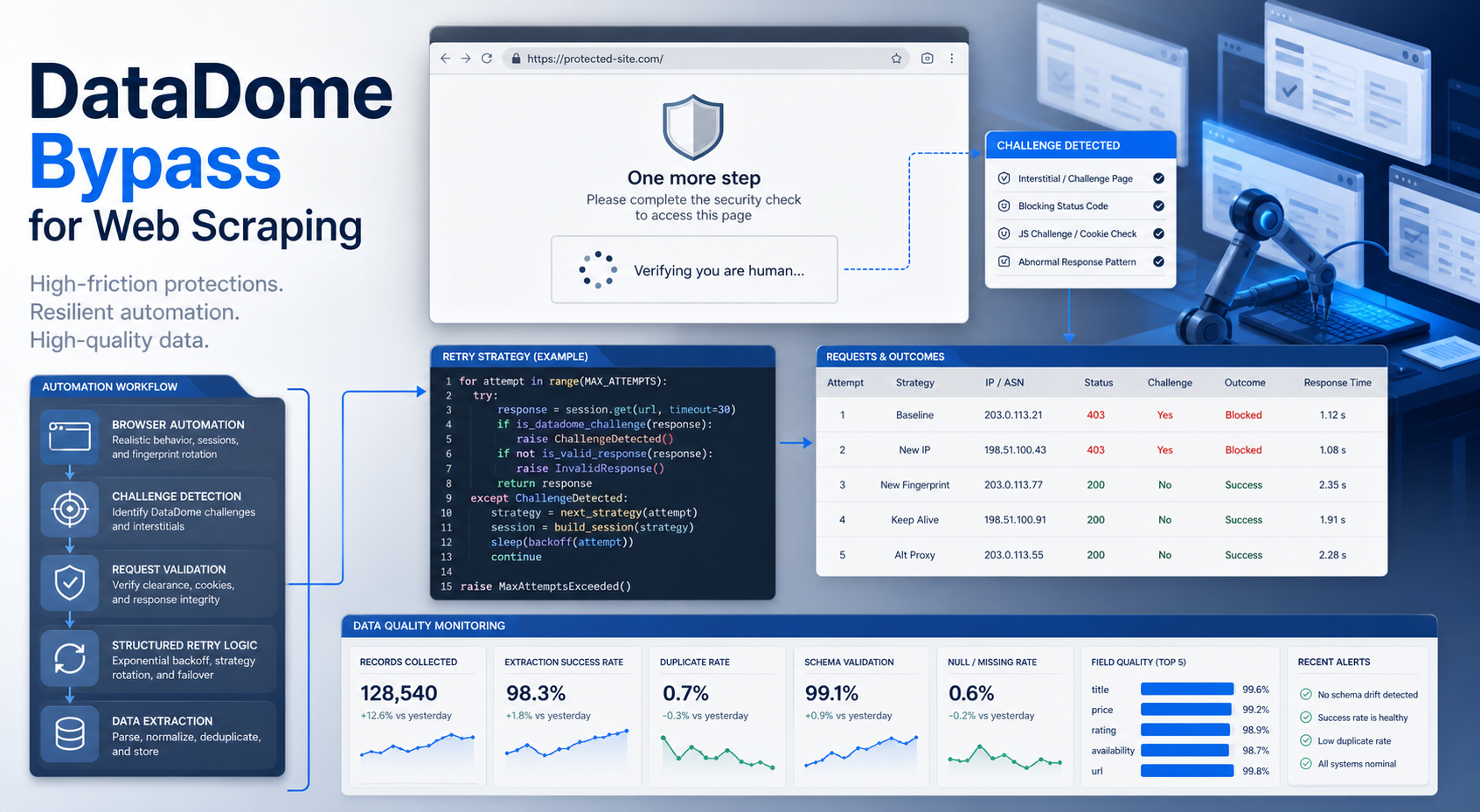
DataDome Bypass for Web Scraping
DataDome Bypass for Web Scraping
View Details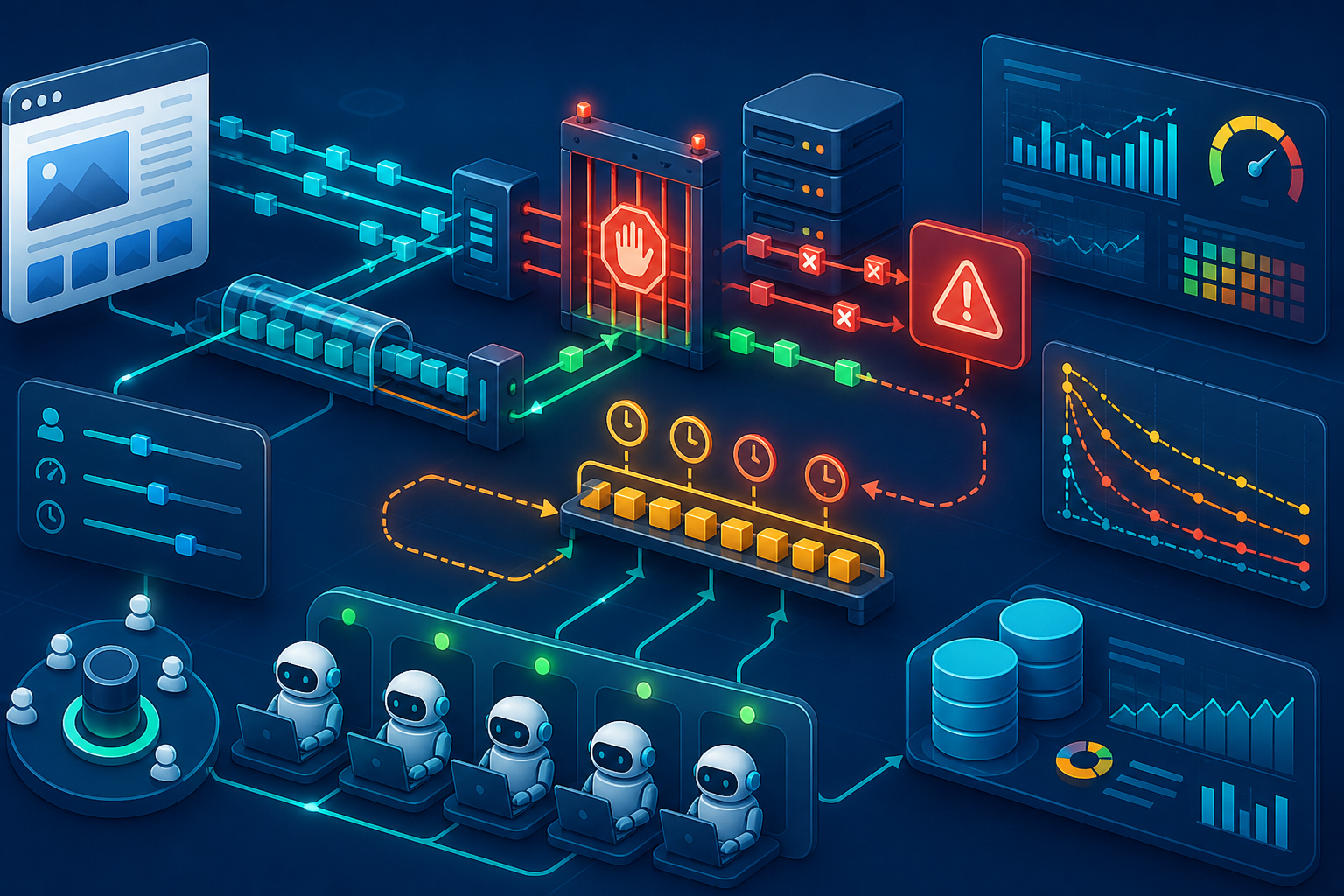
Web Scraping Rate Limiting: How to Handle 429s, Backoff, and Concurrency
Web scraping rate limiting is the engineering discipline of keeping an authorized collection workload inside a target service's acceptable request envelope. When that envelope is exceeded, a server may respond with HTTP 429 Too Many Requests, delay responses, or apply other controls.
View Details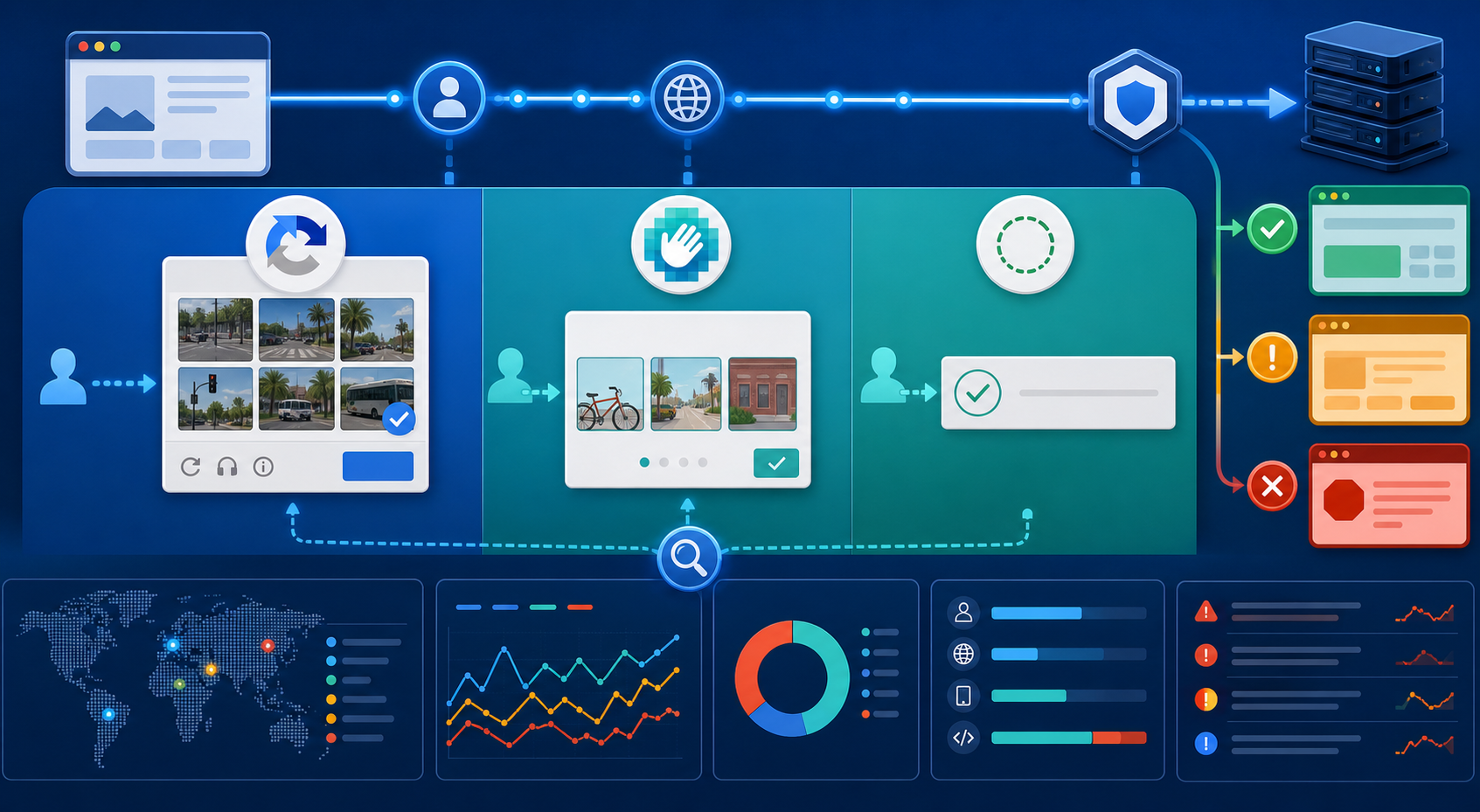
reCAPTCHA vs hCaptcha vs Cloudflare Turnstile: What Scraping Teams Need to Know
If an authorized data-collection workflow suddenly stops at a verification screen, identifying the protection system matters before you change code, browser settings, or proxy infrastructure. reCAPTCHA vs hCaptcha vs Turnstile is not simply a branding comparison. The three systems can expose different browser flows, token models, risk decisions, and failure symptoms.
View Details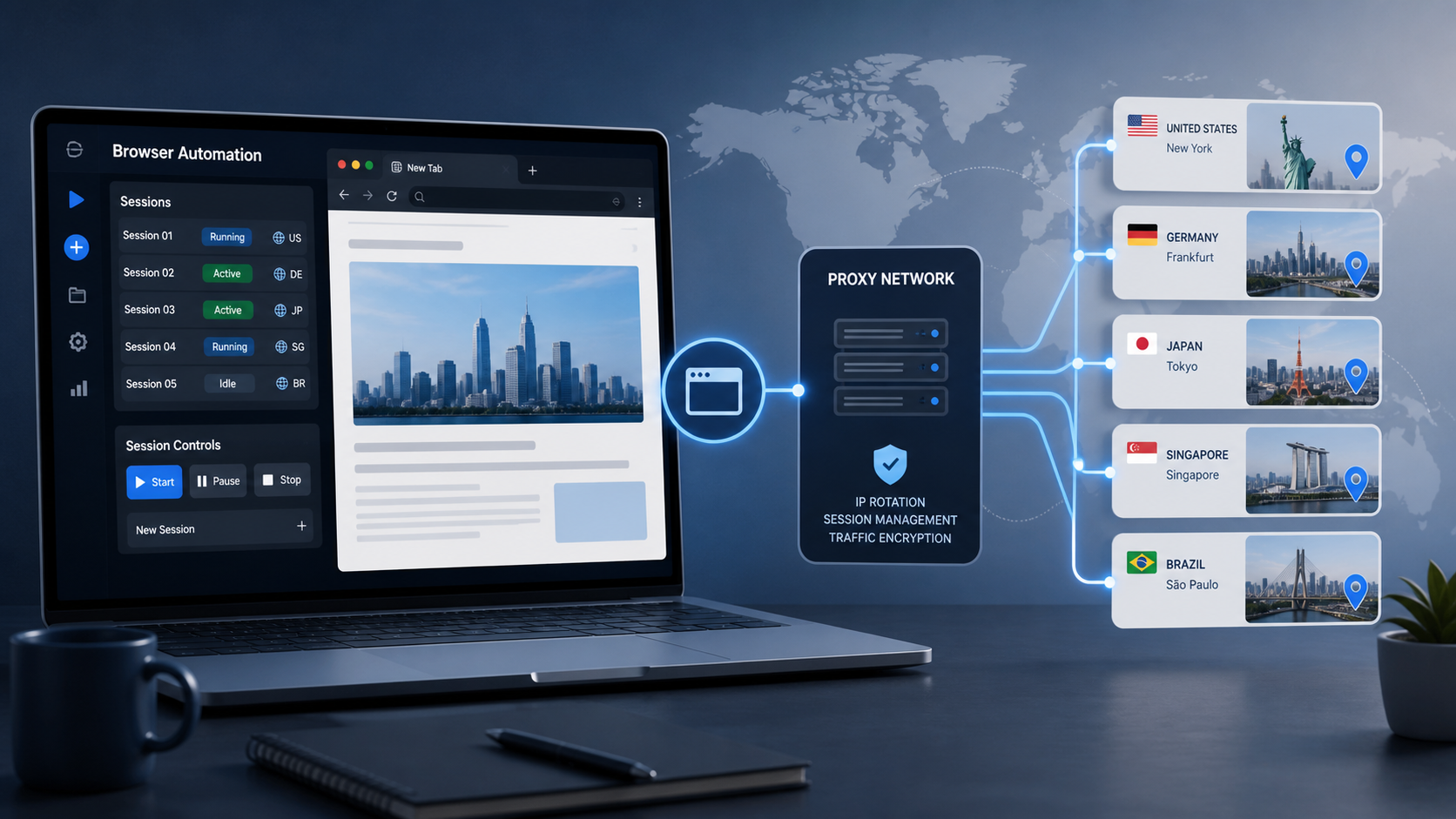
Browser Automation Proxies: IPs, Geo-Targeting, Sessions, and AI Agents
A browser automation proxy belongs to the network layer of Playwright, Selenium, cloud-browser, and AI-agent workflows. It changes how browser traffic is routed and can affect the source IP address, geographic egress, and session continuity seen by a destination site. It does not improve an AI model's reasoning, repair browser logic, or guarantee that a website will accept the session.
View Details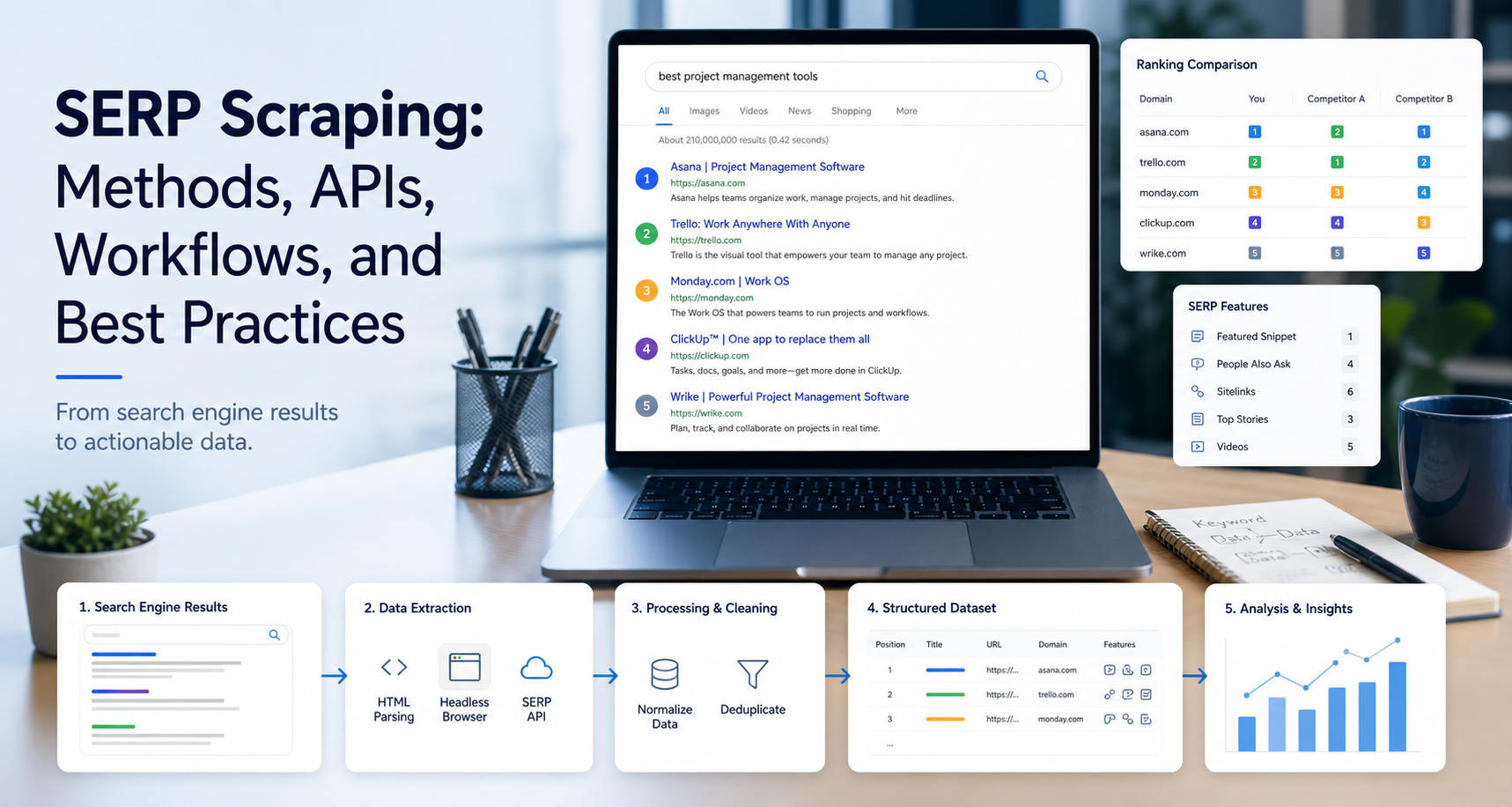
SERP Scraping: Methods, APIs, Workflows, and Best Practices
SERP scraping is the automated collection of information from search engine results pages. A SERP scraper can capture organic rankings, advertisements, featured snippets, People Also Ask questions, local results, shopping listings, images, and other search features, then convert them into structured data for analysis.
View Details