
How Proxy Unblockers Actually Work on Chromebooks
Ever wonder why a random link lets you access blocked sites? Here's the real reason — and it's a lot more interesting than most students realize.
If you have ever been sitting in a computer lab, tried to open a specific website, and hit that familiar blocked page, you have probably also stumbled across a random-looking URL shared in a group chat claiming it gets around the filter. You paste it in, and somehow it works.
But how? What is actually happening behind the scenes when you route traffic through one of those links? Understanding this isn't just cool trivia for students—it is foundational knowledge for developers, QA testers, and technical operators who deal with network routing and data collection every day. It changes the way you think about how the internet itself is structured.
Build Faster With LycheeIP
What a Web Proxy Actually Is
Let's start from the beginning. When you type a web address into your Chromebook browser and hit enter, your request travels from your device, through the local network firewall, and out to the internet to resolve the domain. The network filter sits in the middle of that journey, checking every HTTP request against a strict list of blacklisted domains. If the address matches, it drops the connection.
A web proxy is essentially a detour. Instead of your browser talking directly to the blocked website, it talks to an intermediary server—the proxy server—and that server executes the request on your behalf.
Think of it like asking a friend who lives outside a restricted building to go grab a file for you. You hand your friend the request, they retrieve it, and they hand it back to you. The network filter only sees you talking to your friend; it never sees the store you actually visited.
The proxy server receives your request, visits the target destination, collects the DOM data (text, images, scripts), and sends that payload back to your browser wrapped in its own address. From the firewall's perspective, you were just visiting whatever domain the proxy lives on—which might look like a random string of characters the filter has never encountered before.
The Types of Proxies You Might Encounter
Not all proxies handle traffic the same way. The infrastructure dictates the capability:
- HTTP Proxies: The most basic kind, handling standard, unencrypted web page requests.
- HTTPS Proxies: These handle encrypted traffic, which is mandatory for modern web browsing, as most sites enforce SSL/TLS protocols.
- Web-Based Proxies: These are essentially websites with a URL bar built into the DOM. You visit the proxy site, type in your target address, and the proxy loads it via an iframe or by rewriting the source code. This is the format most commonly shared on Chromebooks because it requires zero OS-level configuration.
- SOCKS5 Proxies: Operating at the transport layer, SOCKS5 (defined in RFC 1928) can route any type of traffic (TCP or UDP), not just web browsing. These are used by developers for complex applications but require manual network configuration.
Why Network Filters Miss These Proxy URLs
Here is where network engineering gets interesting. Enterprise and academic content filters are powerful, but they operate on finite logic. They utilize a blocklist (or denylist) of known domains and IP addresses. Cybersecurity companies constantly update these lists, categorizing millions of sites.
The problem for the filter is a simple numbers game.
A proxy operator can spin up a brand-new web server with a fresh domain name in minutes. Until that domain gets reported, crawled, and added to the global blocklist—which can take days—the filter simply does not know it exists. It is not on the list, so the firewall waves the traffic through.
This explains why proxy links go stale. You use one, it works for a week, and then suddenly it is blocked. That is because the filter caught up. The filtering company's automated crawlers discovered the domain, analyzed its behavior, and flagged it as an anonymizer.
Why Obscure URLs Are Harder to Catch
Filtering vendors use complex heuristics to find and block proxies. They look for specific HTML patterns, URL structures, or server headers. Clever proxy operators disguise their landing pages to look like innocuous blogs or search engines, making automated detection harder.
Network administrators also rely on category-based filtering, where an entire classification (like "anonymizers") is blocked. But a brand-new domain that hasn't been categorized yet slips right through. It is effectively invisible.
This cat-and-mouse dynamic is the core reason proxy links keep circulating. The filter is reactive by nature, while proxy operators are proactive.
Build Faster With LycheeIP
Proxy Links vs. VPNs — What's the Real Difference on a Chromebook?
In any conversation about bypassing filters, VPNs inevitably come up. While both route your traffic through an intermediary server, the technical differences matter immensely—especially on a managed device like a Chromebook.
How a VPN Works Differently
A Virtual Private Network (VPN) creates an encrypted tunnel between your device's operating system and a VPN server. All of your internet traffic—browser requests, background app updates, DNS queries—gets routed through this tunnel.
- A web proxy only reroutes browser traffic on a per-tab or per-application basis, and often does not encrypt the payload.
- A VPN encrypts everything at the system level.
The Chromebook Problem
Here is the technical catch: school-issued Chromebooks are heavily locked down using Mobile Device Management (MDM) systems, typically Google Workspace Admin.
On a managed Chromebook, administrators actively block the installation of VPN extensions from the Chrome Web Store and restrict access to Chrome OS network settings. This makes traditional VPN execution impossible without developer-mode access (which is also disabled).
Web-based proxies, however, require zero installation. They operate entirely inside the browser tab as a standard HTTP request. This is why they remain the primary workaround on restricted hardware—they do not require administrative privileges to execute.
LycheeIP (Developer-First Proxy Infrastructure)
While web-based proxy links are a common workaround for students on Chromebooks, relying on obscure, temporary URLs is not a viable strategy for professional developers, QA engineers, or data teams. When technical operators need to bypass geo-restrictions to verify localized application features or securely collect public web data at scale, they require robust, enterprise-grade infrastructure.
This is where LycheeIP comes in as a developer-first proxy and data infrastructure provider. Instead of hunting for temporary links, engineering teams can integrate a reliable proxy network directly into their automated testing environments or web scrapers. For example, if a growth team needs to test how a checkout flow performs across different global regions without triggering aggressive bot-mitigation firewalls, utilizing dynamic IP routing allows their automated requests to simulate real, distributed user behavior. Conversely, for continuous integration pipelines that require lightning-fast, persistent connections to staging environments, datacenter proxies provide unparalleled stability. For tasks requiring a consistent identity over long periods, dedicated static IPs ensure your access is never interrupted. By leveraging a professional proxy and data infrastructure, developers can focus on shipping code rather than fighting network blocks.
The Bigger Picture
Understanding how proxies work is not just about getting around a local Wi-Fi filter. It provides a foundational window into how the internet functions: how packets are routed, how IP identity is established, and how network firewalls enforce rules. These are the exact concepts utilized daily in cybersecurity, network engineering, and data science.
The next time you see a cryptic proxy link shared in a forum, you will know exactly what is happening under the hood: a server was provisioned to act as a middleman, assigned a fresh address the firewall hasn't seen yet, and deployed before the global blocklist could catch up. It is simple, highly effective, and entirely temporary.
Build Faster With LycheeIP
Frequently Asked Questions
Q: What exactly is a web proxy and how does it bypass a network filter?
A: A web proxy is a server that acts as a middleman between your browser and your target website. Instead of your browser contacting the blocked site directly (which the firewall would stop), it contacts the proxy server. The proxy fetches the content and returns it to you. The filter only sees traffic flowing to the proxy's IP address, which it may not have blocked yet.
Q: Why do proxy links stop working after a while?
A: Proxy links die once the network's content filter identifies the proxy's domain and adds it to its blocklist. This happens through automated threat-detection crawlers, manual IT reviews, or traffic anomaly detection. Once categorized, the link is blackholed.
Q: Is using a proxy on a managed network against the rules?
A: In almost all enterprise and academic environments, yes. Organizations enforce Acceptable Use Policies (AUPs). Bypassing content filters using unauthorized proxies is a direct violation of these policies and can result in disciplinary action or network termination.
Q: What is the difference between a proxy and a VPN?
A: A web proxy typically only reroutes specific browser traffic and may not fully encrypt the payload. A VPN operates at the OS level, creating a fully encrypted tunnel for all device traffic. While VPNs are more secure, they require administrative installation privileges, which is why they fail on managed Chromebooks.
Q: Can a network administrator see what you're doing through a proxy?
A: If the proxy does not enforce HTTPS encryption, the network can read your traffic in plain text. Even with encryption, the firewall logs will clearly show massive data transfers to an unknown proxy server. Advanced networks utilizing can identify proxy usage patterns regardless of payload encryption.
Q: Why do proxies work on Chromebooks when VPNs often don't?
A: Web-based proxies operate entirely within the browser DOM as regular web traffic, requiring zero OS-level configuration. School-managed Chromebooks lock down system settings and block VPN extension installations. Because a proxy link is just a standard URL, it bypasses those installation restrictions completely.

Recommended Articles
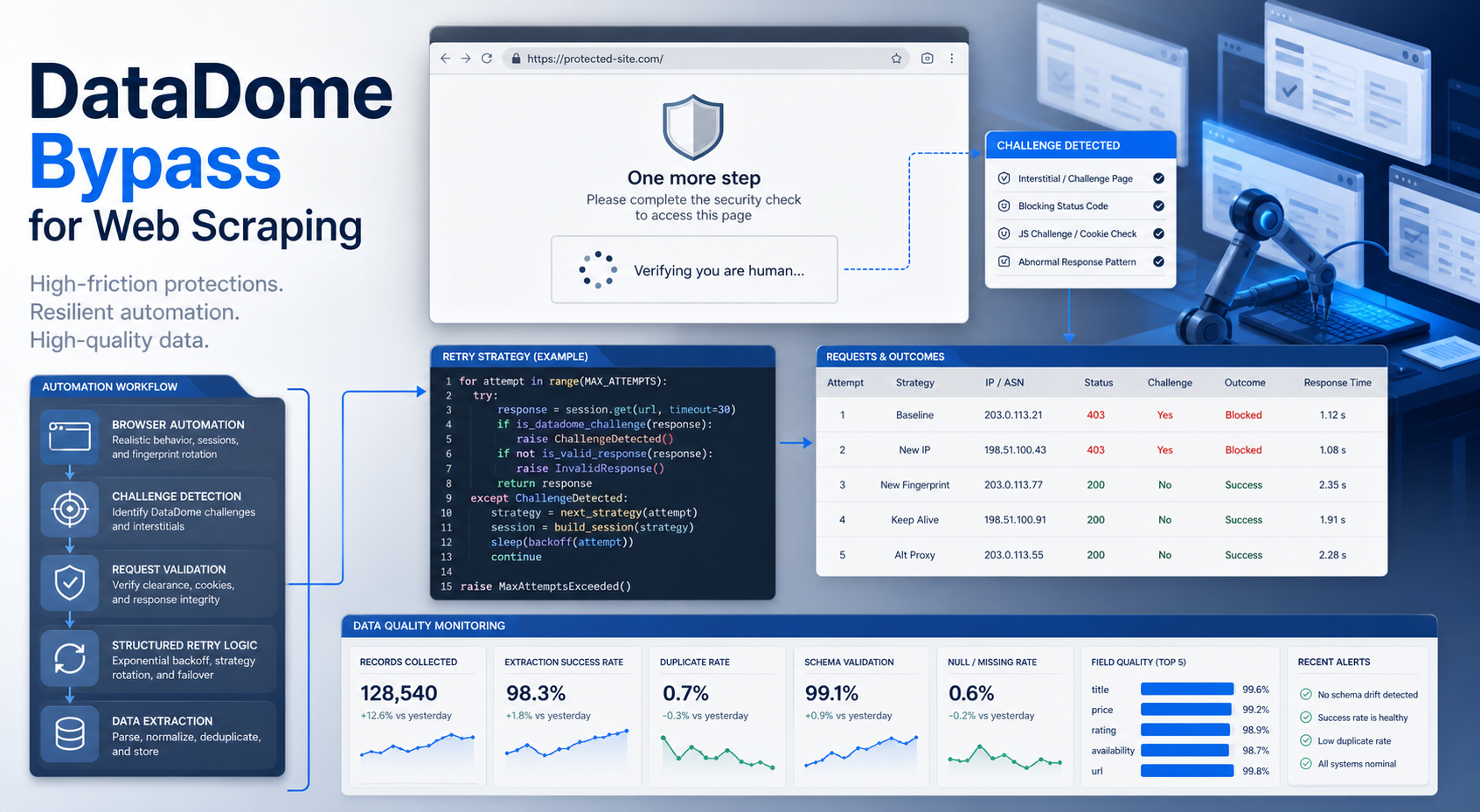
DataDome Bypass for Web Scraping
DataDome Bypass for Web Scraping
View Details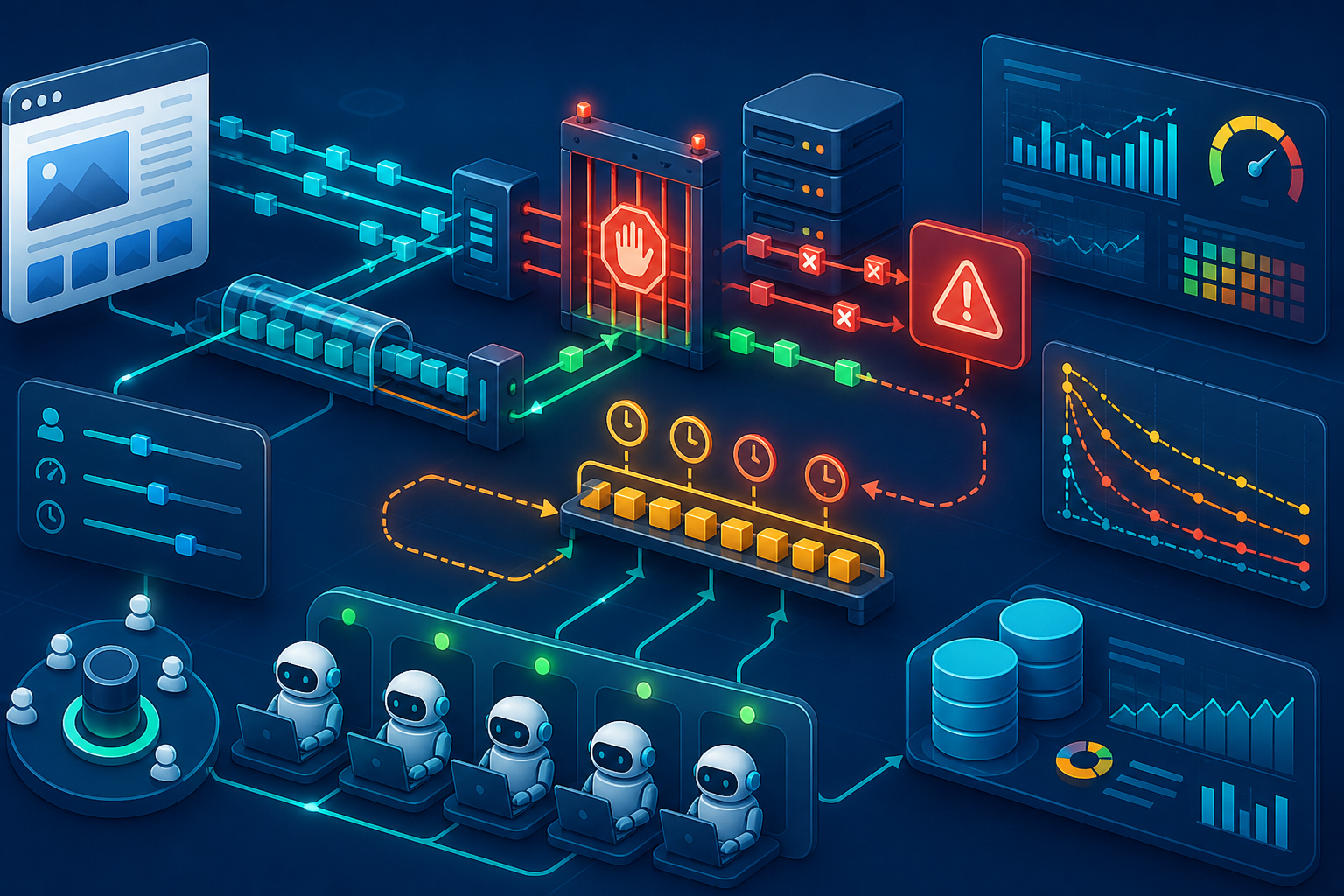
Web Scraping Rate Limiting: How to Handle 429s, Backoff, and Concurrency
Web scraping rate limiting is the engineering discipline of keeping an authorized collection workload inside a target service's acceptable request envelope. When that envelope is exceeded, a server may respond with HTTP 429 Too Many Requests, delay responses, or apply other controls.
View Details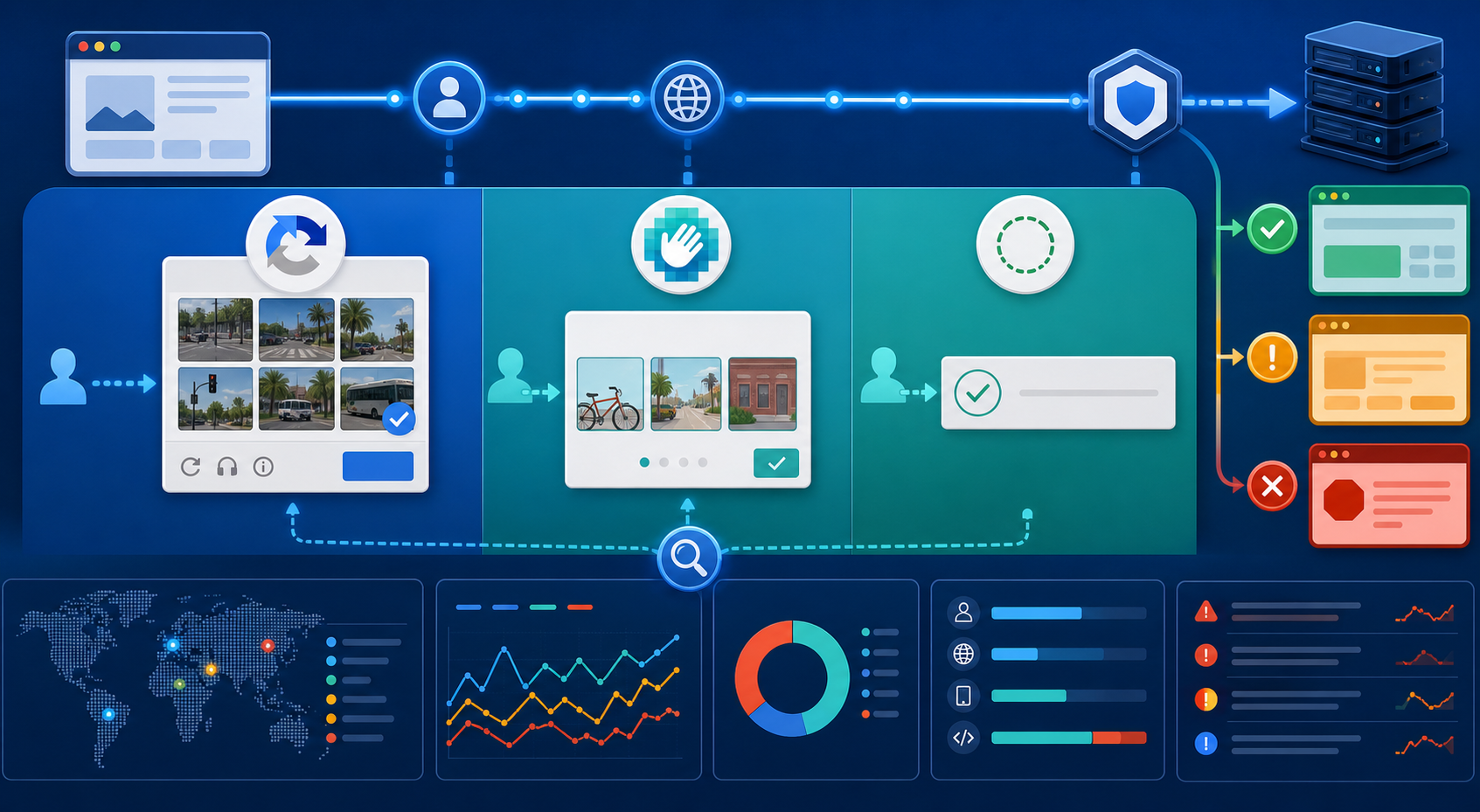
reCAPTCHA vs hCaptcha vs Cloudflare Turnstile: What Scraping Teams Need to Know
If an authorized data-collection workflow suddenly stops at a verification screen, identifying the protection system matters before you change code, browser settings, or proxy infrastructure. reCAPTCHA vs hCaptcha vs Turnstile is not simply a branding comparison. The three systems can expose different browser flows, token models, risk decisions, and failure symptoms.
View Details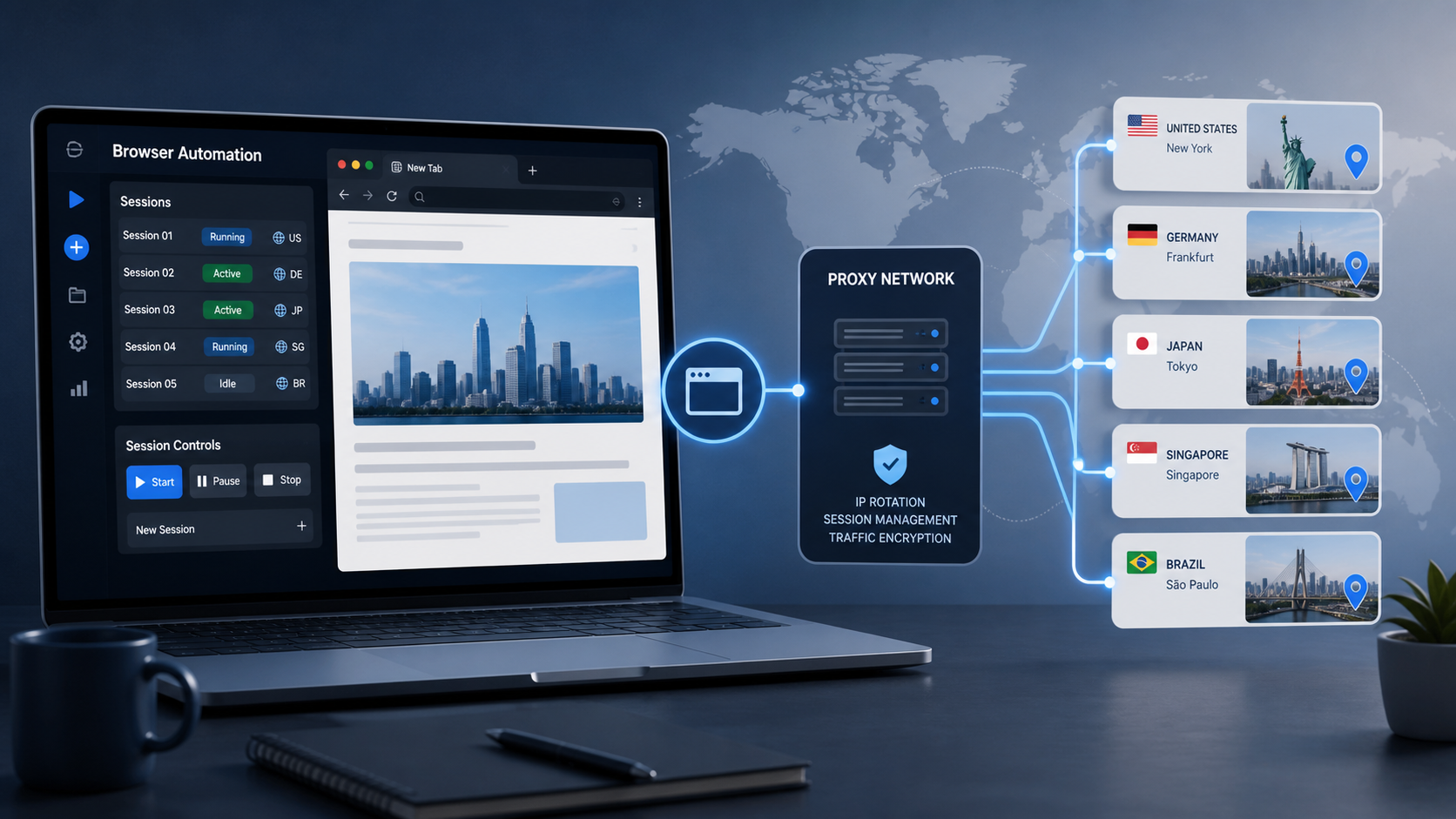
Browser Automation Proxies: IPs, Geo-Targeting, Sessions, and AI Agents
A browser automation proxy belongs to the network layer of Playwright, Selenium, cloud-browser, and AI-agent workflows. It changes how browser traffic is routed and can affect the source IP address, geographic egress, and session continuity seen by a destination site. It does not improve an AI model's reasoning, repair browser logic, or guarantee that a website will accept the session.
View Details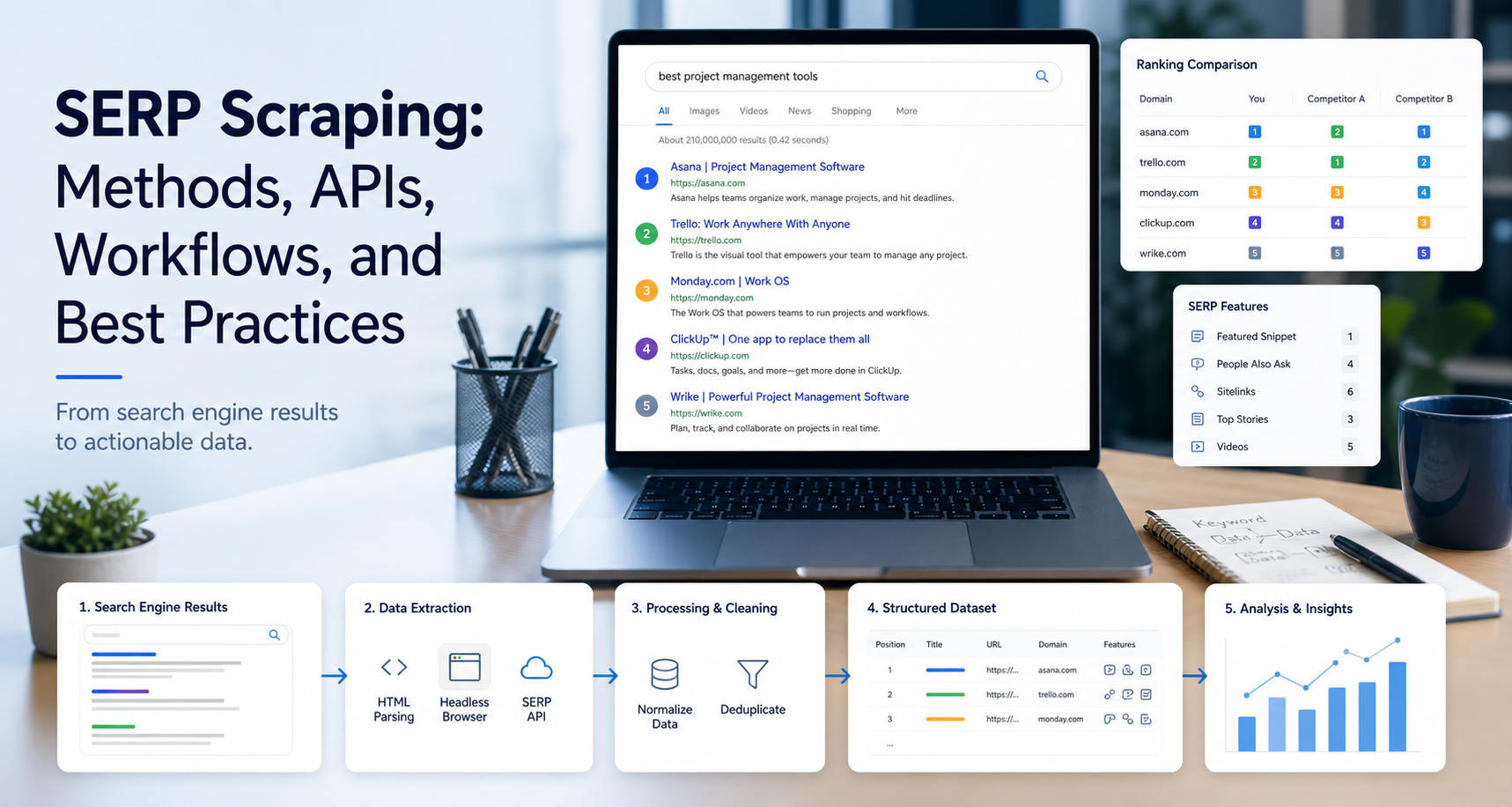
SERP Scraping: Methods, APIs, Workflows, and Best Practices
SERP scraping is the automated collection of information from search engine results pages. A SERP scraper can capture organic rankings, advertisements, featured snippets, People Also Ask questions, local results, shopping listings, images, and other search features, then convert them into structured data for analysis.
View Details