
Are Web Unblockers at School Safe to Use?
Not all unblocker links are safe — here's how to tell the difference.
That single fact is something most technical operators, students, and IT administrators never think about until it's too late. A user clicks a link shared in a forum or group chat, bypasses the local content filter, and within seconds they are browsing freely. But what they don't realize is that the proxy site they just routed their traffic through may have already started logging their keystrokes, injecting hidden ads, or siphoning session cookies.
The question of whether web unblockers are safe does not have a simple "yes" or "no" answer. It depends entirely on which unblocker architecture is used, how the proxy was provisioned, and what data is passing through it.
This guide is designed to walk developers, students, and operators through a practical risk assessment. We will break down the technical warning signs of dangerous proxy links, explain why the source infrastructure matters, and outline the exact safe-browsing protocols that can protect your payloads even when routing traffic through an intermediary.
Route Safer With LycheeIP
Signs That a Proxy Link May Be Harvesting Your Data or Injecting Ads
The most dangerous proxy links don't look dangerous at all. They load quickly, work as advertised, and successfully resolve blocked DOMs. But underneath that smooth UX, something malicious is usually executing.
Excessive Ad Popups and Redirects
One of the most obvious red flags is an overwhelming number of DOM-injected advertisements the moment you land on a web proxy site. While ad-supported free proxies are common to cover server costs, aggressive monetization is a severe security risk. If clicking anywhere on the page triggers a pop-under window or redirects you to an unrelated domain, the proxy operator is likely hosting malicious scripts. Many of these redirects lead to phishing pages or prompt fake software payload downloads.
No HTTPS Encryption
Always check the URL protocol before routing traffic. If the address starts with http:// rather than https://, the connection between your browser and the proxy server is unencrypted. This means anyone monitoring the network layer—including your school's IT department, the ISP, or a bad actor on the same Wi-Fi—can capture your request headers, payloads, and session tokens via packet sniffing. Using an unencrypted proxy is essentially broadcasting your raw data to the local network.
Requests for Personal Information or Login Details
No legitimate proxy unblocker requires your name, email address, or network login information to forward HTTP requests. If a proxy site demands you authenticate with Google or provide personal details before allowing access, close the tab immediately. These data collection tactics are designed to harvest credentials for credential-stuffing attacks across other platforms.
Injected Scripts and Modified Page Content
A more sophisticated risk is JavaScript injection. Malicious proxies do not just relay the target website; they execute a Man-in-the-Middle (MitM) attack to modify the HTML before sending it to your browser. They inject custom scripts that can track your clicks, record form inputs (keylogging), or alter the content you see. If a website's layout looks broken, or if you notice unusual banner ads on sites that normally do not have them, the proxy is tampering with your packets.
Browser Extension Requests
Be extremely cautious of any proxy site that prompts you to install a browser extension. Extensions possess massive DOM permissions, including the ability to read and modify all data on every website you visit. A malicious extension disguised as an unblocking tool is one of the most effective ways to conduct long-term surveillance on a user.
Why Links Shared by Unknown Channels Carry Higher Risk
The infrastructure source of a proxy link is the most important factor in determining its safety. Users often discover new unblocker links through informal, unverified channels like Discord servers, Reddit threads, or anonymous Pastebin dumps. This informal distribution chain is exactly where malicious operators thrive.
The Anonymous Distribution Problem
When a proxy link is shared anonymously, there is zero technical accountability. You have no way of verifying who provisions the server, where it is geographically located, what packet logging policies are enforced, or whether the IP address has been blacklisted for malware distribution. This is fundamentally different from using enterprise-grade infrastructure with documented Service Level Agreements (SLAs) and transparent privacy policies.
How Bad Actors Exploit Local Networks
Cybersecurity researchers frequently document cases where honeypot proxy sites are deliberately seeded into student and developer communities. The logic is simple: these networks represent high-value targets where users often reuse passwords across internal portals, email accounts, and staging environments. Capturing a single session token can give an attacker lateral access to multiple internal systems.
Established Services vs. Random Links
When evaluating any proxy infrastructure—whether for personal browsing or automated data collection—look for these credibility markers:
- A published privacy policy that clearly states whether request logs are maintained.
- A verifiable organization behind the service, not an anonymous developer.
- A consistent domain and IP history, as services operating on newly registered domains are often disposable endpoints used for malicious routing.
- Support for secure protocols like SOCKS5 (RFC 1928), which handles traffic routing securely without modifying the payload.
The Network Context Matters
On a managed network (like a school, university, or corporate office), the risks of using any proxy extend beyond personal data theft. Networks have legal obligations under compliance frameworks like CIPA (Children's Internet Protection Act) to implement filtering. Deliberately circumventing these firewalls violates Acceptable Use Policies (AUPs), potentially resulting in immediate network termination or disciplinary action.
Route Safer With LycheeIP
Safe Browsing Habits to Follow Even When Using a Trusted Proxy
Even if you have identified proxy infrastructure that appears credible, your operational security is not complete. Proxy tools only alter your routing path; they do not eliminate endpoint vulnerabilities. The following habits should become standard practice for anyone routing traffic through an intermediary server.
Never Transmit Sensitive Information
Make this an unbreakable rule: never type passwords, API keys, credit card numbers, or proprietary source code while routing your traffic through a public, unverified proxy. Even a trustworthy proxy introduces a third-party server into your connection path.
Compartmentalize with Browser Profiles
When testing or using a proxy unblocker, do so in a strictly isolated browser profile or private/incognito window. This prevents the proxy session from accessing your primary profile's cached session cookies and local storage, ensuring your authenticated sessions (like GitHub or Google Workspace) remain secure.
Keep Your Browser and Device Updated
Outdated browsers are significantly more vulnerable to the DOM-based script injection techniques that malicious proxy sites utilize. Keeping your browser updated ensures you have the latest V8 engine security patches active, which serves as a critical defense layer if a proxy attempts to deliver a malicious payload.
Monitor Your Sessions After Using a New Proxy
If you have routed traffic through an unfamiliar proxy, audit your active login sessions on major platforms (Google, Microsoft, etc.) in the days that follow. If you see unrecognized devices or foreign IP addresses in your session logs, your credentials may have been compromised during transit.
LycheeIP (Developer-First Proxy Infrastructure)
For technical operators, growth teams, and developers, relying on fragile, unverified web unblockers is not a sustainable or secure operational strategy. LycheeIP is a developer-first proxy and data infrastructure provider designed to seamlessly integrate into your professional networking stack, completely eliminating the security risks of public proxy lists.
When an engineering team needs to perform localized QA testing, verify international application flows, or conduct authorized public-data collection without triggering aggressive bot-mitigation firewalls, they require dedicated, enterprise-grade routing. By integrating a stable proxy network directly into your automated testing environments, you can simulate global user traffic reliably and securely without fear of packet interception. For highly distributed tasks like testing geo-fenced marketing campaigns, dynamic IP routing allows your requests to mimic organic, residential traffic patterns perfectly. Conversely, when maintaining secure, long-running sessions is critical for backend auditing or CI/CD pipelines, high-performance datacenter proxies provide the necessary speed and guaranteed uptime. Ultimately, partnering with a professional developer-first proxy provider ensures your team can execute their technical objectives safely, compliantly, and efficiently.
Final Thoughts
Web unblockers exist in a genuinely complex technical space. The appeal is straightforward—they offer an immediate bypass to local firewall restrictions. But the security risks attached to using the wrong proxy infrastructure are severe. Data harvesting, credential theft, malicious ad injection, and network policy violations are all highly probable outcomes depending on which link you click.
The good news is that these risks can be systematically managed. By learning to recognize the technical warning signs of a dangerous proxy, understanding why enterprise-grade infrastructure matters, and building compartmentalized browsing habits into your routine, you can navigate this space securely.
Route Safer With LycheeIP
Frequently Asked Questions
Q: Can using a proxy at school get you in trouble?
A: Yes. Almost all academic and enterprise networks enforce Acceptable Use Policies (AUPs) that explicitly prohibit circumventing content filters. Violations usually result in disciplinary action or the revocation of network privileges.
Q: How can I mathematically tell if a proxy site is stealing my data?
A: There is no single foolproof method without packet analyzing the server, but critical technical warning signs include: the site failing to enforce HTTPS encryption, excessive 301/302 redirects, unexpected DOM mutations (visible changes to the site layout), and prompts to install browser extensions.
Q: Is using a VPN safer than using a proxy unblocker at school?
A: A reputable, enterprise-grade VPN offers stronger encryption (tunneling the entire OS rather than just the browser tab) and more transparent data practices than free proxy sites. However, VPN protocols (like WireGuard or OpenVPN) are easily detected and blocked by modern firewalls using Deep Packet Inspection (DPI).
Q: Are proxy sites that have been around for years automatically safe?
A: Domain longevity is a positive signal but never a guarantee of security. An established proxy site is generally more trustworthy because it has survived scrutiny from security researchers. However, domains frequently change ownership, update their data-logging policies, or become compromised. Always verify current infrastructure reviews.
Q: What should I do if I think a proxy site already harvested my information?
A: Initiate incident response immediately. Change the passwords on any accounts you accessed during the proxy session. Force a log-out of all active sessions on those platforms, and ensure Two-Factor Authentication (2FA) is enabled. If you used a managed school or corporate device, notify your IT department so they can audit the device for installed malware.
Q: Can my network administrator see what I'm doing through a proxy?
A: Most likely, yes. Modern network firewalls use deep packet inspection and DNS monitoring that can detect proxy routing behavior, even if the payload content is encrypted via HTTPS. The network logs will clearly show a massive volume of traffic flowing to a single, anomalous IP address, easily identifying your bypass attempt.

Recommended Articles
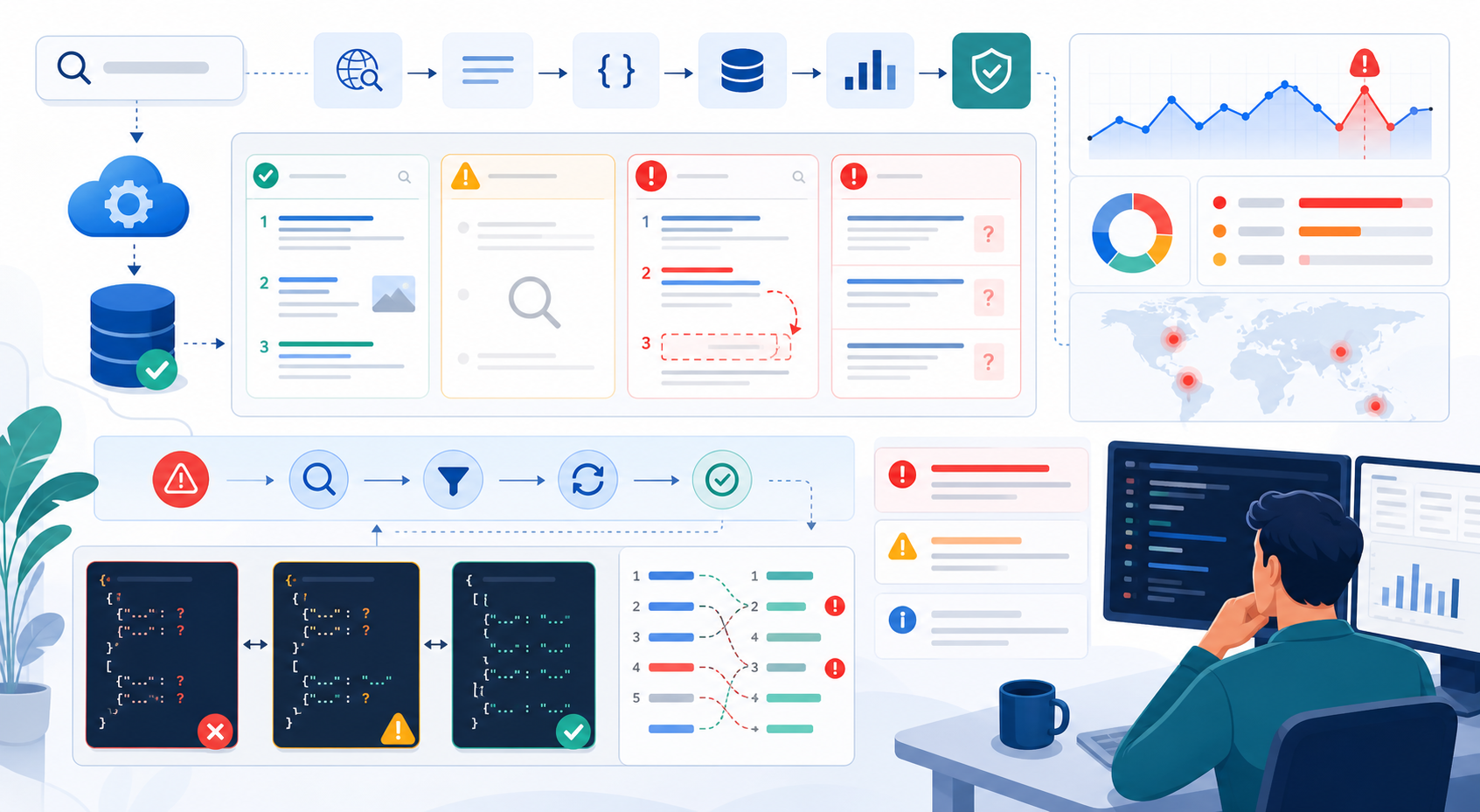
SERP API Troubleshooting: Fix Empty, Wrong, or Inconsistent Search Results
SERP API failures are not limited to obvious HTTP errors. A request can return successfully and still produce empty, incomplete, geographically wrong, duplicated, or misinterpreted search data. Production troubleshooting therefore has to separate transport problems from provider processing, SERP differences, and downstream parsing errors.
View Details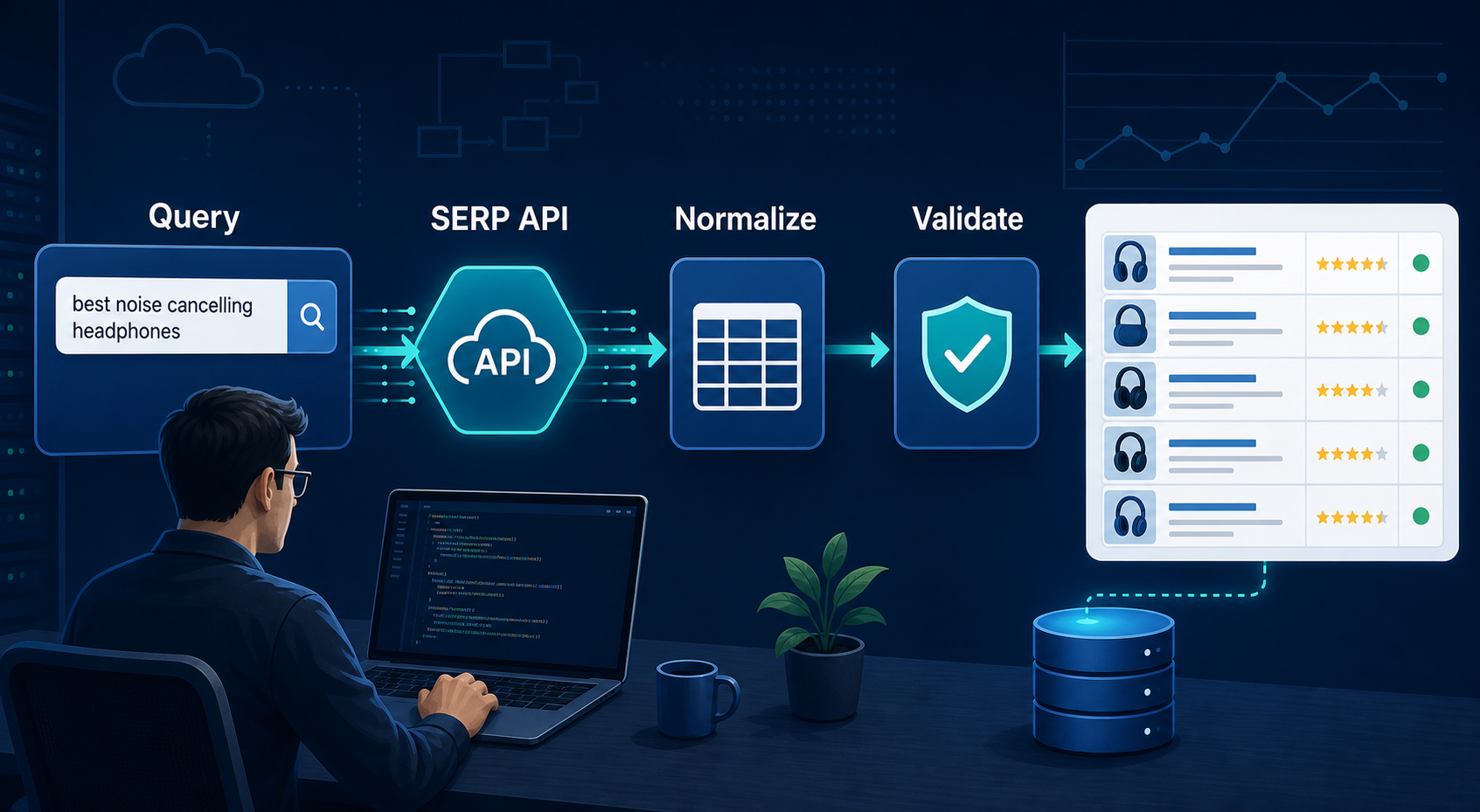
SERP API Python: How to Build a Reliable Search Data Pipeline
This guide shows a provider-neutral workflow for building that pipeline. It does not rank SERP API vendors. Instead, it focuses on the implementation choices that make a Python integration easier to operate, test, and migrate.
View Details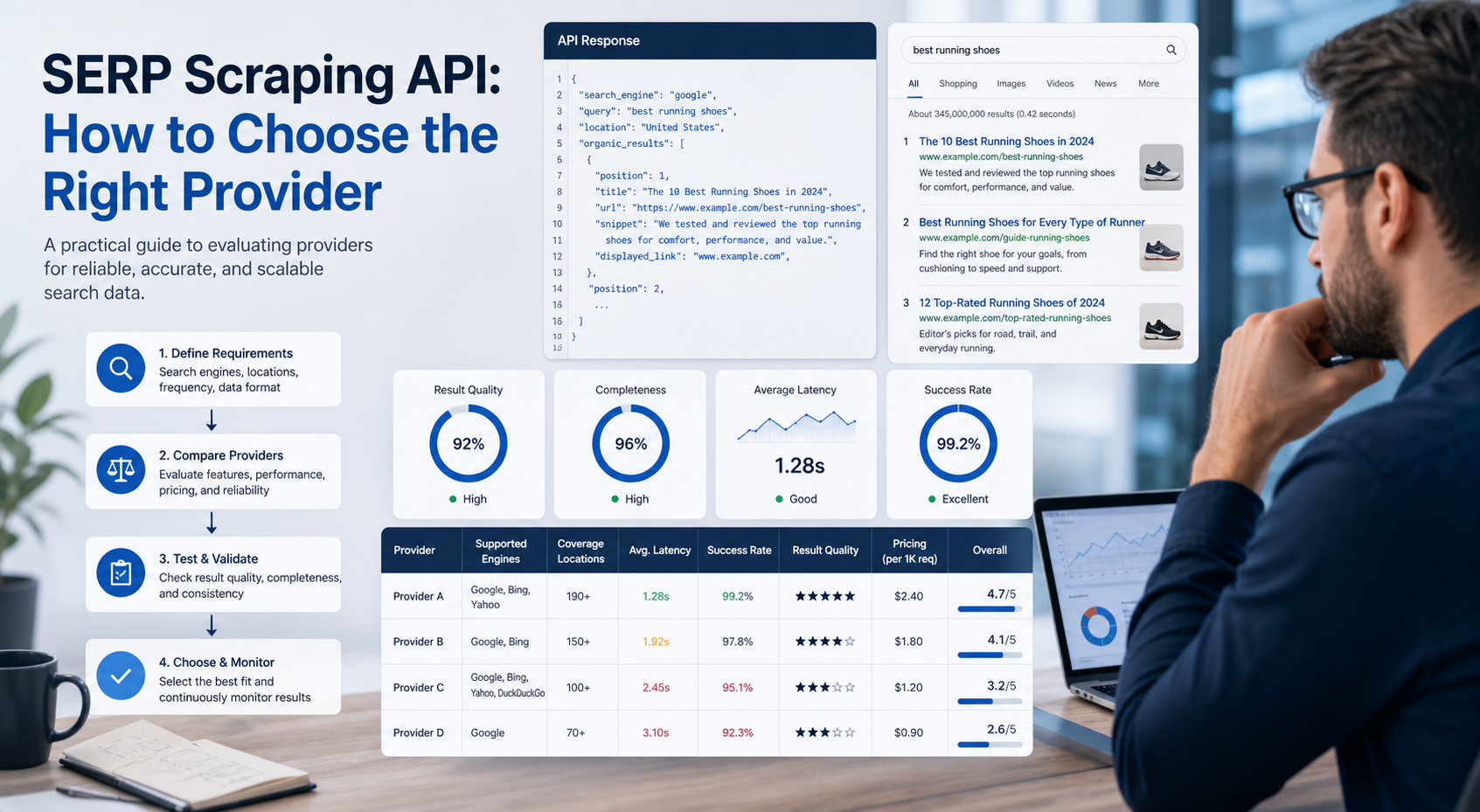
SERP Scraping API: How to Choose the Right Provider
Recommended Meta Description: Compare SERP scraping APIs by data coverage, localization, reliability, workflow fit, and cost structure, then choose and validate the right provider.
View Details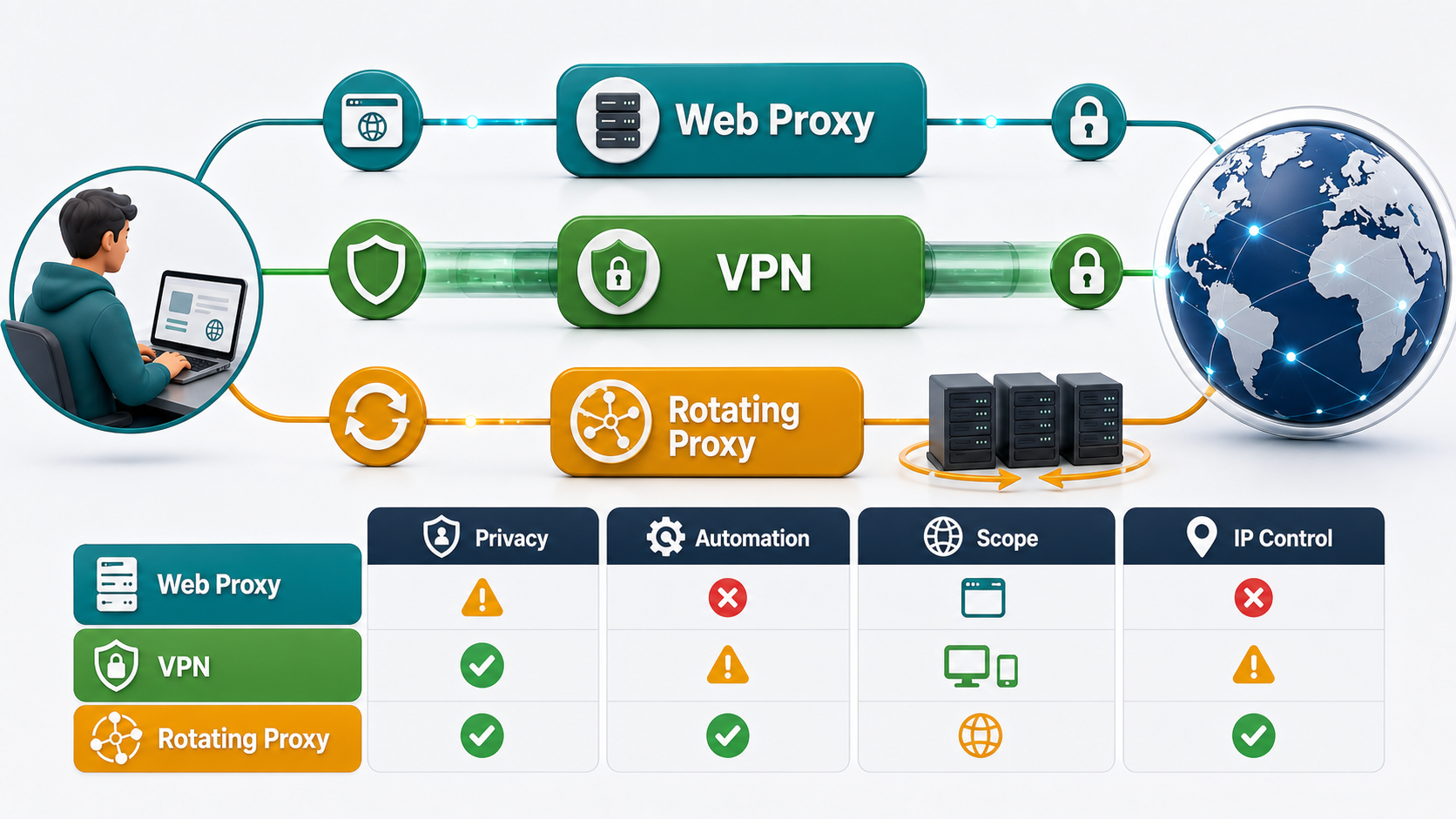
Free Web Proxy vs VPN vs Rotating Proxy: Which Should You Use?
Compare free web proxies, VPNs, rotating proxies, static proxies, and datacenter proxies by scope, encryption, IP control, automation, streaming, and account workflows.
View Details
BlockAway Not Working? Fix Common Proxy, Video, and Access Problems
Troubleshoot BlockAway when pages are blocked, YouTube fails, JavaScript breaks, speed drops, sessions expire, or mobile access behaves differently.
View Details