
Datacenter Proxies vs Residential Proxies How to Choose Right
Understanding datacenter proxies vs residential proxies is ultimately a tradeoff between speed and cost on one side and trust and block resistance on the other. If your targets are open and handle high volume well, server-based infrastructure often makes the most sense. If your targets are protected, heavily geo-sensitive, or require strict session continuity, real household IPs usually justify their higher cost.
This guide provides a practical framework for evaluating datacenter proxies vs residential proxies so you can optimize your success rates without wasting budget.
Test proxies with LycheeIP
What is the core difference between datacenter proxies vs residential proxies?
The core difference is the IP address origin and how target websites interpret the legitimacy of that origin. Datacenter proxies route your traffic through commercial servers owned by cloud hosting providers. Residential proxies route your traffic through IP addresses assigned to real home devices by local internet service providers.
That underlying infrastructure difference dictates how fast the proxy performs, how much it costs to operate, and how easily anti-bot software can flag it. Datacenter IPs are known to belong to hosting companies, making them easy for strict security systems to identify and block. Residential IPs look exactly like everyday consumer traffic. This makes the fundamental choice of datacenter proxies vs residential proxies a matter of matching your infrastructure to the target's defensive posture.
Which proxy type wins on speed, cost, and detection risk?
Each proxy type excels in a completely different performance category. The industry consensus on datacenter proxies vs residential proxies highlights that server IPs offer massive speed and cheap bandwidth, while home IPs offer unparalleled access to heavily protected sites.
Cost efficiency highly depends on your project scope. A flat monthly rate for server IPs is highly cost efficient for scraping a million simple retail pages. Paying per gigabyte for rotating home IPs is the only way to achieve cost efficiency when scraping flight prices from an aggressive travel aggregator.
How can you choose the right proxy type for your workflow?
You can choose the optimal setup by using the TRUST framework to score your project requirements before making a purchase. Evaluating datacenter proxies vs residential proxies requires a systematic approach rather than guessing.
The TRUST Framework helps you decide:
- Target defenses: Determine if the site is completely open or utilizes heavy anti-bot mechanisms.
- Request volume: Calculate if you are making hundreds of requests or millions of requests per day.
- User session continuity: Decide if you need an IP to stay stable for several hours or if you need a new IP for every single request.
- Spend model: Check if your budget aligns better with flat per-IP pricing or metered per-GB pricing.
- Targeting depth: Identify if you need broad country-level access or specific city-level targeting.
If target defenses are light and request volume is massive, you should lean toward server IPs. If target defenses are heavy and precise geographic locations matter, you should pivot to home IPs.
Mini Use-Cases for Different Teams
- Data engineers and scraping teams: You should start with server infrastructure for open directories and escalate to home IP pools only when encountering blocks.
- Multi-account agencies: You should prefer stable ISP IPs to maintain consistent account identities across multiple client logins.
- Security and fraud ops: You should prioritize geographic realism and broad ASN coverage over raw bandwidth to properly simulate local threat vectors.
- Fintech ops: You must carefully review session continuity and compliance guidelines because automated financial API queries face extreme scrutiny from defenders.
When should you use ISP proxies instead of either extreme?
You should use ISP proxies when you need the speed of a commercial server combined with the trusted identity of a consumer internet service provider. These are often called static residential IPs because they do not rotate.
ISP proxies serve as the ideal middle ground in the datacenter proxies vs residential proxies debate. They are perfect for long-lived sessions, managing seller accounts, and handling login workflows where constant IP rotation would trigger security alerts. They are not ideal for massive web crawls that require a completely fresh identity for every single page load.
How should you test proxies before buying at scale?
You should test proxies by running a limited, real-world pilot against your actual target websites rather than relying on vendor speed benchmarks. Building scraping tools requires validation in the wild because anti-bot systems behave unpredictably.
Follow this straightforward testing procedure:
- Select three actual targets ranging from easy to difficult.
- Define success metrics focusing on latency, CAPTCHA rate, and session stability.
- Execute the same automated requests through both proxy types.
- Test concurrently at the same times of day to account for network congestion.
- Separate anonymous data collection from authenticated login workflows.
- Calculate your final cost based on successful data retrieval rather than raw bandwidth used.
- Scale your infrastructure budget only after reviewing the specific win rates of each proxy type.
Test proxies with LycheeIP
What mistakes cost scraping teams the most money?
The most expensive mistake is assuming that expensive home IPs are universally better than cheaper server IPs for every single task. That approach destroys project margins.
Many teams waste money routing low-value, high-volume directory scrapes through expensive gigabyte-metered networks. Conversely, other teams lose weeks of engineering time trying to force basic server IPs into complex google scraping operations that require high trust scores.
You must also be cautious of suspiciously cheap residential proxies available on random forums. Sourcing matters immensely in 2026. Security researchers frequently note that unverified proxy inventory often carries severe compliance risks and degraded trust scores due to prior abuse.
What usually goes wrong after purchase and how do you fix it?
Most operational failures stem from a mismatch between the proxy type and the target website's security layer. According to the Imperva 2025 Bad Bot Report, defenders increasingly look at API abuse and behavioral automation patterns alongside raw IP reputation.
If you experience sudden blocks, you must first verify that your network choice aligns with the target difficulty. Review the troubleshooting table below to map your symptoms to the correct technical fix.
How does LycheeIP simplify the datacenter proxies vs residential proxies decision?
LycheeIP simplifies this architecture decision by providing a single unified platform that offers dynamic residential, static residential, and static datacenter products under one developer-friendly API.
Many market alternatives force users into opaque, shared IP pools with questionable sourcing practices. LycheeIP contrasts this by allocating resources directly from underlying operators to guarantee exclusive access and implementing strict cooling periods for all IPs.
How LycheeIP fits your workflow:
- Clear pricing structure featuring static datacenter packages from $0.80 per IP monthly and dynamic residential starting at $5.00 per GB.
- Developer-first simplicity with near real-time statistics available via a clean API.
- Strict quality control featuring a mandatory six-month scenario cooling period for IPs to ensure clean reputation.
- Reliable stability backed by 99.98% network availability and unlimited concurrency for dynamic pools.
- Responsive 24/7 support to assist with complex integration troubleshooting.
What assumptions and limitations should you keep in mind?
You should assume that proxy performance is highly dynamic and that no single IP type is immune to being blocked.
Assumptions and limitations to consider:
- Performance on your specific target sites may differ drastically from generic homepage marketing claims.
- Anti-bot systems continue evolving rapidly with heavy focus on AI crawler traffic as documented in recent Cloudflare bot documentation.
- Browser fingerprinting hygiene is just as important as your underlying IP address.
- Vendor pricing models and terms of service can change quickly.
- This content serves as a technical buying guide and does not constitute legal or compliance advice.
Comparison Table
| Feature | Datacenter Proxies | Residential Proxies | ISP Proxies |
| IP Origin | Cloud servers | Real consumer devices | Data center hosted ISP lines |
| Typical Speed | Extremely fast | Slower and variable | Fast and stable |
| Cost Structure | Flat monthly rate per IP | Metered per gigabyte | Flat monthly rate per IP |
| Block Resistance | Low on strict sites | Very high | Moderate to high |
| Ideal Workflow | High-volume open data | Protected sites and precise geo | Sticky sessions and accounts |
Troubleshooting
| Failure Symptom | Likely Cause | Recommended Fix |
| Immediate blocks on travel sites | Using server IPs on strict targets | Upgrade to rotating home IPs |
| Unexpected session logouts | IP rotation is too aggressive | Switch to sticky sessions or ISP proxies |
| Budget draining too quickly | Using metered IPs for easy targets | Split traffic routing based on difficulty |
| Good IPs still receiving CAPTCHAs | Weak browser fingerprinting | Audit your HTTP headers and automation tools |
Test proxies with LycheeIP
Frequently Asked Questions:
- How can you get free residential proxies?
You can find free options online, but they are generally unsuitable for professional use. Free networks suffer from severe oversubscription, unstable uptime, and poor IP reputation, making them a bad choice for reliable scraping operations. - Which is the better choice between datacenter proxies vs residential proxies?
Neither is universally better. Server IPs are the best choice for cheap, high-volume tasks on easy targets. Real home IPs are the best choice when target websites utilize strict security and require a highly trusted identity. - Are ISP proxies the same as residential proxies?
They are fundamentally different. ISP proxies are hosted in server facilities but registered under consumer internet providers. This gives them the speed of a server with the trusted identity of a homeowner. - What should you test before buying proxies?
You should test the success rate, connection latency, CAPTCHA frequency, and overall cost per successful data extraction. Always run these tests against your actual target websites. - Can datacenter proxies work for Google scraping?
They can work for very light or localized queries, but search engines utilize massive security layers. Most professional teams rely on high-trust residential networks to maintain stable success rates for search engine data collection. - Are residential proxies always worth the extra cost?
They are only worth the premium when they solve a specific access problem. Using them to scrape unprotected directories is a massive waste of budget when cheaper infrastructure would achieve the exact same result. - Does anti-bot pressure make this comparison more important in 2026?
Yes. Modern security systems heavily scrutinize automated traffic. Choosing the wrong IP type on a protected target results in immediate failure, making infrastructure planning more critical than ever.

Recommended Articles
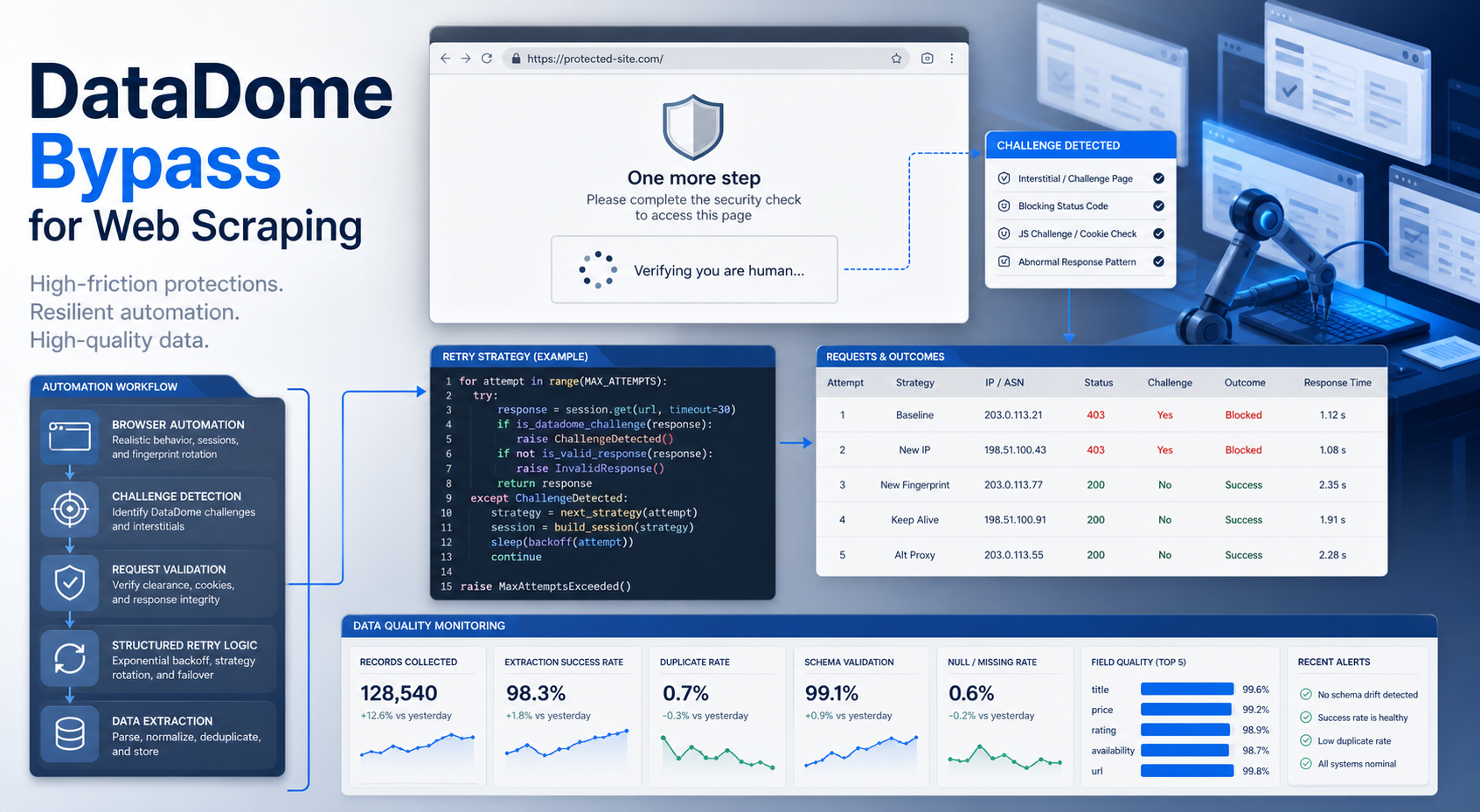
DataDome Bypass for Web Scraping
DataDome Bypass for Web Scraping
View Details
Web Scraping Rate Limiting: How to Handle 429s, Backoff, and Concurrency
Web scraping rate limiting is the engineering discipline of keeping an authorized collection workload inside a target service's acceptable request envelope. When that envelope is exceeded, a server may respond with HTTP 429 Too Many Requests, delay responses, or apply other controls.
View Details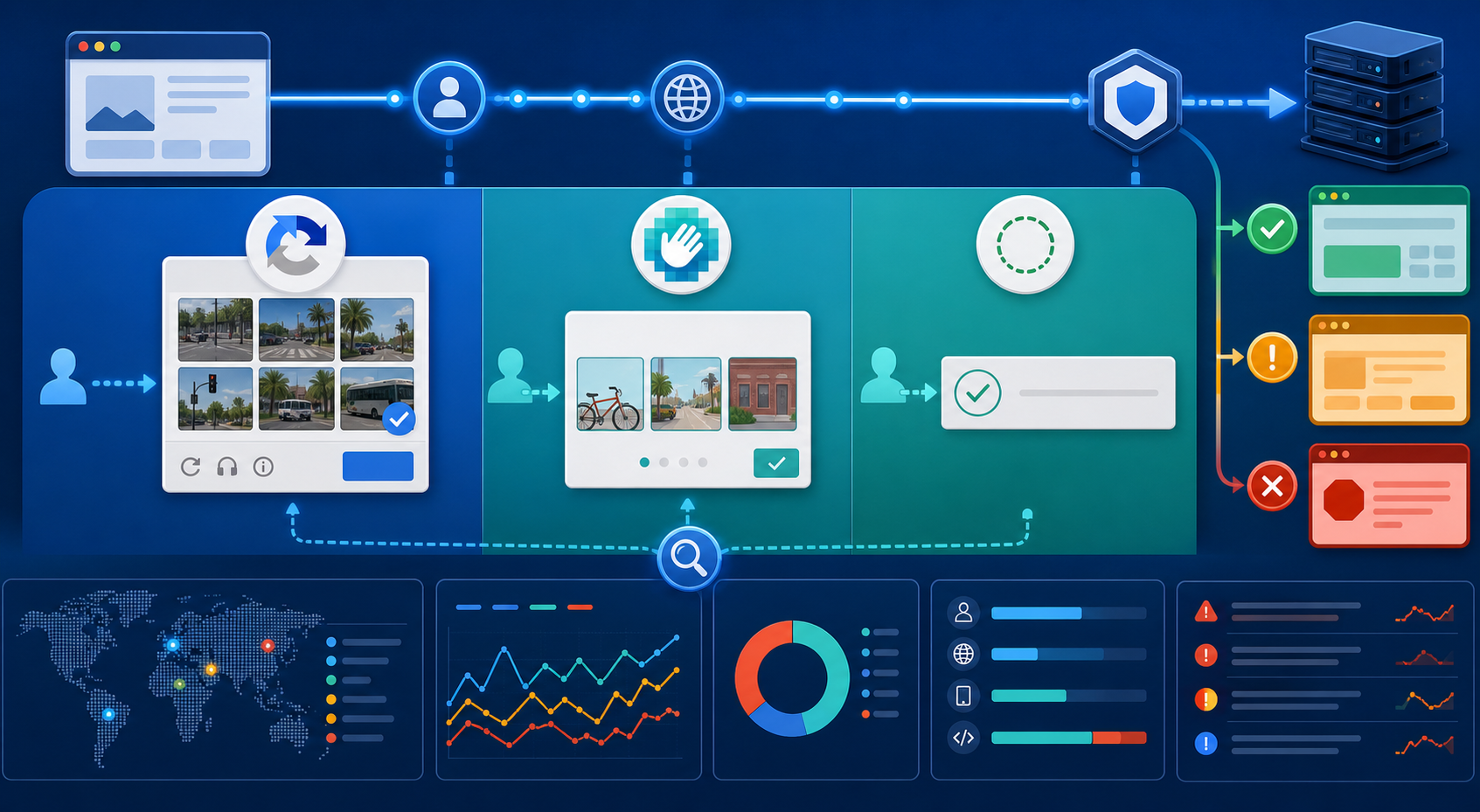
reCAPTCHA vs hCaptcha vs Cloudflare Turnstile: What Scraping Teams Need to Know
If an authorized data-collection workflow suddenly stops at a verification screen, identifying the protection system matters before you change code, browser settings, or proxy infrastructure. reCAPTCHA vs hCaptcha vs Turnstile is not simply a branding comparison. The three systems can expose different browser flows, token models, risk decisions, and failure symptoms.
View Details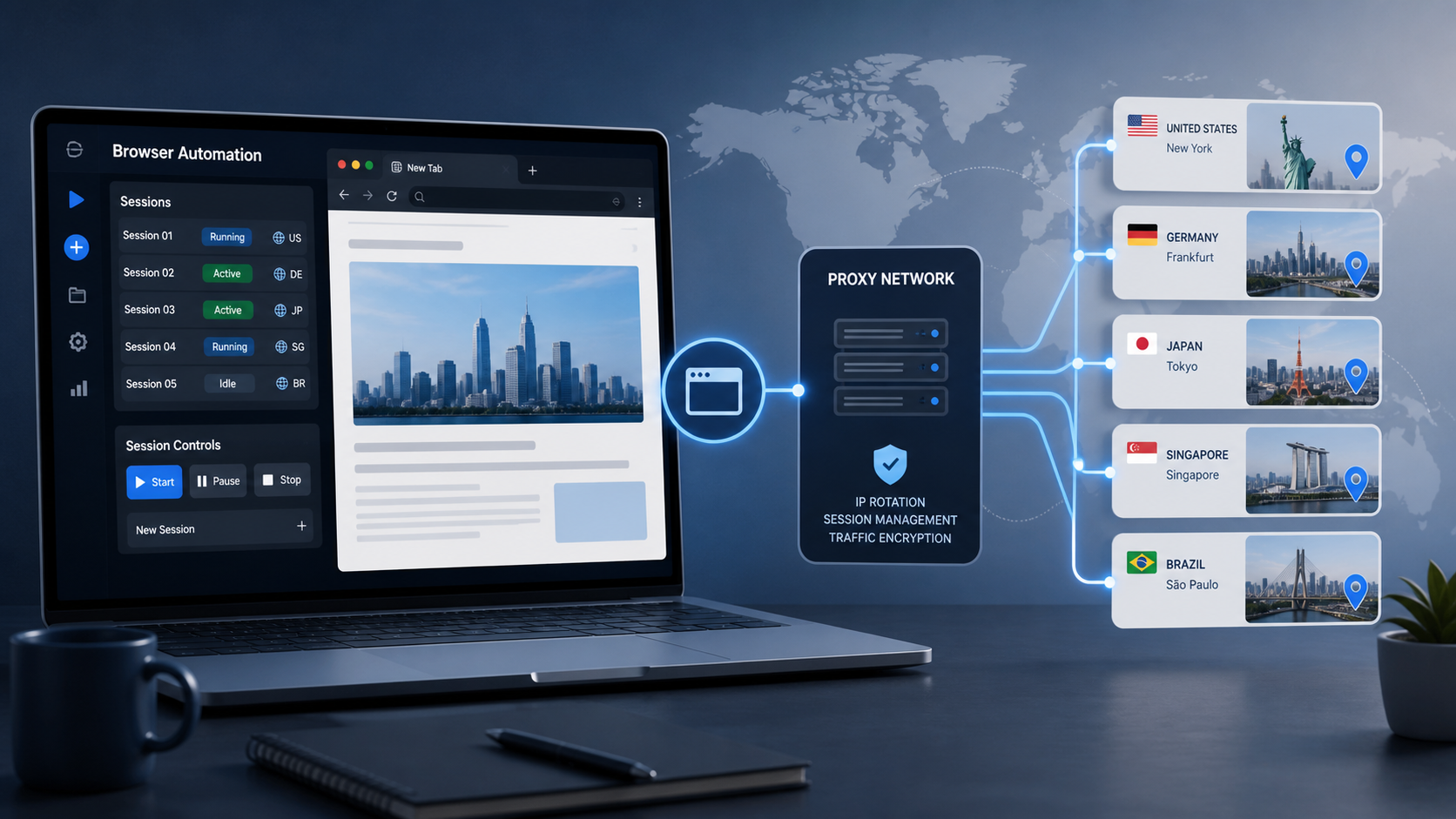
Browser Automation Proxies: IPs, Geo-Targeting, Sessions, and AI Agents
A browser automation proxy belongs to the network layer of Playwright, Selenium, cloud-browser, and AI-agent workflows. It changes how browser traffic is routed and can affect the source IP address, geographic egress, and session continuity seen by a destination site. It does not improve an AI model's reasoning, repair browser logic, or guarantee that a website will accept the session.
View Details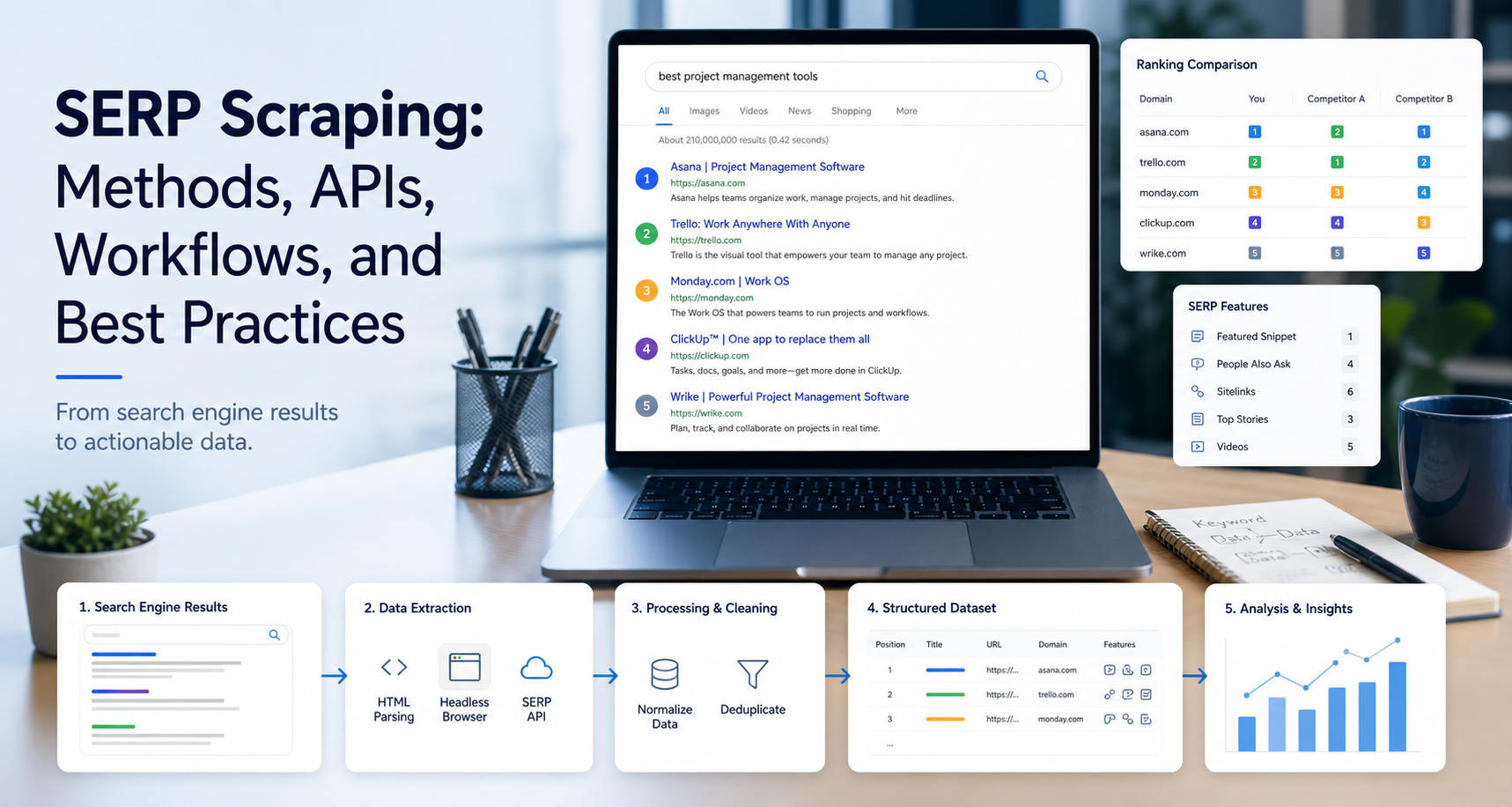
SERP Scraping: Methods, APIs, Workflows, and Best Practices
SERP scraping is the automated collection of information from search engine results pages. A SERP scraper can capture organic rankings, advertisements, featured snippets, People Also Ask questions, local results, shopping listings, images, and other search features, then convert them into structured data for analysis.
View Details