
Agentic vs Generative AI Workflows and When to Use Each
Understanding agentic vs generative ai starts with looking at your desired outcome. Teams building AI tools face a constant choice between generating static content and executing continuous workflows. This guide breaks down exactly where prompt based systems stop and where autonomous action takes over.
What is agentic vs generative AI?
Generative AI creates content from prompts, while agentic AI pursues goals through planning and tool use.
Generative systems act as brilliant but forgetful assistants that return text, code, or images based on a single input. You provide a prompt, and the model generates a response. The system state resets after the interaction.
Agentic systems maintain persistent state and reason across multiple steps to complete an objective. These systems interact with external environments using APIs, databases, or browsers. They evaluate their own progress and adjust their actions if they encounter an error.
Build web agents with LycheeIP
Why is agentic vs generative AI getting more attention now?
Interest is rising because enterprise teams are moving from prompt based assistance to workflow automation and action taking systems.
A recent OECD working paper highlights agentic AI as a fast rising topic because it represents a shift from conceptual chatbots to structural business operations. The Google Cloud 2026 AI agent trends report similarly frames AI agents as an immediate enterprise priority. Engineering teams realize that generating text is only a fraction of what AI can do when connected to actual software workflows.
This transition brings new operational requirements. Moving from answering questions to executing actions means identity management, permissions, and auditability become central concerns. Security teams are updating their threat models to account for autonomous systems taking actions on behalf of human users.
How do you tell whether a task needs generative AI or agentic AI?
You apply the PACE Test to evaluate the output type, autonomy, context, and risk of the task. Comparing agentic vs generative ai requires a practical framework to prevent over-engineering simple problems.
- Primary deliverable: Determine if the end user needs a piece of content or a completed action.
- Autonomy level: Assess whether a human must approve every single step or if the system can run independently.
- Context and state: Check if the task requires long term memory, status checks, and changing conditions.
- Error cost: Evaluate the financial and operational risk if the system makes a mistake.
If the deliverable is mainly content, start with generative AI. If the deliverable is mainly execution, build an agentic system.
Method vs When to Use
| Method | Best For | Tradeoffs |
| Generative AI | Content creation, research synthesis, code drafting | Cannot take action, requires human prompting, lacks persistence |
| Agentic AI | Multi-step workflows, web automation, QA testing | Higher complexity, requires strict security guards, harder to debug |
| Hybrid System | Generating insights within an action loop | Highest infrastructure cost, requires orchestration logic |
Which jobs fit generative AI best?
Generative AI works best when the main deliverable is text, code, images, summaries, or drafts that a human reviews before publishing. When evaluating agentic vs generative ai for creative tasks, the focus should remain on human-in-the-loop workflows.
These models excel at pattern matching and synthesis. Common applications include transforming meeting transcripts into structured notes, creating marketing copy variations, or drafting first-pass documentation. Official guidance from providers consistently places summarization and multimodal creation entirely in the generative category.
Which jobs fit agentic AI best?
Agentic AI operates best when the system must take multiple steps, monitor state, and keep moving toward a goal. The pivot point in any agentic vs generative ai discussion is autonomy.
These workflows span across distinct enterprise roles. Data engineers deploy agents to route tasks, validate pipeline outputs, and retry failed data transformations. Fintech operations teams use agents to investigate transaction alerts by gathering context across multiple databases before preparing a response. Security and fraud ops deploy agents to classify incoming threats and execute low risk containment actions.
Web scraping teams rely heavily on agentic systems to research pages, extract unstructured data, classify outputs, and navigate through captchas or blocks. For web-facing agents to function without interruption, the underlying network infrastructure must remain completely separate from the reasoning layer. Many legacy proxy providers bundle opaque routing layers that conflict with custom agent logic. A developer-first approach separates the network layer from the reasoning layer to give engineers full control.
How LycheeIP fits into agentic web workflows
- Clean IP pools: Dynamic residential IPs go through a strict multi-filtering cooling period of more than six months before use.
- Unrestricted execution: Agents can run with unlimited concurrency on dynamic residential networks without artificial bottlenecks.
- Developer-first simplicity: Usage statistics and account management are accessible in near real-time via a simple API.
- Clear pricing: Teams pay a transparent $5.00/GB for dynamic residential traffic after a 1 GB free test.
How do pre training and fine tuning fit into the comparison?
Pre-training and fine-tuning shape the model's knowledge and tone, but they do not by themselves make a system agentic. People exploring agentic vs generative ai often confuse model training with system design.
Pre-training gives a foundation model its broad general capabilities. Fine tuning adapts that behavior for specific tasks, like teaching a model to output strict JSON formats or adopt a specific brand voice. These training methods improve the quality of the generative output. They do not magically grant the model the ability to plan, use APIs, or remember past interactions.
How can generative AI become part of an agentic system?
A generative model becomes part of an agentic system when developers wrap it with memory, tools, planning logic, and validation checks. The line separating agentic vs generative ai blurs when you add external tools.
Function calling is the bridge between the two. The generative model acts as the reasoning core, deciding which tool to use based on the current context. To build this safely, follow a strict standard operating procedure.
- Define the ultimate goal in clear business terms.
- Break the workflow into reversible, atomic steps.
- Identify exactly which steps require external tools or API access.
- Set strict permission boundaries for every automated action.
- Add escalation checkpoints where a human must review the agent's plan.
- Log every action, API response, and retry path for debugging.
- Measure the completion rate against the manual baseline.
Build web agents with LycheeIP
Why do agentic projects fail and how do you fix them?
Projects fail when teams grant action rights before defining boundaries, review paths, and rollback controls. A major risk in the agentic vs generative ai transition is over-permissioning.
Recent Palo Alto Unit 42 and Okta 2026 materials highlight how compromised tool chains and weak identity controls allow agents to expand risk quickly. When an agent accesses systems with broad permissions, a hallucination can result in deleted databases or unauthorized emails.
Agentic Failures and Troubleshooting
| Common Failure | Likely Cause | Fix |
| Agent acts beyond its safe lane | Too much autonomy granted too early | Start with read-only permissions or a recommendation mode. |
| Broad system compromise | Weak identity controls and shared credentials | Use scoped credentials and narrow tool access specifically for the agent. |
| Bad actions are expensive to unwind | No rollback path or manual review gates | Add approval steps for write actions and ensure state reversibility. |
| Agent loops or repeats mistakes | Poor memory design and context limits | Implement bounded memory and explicit state tracking databases. |
When should you not use agentic AI?
Do not use agentic AI for low-value, single-step, unclear, or high-risk tasks that still need tight human judgment. Sometimes the best answer to the agentic vs generative ai debate is neither.
If a normal prompt plus human review already solves the job well, adding an orchestration layer only adds cost and maintenance overhead. High risk environments involving compliance, health data, or critical infrastructure require human oversight that current agentic systems cannot safely bypass.
Should you choose one or build both?
Most teams should combine both, using generative AI for creation and agentic AI only where action loops justify the added complexity. Most engineering teams reviewing agentic vs generative ai capabilities realize they need a hybrid stack.
Start with generative AI to secure fast operational wins in drafting and synthesis. Once your team understands model behaviors, identify a single workflow where multi step action creates clear value. Pilot a tightly scoped agent with clear approvals, robust logging, and stable infrastructure.
Assumptions and limitations
- Industry terminology still overlaps across vendors, meaning exact definitions for these systems vary.
- Not every software feature marketed as an "agent" possesses meaningful autonomy.
- Security, identity, and audit requirements vary heavily by industry and must dictate your workflow design.
- Model fine-tuning improves accuracy but cannot replace solid workflow orchestration.
Build web agents with LycheeIP
Frequently Asked Questions:
1) Will agentic AI eventually replace traditional software applications?
Not entirely. Current guidance points toward agentic systems augmenting or orchestrating software rather than replacing every application category. Traditional predictive AI remains highly relevant for structured classification and forecasting jobs.
2) Which is best between generative AI and traditional AI?
Neither is universally better. Traditional predictive AI excels at structured prediction and numerical classification. Generative AI is better for creating or transforming unstructured content. Modern business workflows frequently combine both approaches.
3) What are the differences between generative AI and agentic AI?
In agentic vs generative ai architectures, the key difference is the outcome type. Generative systems create text, code, or images from static prompts. Agentic systems plan, maintain state, and take actions through tools to reach an objective.
4) Can generative AI become agentic?
A generative model can become part of an agentic system, but it requires engineering. Developers must layer memory, planning modules, tool access, and execution logic on top of the foundation model.
5) Is ChatGPT generative AI or agentic AI?
In its basic web interface form, it operates primarily as generative AI because it responds to prompts with content. It exhibits agentic behavior only when embedded in a broader system with external tools, goals, and controlled action loops.
6) Do agentic systems need fine-tuning?
Not always. Many highly effective agentic workflows rely on strong pre-trained models combined with excellent prompt engineering and tool design. Fine-tuning becomes necessary when a task requires highly specialized domain behavior.
7) What is the difference between AI agents and agentic AI?
AI agents are the individual components that reason and execute tasks. Agentic AI refers to the broader, coordinated system that uses one or more of these agents, alongside tools and orchestration logic, to achieve larger operational goals.
8) When should security or fraud teams avoid full autonomy?
They should avoid full autonomy when actions are high impact, hard to reverse, or poorly permissioned. Without strict review gates and scoped access, over-privileged autonomous systems can execute damaging actions at scale.

Recommended Articles
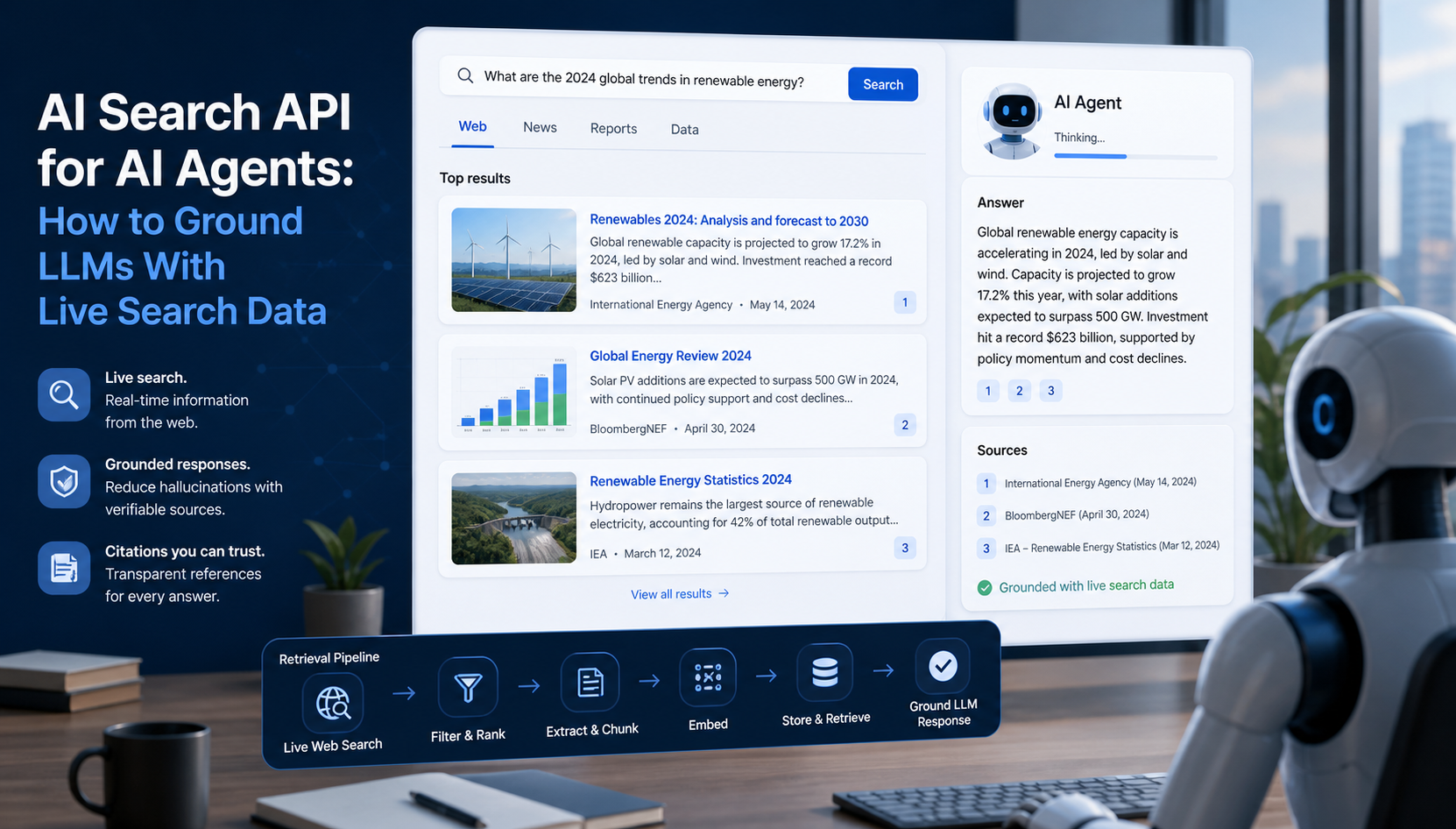
AI Search API for AI Agents: How to Ground LLMs With Live Search Data
An AI search API gives an application or agent programmatic access to current search results. Its most useful role is discovery: the agent can find candidate sources, identify fresh information, and decide what to retrieve next instead of relying only on model memory.
View Details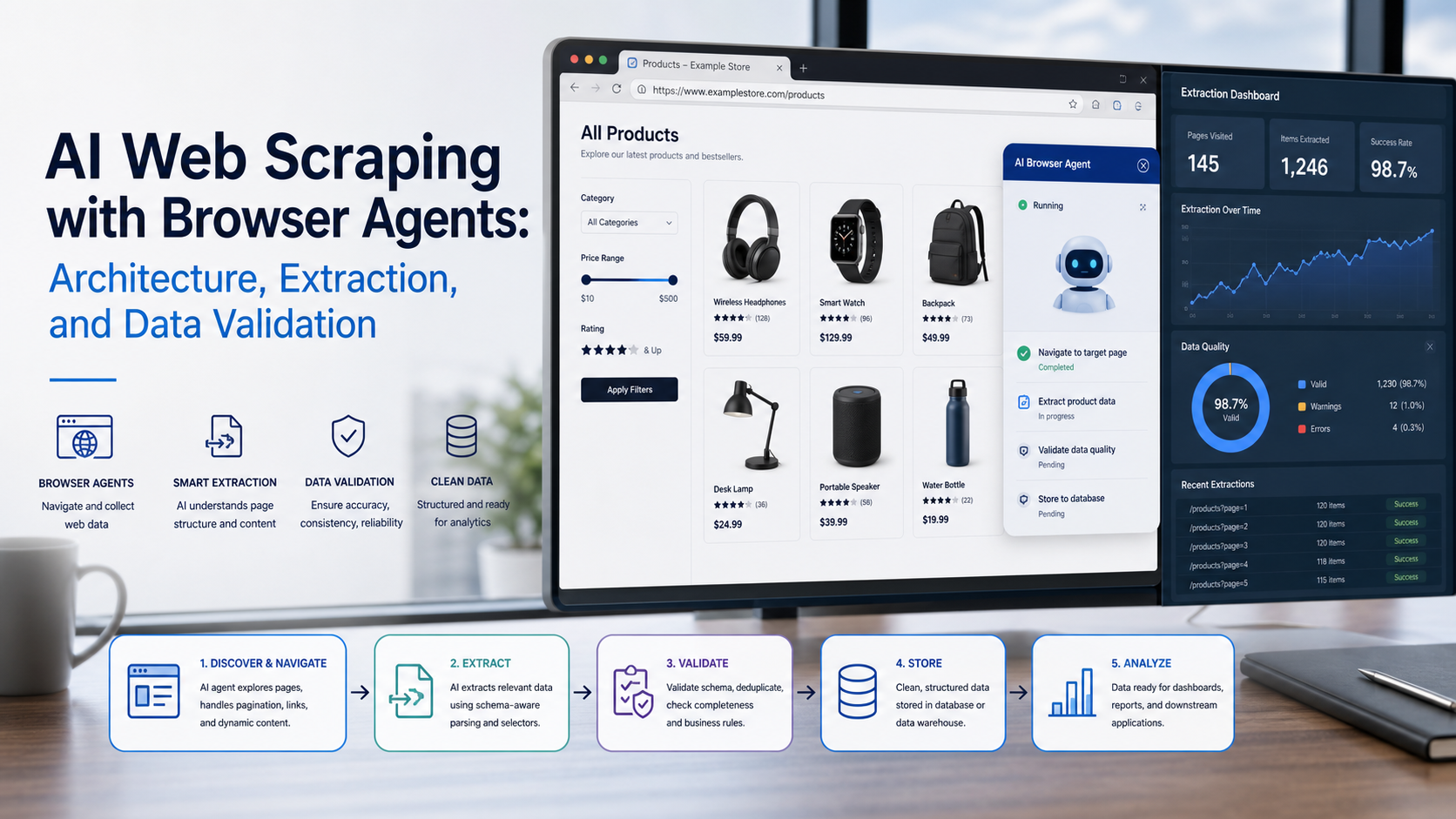
AI Web Scraping with Browser Agents: Architecture, Extraction, and Data Validation
AI web scraping uses AI to help discover, navigate, interpret, or extract information from websites. Browser agents are one implementation option when page interaction, rendering, or layout variation makes a simple scraper too brittle, but the agent should not become the entire data pipeline.
View Details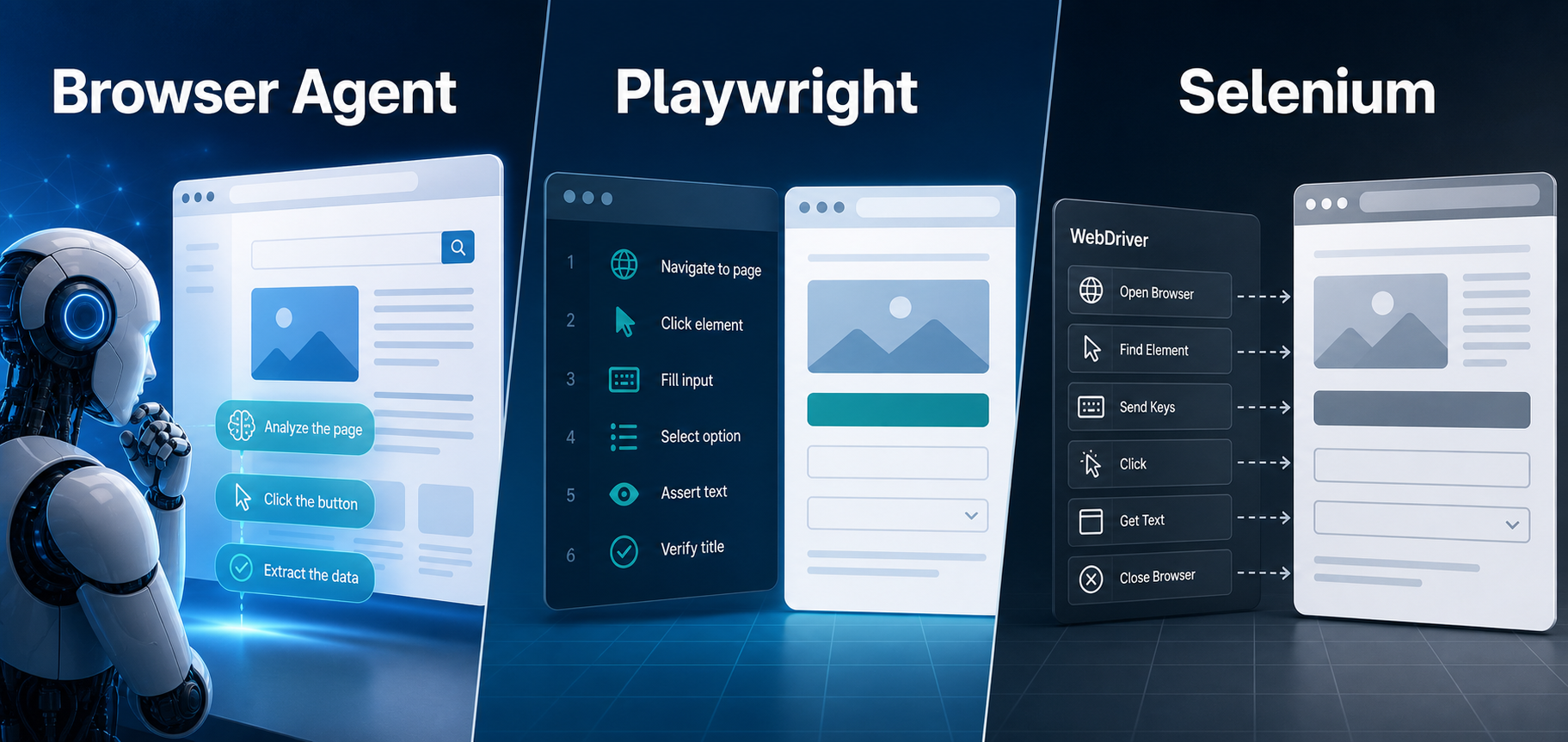
AI Browser Automation: Browser Agents vs Playwright vs Selenium
A browser agent interprets a goal and decides what browser action to take next. Playwright and Selenium can execute explicit, testable browser logic defined by developers. In 2026, however, Playwright also provides official MCP and agent-oriented workflows, so Playwright is no longer just the deterministic alternative to agentic automation. It can also serve as the browser-control layer inside an agent system.
View Details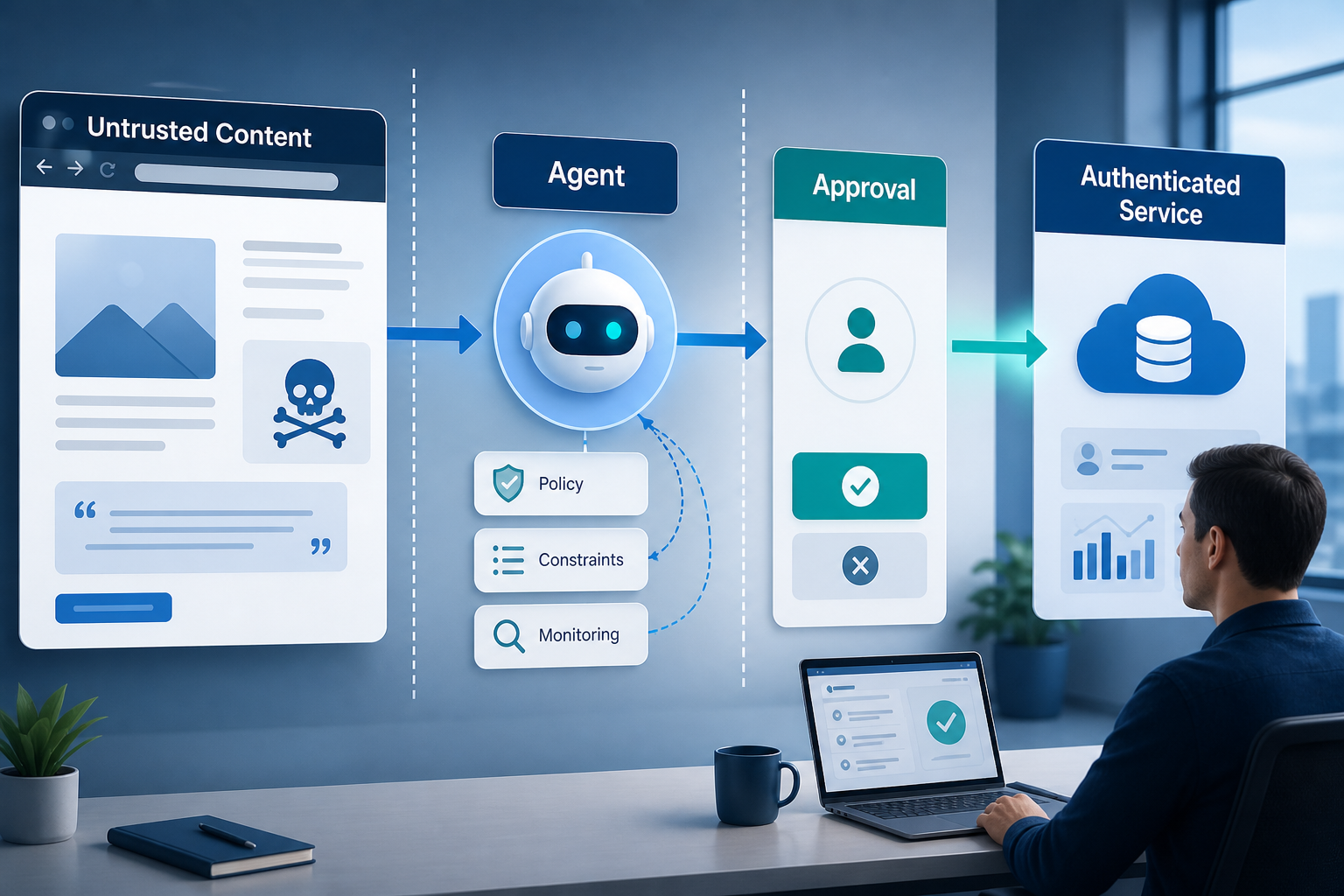
Agentic Browser Security: Prompt Injection, Permissions, and Safe Deployment
That combination creates risks that are different from ordinary browsing and traditional automation. The most important is indirect prompt injection, where hostile instructions hidden in web content attempt to redirect the agent away from the user's goal. Google describes indirect prompt injection as a primary new threat for agentic browsing and has introduced layered defenses that include origin constraints, independent action checks, threat detection, and user confirmation for sensitive actions. Google's Chrome security architecture is a useful reference for how browser-agent defenses are evolving.
View Details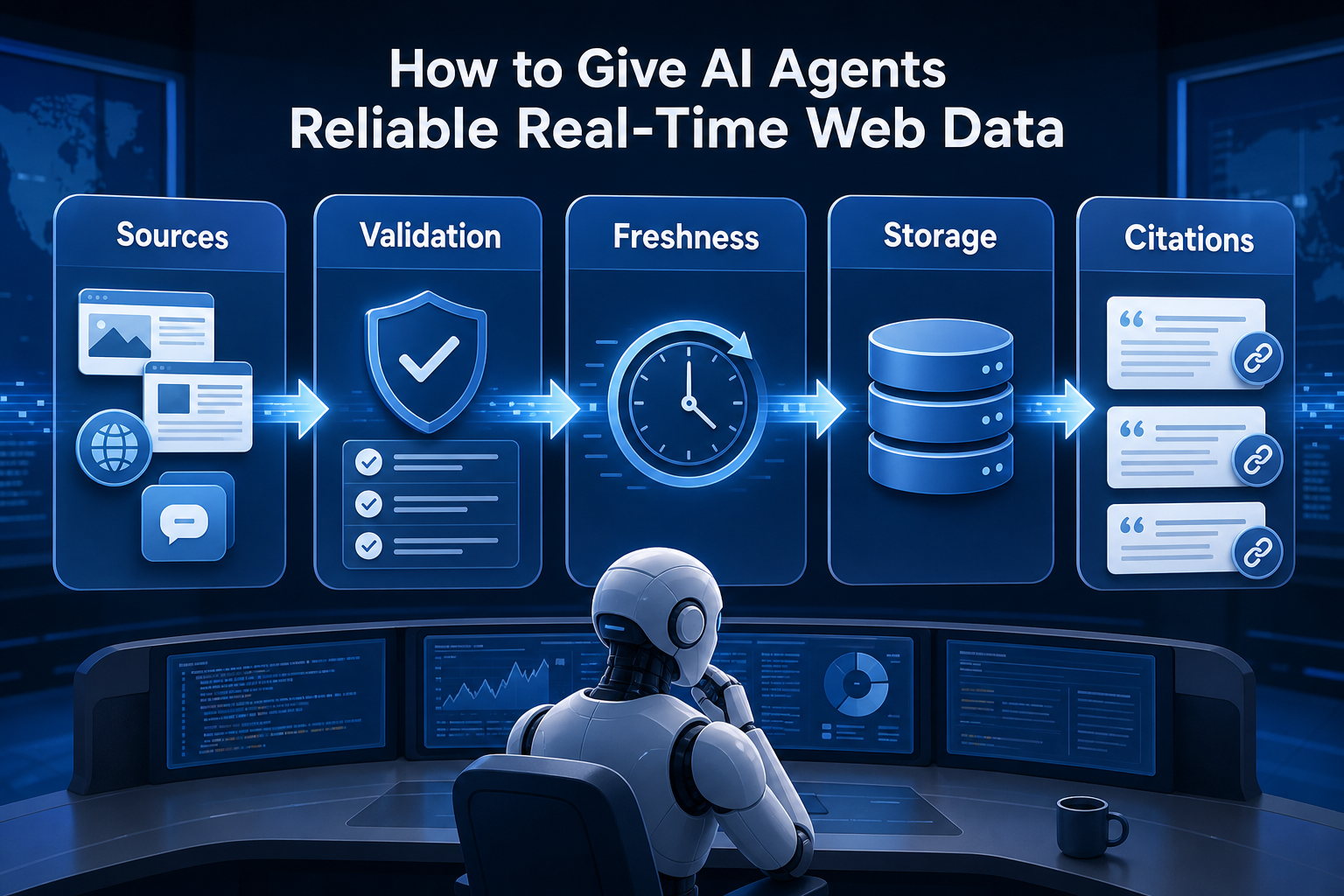
How to Give AI Agents Reliable Real-Time Web Data
A production-ready solution therefore needs more than a web scraper. It needs a web data layer that connects acquisition, validation, storage, retrieval, security, and observability. This guide explains how to design that layer.
View Details