
5,400 Data Centers: Community Impact Breakdown
5,400 data centers across the US. Your town might be next.
The explosive growth of data center infrastructure is creating unprecedented strain on local utilities, water systems, and electrical grids nationwide. What began as a gradual expansion has accelerated into a development wave that's catching communities off-guard, and leaving local governments scrambling to manage the consequences.
For urban planners, local officials, and data engineering teams, understanding this physical expansion isn't just an academic exercise; it's essential preparation for the logistical, environmental, and infrastructure challenges materializing right now.
Scale Smarter with LycheeIP
The Scale of Expansion
The United States currently hosts approximately 5,400 data centers, representing roughly one-third of the global total. This high concentration is not accidental. It directly reflects the massive digital infrastructure demands of American tech companies, cloud service providers, and artificial intelligence applications requiring unprecedented computational horsepower.
Between 2019 and 2024, the US data center market expanded at a compound annual growth rate exceeding 10%, with projections indicating this pace will only accelerate. Industry analysts forecast an additional 450 to 500 major facilities by 2027.
Geographic concentration reveals highly predictable patterns:
- Northern Virginia: Loudoun County alone houses over 300 data centers. Dubbed "Data Center Alley," this single county consumes more power than many mid-sized American cities.
- Emerging Hubs: Major clusters have expanded in Phoenix, Dallas-Fort Worth, Silicon Valley, and Chicago.
- Secondary Markets: Developers are increasingly targeting smaller markets where land costs remain favorable and local tax incentives flow freely.
The players driving this physical expansion include hyperscalers like Amazon Web Services (AWS), Microsoft Azure, and Google Cloud, joined by Meta, Oracle, and specialized cryptocurrency mining operations. Each facility represents a physical footprint ranging from 100,000 to over 1 million square feet, generating massive heat that requires equally massive cooling systems.
Three Primary Growth Drivers
- Artificial Intelligence: Training large language models (LLMs) and running AI inference requires computational resources orders of magnitude beyond traditional applications. A single AI query can consume 10 times more electricity than a standard search engine query.
- Cloud Migration: The continuing transition from localized, on-premise IT infrastructure to distributed cloud services means exponentially growing demand for server farms.
- Cryptocurrency and Blockchain: Despite market volatility, blockchain validation and cryptocurrency mining continue to drive demand for specialized facilities, particularly in regions offering subsidized or lower-cost electricity.
For local officials and infrastructure engineers, the takeaway is clear: data center proposals are accelerating, and the resource demands of each individual facility are scaling up.
When the Grid Can't Handle It
Abstract statistics become urgent local issues when examining what a single data center means for municipal infrastructure.
A standard medium-sized facility consumes 10 to 50 megawatts (MW) of power continuously—equivalent to the draw of a town of 10,000 to 50,000 residents. Larger hyperscale facilities can demand 100 to 150 MW or more, rivaling the consumption of entire small cities.
The Base Load Challenge
This is not fluctuating "peak demand" that utilities can easily load-balance. According to resources from the International Energy Agency (IEA), data centers require constant, 24/7 power consumption. This creates rigid base load challenges that legacy utilities were simply not engineered to handle.
Real-World Infrastructure Strain
The theoretical strain on grids and aquifers is already causing real-world bottlenecks across multiple global jurisdictions.
- Loudoun County, Virginia: Data centers now consume approximately 70% of the county's total electrical load. This is a complete inversion of the traditional residential-commercial balance. Dominion Energy has had to invest over $4 billion in transmission infrastructure to service this demand.
- Phoenix, Arizona: Data centers use water-intensive evaporative cooling systems to manage server heat. A single large facility can consume 1 to 5 million gallons of water daily. In drought-prone Arizona, this creates direct conflicts with communities facing groundwater depletion. Unlike residential use, cooling water largely evaporates, resulting in a net loss from local aquifers.
- Dublin, Ireland & Singapore: Both jurisdictions implemented strict moratoriums on new data center connections (in 2021 and 2019, respectively) after facilities began consuming massive proportions of the national electricity grid, threatening both stability and climate commitments.
These are not isolated edge cases. They are preview cases of what standard American communities face as digital infrastructure concentration reaches critical mass locally.
Scale Smarter with LycheeIP
Hidden Costs Passed to Residents
Utility infrastructure upgrades required to service data centers are rarely charged exclusively to the facilities themselves. Instead, costs are typically socialized across all ratepayers through standard utility commission processes.
This means everyday residential electric bills subsidize the transmission line construction, substation upgrades, and grid reinforcements that primarily benefit commercial operators. In Prince William County, Virginia, residents saw proposed rate increases of 8-12% over three years, largely to fund infrastructure serving planned tech developments.
Environmental externalities compound these direct costs:
- Carbon Emissions: A 50 MW facility running on a typical US grid mix generates approximately 200,000 to 300,000 tons of CO2 annually.
- Quality of Life: Noise pollution from massive HVAC systems, traffic from ongoing maintenance, and light pollution from 24/7 security operations create persistent impacts for neighboring properties.
Organizing Against Unwanted Development
For communities facing unwanted data center proposals, understanding strategic leverage points makes the difference between steamrolled development and meaningful local control over infrastructure.
Early Warning Recognition Framework
Data center developers typically approach communities through recognizable, yet quiet, channels. Local organizers and planners should monitor for:
- Rezoning applications seeking industrial or technology park designations in previously agricultural or light commercial zones.
- Special use permit requests for facilities citing unusual power demands or 24/7 operational requirements.
- Utility service requests that trigger long-term infrastructure planning processes.
- Tax incentive negotiations with economic development authorities, which are often conducted under strict confidentiality provisions.
Monitoring planning commission agendas and utility filings provides early detection before projects reach advanced planning stages.
Effective Coalition Building
Successful organizing requires broader coalitions than typical neighborhood disputes:
- Environmental Groups: Bring vital technical expertise regarding water usage, carbon emissions, and local climate impact.
- Neighboring Property Owners: Provide the direct legal standing and immediate impact narratives that planning commissions are required to consider.
- Local Businesses: Add economic credibility by highlighting how utility cost increases or rolling brownouts will negatively impact their operations.
- Agricultural Interests: Can highlight direct resource competition (especially water) and land-use conflicts.
Technical Arguments That Work
Emotional opposition rarely succeeds against well-funded development proposals backed by promises of local tax revenue. However, technical objections grounded in infrastructure capacity create durable, actionable obstacles:
- Grid Capacity Studies: Independent assessments can document existing strain and question whether proposed utility upgrades will actually protect reliability for existing customers.
- Water Availability Analyses: Crucial in drought-prone regions, these force regulatory examination of long-term aquifer sustainability.
- Environmental Impact Reviews: Demanding rigorous assessments through state-level equivalents of the National Environmental Policy Act (NEPA) creates procedural requirements that increase public transparency and slow rushed timelines.
- Traffic & Construction Studies: Reveal the hidden, secondary infrastructure upgrade costs required beyond the facility's immediate footprint.
Scale Smarter with LycheeIP
Successful Resistance Cases
Communities have successfully blocked or substantially modified data center proposals by leveraging technical data and sustained organizing:
- Rapidan, Virginia (2022): Residents blocked a proposed cryptocurrency mining facility by convincing the county planning commission to deny special use permits based on documented noise impacts and grid strain concerns.
- Tracy, California (2021): Community opposition led to the rejection of a large-scale data center after organizing highlighted severe water consumption conflicts with local agricultural needs during a drought.
- Mesa, Arizona (2023): Residents secured substantial design modifications to Google data center plans, successfully requiring advanced water recycling systems and renewable energy commitments as strict conditions of approval.
Negotiating Community Benefit Agreements
When blocking development proves unfeasible or undesirable, Community Benefit Agreements (CBAs) can secure concrete commitments that mitigate local impacts. Effective CBAs typically include:
- Renewable Energy Mandates: Requirements exceeding standard state mandates, often including on-site solar generation.
- Water Recycling Commitments: Closed-loop cooling systems that minimize net freshwater consumption.
- Economic Givebacks: Local hiring requirements and funded job training partnerships.
- Ratepayer Protections: Infrastructure cost commitments specifically structured to prevent utility rate increases for existing residents.
- Transparency Audits: Ongoing environmental monitoring and reporting on actual resource consumption.
CBAs are most effective when negotiated before final approvals are granted, while developers still face meaningful uncertainty regarding their project timelines.
Policy Solutions for Proactive Protection
The most reliable community protection stems from proactive local policy rather than reactive opposition to individual, late-stage projects. Key municipal frameworks include:
- Targeted Zoning Restrictions: Limiting data center development to specific heavy-industrial zones, safely distanced from residential areas and critical water resources.
- Strategic Moratoriums: Providing municipalities the necessary time for comprehensive infrastructure planning before approving any additional facilities.
- Impact Fee Structures: Financial frameworks designed to capture the true, long-term infrastructure costs and strictly prevent subsidization by existing utility ratepayers.
- Grid Capacity Triggers: Automated zoning policies that pause new development approvals whenever local utility loading exceeds predefined sustainability thresholds.
LycheeIP (Developer-First Proxy Infrastructure)
LycheeIP is a developer-first proxy and data infrastructure provider designed to facilitate secure, distributed network routing.
As communities increasingly push back against the physical footprint of localized data centers, data teams and technical operators are rethinking how they deploy their architecture. When conducting legitimate operations—such as software quality assurance, regional geo-testing, or authorized public-data collection—teams often turn to a core proxy infrastructure provider rather than building out resource-heavy physical servers in constrained municipalities. By leveraging smart, distributed dynamic IP routing alongside highly reliable datacenter proxy networks, developers can route their network requests efficiently without exacerbating local grid strain. Exploring the comprehensive LycheeIP platform for optimized static IP setups empowers growth and data teams to maintain reliable, compliant connectivity while adhering to modern infrastructure best practices.
The Path Forward
Data center expansion won't reverse. The digital infrastructure demands driving current growth will only intensify as artificial intelligence applications proliferate and global cloud migration continues. For technical operators, local officials, and community organizers, the question isn't whether to engage with data center proposals, but how to do so strategically.
Communities that wait until ground is broken have already lost their negotiating leverage. Those that implement proactive policies, build monitoring capacity into their planning processes, and develop the technical expertise to evaluate complex infrastructure claims will maintain agency over their local development trajectories.
The 5,400 data centers operating today represent just the baseline. The next wave is already in the planning stages. Whether that expansion happens on terms that protect community interests or simply serves utility profits depends entirely on the sophistication of local frameworks.
Your town may indeed be next. The question is whether you'll be ready.
Scale Smarter with LycheeIP
Frequently Asked Questions
Q: Why are so many data centers being built right now?
A: The surge is driven by three primary factors: the explosive growth of artificial intelligence applications requiring massive computational power, continuing cloud migration by businesses abandoning on-premise IT infrastructure, and cryptocurrency operations. AI workloads are particularly demanding—a single AI query can consume 10 times more electricity than a traditional search, creating unprecedented infrastructure demands.
Q: How much power does a typical data center actually use?
A: A medium-sized data center consumes 10 to 50 megawatts continuously, which is equivalent to the needs of a town of 10,000 to 50,000 residents. Hyperscale facilities operated by companies like AWS, Microsoft, and Google can demand 100 to 150 megawatts or more. Because this is constant 24/7 consumption rather than fluctuating peak demand, it creates severe base load challenges for local electrical grids.
Q: Can communities legally stop data center development?
A: Yes, through several mechanisms. Municipalities can deny rezoning applications, reject special use permits based on infrastructure concerns, implement zoning restrictions, or enact moratoriums for comprehensive planning. Successful opposition typically requires technical documentation of grid capacity limitations, water availability concerns, or environmental impacts rather than simple localized complaints.
Q: What are Community Benefit Agreements and how do they work?
A: Community Benefit Agreements (CBAs) are legally binding, negotiated commitments between developers and communities. They secure concrete mitigation measures in exchange for project approval. Common elements include renewable energy requirements, closed-loop water recycling commitments, local hiring quotas, and infrastructure cost guarantees that prevent utility rate increases for existing customers.
Q: How can I find out if a data center is planned for my area?
A: Monitor local planning commission and zoning board agendas for industrial rezoning applications or special use permits. Watch utility commission filings for unusual service requests, and track economic development authority meetings where tax incentives are negotiated. Many data center projects initially appear under generic LLC names or confidential project codes. Unusual requests for industrial zoning in agricultural areas citing high power demands are strong indicators.

Recommended Articles
Best Real Estate Scrapers in 2026
Best Real Estate Scrapers in 2026
View Details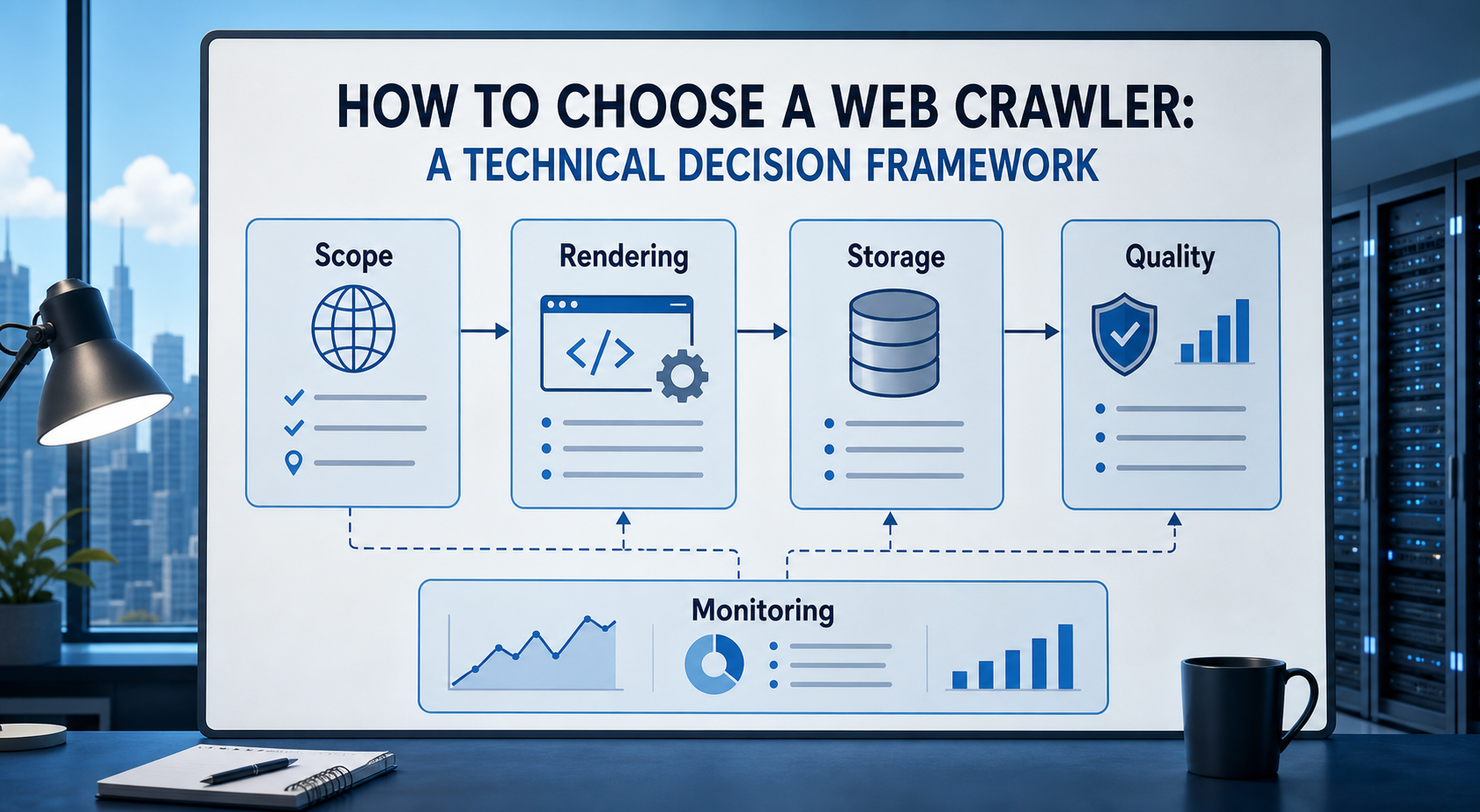
How to Choose a Web Crawler: A Technical Decision Framework
The wrong way to choose a web crawler is to begin with a list of products. The right starting point is the system you need to build. Before comparing tools, define:
View Details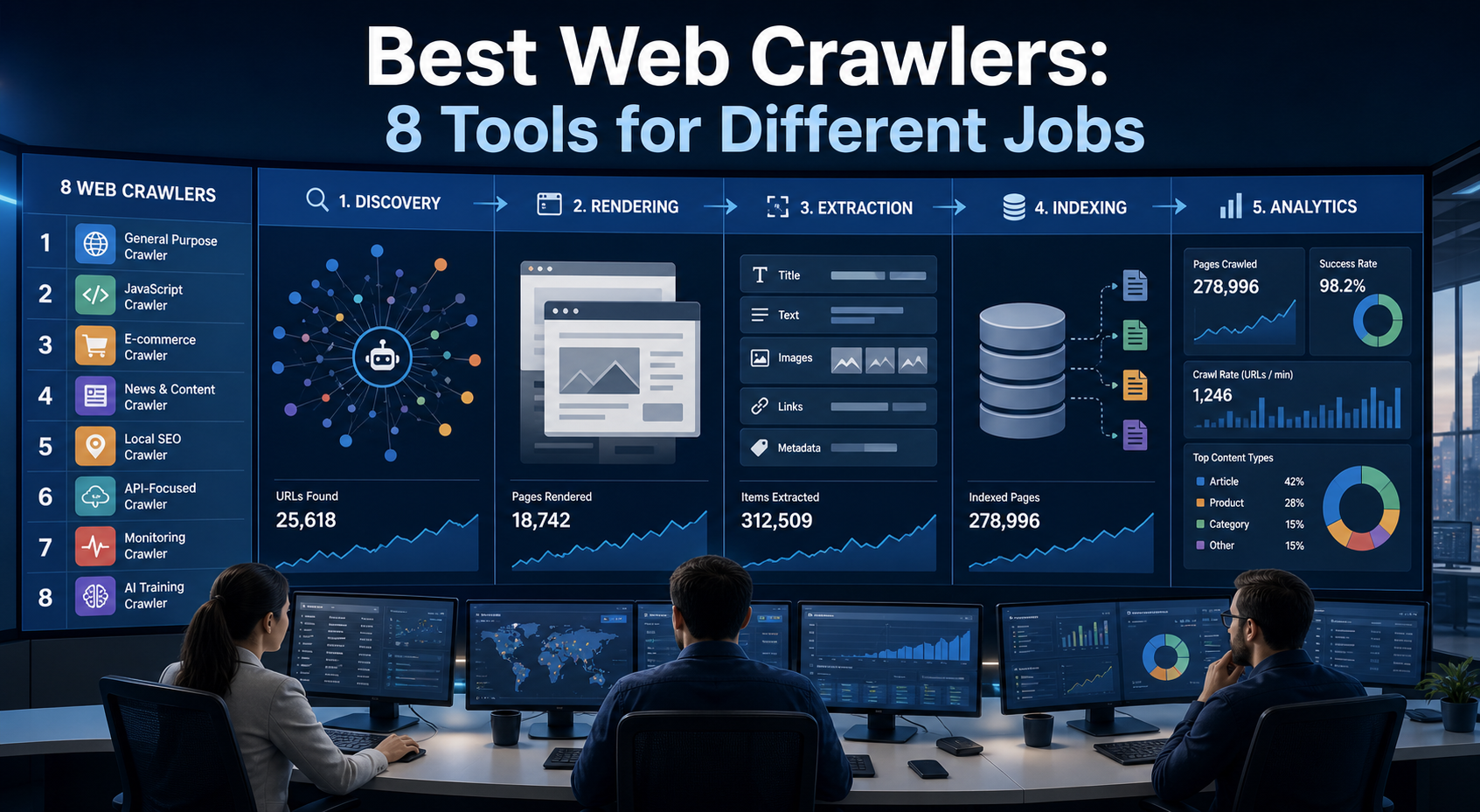
Best Web Crawlers: 8 Tools for Different Jobs
There is no single best web crawler for every project. A technical SEO audit, an AI knowledge pipeline, an internet archive, and a distributed search index may all involve crawling URLs, but they require different capabilities. The most useful way to compare web crawler tools is therefore to ask what job each one was designed to perform. This guide evaluates eight strong options across:
View Details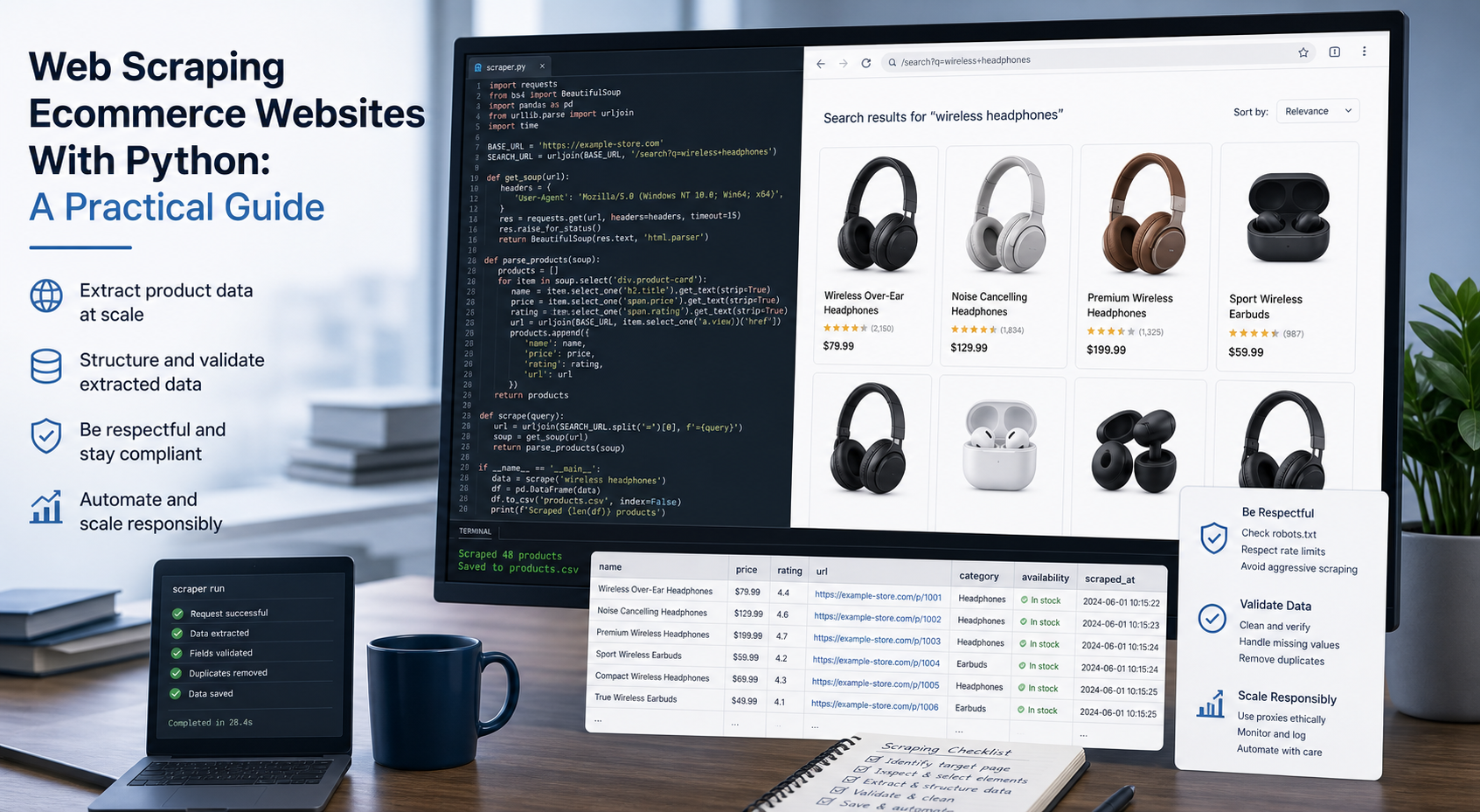
Web Scraping Ecommerce Websites With Python: A Practical Guide
Recommended meta title: Web Scraping Ecommerce Websites With Python: Guide Recommended meta description: Learn how to scrape ecommerce websites with Python using Requests, Beautiful Soup, Playwright, and Scrapy, with validation and scaling guidance. URL slug: /web-scraping-ecommerce-websites-python/
View Details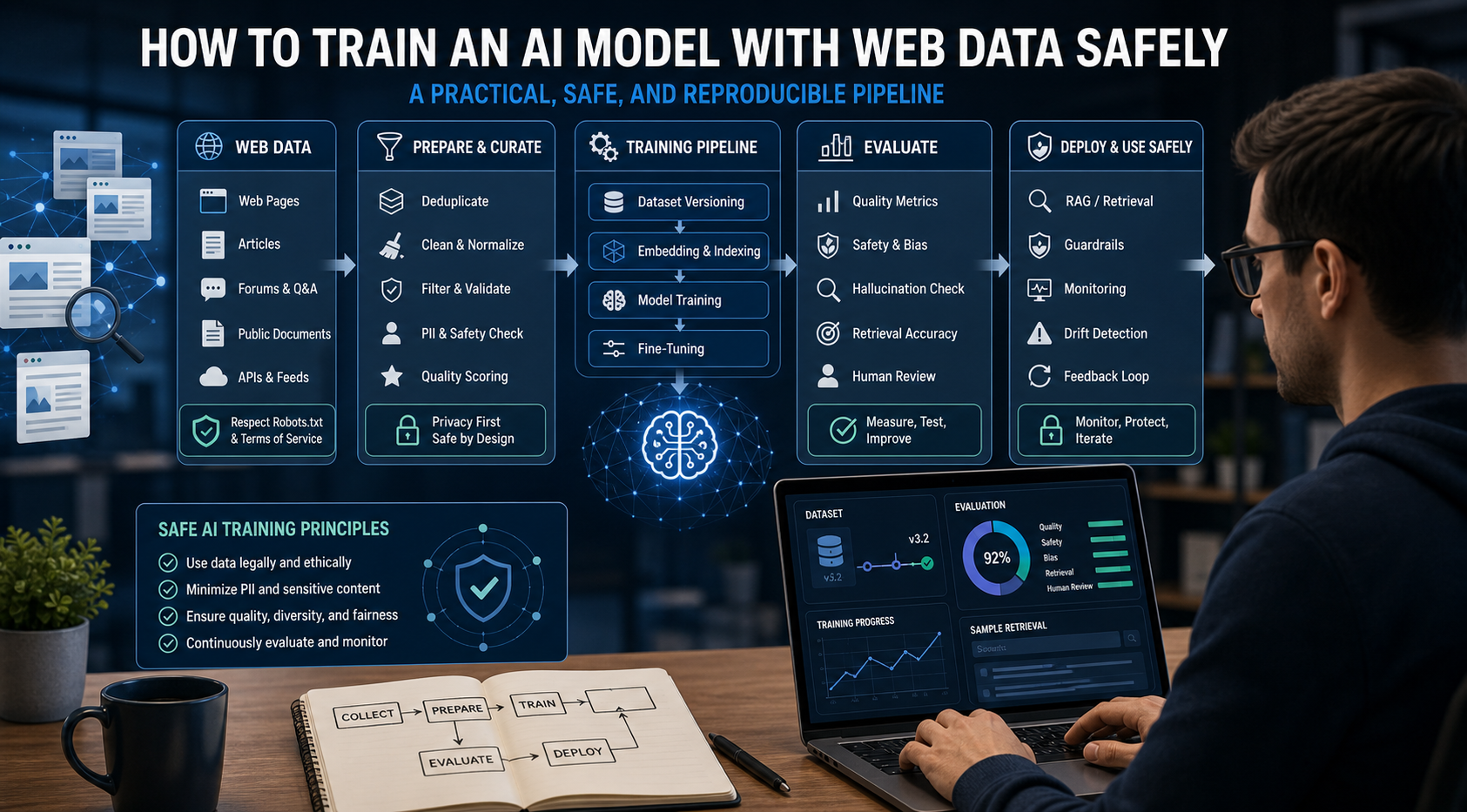
How to Train an AI Model With Web Data Safely
To train an AI model with web data, start by deciding whether you actually need training. Then collect representative sources, preserve provenance, remove duplicates and low-quality content, create leakage-resistant splits, build a baseline, fine-tune or train the appropriate model, and evaluate on real held-out examples before deployment.
View Details