
Geopolitical Risk: Cloud Infrastructure Under Fire
Cloud services just became collateral damage in Middle East conflict.
For decades, enterprise IT leaders operated under the assumption that civilian infrastructure, particularly digital infrastructure, would remain insulated from military conflicts. That assumption shattered when reports emerged of an Amazon Web Services (AWS) data center facility in the United Arab Emirates experiencing disruptions following regional military escalation.
While the full extent of the incident remains under investigation, the implications are unmistakable: we've entered a new era of warfare where technology infrastructure has become a strategic target, and the ripple effects extend far beyond conflict zones.
This isn't theoretical risk management anymore. Companies running critical workloads on cloud infrastructure must now factor geopolitical volatility into their architecture decisions with the same rigor they apply to disaster recovery and cybersecurity planning. The question is no longer if geopolitical events will impact cloud services, but when, and whether your organization is prepared.
Key Takeaways for IT Leaders:
- Geopolitical targeting introduces risks that bypass traditional Availability Zone (AZ) redundancies.
- Data sovereignty laws can unintentionally trap workloads in active conflict zones.
- "Multi-region" no longer just means geographic distance; it must mean geopolitical diversity.
Build Resilient Routing with LycheeIP
When the Cloud Becomes a Battlefield
The UAE Incident: What We Know
The AWS facility disruption in the UAE occurred against the backdrop of heightened regional tensions. While Amazon has been characteristically tight-lipped about operational security details, multiple enterprise customers reported degraded performance and intermittent connectivity issues to resources hosted in the AWS Middle East (UAE) Region (me-central-1) during a critical 72-hour window.
Unlike typical outages caused by hardware failure, cooling system crashes, or software bugs, this incident displayed characteristics consistent with external, targeted interference.
- Unusual Telemetry: Network telemetry data reviewed by independent security researchers showed erratic traffic patterns.
- Fiber Disruptions: There appeared to be deliberate disruption of vital physical fiber-optic pathways leading to the facility.
- Failover Friction: Several enterprise customers reported that failover mechanisms to other regions were slower than expected, suggesting that the incident affected not just the primary data center but the broader regional routing infrastructure as well.
Why Cloud Infrastructure Matters in Modern Conflict
Historically, military strategists targeted physical infrastructure: bridges, power plants, and communication towers. But modern economies run on data, and that data lives in massive, geographically concentrated facilities that are surprisingly vulnerable despite their technological sophistication. For official guidance on geopolitical cyber risks, organizations often refer to national cybersecurity defense initiatives, highlighting how heavily monitored these assets have become.
Cloud data centers represent high-value targets for three distinct reasons:
- Economic disruption potential: A single AWS region hosts thousands of customers. Degrading or destroying one facility can simultaneously impact banks, retailers, government services, and logistics companies—creating cascading economic damage that extends far beyond the localized conflict zone.
- Intelligence gathering opportunities: Nation-state actors understand that cloud facilities process enormous volumes of sensitive data. Even temporary access or disruption can create intelligence opportunities or simply sow chaos and distrust in digital services.
- Asymmetric warfare advantage: Compared to traditional military targets, cloud infrastructure offers attackers significant leverage. A relatively small operation—whether kinetic, cyber, or hybrid—can generate disproportionate impact when directed at concentrated infrastructure nodes.
The Immediate Impact
Enterprises running workloads in the affected UAE region experienced varying degrees of disruption across their technology stacks:
- Application Layer: E-commerce platforms saw elevated 503 error rates and timeout failures during peak shopping periods.
- Database/Transaction Layer: Financial services companies reported severe transaction processing delays, leading to stalled global clearings.
- Compliance Layer: Companies relying on region-specific compliance requirements (data sovereignty regulations that mandate UAE residency for customer data) faced acute challenges. They couldn't simply migrate workloads to distant regions without violating local laws.
Perhaps most concerning: several organizations discovered that their multi-region architectures weren't as resilient as their architecture diagrams suggested. Automated failover mechanisms struggled when BGP network pathways between regions degraded simultaneously. Disaster recovery runbooks that looked robust in tabletop exercises revealed fatal gaps when tested against a geopolitical crisis scenario they hadn't anticipated.
The Hidden Fragilities in Cloud Architecture
Regional Concentration: The Double-Edged Sword
Cloud providers have built their business models on regional concentration, massive facilities that achieve economies of scale and performance advantages through proximity. AWS, Microsoft Azure, and Google Cloud Platform have all invested billions in regional data centers designed to serve specific geographic markets while complying with local data sovereignty requirements.
This architecture works brilliantly under normal conditions. It falls apart when normal conditions disappear.
The Middle East, in particular, presents a complex risk landscape. The region hosts critical cloud infrastructure serving Europe, Asia, and Africa—positioning facilities like the UAE data centers as crucial transit points for global network traffic. But the region's persistent geopolitical volatility means these facilities operate in a threat environment vastly different from those in Singapore, Frankfurt, or Virginia.
Data Sovereignty: The Compliance Trap
Many enterprises discovered during the UAE incident that regulatory compliance requirements had created inadvertent single points of failure.
Financial regulations in several Gulf Cooperation Council (GCC) countries require that customer financial data physically reside within national borders. Healthcare providers operating in the region face similar strict constraints under local privacy laws.
These sovereignty requirements, designed to protect citizens and ensure regulatory oversight, become liabilities during geopolitical crises. Organizations that carefully architected their infrastructure to comply with data residency rules found themselves unable to rapidly shift workloads to safer regions without violating regulations. The choice became agonizing: maintain compliance and accept critical service degradation, or migrate data and face potential regulatory penalties.
The Cascade Effect: When Regions Fall Like Dominoes
Cloud architecture best practices emphasize multi-region deployments and automated failover. But the UAE incident revealed a troubling reality: geopolitical conflicts don't respect regional boundaries on a network topology map.
When the UAE facility experienced disruption, several organizations attempted to failover to their designated secondary regions—often AWS Middle East (Bahrain) or EU (Frankfurt). However, the same regional tensions affecting the UAE also degraded under-sea network connectivity to Bahrain. Meanwhile, failover to Frankfurt revealed severe latency issues that made certain real-time applications unusable for end-users still situated in the Gulf region.
The lesson: Geographic redundancy doesn't automatically translate to geopolitical resilience. A military conflict can simultaneously impact multiple regions that appear separate on a cloud provider's infrastructure map but exist within the same operational theater.
The Trust Equation Shifts
Beyond immediate technical challenges, the incident forced enterprise leaders to reconsider fundamental assumptions about cloud reliability. The cloud's promise has always been resilience through redundancy—hardware fails, but the platform endures. Geopolitical targeting breaks that promise by introducing risks that transcend technical architecture.
CIOs who've spent years evangelizing cloud migration now face difficult questions from boards and executive teams: "If our cloud infrastructure can be targeted in a military conflict, what's our exact exposure? What's our plan?"
Build Resilient Routing with LycheeIP
Building Resilience in an Unstable World
Strategy 1: True Multi-Region Architecture (Beyond the Checklist)
Most organizations implement multi-region deployments by selecting two or three regions based on latency, compliance, and cost. Post-UAE, that calculus must expand to include rigorous geopolitical risk assessment.
- Geopolitically diverse region selection: Don't just distribute across geography—distribute across political risk profiles. If your primary region is in the Middle East, don't make your secondary region another Middle Eastern country likely to be affected by the same conflict. Pair the UAE with Singapore or Ireland, not the UAE with Bahrain.
- Active-active over active-passive: Traditional disaster recovery often relies on active-passive architectures. Geopolitical risks demand active-active architectures where workloads genuinely run across multiple, independent regions simultaneously. This approach is more expensive, but it eliminates the failover delay that proved costly during the UAE incident.
- Network pathway diversity: Resilient architectures must account for physical network pathway diversity—ensuring that traffic can route through multiple independent telecommunications providers and discrete fiber pathways.
Strategy 2: Data Sovereignty Flexibility
Compliance with data sovereignty regulations remains non-negotiable, but organizations can build strategic flexibility into how they satisfy those requirements.
- Encryption and tokenization: Some data residency regulations focus specifically on clear-text personally identifiable information (PII). By implementing field-level encryption and tokenization, organizations can potentially store the encrypted ciphertext outside regulated regions while keeping decryption keys safely within compliance boundaries.
- Regulatory contingency planning: Engage with regulators before a crisis to establish emergency protocols. Some jurisdictions may grant temporary data-shifting exceptions during documented emergencies.
- Hybrid architectures: For truly critical workloads, consider hybrid architectures that keep sensitive databases on-premises or in local colocation facilities while leveraging external cloud infrastructure for non-regulated compute components.
Strategy 3: Vendor Diversification (Multi-Cloud with Purpose)
Multi-cloud strategies have historically been driven by avoiding vendor lock-in or optimizing compute costs. Geopolitical risk introduces a powerful new rationale: different cloud providers maintain different regional footprints and different relationships with host governments.
AWS, Azure, Google Cloud, Alibaba Cloud, and regional providers like Oracle Cloud each have unique strengths and vulnerabilities based on their geographic presence and corporate nationality. A conflict that impacts U.S.-based cloud providers may not equally affect European or Asian alternatives.
Implementing true multi-cloud resilience is significantly more complex than multi-region within a single provider, but for mission-critical operations, that complexity may be justified insurance.
Strategy 4: Scenario Planning Beyond Technical Failures
Most disaster recovery planning focuses strictly on technical failure scenarios: hardware malfunctions, DDoS attacks, or natural disasters. When aligning with NIST contingency planning guidelines for information systems, engineering teams must now expand scenario planning to include:
- Regional conflict scenarios: What happens if military action directly or indirectly affects your primary cloud region? What if physical fiber lines are severed?
- Sanctions and access restrictions: What if geopolitical tensions lead to sudden sanctions that legally restrict your organization's ability to access cloud resources in certain countries?
- Government requisition: In extreme scenarios, host governments might commandeer cloud infrastructure for national security purposes, instantly displacing commercial workloads.
Running tabletop exercises that include these exact geopolitical disruptions—involving legal, compliance, and executive stakeholders, not just IT—reveals blind spots that technical architecture alone cannot address.
Strategy 5: Insurance and Financial Risk Transfer
Traditional business interruption insurance policies often explicitly exclude losses caused by "acts of war." As cloud infrastructure becomes entangled in geopolitical conflicts, enterprises need to reassess their insurance coverage.
Specialty insurers have begun offering cyber-warfare and infrastructure disruption policies that may cover cloud service interruptions caused by geopolitical events. While premiums are high, these policies provide financial backstops for extreme scenarios where technical mitigation alone proves insufficient.
LycheeIP (Developer-First Proxy Infrastructure)
LycheeIP is a developer-first proxy and data infrastructure provider engineered to facilitate secure, distributed, and resilient network routing.
For data teams and technical operators navigating regional cloud disruptions, maintaining access to localized data and network pathways is critical. Teams generally consider LycheeIP when they need to perform legitimate operational tasks—such as software quality assurance, regional geo-testing, or authorized public-data collection—without relying on a single, vulnerable cloud region that might go dark. By partnering with a robust data infrastructure provider, operators can seamlessly route traffic through global dynamic IP networks to bypass localized outages and test failover states. Furthermore, utilizing highly stable datacenter proxies or dedicated configurations allows enterprises to maintain continuous, localized testing environments even when primary data centers face regional instability. Discover how the LycheeIP ecosystem helps data and growth teams build adaptable connectivity against geographic network fragmentation.
The New Normal: Infrastructure in the Age of Hybrid Warfare
The AWS UAE incident marks a turning point. Cloud infrastructure, once considered civilian, commercial, and largely safe from military targeting, has entered the crosshairs of modern conflict. This shift reflects broader trends in hybrid warfare where the boundaries between civilian and military, digital and physical, and peacetime and conflict have become dangerously blurred.
For enterprise IT leaders, this new reality demands fundamental changes in how we assess risk, design architectures, and plan for continuity. The cloud's promise of resilience remains valid, but achieving that resilience now requires accounting for geopolitical volatility as a first-class design constraint, not an afterthought.
The organizations that will thrive in this environment are those that recognize infrastructure decisions as strategic risk decisions. Cloud infrastructure under fire isn't a hypothetical scenario anymore. It's a foundational planning requirement.
Build Resilient Routing with LycheeIP
Frequently Asked Questions
Q: How can we determine if our cloud regions are at elevated geopolitical risk?
A: Assess geopolitical risk by monitoring several indicators: regional conflict escalation tracked through intelligence services, proximity to active military operations, history of infrastructure targeting, and the host country's political stability indices. Review whether cloud provider regions are located in areas subject to looming sanctions or export controls. Create a risk-scoring matrix that weights these factors based on your organization's specific risk tolerance and update it quarterly.
Q: Should we avoid deploying to cloud regions in geopolitically unstable areas entirely?
A: Not necessarily. Complete avoidance may be impractical, especially for organizations serving local customers or facing strict data sovereignty requirements. Instead, implement tiered risk strategies: use higher-risk regions for workloads that can tolerate disruption, while keeping mission-critical workloads in geopolitically stable regions. The key is conscious risk acceptance paired with appropriate mitigation.
Q: How quickly should we expect to recover from a geopolitically-driven cloud outage?
A: Geopolitically-driven outages behave entirely differently than standard technical failures. While cloud providers can typically resolve hardware issues within hours, geopolitical disruptions (like severed fiber cables or sanctions) may persist for days or weeks. Your recovery time objective (RTO) should assume extended outages. Secondary regions must be architected to handle full production loads indefinitely, not just temporarily.
Q: Do cloud providers offer any guarantees or compensation for geopolitically-driven outages?
A: Most cloud provider service level agreements (SLAs) explicitly exclude force majeure events, which typically include acts of war, terrorism, and government actions. This means geopolitically-driven outages may not trigger the standard SLA credits that apply to technical failures. Review your cloud contracts carefully, and do not rely on provider compensation as your primary financial protection.
Q: How do we balance data sovereignty compliance with geopolitical resilience?
A: This tension is one of the most complex challenges in cloud architecture. Start by engaging legal teams to identify potential flexibilities. Explore technical solutions like tokenization and data partitioning that may allow you to meet the spirit of residency requirements while maintaining geographic distribution outside the risk zone. For critical workloads, consider hybrid architectures that keep regulated data on-premises.

Recommended Articles
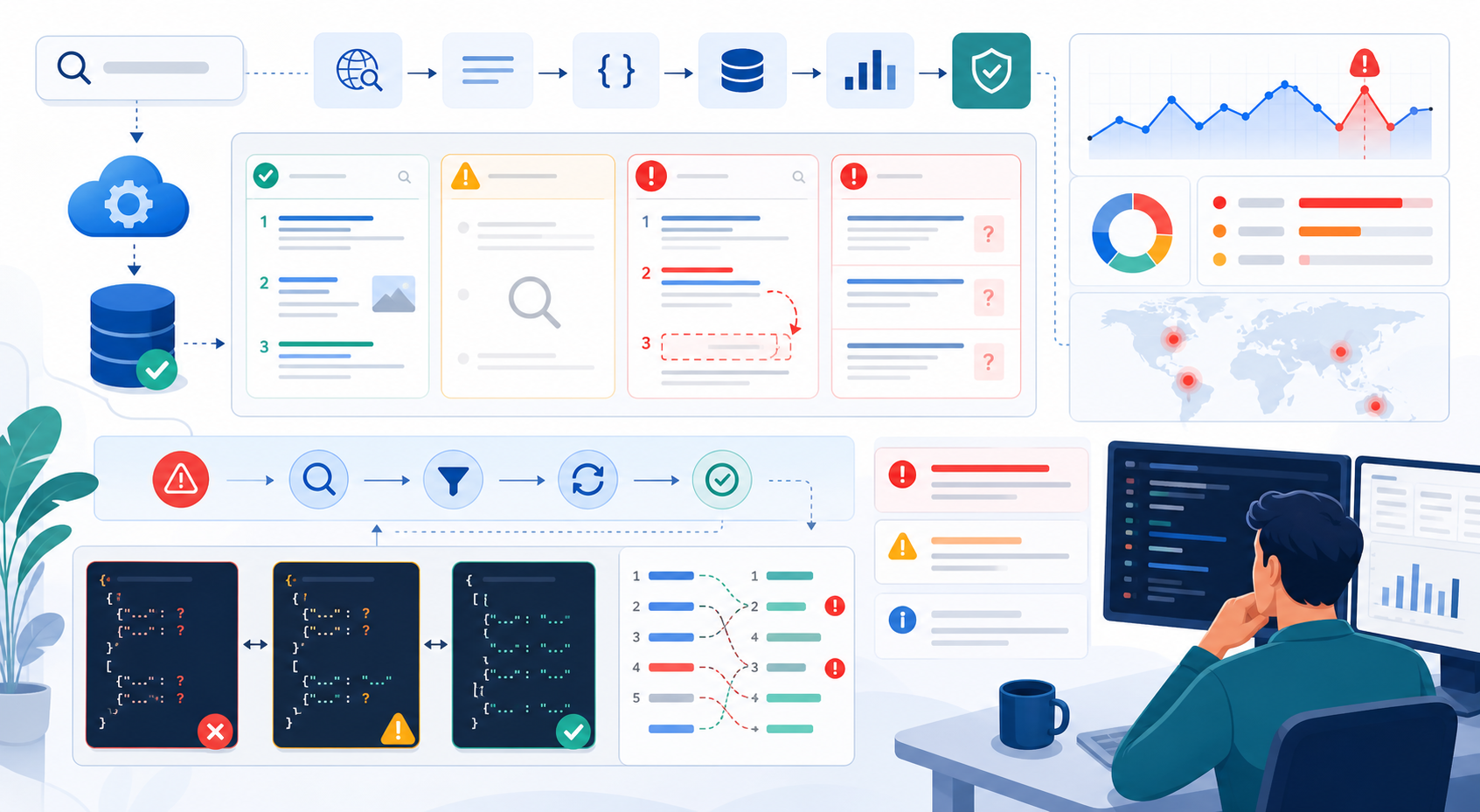
SERP API Troubleshooting: Fix Empty, Wrong, or Inconsistent Search Results
SERP API failures are not limited to obvious HTTP errors. A request can return successfully and still produce empty, incomplete, geographically wrong, duplicated, or misinterpreted search data. Production troubleshooting therefore has to separate transport problems from provider processing, SERP differences, and downstream parsing errors.
View Details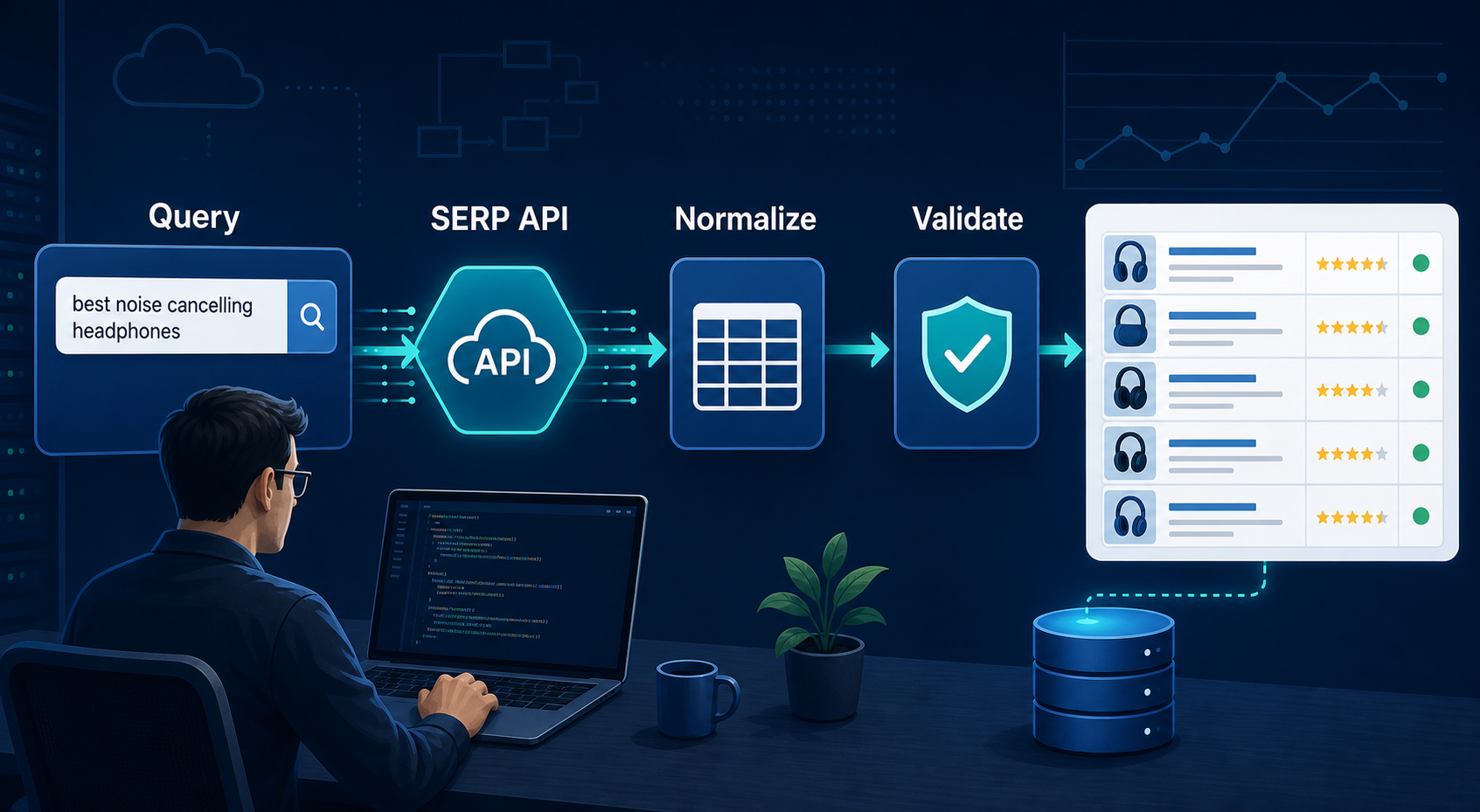
SERP API Python: How to Build a Reliable Search Data Pipeline
This guide shows a provider-neutral workflow for building that pipeline. It does not rank SERP API vendors. Instead, it focuses on the implementation choices that make a Python integration easier to operate, test, and migrate.
View Details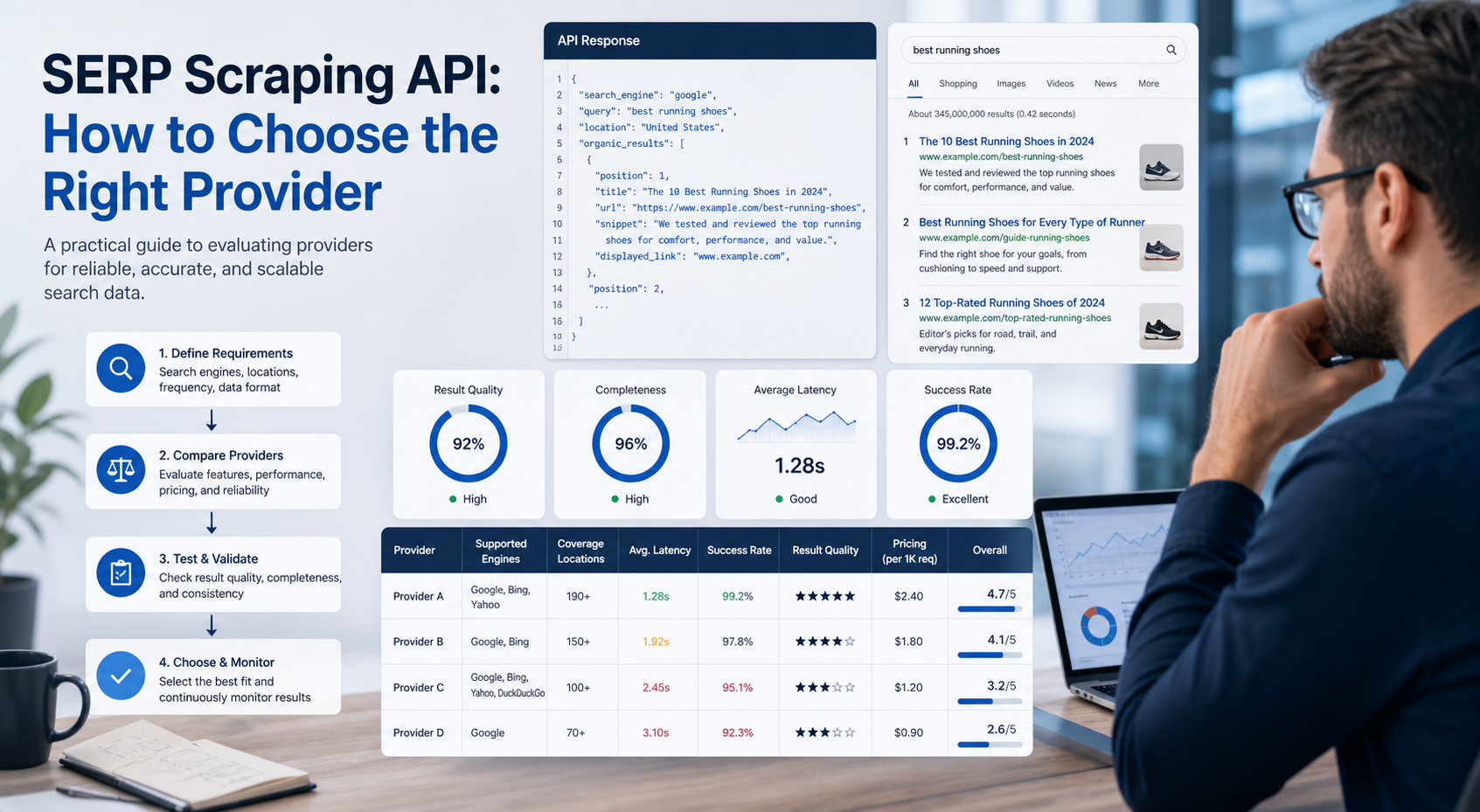
SERP Scraping API: How to Choose the Right Provider
Recommended Meta Description: Compare SERP scraping APIs by data coverage, localization, reliability, workflow fit, and cost structure, then choose and validate the right provider.
View Details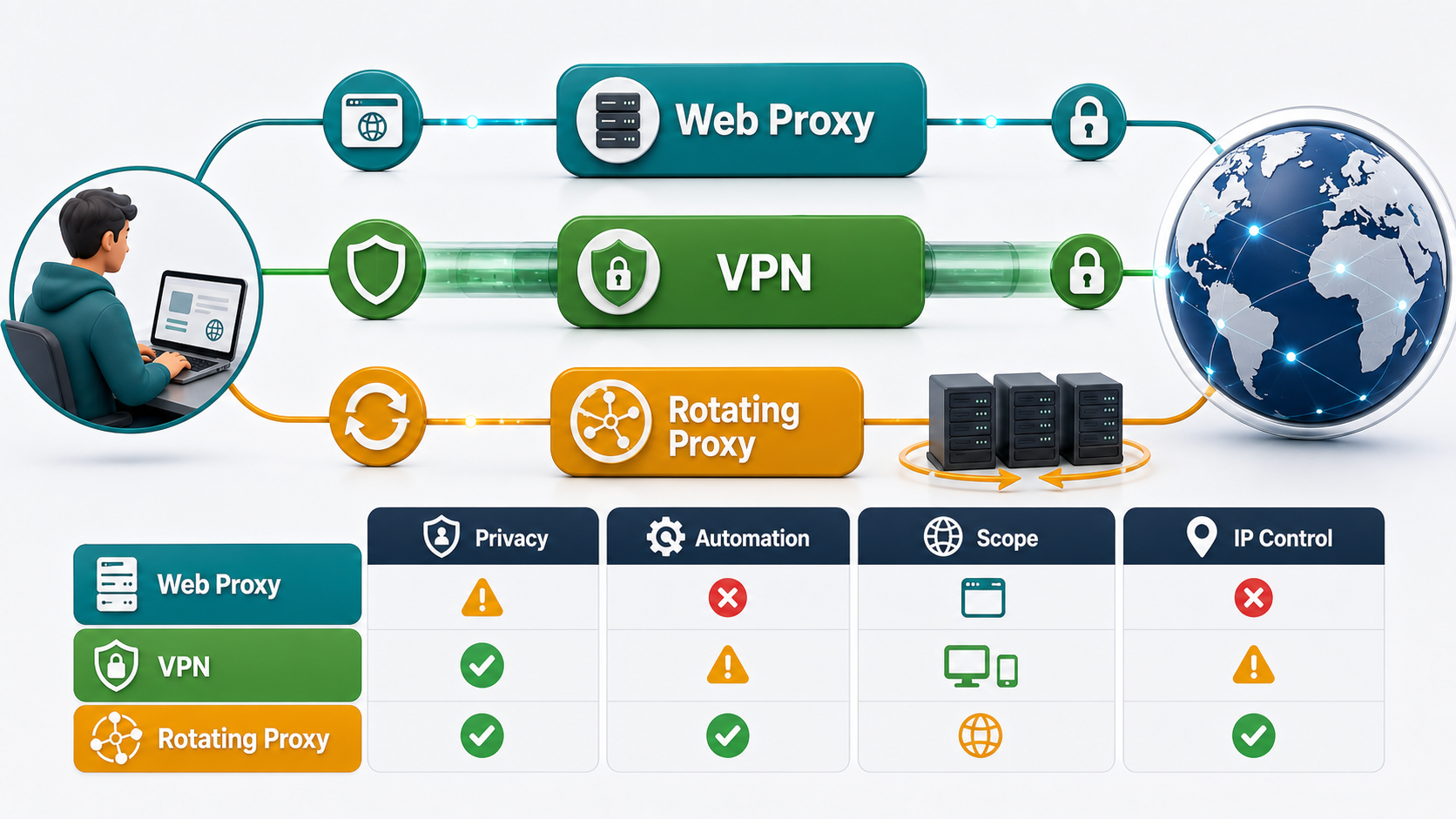
Free Web Proxy vs VPN vs Rotating Proxy: Which Should You Use?
Compare free web proxies, VPNs, rotating proxies, static proxies, and datacenter proxies by scope, encryption, IP control, automation, streaming, and account workflows.
View Details
BlockAway Not Working? Fix Common Proxy, Video, and Access Problems
Troubleshoot BlockAway when pages are blocked, YouTube fails, JavaScript breaks, speed drops, sessions expire, or mobile access behaves differently.
View Details