
AI vs AI: The New Cybersecurity Arms Race
When both hackers and defenders have AI, who wins?
This isn't a hypothetical question anymore. It's the daily reality facing every CISO, security architect, and technology leader today. We're witnessing an unprecedented technological standoff where artificial intelligence has become the primary weapon of choice for both sides of the cybersecurity battlefield.
The traditional cat-and-mouse game between attackers and defenders has evolved into something far more complex: an AI versus AI competition where both sides continuously adapt, learn, and escalate their capabilities at machine speed.
Strengthen AI Defense with LycheeIP
THE OFFENSIVE AI ARSENAL
Let's start by understanding the modern threat landscape. Threat actors aren't just experimenting with artificial intelligence in isolated labs—they're weaponizing it at scale, transforming how breaches are executed.
Automated Social Engineering
Traditional phishing campaigns required significant human effort: crafting emails, researching target hierarchies, and testing message deliverability. AI has transformed this entirely, allowing attackers to operate with both high volume and high personalization. Modern attack frameworks can:
- Generate personalized phishing content using large language models (LLMs) that rapidly analyze a target's social media presence, writing style, and professional context.
- Optimize delivery tactics by analyzing behavioral patterns and historical success rates to determine the exact minute a target is most likely to click a link.
- Deploy deepfake audio and video convincing enough to impersonate C-suite executives in real-time communications, bypassing traditional voice-verification protocols.
- Conduct conversational attacks that dynamically adapt to victim responses, making them nearly indistinguishable from legitimate human interactions.
The emergence of dark-web tools like WormGPT and FraudGPT demonstrated how readily available AI models can be stripped of their ethical guardrails and repurposed for malicious intent—requiring almost zero advanced coding skills from the operator.
Intelligent Malware Evolution
AI has given malware a terrifying evolutionary advantage. Polymorphic and metamorphic capabilities now extend far beyond simple signature obfuscation. Today, AI-powered malware can:
- Rewrite its own code structure on the fly while maintaining its core destructive functionality.
- Adapt its behavior based on the specific operating system, network architecture, or sandbox environment it detects.
- Learn from failed intrusion attempts, modifying its payload delivery tactics for the next strike.
- Actively identify security tools (like specific antivirus engines) and temporarily lay dormant to evade detection mechanisms.
Reconnaissance at Machine Speed
Where human hackers once spent weeks mapping networks and identifying exposed ports, AI-driven automation executes these tasks in fractions of a second. It can:
- Scan and analyze entire global network architectures in hours.
- Identify zero-day vulnerabilities through complex pattern recognition across disparate codebases.
- Prioritize high-value data targets (like databases containing PII) based on automated data correlation.
- Map hidden trust relationships between internal systems that human operators would likely miss.
The Democratization of Advanced Attacks
Perhaps most concerning is how AI has drastically lowered the barrier to entry for sophisticated cybercrime. Script kiddies and low-skill threat actors can now deploy techniques that previously required nation-state funding and infrastructure.
Attack-as-a-service platforms increasingly incorporate machine learning features, making advanced capabilities available to anyone with cryptocurrency and malicious intent. To understand the full scope of how these models are exploited, security teams frequently reference the OWASP Machine Learning Security Top 10, which outlines the most critical vulnerabilities in modern AI systems.
THE DEFENSIVE AI COUNTEROFFENSIVE
But defenders aren't sitting idle. Security engineering teams and infrastructure operators have mobilized AI to create unprecedented, automated defensive capabilities.
Threat Detection and Pattern Recognition
Modern AI-powered security platforms excel precisely where human analysts struggle: analyzing impossible volumes of data. Security Information and Event Management (SIEM) systems enhanced with machine learning can:
- Process millions of events per second across distributed global infrastructure.
- Identify micro-anomalies in network traffic that deviate from learned baseline behaviors.
- Correlate seemingly unrelated events (e.g., a failed login in Tokyo and a database query in London) to reveal coordinated attack patterns.
- Detect novel, fileless attack signatures without relying on predefined, static rules.
These systems don't just flag known threats, they identify suspicious intent based on subtle deviations from normal operational patterns.
Automated Incident Response
Speed is the ultimate currency in cybersecurity. AI-driven Security Orchestration, Automation, and Response (SOAR) platforms can:
- Execute immediate containment actions the millisecond threats are detected—isolating compromised endpoints, blocking malicious IPs at the firewall, and revoking user credentials.
- Triage alerts intelligently, drastically reducing "alert fatigue" by filtering out false positives and prioritizing genuine, high-risk threats.
- Initiate remediation workflows automatically, executing complex security playbooks faster than any human response team.
- Learn from each resolved incident to improve future response accuracy and effectiveness.
What once took hours of manual analyst investigation now happens in milliseconds.
Behavioral Analytics and User Monitoring
User and Entity Behavior Analytics (UEBA) systems create dynamic, baseline profiles for every single user, device, and entity in an environment:
- Detecting compromised credentials by flagging abnormal access patterns (e.g., logging in at 3 AM from a new device).
- Identifying insider threats by monitoring for unusual data access, bulk file downloads, or exfiltration attempts.
- Recognizing account takeover through behavioral biometrics (keystroke dynamics, mouse movement).
- Predicting potential security incidents before the payload is even delivered.
Predictive Defense
The most advanced AI security implementations don't just react to breaches—they anticipate them.
- Vulnerability prediction: Identifying which specific servers are most likely to be targeted based on global threat intelligence and emerging attack trends.
- Attack path analysis: Simulating how an attacker might pivot through the network to prioritize preventative defensive investments.
- Threat hunting: Proactively scanning for dormant, hidden threats that evaded initial perimeter detection.
- Risk scoring: Continuously assessing the real-time security posture of every asset and user identity.
The AI-Assisted SOC
Security Operations Centers (SOCs) are being fundamentally transformed. AI acts as a crucial force multiplier:
- Junior analysts receive AI-generated investigation summaries and remediation guidance.
- Raw threat intelligence is automatically enriched, parsed, and contextualized.
- Compliance and incident reports effectively write themselves based on granular event analysis.
- Critical skills gaps are bridged through AI-assisted decision support systems.
Strengthen AI Defense with LycheeIP
THE ESCALATION CYCLE AND STRATEGIC IMPLICATIONS
So who wins when both sides have AI? The uncomfortable answer: neither. We are permanently locked in a perpetual escalation cycle.
The Adaptation Loop
Here is how the continuous cycle of cyber warfare currently operates:
- Defenders deploy an AI detection model → Attackers develop a generative AI that specifically evades those detection parameters.
- Attackers create highly persuasive AI-generated phishing → Defenders train linguistic AI models to recognize AI-generated syntax.
- Defenders implement strict behavioral analytics → Attackers use AI to perfectly mimic a target user's normal baseline behavior.
- Attackers automate their reconnaissance → Defenders deploy AI-generated deception technologies (honeypots) to confuse the attackers' scanners.
Each technological advancement immediately triggers a counter-advancement.
Advantage: Speed and Scale
AI provides clear, undeniable advantages in two critical dimensions:
- Speed: Attacks and defenses now occur at machine speed. Human decision-making has become the bottleneck. The side that can act faster—detecting, deciding, and responding in milliseconds—gains the tactical advantage.
- Scale: Both attackers and defenders can now operate at an unprecedented scale. A single security team utilizing AI can monitor infrastructure that would have previously required hundreds of analysts. Conversely, a single threat actor utilizing AI can target thousands of global organizations simultaneously.
The Irreplaceable Human Element
Yet despite AI's staggering capabilities, the human element remains absolutely critical to enterprise security:
- Strategic thinking: AI optimizes within predefined parameters, but humans define the overarching strategic objectives and ethical boundaries.
- Contextual judgment: AI identifies anomalies, but humans understand the business context, operational priorities, and acceptable risk thresholds.
- Adversarial creativity: The most sophisticated, zero-day attacks still require human creativity to identify novel vectors that AI hasn't been trained to anticipate.
- Governance and accountability: Humans must validate AI decisions, especially for automated actions that have significant business or legal impact.
The winning approach isn't AI replacing humans—it's AI aggressively augmenting human expertise.
Future Implications
The Quantum Computing Wild Card
Quantum computing threatens to disrupt this entire equilibrium. When quantum systems become commercially viable, current encryption standards will become vulnerable, and AI training speeds will accelerate exponentially.
Regulatory and Ethical Dimensions
Governments are moving rapidly to regulate AI in security contexts. To ensure responsible deployment, organizations are increasingly aligning their strategies with guidelines like the NIST AI Risk Management Framework, which helps teams map, measure, and manage the risks of integrating AI into critical infrastructure.
The Talent Transformation
The security workforce must evolve from manual alert triage to AI system management, focusing heavily on human-AI collaboration and strategic threat anticipation.
Strategic Recommendations for Security Leaders
- Embrace AI as foundational, not optional: Organizations without AI-powered security are already at a massive disadvantage. It is a current operational necessity.
- Invest in AI literacy across security teams: Teams must understand how AI systems work, their inherent limitations (like hallucinations), and how to prompt them effectively.
- Implement layered AI defenses: No single AI system is foolproof. Deploy a mesh of multiple AI approaches: signature-based, behavioral, predictive, and deceptive.
- Prepare for AI-powered attacks: Proactively test your defenses against AI-generated threats by conducting adversarial simulations and authorized red-teaming.
- Maintain human oversight: Establish clear governance for automated AI decisions, strictly defining which remediation actions require a human "kill switch."
- Stay adaptable: Build modular security architectures that can seamlessly integrate new, specialized AI capabilities as they emerge.
LycheeIP (Developer-First Proxy Infrastructure)
LycheeIP is a developer-first proxy and data infrastructure provider designed to facilitate secure, scalable, and highly distributed network routing.
For threat intelligence teams and security researchers operating in an AI-driven landscape, safely gathering data on emerging threats requires robust, anonymous infrastructure. Whether conducting authorized security testing, simulating distributed botnet attacks to train defensive ML models, or safely scraping global threat intel feeds, engineering teams consistently rely on a resilient core data infrastructure provider By routing automated reconnaissance traffic through highly reliable datacenter proxy networks, analysts can obscure their operational origins during sensitive investigations. Furthermore, utilizing programmable dynamic IP routing allows security platforms to rigorously test their rate-limiting and geo-blocking algorithms against simulated global traffic. For dedicated, stable penetration testing environments, teams can easily provision static IP setups directly through the LycheeIP platform, ensuring their defensive AI models are trained on accurate, real-world network conditions.
Strengthen AI Defense with LycheeIP
Frequently Asked Questions
Q: How are attackers currently using AI in cyber attacks?
A: Attackers leverage AI for automated social engineering (like hyper-personalized phishing and voice deepfakes), intelligent malware that dynamically adapts to evade detection, rapid network reconnaissance, and automated vulnerability discovery. Tools like WormGPT have made these capabilities accessible even to low-skill threat actors, dramatically lowering the barrier to entry.
Q: What are the most effective AI-powered defensive technologies?
A: The most effective defensive AI technologies include AI-enhanced SIEM systems for processing massive threat logs, SOAR platforms for automated, millisecond incident response, User and Entity Behavior Analytics (UEBA) for detecting internal anomalies, and predictive security analytics for proactive defense posturing.
Q: Can AI completely replace human security analysts?
A: No. While AI excels at speed, scale, and pattern recognition, humans remain absolutely essential for strategic thinking, contextual business judgment, adversarial creativity, and overall governance. The most effective security posture is human-AI collaboration.
Q: How should organizations prepare for AI-powered cyber threats?
A: Organizations should implement layered, AI-powered defensive tools as their foundational infrastructure. Additionally, they must invest in AI literacy for their staff, rigorously test systems against AI-generated threats via red-teaming, maintain strict human oversight with clear governance, and build adaptable architectures ready for future integrations.
Q: What will determine who 'wins' the AI cybersecurity arms race?
A: There is no final winner in this continuous escalation cycle. Success belongs to organizations that adapt the fastest, combine AI scale with human expertise, invest continuously in both technology and talent, and recognize modern security as a fundamentally AI-native discipline requiring ongoing evolution.

Recommended Articles
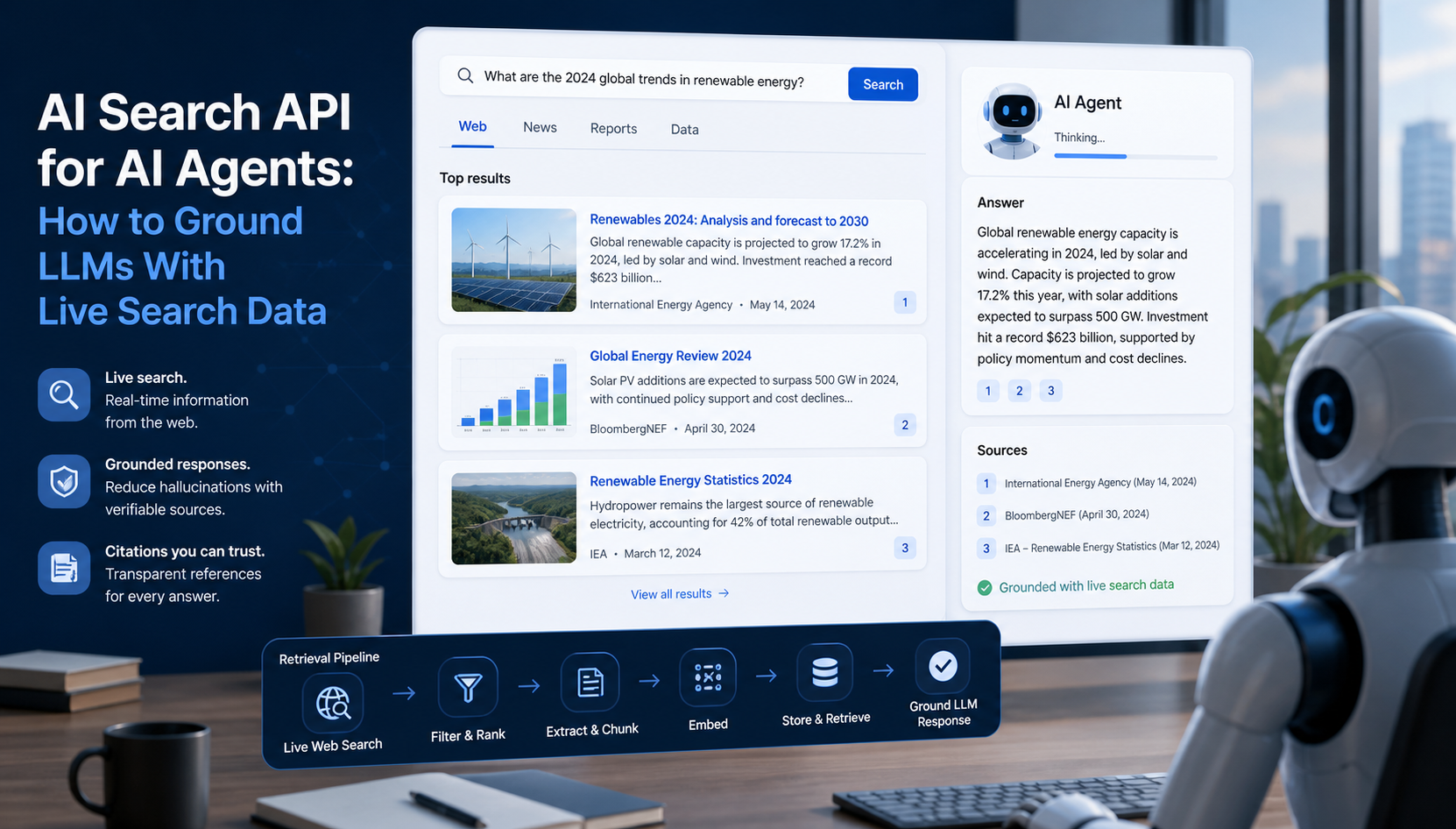
AI Search API for AI Agents: How to Ground LLMs With Live Search Data
An AI search API gives an application or agent programmatic access to current search results. Its most useful role is discovery: the agent can find candidate sources, identify fresh information, and decide what to retrieve next instead of relying only on model memory.
View Details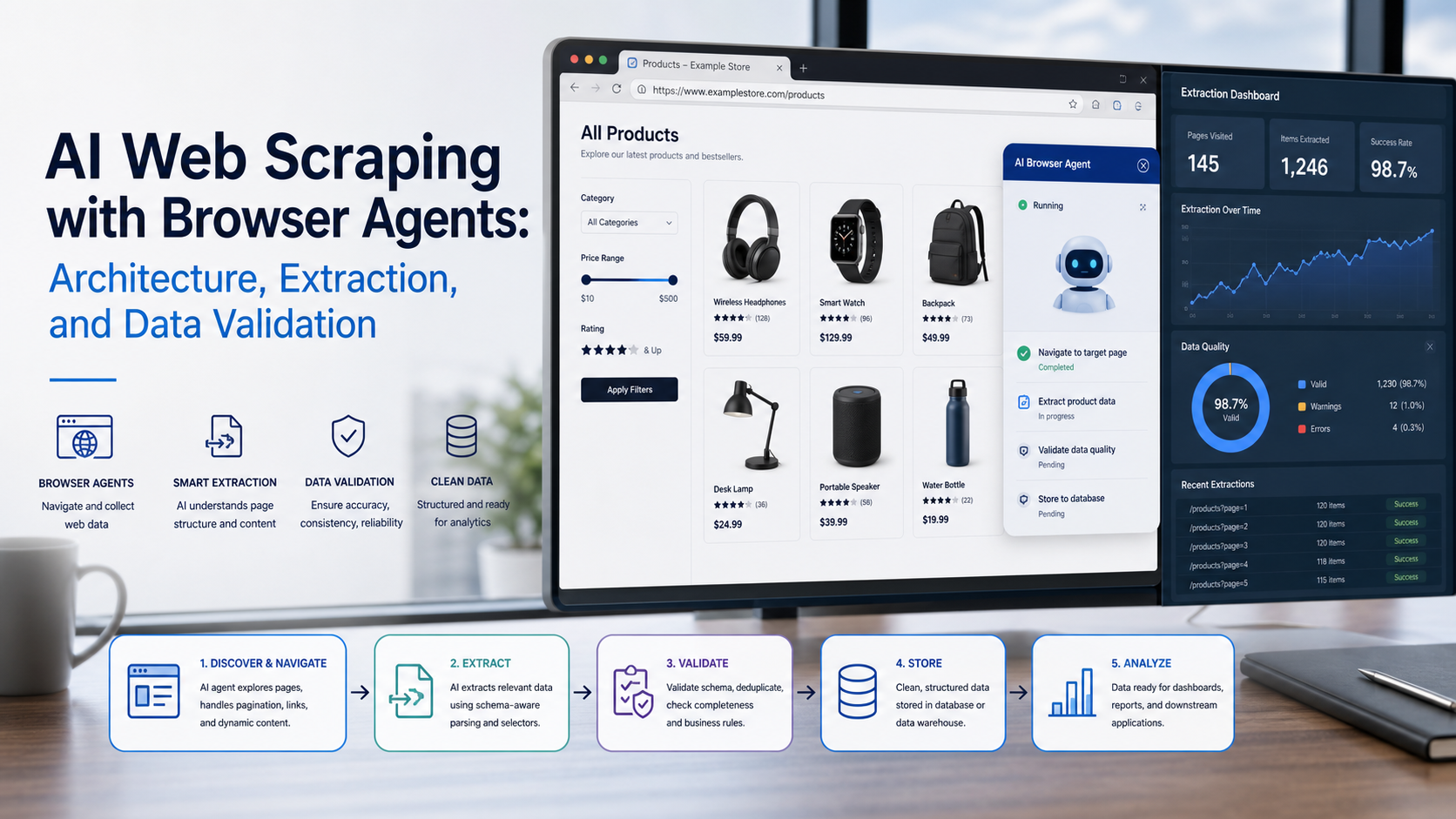
AI Web Scraping with Browser Agents: Architecture, Extraction, and Data Validation
AI web scraping uses AI to help discover, navigate, interpret, or extract information from websites. Browser agents are one implementation option when page interaction, rendering, or layout variation makes a simple scraper too brittle, but the agent should not become the entire data pipeline.
View Details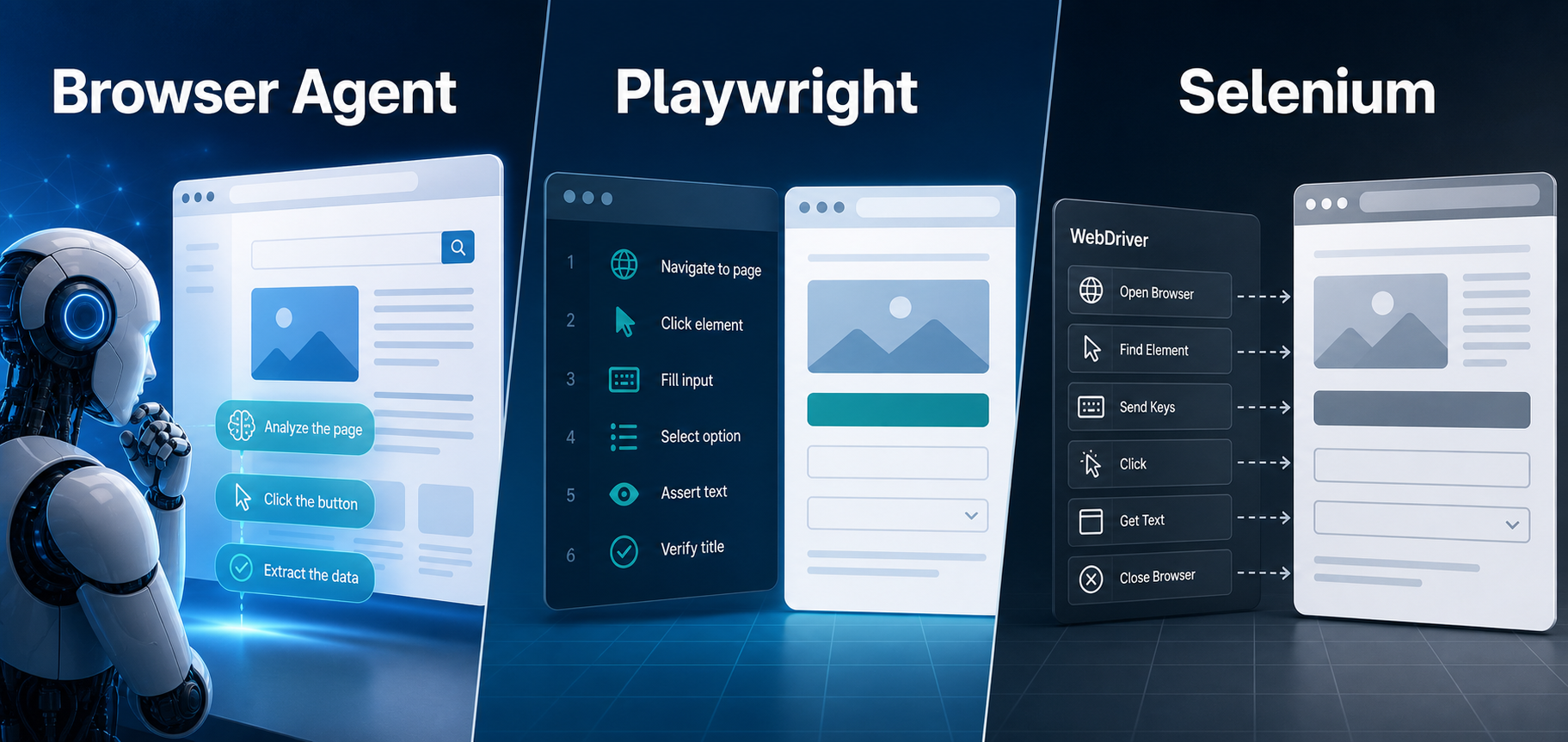
AI Browser Automation: Browser Agents vs Playwright vs Selenium
A browser agent interprets a goal and decides what browser action to take next. Playwright and Selenium can execute explicit, testable browser logic defined by developers. In 2026, however, Playwright also provides official MCP and agent-oriented workflows, so Playwright is no longer just the deterministic alternative to agentic automation. It can also serve as the browser-control layer inside an agent system.
View Details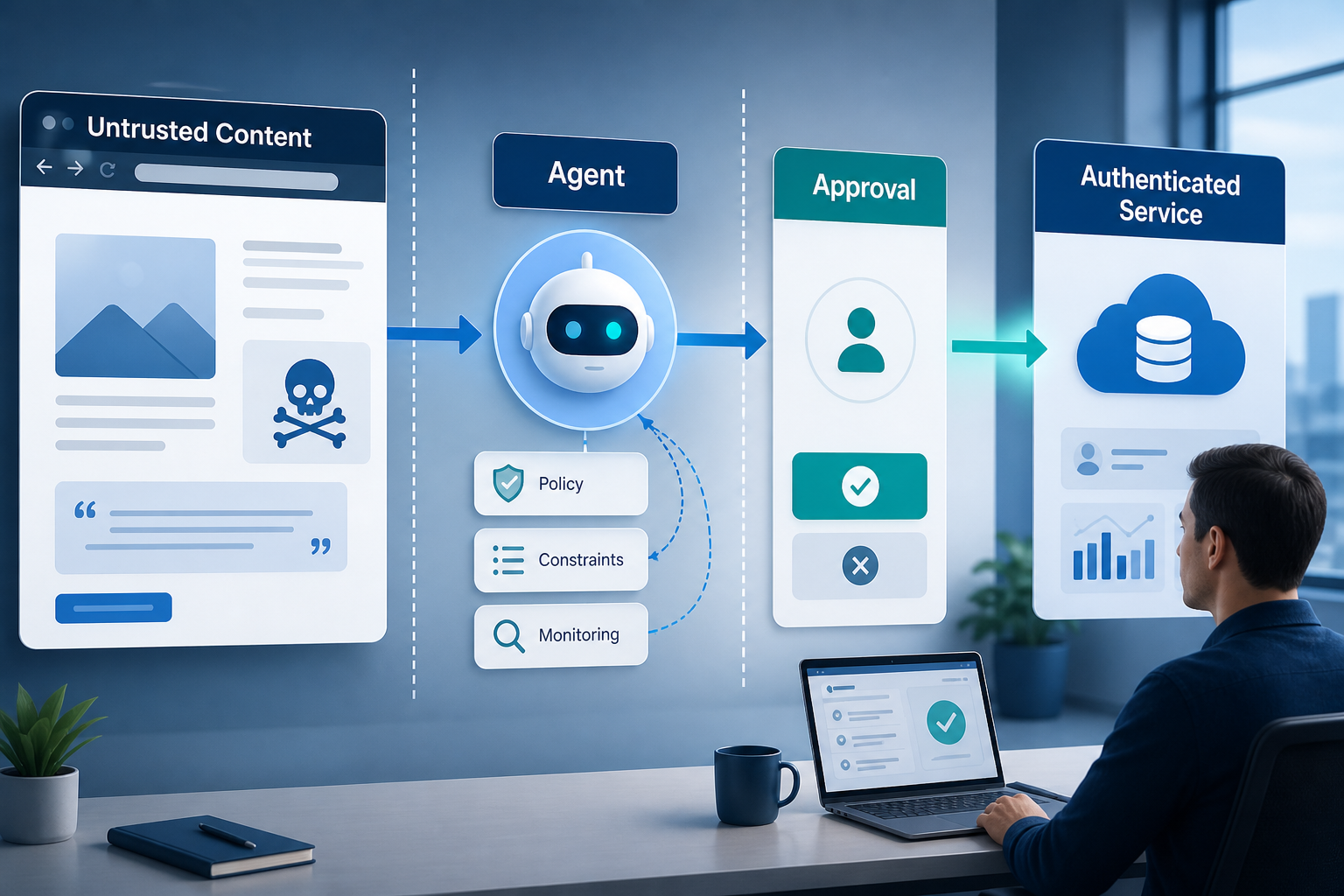
Agentic Browser Security: Prompt Injection, Permissions, and Safe Deployment
That combination creates risks that are different from ordinary browsing and traditional automation. The most important is indirect prompt injection, where hostile instructions hidden in web content attempt to redirect the agent away from the user's goal. Google describes indirect prompt injection as a primary new threat for agentic browsing and has introduced layered defenses that include origin constraints, independent action checks, threat detection, and user confirmation for sensitive actions. Google's Chrome security architecture is a useful reference for how browser-agent defenses are evolving.
View Details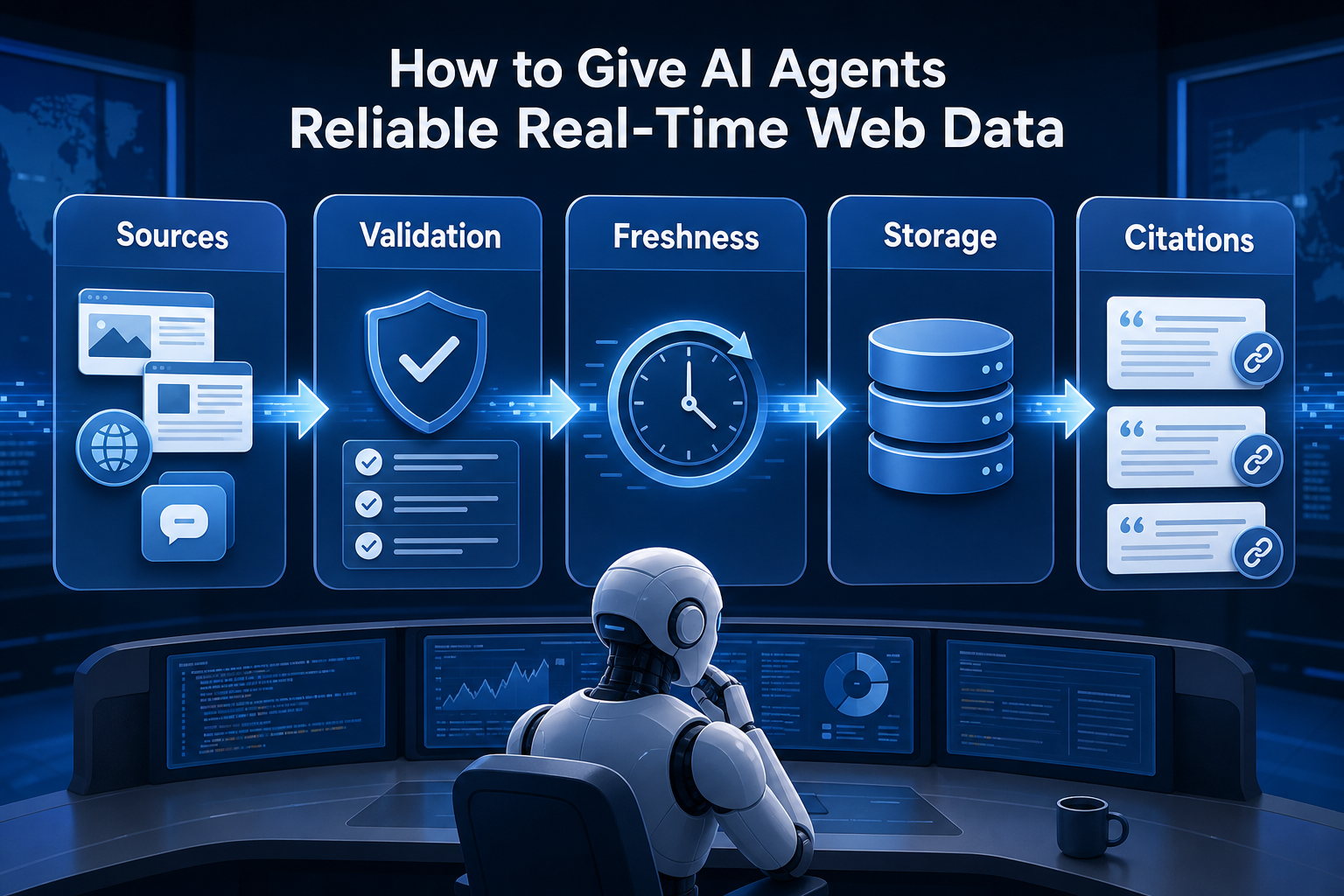
How to Give AI Agents Reliable Real-Time Web Data
A production-ready solution therefore needs more than a web scraper. It needs a web data layer that connects acquisition, validation, storage, retrieval, security, and observability. This guide explains how to design that layer.
View Details