
How to Train an AI Model for Business Use: A Practical Workflow
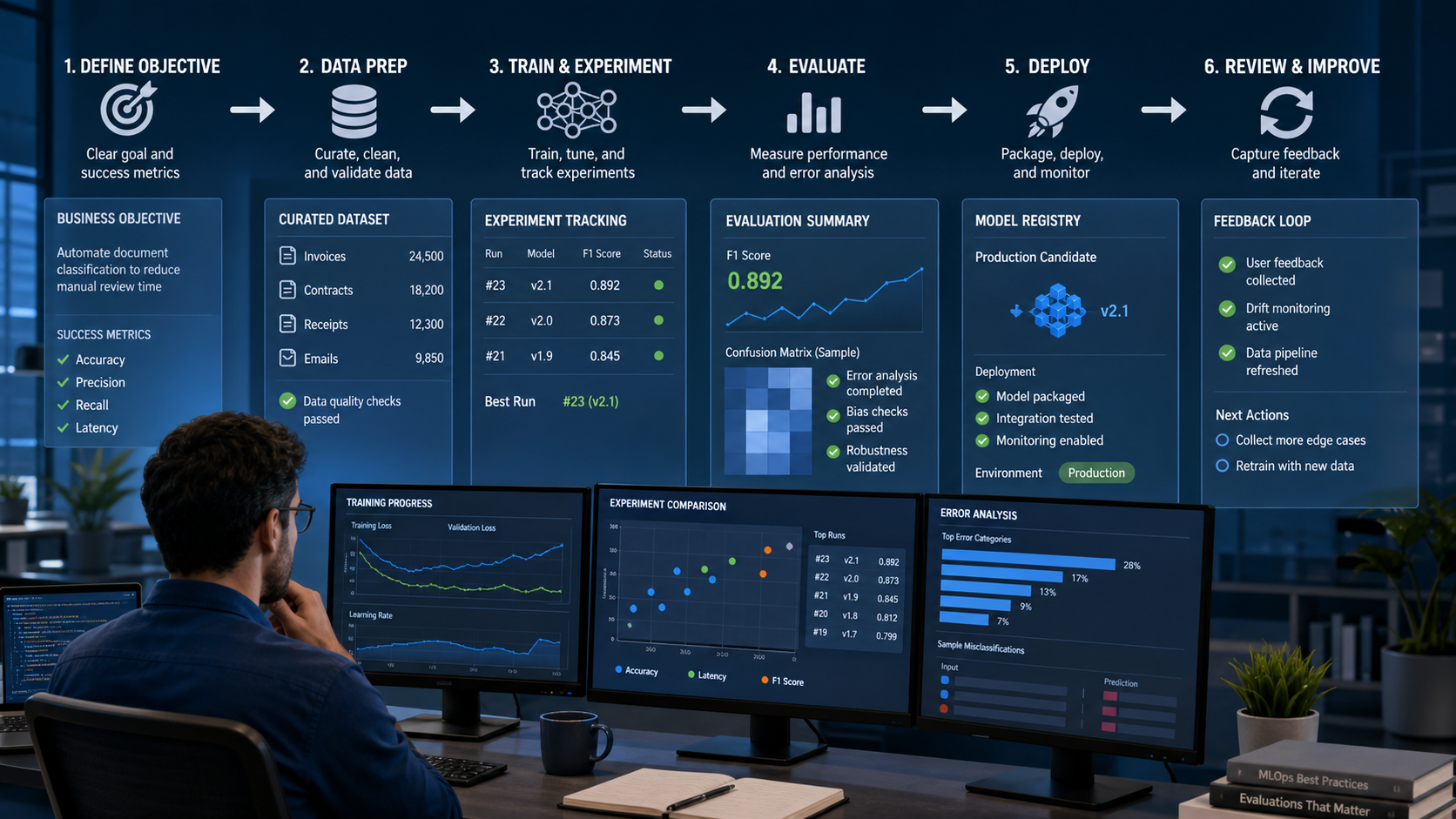
Most teams asking how to train an AI model are really asking a more useful question: what is the lightest-weight way to get reliable model behaviour for my task? In 2026, the answer is often not “start training”. It is usually: define the task, write evals, test prompting, add retrieval if you need external knowledge, then fine-tune or use parameter-efficient adaptation only if the earlier steps are not enough. Full pretraining from scratch is still valid, but mainly when you have a very large corpus and it differs materially from what existing models were trained on.
Most teams asking how to train an AI model are really asking a more useful question: what is the lightest-weight way to get reliable model behaviour for my task? In 2026, the answer is often not “start training”. It is usually: define the task, write evals, test prompting, add retrieval if you need external knowledge, then fine-tune or use parameter-efficient adaptation only if the earlier steps are not enough. Full pretraining from scratch is still valid, but mainly when you have a very large corpus and it differs materially from what existing models were trained on.
Choose the training path before you choose the framework
There are four common paths, and they solve different problems.
The first is prompt engineering. OpenAI’s model-optimisation guide explicitly places evals, prompt engineering, and fine-tuning in the same optimisation loop, and says prompt engineering may be all you need for some use cases. If your main issue is instructions, format, verbosity, or missing context, start here. It is the fastest and cheapest thing to test.
The second is retrieval or context injection. If the model needs current facts, private documents, or other information outside its training data, retrieval often solves the problem better than training. OpenAI’s optimisation guide recommends including relevant context directly in prompts when the model needs information from outside its training data, including private databases or up-to-the-minute information. That is a strong hint that many “training” problems are really knowledge-access problems.
The third is fine-tuning or parameter-efficient adaptation. This is the right path when you need the model to behave consistently on a task, use a specific output structure, follow a domain style, or improve task-specific performance beyond what prompting can achieve. OpenAI’s current docs describe supervised fine-tuning as training on example inputs and known good outputs, while Hugging Face’s PEFT documentation explains that parameter-efficient methods adapt pretrained models without updating all parameters, cutting compute and storage costs substantially.
The fourth is pretraining from scratch. Hugging Face’s LLM course is blunt about when this makes sense: you need a lot of data, it should be materially different from existing pretraining corpora, and the compute requirements are much higher than for fine-tuning. That makes it sensible for unusual domains such as code, DNA-like sequences, or other modalities or distributions that generic foundation models do not cover well. It is not the default choice for a business workflow on ordinary text tasks.
For the LycheeIP implementation details behind this step, review AI-powered browser automation hub.
For the official technical reference behind this point, see OpenAI developer documentation.
Start with evaluation, not enthusiasm
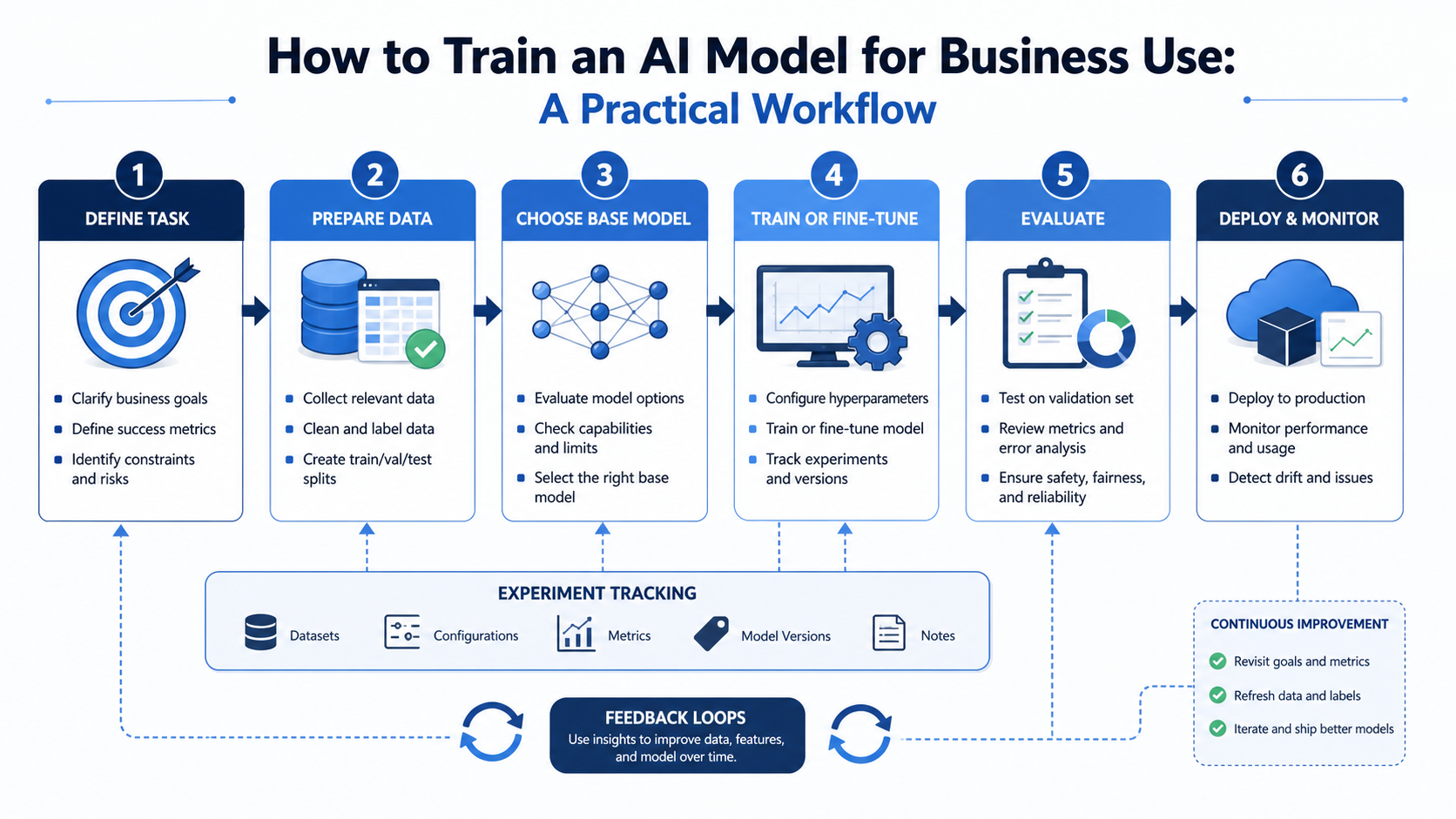
Good model training starts with a failure definition. OpenAI’s evals guidance says evals are structured tests for measuring performance, reliability, and accuracy, and they are one of the only reliable ways to improve LLM applications. That means your first deliverable is not a notebook. It is a test set and a success metric.
In practice, define three things before you train anything:
- the task you want the model to do
- the failure modes that matter most
- the metric that will tell you whether the model is better
For a classifier, that might be precision and recall on a curated holdout set. For a document assistant, it might be citation accuracy, format compliance, latency, and human preference scores. For a reasoning workflow, it may be task completion rate plus domain-specific graders. The exact metric changes, but the discipline does not. If you cannot tell whether a model improved, you are not training. You are experimenting without a stopping rule.
Prepare data like it will become a policy
Data quality usually matters more than algorithm novelty. OpenAI’s fine-tuning best practices say a smaller amount of high-quality data is generally more effective than a larger amount of low-quality data, and recommend splitting data into training and test sets early. The same page also warns that if your examples contain style, logic, or behavioural problems, the fine-tuned model may reproduce them. That advice generalises well beyond OpenAI. Your dataset is not just content. It is the behaviour you are teaching.
For the LycheeIP implementation details behind this step, review LycheeIP proxy infrastructure.
A strong dataset pipeline usually includes:
- source selection and rights review
- cleaning and normalisation
- label definition or response standards
- train, validation, and test splits
- versioning of every dataset revision
- documentation of edge cases and exclusions
If you are working with limited labels, transfer learning remains the practical default. TensorFlow’s guidance on transfer learning says it is usually used when your dataset is too small to train a full-scale model from scratch. That is not just a computer vision lesson. It is one of the key economic reasons pretrained models dominate real-world deployments.
Use a pretrained base model unless you have a strong reason not to
Hugging Face’s Transformers docs recommend pretrained models because they reduce compute cost, time, and even carbon footprint compared with training an entirely new model. That aligns with how most modern ML and LLM systems are built: start from a strong base, then adapt.
Once you choose a base model, your technical path depends on scale.
For small and mid-sized tasks, a standard trainer loop or hosted fine-tuning job may be sufficient. For larger open-source training runs, PyTorch’s DistributedDataParallel synchronises gradients across model replicas, while FullyShardedDataParallel shards module parameters across workers to reduce memory pressure. That makes DDP a strong default for multi-GPU training and FSDP the next tool to reach for when the model size becomes the bottleneck.
If you do not need full fine-tuning, PEFT methods such as LoRA are often the sensible compromise. Hugging Face notes that PEFT only trains a small number of additional parameters while keeping performance comparable to full fine-tuning for many downstream tasks, drastically reducing compute and storage requirements. For many B2B use cases, that is the sweet spot.
For the official technical reference behind this point, see Anthropic documentation.
Understand that platform workflows change
One weakness in the competitor article is that it presents a specific vendor fine-tuning flow as though it were a stable definition of “training an AI model”. Current OpenAI docs now say the legacy fine-tuning platform is winding down for new users, even while some fine-tuned models remain available for inference for existing users. The bigger lesson is not about one vendor. It is that product workflows change. Your process should not depend on a single dashboard sequence or a single model family. It should depend on portable ideas: evals, clean data, reproducible training, and versioned deployment.
For the LycheeIP implementation details behind this step, review scaling lead scraping with n8n.
Track experiments and save the model properly
As soon as you move beyond one laptop run, you need observability and version control for training itself. Weights & Biases documents experiment tracking for metrics, hyperparameters, system metrics, and model artefacts. MLflow’s model registry adds a disciplined path to model versions, aliases, tags, and deployment handoffs. Together, they solve a problem that many “how to train a model” articles ignore: remembering what actually worked.
You also need robust checkpoints. PyTorch recommends saving not just the model state but also the optimiser state, epoch, and loss when you want resumable training. TensorFlow recommends the modern .keras format for Keras objects because it is robust and easier to debug than older or lower-level formats. This is not admin work at the edge of the project. It is part of reproducibility.
Treat deployment as part of training
A model is not finished when the loss curve looks good. It is finished when you can deploy it, monitor it, and roll it back.
A practical production loop looks like this:
- register the candidate model with metadata
- compare it against the current production model on fixed evals
- deploy behind a feature flag, canary, or limited audience
- watch task metrics and failure samples
- feed real failures back into the dataset
- retrain or re-adapt on a schedule that matches drift
MLflow’s model registry is useful here because registered models carry versions, aliases such as champion, and deployment metadata. That helps separate experiments from promotion decisions.
For the LycheeIP implementation details behind this step, review rotating residential proxies.
Use LycheeIP Proxies in Your AI Training Workflow
The common mistakes to avoid
The first mistake is calling every change “training”. A model that needed better prompts or better retrieval did not need training. It needed problem diagnosis.
The second is training before building evals. Without a durable benchmark, you cannot tell whether a model improved or merely changed.
The third is using low-quality or inconsistent examples. OpenAI’s fine-tuning advice makes the point clearly: poor examples teach poor behaviour.
The fourth is assuming full fine-tuning is always worth it. PEFT exists because updating every parameter is often unnecessarily costly.
The fifth is ignoring lifecycle tooling. If you cannot reproduce the run, resume from a checkpoint, or identify which version is in production, the training project is not production-ready.
Frequently Asked Questions
Should I train from scratch or fine-tune?
Fine-tune or use PEFT unless you have a very large dataset that is meaningfully different from the data available to existing pretrained models. Train from scratch only when you have both the data and the compute case to justify it.
What if my dataset is small?
Use transfer learning or a pretrained model. TensorFlow explicitly positions transfer learning for cases where the dataset is too small to train a full-scale model from scratch.
What is the first thing I should build?
A representative evaluation set and a baseline. Training without that is guesswork.
When is PEFT a better choice than full fine-tuning?
When you want to adapt a strong base model efficiently, especially if compute and storage are constrained. Hugging Face documents PEFT as a way to reduce both substantially while maintaining competitive task performance.
What should I use for experiment tracking and versioning?
Any serious stack needs both. W\&B is well suited to run tracking and artefacts, while MLflow’s registry gives you formal model versions and deployable aliases. The right way to train an AI model is not to reach for the heaviest tool first. It is to choose the smallest intervention that measurably improves the task, and then wrap that intervention in strong data discipline, real evals, and a deployment process you can trust. That is what turns “model training” from a tutorial into an engineering capability.
Related LycheeIP Guides and Resources

Recommended Articles
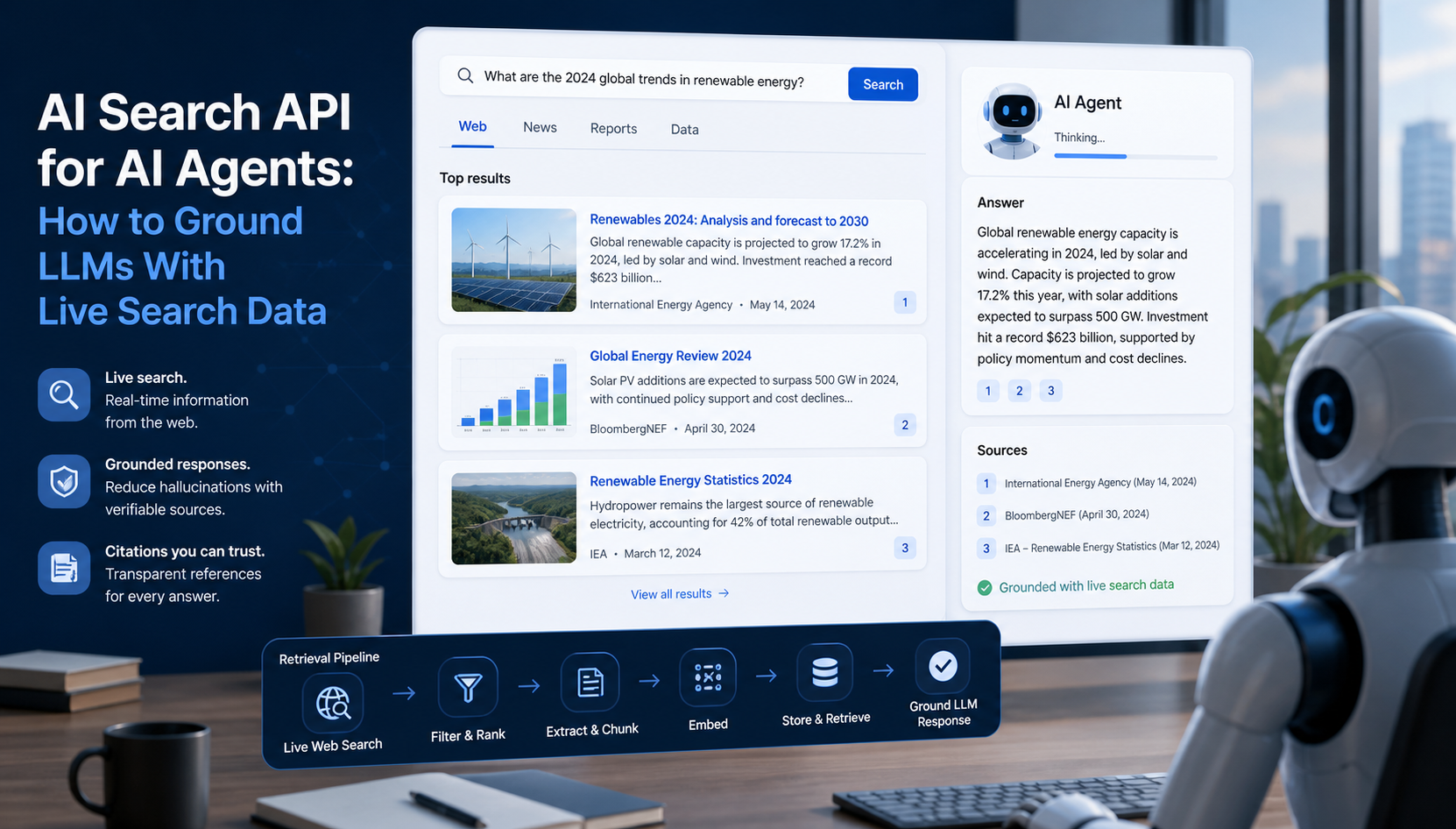
AI Search API for AI Agents: How to Ground LLMs With Live Search Data
An AI search API gives an application or agent programmatic access to current search results. Its most useful role is discovery: the agent can find candidate sources, identify fresh information, and decide what to retrieve next instead of relying only on model memory.
View Details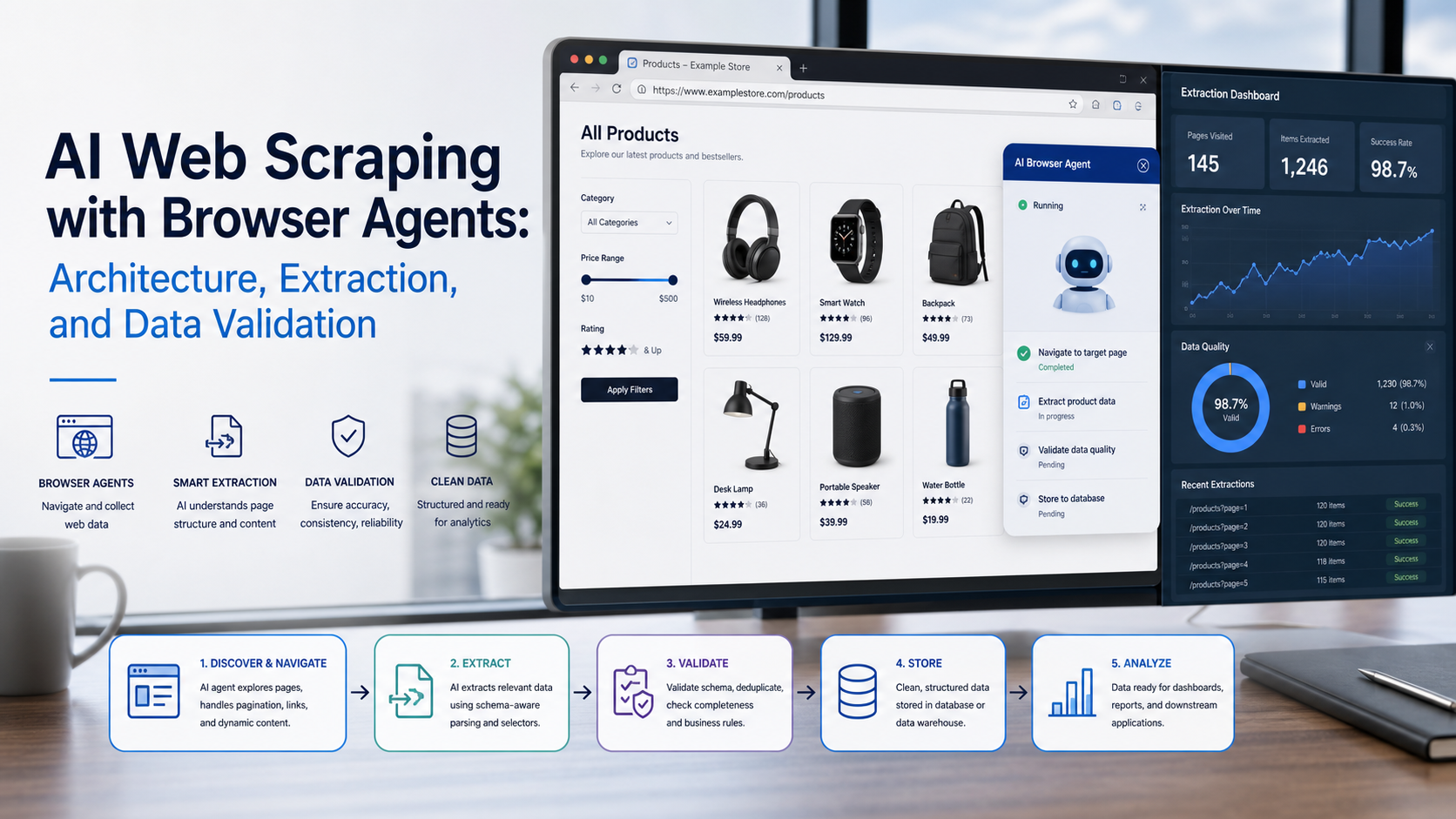
AI Web Scraping with Browser Agents: Architecture, Extraction, and Data Validation
AI web scraping uses AI to help discover, navigate, interpret, or extract information from websites. Browser agents are one implementation option when page interaction, rendering, or layout variation makes a simple scraper too brittle, but the agent should not become the entire data pipeline.
View Details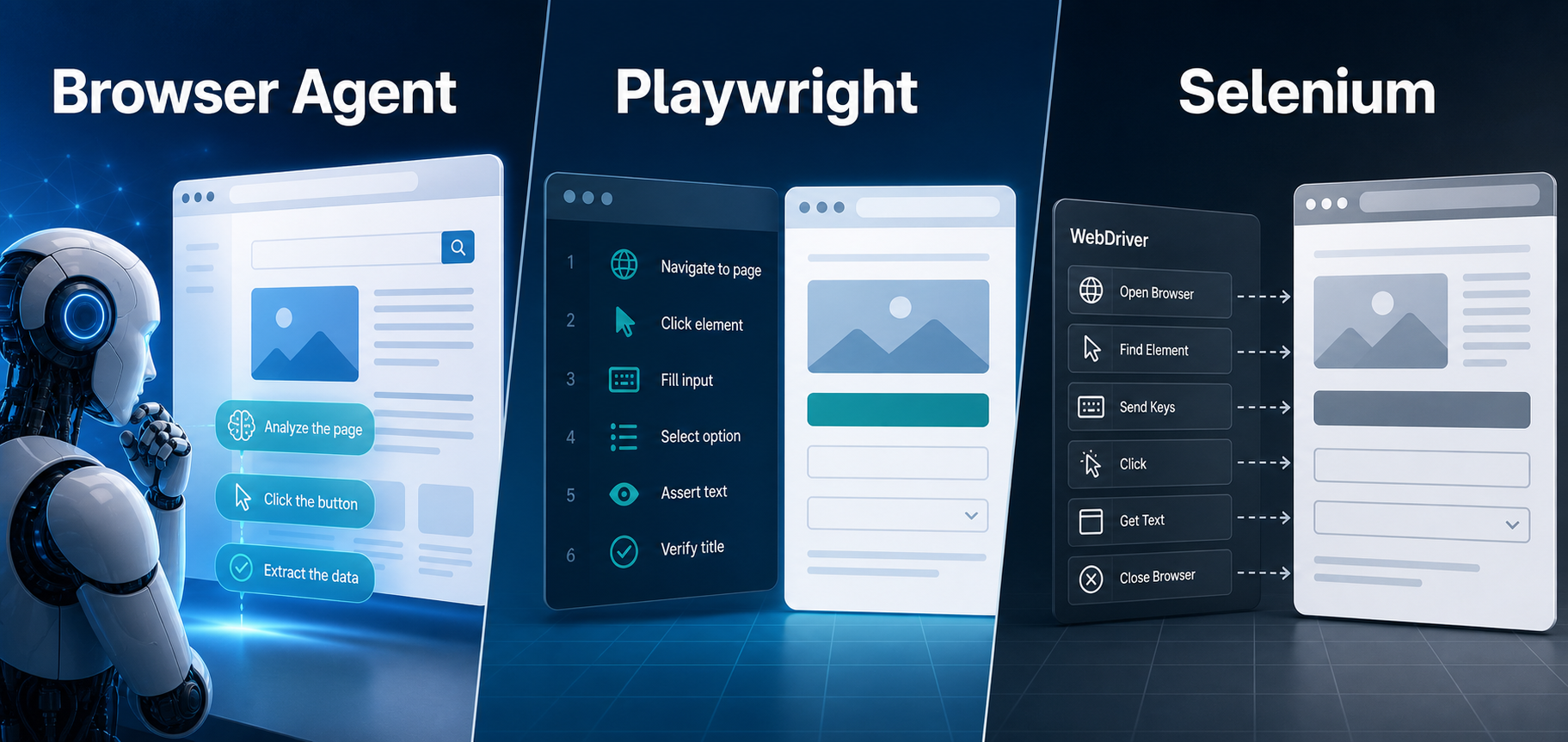
AI Browser Automation: Browser Agents vs Playwright vs Selenium
A browser agent interprets a goal and decides what browser action to take next. Playwright and Selenium can execute explicit, testable browser logic defined by developers. In 2026, however, Playwright also provides official MCP and agent-oriented workflows, so Playwright is no longer just the deterministic alternative to agentic automation. It can also serve as the browser-control layer inside an agent system.
View Details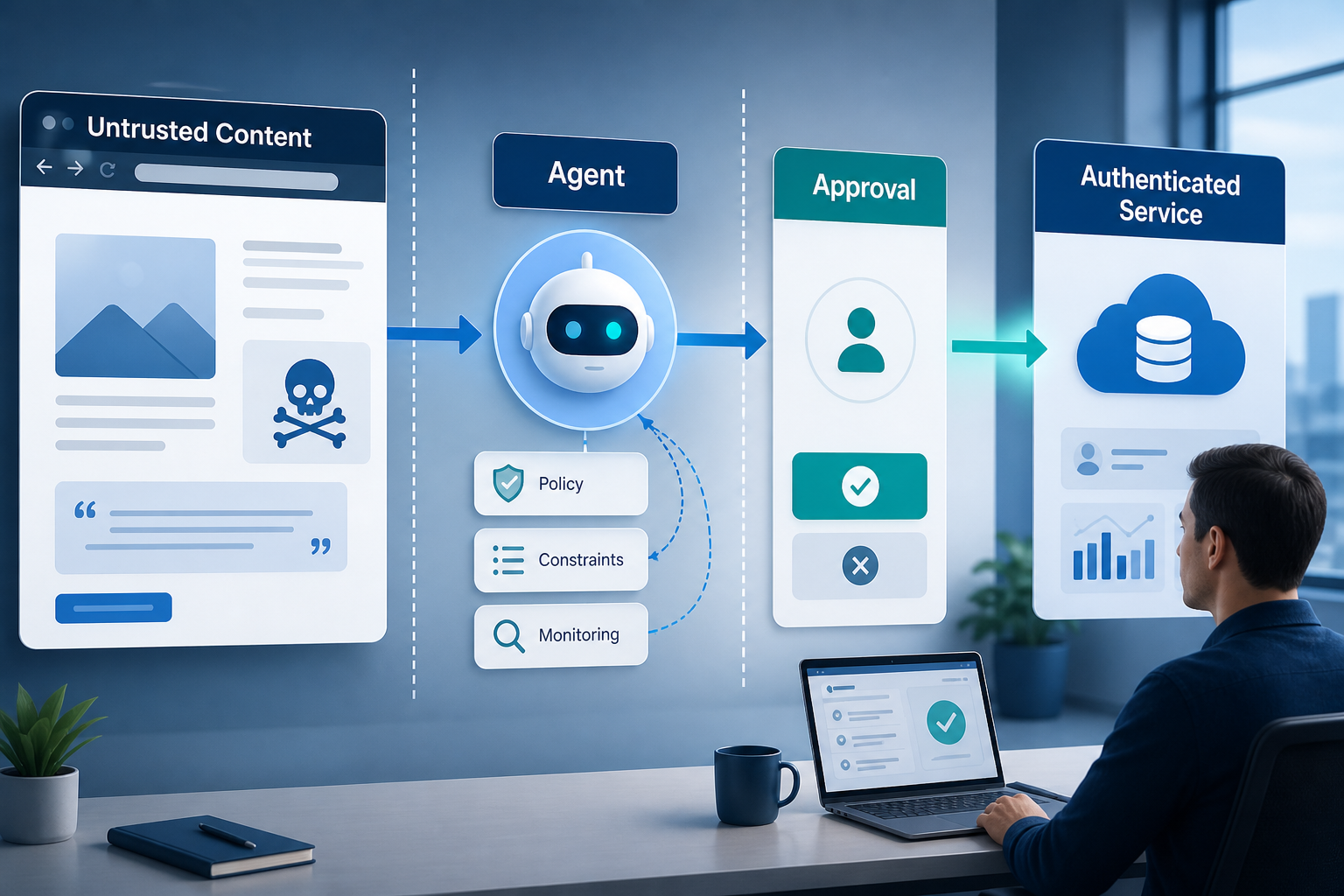
Agentic Browser Security: Prompt Injection, Permissions, and Safe Deployment
That combination creates risks that are different from ordinary browsing and traditional automation. The most important is indirect prompt injection, where hostile instructions hidden in web content attempt to redirect the agent away from the user's goal. Google describes indirect prompt injection as a primary new threat for agentic browsing and has introduced layered defenses that include origin constraints, independent action checks, threat detection, and user confirmation for sensitive actions. Google's Chrome security architecture is a useful reference for how browser-agent defenses are evolving.
View Details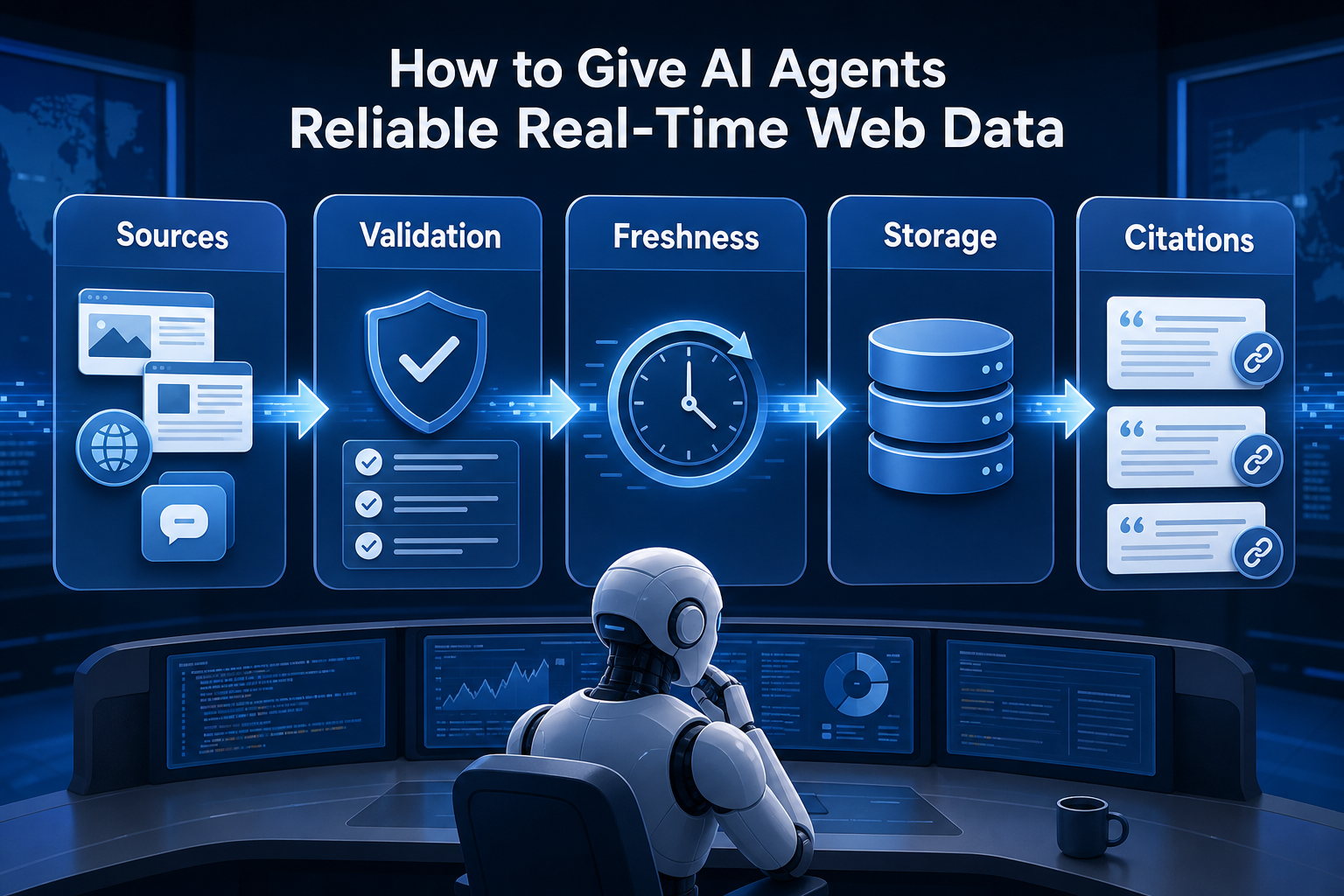
How to Give AI Agents Reliable Real-Time Web Data
A production-ready solution therefore needs more than a web scraper. It needs a web data layer that connects acquisition, validation, storage, retrieval, security, and observability. This guide explains how to design that layer.
View Details