
How to Choose a Proxy Provider in 2026
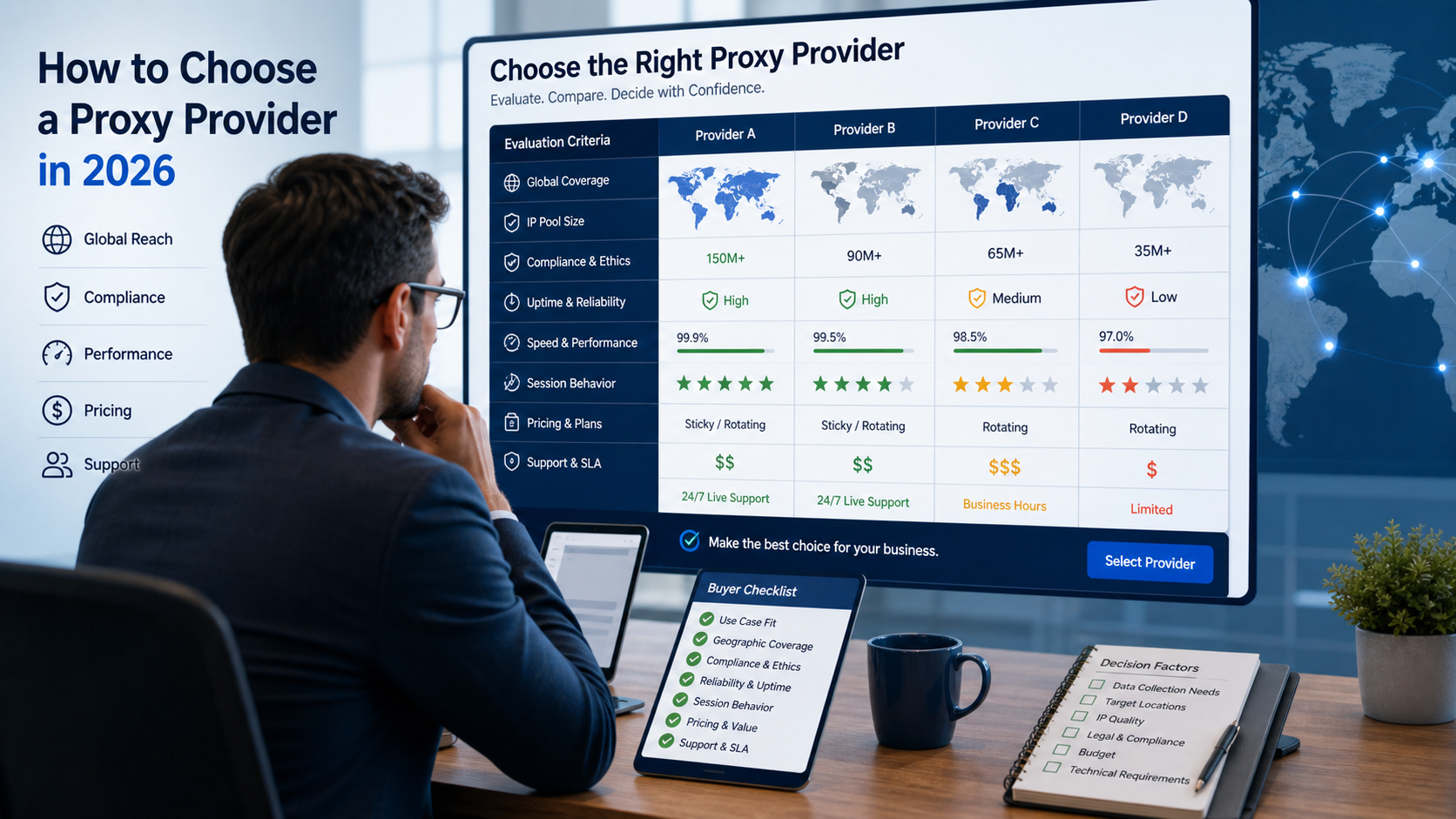
If you are searching for the best proxy provider, the most useful answer is this: there is no single best provider across all workloads. The right choice depends on what is more important for your team: broad residential coverage, fine-grained geo-targeting, managed unblocking tools, self-serve pricing, ethical sourcing, protocol support, or procurement overhead. A provider that is ideal for enterprise-scale public data collection may be wrong for a developer pilot, and an inexpensive network may become costly if your workflow needs sticky sessions, advanced targeting, or hands-on support.
If you are searching for the best proxy provider, the most useful answer is this: there is no single best provider across all workloads. The right choice depends on what is more important for your team: broad residential coverage, fine-grained geo-targeting, managed unblocking tools, self-serve pricing, ethical sourcing, protocol support, or procurement overhead. A provider that is ideal for enterprise-scale public data collection may be wrong for a developer pilot, and an inexpensive network may become costly if your workflow needs sticky sessions, advanced targeting, or hands-on support.
What you are really buying
MDN defines a proxy server as an intermediary used when navigating different networks on the internet, intercepting requests and returning or forwarding responses. In business terms, a proxy provider is selling you managed network identity, routing controls, and operational tooling around that routing layer. That is why “IP count” alone is a weak buying signal. A large network can still be a poor fit if authentication is awkward, sessions are unstable, geo-targeting is coarse, or support disappears the moment something breaks.
This is also where buyers confuse proxy types. Residential proxies are often chosen for realism and lower block rates. Datacentre proxies are usually faster and cheaper. ISP or static residential proxies sit in the middle, offering longer-lived identities with more residential-looking characteristics. SOCKS5 support matters if your tooling needs a lower-level transport path rather than a strictly HTTP-oriented workflow. Webshare, IPRoyal, Decodo, Bright Data, SOAX, and others all document SOCKS5 or mixed protocol support in different ways, but the important question is not whether the acronym appears on a pricing page. It is whether it matches the traffic pattern your tools actually generate.
For the LycheeIP implementation details behind this step, review LycheeIP proxy infrastructure.
For the LycheeIP implementation details behind this step, review rotating residential proxies.
For the LycheeIP implementation details behind this step, review static residential proxies.
For the official technical reference behind this point, see MDN HTTP overview.
The shortlist should be based on use case, not hype
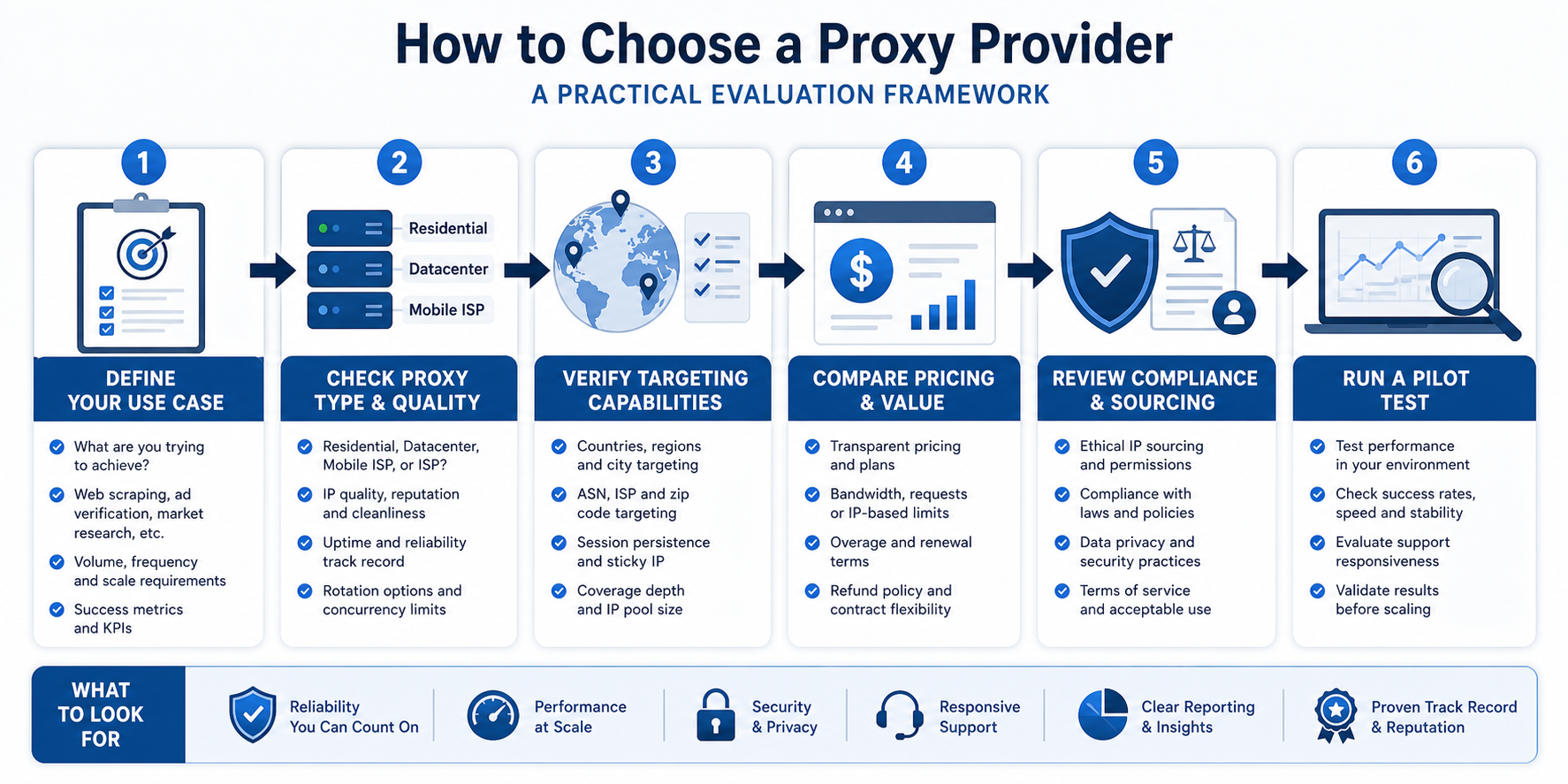
For enterprise-scale public data collection and managed unblocking, Bright Data and Oxylabs belong on most shortlists. Bright Data documents 400M+ residential IPs across 195+ countries, fine-grained targeting, and an explicit opt-in, compensated sourcing model. Oxylabs advertises 175M+ residential IPs, 195-country coverage, web-data tooling for scraping and AI workflows, and an ethics code describing proxies as sourced from ISPs or fully consenting, rewarded participants. If your team needs not just IPs but also unblocking, scraping products, and procurement reassurance, these providers are obvious candidates to test first.
For mid-market teams that want a strong self-serve experience, Decodo and SOAX are compelling. Decodo says it operates with 125M+ IPs across 195+ locations, advertises residential pricing from $2 per GB, and leans into easy onboarding, free trials, and adjacent scraping tools. SOAX positions itself around routing quality and granular residential coverage, advertising 155M+ residential IPs in 195+ locations, a quoted 99.95% success rate, and a low-cost three-day trial. In practice, these are often the providers shortlisted by teams that need serious capability without the full enterprise sales cycle on day one.
For cost-sensitive pilots and developer-led experiments, Webshare and IPRoyal are worth attention. Webshare advertises 80M+ rotating residential IPs, a free plan, and residential entry pricing from $1.40 per GB, which can make it attractive for smaller tests or teams that want to validate a workflow before moving to a bigger contract. IPRoyal positions itself differently, emphasising flexible purchasing and non-expiring traffic, with a 32M+ residential pool in 195+ countries and small-package residential pricing that drops significantly at scale. That non-expiring model can be attractive if your usage is irregular rather than monthly and predictable.
For teams that care strongly about sourcing transparency and a more explicit ethics narrative, Rayobyte deserves consideration. Rayobyte states that it processes large volumes of public web data, operates a 40M+ residential pool, and offers residential plans starting from $3.50 per GB with lower rates at volume. Its public materials also emphasise ethical sourcing and, in some purchase flows, non-expiring unused bandwidth. That makes it a reasonable candidate for buyers who want a more transparent discussion of sourcing and commercial terms rather than a pure “largest network wins” mentality.
The buying criteria that actually change outcomes
The first is targeting depth. Country-level coverage is table stakes. City, ZIP, ASN, and carrier targeting materially change what you can test or collect. Bright Data and Oxylabs both document fine-grained targeting, while SOAX also leans heavily on targeting precision in its residential offering. If your workflow depends on local SERP visibility, ad verification, or region-specific validation, this matters more than a headline IP count.
The second is commercial model. Monthly commitments, strict PAYG, non-expiring traffic, paid trials, and free plans create very different cost behaviour. Decodo publishes residential pricing from $2 per GB, SOAX pushes packaged plans plus a small trial, Webshare uses a low-entry self-serve model, and IPRoyal’s pricing changes substantially between small and bulk purchases while marketing non-expiring traffic. Cost is never just the headline rate. It is the combination of minimum commitment, expiry rules, support tier, and how much failed traffic you can tolerate.
The third is adjacent tooling. Some providers are close to being infrastructure vendors. Others are becoming workflow platforms. Bright Data, Oxylabs, and Decodo all market scraping or AI-adjacent products alongside proxies. That can reduce build time if your team would otherwise assemble proxy management, CAPTCHA handling, scraping logic, and data delivery separately. The trade-off is dependence on a broader vendor stack.
The fourth is ethics and sourcing. This is not a marketing detail. It is procurement due diligence. Bright Data’s docs describe an explicit opt-in, compensated model for residential participants. Oxylabs’ ethics code refers to ISP sources or fully consenting, rewarded individuals. SOAX publishes ethical guidelines, and Webshare publicly emphasises ethically sourced residential proxies. If a provider cannot explain where residential IPs come from, that is not a minor omission. It is a risk indicator.
How to run a serious pilot before you sign anything
Do not choose a proxy provider from a comparison table alone. Run a controlled pilot on your real targets.
Start by testing the exact domains and request patterns your production workflow will use. Measure success rate, median latency, geo accuracy, and session stability separately. A provider that works well for general browsing may underperform on heavily defended sites or highly localised targets.
Then test operational details that sales pages rarely make clear:
- authentication options and rotation behaviour
- sticky-session duration
- protocol compatibility with your browsers, scripts, or scraping stack
- dashboard usability and API ergonomics
- support responsiveness when a target starts blocking requests
- billing behaviour during retries or failed requests
This is where short trials and free plans become valuable. Webshare’s free tier, SOAX’s inexpensive trial, and Decodo’s free-trial positioning all make it easier to test fit before commitment.
Finally, insist on a small exit plan. Before you buy, know how easily you can migrate credentials, session logic, allowlists, and monitoring to another provider. The best time to think about vendor lock-in is before the first annual contract, not after your collection pipeline depends on one proprietary configuration model.
For the LycheeIP implementation details behind this step, review AI-powered browser automation hub.
For the official technical reference behind this point, see Anthropic documentation.
Compare LycheeIP Proxy Options for Your Use Case
Legal and policy guardrails buyers should not skip
A proxy is infrastructure. It is not permission.
The Ninth Circuit’s 2022 hiQ v LinkedIn opinion reinforced a narrow point under the CFAA: where a site is publicly accessible and no authentication is generally required, “without authorisation” under that statute may not apply in the same way. But that does not mean every scraping or automation use case is lawful or contractually safe. Terms of service, privacy law, sector rules, and other claims still matter. Proxy procurement should therefore sit inside a broader policy review, not outside it.
There is also a conduct layer that many buyer guides ignore entirely. The FTC’s 2024 final rule banning fake reviews and testimonials allows the agency to seek civil penalties against knowing violators. In plain language, if a workflow is designed to create deceptive reviews, testimonials, or similar fraud, a premium proxy network does not make the risk disappear. It may only make the behaviour more scalable. That is one reason serious proxy selection should include acceptable-use review and internal controls, not just performance testing.
Frequently Asked Questions
Which proxy provider is best overall?
There is no defensible universal answer. Bright Data and Oxylabs are strong for enterprise-scale needs and adjacent tooling; Decodo and SOAX are strong mid-market options; Webshare and IPRoyal appeal on self-serve affordability and flexibility; Rayobyte stands out for buyers who care about sourcing transparency and straightforward commercial terms.
What matters more, IP count or targeting?
For many workflows, targeting matters more once a provider is above a basic scale threshold. City, ZIP, ASN, and carrier control often shape results more than raw headline pool size.
Are residential proxies always better than datacentre proxies?
No. Residential proxies often look more realistic to target sites, but datacentre proxies can be faster and cheaper. The right type depends on your target sensitivity, required uptime, and whether you need long-lived or rotating identities.
How important is ethical sourcing?
Very important. Residential proxy networks involve real user devices or ISP-originated identities, so sourcing transparency is part of vendor risk, not just branding. Leading providers now publish sourcing or ethics statements for exactly that reason.
Can a proxy provider make scraping lawful by itself?
No. A proxy changes how traffic is routed. It does not override contracts, privacy obligations, platform rules, or deceptive-practice laws. The strongest competing resource on this topic is not the one with the longest ranking table. It is the one that helps a reader spend money wisely. Shortlist by workflow, verify claims on your actual targets, scrutinise sourcing and support, and treat proxies as one part of a lawful, well-governed data collection stack rather than a magic layer that solves everything.
Related LycheeIP Guides and Resources

Recommended Articles
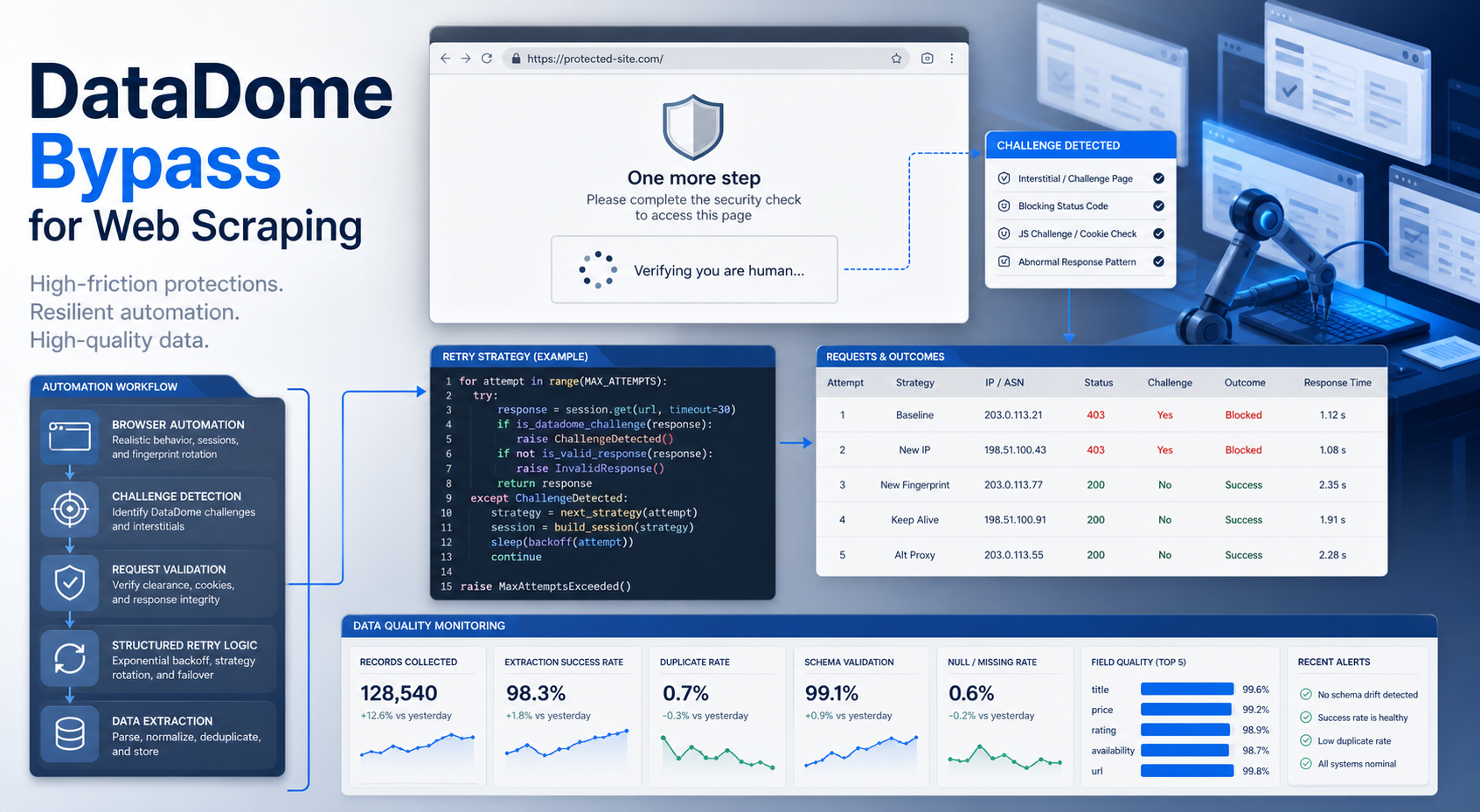
DataDome Bypass for Web Scraping
DataDome Bypass for Web Scraping
View Details
Web Scraping Rate Limiting: How to Handle 429s, Backoff, and Concurrency
Web scraping rate limiting is the engineering discipline of keeping an authorized collection workload inside a target service's acceptable request envelope. When that envelope is exceeded, a server may respond with HTTP 429 Too Many Requests, delay responses, or apply other controls.
View Details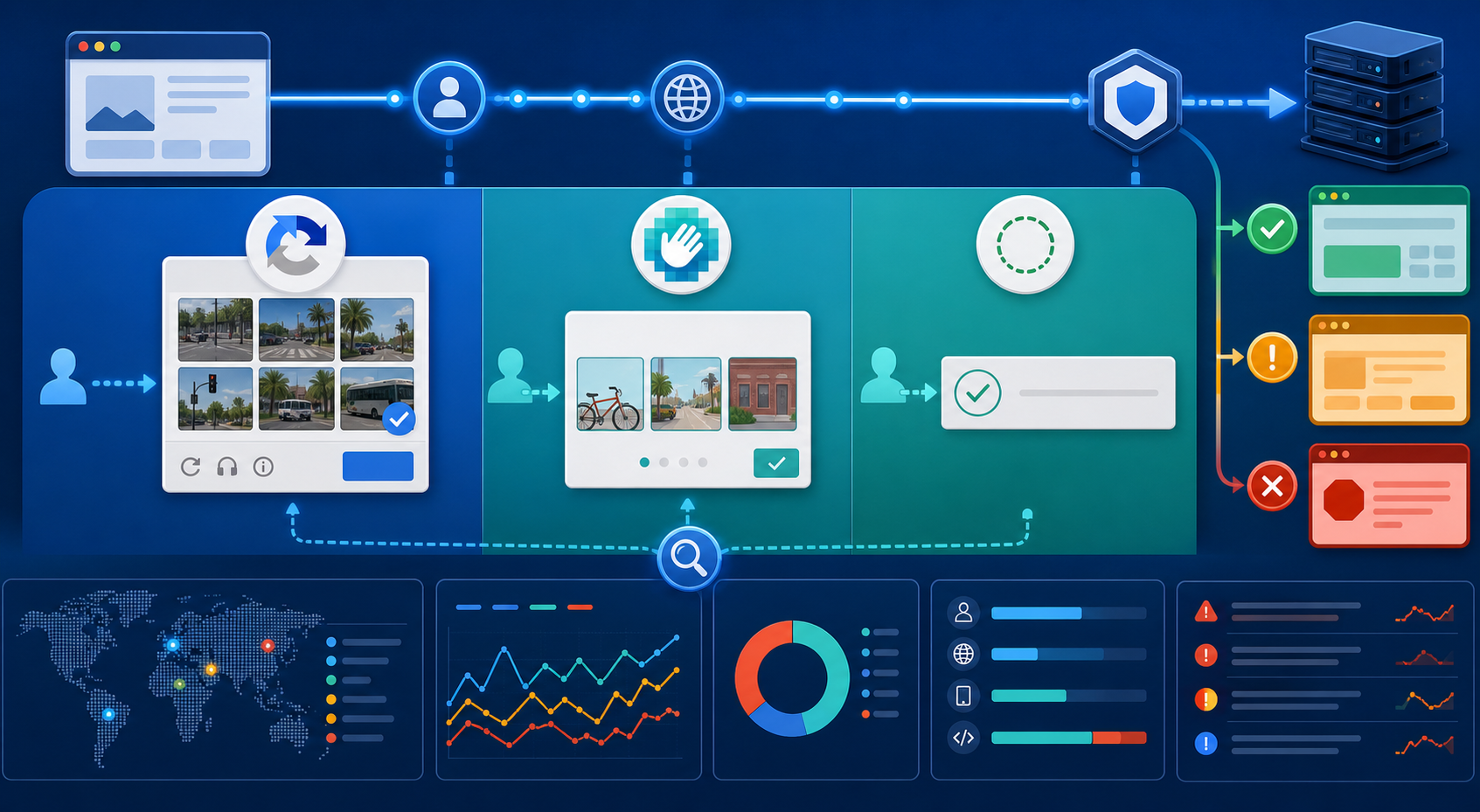
reCAPTCHA vs hCaptcha vs Cloudflare Turnstile: What Scraping Teams Need to Know
If an authorized data-collection workflow suddenly stops at a verification screen, identifying the protection system matters before you change code, browser settings, or proxy infrastructure. reCAPTCHA vs hCaptcha vs Turnstile is not simply a branding comparison. The three systems can expose different browser flows, token models, risk decisions, and failure symptoms.
View Details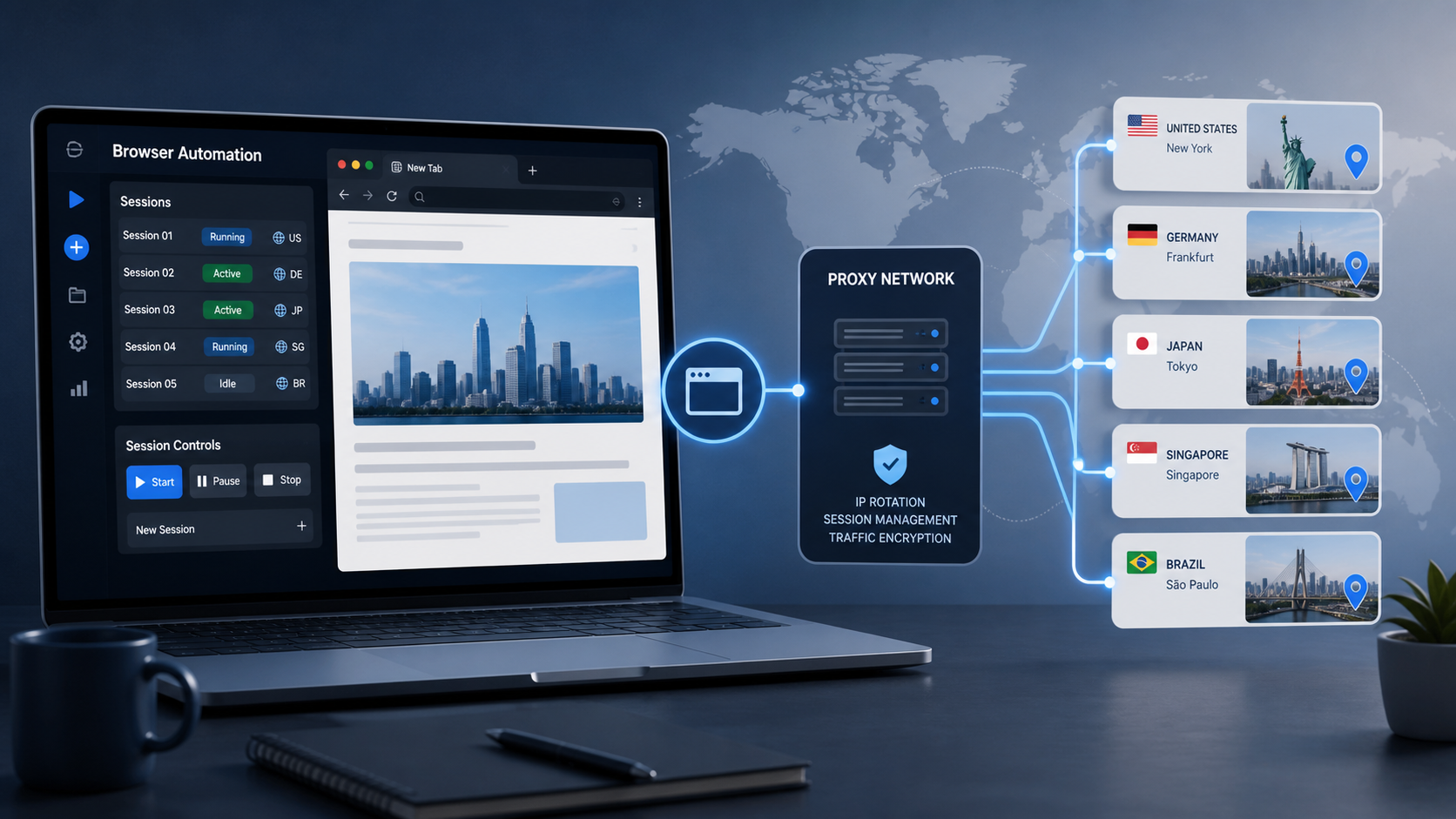
Browser Automation Proxies: IPs, Geo-Targeting, Sessions, and AI Agents
A browser automation proxy belongs to the network layer of Playwright, Selenium, cloud-browser, and AI-agent workflows. It changes how browser traffic is routed and can affect the source IP address, geographic egress, and session continuity seen by a destination site. It does not improve an AI model's reasoning, repair browser logic, or guarantee that a website will accept the session.
View Details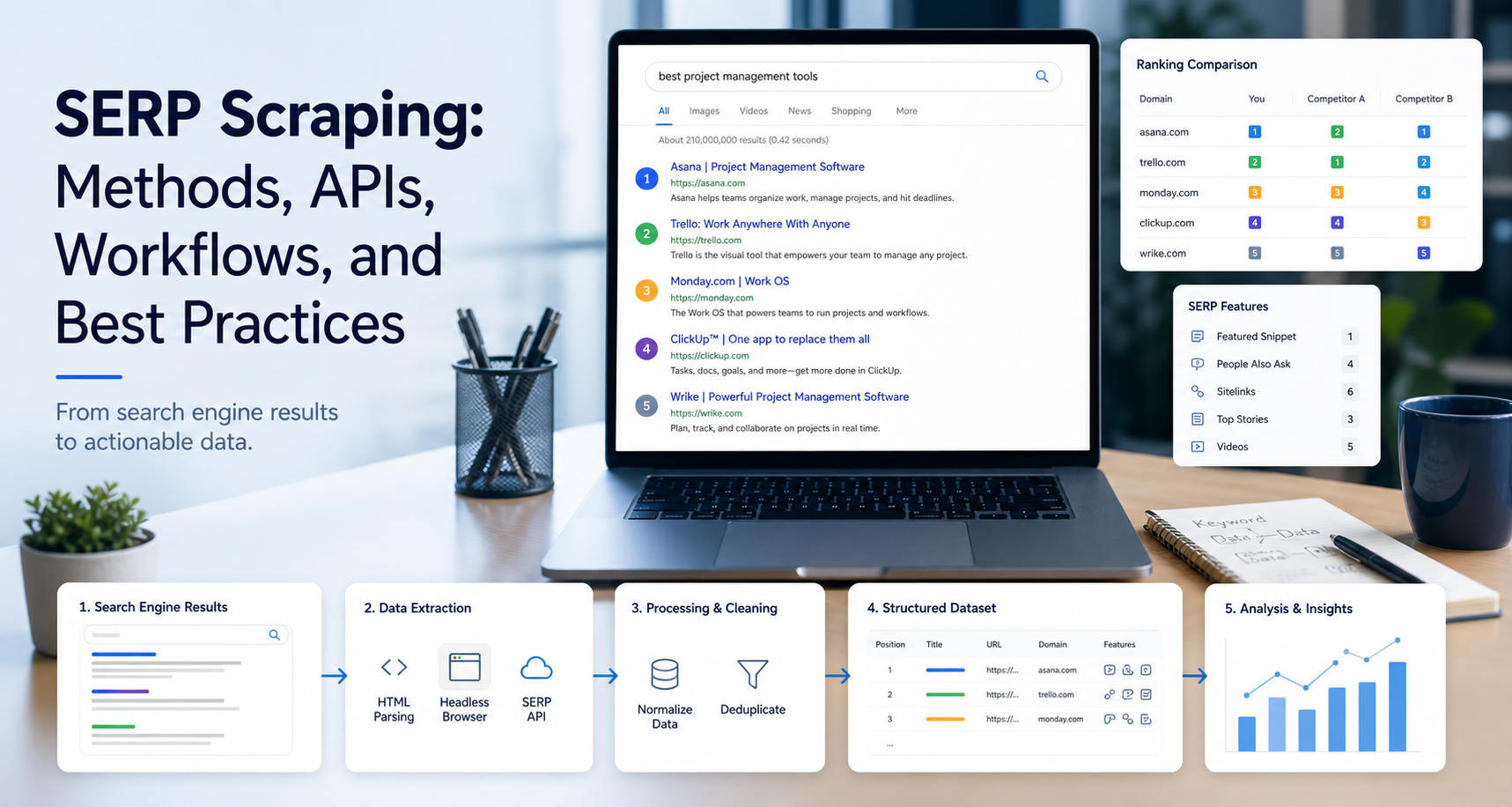
SERP Scraping: Methods, APIs, Workflows, and Best Practices
SERP scraping is the automated collection of information from search engine results pages. A SERP scraper can capture organic rankings, advertisements, featured snippets, People Also Ask questions, local results, shopping listings, images, and other search features, then convert them into structured data for analysis.
View Details