
Data Center Crisis: Infrastructure at Breaking Point
AI data centers are consuming critical resources faster than our physical grid can sustain. As artificial intelligence transitions from an experimental technology to mission-critical infrastructure, the physical backbone supporting this revolution is buckling under unprecedented strain.
The exponential growth of large language models (LLMs), generative AI, and heavy machine learning workloads has created a perfect storm: skyrocketing energy demands are colliding with aging electrical grids, massive water consumption is intensifying during historic global droughts, and infrastructure expansion is vastly outpacing our ability to build sustainably.
This is not a distant, theoretical future. Data center operators, utility companies, and environmental regulators are confronting these constraints right now. Each new frontier model release amplifies resource consumption beyond what regional infrastructures were designed to handle. For developers, data engineers, and policymakers, the core question has shifted: it is no longer whether AI will transform our world, but whether our physical world can support the scale of the AI infrastructure we are building.
Optimize AI Pipelines with LycheeIP
The Energy Grid Under Siege
The Mathematics of AI Power Draw
The raw numbers tell a stark story about computational cost. A single generative AI query (such as a ChatGPT prompt) consumes approximately 2.9 watt-hours of electricity—roughly ten times more than a standard search engine query.
When you scale that power draw across billions of daily interactions and add the massive, continuous training runs required for foundation models, the grid impact is staggering. According to the International Energy Agency (IEA), data centers currently account for 1-2% of global electricity consumption, a baseline figure projected to double to nearly 4% by the end of the decade.
The AI boom has fundamentally altered the timeline and scale of facility engineering:
- Traditional Data Centers: Historically operated with power densities of 5 to 10 kilowatts (kW) per server rack.
- AI Training Clusters: Modern GPU racks (like NVIDIA's H100 clusters) require 50 to 100 kW per rack.
- Next-Generation Facilities: Currently targeting 200+ kW per rack, requiring specialized liquid cooling and radically upgraded electrical mains.
Localized Grid Bottlenecks
Aggregate statistics often mask the localized crises already emerging in major tech hubs:
- Northern Virginia (Data Center Alley): The world's largest data center market has seen power demand force local utility Dominion Energy to delay new facility connections. Upgrading the grid to handle this load requires years of substation construction and billions in new transmission lines.
- Ireland: The national grid operator has imposed severe restrictions on new data center connections around Dublin, where tech facilities already consume nearly 20% of the nation's total electricity.
- Singapore: Recently concluded a three-year moratorium on new data center development to strictly prevent grid destabilization.
The Renewable Energy Paradox
While major hyperscalers have made ambitious commitments to run on 100% clean energy, the intermittent nature of solar and wind generation creates a massive challenge for data centers that require flawless 24/7 uptime. Because grid-scale battery storage has not yet scaled sufficiently to bridge the gap during windless nights, many facilities are forced to rely on natural gas peaking plants or diesel generators for backup. This physical reality undermines decarbonization goals, even as tech giants purchase millions of dollars in renewable energy credits.
Water Crisis Deepens During Drought
The Cooling Conundrum
While energy consumption dominates the headlines, water usage presents an equally pressing—and in some regions, more immediate—constraint. The same high-density GPUs driving electricity demand generate intense heat that must be continuously dissipated to prevent catastrophic hardware failure. For decades, evaporative water-cooling systems have provided the most cost-effective thermal management, but the sheer volumes required by modern AI infrastructure are staggering.
- Average Hyperscale Consumption: A standard large-scale facility consumes 300,000 to 500,000 gallons of water daily—equivalent to the usage of a small city.
- Corporate Footprints: Recent sustainability reports show massive spikes. Google's data centers withdrew roughly 4.3 billion gallons in a single year (a 20% year-over-year increase), while Microsoft's water consumption jumped 34% to nearly 1.7 billion gallons as its AI infrastructure expanded.
Community Conflicts and Scarcity
During severe drought conditions affecting the American Southwest and regions globally, this becomes a crisis of strict resource allocation. Data centers in water-stressed areas find themselves competing directly with agriculture, residential users, and vulnerable ecosystems for a finite, dwindling supply.
The town of Mesa, Arizona, perfectly exemplifies this tension. Google operates a massive campus there, consuming millions of gallons annually from an aquifer system already strained by decades of overuse. Local residents and agricultural operators, who face mandatory household cutbacks and crop restrictions, are increasingly questioning whether prioritizing corporate AI infrastructure over residential drinking water is sustainable.
Evaluating Alternative Cooling
The U.S. Department of Energy and industry leaders are actively exploring alternative cooling technologies, though each carries distinct trade-offs:
- Air Cooling: Uses ambient air, but requires significantly more electricity to run massive fans and struggles completely in high-temperature climates.
- Immersion Cooling: Servers are submerged entirely in non-conductive dielectric fluid. It shows massive promise for efficiency but requires a complete, expensive overhaul of existing rack infrastructure.
- Closed-Loop Systems: Recycles coolant to drastically minimize consumption, but requires substantial upfront capital investment and doesn't completely eliminate water use.
Optimize AI Pipelines with LycheeIP
The Sustainability Reckoning
Innovation vs. The Jevons Paradox
Can the tech industry's current AI growth trajectory continue without fundamentally compromising long-term planetary sustainability? The optimistic scenario points to rapid hardware innovation. New custom silicon (like Google's TPU v5 or advanced NVIDIA architectures) delivers significantly better performance-per-watt than previous generations. Software optimizations—like model quantization and sparse routing—reduce resource requirements without sacrificing capability.
However, these innovations are currently losing the race against overall demand. This is the classic Jevons Paradox playing out in real-time: improvements in computational efficiency simply lower the cost of AI, enabling expanded use cases that drastically increase total aggregate consumption. A 30% improvement in energy efficiency per computation is functionally erased when computation volume doubles every few months.
Policy and Regulatory Interventions
Policy and regulation will likely play the determining roles in this crisis:
- The European Union: Currently drafting stricter sustainability requirements for data center operations, including mandatory efficiency reporting and strict renewable energy minimums.
- U.S. State Interventions: Implementing aggressive environmental impact reviews for large facilities, with some regions debating cost-allocation bills to prevent utility companies from passing grid upgrade costs onto residential ratepayers.
Yet, policy moves slowly. The intense economic competition between regions for data center development creates a "race-to-the-bottom" dynamic. States with surplus coal power market cheap electricity to attract energy-intensive operations, directly perpetuating fossil fuel dependence.
LycheeIP (Developer-First Proxy Infrastructure)
Long before massive data centers run the heavy compute cycles required to train an AI model, data engineering teams must execute the foundational step: gathering massive, diverse public datasets. When web scraping scripts encounter geo-blocks, rate limits, or CAPTCHAs, they often execute endless server retries, wasting valuable compute uptime and exacerbating energy consumption. LycheeIP is a developer-first proxy and data infrastructure provider designed to optimize this exact high-volume routing challenge. By routing your data acquisition pipelines through intelligent dynamic IP routing, engineering teams can avoid anti-bot bottlenecks entirely, fetching data efficiently on the first attempt. For pipelines requiring massive, parallelized extraction of public documentation, high-performance datacenter proxies ensure low-latency, high-bandwidth throughput that minimizes server runtime. Conversely, if your QA team needs to securely validate localized AI features against specific external APIs, deploying dedicated static IPs ensures a stable, allowlisted connection without dropping packets. Integrating LycheeIP directly into your data collection layer allows your technical operators to drastically reduce wasted server compute, lowering your infrastructure footprint before the energy-intensive model training phase even begins.
The Choice Ahead
The data center crisis is not fundamentally about hardware limitations, it is about priorities and proactive planning. The infrastructure to sustainably support continued AI growth exists in theory: advanced nuclear micro-reactors, sophisticated closed-loop water recycling systems, and highly distributed computing architectures that spread the thermal load across cooler geographic regions.
What remains uncertain is whether the industry will implement these solutions proactively, or reactively through crisis response. The early warning signs are glaring: grid connection delays, drought-driven water restrictions, and surging residential utility bills.
The alternative, continuing the current "build at all costs" trajectory until hard resource limits force abrupt constraints, risks stranding billions in capital investments and heavily eroding public trust. The ultimate success of the AI revolution may depend less on the next algorithmic breakthrough, and entirely on our ability to build the physical, unsexy infrastructure, power plants, water systems, and cooling facilities—that makes sustained innovation possible.
Optimize AI Pipelines with LycheeIP
Frequently Asked Questions
Q: How much energy do AI data centers actually consume compared to traditional data centers?A: AI workloads are significantly more energy-intensive. While conventional data centers operate at 5 to 10 kilowatts per rack, AI training facilities require 50 to 100 kilowatts per rack. A single generative AI query uses approximately 2.9 watt-hours, roughly ten times more than a standard search. Industry-wide, data centers currently account for 1-2% of global electricity consumption, a figure projected to reach nearly 4% by 2030.
Q: Why can't renewable energy alone solve the data center power problem?A: While tech companies have heavily committed to renewables, the intermittent nature of solar and wind creates severe challenges for data centers requiring 24/7 flawless uptime. Because grid-scale battery storage hasn't scaled enough to bridge gaps on windless nights, facilities are forced to maintain fossil fuel backup systems (natural gas or diesel) to ensure reliability, undermining their decarbonization goals.
Q: What alternative cooling technologies exist to reduce water consumption?A: Several alternatives to evaporative cooling are being aggressively explored. Air cooling uses ambient air but requires more electricity and struggles in hot climates. Immersion cooling submerges servers directly in non-conductive fluid for superior efficiency but requires complete, costly infrastructure redesigns. Closed-loop systems recycle coolant to minimize consumption but don't eliminate water use entirely.
Q: Are there regions where AI infrastructure expansion is more sustainable?A: Yes. Locations like Iceland, Norway, and parts of Canada provide abundant hydroelectric power, naturally cold climates that drastically reduce mechanical cooling requirements, and highly stable water supplies. While these regions offer better resource profiles, they often lack the established fiber connectivity or localized tech talent pools found in traditional hubs like Silicon Valley or Northern Virginia.
Q: What policy measures could address the infrastructure crisis?A: Policymakers are considering several interventions: mandatory power-usage effectiveness (PUE) standards for new construction, strict renewable energy minimums, and comprehensive environmental impact reviews for large campuses. Some jurisdictions (like Dublin and Singapore) have utilized outright connection moratoriums to prevent grid destabilization, forcing companies to prove they are bringing their own green energy to the table before breaking ground.

Recommended Articles
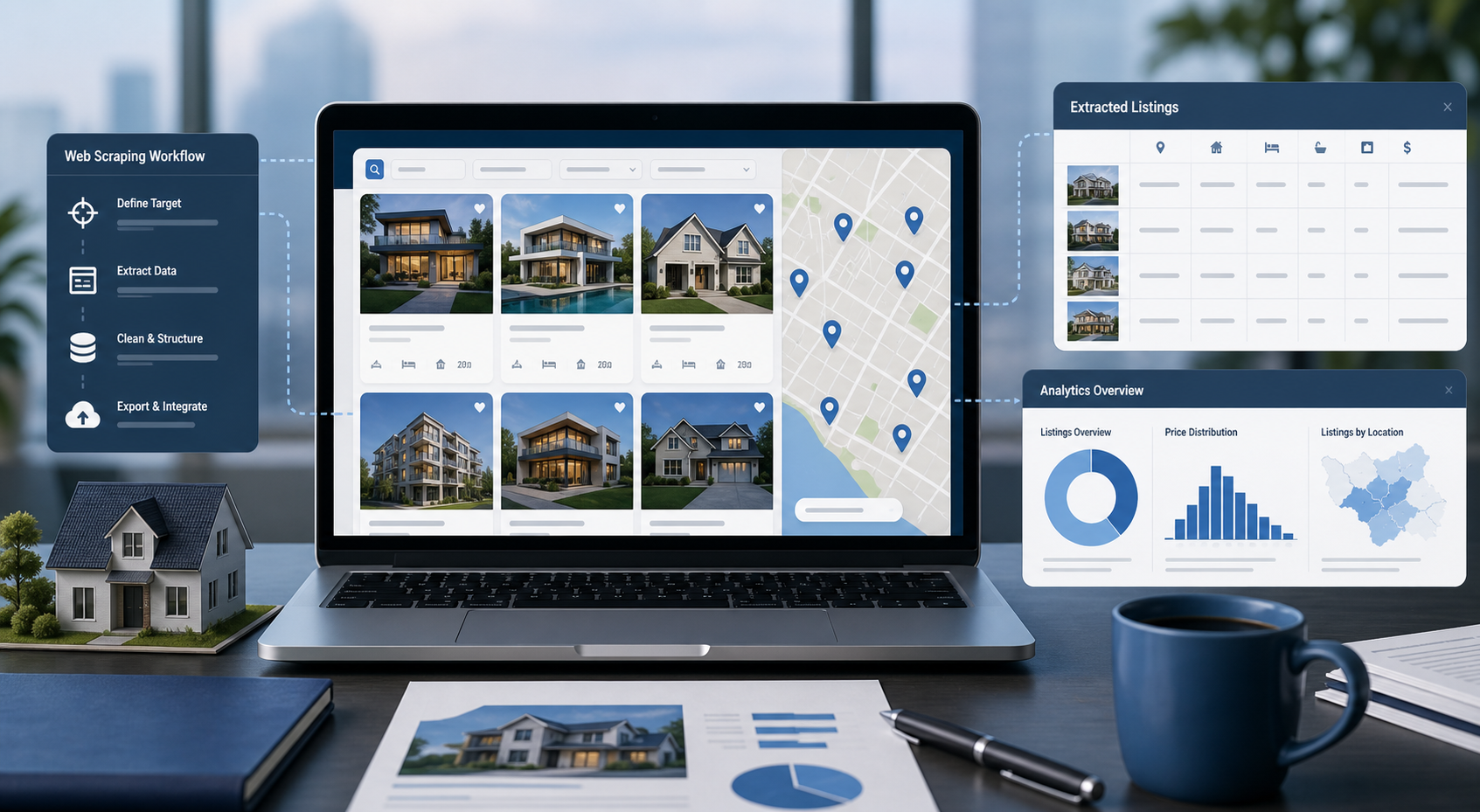
Best Real Estate Scrapers in 2026
Best Real Estate Scrapers in 2026
View Details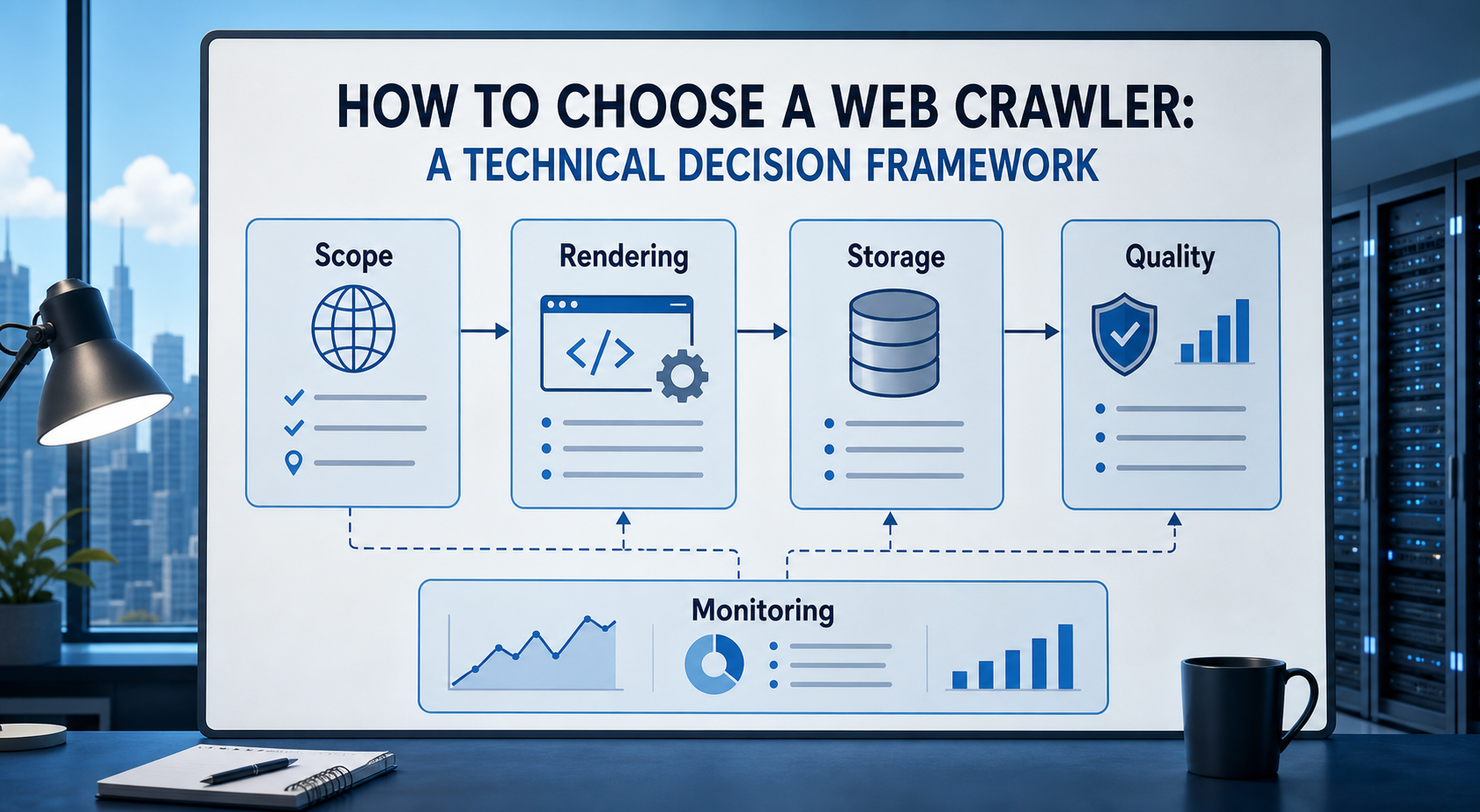
How to Choose a Web Crawler: A Technical Decision Framework
The wrong way to choose a web crawler is to begin with a list of products. The right starting point is the system you need to build. Before comparing tools, define:
View Details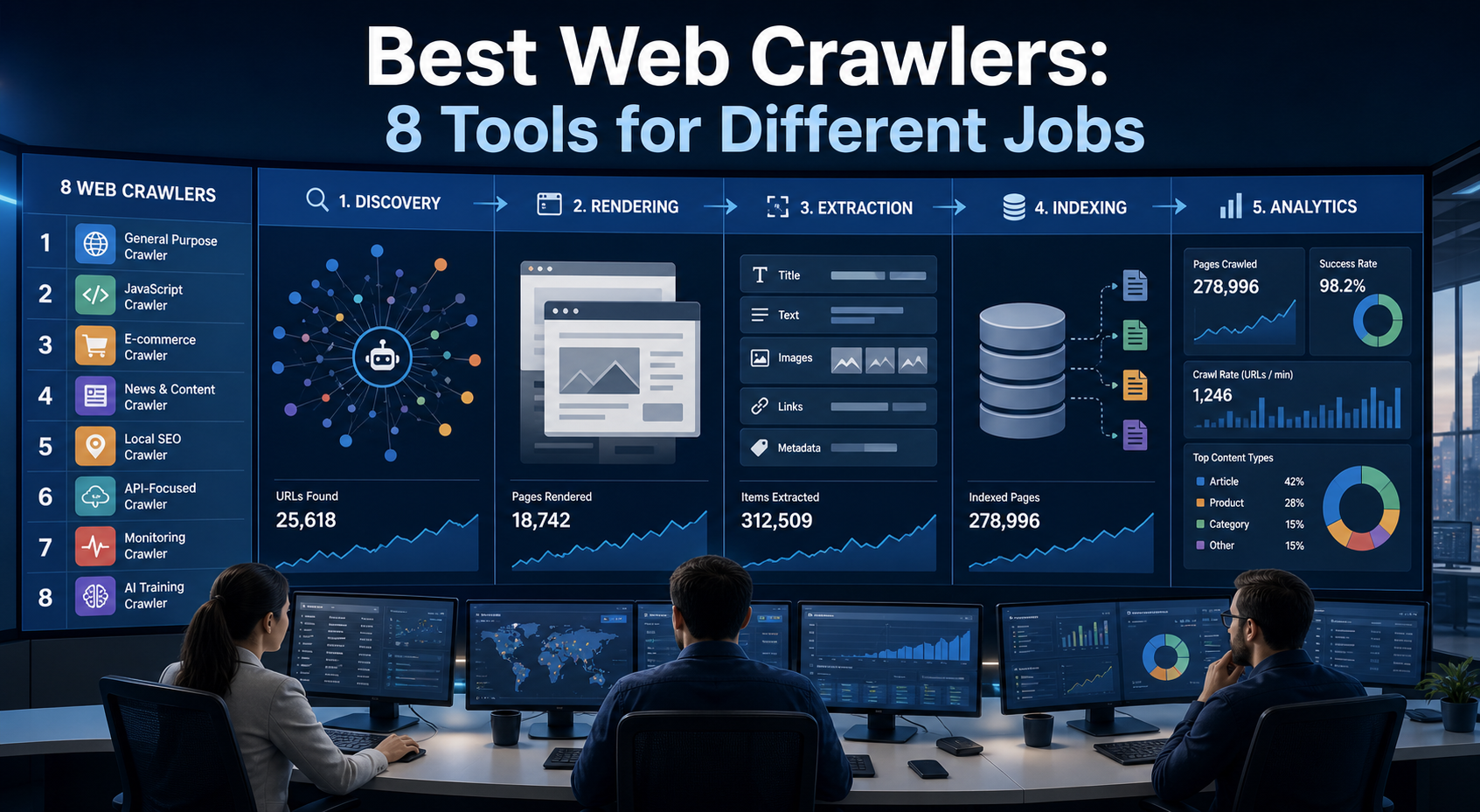
Best Web Crawlers: 8 Tools for Different Jobs
There is no single best web crawler for every project. A technical SEO audit, an AI knowledge pipeline, an internet archive, and a distributed search index may all involve crawling URLs, but they require different capabilities. The most useful way to compare web crawler tools is therefore to ask what job each one was designed to perform. This guide evaluates eight strong options across:
View Details
Web Scraping Ecommerce Websites With Python: A Practical Guide
Recommended meta title: Web Scraping Ecommerce Websites With Python: Guide Recommended meta description: Learn how to scrape ecommerce websites with Python using Requests, Beautiful Soup, Playwright, and Scrapy, with validation and scaling guidance. URL slug: /web-scraping-ecommerce-websites-python/
View Details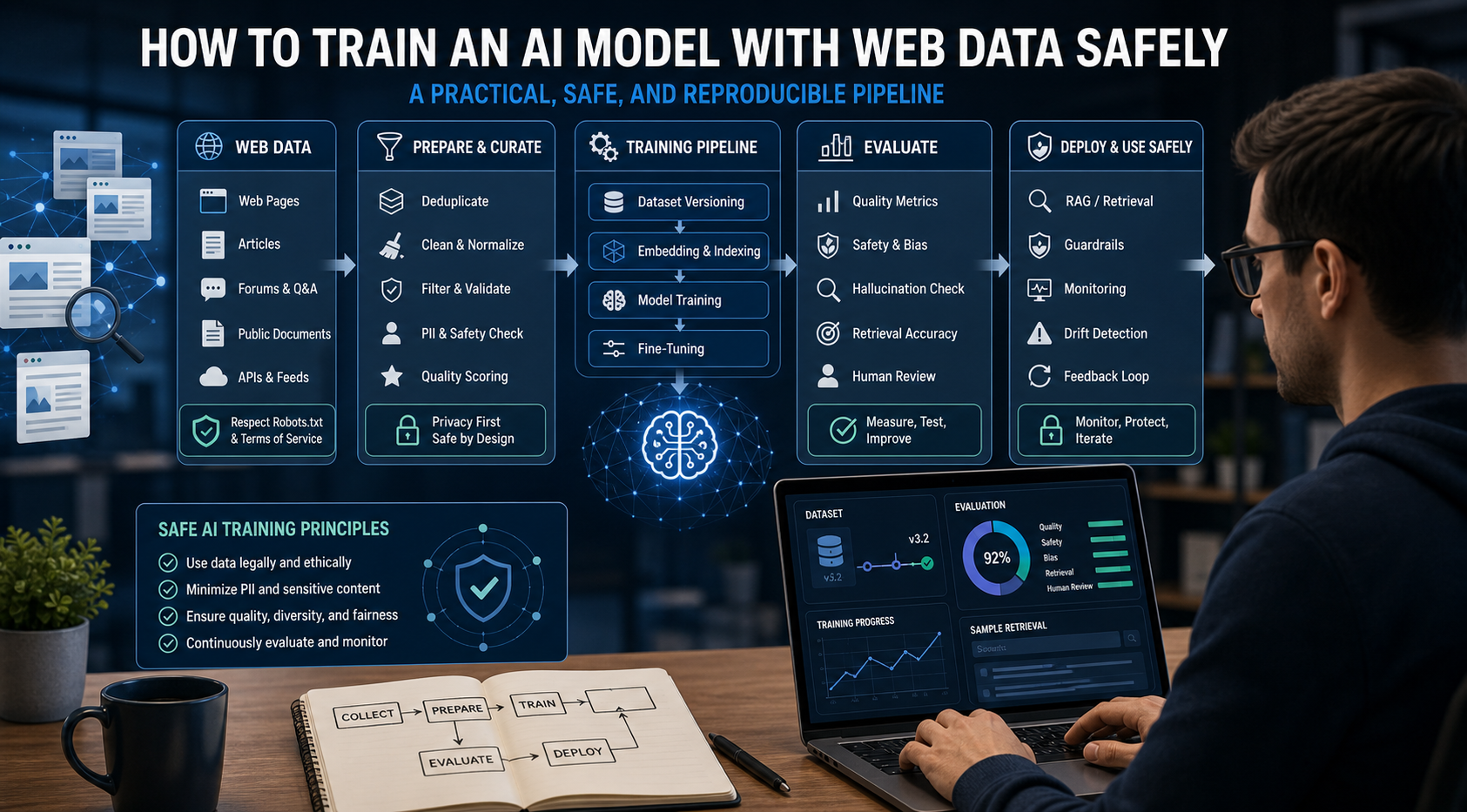
How to Train an AI Model With Web Data Safely
To train an AI model with web data, start by deciding whether you actually need training. Then collect representative sources, preserve provenance, remove duplicates and low-quality content, create leakage-resistant splits, build a baseline, fine-tune or train the appropriate model, and evaluate on real held-out examples before deployment.
View Details