
The Hidden Costs of AI Data Centers on Your Bills
Your electricity bill just doubled. AI data centers might be exactly why.
Across the United States, homeowners and technical operators alike are opening their utility statements to find shocking increases, sometimes 30%, 50%, or even 100% higher than the previous year. While inflation and fuel costs shoulder part of the blame, a less visible culprit is rapidly reshaping the American energy landscape: the explosive growth of AI data centers. These facilities demand unprecedented amounts of electricity, heavily straining local power grids and forcing residential customers to absorb the underlying infrastructure costs.
The artificial intelligence boom has created an insatiable appetite for computational power. Every generative AI query, every synthesized image, and every machine learning training session requires massive server farms operating around the clock. These facilities do not just use electricity, they devour it at scales that dwarf traditional commercial operations. As tech giants race to expand their capabilities, communities from rural Virginia to suburban Arizona are waking up to a harsh reality: their power bills are effectively subsidizing Silicon Valley's latest revolution.
Power Data Pipelines with LycheeIP
The Energy Hunger of AI Infrastructure
Unprecedented Power Demands
To understand why utility costs have surged, you must grasp the sheer mathematical scale of energy consumption that modern AI requires. According to recent reports from the International Energy Agency (IEA), U.S. data center electricity consumption skyrocketed from 108 terawatt-hours (TWh) in 2020 to roughly 183 TWh in 2024, accounting for over 4% of the nation's total electricity. By 2030, that figure is projected to reach an astounding 426 TWh.
The difference between traditional computing and AI workloads is staggering:
- The Query Gap: A single ChatGPT text prompt requires roughly 10 times more electricity than a traditional Google search.
- The Training Toll: Training a single large language model (LLM) like GPT-4 can consume upwards of 50 gigawatt-hours (GWh), the equivalent of what 1,000 American homes use in an entire year.
- The Hardware Shift: Traditional CPU-based server racks consume 5 to 15 kilowatts (kW) of power. Modern, AI-optimized GPU racks demand between 40 and 100+ kW.
How Grid Strain Translates to Higher Bills
The direct connection between data center expansion and your rising utility costs operates through several distinct mechanisms:
- Infrastructure Upgrades Passed to Consumers: When a new hyperscale data center arrives, the local utility must heavily upgrade transmission lines and substations. While tech companies typically pay initial connection fees, utilities frequently recover the broader grid improvement costs through base rate increases applied to all customers.
- Peak Demand Pricing: Data centers operate 24/7/365, creating a massive, unyielding baseload demand. This forces utilities to keep less-efficient, expensive "peaker" plants online or purchase emergency electricity on spot markets. These wholesale costs eventually flow through to retail rates.
- Capacity Scarcity: In concentrated regions, tech companies effectively compete with residential users for limited generation capacity. When demand approaches maximum supply limits, it triggers price spikes.
- Renewable Energy Cannibalization: Many hyperscalers commit to "green" operations by purchasing vast quantities of solar and wind power. While environmentally positive, this monopolizes the renewable energy available to the grid, forcing utilities to rely on more expensive fossil fuels to serve residential neighborhoods.
The Virginia Case Study
Nowhere is this dynamic clearer than in Northern Virginia's "Data Center Alley." In 2023, data centers accounted for approximately 26% of Virginia’s total state electricity consumption.
In early 2026, Virginia state regulators approved new rate increases for Dominion Energy that will add roughly $13 to $16 to average monthly residential bills by 2027. However, the regulatory battle yielded a crucial pivot: recognizing the disproportionate strain caused by tech giants, the State Corporation Commission established a new GS-5 rate class starting in 2027. This new classification specifically forces large data centers to sign 14-year contracts and cover up to 85% of their own transmission and distribution costs, attempting to shield residential ratepayers from future infrastructure shocks.
Communities Fight Back
The NIMBY Movement Goes Mainstream
As utility bills climb and massive cooling towers alter local skylines, a growing coalition of homeowners, environmental activists, and local officials is pushing back against unchecked data center expansion. What began as isolated zoning complaints has evolved into highly organized resistance.
- Georgia's Groundswell: In Douglas County, residents formed grassroots organizations after learning a proposed hyperscale facility would consume 1.6 million gallons of water daily for cooling, alongside massive electricity demands. Following months of intense pushback regarding resource drain and minimal local job creation, the tech giant withdrew its application.
- Arizona's Water Wars: The Phoenix metro area has become a fierce flashpoint. With the region already facing severe, climate-driven water scarcity and summer grid-reliability warnings, residents are actively protesting facilities that prioritize corporate compute power over residential drinking water.
- Ohio's Rate Rebellion: In central Ohio, where tech giants have collectively invested billions in infrastructure, residential customers of American Electric Power have seen rates increase aggressively over the past three years. Advocacy groups have filed formal complaints arguing that industrial customers, not households, should bear the brunt of generation expansion costs.
Beyond Utility Bills: The Full Cost Calculation
Community opposition now extends far beyond the monthly power bill, encompassing serious quality-of-life and civic concerns:
- Property Tax Inequities: Jurisdictions often use massive tax abatements to lure data centers, indirectly shifting the local tax burden onto residential property owners.
- Noise Pollution: The massive HVAC and liquid cooling systems required for GPU clusters generate a constant, low-frequency industrial hum in previously quiet suburban areas.
- Environmental Impact: Beyond electricity, communities are fighting the local ecosystem disruption caused by massive construction footprints and intensive groundwater usage.
- Limited Economic Benefit: Unlike traditional automotive or manufacturing plants, highly automated data centers create very few permanent jobs (often fewer than 50 per campus), offering a remarkably poor return on community infrastructure investments.
Power Data Pipelines with LycheeIP
The Political Powder Keg
A Populist Issue Takes Shape
As upcoming election cycles approach, energy costs driven by AI infrastructure are emerging as a potent, bipartisan populist issue. Progressive environmental advocates and conservative anti-regulation voices are finding rare common ground in opposing corporate cost-shifting.
Legislators are responding with targeted bills:
- Cost Allocation Reform: Following Virginia's lead, states are proposing strict legislative frameworks requiring data centers to pay the full cost of grid infrastructure upgrades, completely isolating residential ratepayers.
- Zoning Moratoriums: Dozens of local governments have enacted temporary moratoriums on new data center construction pending comprehensive grid-impact studies.
- On-Site Generation Mandates: New proposals would force data centers to build their own on-site renewable energy generation (like geothermal or advanced nuclear microreactors) rather than draining public grid capacity.
The 2028 Wildcard
Political strategists view surging energy costs as the ultimate "kitchen table issue." A household struggling with a doubled electricity bill represents a concrete grievance that resonates far more powerfully than abstract debates about AI safety. Candidates who challenge the tech industry's preferred regulatory environment and promise to protect the U.S. Department of Energy grid from corporate monopolization are finding highly receptive audiences.
Industry Response
Sensing the shifting political winds, tech companies are responding with a mix of genuine infrastructure investments and public relations mitigation:
- Offering voluntary community benefit agreements to fund local municipal services.
- Investing heavily in next-generation liquid cooling and immersion technologies to drastically reduce water consumption.
- Pushing aggressively into advanced nuclear power purchase agreements (PPAs) to generate their own baseload power.
However, critics maintain that these measures do not resolve the core conflict: whether ordinary citizens should financially subsidize the physical foundation of the AI revolution.
LycheeIP (Developer-First Proxy Infrastructure)
While massive, multi-gigawatt data centers handle the heavy compute required to train AI models, the foundational step of AI development, gathering the public datasets needed to feed those models, relies on highly efficient, distributed data collection. LycheeIP is a developer-first proxy and data infrastructure provider designed to handle the exact high-volume routing challenges inherent in building these AI systems. Data engineering teams consider LycheeIP when they need to securely and ethically aggregate public data, conduct geo-testing, or perform authorized QA testing without burning excess server uptime (and electricity) on blocked network requests.
By utilizing optimized dynamic IP routing to smoothly navigate target endpoints, or deploying high-performance datacenter proxies for rapid, low-latency data extraction, engineering teams can minimize wasted compute cycles during the data aggregation phase. Whether an AI project requires rotating networks for massive public data scraping or dedicated static IPs for stable API integrations, a resilient proxy layer ensures that your data pipelines run efficiently long before the energy-intensive model training ever begins.
The Path Forward
The collision between AI's insatiable energy appetite and standard household budgets represents a defining infrastructure challenge for the next decade. The resolution will likely follow one of these trajectories:
- Regulatory Reform: Strict, state-level frameworks that force full cost internalization by data center operators, legally preventing utilities from socializing expansion costs.
- Technological Innovation: Massive breakthroughs in GPU efficiency, photonic computing, or closed-loop liquid cooling systems that radically drop power usage effectiveness (PUE).
- Distributed Architectures: A pivot away from hyper-centralized, 500-megawatt campuses toward smaller, highly distributed computing nodes that place less acute stress on local transformers.
For homeowners staring down rising utility bills, the immediate question is whether relief will arrive via political intervention or market innovation. What is certain is that the physical, hidden costs of the cloud are becoming impossible to ignore. Your rising electricity bill is not just a number on a statement, it is the front line of a larger battle over who ultimately pays for the AI revolution.
Power Data Pipelines with LycheeIP
Frequently Asked Questions
Q: How much electricity does a typical AI data center consume?
A: Large AI-optimized data centers typically consume between 100 and 500 megawatts of electricity. To put that in perspective, a single 500-megawatt facility uses as much power as 400,000 homes. The IEA projects that total U.S. data center consumption could reach 426 terawatt-hours by 2030.
Q: Why does my electricity bill increase when a data center is built in my area?
A: Utilities must build new transmission lines and generation plants to support the massive power draw. Historically, utilities have recovered these multi-million-dollar infrastructure costs by raising the "base rate" charged to all customers, meaning residential households effectively subsidize the grid upgrades required by the tech companies.
Q: Which areas of the United States are most affected by data center-related utility cost increases?
A: Northern Virginia (particularly Loudoun County), central Ohio, the Phoenix metro area, and parts of Georgia have seen the most acute impacts. In Virginia, data centers accounted for roughly 26% of the state's total electricity consumption in 2023.
Q: How many jobs do data centers create compared to other industries?
A: Data centers create remarkably few permanent jobs, typically fewer than 50 full-time positions per campus. Because they are highly automated, they offer a much lower employment return-on-investment for local communities compared to traditional manufacturing plants of the same physical size.
Q: What can homeowners do to address rising electricity costs related to data centers?
A: Residents can engage with local zoning boards when new facilities are proposed, support advocacy groups challenging unfair tax abatements, and pressure state Public Utilities Commissions to implement targeted rate classes (like Virginia's new GS-5 class) that force high-load data centers to pay for their own infrastructure upgrades.
Q: Are tech companies required to pay for the grid infrastructure their data centers need?
A: Historically, tech companies paid standard connection fees while the broader grid upgrade costs were socialized across all ratepayers. However, regulatory backlash is changing this. States are increasingly requiring data centers to sign long-term contracts and pay for up to 85% of the new transmission costs they necessitate.

Recommended Articles
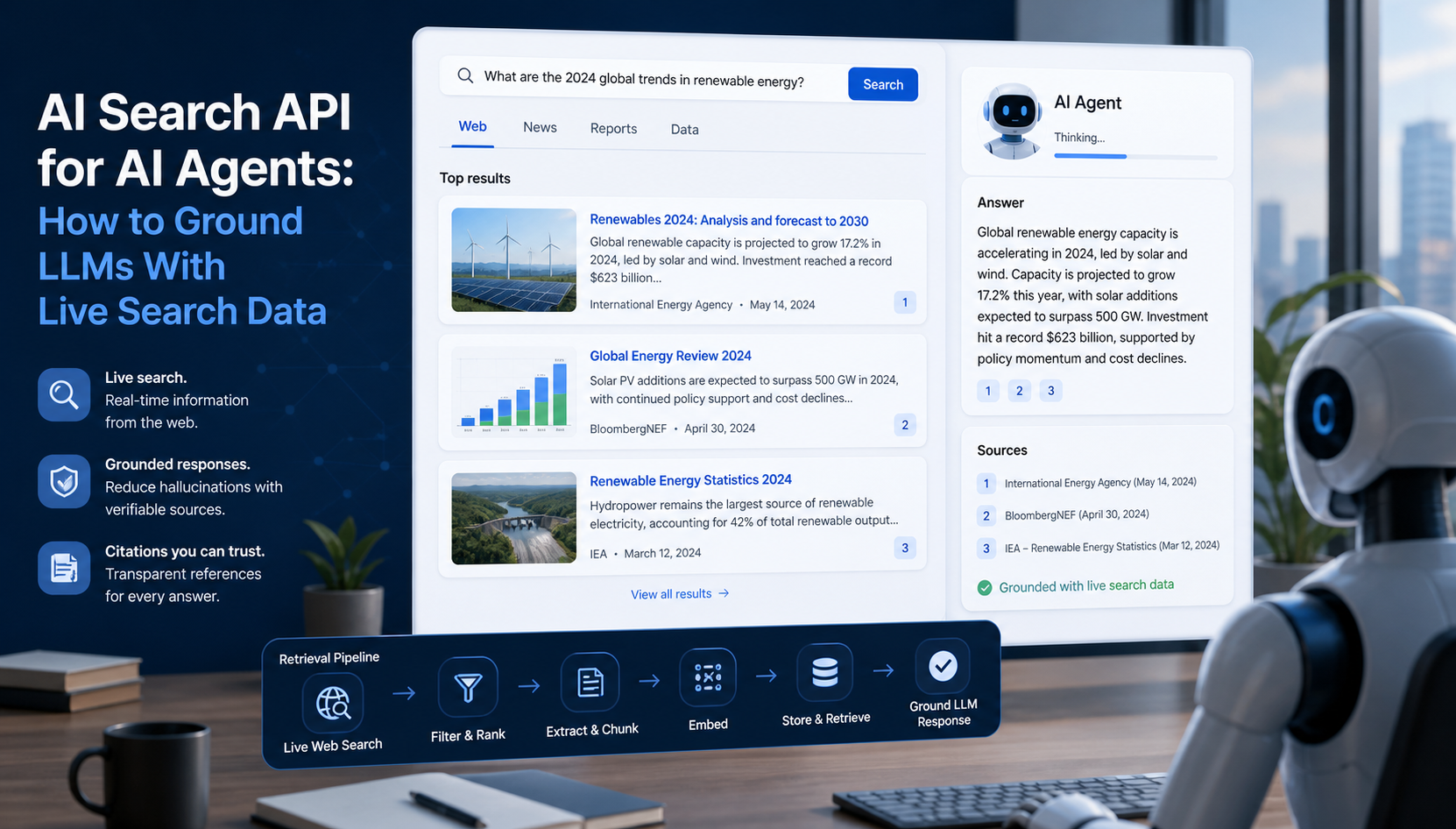
AI Search API for AI Agents: How to Ground LLMs With Live Search Data
An AI search API gives an application or agent programmatic access to current search results. Its most useful role is discovery: the agent can find candidate sources, identify fresh information, and decide what to retrieve next instead of relying only on model memory.
View Details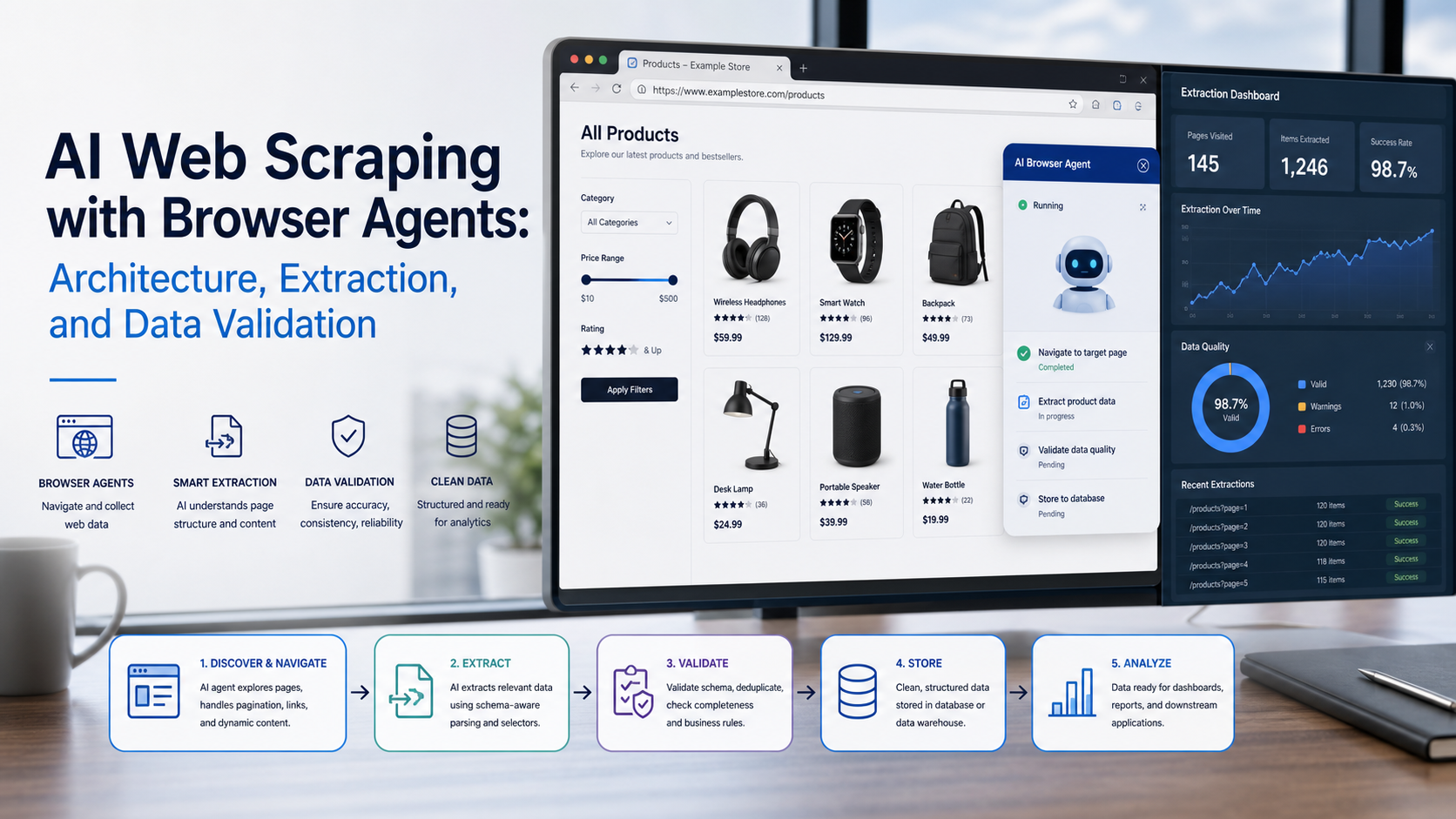
AI Web Scraping with Browser Agents: Architecture, Extraction, and Data Validation
AI web scraping uses AI to help discover, navigate, interpret, or extract information from websites. Browser agents are one implementation option when page interaction, rendering, or layout variation makes a simple scraper too brittle, but the agent should not become the entire data pipeline.
View Details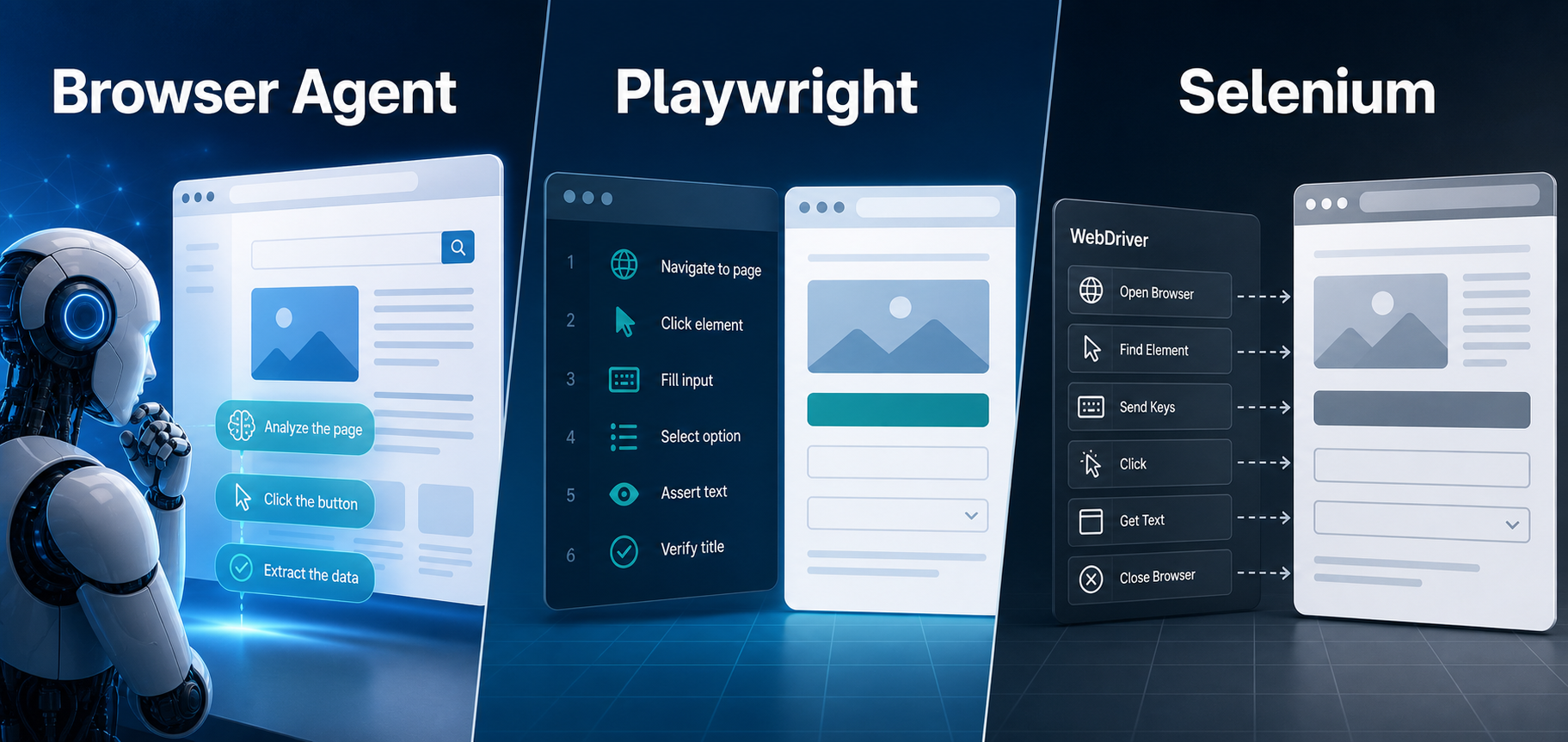
AI Browser Automation: Browser Agents vs Playwright vs Selenium
A browser agent interprets a goal and decides what browser action to take next. Playwright and Selenium can execute explicit, testable browser logic defined by developers. In 2026, however, Playwright also provides official MCP and agent-oriented workflows, so Playwright is no longer just the deterministic alternative to agentic automation. It can also serve as the browser-control layer inside an agent system.
View Details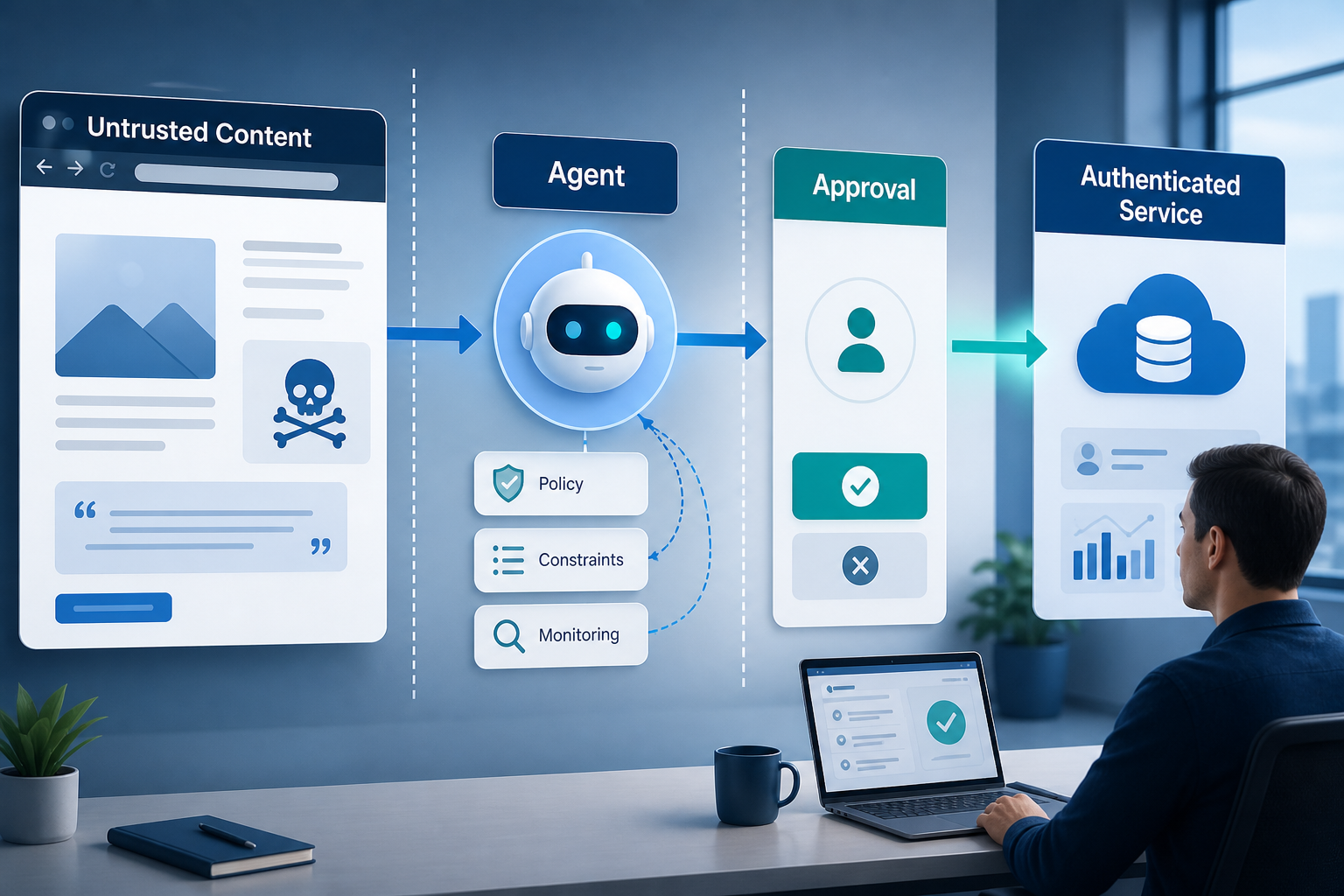
Agentic Browser Security: Prompt Injection, Permissions, and Safe Deployment
That combination creates risks that are different from ordinary browsing and traditional automation. The most important is indirect prompt injection, where hostile instructions hidden in web content attempt to redirect the agent away from the user's goal. Google describes indirect prompt injection as a primary new threat for agentic browsing and has introduced layered defenses that include origin constraints, independent action checks, threat detection, and user confirmation for sensitive actions. Google's Chrome security architecture is a useful reference for how browser-agent defenses are evolving.
View Details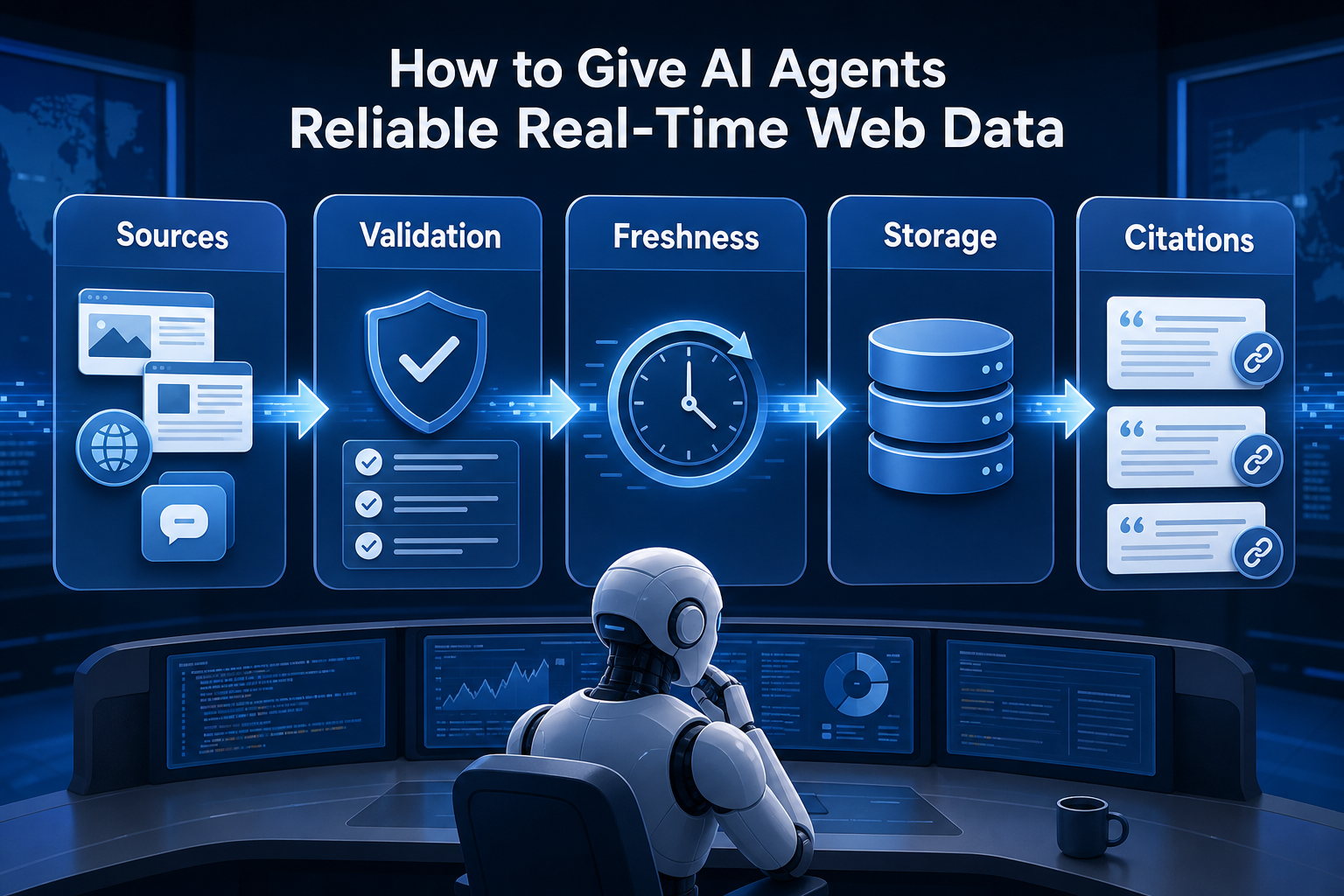
How to Give AI Agents Reliable Real-Time Web Data
A production-ready solution therefore needs more than a web scraper. It needs a web data layer that connects acquisition, validation, storage, retrieval, security, and observability. This guide explains how to design that layer.
View Details