
Best Proxy Providers for Web Scraping and Data Teams
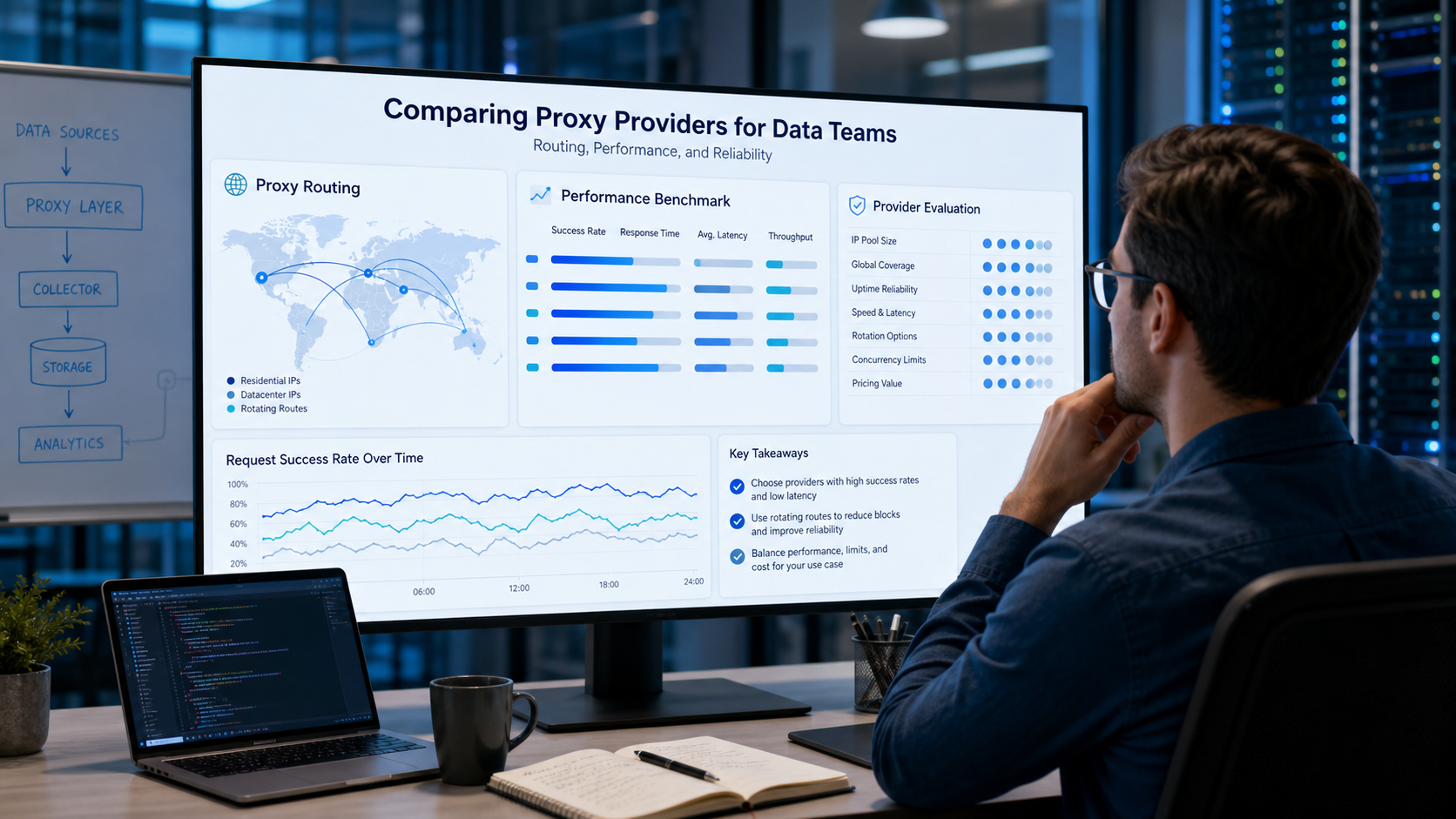
This guide compares proxy providers by workload fit rather than repeating a vendor-claimed IP count ranking.
The best proxy provider is the one that produces reliable successful requests for your target mix at an acceptable cost and with enough control for your workflow. A huge advertised IP pool does not automatically make a provider the best choice.
For developer-first proxy infrastructure, LycheeIP is a strong fit for teams that want residential, ISP, datacenter, and mobile options with rotating and sticky session patterns. Bright Data and Oxylabs are better suited to enterprises that want broad web-data tooling around the proxy network. Decodo is a practical all-rounder. SOAX stands out when granular targeting matters. IPRoyal and Webshare are attractive for cost-sensitive teams and smaller workloads.
Quick Picks: Best Proxy Providers by Use Case
- LycheeIP: Best for developer-first proxy infrastructure. Multiple proxy types, rotating and sticky workflows, and a practical integration focus.
- Bright Data: Best for enterprise web data collection. Large proxy infrastructure plus scraping APIs, browser tooling, and datasets.
- Oxylabs: Best for large-scale web intelligence teams. Broad proxy portfolio and managed scraping products.
- Decodo: Best for flexible all-round use. Residential, mobile, ISP, and datacenter options with scraping tools.
- SOAX: Best for granular geo and network targeting. Strong location and ASN or ISP targeting options.
- IPRoyal: Best for cost-conscious teams. Flexible access to residential, ISP, datacenter, and mobile proxies.
- Webshare: Best for simple self-service proxy deployment. Straightforward dashboard, static and rotating residential options, and proxy servers.
These are not interchangeable products. The right shortlist changes depending on whether you are crawling millions of public pages, running localized SERP checks, maintaining long sessions, or testing an application from mobile networks.
For the LycheeIP implementation details behind this step, review rotating residential proxies.
For the official technical reference behind this point, see Anthropic documentation.
How We Evaluate Proxy Providers
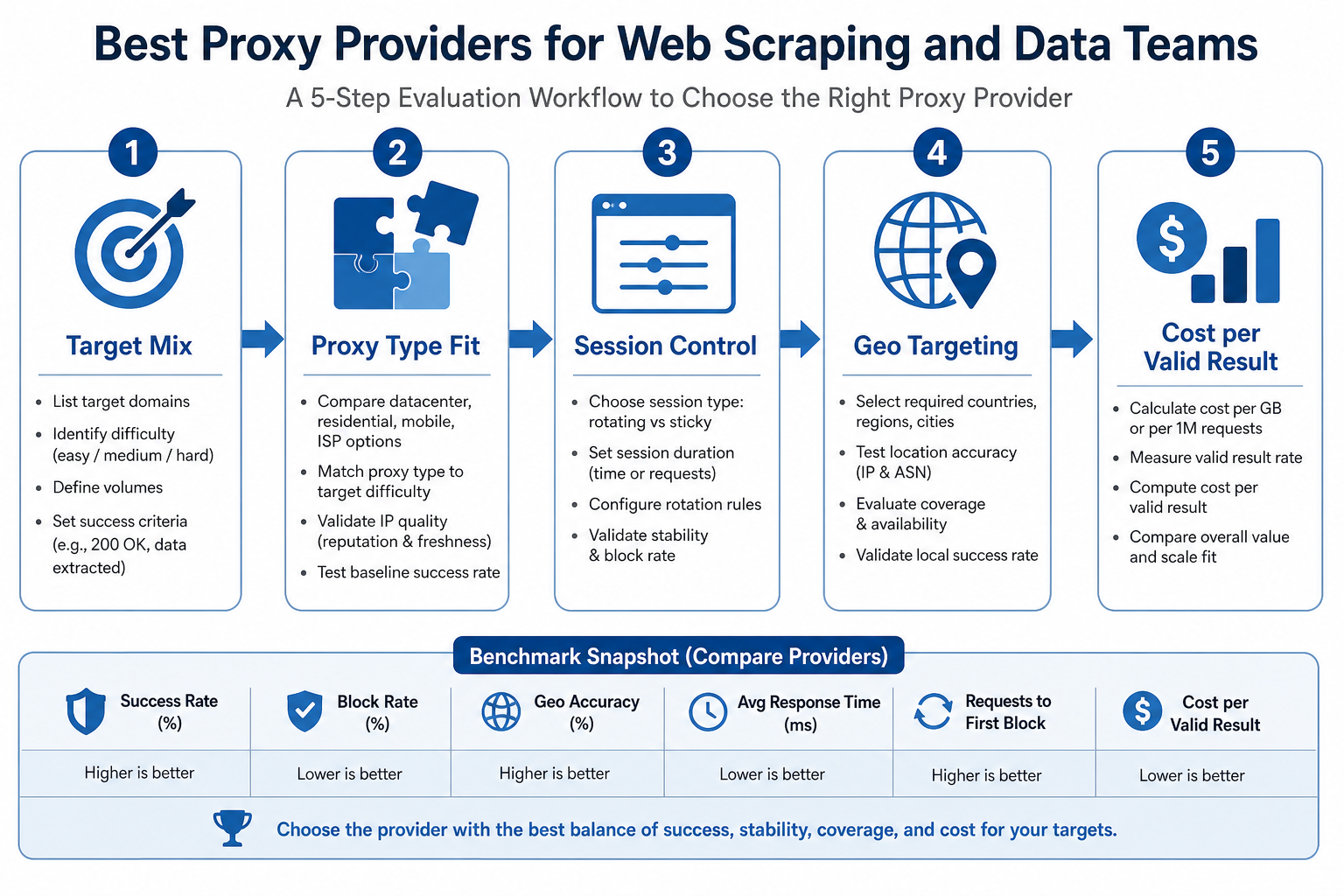
A useful comparison should begin with the workload.
1. Success rate on your actual targets
A provider may perform well on easy HTTP targets and fail on heavily protected retail, travel, or social platforms. Generic network claims do not reveal this.
Test a representative URL set. Measure successful responses, blocks, CAPTCHAs, empty pages, retry count, and cost per valid record.
2. Proxy type fit
The four common categories solve different problems.
Residential proxies route traffic through consumer-network IP addresses. They are useful when targets apply stronger reputation and location checks.
ISP proxies are static IPs associated with internet service providers but hosted for stable, long-running use. They are useful when you need a consistent IP identity.
Datacenter proxies are usually faster and cheaper for high-throughput workloads, but some targets identify datacenter ranges more aggressively.
Mobile proxies use mobile-network IP space. They are useful for mobile app testing, carrier or location checks, and workloads where mobile-network identity matters.
A provider that is excellent for rotating residential traffic may be a poor fit for persistent ISP sessions.
3. Session control
Check whether the provider supports per-request rotation, configurable sticky sessions, explicit session identifiers, and predictable session expiration.
For scraping, rapid rotation can distribute requests. For account-linked or multi-step workflows, changing IPs mid-session can break state.
For the LycheeIP implementation details behind this step, review static residential proxies.
4. Geographic and network targeting
Country targeting is not enough for every project. Some teams need state, city, ZIP code, ASN, ISP, or carrier targeting.
Do not pay for targeting precision you never use. But if your application depends on local pricing, ad verification, or regional availability, coarse geography can create bad data.
5. Authentication and integration
Username and password authentication is easy to automate. IP allowlisting can be convenient in fixed environments. The best providers support common proxy protocols and provide clear examples for Python, Node.js, curl, browsers, and automation frameworks.
For teams with many workers, check sub-user management, credential rotation, usage limits, and API-based configuration.
6. Observability
You need to know why a job failed.
Useful metrics include bandwidth, request volume, location distribution, connection errors, authentication failures, and target-level success rates. A proxy dashboard should complement your own application logs rather than replace them.
7. Network sourcing and abuse controls
Residential proxy networks raise important security and consent questions. Ask how residential IPs are sourced, how participant consent is handled, what acceptable-use controls exist, and how abuse complaints are processed.
This is not merely a brand issue. In 2024, academic researchers highlighted the security risks created by residential proxy networks deployed without proper authorization in some environments. In July 2026, Google and law-enforcement partners disrupted infrastructure tied to NetNut-related malicious operations, according to Reuters. NetNut's parent company said it would cooperate with law enforcement.
Because that event occurred on July 2, 2026, we have not included NetNut in the main recommendation table while the operational and compliance implications are still developing.
1. LycheeIP: Best for Developer-First Proxy Infrastructure
LycheeIP is a strong choice for engineering teams that want proxy infrastructure without starting from an enterprise web-data suite.
Its product mix covers residential, ISP, datacenter, and mobile proxies. That lets a team match proxy type to target difficulty instead of forcing every request through the most expensive network.
The practical advantage is workflow flexibility. Rotating sessions fit distributed collection, while sticky sessions fit tasks that need continuity across multiple requests. For developers building Python scrapers, browser automation, SEO monitoring, product intelligence, or AI data pipelines, this infrastructure-first approach can be easier to reason about than a platform centered primarily on managed data products.
Best for: developers, scraping teams, data engineers, agencies, and technical teams that want to control the collection pipeline.
Consider LycheeIP when: you need multiple proxy types, session flexibility, and a developer-oriented deployment model.
Check before scaling: target-level success rate, exact location coverage for your markets, and bandwidth economics for your request pattern.
For the LycheeIP implementation details behind this step, review LycheeIP proxy infrastructure.
2. Bright Data: Best for Enterprise Web Data Collection
Bright Data is more than a proxy vendor. Its current product catalog includes residential, ISP, and datacenter proxy infrastructure alongside an Unlocker API, Browser API, SERP API, Crawl API, scraper APIs, datasets, and managed data acquisition.
Bright Data's official proxy page currently advertises 400 million-plus monthly residential IPs across 195 countries, as well as 1.3 million-plus ISP and 1.3 million-plus datacenter IPs. Those are vendor-reported figures and should still be validated against the locations and success rates your workload needs.
The strongest reason to choose Bright Data is breadth. An enterprise can start with raw proxies and move toward collection APIs or pre-collected datasets. For a small team, the large product surface may be more than the workload needs.
Best for: enterprises, large data operations, AI data teams, and organizations that want both proxy infrastructure and managed web-data tools.
Consider Bright Data when: your roadmap includes scraping APIs, browser infrastructure, datasets, or managed collection in addition to proxies.
Check before scaling: whether you need the broader platform or only a narrow proxy product, and whether your unit economics remain sensible at your bandwidth level.
3. Oxylabs: Best for Large Web Intelligence Operations
Oxylabs is a strong enterprise alternative for teams running web intelligence and large-scale public data collection.
Its portfolio covers residential, mobile, datacenter, and ISP proxy categories, together with scraping and web-unblocking products. The platform is commonly positioned around high-volume business use cases such as market intelligence, search data, ecommerce monitoring, and AI data acquisition.
The reason to shortlist Oxylabs is the combination of proxy types, scraping infrastructure, documentation, and an enterprise support model.
Best for: larger organizations with established data collection workloads and teams that need vendor support around scaling.
Consider Oxylabs when: you expect high request volume, multiple target categories, and a need for both proxies and higher-level scraping products.
Check before scaling: contract structure, support expectations, target-specific performance, and whether a managed scraping API would be more cost effective than maintaining your own browser or parser stack.
4. Decodo: Best All-Rounder for Flexible Teams
Decodo, formerly Smartproxy, offers residential, mobile, ISP, and datacenter proxy products plus site-unblocking and scraping tools.
It is a useful middle ground between a basic proxy seller and a large enterprise data platform. Teams can run raw proxy traffic for custom scrapers while using higher-level tools for difficult targets.
That makes Decodo attractive to agencies and data teams with changing use cases, from localized collection to stable sessions and difficult targets.
Best for: small-to-mid-size data teams and agencies that need a broad product mix without an enterprise-first buying process.
Consider Decodo when: your workload changes frequently and you want several proxy types plus unblocker or scraper options in one account.
Check before scaling: product-specific pricing, session controls, and whether location targeting matches your exact markets.
5. SOAX: Best for Granular Targeting
SOAX deserves attention when geography and network selection are central to the project.
Its proxy offering spans residential, mobile, ISP, and datacenter categories. The service is known for detailed targeting controls, including location and network dimensions such as ASN or ISP in supported products.
This matters for tasks where "a US IP" is too broad. Ad verification, localized ecommerce research, carrier testing, and regional availability checks may require more precise routing.
Best for: location-sensitive data collection, ad verification, and teams that need granular network targeting.
Consider SOAX when: city, ISP, ASN, or mobile-network selection affects the accuracy of your results.
Check before scaling: the exact targeting fields supported by the proxy type you plan to use and the available inventory in low-volume locations.
6. IPRoyal: Best for Cost-Conscious Teams
IPRoyal offers residential, ISP, datacenter, and mobile proxy categories and is frequently shortlisted by smaller teams because of flexible purchasing options.
Its appeal is straightforward: developers can choose a proxy type without buying a broad data platform, which suits experiments and smaller scraping jobs.
Judge cost by successful results, not only price per gigabyte or IP. Retries, browser fallbacks, and manual intervention can erase a lower headline price.
Best for: individual developers, startups, and smaller automation or data projects.
Consider IPRoyal when: budget flexibility matters and you are willing to benchmark target performance carefully.
Check before scaling: success rate on difficult domains, location depth, and whether support and observability are sufficient for production operations.
For the LycheeIP implementation details behind this step, review datacenter proxies.
7. Webshare: Best for Simple Self-Service Deployment
Webshare focuses on a straightforward self-service experience. Its product lineup includes rotating residential proxies, static residential proxies, and proxy servers, with dashboard and API access.
For developers who want to configure proxies and integrate quickly, simplicity is a real advantage. Webshare is also known for a free proxy-server starter tier that can help test its dashboard and integration model.
The tradeoff is a narrower product scope than providers with managed scraping APIs, browser platforms, or large data catalogs.
Best for: developers and teams that want simple proxy management and do not need a complete web-data platform.
Consider Webshare when: ease of setup and self-service controls matter more than an extensive scraping product suite.
Check before scaling: whether the proxy types and support model are enough for your hardest targets.
Do Not Choose a Proxy Provider by IP Pool Size Alone
IP pool size is one of the most repeated metrics in proxy marketing. It is also one of the easiest metrics to misuse.
A network with a large number of globally distributed IPs may still have limited inventory in the city or carrier you need. It may rotate through poor-quality endpoints for your target. A smaller provider may perform better because its routes, session control, and target fit are stronger.
Use a benchmark that reflects your production workload.
Build a target test set
Create a list of 50 to 500 URLs representing your real targets. Include easy pages, JavaScript pages, protected pages, and multiple geographies.
Define a valid result
An HTTP 200 response is not necessarily success. A valid result may require the expected page title, product field, schema object, or minimum text length.
Run the same request policy
Use the same concurrency, timeout, retry budget, and session strategy for every provider.
For the official technical reference behind this point, see MDN HTTP overview.
Measure cost per valid result
Track:
- valid result rate
- median and p95 response time
- block rate
- CAPTCHA rate
- average attempts per valid result
- bandwidth per valid result
- cost per 1,000 valid records
The best proxy provider is the one that wins on the metric your business actually pays for.
Match the Proxy Type to the Request
A mature scraping pipeline may route low-risk public pages through datacenter proxies, escalate repeated blocks to residential networks, use sticky residential or ISP sessions for multi-step flows, and reserve mobile proxies for workloads where mobile-network identity matters. JavaScript-heavy or highly protected targets may be cheaper to send to a browser or unblocker layer than to retry repeatedly. This tiered policy can reduce cost and make failure analysis clearer.
Proxy Provider Red Flags
Be cautious when residential network sourcing is unclear, acceptable-use enforcement appears weak, location claims are vague, or sticky-session behavior is poorly documented. Also reject benchmarks that count every HTTP 200 as success or test only one easy website. A block page can return status 200, and provider performance varies sharply by target.
Which Proxy Provider Should You Choose?
Choose LycheeIP when you want a developer-first proxy infrastructure model with residential, ISP, datacenter, and mobile options and you plan to control your own scraping or automation pipeline.
Choose Bright Data when you need a broad enterprise data collection ecosystem around the proxy network.
Choose Oxylabs when you run large web intelligence workloads and value enterprise-oriented scraping infrastructure and support.
Choose Decodo when you need a flexible all-round product mix for a team with changing targets.
Choose SOAX when granular geography or network targeting is a deciding requirement.
Choose IPRoyal when cost flexibility is important and your workload is small enough to benchmark carefully.
Choose Webshare when simple self-service proxy deployment matters more than a broad web-data product suite.
For high-volume projects, do not select a provider from a comparison table alone. Run a target-specific bake-off and calculate cost per valid result.
Compare LycheeIP Proxy Options for Your Use Case
Conclusion
The proxy market is crowded because different workloads need different network characteristics. That is why a list based mainly on advertised IP pool size gives weak decision support.
Start with the target. Decide which requests need datacenter speed, residential reputation, ISP persistence, or mobile-network identity. Then compare providers using identical concurrency, retry, session, and validation rules.
For developer-first infrastructure, LycheeIP is a strong starting point. For enterprise web-data platforms, Bright Data and Oxylabs deserve a shortlist. Decodo, SOAX, IPRoyal, and Webshare each solve different cost, targeting, and deployment problems.
The final decision should come from your own benchmark. Measure valid records, latency, retries, and cost. The provider that looks largest on a marketing page is not always the provider that delivers the lowest cost per successful production result.
Frequently Asked Questions
What is the best proxy provider for web scraping?
There is no universal winner. LycheeIP is a strong developer-first option, while Bright Data and Oxylabs fit larger web-data operations. Decodo is a flexible all-rounder. Test providers against your real target list before committing.
Are residential proxies better than datacenter proxies?
Residential proxies are often more suitable for targets that apply stronger IP reputation checks. Datacenter proxies are usually faster and more economical. Many scraping systems use datacenter proxies first and escalate difficult requests to residential networks.
What is an ISP proxy?
An ISP proxy is a static proxy address associated with an internet service provider and hosted for stable use. It combines a persistent session model with an ISP-associated IP identity.
Should I use rotating or sticky proxies?
Use rotating proxies for independent requests where spreading traffic across IPs is helpful. Use sticky sessions for multi-step workflows, session continuity, and tasks where changing the IP mid-process can break state.
How do I compare proxy provider pricing?
Calculate cost per valid result, not only price per gigabyte or per IP. Include retry rate, bandwidth, browser overhead, blocked responses, and operational time.
Are free proxies safe for production scraping?
Free public proxies are generally a poor choice for production data pipelines because reliability, privacy, ownership, and abuse risk can be difficult to verify. Use a provider with clear sourcing, authentication, support, and acceptable-use controls.
Related LycheeIP Guides and Resources

Recommended Articles
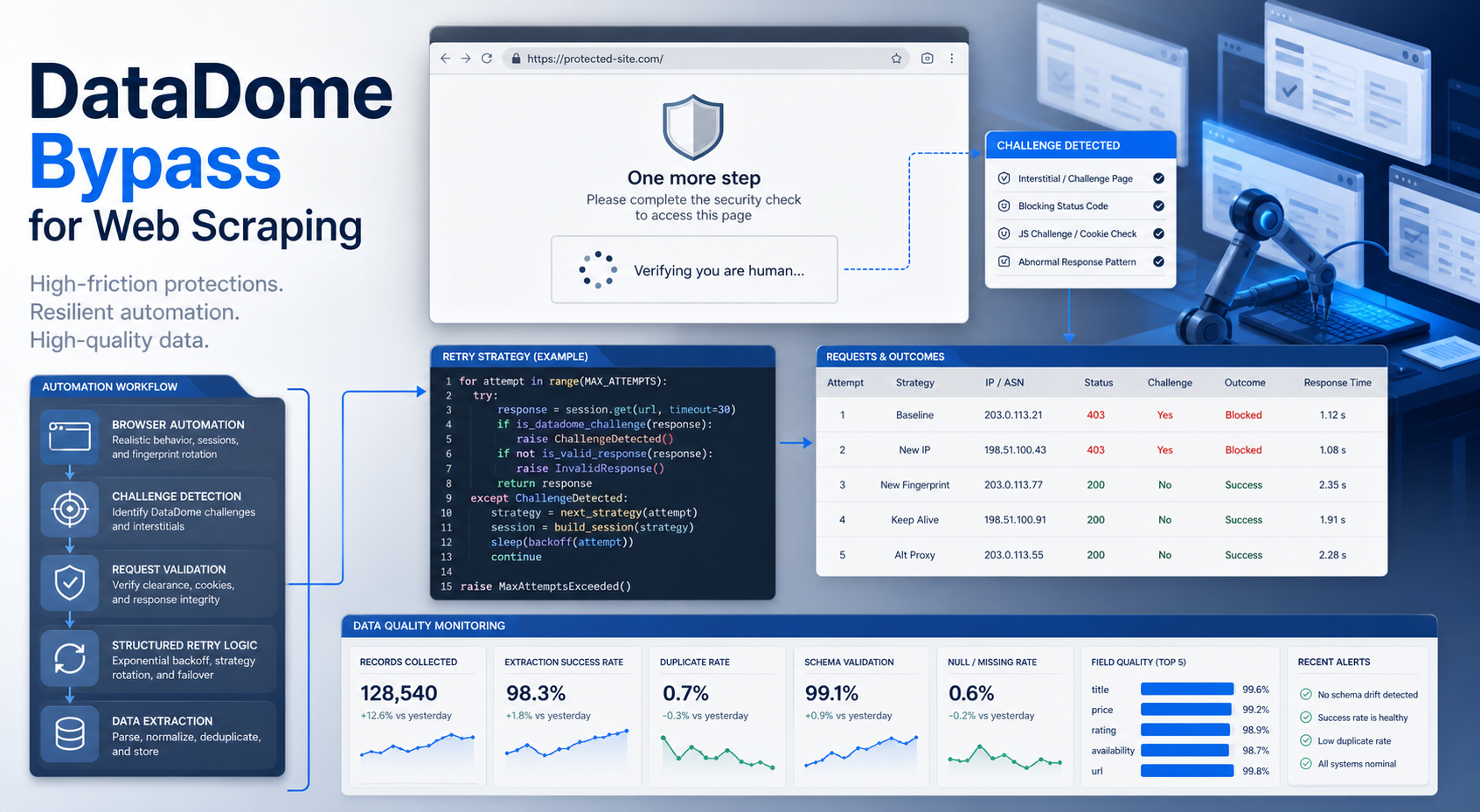
DataDome Bypass for Web Scraping
DataDome Bypass for Web Scraping
View Details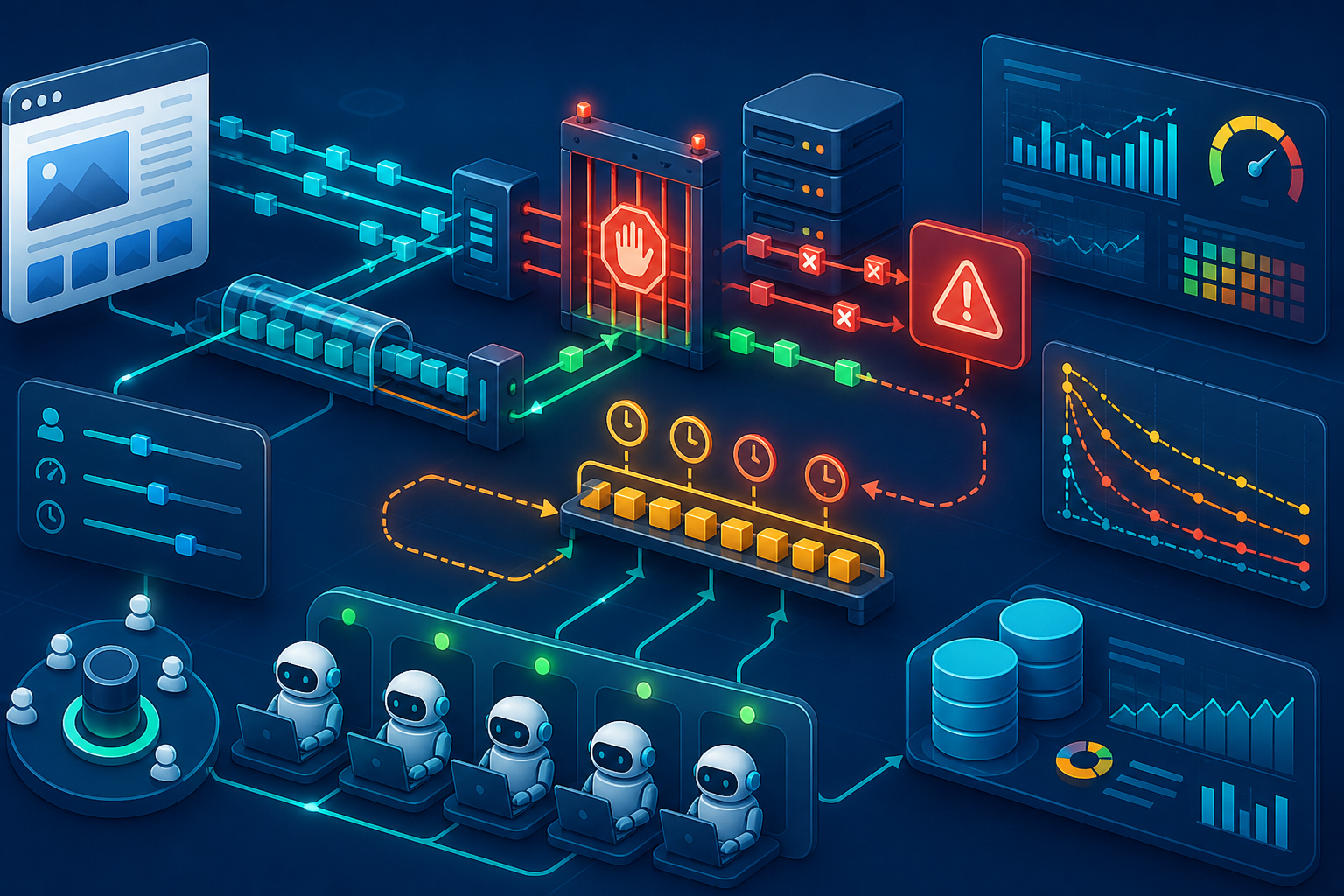
Web Scraping Rate Limiting: How to Handle 429s, Backoff, and Concurrency
Web scraping rate limiting is the engineering discipline of keeping an authorized collection workload inside a target service's acceptable request envelope. When that envelope is exceeded, a server may respond with HTTP 429 Too Many Requests, delay responses, or apply other controls.
View Details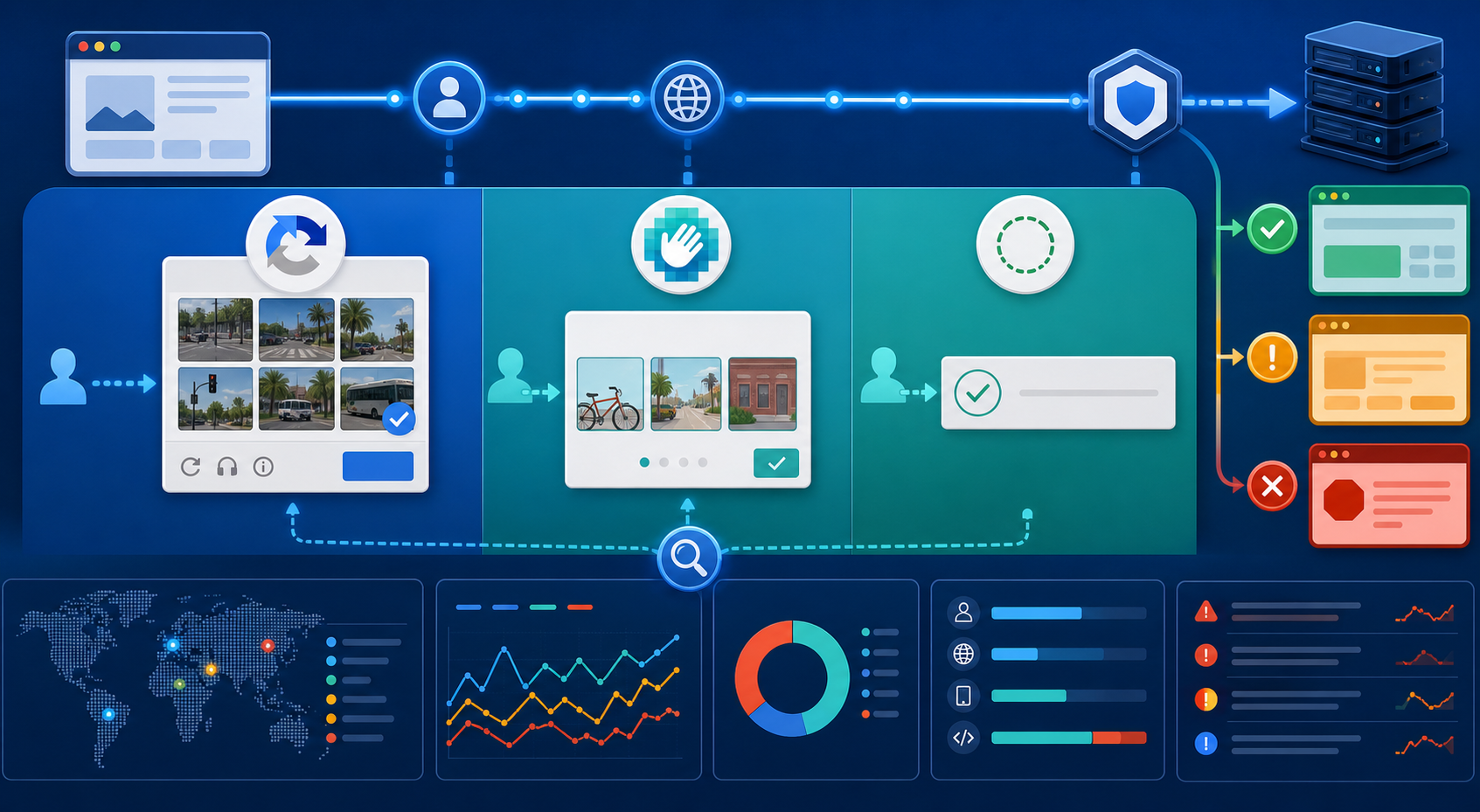
reCAPTCHA vs hCaptcha vs Cloudflare Turnstile: What Scraping Teams Need to Know
If an authorized data-collection workflow suddenly stops at a verification screen, identifying the protection system matters before you change code, browser settings, or proxy infrastructure. reCAPTCHA vs hCaptcha vs Turnstile is not simply a branding comparison. The three systems can expose different browser flows, token models, risk decisions, and failure symptoms.
View Details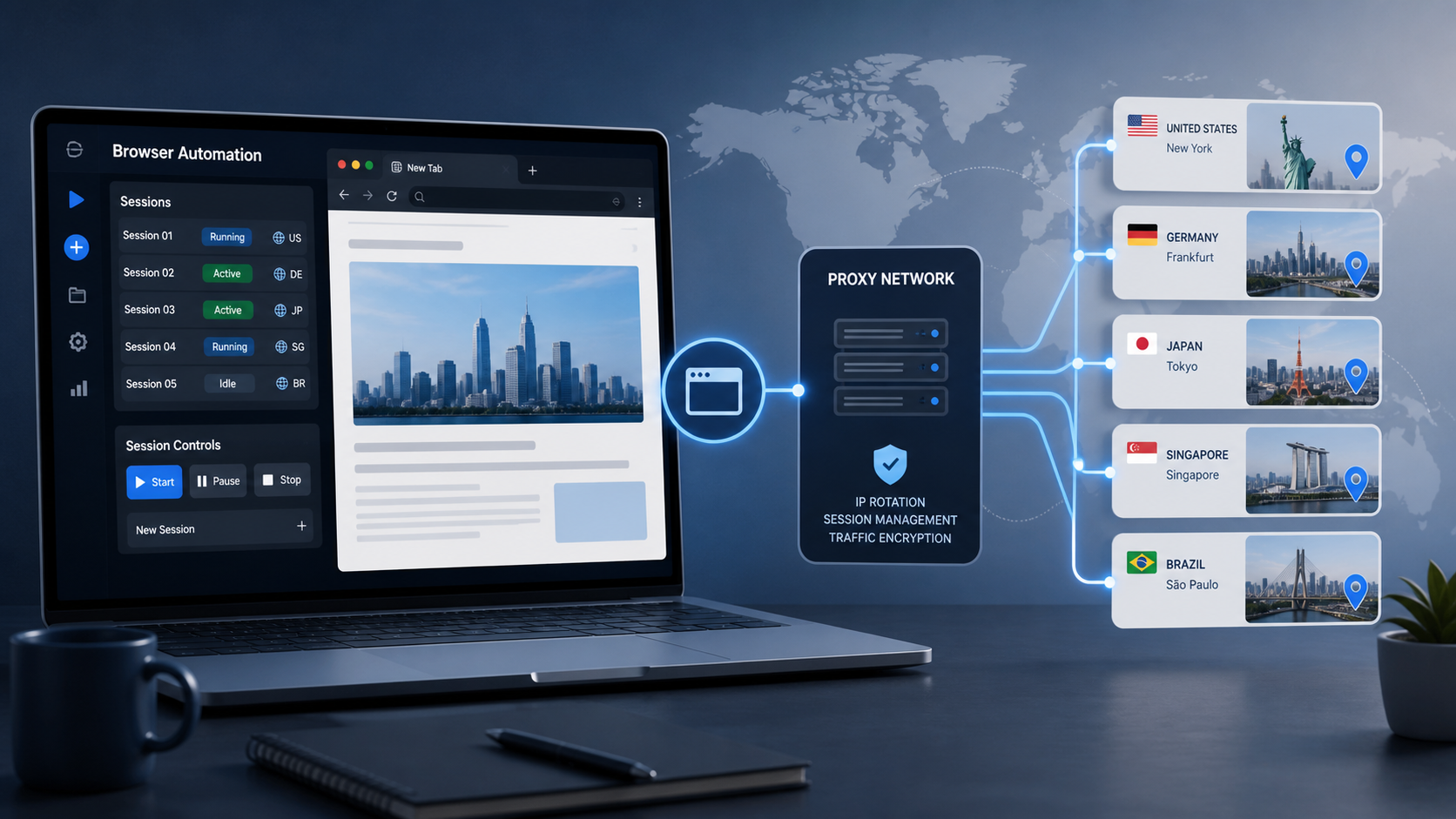
Browser Automation Proxies: IPs, Geo-Targeting, Sessions, and AI Agents
A browser automation proxy belongs to the network layer of Playwright, Selenium, cloud-browser, and AI-agent workflows. It changes how browser traffic is routed and can affect the source IP address, geographic egress, and session continuity seen by a destination site. It does not improve an AI model's reasoning, repair browser logic, or guarantee that a website will accept the session.
View Details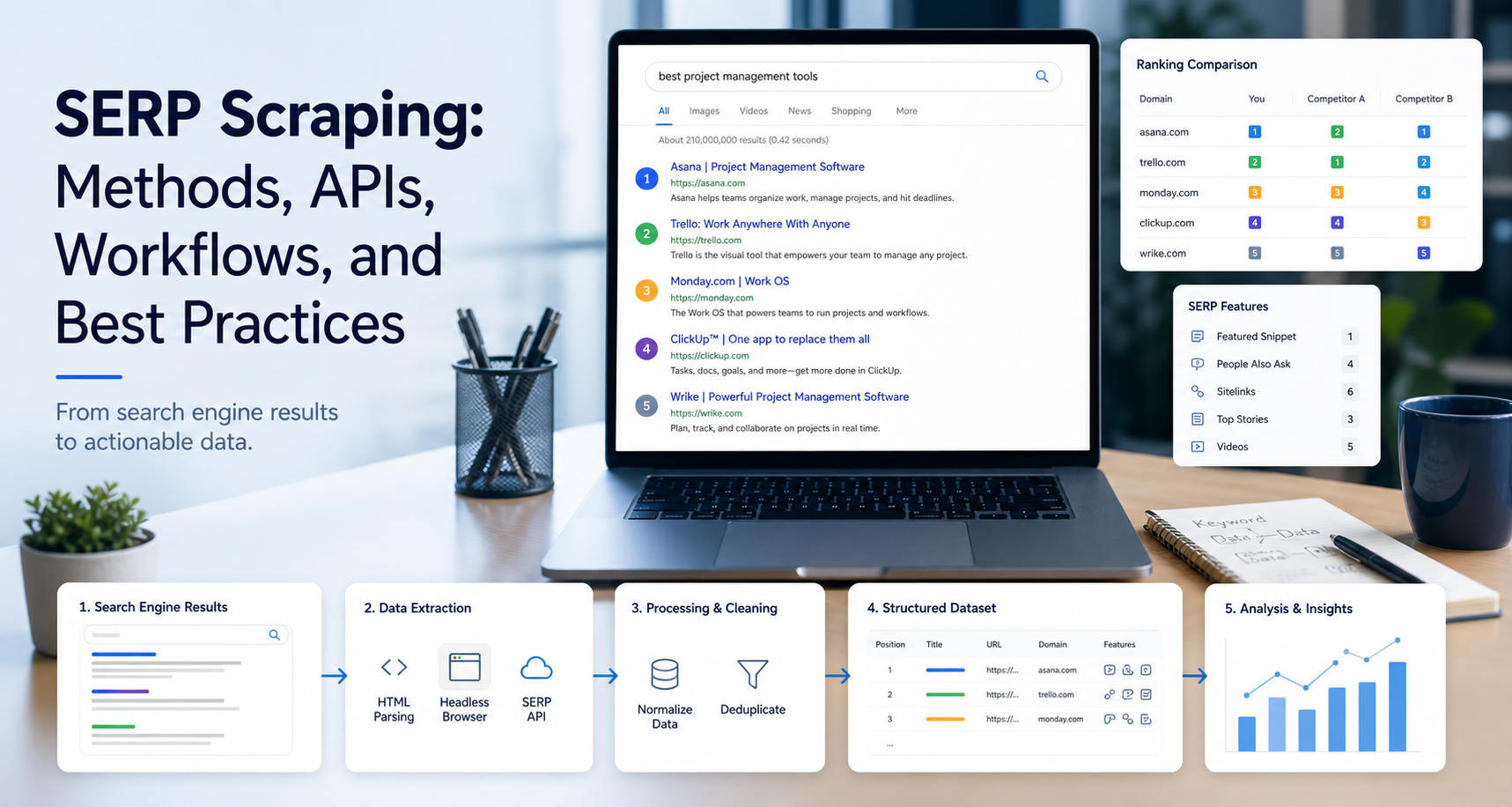
SERP Scraping: Methods, APIs, Workflows, and Best Practices
SERP scraping is the automated collection of information from search engine results pages. A SERP scraper can capture organic rankings, advertisements, featured snippets, People Also Ask questions, local results, shopping listings, images, and other search features, then convert them into structured data for analysis.
View Details