
Security Risks of AI Coding Tools: What You Need to Know
AI coding tools like Claude Code are powerful, but they introduce new security risks. Here's what to watch for.
The rapid adoption of AI-powered coding assistants has fundamentally changed how developers write software. These tools promise increased productivity, faster debugging, and intelligent code suggestions that can transform a junior developer's output to rival that of a senior engineer. However, for security officers, compliance teams, and development managers, this technological leap forward comes with a sobering reality: each AI coding interaction represents a potential security incident waiting to happen.
Understanding the security vulnerabilities introduced by AI coding assistants isn't just about protecting intellectual property—it's about safeguarding your organization's entire digital infrastructure. From data exposure risks to remote access vulnerabilities and the challenge of implementing effective governance policies, the security implications of AI coding tools demand immediate, structured attention from enterprise security teams.
Secure Dev Traffic With LycheeIP
Act 1: Data Exposure Risks When Sharing Code with AI Tools
Your Code Is Your Crown Jewels
Every line of proprietary code represents intellectual property that may contain trade secrets, custom business logic, algorithmic innovations, or competitive advantages worth millions of dollars. When developers lazily paste code snippets into web-based AI coding assistants, they are potentially exposing this valuable IP to third-party systems with varying levels of security and data handling practices.
The fundamental security question is deceptively simple: Where does your code actually go when you share it with an AI tool?
Understanding the Data Flow
Most AI coding assistants operate on cloud-based infrastructure. This means code shared with these tools is transmitted over the internet to external server farms for processing. This data flow creates multiple exposure points:
- Transmission Vulnerabilities: Code travels across networks where it could potentially be intercepted, despite standard TLS/SSL encryption protocols. Organizations with strict data sovereignty requirements may find their code crossing geographic boundaries into jurisdictions with vastly different privacy laws.
- Server-Side Processing: Once your code reaches the AI provider's infrastructure, it is processed on systems you do not control. Even with enterprise agreements promising logical data isolation, the code temporarily exists in the memory of shared, multi-tenant infrastructure.
- Data Retention Policies: This is where many organizations discover uncomfortable truths. Different AI providers have wildly different approaches to data retention:Some free-tier providers retain conversation histories indefinitely for service improvement.Enterprise tiers often offer "zero data retention" commitments, but these must be contractually enforced.Many providers have ambiguous policies regarding how they utilize "aggregated" or "anonymized" telemetry data.
The Training Data Contamination Risk
A particularly insidious risk involves your proprietary code potentially becoming part of the AI's future training data. While reputable AI providers typically exclude enterprise customer data from foundational model training, the policies vary significantly based on the user's account type.
- Free Tier vs. Enterprise Tier Disparities: Many AI coding tools offer free versions where user inputs are explicitly harvested for model improvement. If developers use their personal accounts rather than properly licensed corporate enterprise versions, your proprietary company code could inadvertently train future model versions available to your competitors.
- Inadvertent Disclosure Patterns: Even without explicit training data inclusion, AI models can sometimes hallucinate or reproduce code patterns they've seen. If your proprietary algorithm shares structural similarities with training data, there is a non-zero risk of algorithmic leakage through AI-generated suggestions to other users.
Industry-Specific Concerns
Certain sectors face massively heightened data exposure risks:
- Financial Services: Code containing high-frequency trading algorithms, risk models, or fraud detection logic represents a competitive advantage worth protecting with the same vigor as customer financial data.
- Healthcare: Code interfacing with Protected Health Information (PHI) must comply strictly with HIPAA. Any external data sharing with a non-compliant AI vendor is a severe regulatory violation.
- Defense and Government: Classified code absolutely cannot be shared with commercial AI platforms without explicit, air-gapped authorization.
Act 2: Security Implications of Remote Access Features
How AI Coding Tools Access Your Codebase
Modern AI coding assistants have evolved far beyond simple copy-paste web interfaces. Many now offer deep, persistent integrations with local development environments, version control systems, and cloud infrastructure.
- IDE Extensions and Plugins: Tools that integrate directly into Visual Studio Code, JetBrains IDEs, or Neovim require broad local permissions to read files, access the host file system, and sometimes execute terminal commands.
- Repository Integrations: Some AI coding platforms request OAuth access directly to your GitHub, GitLab, or Bitbucket repositories, granting broad read (and sometimes write) access to your entire organizational codebase.
Authentication and Authorization Weaknesses
The security of these integrations often depends on authentication mechanisms that were not designed for autonomous AI agents.
- OAuth Token Scope Creep: Developers frequently grant overly broad permissions because the authorization flow doesn't offer granular options. A simple request for "repository access" might inadvertently grant read/write access to all repositories in an organization, not just the specific project the developer intended to analyze.
- Personal Access Token (PAT) Proliferation: Many developers generate PATs to connect AI tools to their repositories. These tokens are highly dangerous because they often never expire, are rarely rotated, provide excessive access, and are completely invisible to centralized identity management systems.
- Lack of Multi-Factor Authentication (MFA): Some AI integrations bypass standard MFA requirements, creating frictionless authentication paths that are significantly less secure than direct, human repository access.
Privilege Escalation and Supply Chain Risks
When developers with elevated permissions use AI coding tools, the risk profile multiplies exponentially.
If a senior developer with repository admin rights connects an AI tool, that tool's background token inherits those elevated privileges. A compromise of the AI provider's backend systems could grant attackers instant admin access to your core repositories. Furthermore, AI coding tools represent a massive new node in your software supply chain. If an attacker compromises an AI coding tool provider, they could potentially inject malicious code suggestions directly into the IDEs of thousands of connected developers globally.
Secure Dev Traffic With LycheeIP
Act 3: Implementing Security Policies for AI Coding Tool Usage
Building a Risk Assessment Framework
Effective AI coding tool governance begins with a structured, pragmatic risk assessment.
Step 1: Inventory Current Usage
Before implementing draconian controls, understand your current exposure. Survey your engineering teams to identify which AI coding tools are currently in use (hunting for shadow IT), how they're being used (copy-paste vs. IDE integration), and which developers have already connected organizational GitHub repositories.
Step 2: Classify Your Code
Not all code carries equal risk. Implement a strict data classification scheme:
- Public: Open-source or publicly available frontend code (Minimal restrictions).
- Internal: Proprietary but non-sensitive microservices (Moderate controls).
- Confidential: Core business logic, proprietary algorithms, or payment integration details (Strict controls; Enterprise AI tiers only).
- Restricted: Cryptographic keys, compliance-related logic, or highly sensitive operational technology (Strictly prohibited from any cloud AI tool sharing).
Essential Policy Components
- Approved Tool Allowlist: Rather than playing whack-a-mole trying to block every possible AI tool, create a strict allowlist of approved, vetted solutions. This list should specify the exact approved tool, the required configuration settings (e.g., "Must use Enterprise Tier with Zero Retention enabled"), and prohibited use cases.
- Mandatory Training: Developers must complete security awareness training specifically covering how to identify restricted code, the proper configuration of AI IDE plugins, and incident reporting procedures if sensitive .env files are accidentally shared.
Technical Controls and Enforcement
A security policy without technical enforcement is merely a suggestion. Implement these immediate technical guardrails:
- Network-Level Controls: Configure corporate firewalls to block unapproved AI coding tool domains and known API endpoints.
- Endpoint Controls: Use application control solutions (like MDM) to restrict which AI plugins can be installed in corporate-managed IDEs.
- Repository Protections: Configure your version control systems to strictly require admin approval for any new OAuth application workflows. Enable alerts for the creation of broad-scope Personal Access Tokens.
LycheeIP (Developer-First Proxy Infrastructure)
As enterprise security teams audit their environments to detect unauthorized AI coding tools or monitor outgoing developer traffic for data loss prevention (DLP), they require robust network control. LycheeIP is a developer-first proxy and data infrastructure platform that helps engineering and security teams reliably route and manage their network requests at scale.
If your DevSecOps team is building automated tools to scrape public repositories for leaked company code (often hallucinated by AI tools trained on exposed data), utilizing a developer-first proxy infrastructure ensures your automated OSINT scanners aren't blocked by rate limits. Red teams simulating supply-chain attacks or testing the boundaries of internal APIs often leverage dynamic IP networks to smoothly rotate connections and mimic distributed threats. Conversely, for infrastructure teams that need to maintain highly secure, persistent connections for remote DLP monitoring tools, datacenter IP solutions provide the dedicated bandwidth and stability required. Ultimately, securing developer workflows requires deep network visibility, and LycheeIP provides the infrastructure to test, manage, and scale those connections safely.
Balancing Innovation and Security
The security risks of AI coding tools are real, immediate, and significant—but they do not necessarily outweigh the massive productivity benefits. The goal is not to ban these tools entirely; that approach simply drives usage underground into unmanaged, highly dangerous shadow IT.
Instead, successful organizations create frameworks that enable safe, sanctioned AI adoption. Apply controls proportional to data sensitivity, involve development teams in policy creation to ensure buy-in, and provide company-paid, secure enterprise AI tiers so developers don't need to seek out unauthorized free alternatives.
For security officers, compliance teams, and development managers, the time to act is right now. AI coding tools are already being used in your organization—the only question is whether that use is visible, managed, and secured according to your risk tolerance.
Secure Dev Traffic With LycheeIP
Frequently Asked Questions
Q: Can we completely block AI coding tools in our organization?
A: While technically possible through strict network firewalls and endpoint application whitelisting, complete blocking is generally a bad strategy. It often drives developers to use these tools through personal devices or unsecured cellular networks (shadow IT), creating even greater visibility risks. A much more effective approach is to provide approved, enterprise-tier AI tools with appropriate security controls while blocking unapproved alternatives.
Q: What is the exact difference between enterprise and free tier AI coding tools from a security perspective?
A: Enterprise tiers typically offer critical, contractually binding security advantages: explicit zero data retention policies, absolute exclusion from foundational model training, Data Processing Agreements (DPAs) for GDPR compliance, dedicated security certifications (SOC 2, ISO 27001), and advanced Single Sign-On (SSO) access controls. Free tiers often retain conversation histories indefinitely, use inputs for model improvement, and provide zero audit capabilities.
Q: How do we handle developers who have already connected unauthorized AI tools to our repositories?
A: First, conduct an immediate audit of all third-party OAuth applications connected to your GitHub or GitLab organization. Identify unauthorized AI coding tool connections and revoke their access immediately. Require developers to reconnect using approved enterprise accounts with heavily scoped tokens. Finally, implement mandatory training for the affected developers on proper API token security practices.
Q: What should we do if a developer accidentally shares highly sensitive code with a public AI tool?
A: Treat this as an active data exposure incident requiring immediate incident response. 1) Document exactly what code was shared and when. 2) Contact the AI provider's privacy team immediately to request data deletion. 3) Assess the sensitivity of the exposed code—if it contained active API keys or credentials, rotate them immediately across all environments. 4) Conduct a root cause analysis to identify why existing DLP controls failed to prevent the copy-paste action.
Q: Are there AI coding tools that can run entirely on-premise without sending data to the cloud?
A: Yes. Several vendors now offer on-premise, air-gapped AI coding solutions (often utilizing open-source models like Llama 3 or specialized coding models) specifically designed for organizations with strict data residency requirements. However, these options require significant infrastructure investment for GPU-capable bare-metal servers, ongoing internal model maintenance, and typically offer slightly reduced reasoning performance compared to massive cloud-based frontier models. Organizations in defense, healthcare, and finance often find this trade-off acceptable for the absolute data security it provides.

Recommended Articles
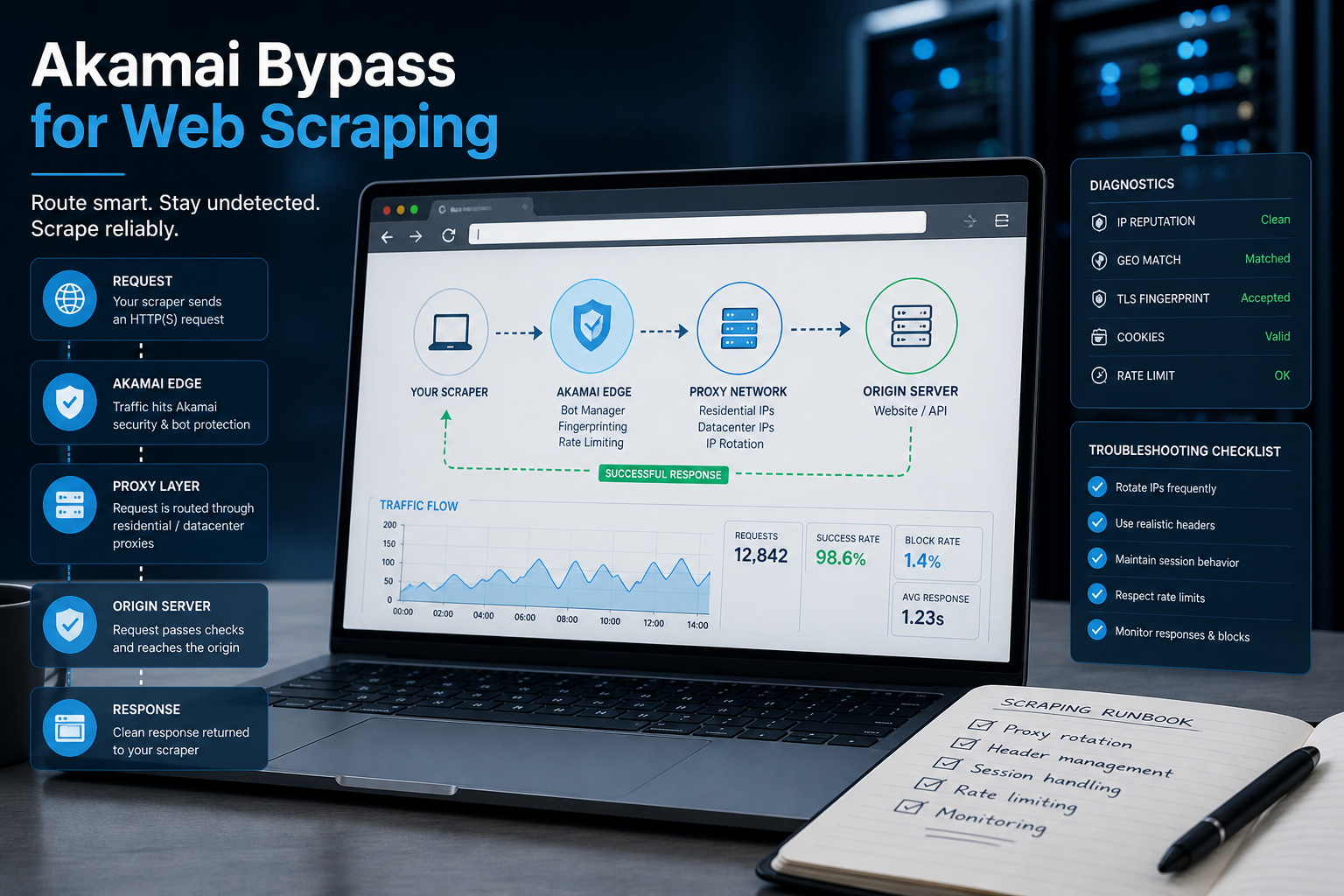
Akamai Bypass for Web Scraping
Akamai Bypass for Web Scraping
View Details
Browser Security Settings Most Users Never Touch
Stop leaving your personal data wide open. We reveal the crucial security toggles buried in your browser that instantly lock down your passwords and hide your daily web traffic.
View Details
Stop Saving Passwords in Your Browser
Letting Chrome or Safari remember your passwords feels incredibly convenient, but it is a massive security risk. Discover the hidden dangers of browser autofill and exactly what you should be using instead.
View Details
Should You Pay for a Browser? The Case For and Against
Are you currently paying for your free browser with your personal data? Discover if upgrading to a paid tool like Brave Origin is the ultimate privacy hack or just a complete waste of your cash.
View Details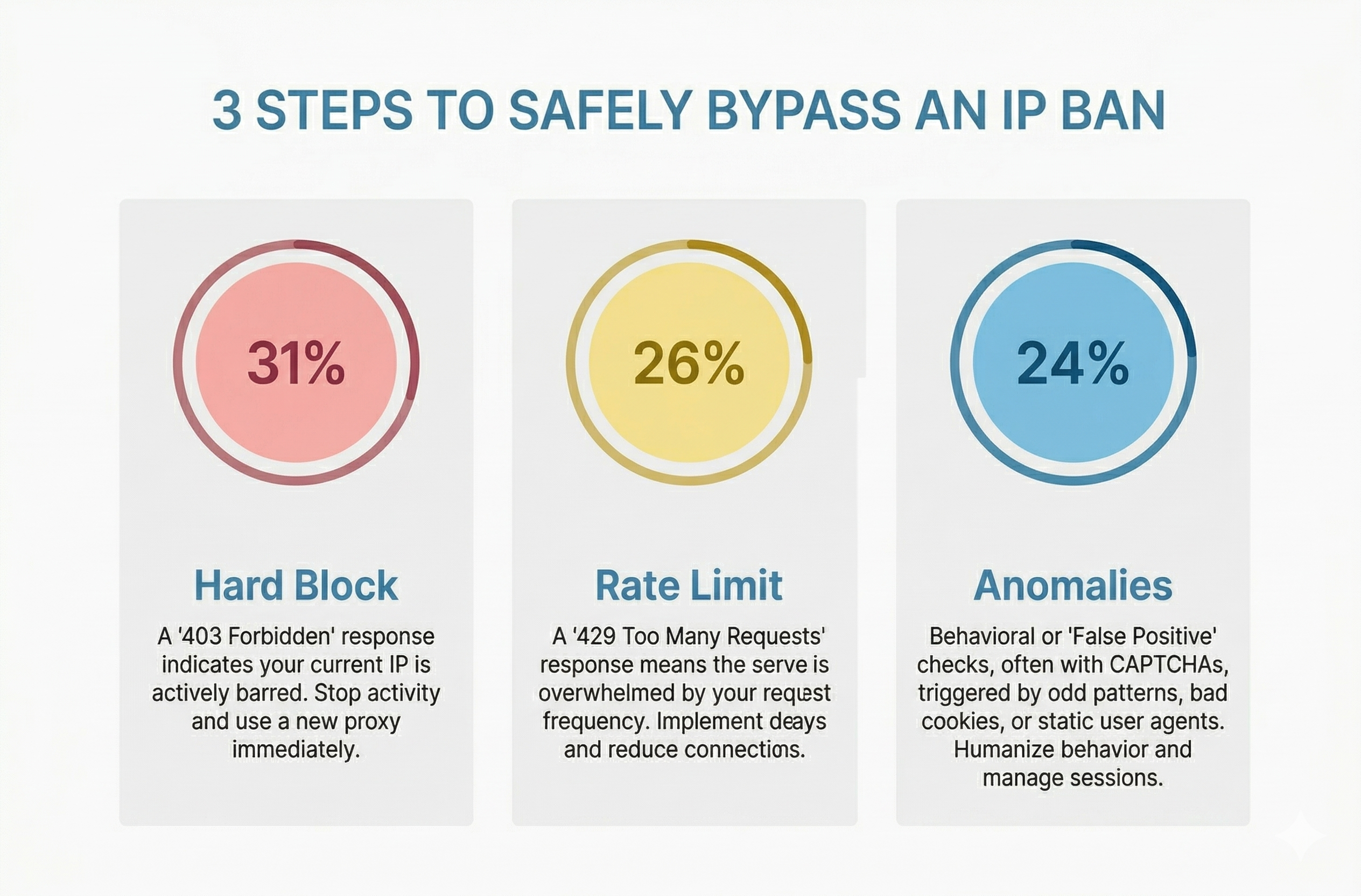
How to Bypass an IP Ban Safely by Diagnosing 403s, 429s, and False Positives
Diagnose 403s, 429s, and false positives quickly. Use this technical checklist to recover network access, reduce blocks, and scale data pipelines safely.
View Details