
Is AI Replacing Security Teams? Claude's Real Impact
Can Claude really replace your entire security team? I tested it to find out.
The question isn't hypothetical anymore. As Large Language Models (LLMs) like Claude become increasingly sophisticated, security professionals, CTOs, and hiring managers face a pressing concern: will artificial intelligence make human security teams obsolete? I spent weeks putting Claude through real-world, highly technical security scenarios to separate the marketing hype from operational reality.
The answer isn't simple, but it matters deeply for anyone building, managing, or working in application security. Let's examine what AI can actually do, where it fails spectacularly, and how modern security professionals should adapt their workflows.
Scale Secure Automation with LycheeIP
What Security Tasks Claude Can Fully Automate (And What Still Needs Human Oversight)
Where Claude Excels: The Low-Hanging Fruit
Claude demonstrates genuine, out-of-the-box competence in several security domains that traditionally consumed hours of a junior analyst's time. By treating AI as an automation engine, teams can immediately reclaim bandwidth in the following areas:
- Code Security Review: I fed Claude various code snippets containing SQL injection vulnerabilities, Cross-Site Scripting (XSS) flaws, and insecure authentication patterns. The results were highly impressive. Claude identified vulnerabilities with 85-90% accuracy in controlled tests, often explaining the exploit path and suggesting secure architectural alternatives. For straightforward code review tasks—such as checking for standard OWASP Top 10 vulnerabilities in web applications—Claude performs comparably to traditional static automated scanners, but provides vastly superior contextual explanations.
- Security Documentation and Policy Writing: Claude can draft comprehensive security policies, incident response playbooks, and compliance documentation in a matter of minutes. When requested to build an ISO 27001-aligned access control policy, Claude produced a highly structured first draft that would have taken a human analyst half a day. The caveat? It still requires expert review to align with your organization's specific tech stack.
- Threat Modeling for Standard Architectures: For common application architectures (e.g., three-tier web apps or AWS microservices), Claude generates incredibly useful baseline threat models using the STRIDE or PASTA frameworks. It quickly identifies attack surfaces, enumerates likely threats, and suggests standard mitigations.
- Security Questionnaire Responses: Vendor security assessments and compliance questionnaires are tedious but necessary for B2B sales. Claude can ingest your existing security posture documentation and draft highly accurate responses to standard questionnaires (SOC 2, CAIQ), cutting manual response time by up to 70%.
Where Human Oversight Remains Critical
The automation story breaks down quickly when we move beyond pattern recognition to high-stakes judgment:
- Incident Response Coordination: When I simulated a live ransomware incident response and asked Claude to coordinate the actions, it provided generic playbook steps: isolate systems, preserve evidence, notify stakeholders. However, it couldn't prioritize actions based on active business context, navigate the political dynamics between the infrastructure and legal teams, or make the hard judgment call between containment speed and forensic preservation.
- Threat Intelligence Interpretation: Claude can beautifully summarize threat reports and CVE databases, but it struggles to answer the critical question: "Should we care about this threat right now for our specific organization?" * Zero-Day Vulnerability Assessment: For novel vulnerabilities without established, documented patterns, Claude's performance degrades significantly. It lacks the adversarial creativity to identify genuinely new attack vectors or anticipate how attackers might chain seemingly minor, low-severity vulnerabilities into a critical exploit.
Limitations of AI in Complex Security Decision-Making
My testing revealed five fundamental limitations that prevent Claude from replacing seasoned security professionals:
1. Context Blindness
AI operates purely in the context you provide—nothing more. When I asked Claude to assess the security risk of allowing developers SSH access to production servers, it provided a generic, textbook "high risk" assessment. It didn't know that:
- Our developers already possessed console access through cloud provider IAM.
- SSH was actually more tightly audited than the alternative pipeline they were using.
- The business velocity cost of the current workflow was creating a dangerous "shadow IT" risk.
A human security architect gathers this context naturally through conversation and organizational awareness. Claude requires explicit prompting for every contextual factor, and you simply cannot prompt for what you don't know you're missing.
2. Business Risk Assessment Failure
Security isn't about eliminating all risk; it is about managing risk in service of business objectives. Claude can identify technical vulnerabilities but cannot weigh them against business priorities.
When presented with a scenario where fixing a medium-severity vulnerability would require three weeks of downtime for a critical revenue-generating system, Claude recommended immediate patching. A human CISO would consider compensating controls, temporary WAF rules, timing the fix with planned maintenance, or accepting the risk with executive sign-off.
3. Adversarial Thinking Gaps
Security is inherently adversarial. Attackers actively try to circumvent defenses, exploit edge cases, and think creatively about system abuse. During a simulated penetration test, Claude suggested standard attacks (SQLi, CSRF) but completely failed to identify a business logic flaw where users could manipulate API timestamps to extend trial subscriptions indefinitely. Human penetration testers excel at this adversarial thinking—asking "How would I abuse this feature?" rather than just checking for known CVE patterns.
4. Accountability and Trust
Who is responsible when Claude's security recommendation leads to a data breach? Security decisions carry severe legal, financial, and reputational consequences. Organizations inherently need a human accountable for security outcomes. "The AI said so" will never satisfy a board of directors, government regulators, or your customers.
5. Compliance and Legal Nuances
Frameworks like GDPR, HIPAA, and PCI-DSS involve legal interpretation, not just technical IT controls. When asked about GDPR data retention requirements, Claude provided technically accurate definitions but couldn't advise on how conflicting legal obligations (e.g., GDPR's data minimization vs. financial regulations requiring 7-year retention) should be resolved for a specific database architecture.
Scale Secure Automation with LycheeIP
How Security Professionals Should Adapt Their Skills for the AI Era
The existential question for security professionals is clear: if AI handles the routine, tactical tasks, what exactly is your role? The answer is to double down on uniquely human capabilities and transition into an AI-augmented professional.
Skills That Become MORE Valuable
- Strategic Security Thinking: As AI handles tactical execution, strategic architecture becomes a premium skill. Focus on program design, zero-trust architecture, and aligning security posture with business growth.
- Stakeholder Management: Claude can write a password policy, but it cannot persuade a resistant engineering team to actually adopt it. Communication, influence, and cross-departmental relationship-building are distinctly human skills that grow exponentially more valuable.
- Creative Problem-Solving: Real-world security scenarios rarely match textbook examples. Synthesizing information from disparate sources and devising creative, custom solutions remains strictly human territory.
- Adversarial and Systems Thinking: Develop your ability to think like a motivated attacker, see second-order effects, and understand complex microservice interactions.
The AI-Augmented Security Professional Model
Instead of competing with AI, integrate it deeply into your daily workflow using this 4-step augmentation model:
- Use AI for First Drafts: Let Claude generate the baseline drafts for policies, threat models, and compliance documentation. Spend your valuable time refining, contextualizing, and tailoring the output.
- Accelerate Research: Use AI to rapidly summarize massive threat intelligence feeds, incident post-mortems, and security research papers. Focus your expertise on strategic decision-making based on those summaries.
- Scale Your Expertise: Deploy internal AI chatbots to handle routine, Tier-1 security questions from development teams (e.g., "What is our approved hashing algorithm?"), freeing you for complex architectural consultations.
- Enhance Productivity: Utilize AI for rapid code review assistance, unit test case generation, and security control validation.
Practical Upskilling Recommendations
To thrive in the AI era, security practitioners should adopt the following checklist:
- Master AI Prompting: Effective AI interaction is now a mandatory professional competency. Learn advanced prompt engineering to extract maximum accuracy from LLMs.
- Deepen Business Acumen: As technical tasks automate, your business context becomes your primary differentiator. Understand your organization's revenue drivers and competitive landscape.
- Develop Cross-Functional Expertise: Security increasingly intersects with data privacy, legal compliance, and product development. Broaden your expertise beyond pure technical network security.
- Build Leadership Capabilities: Setting a security vision, building resilient teams, and driving organizational culture change cannot be automated.
LycheeIP (Developer-First Proxy Infrastructure)
LycheeIP is a developer-first proxy and data infrastructure platform that empowers security and engineering teams to reliably route their network traffic at scale. As security professionals transition into an AI-augmented model, they increasingly rely on automated scripts and AI agents to continuously monitor external attack surfaces, scrape global threat intelligence, and validate geographic access controls. Integrating a developer-first proxy infrastructure ensures these automated reconnaissance and testing workflows run smoothly without triggering rate limits or Web Application Firewall (WAF) blocks.
For example, when conducting authorized external vulnerability scans or simulating distributed credential stuffing attacks to test internal defenses, teams utilize dynamic IP networks to smoothly rotate connections and mimic legitimate user traffic. Conversely, for the continuous, high-bandwidth ingestion of threat intelligence feeds into your AI analysis engines, datacenter IP solutions provide the dedicated stability and speed required. Learn how to optimize your security team's automated data collection pipelines at LycheeIP.
The Verdict: Augmentation, Not Replacement
After extensive testing, the answer is remarkably clear: Claude and similar AI tools will not replace security teams, but they will fundamentally reshape what daily security work looks like.
What is changing: Routine security tasks, documentation, basic code review, standard threat modeling, and vendor questionnaire responses, will increasingly become fully automated or heavily AI-assisted. Entry-level security roles focused primarily on manual compliance and log-checking face immediate disruption.
What is not changing: Complex security decision-making, business risk assessment, high-stakes incident response coordination, stakeholder management, and strategic security architecture remain strictly human domains.
The real threat to your career isn't AI replacing you; it is another security professional who effectively uses AI replacing you. The competitive advantage goes to those who adapt the fastest. The security team of the future won't be entirely human or entirely AI. It will be smaller, highly strategic, and significantly more productive—with AI handling the routine noise, and humans focusing on what they do best: navigating complexity, exercising judgment, and protecting the business.
Scale Secure Automation with LycheeIP
Frequently Asked Questions
Q: Can AI tools like Claude fully replace junior security analysts?
A: Not entirely. While Claude can automate many tasks junior analysts traditionally perform (basic code review, documentation generation, standard threat modeling), it cannot replace the organizational learning, context-building, and judgment development that occurs in those junior roles. Junior positions will evolve to focus heavily on AI-augmented workflow management, verifying AI outputs, and handling edge cases the AI cannot process.
Q: What specific security tasks should I NOT trust to AI?
A: Never rely solely on AI for: live incident response decision-making, business risk assessments, zero-day vulnerability evaluation, compliance interpretations carrying legal liability, or security architecture for entirely novel systems. Always use AI as an assistant or a sounding board, never as the final, authoritative decision-maker.
Q: How should security professionals start using AI tools effectively today?
A: Start by using AI for low-stakes, high-effort tasks like generating first drafts of internal documentation, summarizing lengthy external security reports, or generating security testing scripts. Develop your prompt engineering skills to get better, more specific results. Always manually review and contextualize the AI output before sharing it.
Q: Will AI reduce the overall need for security professionals in organizations?
A: AI will likely change the composition and output expectations of security teams rather than eliminate them. Organizations may need fewer people for routine, manual compliance tasks, but they will still desperately need senior security expertise for strategy, complex decision-making, and business alignment. While total headcount growth might slow, demand for highly experienced security professionals with AI skills will remain incredibly strong.
Q: What skills should I focus on developing to stay relevant as a security professional?
A: Focus on the "soft" and strategic skills that AI cannot replicate: high-level strategic thinking, business acumen, stakeholder negotiation, creative problem-solving, adversarial thinking, and leadership. Additionally, develop your AI literacy—learn how to build internal tooling that leverages LLMs as force multipliers for your team.

Recommended Articles
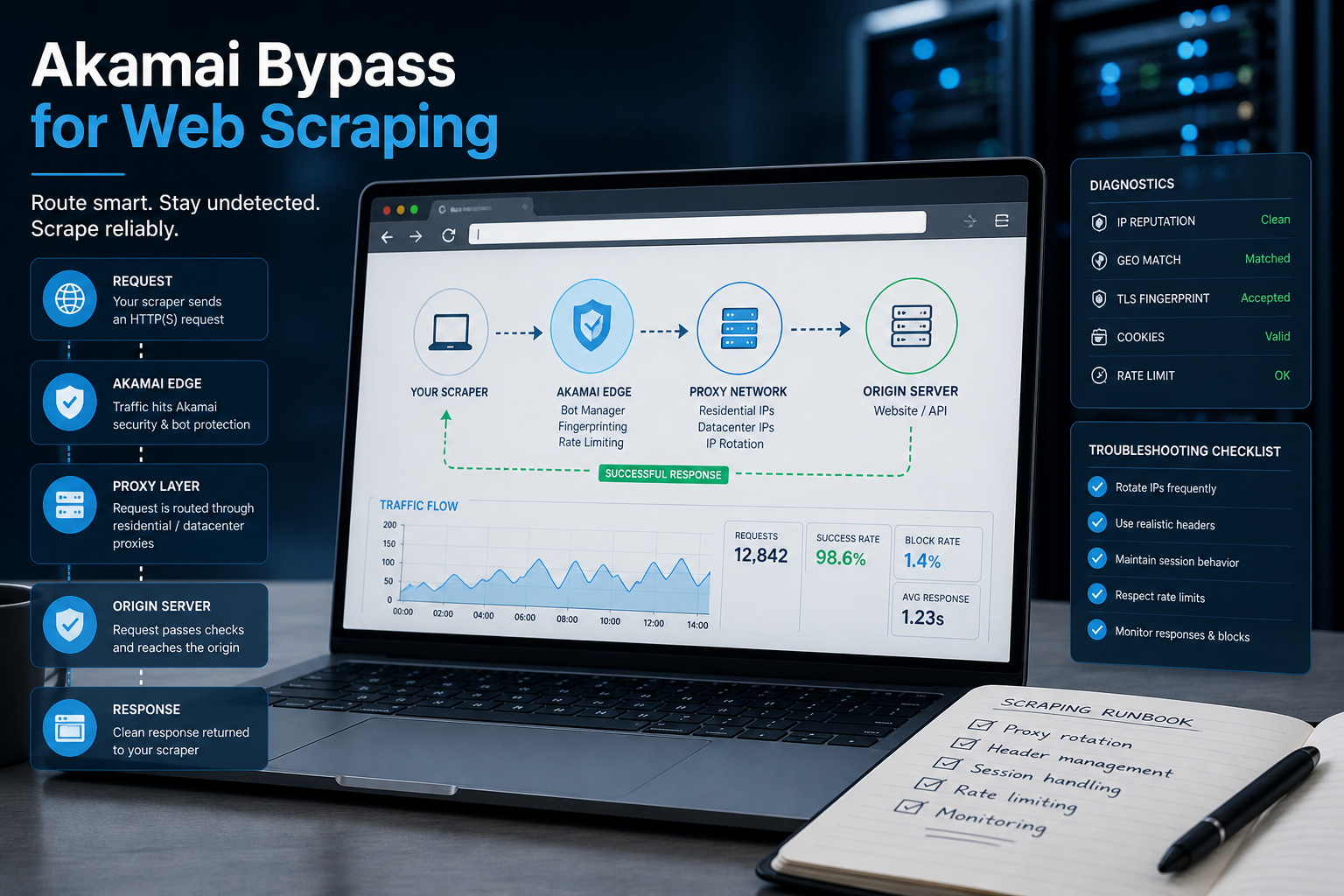
Akamai Bypass for Web Scraping
Akamai Bypass for Web Scraping
View Details
Browser Security Settings Most Users Never Touch
Stop leaving your personal data wide open. We reveal the crucial security toggles buried in your browser that instantly lock down your passwords and hide your daily web traffic.
View Details
Stop Saving Passwords in Your Browser
Letting Chrome or Safari remember your passwords feels incredibly convenient, but it is a massive security risk. Discover the hidden dangers of browser autofill and exactly what you should be using instead.
View Details
Should You Pay for a Browser? The Case For and Against
Are you currently paying for your free browser with your personal data? Discover if upgrading to a paid tool like Brave Origin is the ultimate privacy hack or just a complete waste of your cash.
View Details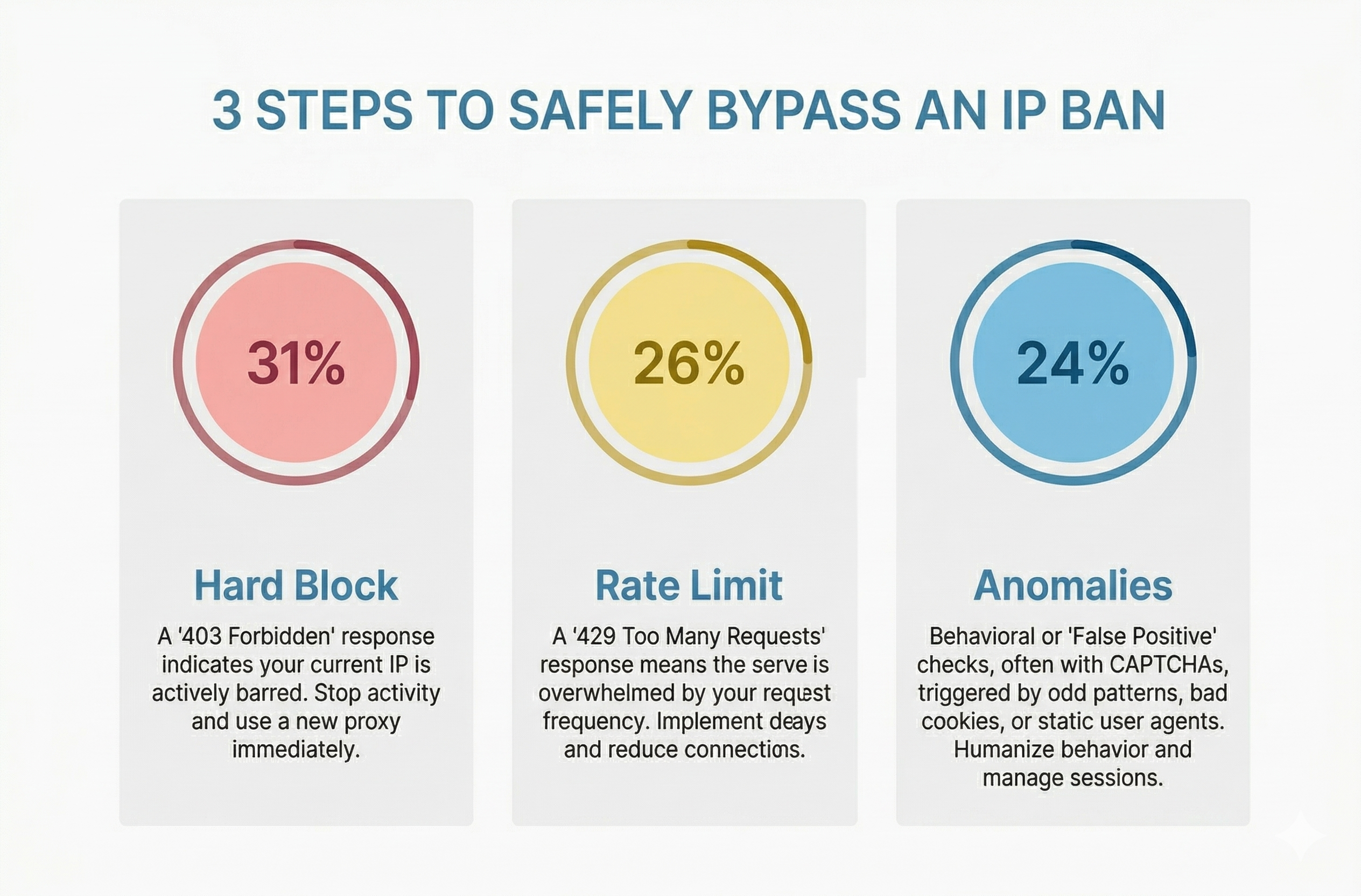
How to Bypass an IP Ban Safely by Diagnosing 403s, 429s, and False Positives
Diagnose 403s, 429s, and false positives quickly. Use this technical checklist to recover network access, reduce blocks, and scale data pipelines safely.
View Details