
Automated Vulnerability Scanning with Claude Code Security
Claude Code Security scans your entire codebase and finds vulnerabilities you missed. Here's what it caught in mine.
After three rounds of manual code review, an external penetration testing engagement, and running our standard Static Application Security Testing (SAST) suite, I thought our authentication service was rock-solid. Then I ran Claude Code Security. Within minutes, the AI flagged a subtle race condition in our token refresh logic that could allow session hijacking under specific timing conditions—a critical flaw that neither our human security team nor traditional scanners caught. This wasn't just a theoretical vulnerability; it was highly exploitable in our production environment.
This experience highlights a fundamental shift happening in modern application security. While conventional scanning tools excel at rapid pattern matching and identifying known vulnerability signatures (like outdated dependencies or missing headers), they completely lack context. They struggle with context-dependent issues and complex business logic flaws. AI-powered code analysis tools bring a fundamentally different approach: understanding code semantically, reasoning about data flow across complex microservices, and identifying vulnerabilities that emerge from the unexpected interaction of multiple components.
Validate faster with LycheeIP
Setting Up Claude Code Security for Codebase Analysis
Prerequisites and Access
Before diving into implementation, ensure your development environment meets the necessary baseline requirements. You will need API access to Claude (currently via Anthropic's API), secure authentication credentials, and sufficient API token quota allocated for analyzing your codebase size.
For a medium-sized application (50,000 to 100,000 lines of code), expect initial comprehensive scans to consume a significant token allocation. Unlike traditional scanners that require rigid configuration files and rule sets, Claude Code Security works through conversational prompts that define what you want analyzed. Structuring these prompts effectively requires understanding how to feed the model the right context.
Integration Architecture
The most effective implementation integrates Claude directly into your CI/CD pipeline as a mandatory pre-merge check. Here is the recommended architecture:
- Repository Integration: Set up a dedicated security scanning service (e.g., a GitHub Action or GitLab Pipeline) that clones your repository at specific checkpoints, such as pull request creation or pre-deployment. This service acts as the orchestration layer between your source code and Claude's API.
- Context Building: The critical step most teams miss is providing sufficient operational context. Rather than feeding raw code files to the LLM sequentially, build a dynamic context package that includes:Architecture diagrams or README documentation describing system components.API contracts (like OpenAPI/Swagger specs) and data flow specifications.Detailed authentication and authorization models.Previous vulnerability reports to avoid hallucinated or duplicate findings.Specific areas of concern (e.g., newly modified authentication logic).
This curated context allows Claude to understand not just isolated code segments, but how they interact within your larger, distributed system.
Running Your First Scan
Start with a focused scan rather than analyzing your entire monorepo immediately. Select a critical component (like payment processing or data handling) and craft a highly specific prompt:
Plaintext
Analyze the authentication module in /src/auth for security vulnerabilities.
Focus on:
- Session management and token handling
- Authorization bypass opportunities
- Race conditions in concurrent authentication attempts
- Input validation on authentication endpoints
- Secure credential storage and comparison

The application uses JWT tokens with a refresh mechanism.
Provide specific code locations and exploit scenarios for any findings.
Specificity is crucial here. Generic prompts like "find security issues" will produce generic, unhelpful results. Targeted prompts that directly reflect your team's threat model yield actionable security intelligence.
Complex Vulnerabilities Beyond Basic Tools
Business Logic Vulnerabilities
This is where Claude Code Security truly differentiates itself. Traditional SAST tools scan for known syntax patterns: hardcoded secrets, SQL injection, or buffer overflows. They cannot reason about whether your application's intended workflow inherently creates security issues, commonly known as business logic vulnerabilities.
In our codebase, Claude identified a critical flaw in our subscription upgrade flow. The code correctly validated payment information and user authorization, passing all our SAST checks. However, Claude noticed that the backend process updated the user's subscription tier before asynchronous payment confirmation was received. This created a brief window where users could access premium features by initiating and immediately canceling an upgrade. This required understanding the temporal relationship between four different microservices—something pattern-matching regex tools cannot mathematically detect.
Context-Aware Security Issues
Claude excels at understanding operational context across file boundaries. When analyzing our API gateway, it identified that while each individual endpoint implemented rate limiting, there was no aggregate rate limiting across related endpoints. An attacker could easily bypass per-endpoint limits by distributing their brute-force requests across functionally similar endpoints that all queried the same backend database.
The tool also caught a subtle authentication gap. We had an administrative endpoint that properly checked for an "admin" role, but the role check occurred after fetching user data from the database. Claude identified that the initial database query used an unsanitized parameter from the request, creating a SQL injection vulnerability that executed before the authorization block could even run.
Supply Chain and Dependency Risks
While standard Software Composition Analysis (SCA) scanners identify known CVEs in third-party packages, Claude analyzes how you are actually implementing those dependencies. It found that we were using an industry-standard cryptography library correctly for encryption, but we had implemented a custom key derivation function (KDF) rather than using the library's hardened, built-in KDF. This introduced weak key generation that no standard dependency scanner would flag because the library version itself was secure.
Authentication and Authorization Flaws
Claude's semantic understanding allows it to trace authentication state across complex session flows. It discovered that our mobile API suffered from a horizontal privilege escalation vulnerability: the initial login correctly established authentication, but subsequent PUT requests to modify user data only checked for a valid session token—not whether the token actually belonged to the target user ID being modified.
The AI also successfully identified Time-of-Check to Time-of-Use (TOCTOU) vulnerabilities in our authorization middleware. Permissions were verified at the start of a request, but the actual file-writing operation happened asynchronously milliseconds later, during which time the file permissions could theoretically be altered.
Data Exposure and Privacy Issues
By tracing data flow through the application, Claude identified severe exposure risks. It found that our centralized logging system—configured strictly to help with debugging—was inadvertently logging raw request bodies that contained Personally Identifiable Information (PII). Because the logging configuration lived in a completely different repository from the API code, human reviewers missed the connection, but Claude mapped the data flow perfectly.
Validate faster with LycheeIP
Interpreting and Implementing Security Fixes
Understanding Security Reports
Claude's output differs wildly from traditional scanner reports. Instead of a sterile list of CVE numbers and line items, you receive a narrative, contextual explanation of the vulnerability, including:
- Attack Scenario: A step-by-step breakdown of how a threat actor would exploit the issue.
- Data Flow: How the vulnerability emerges from data moving through your specific system architecture.
- Business Impact: What is actually at risk (e.g., compliance fines, data loss, downtime) beyond the technical details.
- Code Context: The relationship between the vulnerable components.
This narrative format requires a different triage approach. Rather than sorting blindly by CVSS scores, engineering teams must evaluate findings based on real-world business context and true exploitability.
Prioritization Framework
Develop a strict prioritization matrix that considers the following:
- Exploitability: Can this be triggered remotely without authentication? Does it require complex, specific timing, or rare edge-case conditions?
- Business Impact: What data or functionality is exposed? Does it compromise core business operations?
- Scope: Is this isolated to one legacy component, or is it a systemic architectural flaw?
- Detection Difficulty: Could this have been found with traditional tools? (If no, it strongly indicates that similar logical flaws might exist elsewhere).
Implementing Fixes
Claude can assist with remediation, but you must treat its suggested code fixes as starting points—not blind, production-ready patches. For the token refresh race condition, Claude correctly suggested implementing distributed locking. While the concept was accurate, the specific implementation required our team to adapt the code for our Redis infrastructure and latency requirements.
Your remediation workflow should look like this:
- Reproduce: Create a unit or integration test that actively demonstrates the exploit.
- Design: Use Claude to brainstorm remediation options, but evaluate them strictly against your architecture.
- Implement: Fix the specific issue, and audit the codebase for similar logical patterns.
- Verify: Ensure the fix properly closes the vulnerability without breaking downstream functionality.
Integration into Development Workflow
Make AI-driven code security a continuous, automated process:
- Pre-Commit Scanning: Developers run focused, lightweight scans on security-sensitive modules before committing changes.
- Pull Request Automation: Automated bots analyze changed code strictly within the context of surrounding systems.
- Threat-Model-Driven Analysis: Following a human-led threat modeling session, run targeted AI scans focused entirely on the newly identified attack vectors.
Verification and Regression Testing
After merging fixes, use Claude to verify the remediation. Provide the updated code snippet alongside context about what was patched, and ask the model to evaluate whether the vulnerability persists or if the patch introduced a new bypass.
LycheeIP (Developer-First Proxy Infrastructure)
LycheeIP is a developer-first proxy and data infrastructure platform that empowers technical teams to route network requests reliably at scale. When security teams use AI tools to uncover complex logic flaws, they must actively validate these vulnerabilities in staging environments to confirm exploitability. Reproducing issues like rate-limiting bypasses, geographic authorization flaws, or concurrent race conditions requires robust external network routing to simulate real-world attacker behavior accurately.
By leveraging a proxy and data infrastructure platform, QA engineers and penetration testers can reliably route their validation scripts. For instance, using dynamic IP networks allows security teams to simulate distributed authentication attempts to verify that aggregate rate-limiting fixes are functioning correctly. Additionally, when automating continuous security tests that require high-speed, stable connections to external verification APIs, datacenter IP solutions provide the persistent bandwidth needed. Integrating LycheeIP ensures your team has the robust network backbone required to validate, test, and secure modern applications.
Key Takeaways and Best Practices
Claude Code Security represents a massive paradigm shift in vulnerability detection, but it is not a replacement for comprehensive human security practices—it is a powerful enhancement.
What works well:
- Detecting deep business logic vulnerabilities that require understanding system behavior.
- Identifying context-dependent issues across decoupled microservices.
- Explaining complex vulnerabilities in clear, developer-friendly language.
- Iteratively exploring remediation architectures.
What requires caution:
- High API token costs for analyzing massive codebases (optimize this by scanning incrementally based on git diffs).
- AI hallucinations and false positives, which require senior developer judgment to triage.
- Suggested code fixes that lack awareness of your specific infrastructure nuances.
Recommended approach:
- Start strictly with targeted scans of highly critical components.
- Build robust "context packages" that help the AI understand your macro architecture.
- Combine AI scanning with traditional SAST/DAST tools—Claude finds the logical gaps, while SAST catches the syntax errors.
- Treat the tool as a collaborative, asynchronous security review, not a definitive automated pass/fail gate.
The race condition in my authentication system was a massive wake-up call. It proved that security isn't just about patching known CVEs and fulfilling compliance checklists. The most dangerous flaws often emerge from the complex interactions between well-intentioned, perfectly formatted code.
Validate faster with LycheeIP
Frequently Asked Questions
Q: How does Claude Code Security differ from traditional SAST/DAST tools?
A: Claude uses semantic, contextual understanding to analyze code logic and data flow, rather than relying on rigid pattern matching. While traditional SAST tools excel at finding known vulnerability signatures (like specific SQL injection patterns), Claude identifies complex business logic vulnerabilities, context-dependent issues across multiple microservices, and flaws emerging from architectural interactions. It acts as a complement to traditional tools, not a full replacement.
Q: What are the typical costs and token usage for scanning a codebase?
A: For a medium-sized application (50,000 to 100,000 lines of code), an initial comprehensive scan can consume a massive amount of API tokens, potentially costing $50 to $200 depending on the depth of the context provided. To optimize these costs, teams should focus on targeted scans of critical components, utilize incremental scanning for daily pull requests, and schedule full repository deep-scans sparingly.
Q: Can Claude Code Security replace manual security code reviews?
A: No. Claude should augment your security engineers, not replace them. While it excels at detecting business logic flaws and complex data flow issues at scale, human security experts are required for high-level threat modeling, architectural guidance, and assessing the true business impact of a vulnerability. The most effective DevSecOps pipelines combine Claude's rapid analytical capabilities with human judgment.
Q: How accurate are the vulnerability findings, and how do you handle false positives?
A: Claude provides highly detailed narratives alongside its findings, which helps developers evaluate the legitimacy of the threat. However, false positives do occur—especially when the AI lacks complete context about your external security controls (like a WAF blocking the attack before it hits the code). You must handle false positives by manually reproducing the vulnerability in a sandbox environment to validate its exploitability.
Q: What types of vulnerabilities does Claude Code Security detect most effectively?
A: Claude is exceptionally strong at detecting business logic vulnerabilities, complex authentication and authorization bypasses, race conditions, TOCTOU timing issues, improper implementations of cryptography, and data flow issues leading to privacy exposure (PII leaks). It thrives on identifying architectural flaws rather than just syntax errors.

Recommended Articles
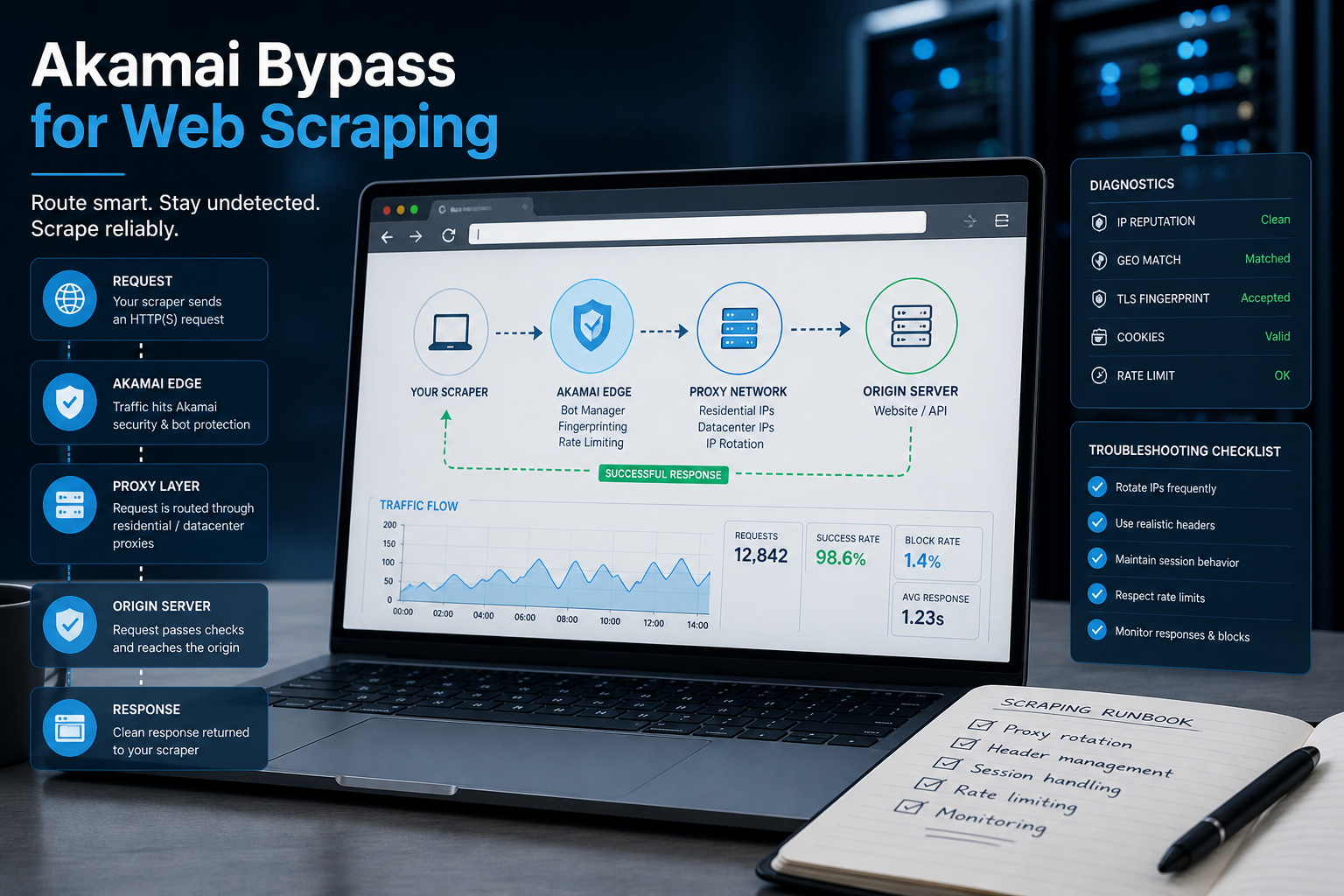
Akamai Bypass for Web Scraping
Akamai Bypass for Web Scraping
View Details
Browser Security Settings Most Users Never Touch
Stop leaving your personal data wide open. We reveal the crucial security toggles buried in your browser that instantly lock down your passwords and hide your daily web traffic.
View Details
Stop Saving Passwords in Your Browser
Letting Chrome or Safari remember your passwords feels incredibly convenient, but it is a massive security risk. Discover the hidden dangers of browser autofill and exactly what you should be using instead.
View Details
Should You Pay for a Browser? The Case For and Against
Are you currently paying for your free browser with your personal data? Discover if upgrading to a paid tool like Brave Origin is the ultimate privacy hack or just a complete waste of your cash.
View Details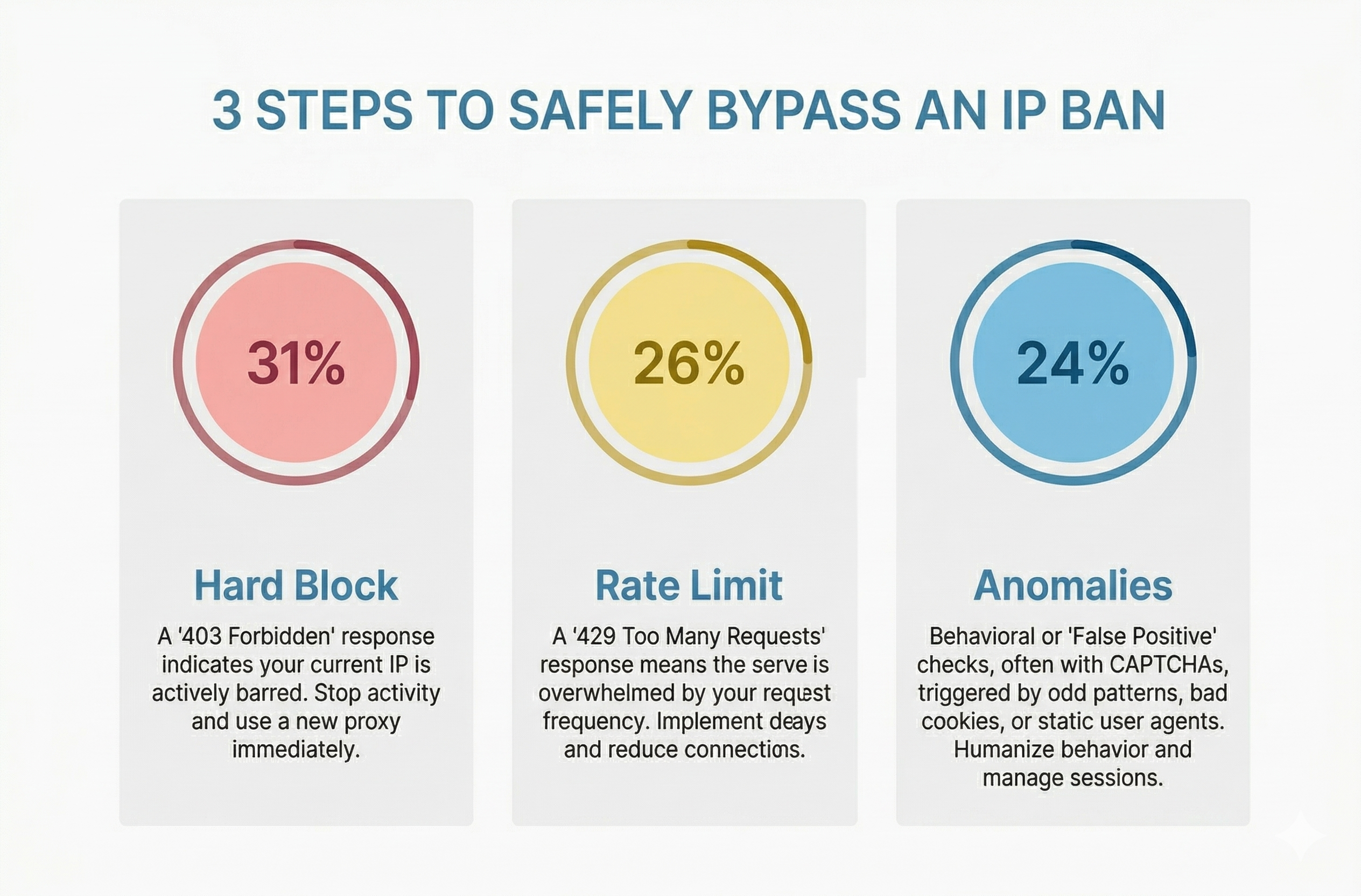
How to Bypass an IP Ban Safely by Diagnosing 403s, 429s, and False Positives
Diagnose 403s, 429s, and false positives quickly. Use this technical checklist to recover network access, reduce blocks, and scale data pipelines safely.
View Details