
Troubleshooting Hydraproxy Connection Problems Step by Step (2026)
Hydraproxy Not Working? A 2026 Diagnostic Playbook for Proxy Errors
What symptom are you seeing with Hydraproxy right now?
When Hydraproxy is not working, the error code usually points directly to the layer of the stack that is failing.
A timeout (Error 504) means the proxy server didn't respond in time, while connection refused (Error 111 or 0x05 in SOCKS) means the "door is locked", the proxy server or the target site is actively rejecting the request. In 2026, this is often caused by an over-saturated port or an aggressive local firewall.
Auth Failed and 407 Proxy Authentication
The 407 error is a gatekeeper. It means your request reached the Hydraproxy server, but it didn't recognize your "ID card." This is almost always a credential or whitelisting issue. If you are using the extension, follow the Hydraproxy Chrome extension troubleshooting steps to re-sync your app credentials.
Slow sessions and inconsistent results
If your session starts fast but crawls after 30 seconds, you are likely experiencing pool congestion. This happens when too many users are routed through the same mobile carrier tower or ISP node, a common issue in shared proxy pools.
Switch to stable LycheeIP pools
How do you isolate whether the issue is local setup or provider-side?
Before changing your code, run a 5-minute isolation test to stop "ghost-chasing" errors.
The 5-minute isolation test
1. Change the Device: If it fails on your server but works on your laptop, it’s a local firewall or environment issue.
2. Change the Network: Switch from office Wi-Fi to a mobile hotspot. If the proxy starts working, your office ISP is likely blocking the proxy protocol.
3. Change the Target: Try to access google.com. If that works but your target site fails, the proxy is fine—the target site has blocked that specific IP.
How do you debug authentication and whitelisting failures?
Auth failures are the most common "self-inflicted" proxy issues.
· Credential Mismatch: Ensure you are using the Proxy Password from the Hydraproxy app, not your main account login password.
· Whitelist Mismatch: If you use IP whitelisting, check if your local IP has changed (common on dynamic home connections). Your whitelisted IP in the dashboard must match your current public IP.
· Protocol Formatting: In SOCKS5, the URL format is often socks5://user:pass@host:port. A single missing colon will trigger a 407 or connection error.
How do you debug rotation and session instability?
If your scraper loses its session mid-way through a task, your rotation interval is likely clashing with your workflow duration.
· Symptoms of aggressive rotation: You log in successfully, but the next request shows you as "Logged Out." Fix: Increase your "Sticky" session duration in the Hydraproxy dashboard to at least 30 or 60 minutes.
· Symptoms of stale sessions: You are consistently blocked on the 50th request. Fix: Your IP has been "flagged." Enable a shorter rotation interval (e.g., 5 minutes) to stay ahead of rate limits.
In 2026, sites block you for two reasons: who you are (IP Reputation) or how you act (Behavior).
| Block Type | Signal | Fix |
| Policy Block | 403 Forbidden | Check if the target site allows proxies in their robots.txt or ToS. |
| Reputation Block | Immediate CAPTCHA | The IP has "bad baggage." Rotate to a new port or use a provider with a cooling period. |
| Behavior Flag | "Access Denied" after 10 requests | You are moving too fast. Add a 5–10s delay between requests. |
Switch to stable LycheeIP pools
How do you create a simple monitoring dashboard for proxy health?
To prevent future downtime, you should track three key metrics. You can use a 7-day evaluation metrics and plan-selection worksheet as a template for this.
1. Retry Rate: The percentage of requests that require a second attempt. (Target: <5%)
2. Timeout Rate: How often the proxy simply doesn't answer. (Target: <2%)
3. Success per Port: Are some ports performing better than others? This helps you identify "dirty" subnets.
When should you escalate to support or switch providers?
If you have cleared your cache, verified your credentials, and the isolation test points to the provider, it is time to escalate.
What to send to support:
· The exact Error Code (e.g., HTTP 504).
· The Port/Host you are using.
· The timestamp of the failure.
· A "cURL" command showing the failure in a terminal.
The switch decision checklist: Hydraproxy vs. LycheeIP
If you find yourself troubleshooting Hydraproxy more than using it, you may have outgrown their shared pool architecture. Use the Hydraproxy vs LycheeIP bake-off scorecard to determine if a move is necessary.
Switch to LycheeIP if:
· You require a 99.8% uptime SLA for production-grade scraping.
· You need IPs that have a guaranteed 6-month cooling period to avoid reputation blocks.
· You need near real-time API statistics to monitor health automatically rather than manually checking a dashboard.
Troubleshooting Summary Table
| Error | Root Cause | Quick Fix |
| 407 Auth | Credentials / Whitelist | Sync user:pass from Hydraproxy app; update whitelisted IP. |
| 504 Timeout | Port Saturation / Target Down | Wait 60s; test on a different target (e.g., Google). |
| 111 Refused | Protocol Mismatch | Switch between HTTP and SOCKS5 in settings. |
| 403 Forbidden | IP Flagged | Rotate the IP or increase request delays (pacing). |
Switch to stable LycheeIP pools
Frequently Asked Questions:
1. Why is my Hydraproxy connection refused in the Chrome extension?
This usually happens if you have another VPN or proxy extension active. Disable all other network-altering tools and try again.
2. How do I fix "Hydraproxy authentication error" in Python?
Ensure you are using the correct library syntax for proxy auth. For requests, it should be proxies = {'http': 'http://user:pass@host:port'}.
3. Is it normal for mobile proxies to be slow?
Mobile proxies route through cellular towers, which naturally have higher latency than fiber-optic datacenter lines. Expect 200ms–800ms higher pings.
4. Does "Hydraproxy not working" mean the service is down?
Rarely. Most issues are related to local network blocks (like corporate firewalls) or specific target sites flagging a shared IP subnet.
5. How often should I rotate my Hydraproxy IPs?
For account management, once every 24 hours is standard. For high-volume scraping, rotate every 5–10 minutes or per-request.
6. What is the best way to monitor proxy health?
Log every response code in your script. If you see a spike in 403 or 504 errors, your script should automatically trigger an IP rotation or alert your team.

Recommended Articles
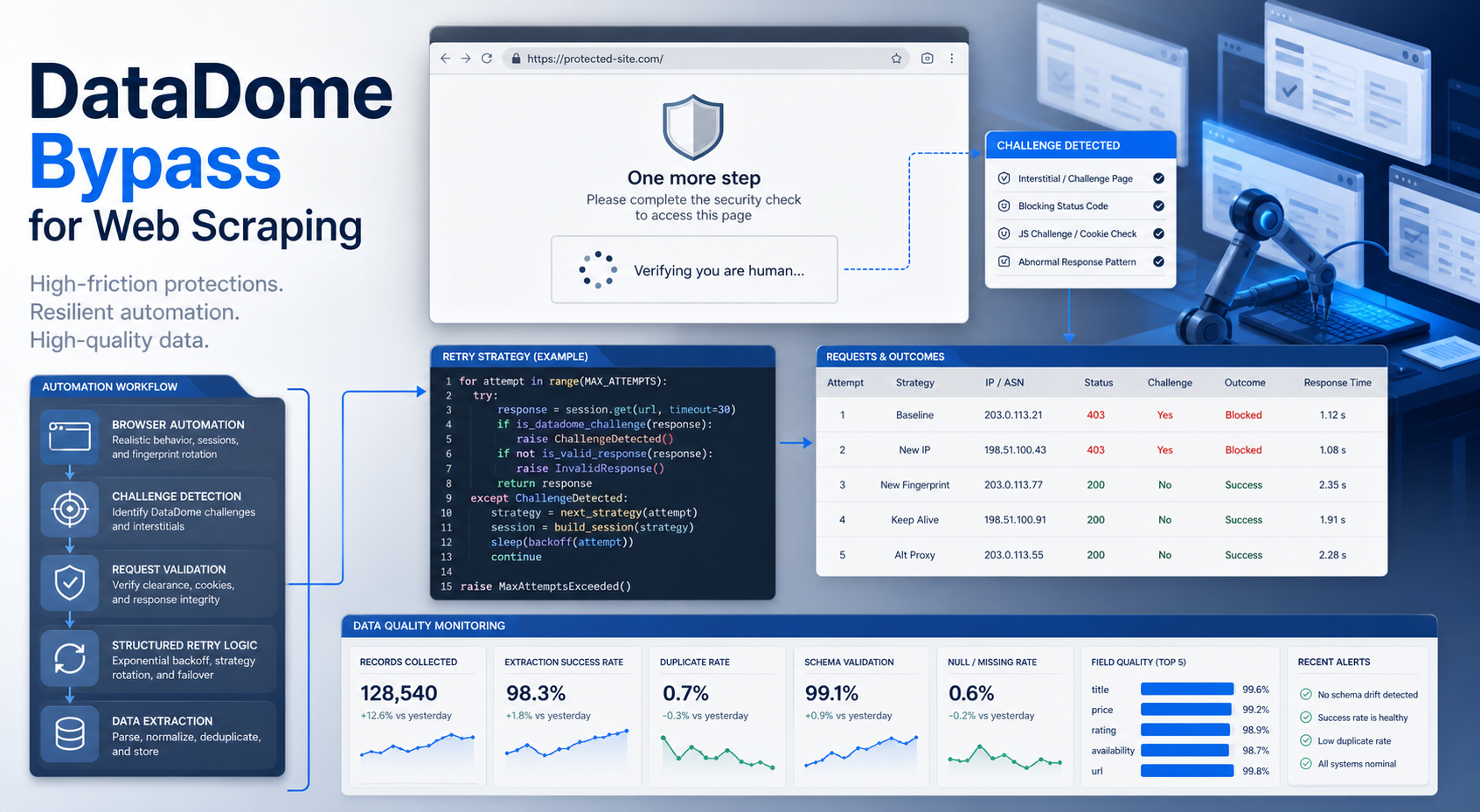
DataDome Bypass for Web Scraping
DataDome Bypass for Web Scraping
View Details
Web Scraping Rate Limiting: How to Handle 429s, Backoff, and Concurrency
Web scraping rate limiting is the engineering discipline of keeping an authorized collection workload inside a target service's acceptable request envelope. When that envelope is exceeded, a server may respond with HTTP 429 Too Many Requests, delay responses, or apply other controls.
View Details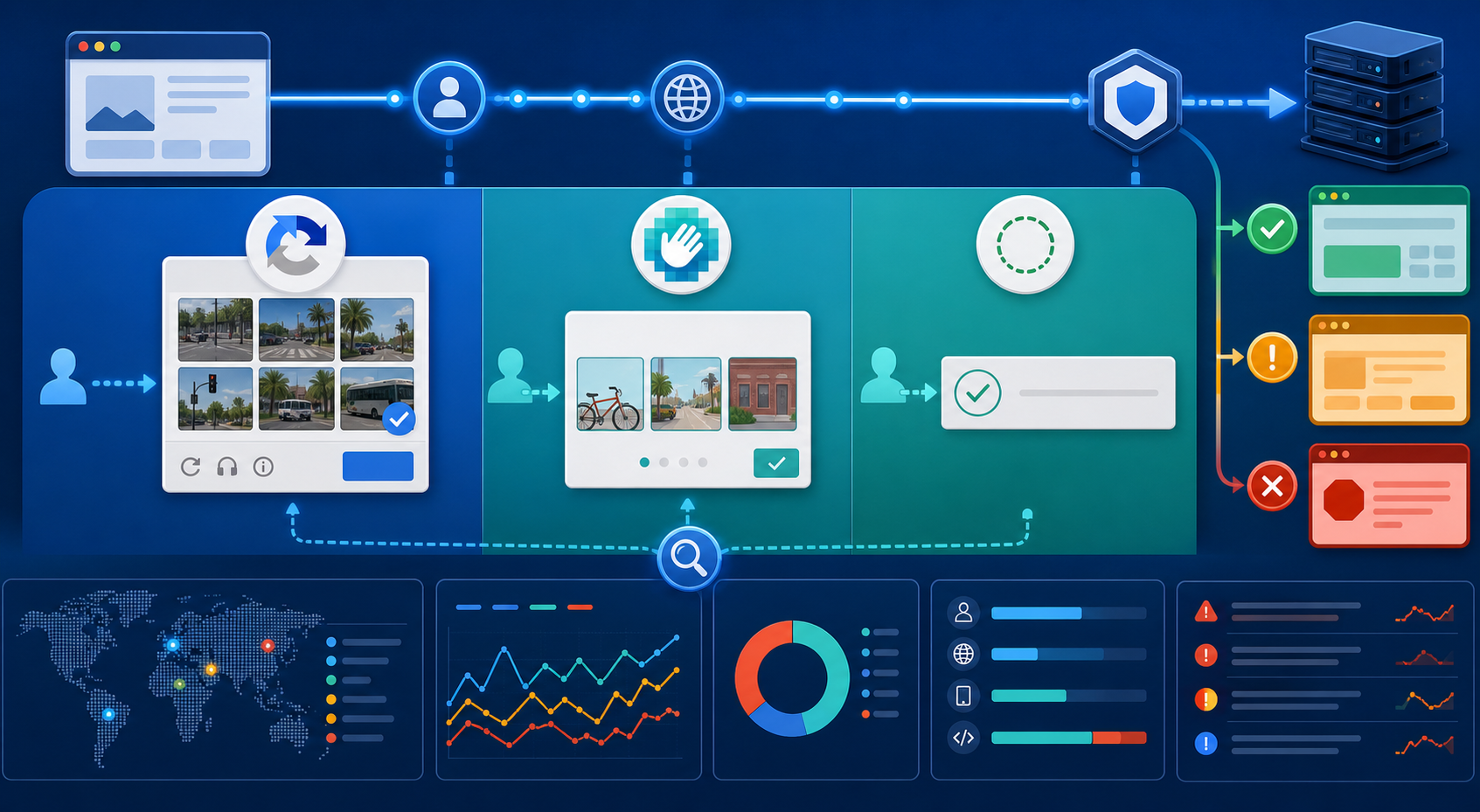
reCAPTCHA vs hCaptcha vs Cloudflare Turnstile: What Scraping Teams Need to Know
If an authorized data-collection workflow suddenly stops at a verification screen, identifying the protection system matters before you change code, browser settings, or proxy infrastructure. reCAPTCHA vs hCaptcha vs Turnstile is not simply a branding comparison. The three systems can expose different browser flows, token models, risk decisions, and failure symptoms.
View Details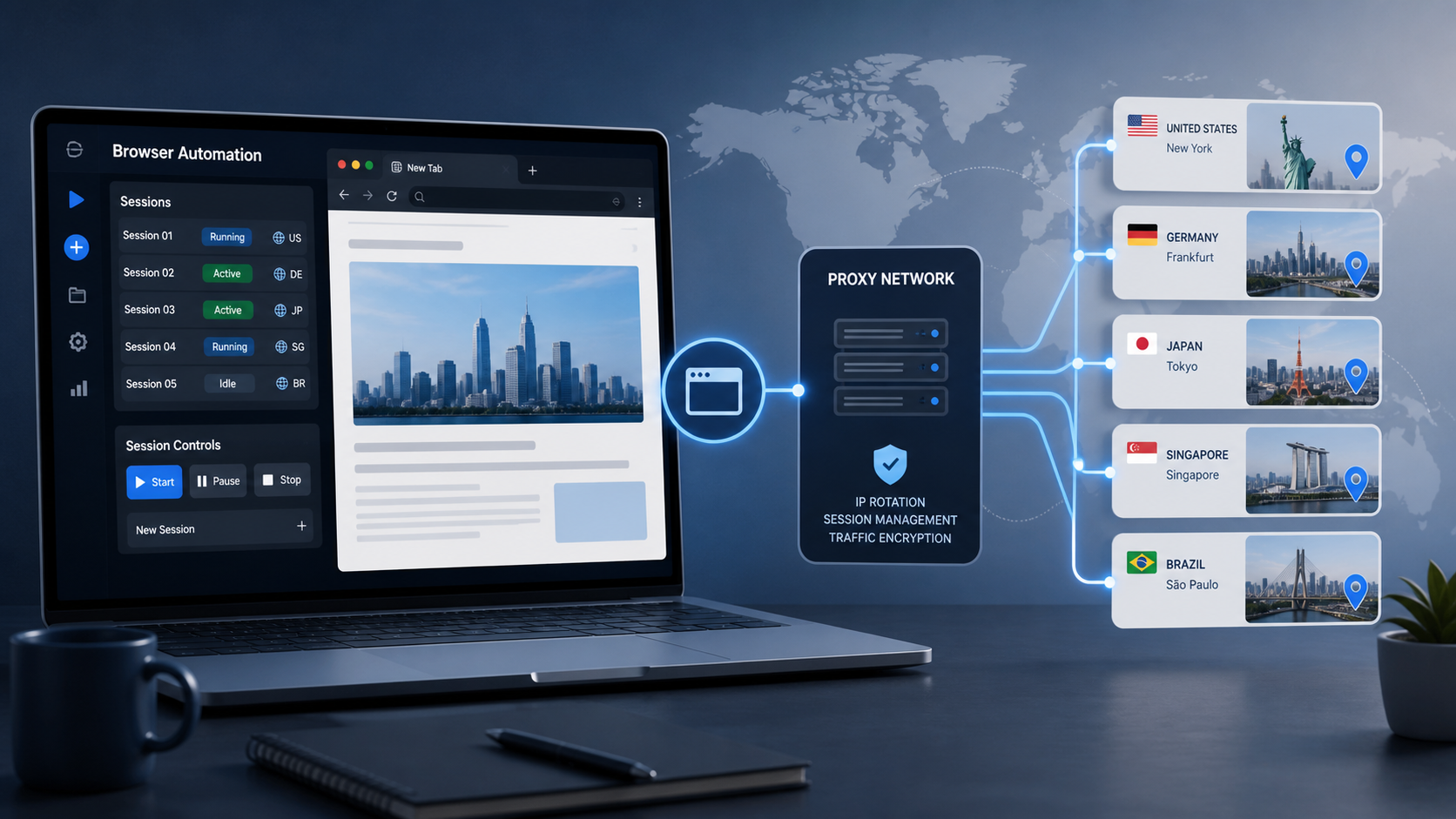
Browser Automation Proxies: IPs, Geo-Targeting, Sessions, and AI Agents
A browser automation proxy belongs to the network layer of Playwright, Selenium, cloud-browser, and AI-agent workflows. It changes how browser traffic is routed and can affect the source IP address, geographic egress, and session continuity seen by a destination site. It does not improve an AI model's reasoning, repair browser logic, or guarantee that a website will accept the session.
View Details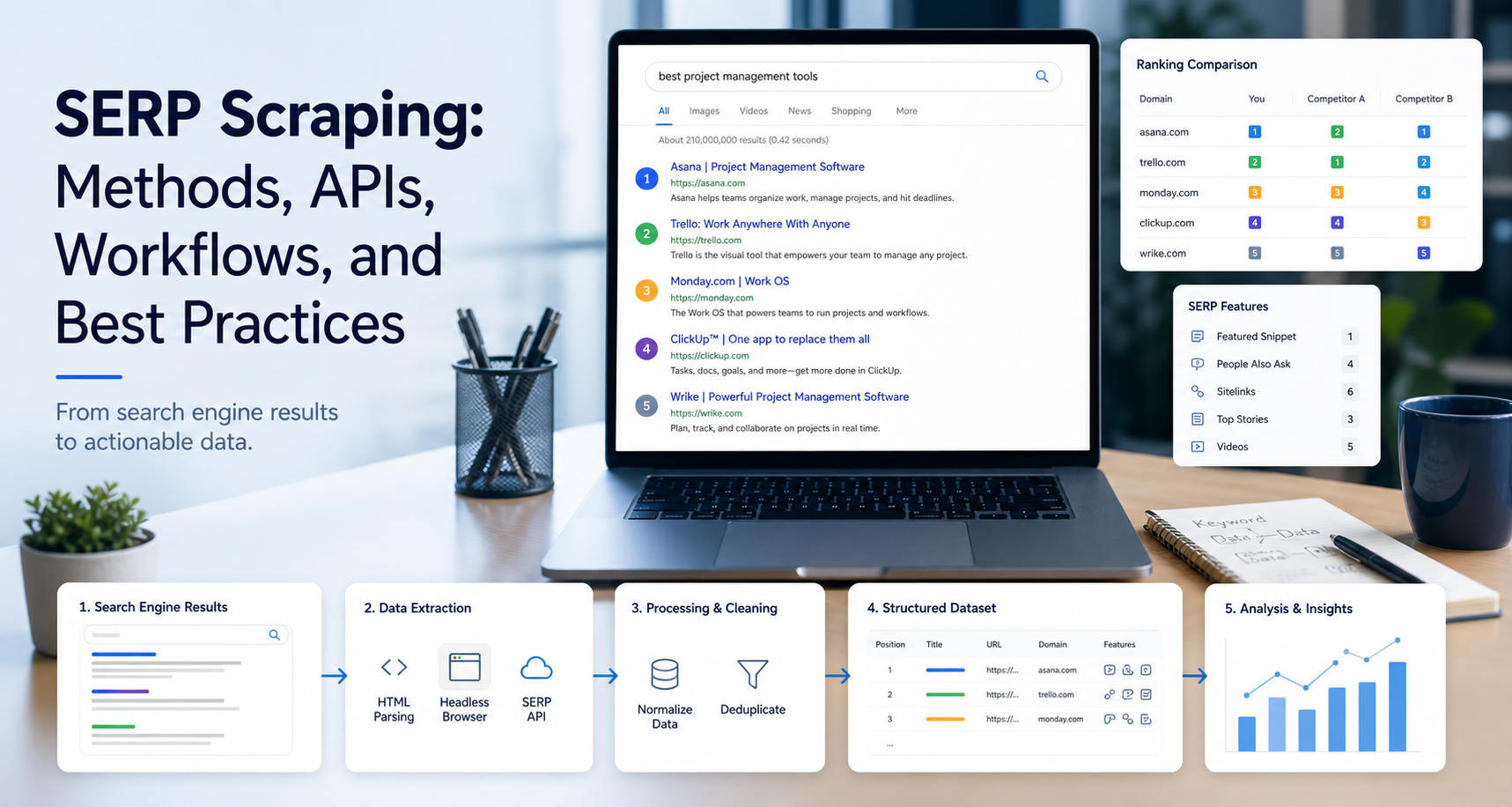
SERP Scraping: Methods, APIs, Workflows, and Best Practices
SERP scraping is the automated collection of information from search engine results pages. A SERP scraper can capture organic rankings, advertisements, featured snippets, People Also Ask questions, local results, shopping listings, images, and other search features, then convert them into structured data for analysis.
View Details