
Is Your Server Hardware Ready for Rocky Linux 10.1
Will Rocky Linux 10.1 Run on Your Server? x86-64-v3 Compatibility Checklist
The release of Rocky Linux 10.1 marks a definitive shift in the Enterprise Linux ecosystem. By adopting the x86-64-v3 microarchitecture as the mandatory baseline, the project promises better performance and modern instruction sets, but it also means some legacy hardware will no longer boot the 10.x kernel.
Consult with LycheeIP today
Why is Rocky Linux 10 using an x86-64-v3 baseline now?
Moving to a higher microarchitecture level allows the operating system to leverage modern CPU features that were previously optional. This results in faster cryptographic operations, better mathematical throughput, and improved overall system efficiency.
What “microarchitecture level” means in plain English
In the Linux world, x86-64 is no longer a single standard. It is divided into levels (v1 through v4).
- v2: Adds features like SSE4.2 and Popcnt (roughly 2008+).
- v3: Adds AVX, AVX2, and BMI1/2 (roughly 2013+).
- v4: Adds AVX-512 (high-end modern chips).
By requiring Rocky Linux x86-64-v3, the OS ensures that every running instance can use AVX2 instructions for performance-heavy tasks.
What kinds of systems get left behind?
Generally, Intel CPUs older than the Haswell generation (2013) and AMD CPUs older than Excavator (2015) will likely fail the v3 requirement. This includes many "budget" or "embedded" chips that lacked advanced instruction sets even in later years. For these systems, the rocky linux 10.1 hardware requirements simply cannot be met.
Which quick tests tell you if your CPU is compatible in under 5 minutes?
Testing for compatibility is a critical "pre-flight" step before any rocky linux 10.1 upgrade risk assessment.
Command set for bare metal
The fastest way to check is to look for the avx2 and bmi2 flags in your CPU information. Run the following command:
Bash
# Check for specific v3-level flags
grep -E 'avx2|bmi1|bmi2' /proc/cpuinfo
If the output is empty, your hardware does not support v3. For a more definitive validation, use the lscpu tool:
Bash
lscpu | grep "Flags"
What to do when virtualization hides CPU flags
If you are running in a VM (KVM, VMware, or Hyper-V), the hypervisor might be "masking" your CPU features. Even if your physical server is a 2024 powerhouse, the VM might see a generic "v2" CPU.
- Fix: Ensure your hypervisor's CPU mode is set to "Host Passthrough" or a specific model that supports the v3 feature set.
Consult with LycheeIP today
What are the most common “surprise blockers” besides the CPU?
Hardware support isn't just about the silicon. Sometimes, software assumptions or firmware settings create a "soft" failure for Rocky 10.1.
- Microcode Updates: Ensure your BIOS/UEFI is updated. Older microcode can sometimes misreport instruction set availability.
- Virtualization Extensions: Some rocky linux 10 cpu compatibility issues stem from VT-x or AMD-V being disabled in the BIOS, which can interfere with how certain v3 instructions are virtualized.
- 32-bit Runtimes: Rocky 10.1 removes 32-bit support. If your legacy apps need 32-bit libraries, they won't run natively, even on v3 hardware.
How LycheeIP fits into your infrastructure plan
If your local hardware fails the v3 check, you don't have to stop your project. LycheeIP allows you to decouple your data operations from your local hardware limitations:
- Cloud-First Scenarios: Use LycheeIP’s static datacenter proxies on modern cloud instances that fully support x86-64-v3.
- Developer-First Simplicity: Manage your global IP resources via a central dashboard, regardless of whether your local test server is running Rocky 9 or 10.
- Reliability: With 99.98% network availability, your data scraping or fintech ops stay up even if you are in the middle of a hardware refresh.
Which path should you pick if some of your fleet fails the v3 requirement?
Option A: Keep older nodes on Rocky Linux 9
Rocky 9 remains supported for several years. If your hardware is rocky linux old hardware, staying on the 9.x line is the safest, most stable path for production workloads.
Option B: Shift workloads to the cloud
Replatforming to modern instance types (like AWS m5+ or GCP N2+) ensures 100% compatibility with Rocky 10.1.
Option C: Consider an EL alternative
If you absolutely must have a newer OS on older hardware, some teams look at AlmaLinux x86-64-v2 alternative builds (if available) or other distributions that have not yet mandated the v3 baseline. However, this may sacrifice the specific performance optimizations found in Rocky 10.1.
Consult with LycheeIP today
What rollout plan reduces risk in mixed-hardware environments?
To avoid widespread outages, use a "Canary" deployment strategy:
- Stage 1: Identify a small subset of v3-verified servers.
- Stage 2: Use our migrate2rocky runbook to convert or fresh-install these nodes.
- Stage 3: Monitor for "Illegal Instruction" errors, which are the hallmark of a rocky linux 10.1 upgrade risk where the CPU cannot handle a v3 instruction.
Troubleshooting: Non-v3 Failure Signs
| Symptom | Meaning | Fix |
| Illegal instruction | Kernel/Binary used a v3 instruction on v2 CPU | Downgrade to Rocky 9. |
| Kernel panic - not syncing | Early boot failure on legacy chips | Verify CPU flags in BIOS or upgrade hardware. |
| DNF: Cannot find repo | Architecture mismatch | Verify arch is reporting x86_64. |
Assumptions & Limitations
- Hardware compatibility is based on the x86-64-v3 standard as defined by the glibc/GCC levels.
- Some cloud providers may use custom "vCPU" types that hide feature flags; consult your provider's documentation.
Consult with LycheeIP today
Frequently Asked Questions
1. Does Rocky Linux 10.1 run on Intel 4th Gen (Haswell)?
Generally, yes. Haswell was the first Intel consumer architecture to support AVX2/v3, but always check your specific model.
2. Can I bypass the v3 check?
No. The binaries are compiled to use these instructions. Bypassing a check (if one existed) would only result in a system crash the moment an AVX2 instruction is called.
3. Is Rocky Linux 10.1 more secure because of v3?
Indirectly. The modern hardware requirements often go hand-in-hand with better support for hardware-level security features like Secure Boot and TPM 2.0.
4. How do I check for x86-64-v3 in a script?
You can use: grep -q "avx2" /proc/cpuinfo && echo "V3 Supported".
5. What is the EOL for Rocky Linux 9?
Rocky 9 will receive security updates until 2032, giving you plenty of time to refresh your hardware for Rocky 10 or 11.

Recommended Articles

SERP API Troubleshooting: Fix Empty, Wrong, or Inconsistent Search Results
SERP API failures are not limited to obvious HTTP errors. A request can return successfully and still produce empty, incomplete, geographically wrong, duplicated, or misinterpreted search data. Production troubleshooting therefore has to separate transport problems from provider processing, SERP differences, and downstream parsing errors.
View Details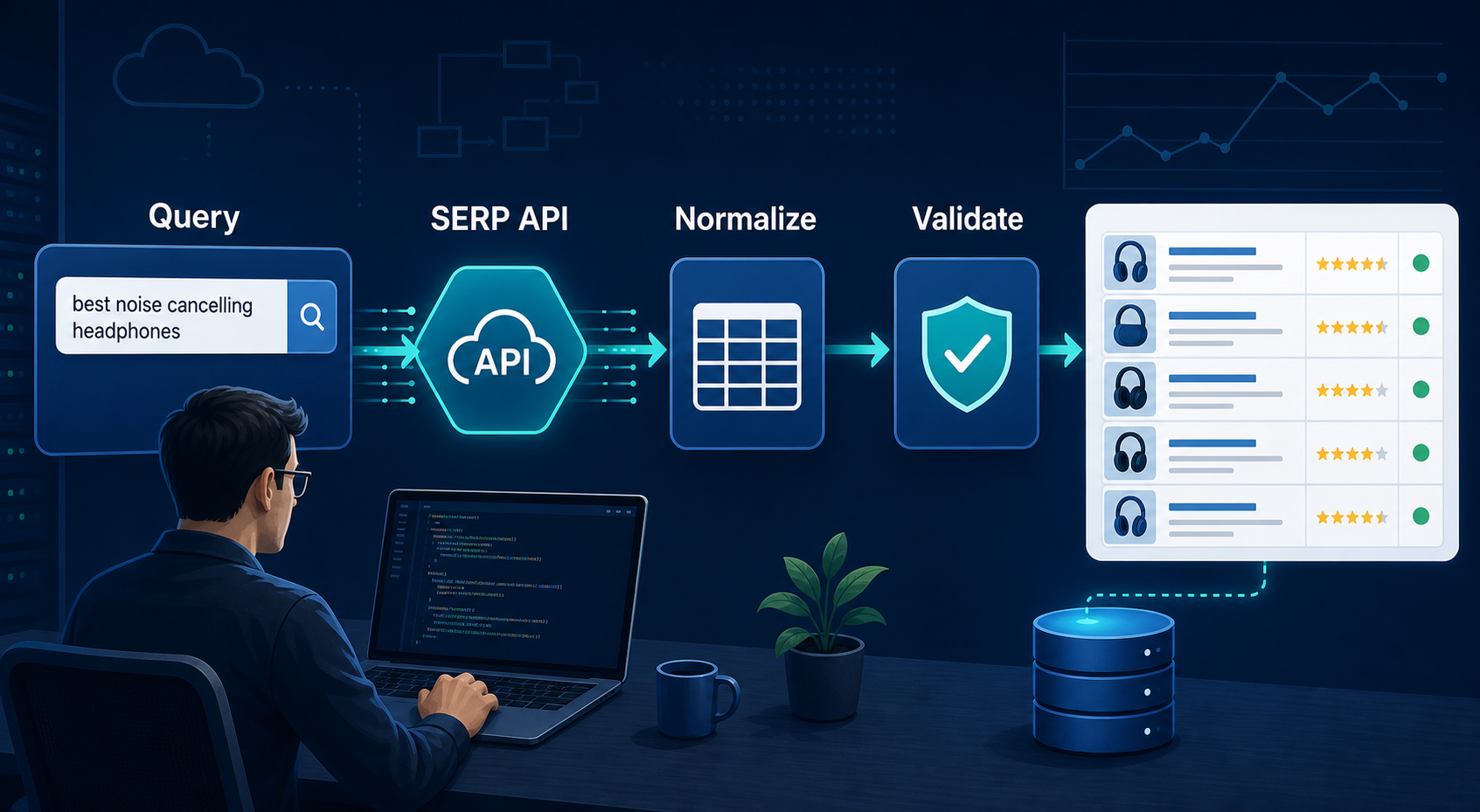
SERP API Python: How to Build a Reliable Search Data Pipeline
This guide shows a provider-neutral workflow for building that pipeline. It does not rank SERP API vendors. Instead, it focuses on the implementation choices that make a Python integration easier to operate, test, and migrate.
View Details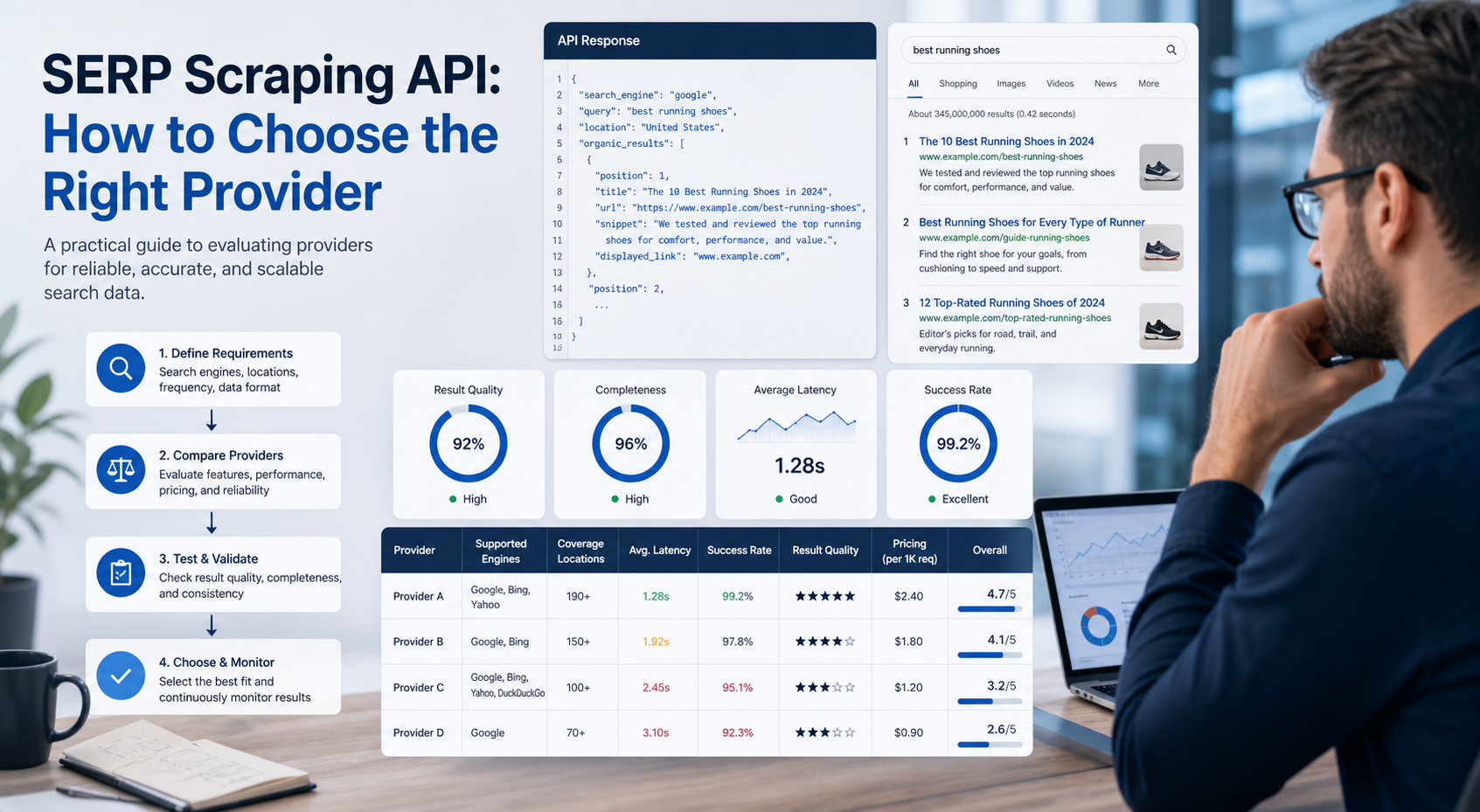
SERP Scraping API: How to Choose the Right Provider
Recommended Meta Description: Compare SERP scraping APIs by data coverage, localization, reliability, workflow fit, and cost structure, then choose and validate the right provider.
View Details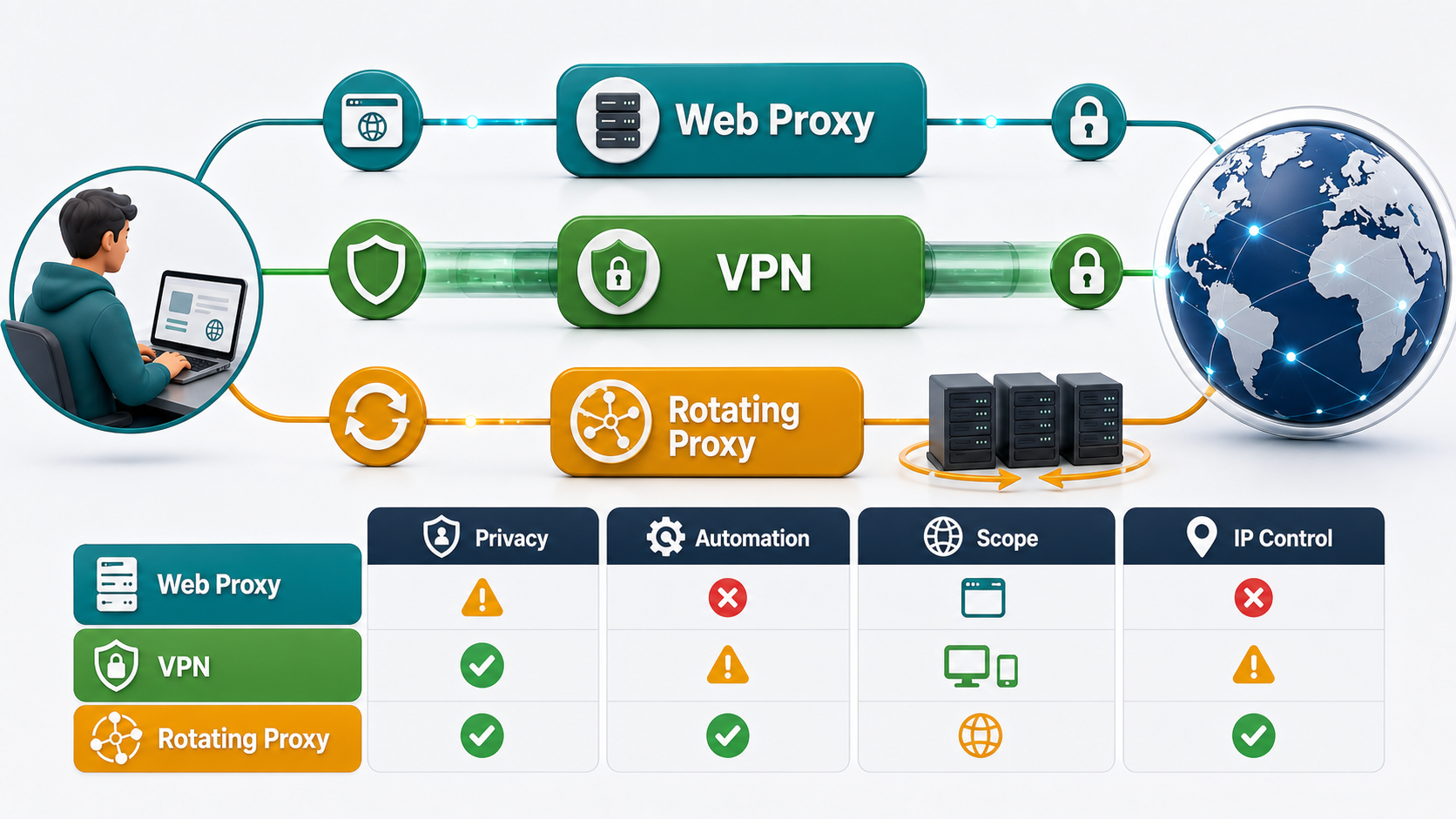
Free Web Proxy vs VPN vs Rotating Proxy: Which Should You Use?
Compare free web proxies, VPNs, rotating proxies, static proxies, and datacenter proxies by scope, encryption, IP control, automation, streaming, and account workflows.
View Details
BlockAway Not Working? Fix Common Proxy, Video, and Access Problems
Troubleshoot BlockAway when pages are blocked, YouTube fails, JavaScript breaks, speed drops, sessions expire, or mobile access behaves differently.
View Details