
Chrome Proxy Not Working? Fix ERR_PROXY_CONNECTION_FAILED, 407 Auth, and Random Disconnects
Chrome Proxy Not Working? Fix ERR_PROXY_CONNECTION_FAILED, 407 Auth, and Random Disconnects
When your chrome proxy not working, it usually manifests as a complete loss of internet or a frustrating "loop" of login popups. In 2026, many of these issues are tied to the transition to Manifest V3 (MV3) or "stuck" system configurations that Chrome inherits.
This guide provides a clinical troubleshooting tree to move you from error code to resolution in minutes.
Use LycheeIP to eliminate 407 errors
What does “ERR_PROXY_CONNECTION_FAILED” mean in Chrome?
This error indicates that Chrome is attempting to route your traffic through an intermediary server that is either offline, rejecting the connection, or incorrectly addressed.
The 3 most common root causes
- Dead Endpoint: The proxy server IP or hostname is no longer active.
- Port Blockage: Your local firewall or ISP is blocking common proxy ports (e.g., 8080, 3128, or 1080).
- Protocol Mismatch: You are sending HTTP traffic to a SOCKS5-only port, or vice-versa.
How to isolate the issue (Extension vs. System vs. Network)
- Test Incognito Mode: If the proxy works in Incognito (assuming the extension is disabled there), a rogue extension is likely the culprit.
- Check the "System" Layer: Chrome often uses your OS proxy settings. In Windows, go to Settings > Network & Internet > Proxy. If "Manual proxy setup" is ON when it shouldn't be, Chrome will fail.
- The "Ping" Test: Try to ping the proxy IP from your terminal. If the request times out, the issue is with your network or the proxy provider, not Chrome.
Why does Chrome show “Proxy Authentication Required (407)” repeatedly?
A Proxy Authentication Required 407 Chrome error means the proxy server sees you but doesn't trust you. You are at the "front door," but your key doesn't fit.
What triggers 407 loops in browsers
Auth loops happen when Chrome fails to cache your credentials correctly or when the proxy server rejects the authentication header. In 2026, Chrome keeps asking for proxy username and password often because of how MV3 manages background service workers, they may "wake up" without access to the saved credential store.
Practical fixes for 407 loops
- IP Allowlisting: This is the gold standard for stability. By whitelisting your office or home IP at the provider level, you bypass the need for a username/password entirely.
- Local Proxy Manager: Use a desktop-level client (like a vendor’s app) to handle the auth. Chrome then connects to the local client "unauthenticated," while the client handles the "heavy lifting" with the remote server.
- Profile Separation: Avoid using the same proxy credentials across 50 open tabs. High concurrency can trigger security rate-limits that look like 407 errors.
Use LycheeIP to eliminate 407 errors
How LycheeIP stabilizes Chrome proxy workflows
If your chrome proxy not working due to provider-side instability, switching to high-quality infrastructure is the only permanent fix. LycheeIP addresses the most common "fail" points mentioned above:
- 99.98% Network Availability: Reduces "Connection Failed" errors caused by server downtime.
- IP Whitelisting (Static Residential): Allows you to whitelist up to 5 IPs, eliminating 407 auth prompts entirely for those locations.
- Operator-Direct Resources: Unlike "free" proxies that are often recycled and blocked, LycheeIP resources are direct from operators and filtered via AI algorithms for cleanliness.
- Real-time Stats: Use the LycheeIP API or dashboard to see if your 407 errors are due to reaching a traffic limit (near real-time usage monitoring).
Which quick checks confirm your proxy is actually applied?
Don't trust the extension icon; trust the data.
IP Verification
Visit a site like ipinfo.io or whatismyipaddress.com. If the location matches your proxy but the "Organization" field still shows your home ISP, you have a partial leak.
The DNS Leak Proxy Chrome Test
A DNS leak proxy Chrome occurs when your browser routes your data through the proxy but sends your DNS queries (which sites you visit) through your local ISP.
- The Fix: Use a SOCKS5 proxy or an extension that supports "Remote DNS."
- Check: Run an extended test at dnsleaktest.com. If you see your local ISP's name, your proxy is leaking.
How do you reset Chrome proxy behavior safely?
If your Chrome proxy settings keep changing or you're stuck in an error state, a surgical reset is better than a full reinstall.
- Clear Socket Pools: Navigate to chrome://net-internals/#sockets and click Flush socket pools. This forces Chrome to drop all existing (and potentially broken) connections.
- Reset WinHTTP (Windows): Open CMD as Admin and type netsh winhttp reset proxy. This clears any system-level "ghost" proxies that might be overriding Chrome.
- Audit Extensions: If settings revert automatically, you likely have a malicious or misconfigured extension.
Use LycheeIP to eliminate 407 errors
When should you stop using an extension and switch to PAC?
Extensions are great for one-off tasks, but they are the least stable way to manage proxies at scale.
- Switch to PAC (Proxy Auto-Config): If you need different proxies for different URLs (e.g., use a US proxy for Google and a UK proxy for BBC), a PAC script is much faster and less prone to "breaking" during Chrome updates.
- Switch to Managed Policies: If you are an agency managing 100+ browser profiles, use Chrome Enterprise policies to hard-code proxy settings. This prevents users (or malware) from changing them.
Troubleshooting Table: Error vs. Solution
| Symptom | Error Code | Root Cause | Fastest Fix |
| Blank Page | ERR_PROXY_CONNECTION_FAILED | Proxy is offline or Port 80/443 is blocked. | Change the proxy port or check provider status. |
| Infinite Login Popup | HTTP 407 | Cached credentials are stale or rejected. | Use IP Whitelisting instead of User/Pass. |
| "Your Connection is Not Private" | NET::ERR_CERT_AUTHORITY_INVALID | Proxy is trying to "inspect" HTTPS traffic. | Disable "SSL Decryption" in your proxy dashboard. |
| Sites Not Loading (Partial) | ERR_TIMED_OUT | WAF (like Cloudflare) blocked the proxy IP. | Rotate to a fresh Residential IP (LycheeIP). |
Assumptions & Limitations
- VPN Conflict: If you have a system-wide VPN active, it will almost always override your Chrome proxy extension.
- Captive Portals: High-security proxies often fail on hotel or airport Wi-Fi until you "log in" to the local network.
- Extension Limit: Chrome only allows one extension to control proxy settings at a time. If you have two, they will fight for control, causing random disconnects.
Use LycheeIP to eliminate 407 errors
Frequently Asked Questions
- How to fix chrome proxy not working?
Start by flushing your socket pools at chrome://net-internals/#sockets and checking if the error persists in Incognito mode. If it works in Incognito, disable your extensions one by one. - Why does my ERR_PROXY_CONNECTION_FAILED Chrome error keep coming back?
This often happens if your Windows "LAN Settings" are set to "Use a proxy server" for a server that no longer exists. Uncheck this in your system's Internet Properties. - What is a 407 error in Chrome?
It is a "Proxy Authentication Required" code. It means your credentials (username/password) are wrong or the proxy doesn't recognize your IP. - How do I stop Chrome from asking for a proxy password?
The most effective way is to use IP whitelisting. This tells the proxy server: "If a request comes from this specific IP address, let it through without a password." - How do I fix a DNS leak in Chrome?
Ensure you are using a SOCKS5 proxy and that your extension is configured to perform DNS resolution on the proxy side, not the local side. - Why do sites not loading with proxy Chrome appear only on certain domains?
Some domains (like banking or government sites) have aggressive "Proxy Detectors." You should add these domains to your extension's Bypass List.

Recommended Articles
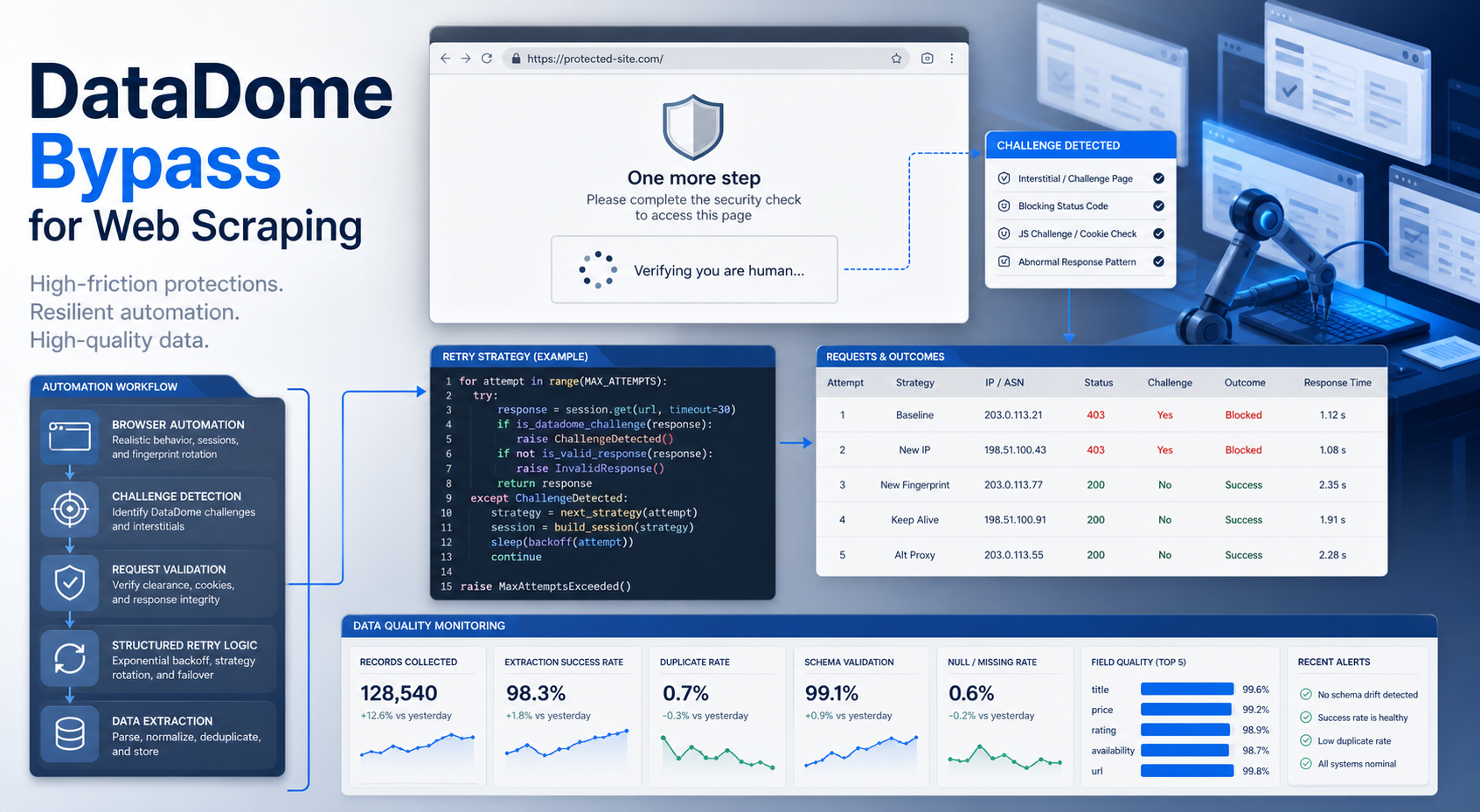
DataDome Bypass for Web Scraping
DataDome Bypass for Web Scraping
View Details
Web Scraping Rate Limiting: How to Handle 429s, Backoff, and Concurrency
Web scraping rate limiting is the engineering discipline of keeping an authorized collection workload inside a target service's acceptable request envelope. When that envelope is exceeded, a server may respond with HTTP 429 Too Many Requests, delay responses, or apply other controls.
View Details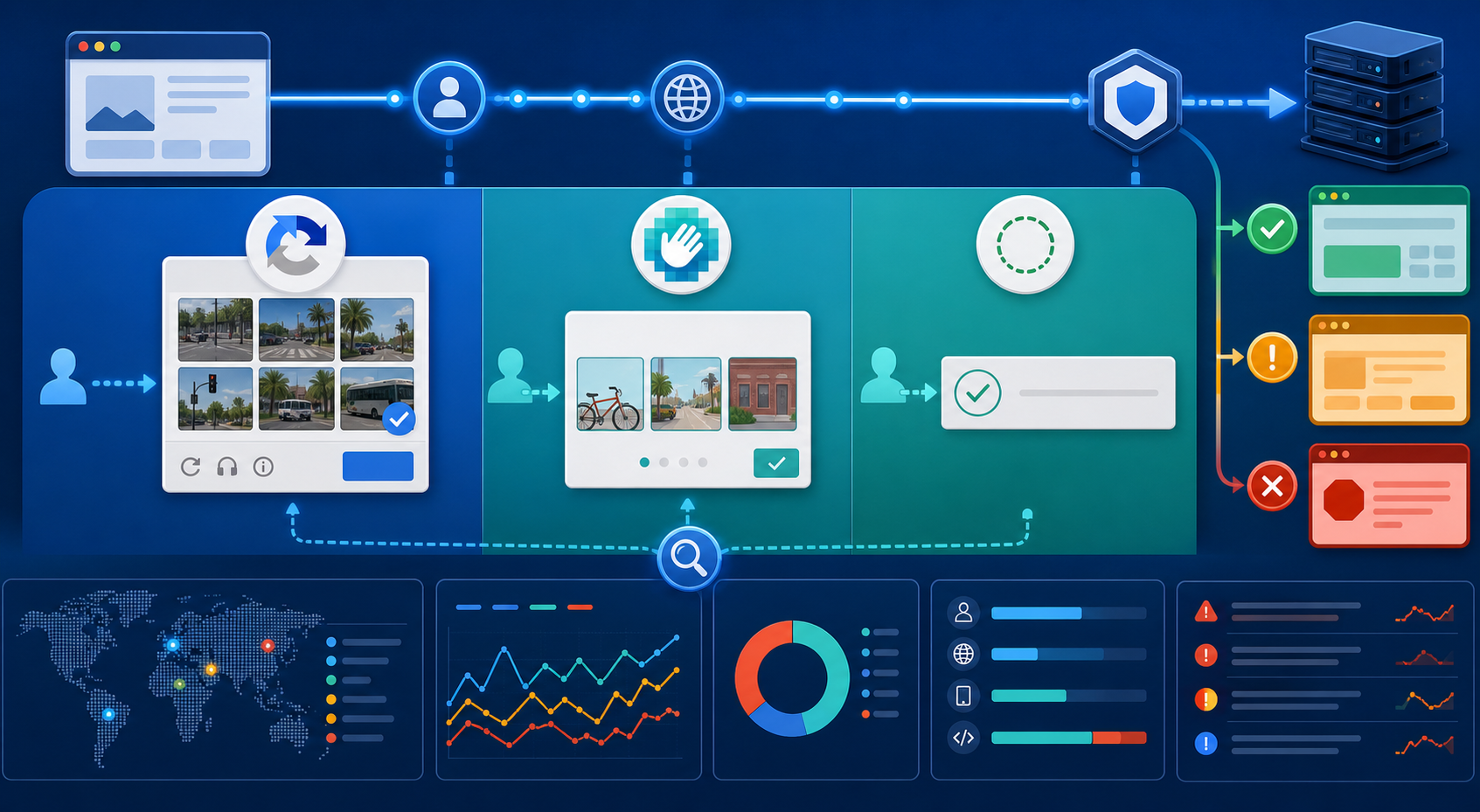
reCAPTCHA vs hCaptcha vs Cloudflare Turnstile: What Scraping Teams Need to Know
If an authorized data-collection workflow suddenly stops at a verification screen, identifying the protection system matters before you change code, browser settings, or proxy infrastructure. reCAPTCHA vs hCaptcha vs Turnstile is not simply a branding comparison. The three systems can expose different browser flows, token models, risk decisions, and failure symptoms.
View Details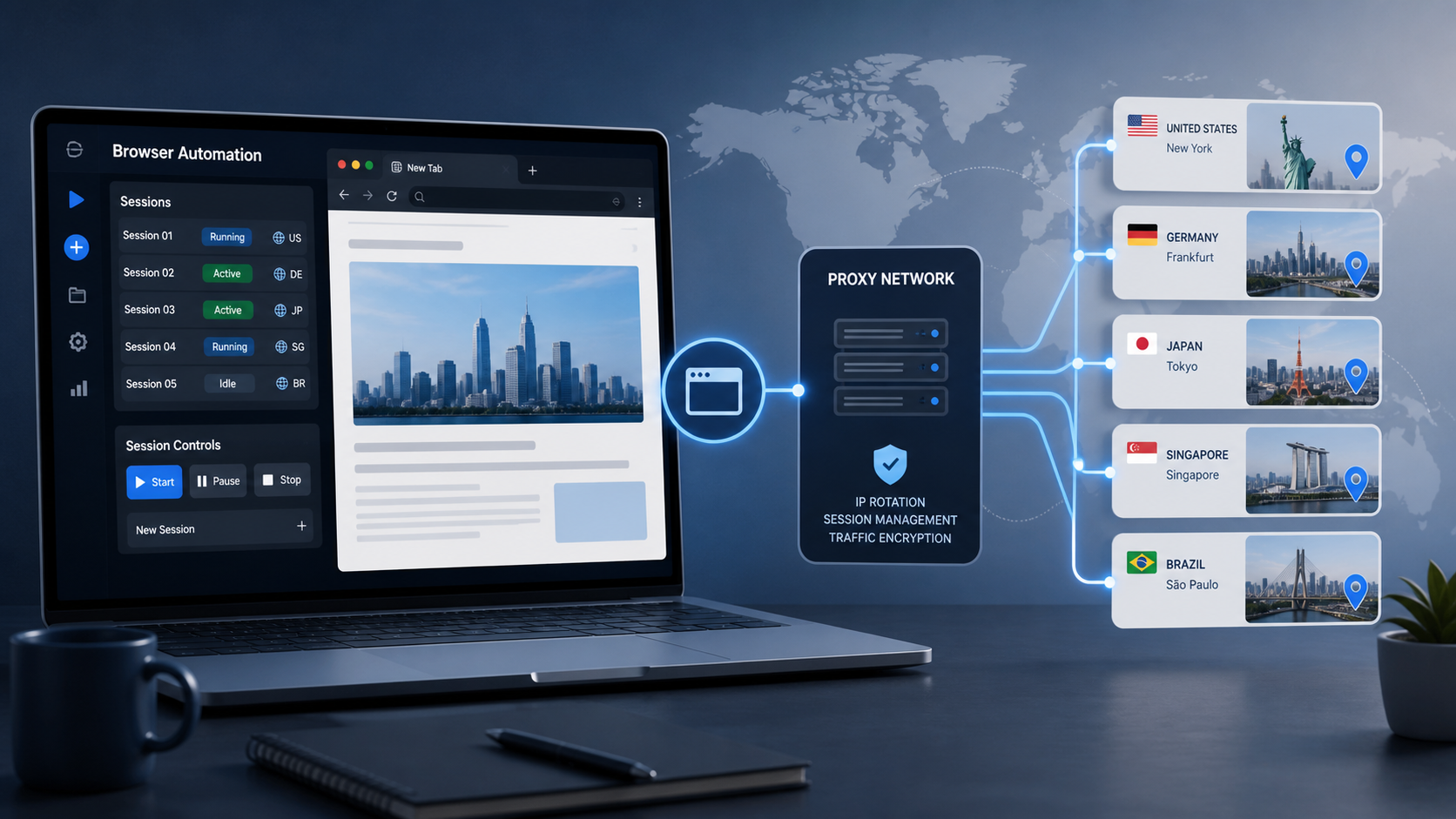
Browser Automation Proxies: IPs, Geo-Targeting, Sessions, and AI Agents
A browser automation proxy belongs to the network layer of Playwright, Selenium, cloud-browser, and AI-agent workflows. It changes how browser traffic is routed and can affect the source IP address, geographic egress, and session continuity seen by a destination site. It does not improve an AI model's reasoning, repair browser logic, or guarantee that a website will accept the session.
View Details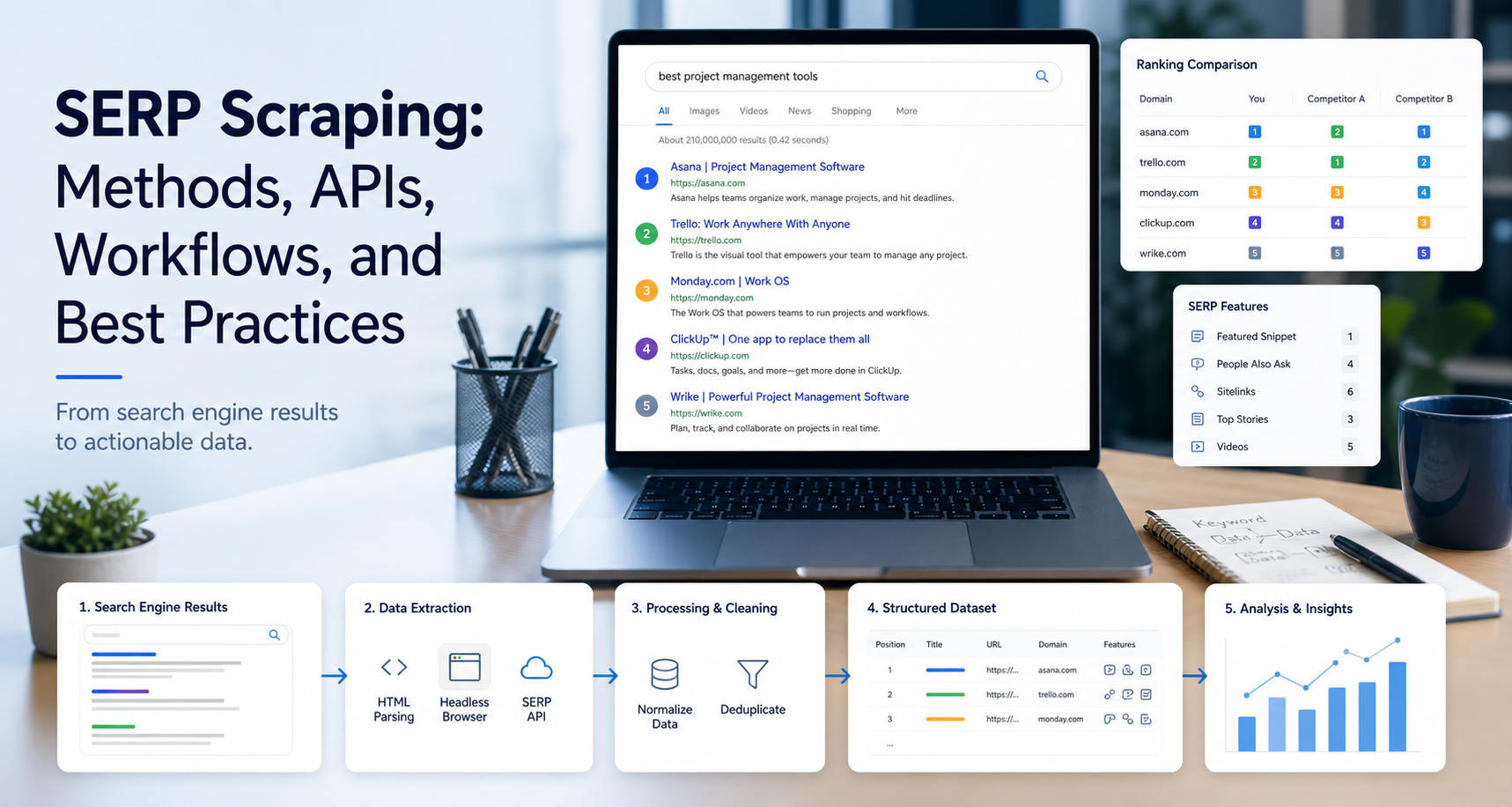
SERP Scraping: Methods, APIs, Workflows, and Best Practices
SERP scraping is the automated collection of information from search engine results pages. A SERP scraper can capture organic rankings, advertisements, featured snippets, People Also Ask questions, local results, shopping listings, images, and other search features, then convert them into structured data for analysis.
View Details