
What Is Concurrency? A Technical Overview for Developers
What Is Concurrency? A Technical Overview for Developers
What is concurrency in the context of modern software architecture? At its core, it is the ability of a system to handle multiple tasks in overlapping time periods, making progress on all of them without necessarily finishing one before starting the next. For developers building scalable scraping infrastructure or high-traffic APIs, understanding what is concurrency goes beyond textbook definitions. It is the key to throughput and efficiency.
What is concurrency in simple terms?
What is concurrency involves a single system managing multiple tasks by switching between them so quickly that they appear to run simultaneously. Imagine a bartender serving three customers; they pour a drink for one, take payment from the second, and chat with the third. The bartender isn't doing these actions at the exact same microsecond, but the workflow is interleaved. This is what is concurrent work in a nutshell.
What does concurrent execution look like in the real world?
Concurrent execution appears whenever a system balances multiple workflows to reduce idle time. In a web browser, concurrent execution allows you to scroll a webpage while a file downloads in the background and a video buffers. In data infrastructure, concurrent execution allows a scraper to send a request, wait for the response, and process a different URL simultaneously.
How does concurrency differ from sequential processing?
Sequential processing forces task B to wait until task A is 100% complete, whereas what is concurrent processing allows task B to start while task A is pausing for I/O.
- Sequential: Read File A -> Wait -> Process A -> Read File B.
- Concurrent: Start Read A -> Start Read B -> Process A when ready.
The basics of concurrency focus on structure and flow, ensuring that computing resources are never wasted waiting for a network response or disk read.
Use LycheeIP to run concurrent proxy connections
How does concurrency actually work inside a computer?
Concurrency works by breaking tasks into smaller units and using a scheduler to assign computing resources to these units in rapid succession. The CPU, acting as the primary among computing resources, executes instructions for one process, pauses, saves the state, and switches to another. This maximizes the utility of limited computing resources.
How do the basics of concurrency relate to context switching?
The basics of concurrency rely heavily on context switching, where the operating system saves the state of a running thread and loads the state of a waiting one. While this enables concurrent execution, excessive switching can drain computing resources. Mastering the basics of concurrency means balancing the number of active tasks against the overhead of managing them.
What role do multiple processes play in the OS?
Multiple processes are independent programs running simultaneously, each with its own memory space, which provides a high degree of safety. Using multiple processes is a common way to achieve concurrency because if one process crashes, others continue running. Modern operating systems leverage multiple processes to ensure that a browser crash doesn't kill your music player. However, communicating between multiple processes is generally slower than using threads.
What is the difference between concurrency and parallelism?
The difference is that concurrency is about dealing with lots of things at once, while parallelism is about doing lots of things at once. Concurrency vs parallelism is often confused, but the distinction is vital:
- Concurrency: One core slicing time between tasks (structure).
- Parallelism: Multiple cores running tasks at the exact same instant (execution).
Understanding concurrency vs parallelism helps developers choose the right hardware. You can have concurrency on a single core, but you cannot have parallelism without multiple cores.
When should you use multi core multi thread parallel processing?
You should use multi core multi thread parallel processing when your tasks are CPU-bound and require raw computational power, such as image rendering or cryptographic calculations. Multi core multi thread parallel processing allows independent threads to run on separate physical cores simultaneously. Unlike simple concurrency, multi core multi thread parallel processing increases the total throughput of heavy calculations.
However, for I/O-bound tasks like web scraping, simple concurrency often beats multi core multi thread parallel processing in efficiency because it doesn't require the overhead of synchronizing massive hardware threads.
Why is the distinction between concurrency vs parallelism critical?
The distinction between concurrency vs parallelism determines how you optimize code; optimizing for concurrency involves reducing blocking operations, while optimizing for parallelism involves data decomposition.
- Concurrency vs parallelism in Python: Due to the Global Interpreter Lock (GIL), Python threads are concurrent but not parallel.
- Concurrency vs parallelism in Data: Concurrency handles the I/O waits; parallelism handles the data parsing.
Use LycheeIP to run concurrent proxy connections
Why does concurrency matter for modern applications?
Concurrency matters because it allows applications to serve thousands of users effectively without requiring infinite hardware. The advantages of concurrency are the foundation of modern web servers, proxies, and cloud infrastructure.
What are the main advantages of concurrency for performance?
The advantages of concurrency include higher responsiveness, better resource utilization, and the ability to hide latency. By utilizing concurrent execution, an application can continue rendering a UI while fetching data from a database. One of the biggest advantages of concurrency is cost efficiency; you can do more work with a smaller server by keeping the CPU busy during I/O waits.
For LycheeIP users, the advantages of concurrency are obvious: running hundreds of lightweight proxy connections concurrently allows for massive data collection without blocking your local machine.
How does concurrency enable fault isolation?
Concurrency enables fault isolation by separating tasks so that a failure in one does not crash the entire system. If a specific request times out or throws an error, fault isolation ensures that other concurrent requests continue processing.
- Fault isolation in browsers: One tab crashes, the browser stays open.
- Fault isolation in scraping: One proxy fails, the scraper retries without stopping the job.
Achieving robust fault isolation usually requires using multiple processes or carefully managed thread pools.
How is concurrency used in programming?
Concurrency in programming is implemented using structures like threads, coroutines, async/await patterns, and event loops. Concurrency in programming has evolved from manual thread management to high-level abstractions that make writing non-blocking code easier.
What are the patterns for concurrency in programming?
Common patterns for concurrency in programming include the Actor model, Worker Pools, and Producer-Consumer pipelines.
- Worker Pools: A fixed number of threads process a queue of tasks.
- Async/Await: Popular in JavaScript and Python for handling concurrent execution without deep nesting.
- Futures/Promises: Objects representing a value that may not be available yet.
Mastering concurrency in programming requires understanding how your specific language handles memory sharing and synchronization.
How do distributed systems handle concurrent requests?
Distributed systems handle concurrent requests by spreading load across multiple servers, often requiring complex coordination. In distributed systems, what is concurrency becomes a network-wide question, how do we keep data consistent across nodes? Distributed systems rely on fault isolation to ensure that if one node goes down, the overall system remains available.
Companies building distributed systems must effectively use multi core multi thread parallel processing on individual nodes while managing concurrency across the network.
What is concurrency in operating systems and databases?
What is concurrency in OS and DB layers refers to the low-level mechanisms that ensure data integrity when multiple users access the same resource. Without strict controls, concurrent execution would lead to data corruption.
Why is concurrency control necessary for data integrity?
Concurrency control is necessary to prevent "race conditions" where two processes try to write to the same data simultaneously. Concurrency control mechanisms, such as locks, semaphores, and monitors, dictate who can access a resource and when. Effective concurrency control ensures that financial transactions or inventory updates are accurate.
If concurrency control is too strict, it slows down the system (blocking). If concurrency control is too loose, data gets corrupted.
How do databases manage shared computing resources?
Databases manage shared computing resources using techniques like Multi-Version Concurrency Control (MVCC), which allows readers to read while writers write. This approach to concurrency control significantly boosts performance in high-traffic environments. Database engines optimize the usage of computing resources to handle thousands of queries via concurrent execution.
Use LycheeIP to run concurrent proxy connections
Which challenges make concurrency difficult to master?
The challenges usually stem from the non-deterministic nature of what is concurrent execution, making bugs hard to reproduce.
What are race conditions and deadlocks?
- Race Conditions: Occur when the outcome depends on the timing of uncontrollable events (e.g., threads finishing in a random order).
- Deadlocks: A situation where two tasks are waiting for each other to release computing resources, causing both to freeze.
- Starvation: When a task is perpetually denied access to computing resources by higher-priority tasks.
These issues highlight why concurrency control and fault isolation are critical design pillars.
How can you implement concurrency safely?
To implement concurrency safely, start by minimizing shared state. The less data your multiple processes or threads share, the less you need complex concurrency control.
For developers using LycheeIP, we recommend starting with simple worker pools. If you are scraping data:
- Use a queue to hold URLs.
- Spin up a fixed number of workers (threads or async tasks).
- Let the workers pull URLs and process them using concurrent execution.
- Rely on our reliable proxy infrastructure to handle the connection stability.
This approach utilizes the advantages of concurrency, speed and efficiency, without overcomplicating your code with multi core multi thread parallel processing logic unless absolutely necessary.
Comparison: Concurrency vs. Parallelism
| Feature | Concurrency | Parallelism |
| Core Concept | Dealing with multiple things at once (Structure). | Doing multiple things at once (Execution). |
| Resources | Can run on a single CPU core via time-slicing. | Requires multi core multi thread parallel processing hardware. |
| Goal | Responsiveness, latency hiding, structure. | Throughput, raw calculation speed. |
| Debugging | Hard (non-deterministic). | Harder (hardware dependent). |
| Best For | I/O tasks (API requests, Scraping, DB calls). | CPU tasks (Encoding, Encryption, Analytics). |
Use LycheeIP to run concurrent proxy connections
Frequently Asked Questions:
1. What is concurrency in simple terms vs parallelism?
What is concurrency focuses on structure, breaking tasks apart so they can overlap. Parallelism focuses on hardware—using multiple cores to run instructions simultaneously. You can have concurrency without parallelism (on one core), but true parallelism requires multi-core hardware.
2. Why is concurrency control important in databases?
Concurrency control is vital to prevent data corruption. Without it, if two users try to update the same bank balance at the exact same moment, one update might overwrite the other, leading to incorrect data.
3. What are the main advantages of concurrency for developers?
The advantages of concurrency include improved application responsiveness (the UI doesn't freeze), better use of computing resources, and faster completion of I/O-heavy tasks like web scraping or API integration.
4. How do distributed systems utilize concurrency?
Distributed systems use concurrency to handle thousands of incoming requests across different servers. They rely on fault isolation to ensure that a failure in one concurrent process doesn't cascade and take down the entire network.
5. When should I use multiple processes instead of threads?
Use multiple processes when you need strong fault isolation (one crash doesn't kill the app) or when you need to bypass CPU limitations in languages like Python (due to the GIL). Threads are lighter on memory but share the same crash risk.
6. Is multi core multi thread parallel processing always faster?
Not always. Multi core multi thread parallel processing introduces overhead for coordination. For simple tasks or I/O-bound work (like waiting for a website to load), simple concurrency on a single core is often more efficient and easier to manage.

Recommended Articles

YouTube Error 400: What It Means and How to Fix It
In HTTP terminology, a 400 Bad Request is a client-error response. MDN explains that servers commonly return 400 when they consider the request malformed, incorrectly framed, or deceptively routed. The important troubleshooting clue is that repeating the exact same request without changing anything is expected to fail again.
View Details
Overseas Social Media Traffic Declining? These Reach-Limiting Triggers Are Often Overlooked
A practical guide to overlooked overseas social media reach drops, covering AI content disclosure, risky wording, abnormal account behavior, hidden reach-limiting signals, and account environment checks.
View Details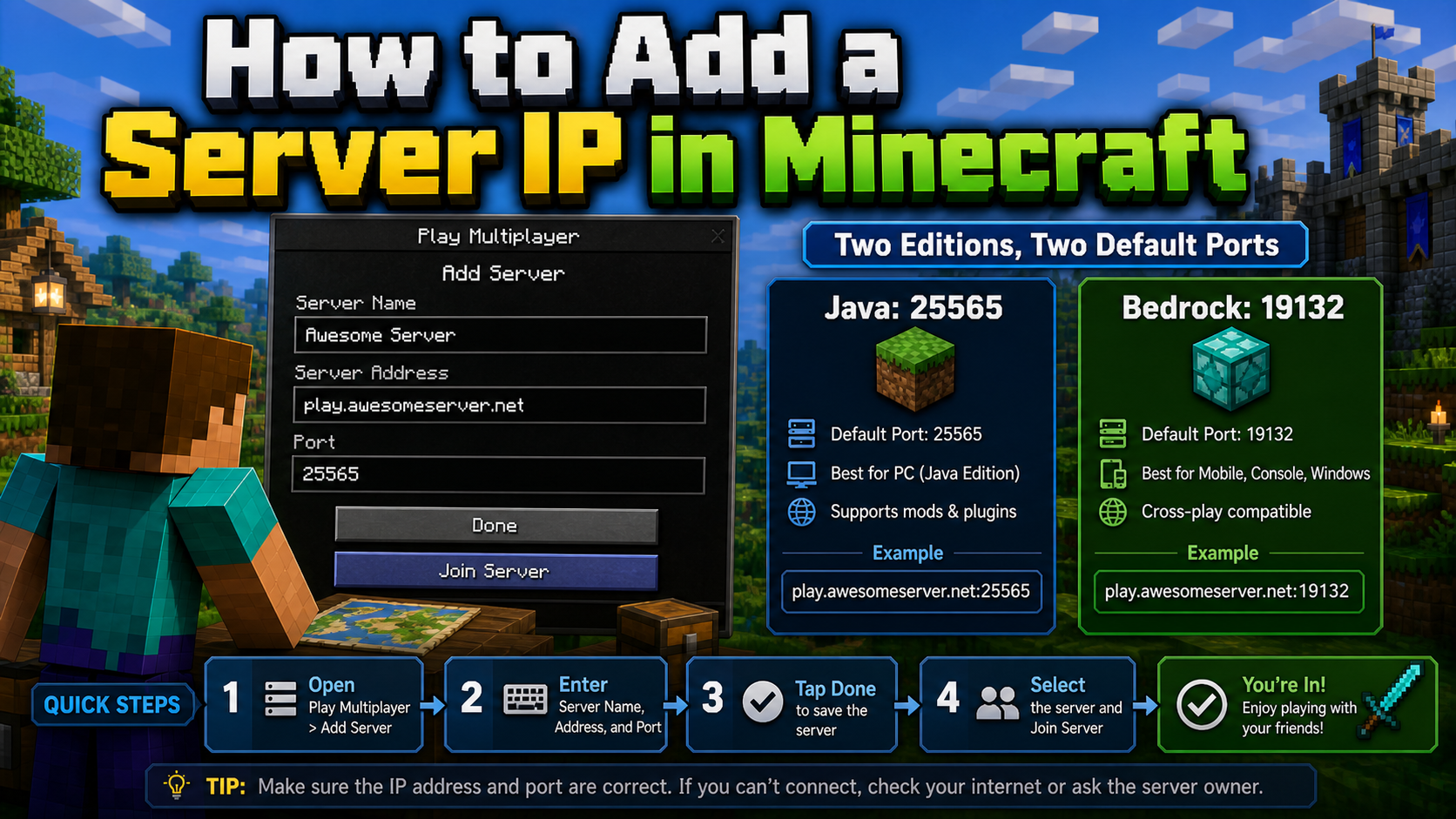
How to Add a Server IP in Minecraft Step by Step
Learn exactly where to enter a Minecraft server IP in Java, Bedrock, and Pocket Edition, plus how to fix common connection errors, ports, and edition mismatches.
View Details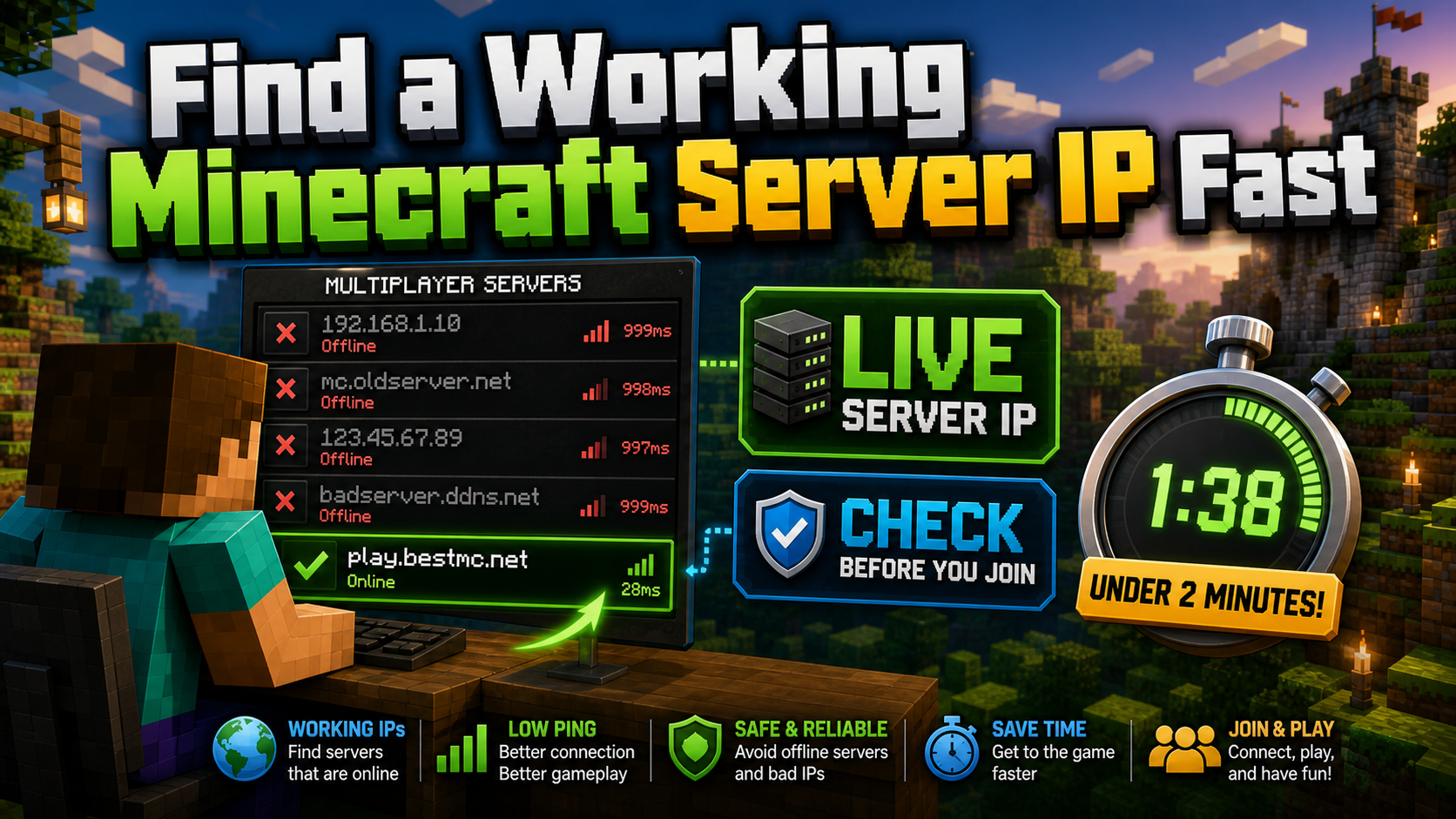
How to Find a Working Minecraft Server IP Fast
Stop wasting time on dead Minecraft server IPs. Learn how to verify live servers quickly, read status icons, check ports, and source updated server addresses.
View Details
Best 24/7 Online Minecraft Server IPs — No Downtime
Find reliable 24/7 Minecraft server IPs for Java and Bedrock, plus uptime checks, port basics, ping guidance, crossplay notes, and network stability tips.
View Details