
Walmart API Integration: Marketplace Endpoints vs. Scraper Data Pipelines
Walmart API Integration: Marketplace Endpoints vs. Scraper Data Pipelines
What is the Walmart API and why do developers use it?
The walmart api is a collective term referring to two distinct integration paths: the official suite of management tools for sellers and the third-party ecosystem of data extraction solutions. Developers use these interfaces to either manage internal business operations on Walmart.com or to extract public competitive intelligence.
What does the official Walmart Marketplace API cover for sellers?
The official walmart marketplace api provides authenticated endpoints that allow authorized sellers to automate item creation, price updates, inventory management, and order fulfillment. This RESTful API is the backbone of seller operations, ensuring that catalog data on Walmart.com remains synchronized with a seller’s internal ERP or logistics systems. It is strictly permission-based and requires a direct business relationship with Walmart.
What other Walmart APIs exist on Walmart.io for partners and logistics?
Beyond the seller tools, walmart api documentation on Walmart.io covers specialized interfaces like the Content Provider API, Logistics API, and the IoT API. These are designed for specific partners such as third-party logistics (3PL) providers or affiliate networks, allowing them to push sensor data or retrieve specialized commerce feeds. These APIs are generally inaccessible to the public and require rigorous onboarding.
Use LycheeIP to test rotating proxies
How does the Walmart Marketplace API differ from a Walmart scraper API?
The official walmart marketplace api is a transactional tool for writing data to your specific seller account, whereas a walmart scraper api is a data extraction tool used to read public product information from across the site. While the official API is free (but gated), scraper APIs (and the proxies that power them) are paid services designed to bypass anti-bot measures and deliver structured data from public pages.
Which use cases fit the official Walmart Marketplace API?
If you are an active seller, you must use the official endpoints to maintain your business. This API is the only legitimate way to:
- Create and update your product catalog (SKUs).
- Acknowledge and ship orders.
- Manage returns and refunds.
- Download settlement reports for accounting.
Which use cases fit a Walmart scraper API?
Data teams and analysts use a walmart scraper api or build their own using residential proxies when they need visibility outside their own account. Use cases include:
- Price Intelligence: Monitoring competitor pricing across thousands of SKUs.
- Trend Analysis: Tracking "Best Seller" ranks and walmart search results visibility.
- Review Aggregation: Scraping user reviews for sentiment analysis.
- Catalog Mapping: Matching UPCs and GTINs across retailers.
How does Amazon vs Walmart API compare at a high level?
When comparing amazon vs walmart api, the architecture is strikingly similar, yet the access models differ. Amazon’s SP-API (Selling Partner API) is a unified, modernized interface for both sellers and vendors, while Walmart maintains a stricter separation between its Marketplace API (for 3P sellers) and its Supplier APIs (for 1P suppliers). However, for data extraction, both ecosystems are heavily guarded, necessitating the use of specialized walmart product api scrapers or high-quality proxies to gather public data reliably.
| Feature | Official Marketplace API | Walmart Scraper API |
| Primary Goal | Manage your inventory & orders | Analyze competitor data & market trends |
| Authentication | OAuth / Client Keys | api key (Provider specific) |
| Data Scope | Private Seller Data | Public Web Data |
| Cost | Free (for sellers) | Paid (SaaS or Proxy costs) |
| Access | Requires Approval | Open to Developers |
Use LycheeIP to test rotating proxies
How do you set up Walmart Marketplace API keys in the Walmart developer portal?
You generate official walmart api keys by logging into the walmart developer portal with an admin-level account and navigating to the API Keys management section. This process is strictly for the official Marketplace integration and does not apply to scraping tools.
What steps generate Walmart API keys in the Walmart Developer Center?
To obtain credentials, follow this workflow:
- Log in to the walmart developer portal using your Seller Center credentials.
- Select "Add New Key" for a specific solution provider or "My Solution" for custom in-house tools.
- Assign specific permissions (e.g., "View Only" for Orders, "Full Access" for Inventory).
- Copy the Client ID and Client Secret immediately; the secret is often shown only once.
- Use these credentials to generate an access token via the specialized token endpoint.
How should you manage Walmart product identifiers?
Successful integration requires precise management of walmart product identifier types, including GTIN, UPC, ISBN, EAN, and the Walmart-specific Item ID.
- Official API: You must map your internal SKU to Walmart’s requirements in your JSON or XML payloads. Mismatched identifiers are the leading cause of feed errors.
- Scraper API: You typically query by keyword or specific walmart product identifier (like a UPC) to retrieve the corresponding Walmart ID (WPID) from the search results, enabling you to build a mapping database.
How can you use a Walmart scraper API to pull search results and product data?
You utilize a walmart scraper api (or a custom scraper backed by residential proxies) to send HTTP requests to public Walmart URLs and receive parsed JSON data in return. This method abstracts away the complexity of handling headless browsers, CAPTCHAs, and IP rotation.
What parameters does a typical Walmart Search API expose?
Most walmart search api tools accept standard query parameters to refine the data extraction. Common parameters include:
- query: The search term (e.g., "wireless headphones").
- page: The pagination number to navigate deep into walmart search results.
- sort_by: Ordering logic (e.g., best_seller, price_low, price_high).
- department_id: Filters results to a specific category.
- delivery_zip: Localizes pricing and availability to a specific region.
How do device emulation and screenshot requests change Walmart search results?
Device emulation forces the request to appear as if it is coming from a Desktop, Android, or iOS device, which drastically alters the HTML structure and the products displayed. Walmart often changes layout and sponsored product placements based on the user agent. Adding screenshot requests to your API call allows you to visually verify that the parsed JSON matches the rendered page, which is crucial for debugging layout changes.
How can data engineers and growth teams plug this Walmart search API into their pipelines?
Engineers integrate these APIs into ETL (Extract, Transform, Load) pipelines to automate market research.
- Orchestration: Use Airflow or Cron to trigger the walmart product api every morning.
- Storage: Dump raw JSON walmart search results into a data lake (like Snowflake or S3).
- Normalization: Clean the data, converting raw prices and availability strings into integers and booleans.
- Visualization: Feed the clean data into Tableau or Looker to track share-of-shelf visibility.
Use LycheeIP to test rotating proxies
How do you call the Walmart API with Node.js and paginate Walmart search results?
You call the walmart api in Node.js using an HTTP client like Axios, wrapping the request in a loop to handle pagination logic. Below is a structural example applicable to most scraper API patterns.
How do you paginate official Walmart Marketplace API responses with nextCursor?
The official API often uses a cursor-based system. You make an initial request, and if more records exist, the response includes a nextCursor string. You must include this cursor in the subsequent request's parameters to retrieve the next batch of items.
How do you paginate scraper API responses using page metadata?
Scraper APIs typically mirror the web behavior, using integer-based pagination.
- Inspect the meta object in the first JSON response to find total_pages.
- Create a loop that increments the page parameter from 1 up to total_pages.
- Add a delay between requests if you are managing your own proxies to avoid aggressive rate limiting.
How do you keep Node.js Walmart API calls robust with retries and logging?
Robustness is critical when dealing with third-party data sources.
- Retries: Implement exponential backoff. If a request fails (5xx error) or times out, wait 2 seconds, then 4, then 8 before retrying.
- Logging: Log every api key usage and HTTP status code.
- Validation: Ensure the response contains expected fields (like price or title) before processing to catch empty SERPs or "soft bans."
Which Walmart API stack should different teams choose?
Selecting the right tool depends on whether you are moving goods or moving data.
Which Walmart API pattern works for data engineers and web-scraping teams?
Data engineers should rely on a walmart scraper api or build a custom solution using LycheeIP residential proxies. The "build" approach is often favored by teams needing high-volume data extraction without the markup costs of managed APIs. By controlling the device emulation and proxy rotation directly, engineers gain granular control over the data quality and cost structure.
Which approach suits social media agencies, multi-account teams and growth marketers?
Agencies dealing with multiple client accounts generally utilize scraper APIs to fetch data without needing seller credentials. They often search for terms like apio walmart or api walmart looking for quick, no-code connectors (like Zapier integrations) that sit on top of these scraper APIs to feed Google Sheets or marketing dashboards.
Which Walmart API options help fintech, payment operations and risk teams?
These teams often require a hybrid approach. They may use the official walmart api (if partner-approved) to verify merchant transaction volumes and a scraper API to validate that the merchant’s inventory and pricing on the public site match their reported revenue claims.
How should you test, monitor and stay compliant when using any Walmart API?
You must establish strict testing protocols to ensure data accuracy and adherence to terms of service.
When should you use sandbox or staging for Walmart API integrations?
The official walmart developer portal provides a sandbox environment for testing feed submissions without affecting live inventory. Always validate your XML/JSON schemas in the sandbox before pushing to production. For scraping, there is no official sandbox; developers usually "test" by running low-volume requests against a small set of URLs using a specific api key allocated for development.
Why do security and fraud teams care about Walmart API logs and rate limits?
Logs provide an audit trail of who accessed what data and when.
- Official API: Monitors for unauthorized API key usage or unexpected bulk inventory deletions.
- Scraper API: Monitors for 429 (Too Many Requests) errors, which indicate that your request velocity is too high or your proxy pool is not rotating effectively.
How do you avoid breaking Walmart’s terms with scraper APIs?
When accessing public data, compliance is key to longevity.
- Rate Limiting: Respect robots.txt directives where applicable and avoid overwhelming the server.
- Data Privacy: Do not scrape Personally Identifiable Information (PII) from user reviews.
- Infrastructure: Use high-reputation proxies. LycheeIP provides ethical, clean IP pools that help maintain compliance by ensuring your traffic looks like legitimate user behavior rather than malicious bot activity.
Comparison Table: Data Extraction Methods
| Method | Setup Effort | Cost Efficiency | Control | Best For |
| Official API | High (Paperwork) | High (Free) | Low (Strict Schema) | Sellers & Suppliers |
| Managed Scraper API | Low (Plug & Play) | Low (Per Record) | Medium | Small Data Teams |
| Custom Scraper + LycheeIP | Medium (Dev Req.) | High (Volume) | High (Full Logic) | Enterprise & Scale |
Use LycheeIP to test rotating proxies
Frequently Asked Questions:
1. Is the Walmart API free to use?
The official walmart marketplace api is free to use for authorized sellers, though you may incur costs for the developer resources to build the integration. Third-party walmart scraper api tools and proxy services like LycheeIP are paid services based on usage volume.
2. Can I use the Walmart API without a seller account?
You cannot use the official Marketplace API without a seller account. However, you can use a scraper API or a custom scraping setup with proxies to access public walmart search results, pricing, and product details without any relationship with Walmart.
3. What is the difference between "walmart api" and "api walmart"?
There is no difference; these are just variations in search terms. Users searching for api walmart, apio walmart, or walmart api documentation are generally looking for the same integration details regarding either the developer portal or data extraction tools.
4. How do I get a Walmart API key?
For the official API, you generate keys inside the walmart developer portal using your seller credentials. For a scraper API, you sign up with a provider and receive a unique api key to authenticate your HTTP requests to their endpoint.
5. Does the Walmart API support image recognition?
The official API does not support image recognition. However, when using a scraper API, you can enable screenshot requests to capture the visual state of the webpage, which can then be processed by a separate OCR or image recognition tool.
6. What are the rate limits for the Walmart API?
The official API has strict throttling limits defined in the documentation (e.g., specific calls per hour per seller). Scraper APIs and proxy networks like LycheeIP allow you to scale beyond these limits by distributing requests across thousands of unique IP addresses.

Recommended Articles
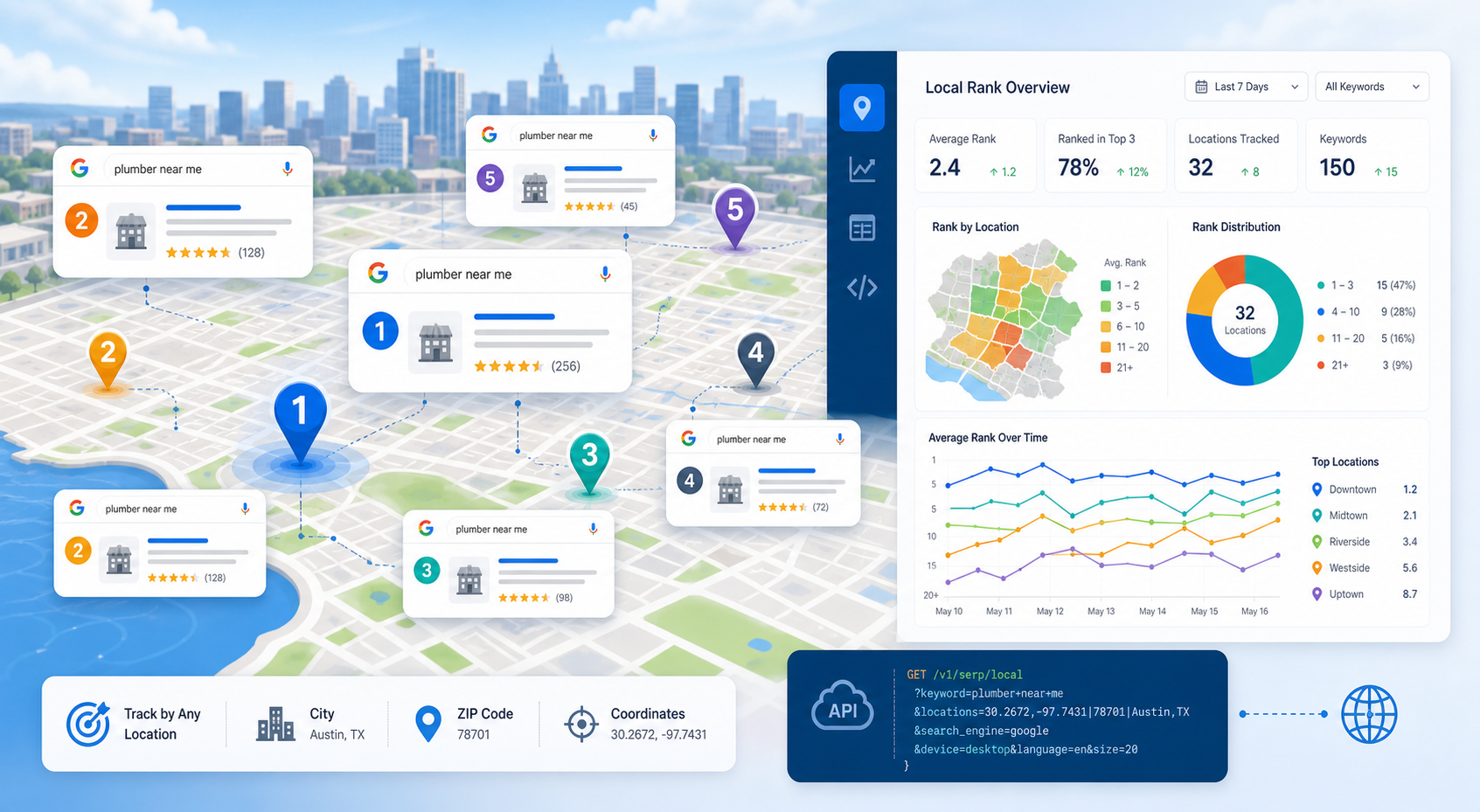
SERP Tracking API: How to Track Local Google Rankings by Location
A SERP tracking API collects search-result positions on a repeatable schedule so SEO teams can measure visibility over time. For local SEO, the useful question is not simply “What rank are we?” It is “What rank are we from this location, on this device, for this result type, at this time?”
View Details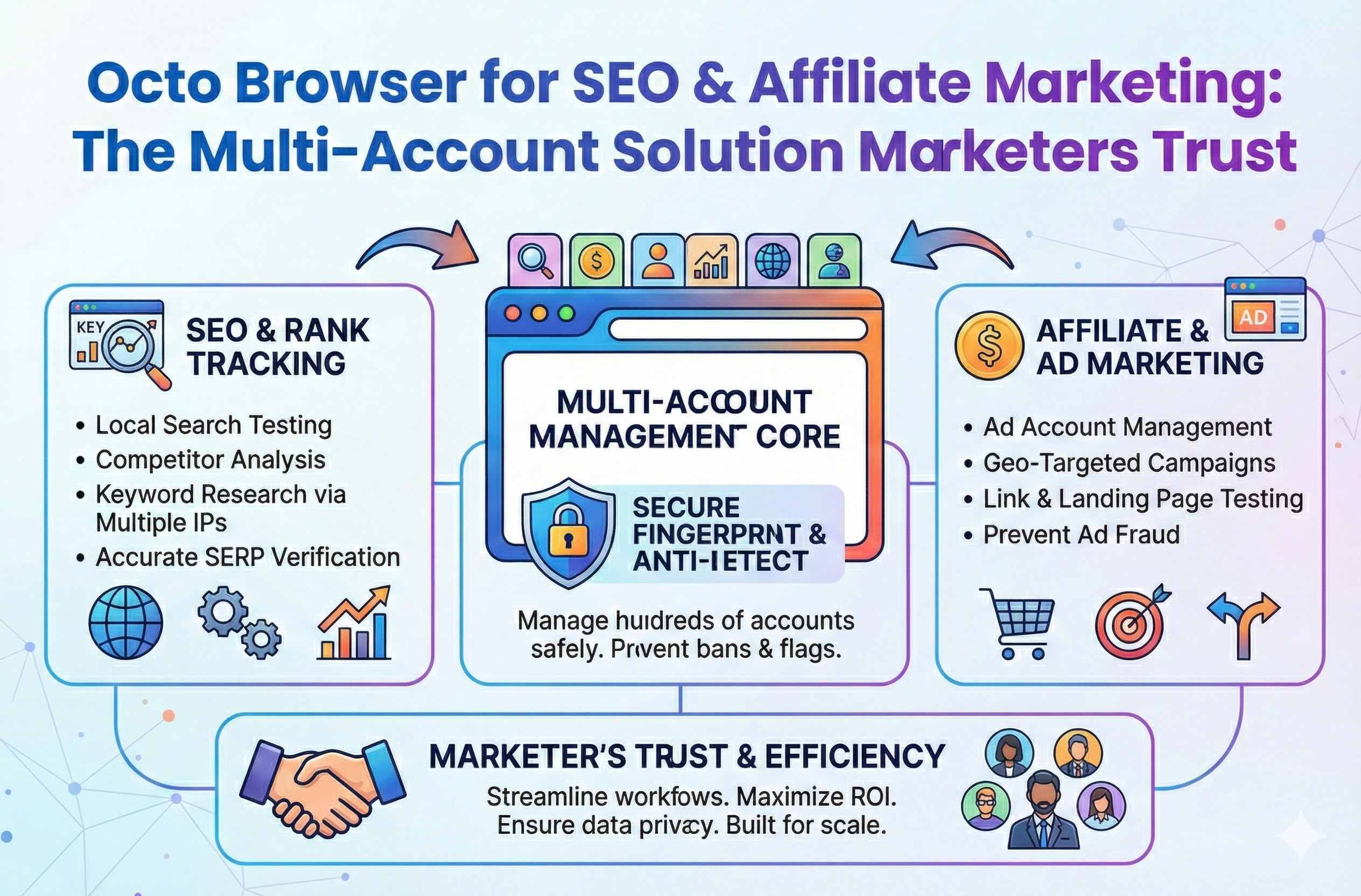
Octo Browser for SEO & Affiliate Marketing: The Multi-Account Solution Marketers Trust
Stop losing your hard earned revenue to sudden account suspensions. Discover how to completely isolate your outreach profiles and scale your campaigns without ever triggering a security flag.
View Details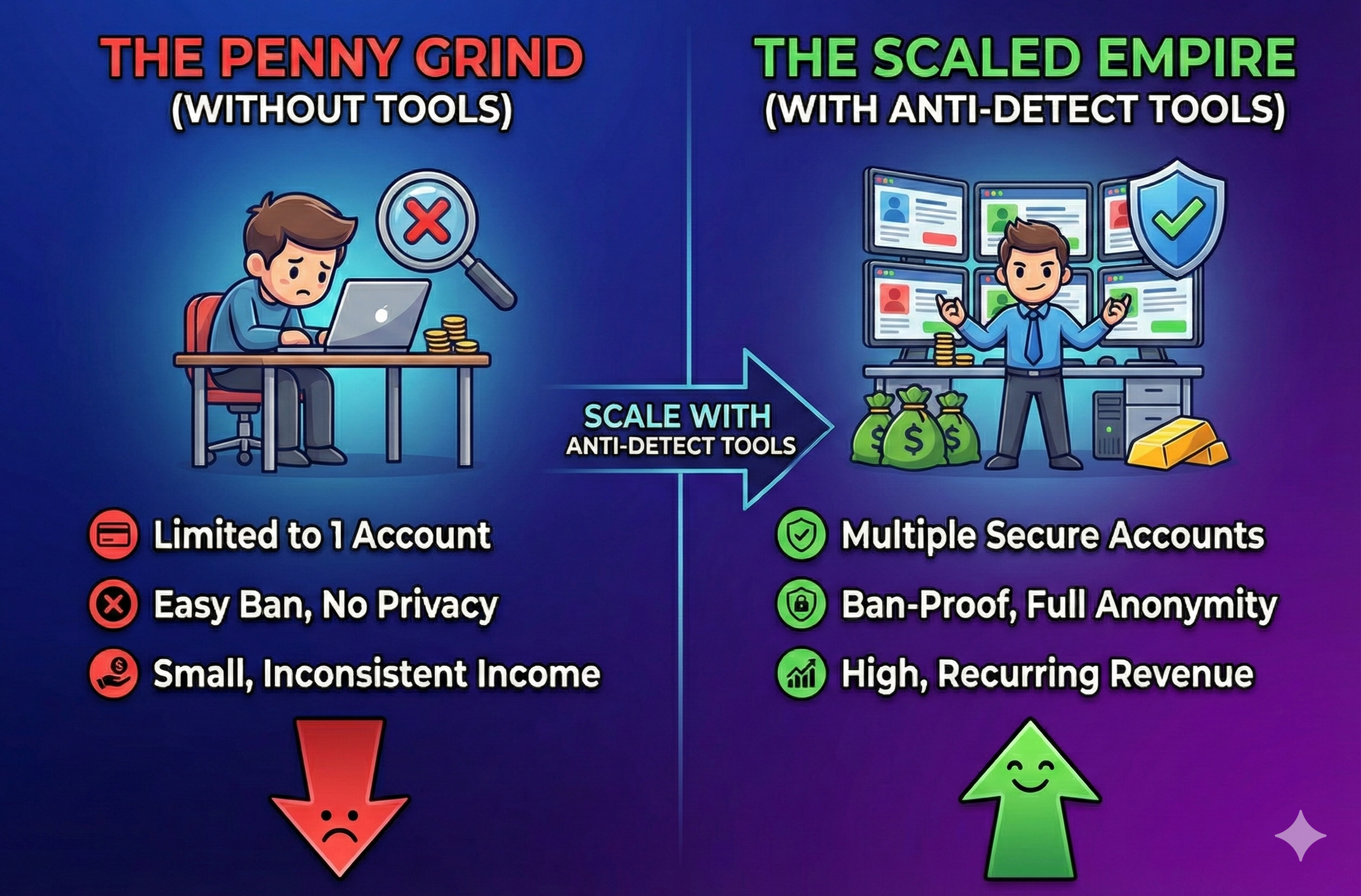
Stop Earning Pennies: Scale with Anti-Detect Tools
Stop letting the fear of account bans limit your business growth. Discover how modern antidetect browsers and clean proxies keep your digital identities isolated so your team can scale securely.
View Details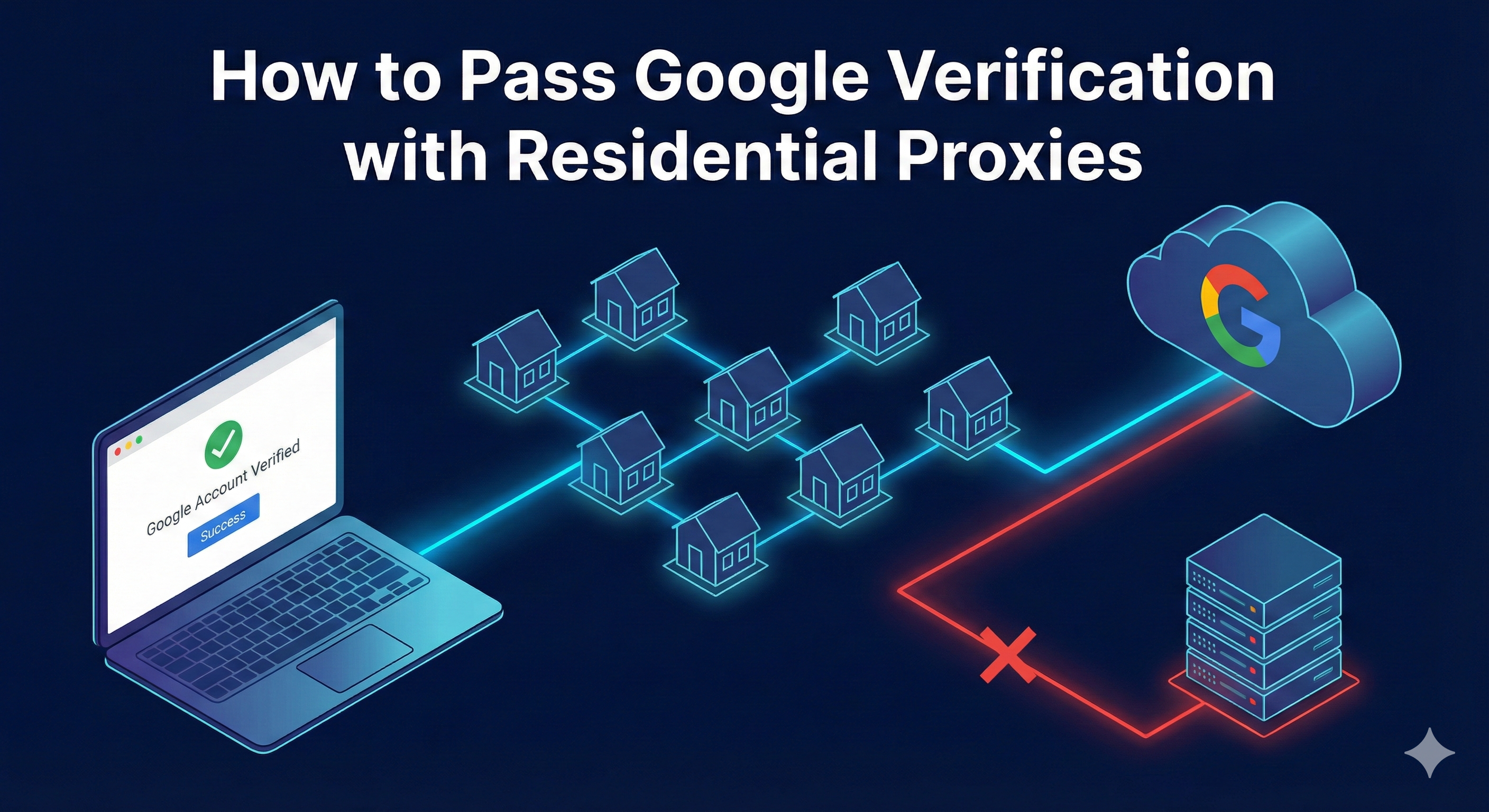
Google Account Verification Issues: Safe Troubleshooting Guide
If Google asks for verification, use the on-screen challenge or official account-recovery process from a familiar device and stable network. Do not try to bypass verification with purchased accounts, disposable phone numbers, anti-detect tools, or repeated proxy rotation. Those tactics can increase risk signals, violate policy, and make recovery harder.
View Details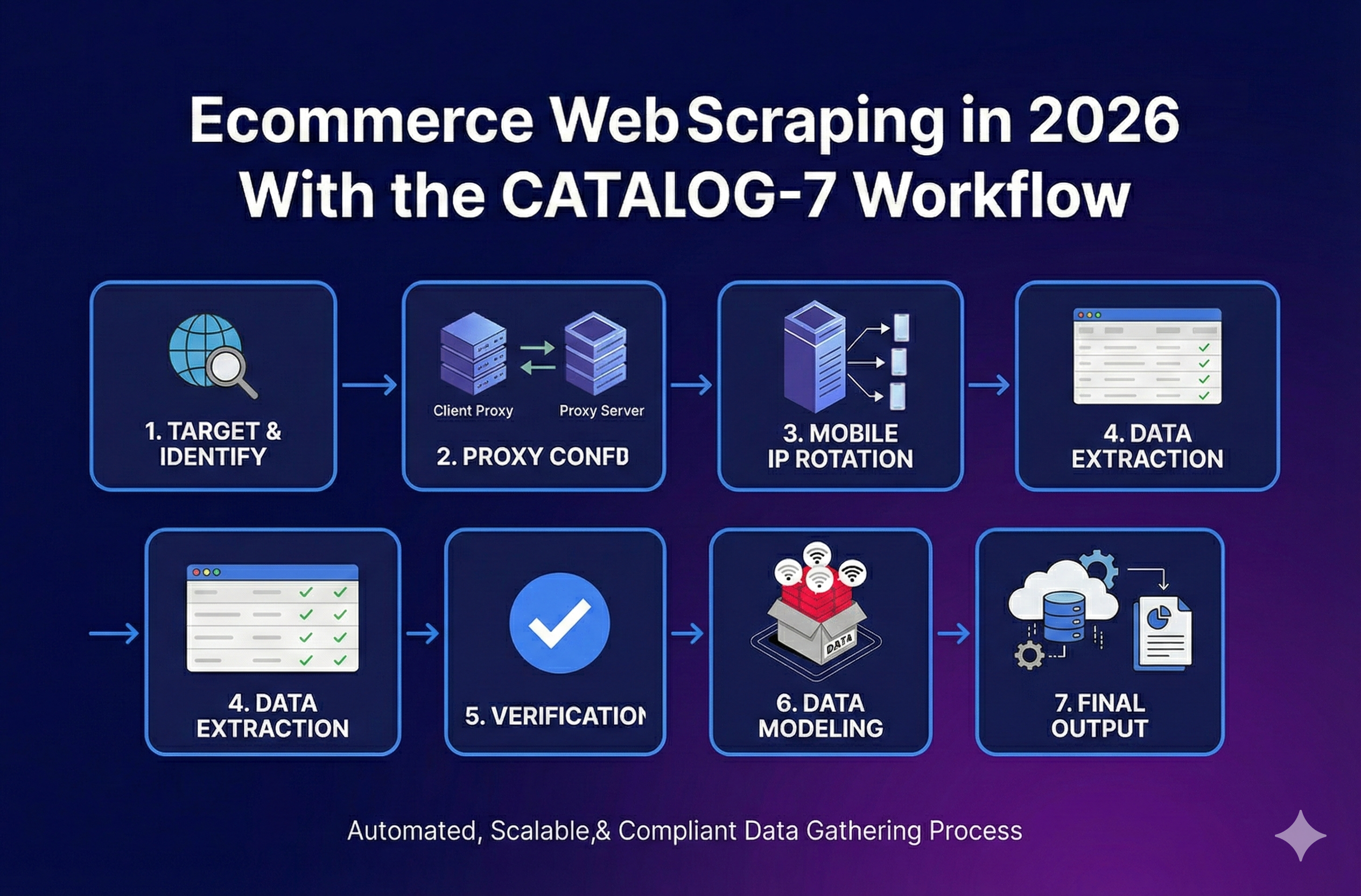
Ecommerce Web Scraping in 2026 With the CATALOG-7 Workflow
Stop broken feeds. Get a reliable ecommerce web scraping workflow, a Python stack picker, and a troubleshooting guide to handle variants and blocks.
View Details