
Web Scraping with Python for Static and Dynamic Websites
Web scraping with Python involves writing code to automate data collection from the internet. The hardest part of a python web scraping tutorial is rarely the code itself. The real challenge is choosing the correct stack for the target website and handling the differences between simple HTML pages and modern, JavaScript-heavy applications.
This guide breaks down exactly how to extract data reliably. You will learn a practical workflow for scraping static sites, a separate approach for scraping dynamic sites, and the proper ways to handle pagination, data export, and scaling.
Scale Python scraping with LycheeIP
What is web scraping with Python?
Web scraping with Python is the process of using the Python programming language to fetch web content, extract target data points, and save them in a structured format. This workflow generally requires an HTTP client to connect to the server and a parser to read the Document Object Model (DOM), which is the tree-like structure browsers use to represent HTML documents.
A reliable python web scraper follows a predictable four-stage cycle: connect, parse, extract, and export. You can remember this practical approach using the FETCH method:
- Find where the data actually appears in the network requests.
- Evaluate whether the page is static or relies on JavaScript.
- Target stable elements or backend API endpoints.
- Control your request pacing, retries, and network delays.
- Handle data cleanup and export formats.
Following this framework prevents the most common beginner mistake, which is throwing heavy browser automation at a simple HTML page that only required a basic HTTP request.
How do static and dynamic websites change your Python stack?
Static and dynamic websites change your Python stack because they deliver data to the client in completely different ways. When scraping static sites, the server response contains all the necessary text and data directly within the initial HTML payload. When scraping dynamic sites, the initial HTML is often empty or thin, and the browser must execute JavaScript to fetch and render the actual content.
If you use a simple HTTP client on a dynamic page, your parser will return empty results because the JavaScript never ran. Conversely, if you use a full browser automation tool on a static page, you waste processing power and memory on rendering steps you do not need. Identifying the site type is the first critical step in web scraping with Python.
Which Python tools should you choose first?
You should choose the lightest Python tool that can reliably retrieve the target data. Start with a basic HTTP client and parser combination, move to browser automation only when rendering is strictly required, and adopt a full framework when managing a large-scale project.
Python Scraping Stack Comparison
| Tool/Library | Best For | Tradeoffs |
| Requests + Beautiful Soup | Scraping static HTML and straightforward page structures. | Fails if the target renders content via JavaScript after the initial page load. |
| urllib | Environments where you must rely strictly on the Python standard library. | Requires more boilerplate code and lacks the user-friendly syntax of external clients. |
| Playwright | Pages that require JavaScript rendering, user interaction, or DOM state changes. | Uses more system memory and runs slower than simple HTML fetching. |
| Selenium | Existing QA environments or legacy browser automation workflows. | Driver management can be cumbersome, though Selenium Manager has improved this. |
| Scrapy | Large-scale crawls, complex pipelines, and highly concurrent scraping jobs. | Overkill for simple, single-page data extraction tasks. |
This split reflects the current developer ecosystem. For example, the official Playwright documentation positions it as a modern solution for asynchronous browser automation, while the Scrapy project defines itself as a comprehensive application framework for crawling.
How can you scrape a static site with Python?
You can scrape a static site with Python by fetching the HTML document, inspecting the markup, targeting specific elements, and extracting the text attributes. This is the fastest and most efficient extraction method available.
Here is the standard workflow for static pages:
- Open the target URL in your browser and inspect the page source to confirm the data is present in the raw HTML.
- Import your networking and parsing libraries.
- Execute web scraping python requests logic to fetch the page content, always setting a strict timeout limit.
- Pass the raw HTML response into a parser using web scraping python beautiful soup commands.
- Locate the data using stable CSS classes, ID attributes, or standard container patterns.
- Extract the desired fields into a Python dictionary or list.
If the data is fully present in the raw source code, you do not need to load a browser window. A lightweight parser will handle the job efficiently.
Scale Python scraping with LycheeIP
How can you scrape a dynamic website with Python using Playwright?
You can scrape a dynamic website with Python using Playwright by launching a headless browser context, navigating to the URL, waiting for specific elements to render, and extracting the data directly from the active DOM.
When you need to scrape javascript website python targets, Playwright offers a very clean syntax. The workflow involves these steps:
- Install the Playwright library and its associated browser binaries.
- Launch a browser instance and open a new viewing context.
- Navigate to the target page and apply an explicit wait command targeting a specific locator.
- Extract the loaded text or attributes once the locator confirms the content is visible.
- Close the browser context cleanly to free up system resources.
The most critical step is the wait command. Dynamic scrapers usually fail because the script tries to extract data before the network finishes fetching the underlying JSON or rendering the visual components.
How do you scrape multiple pages in Python?
You scrape multiple pages in Python by writing logic that follows the exact navigation pattern the website uses instead of relying on a generic loop. Pagination web scraping python workflows require you to identify the site structure and adapt your requests accordingly.
The four standard pagination models include:
- Next links: Find the "Next Page" HTML element, extract its URL attribute, and follow it until the element no longer exists.
- Numbered URLs: Generate page parameters in your request strings (e.g., page=1, page=2) and stop when a response returns an empty item container.
- Infinite scroll: Use browser automation to scroll down the page repeatedly until no new DOM elements generate.
- API cursors: Intercept the backend API calls the website makes, extract the pagination token, and send direct requests to the data endpoint.
To maintain clean data, always store a unique identifier for each extracted item. This allows you to deduplicate records if a website accidentally serves overlapping content across different pages.
How should you save scraped data to CSV or JSON?
You should save scraped data to CSV when working with flat tables, and you should use JSON when extracting nested structures or variable attributes. The Python standard library provides built-in modules for both formats.
To save scraped data csv python workflows typically involve defining a strict set of column headers and appending rows iteratively. This is ideal for pricing lists, lead generation, or standard directories. JSON is much better suited for complex product specifications, comment threads, or any data where the fields change from item to item. Always normalize your data formats, strip trailing whitespace, and standardize dates before you write the final file to disk.
What mistakes break Python scrapers most often?
Most Python scrapers break because developers choose the wrong extraction method, fail to handle network latency, rely on fragile CSS selectors, or ignore rate limits.
Python Scraping Troubleshooting Guide
| Symptom | Likely Cause | First Fix |
| Parser returns empty text | The website loads the content dynamically via JavaScript. | Check the network tab for API calls. If none exist, switch to Playwright. |
| Script hangs indefinitely | The HTTP client lacks a strict timeout policy. | Add explicit timeouts to every network request and implement bounded retries. |
| Selector works locally but fails in code | The chosen CSS path is too brittle or depends on user session data. | Switch to targeting stable data attributes rather than complex, nested HTML child paths. |
| Duplicate records in export | The pagination loop failed to recognize the final page. | Implement a unique ID check and halt the script when it detects repeated items. |
| Consistent HTTP 403 or 429 errors | The script is sending requests too quickly from a single IP address. | Slow down concurrency, add randomized delays, and route traffic through proxy infrastructure. |
These troubleshooting steps align with standard developer documentation regarding network discipline and DOM interaction.
Should you use web scraping with Python on every target?
No. You should not use web scraping with Python on every target, because many tasks are solved more effectively using official API integrations or manual data collection. Scraping is most valuable when public web pages represent the only accurate source of truth for the data you need.
Before building a scraper, evaluate the target carefully. You should likely rethink your approach if an official, documented API already provides the data. You should also avoid scraping if the data sits behind private login portals or if the layout changes so frequently that maintenance costs outweigh the data's value.
Assumptions and Limitations
- This guide assumes you are extracting publicly available data from the open web, not abusing authenticated user sessions.
- The concepts focus on architectural choices and stack selection, not deployment-ready production scripts.
- Robots.txt files communicate crawler preferences and traffic expectations, but they do not serve as legal access authorization.
- According to reputable sources discussing U.S. compliance standards, public data scraping has seen narrower interpretations under the CFAA, but jurisdiction, privacy rules, and site terms always vary. Check with legal counsel for compliance questions.
How do you scale web scraping with Python without making it fragile?
You scale web scraping with Python by adding complexity in isolated layers rather than trying to build a massive framework on day one. You first need a reliable extraction script. Once that works, you add retries. After retries work, you introduce concurrency. Only after establishing that baseline do you add infrastructure to handle IP limitations.
Different operations require different scaling priorities:
- Fintech ops: Prioritize strict data schema validation and immediate error alerts.
- Fraud and risk teams: Prioritize rendering full page sessions to capture hidden DOM elements.
- Multi-account agencies: Prioritize session isolation and strict geographic targeting.
- Scraping reliability engineers: Prioritize detailed logging, network backoff logic, and infrastructure health.
Many common market approaches rely on shared proxy pools that suffer from high block rates and unpredictable performance. Scaling requires clean network routing. This is exactly where LycheeIP fits into a production workflow. You do not replace your Python code. Instead, you connect your HTTP clients or browsers to a stable infrastructure layer to handle the network routing automatically.
How LycheeIP fits into Python scaling:
- Clean IP pools: Resources are allocated directly from underlying operators with a >6-month cooling period to reduce block rates.
- Developer-first simplicity: You can integrate IP whitelisting or credentials directly into Requests, Scrapy, or Playwright.
- Reliable uptime: Dynamic residential proxies maintain 99.8% uptime with unlimited concurrency for heavy scraping jobs.
- Clear pricing: Dynamic residential data is billed at a transparent $5.00/GB without hidden tier restrictions.
Scale your operations by mastering the code first, and applying infrastructure only when network barriers slow you down.
Scale Python scraping with LycheeIP
Frequently Asked Questions:
1. What is web scraping with Python?
It is the automated process of using Python libraries to fetch web pages, parse the underlying HTML or DOM, extract specific data points, and export those results into formats like CSV or JSON.
2. What is the best Python library for web scraping?
No single library fits every scenario. Requests and Beautiful Soup are ideal for simple static pages, Playwright is necessary for JavaScript-rendered sites, and Scrapy is best for large-scale crawling operations.
3. What is the difference between crawling and scraping?
Crawling involves navigating a website to discover new URLs and map site structures. Scraping is the specific act of extracting targeted data fields from the pages you discover.
4. Should I use Requests or urllib?
You should start with Requests because it offers a significantly more user-friendly interface for managing headers, parameters, and sessions. Only use urllib when strict project requirements prevent you from installing external dependencies.
5. Should I use Beautiful Soup or Scrapy?
Use Beautiful Soup when you need a lightweight parser to extract data from a single page you have already downloaded. Use Scrapy when you need a comprehensive framework to manage deep site crawls, concurrency, and data export pipelines simultaneously.
6. How do I scrape multiple pages in Python?
You must reverse-engineer the site's pagination method. Look for "Next" button URLs, sequential page numbers in the address bar, or backend API calls that load new items, and program your script to follow that specific pattern until it hits an empty result.
7. Is web scraping legal?
Legality depends heavily on the jurisdiction, the target site's terms of service, and the nature of the data. While extracting public, non-copyrighted data is generally permissible in many contexts, you must always evaluate privacy regulations and avoid accessing restricted or authenticated portals.
8. How is Selenium used in web scraping with Python?
Selenium automates a real web browser, allowing your Python script to interact with complex web applications. It can click buttons, fill out forms, wait for JavaScript to execute, and extract data from the fully rendered DOM.

Recommended Articles
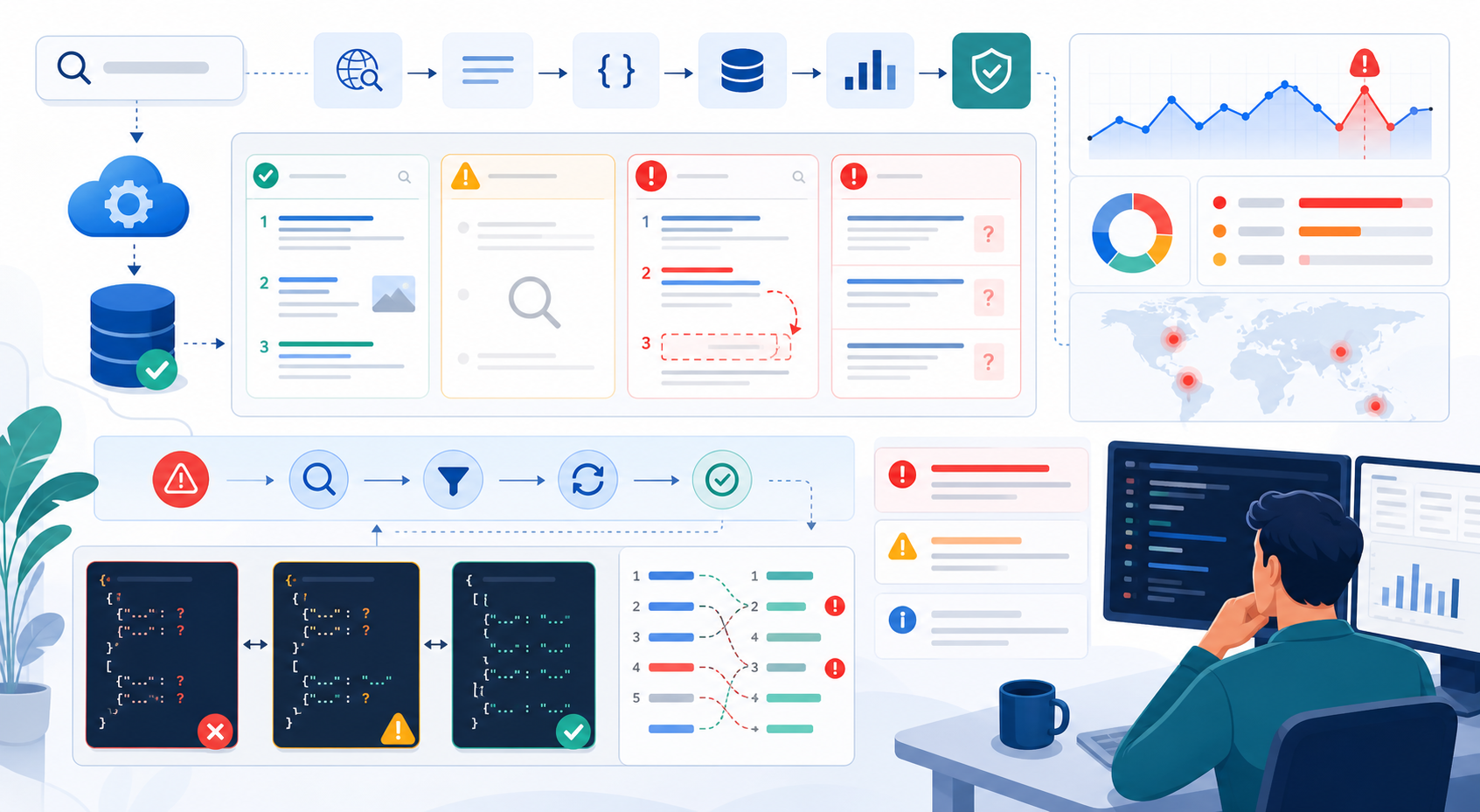
SERP API Troubleshooting: Fix Empty, Wrong, or Inconsistent Search Results
SERP API failures are not limited to obvious HTTP errors. A request can return successfully and still produce empty, incomplete, geographically wrong, duplicated, or misinterpreted search data. Production troubleshooting therefore has to separate transport problems from provider processing, SERP differences, and downstream parsing errors.
View Details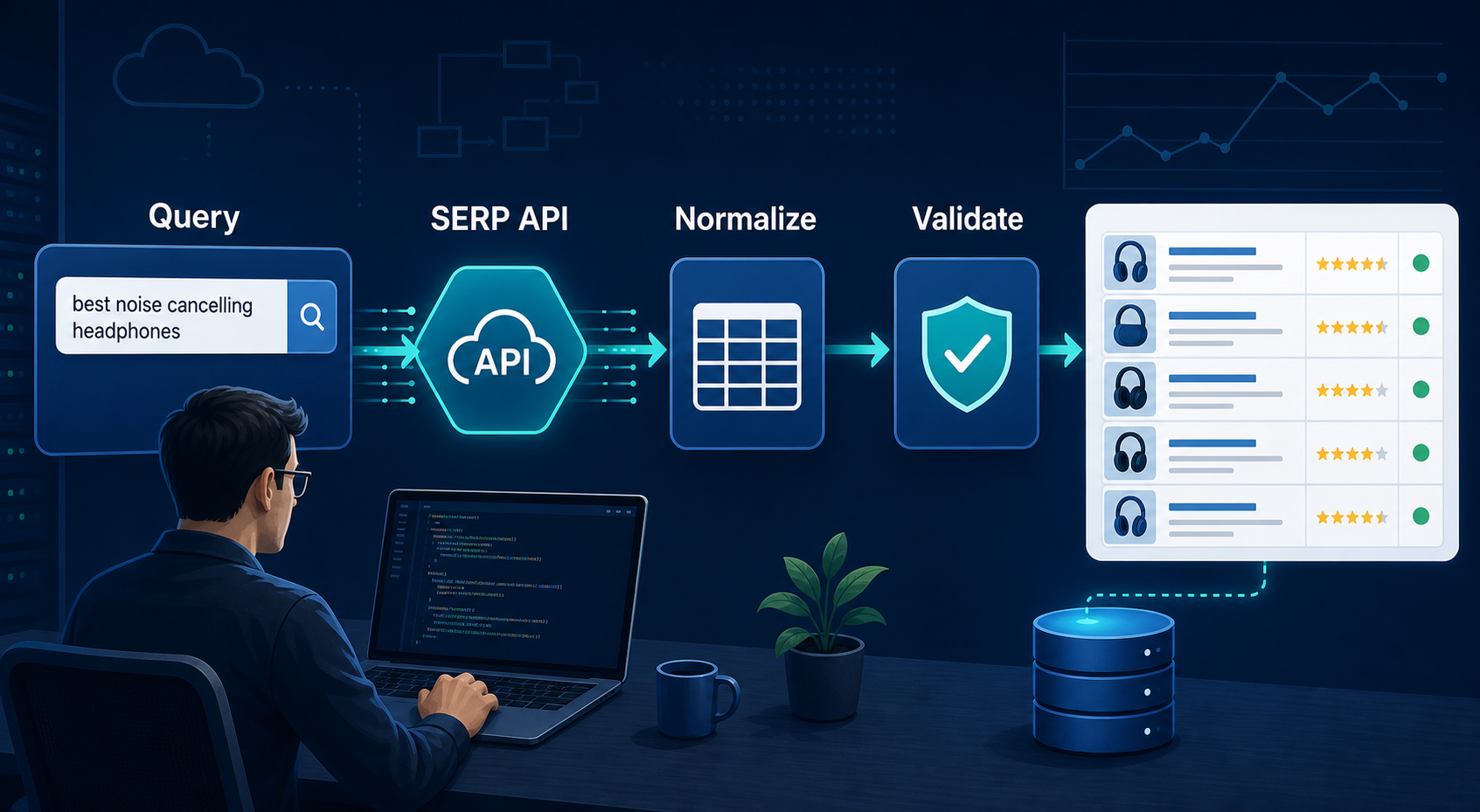
SERP API Python: How to Build a Reliable Search Data Pipeline
This guide shows a provider-neutral workflow for building that pipeline. It does not rank SERP API vendors. Instead, it focuses on the implementation choices that make a Python integration easier to operate, test, and migrate.
View Details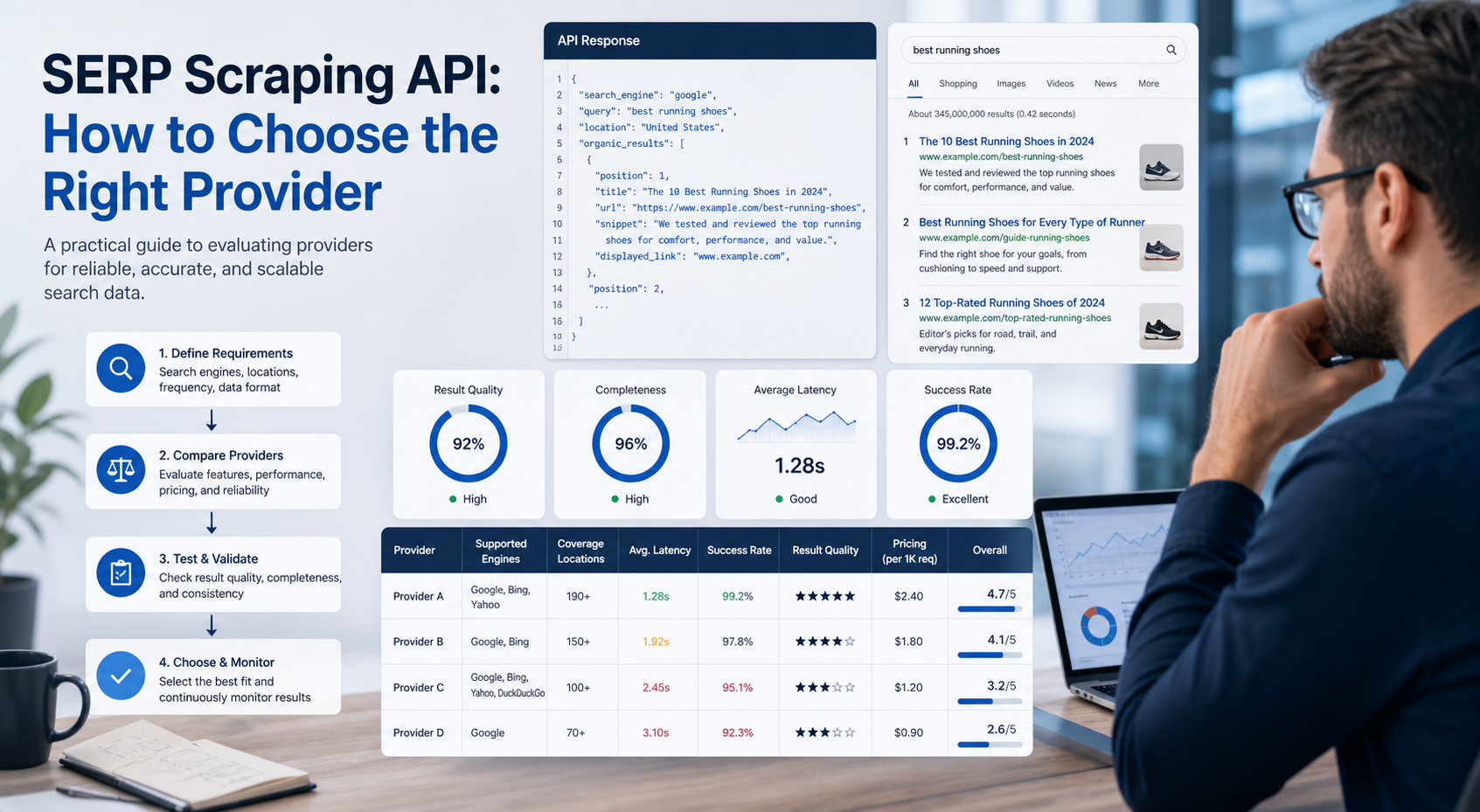
SERP Scraping API: How to Choose the Right Provider
Recommended Meta Description: Compare SERP scraping APIs by data coverage, localization, reliability, workflow fit, and cost structure, then choose and validate the right provider.
View Details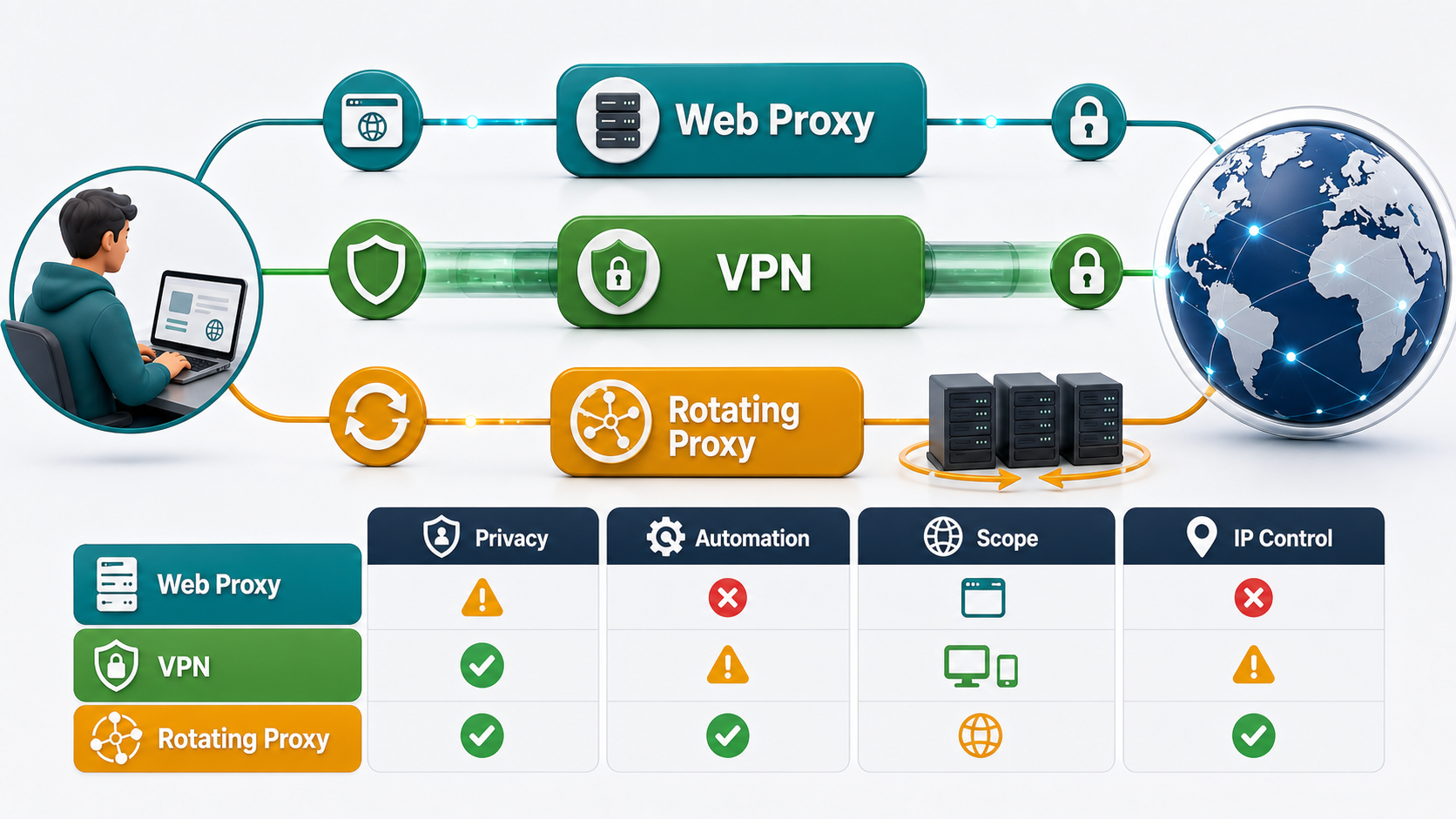
Free Web Proxy vs VPN vs Rotating Proxy: Which Should You Use?
Compare free web proxies, VPNs, rotating proxies, static proxies, and datacenter proxies by scope, encryption, IP control, automation, streaming, and account workflows.
View Details
BlockAway Not Working? Fix Common Proxy, Video, and Access Problems
Troubleshoot BlockAway when pages are blocked, YouTube fails, JavaScript breaks, speed drops, sessions expire, or mobile access behaves differently.
View Details