
Beautiful Soup Web Scraping for Modern Python
Beautiful Soup web scraping remains highly effective for data extraction, but the best approach is more precise than many older tutorials suggest. Beautiful Soup is a Python library that parses HTML and XML documents into a tree structure you can navigate and search. A separate tool must handle the network request to fetch the page first. On simple static pages, developers often use the Requests library. On modern JavaScript-heavy websites, a browser automation tool loads the page before handing the rendered HTML to your parser.
Scale scraping with LycheeIP
What is Beautiful Soup web scraping and where does it fit?
Beautiful Soup web scraping is the process of fetching raw markup, parsing it into a structured tree, and extracting specific elements or text. The library excels at navigating and searching parsed data. It is not a network client, a job scheduler, or a headless browser.
Understanding this boundary is vital for different operational roles:
- Scraping reliability: Data engineers use it to quickly extract clean product pricing from static retail pages without building complex regex patterns.
- Account operations: Multi-account agencies parse validation messages from localized HTML responses to verify account creation statuses.
- Security and fraud risk: Analysts scrape public blocklists and forum data to monitor emerging threat vectors.
- Fintech operations: Financial teams extract structured table data from static regulatory filings for automated compliance checks.
How do Requests and Beautiful Soup work together?
Requests handles the HTTP network call to fetch the page content, while Beautiful Soup parses that returned markup into searchable Python objects. Each tool does one specific job.
For Beautiful Soup web scraping tasks on static sites, this combination is highly efficient. You request the target URL, confirm the response code, and pass the text directly to your parser.
One crucial detail is package installation. You must install the beautifulsoup4 package via pip. The official Python Package Index explicitly lists bs4 as a dummy package designed to prevent namesquatting, advising users to avoid it for actual installation.
Which parser should you choose for Beautiful Soup?
You should choose lxml for maximum speed, html.parser for a setup with no external dependencies, and html5lib when you need extreme leniency for broken markup. The official Beautiful Soup documentation notes that built-in parsing can occasionally miss tags in poorly formatted documents.
| Parser Option | Best For | Primary Strength | Tradeoff |
| lxml | Most production scraping | Fast and lenient | Requires an extra dependency |
| html.parser | Lightweight setups | Built directly into Python | Less robust on messy markup |
| html5lib | Very broken HTML | Browser-like leniency | Slowest parsing speed |
How do find(), find_all(), and CSS selectors compare?
The find method isolates the first matching element, find_all retrieves a list of all matching elements, and CSS selectors help when target relationships are complex. The official documentation explains that find_all scans a tag's descendants recursively to locate matches. Using CSS selectors via the select method relies on SoupSieve to process standard CSS4 paths.
A practical rule for selection:
- Use find() for a single predictable node.
- Use find_all() for repeated blocks such as product cards.
- Use .select() when the page structure is easier to describe with CSS relationships.
How do you scrape a page with a repeatable workflow?
You build a repeatable workflow by separating the fetch step from the parsing step and prioritizing stable element attributes. Find the real source of the data first, test whether the page is static or rendered dynamically, write selectors against stable IDs or data attributes, and clean the parsed output before saving it.
To maintain scraping reliability at scale, you must ensure your fetch layer does not fail before parsing even begins. Many market proxy solutions route traffic through overlapping, low-quality pools that trigger immediate blocks and bot challenges. LycheeIP approaches this differently by allocating resources directly from underlying operators and enforcing strict cooling periods to ensure high success rates.
How LycheeIP fits into a Beautiful Soup web scraping workflow:
- Provides 100% exclusive global proxy IP services for cleaner network requests.
- Improves uptime with a 99.8% network availability SLA for dynamic residential proxies.
- Reduces blocks via multi-filtering and a minimum six-month cooling period for IPs.
- Offers an intuitive API to monitor usage statistics in near real-time.
- Maintains simple, transparent pricing at $5.00 per GB for dynamic residential traffic.
Scale scraping with LycheeIP
How should you handle dynamic websites with Beautiful Soup?
You must load the page using a browser automation tool like Playwright or Selenium first, then pass the fully rendered HTML to your parser. Modern documentation for browser tools emphasizes waiting for specific elements to appear before capturing the page source.
Successful Beautiful Soup web scraping is completely compatible with dynamic websites. It simply requires you to feed the parser the final DOM state instead of the initial, empty HTML shell that Requests might return.
What usually breaks in Beautiful Soup web scraping and how do you fix it?
Most Beautiful Soup web scraping scripts break due to missing initial content, overly strict selectors, incorrect parser choices, or unexpected website structural changes.
| Common Failure | Likely Cause | Recommended Fix |
| find_all() returns [] | Target data requires JavaScript to load | Switch to a browser-assisted fetch layer |
| find() returns None | Selector is too specific or page structure changed | Simplify the selector and inspect the live DOM |
| Text output is messy | Too much whitespace or hidden script tags | Use get_text(strip=True) and decompose junk nodes |
| Scraper slows down badly | Parser choice or massive document size | Switch to the lxml parser and target tighter nodes |
When should you not use Beautiful Soup?
You should avoid Beautiful Soup when your primary technical challenge involves deep crawl orchestration, complex browser interactions, or enterprise-scale job scheduling. Advanced Beautiful Soup web scraping operations often hit a ceiling when managing concurrency and retries. If you need built-in item pipelines and broad site traversal, a framework like Scrapy is superior.
What assumptions and limitations should you keep in mind?
Beautiful Soup relies entirely on the quality of the HTML you provide and assumes the target page structure remains relatively stable over time.
- This guide assumes you are targeting publicly available web data.
- It does not guarantee success against advanced bot mitigation platforms or dynamic tokens.
- It assumes you have the infrastructure and proxies to scale network requests safely.
- It requires manual code updates when target websites undergo major DOM redesigns.
Scale scraping with LycheeIP
Frequently Asked Questions:
1) What is Beautiful Soup in Python?
Beautiful Soup is a Python library for parsing HTML and XML into a tree structure. It allows developers to extract data from markup easily.
2) How do I install Beautiful Soup?
Install beautifulsoup4 via pip. Do not install bs4, as PyPI lists it as a dummy package designed to prevent namesquatting.
3) What parser should I use with Beautiful Soup?
For most Beautiful Soup web scraping operations, lxml is the strongest default because of its speed and leniency.
4) How do find() and find_all() differ?
The find method returns the first matching element it encounters. The find_all method returns a list of all matching descendants that fit your specified filters.
5) How do Requests and Beautiful Soup work together?
Requests fetches the raw HTTP response from a server. Beautiful Soup web scraping relies on that response body to build a searchable parse tree.
6) Can Beautiful Soup scrape dynamic websites?
Yes, but it cannot render JavaScript on its own. You must use a browser automation tool to render the page first, then pass the final HTML to Beautiful Soup.
7) How do I extract clean text from HTML?
Use the get_text() method. Passing the strip=True argument helps remove excessive whitespace and line breaks from the output.

Recommended Articles
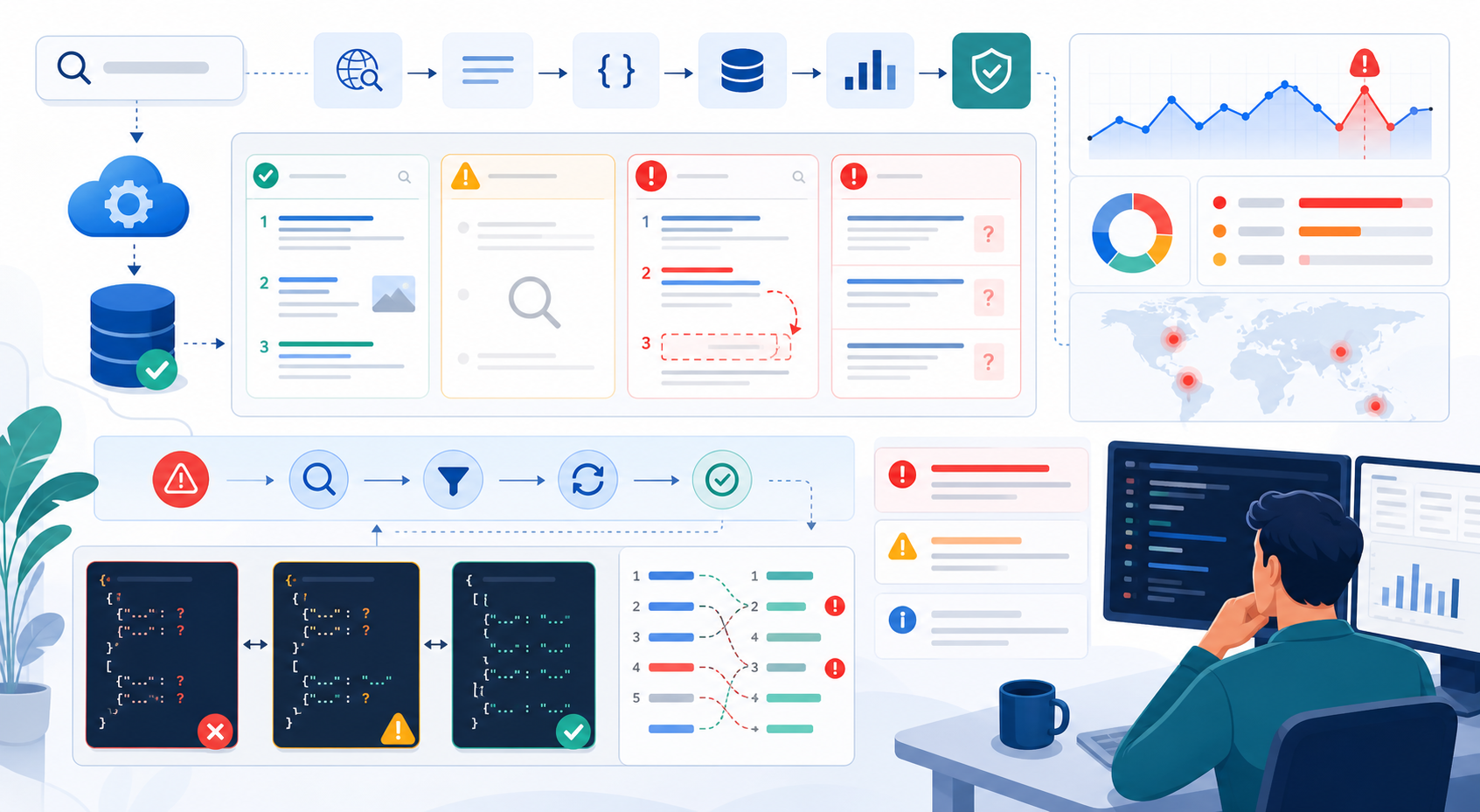
SERP API Troubleshooting: Fix Empty, Wrong, or Inconsistent Search Results
SERP API failures are not limited to obvious HTTP errors. A request can return successfully and still produce empty, incomplete, geographically wrong, duplicated, or misinterpreted search data. Production troubleshooting therefore has to separate transport problems from provider processing, SERP differences, and downstream parsing errors.
View Details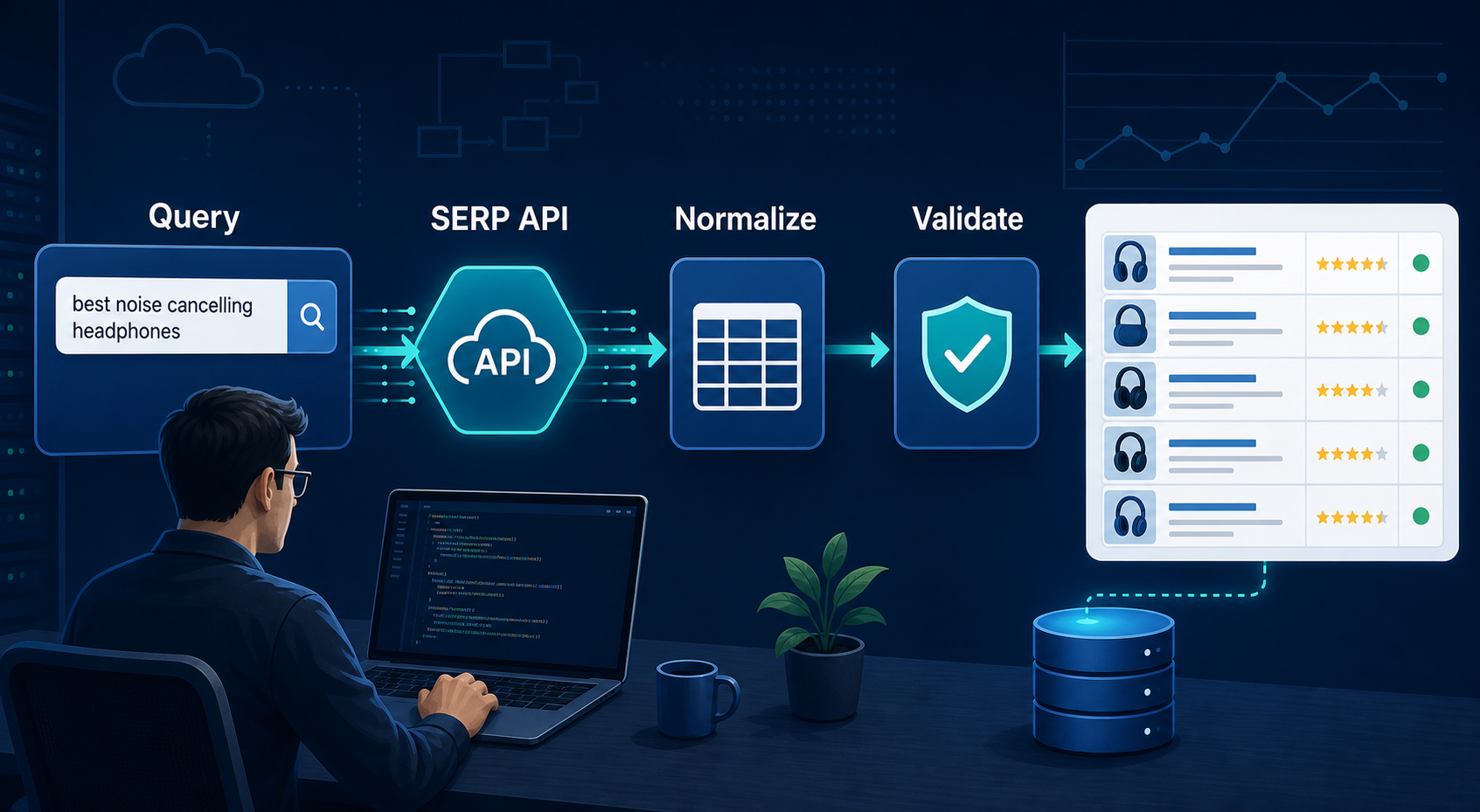
SERP API Python: How to Build a Reliable Search Data Pipeline
This guide shows a provider-neutral workflow for building that pipeline. It does not rank SERP API vendors. Instead, it focuses on the implementation choices that make a Python integration easier to operate, test, and migrate.
View Details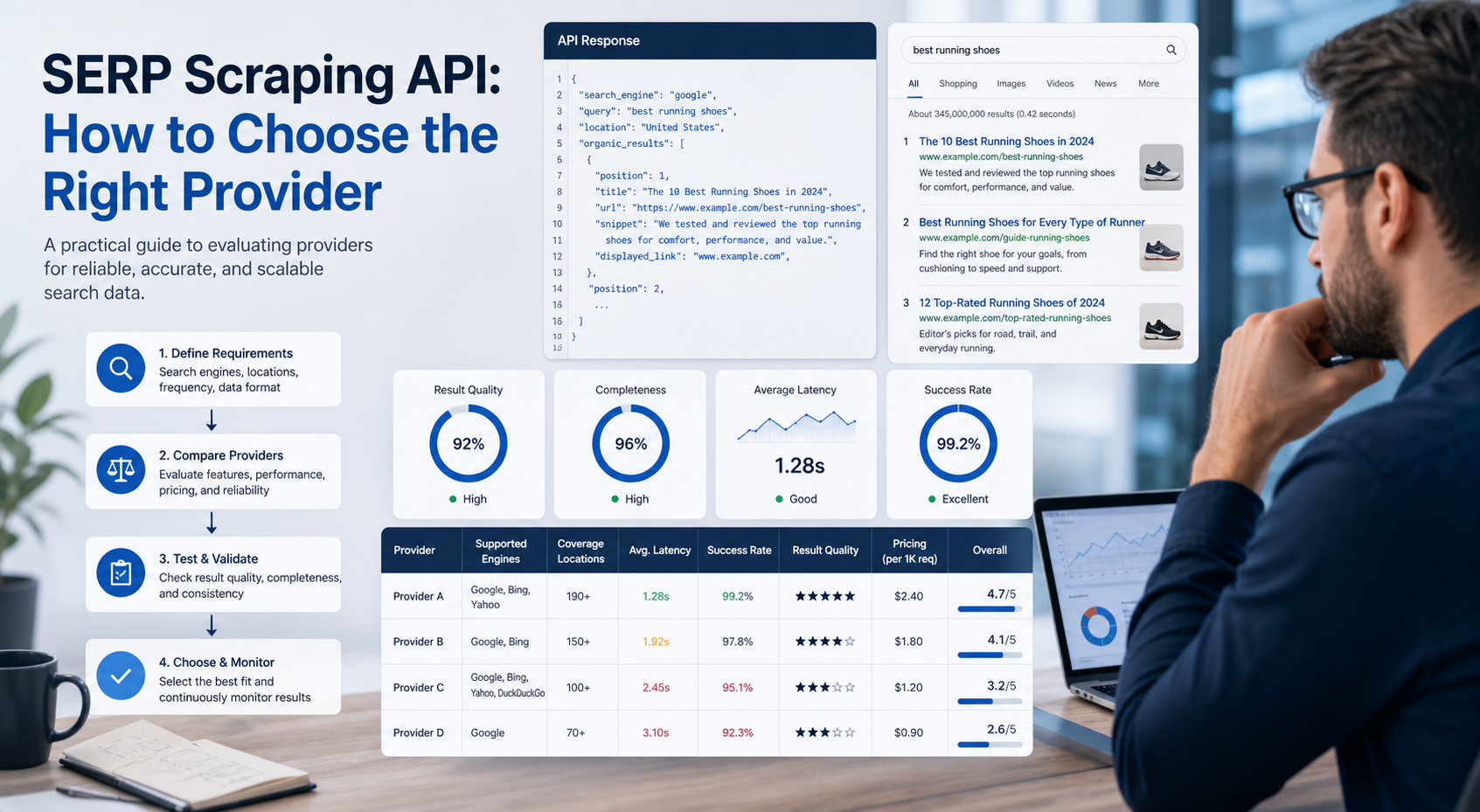
SERP Scraping API: How to Choose the Right Provider
Recommended Meta Description: Compare SERP scraping APIs by data coverage, localization, reliability, workflow fit, and cost structure, then choose and validate the right provider.
View Details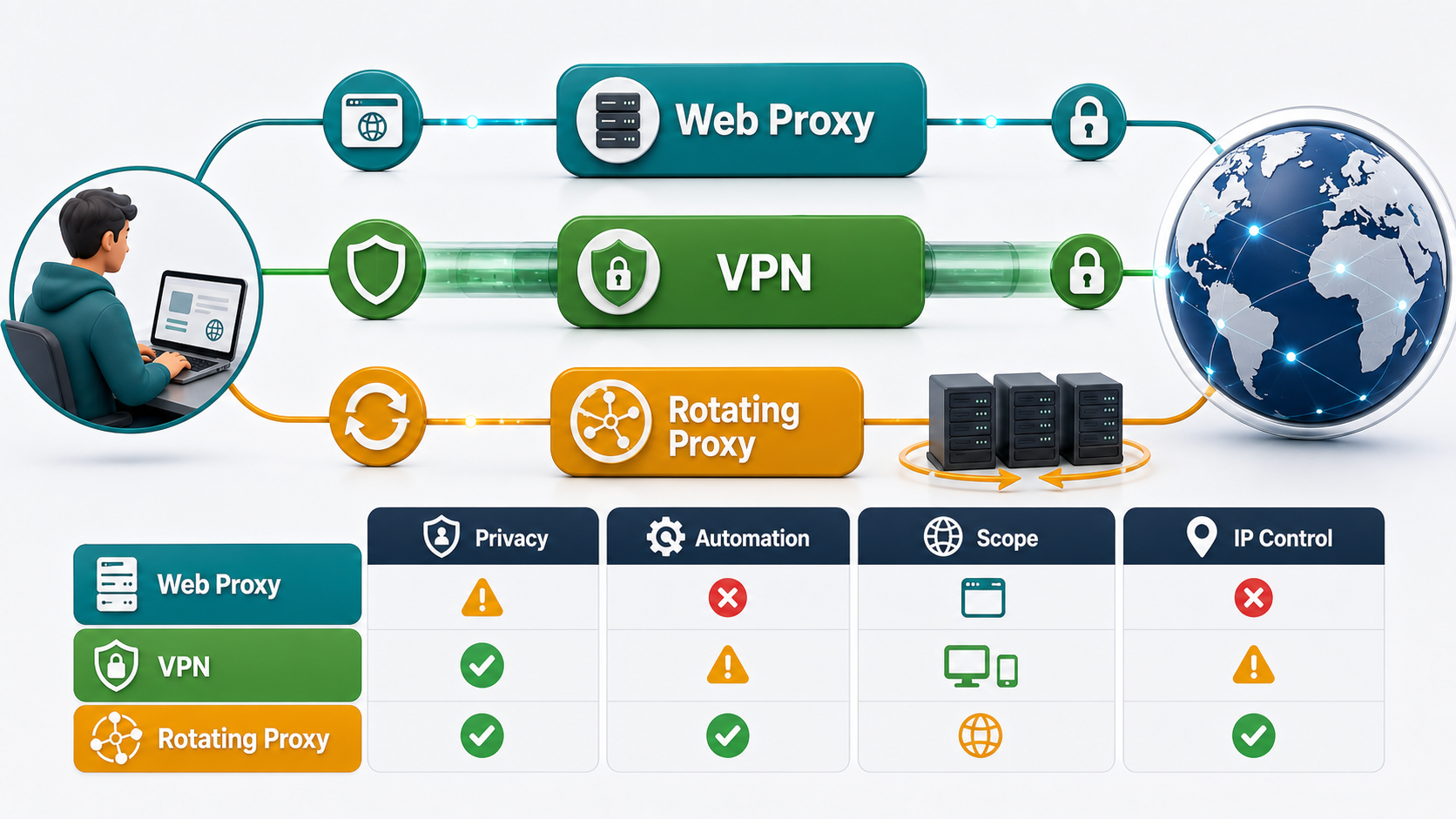
Free Web Proxy vs VPN vs Rotating Proxy: Which Should You Use?
Compare free web proxies, VPNs, rotating proxies, static proxies, and datacenter proxies by scope, encryption, IP control, automation, streaming, and account workflows.
View Details
BlockAway Not Working? Fix Common Proxy, Video, and Access Problems
Troubleshoot BlockAway when pages are blocked, YouTube fails, JavaScript breaks, speed drops, sessions expire, or mobile access behaves differently.
View Details