
The IPv4 Address Gold Rush: How IP Blocks Became a Multimillion-Dollar Asset Class
Some companies are making millions by hoarding something you've never thought about: IP addresses. While most digital infrastructure professionals focus on servers, bandwidth, and compute power, a quieter market has emerged where IPv4 addresses have become tradable commodities worth billions of dollars collectively. Companies that secured large IPv4 blocks decades ago are now sitting on digital real estate that appreciates faster than many traditional investments.
For teams comparing privacy, geo-testing, and data collection workflows, the practical question is not only what an IP address reveals. It is also how clean routing, trusted proxy infrastructure, session control, and compliance practices shape the final result.
For official technical background, see IANA number resources, ARIN IPv4 resources, RFC 791 Internet Protocol, MDN X-Forwarded-For reference.
The core issue is straightforward: IPv4 addresses are finite, exhausted in most regions, and increasingly expensive to acquire. As cloud computing, IoT devices, mobile networks, and data infrastructure expand, demand continues to rise while supply remains fixed at roughly 4.3 billion addresses. This scarcity has created a secondary market where IPv4 blocks trade hands for $30 to $60 per address, turning legacy allocations into multimillion-dollar assets.
For tech investors and digital infrastructure professionals, understanding this market is critical. Whether you're building proxy networks, expanding data center capacity, launching new services, or evaluating infrastructure investments, IPv4 address costs now represent a significant line item. Companies that once received addresses freely from regional registries now compete in auctions and broker deals, fundamentally changing how infrastructure economics work.
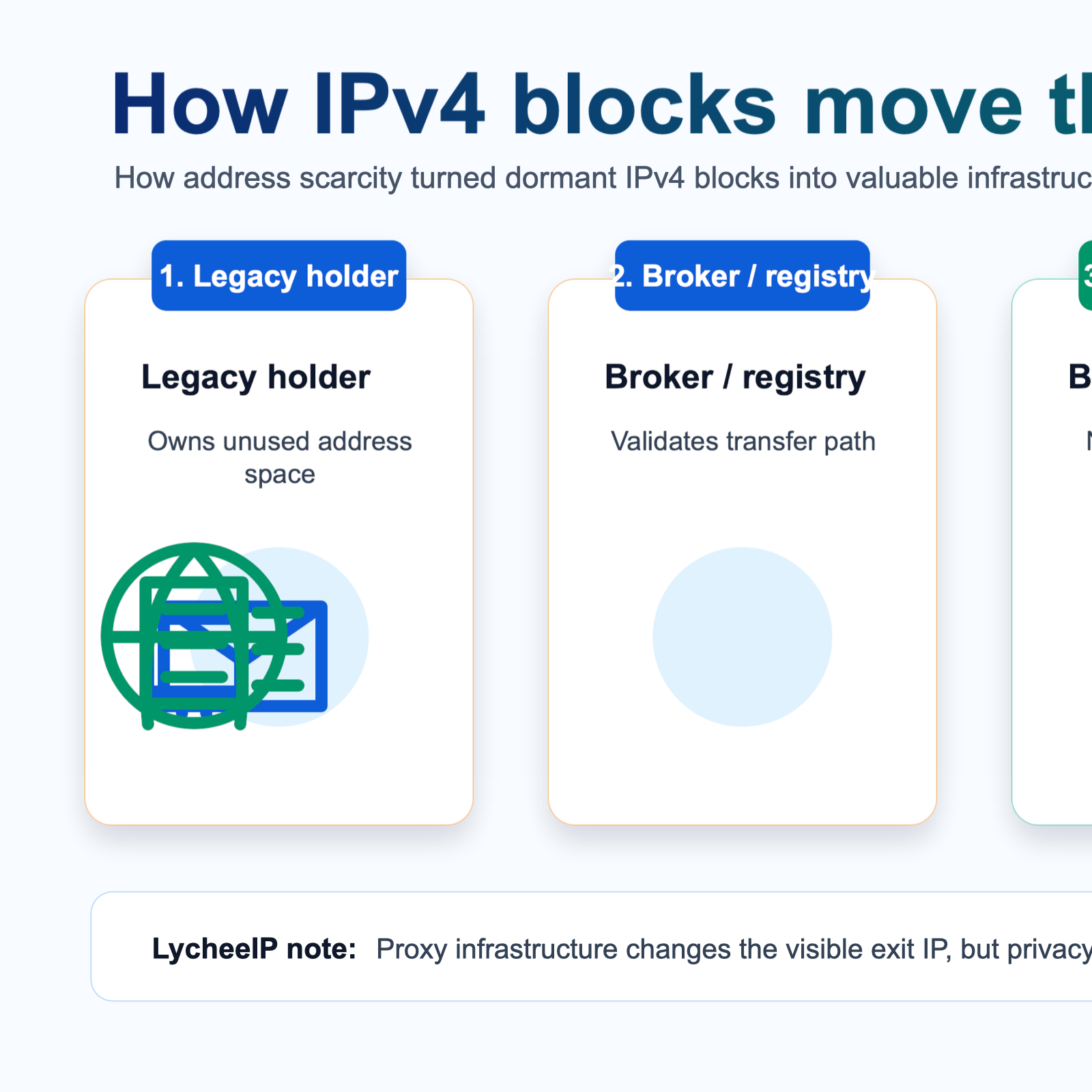
Buying and Selling IPv4 Addresses
Universities represent the most visible success stories. MIT's address holdings alone are worth over $800 million at current market rates. While MIT has not disclosed full monetization plans, other universities have aggressively sold excess capacity. These institutions received addresses when registration was informal, creating windfalls as scarcity emerged.
Defense contractors and legacy technology companies follow similar patterns. Organizations that once required massive address space for internal networks have migrated to private addressing (RFC 1918) and NAT, freeing public addresses for sale. A company with a /16 allocation that only actively uses 20% of the space can monetize the remainder for $2-3 million while retaining operational flexibility.
Government agencies face more complex constraints. While holding significant address space, political and policy considerations limit aggressive monetization. Some agencies have participated in transfers, but the process involves procurement rules, congressional oversight, and interagency coordination that private entities avoid.
Brokers and Market Makers
IPv4 brokers have built profitable businesses facilitating transactions. They provide services including:
- Buyer-seller matching: Maintaining databases of available inventory and qualified buyers
- Due diligence: Verifying ownership, checking reputation, confirming transfer eligibility
- Valuation guidance: Providing market intelligence and pricing recommendations
- Transfer facilitation: Managing registry paperwork and compliance requirements
- Legal coordination: Connecting parties with specialized attorneys for contracts
Brokers typically charge 5-15% commission, split between buyer and seller. On a $2 million transaction for a /16 block, brokers might earn $100,000-$300,000 in fees. Established brokers facilitate dozens of transactions annually, generating substantial revenue.
Some brokers also maintain inventory, purchasing blocks for resale at markups. This creates additional risk but increases profit potential when timed correctly.
Cloud and Hosting Providers
While cloud providers are major buyers, they also profit indirectly through service pricing. As IPv4 addresses become scarce, providers increasingly charge customers for public IP addresses:
- AWS: Charges $0.005 per hour per public IPv4 address ($3.65 monthly)
- Google Cloud: Implements similar per-IP pricing
- Microsoft Azure: Charges for public IP addresses as standalone resources
These fees offset acquisition costs while encouraging IPv6 adoption and efficient address use. For providers with millions of addresses across their infrastructure, the revenue adds up substantially even after accounting for purchase prices.
Hosting companies and datacenter operators face similar economics. Dedicated server providers once included multiple IP addresses freely but now limit allocations and charge for additional addresses. This protects margins as acquisition costs rise.
Proxy Infrastructure and Data Collection Platforms
Companies operating large-scale proxy infrastructure face unique IPv4 economics. Proxy services rely heavily on IP diversity and availability, making address acquisition a core business function.
Residential proxy networks typically source addresses through ISP partnerships and end-user devices rather than direct ownership, sidestepping the IPv4 market. However, datacenter proxy providers and static residential proxy operators must acquire substantial address inventory.
A datacenter proxy provider might operate pools containing 50,000-200,000 IPv4 addresses distributed across multiple locations. At current market rates, this represents $2-12 million in address value alone before considering infrastructure costs. As these addresses generate recurring service revenue through subscription models, the investment can be justified, but it creates significant capital requirements.
Static residential proxy providers face even higher costs per address since these must appear as genuine residential IPs from ISPs, typically requiring more complex acquisition arrangements.
For companies building internal data collection infrastructure, IPv4 costs increasingly influence architecture decisions. Organizations conducting large-scale web scraping, ad verification, or e-commerce research must factor address acquisition into project economics. A project requiring 10,000 dedicated IPs now carries $400,000-$600,000 in address costs before operational expenses.
Speculative Investors
Investment funds and individual speculators have entered the IPv4 market, treating addresses as alternative assets. These participants have no operational need for addresses but bet on continued appreciation.
Speculative investment creates interesting dynamics. While increasing liquidity and price discovery, speculators also reduce available supply, potentially accelerating price increases. Some market observers worry about bubble dynamics if speculation becomes dominant, though operational demand remains strong enough to support current pricing.
Funds holding IPv4 addresses face questions about exit strategies. Unlike traditional securities with deep liquid markets, selling large address blocks requires finding specific buyers with operational need and capital. This creates potential exit bottlenecks if many speculators attempt to liquidate simultaneously.
Implications for Proxy and Data Infrastructure
The IPv4 market dynamics directly impact organizations building and operating proxy infrastructure, web scraping platforms, and data collection systems.
Architecture Decisions Influenced by IPv4 Economics
Address scarcity and pricing force architectural tradeoffs:
IPv6 adoption: Organizations can potentially reduce IPv4 dependency by implementing IPv6 support. However, many target websites still lack full IPv6 compatibility, and some use cases specifically require IPv4 for testing or access purposes.
IP rotation strategies: Proxy services must balance pool size against cost. Larger pools provide better rotation and reduce block risk but multiply acquisition costs. Rotation algorithms that maximize value from limited inventory become critical.
Shared vs. dedicated IPs: Offering shared proxy pools where multiple customers route through the same IPs reduces per-customer address requirements but creates performance and reputation challenges. Dedicated IP offerings command premium pricing partially due to underlying address costs.
Geographic distribution: Address prices vary by region and registry. Infrastructure decisions increasingly factor in not just server costs and latency but also IPv4 acquisition economics in different jurisdictions.
Impact on Proxy Service Economics
IPv4 costs influence proxy service pricing models and margins. A datacenter proxy provider maintaining 100,000 addresses at $45 each has $4.5 million in address value. If amortizing this over three years, that's $1.5 million annually, or $15 per address yearly before operational costs.
For a service charging $5 per GB of bandwidth or $50-$100 monthly per dedicated IP, these address costs become significant but manageable portions of the cost structure. However, they create barriers to entry for new competitors and pressure margins during customer acquisition phases.
Services relying on residential proxy networks through peer-sourcing models avoid direct IPv4 purchase costs but face different economics around user compensation and partnership arrangements.
Strategic Considerations for Data Infrastructure Teams
Organizations building internal data collection capabilities must make strategic decisions about IP sourcing:
Build vs. buy: Companies can purchase IPv4 blocks directly or contract with proxy providers. Direct ownership offers long-term cost advantages but requires upfront capital, registry navigation, and infrastructure management. Proxy services convert capital expenses to operational expenses, providing flexibility but higher long-term costs.
Lease arrangements: Some organizations lease address space rather than purchasing, reducing capital requirements but creating ongoing costs. Lease economics make sense for temporary projects or organizations wanting to avoid asset ownership complexity.
Hybrid approaches: Many organizations use a mix of owned addresses for core infrastructure and proxy services for variable capacity and specialized use cases.
proxy infrastructure providers like LycheeIP help organizations navigate these tradeoffs by offering flexible access to proxy networks without requiring direct IPv4 address acquisition. For companies focused on web scraping, public data collection, geo-testing, or ad verification, working with established proxy providers can reduce capital requirements while maintaining access to diverse IP pools. This approach lets technical teams focus on data workflows and application logic rather than IP address procurement and management.
Responsible Infrastructure Use
Regardless of IP sourcing approach, organizations should implement responsible practices:
- Respect website terms of service and robots.txt directives
- Implement rate limiting to avoid overloading target systems
- Use proxies for legitimate purposes like public data collection, testing, market research, and content verification
- Maintain clear documentation of data collection practices and purposes
- Review compliance requirements for specific industries and jurisdictions
These practices protect both the organization and the broader internet ecosystem, ensuring sustainable access to public data resources.
Decision Framework for Organizations
Organizations evaluating IPv4-related decisions should consider several factors:
For Legacy Address Holders
If your organization controls significant unused IPv4 space:
Assess actual needs: Conduct thorough inventory of current and projected requirements. Many organizations overestimate future needs based on outdated growth models.
Evaluate monetization options: Compare outright sale, long-term leasing, and strategic retention. Sale generates immediate capital but eliminates future flexibility. Leasing creates income streams while retaining ultimate ownership.
Consider timing: Current prices are historically high, but continued scarcity may drive further appreciation. Tax implications, organizational cash needs, and market sentiment all influence timing decisions.
Engage specialists: Registry transfer procedures, legal contracts, and valuation require specialized expertise. Working with experienced brokers and attorneys reduces risks.
For Address Acquirers
Organizations needing IPv4 addresses should evaluate:
Alternatives to acquisition: Can IPv6, NAT, or architectural changes reduce requirements? These may offer better long-term economics despite implementation costs.
Direct purchase vs. proxy services: For data collection and testing use cases, proxy infrastructure services may provide better economics than direct address ownership, particularly for variable workloads.
Block characteristics: Balance price against specific needs. Smaller blocks cost less upfront but may carry higher per-address pricing and operational complexity.
Total cost of ownership: Include acquisition price, registry fees, infrastructure costs, and management overhead in economic analysis.
Due diligence requirements: Implement thorough reputation checking, ownership verification, and transfer eligibility confirmation before committing capital.
For Infrastructure Operators
Companies building proxy services or data collection platforms should:
Forecast requirements carefully: Model user growth, service offerings, and technical architecture against address needs. Underestimating creates future acquisition pressure, while overestimating ties up capital.
Diversify sourcing: Combine owned addresses, leased capacity, and strategic partnerships to balance cost, flexibility, and control.
Monitor market conditions: IPv4 pricing and availability fluctuate. Establish relationships with brokers and track market trends to inform acquisition timing.
Design for efficiency: Implement rotation algorithms, session management, and allocation strategies that maximize value from available addresses.
Plan for IPv6 transition: While IPv4 remains critical today, dual-stack infrastructure and gradual IPv6 integration position organizations for eventual ecosystem shifts.
Common Mistakes and Considerations
Organizations participating in the IPv4 market frequently encounter these challenges:
Reputation Issues
Purchasing addresses without thorough reputation checking can create expensive problems. Blacklisted addresses require extensive remediation or may prove unusable for certain applications. Always check addresses against multiple reputation databases, spam blacklists, and abuse registries before finalizing purchases.
Transfer Complexity
Registry transfer procedures involve detailed documentation, justified need statements, and administrative processing. Allow 30-90 days for transfers and ensure all parties understand requirements. Incomplete documentation causes delays and additional costs.
Contractual Gaps
Standard purchase agreements should address warranty of title, representation of reputation status, transfer facilitation responsibilities, and remedies for non-completion. Generic contracts often overlook addressing-specific considerations, creating future disputes.
Operational Integration
Acquiring addresses is only the beginning. Organizations need infrastructure to announce routes, configure reverse DNS, maintain registration data, and respond to abuse complaints. Budget time and resources for operational integration.
Overestimating IPv6 Timeline
While IPv6 adoption continues, complete transition timelines consistently extend beyond predictions. Organizations should not defer IPv4 acquisition assuming imminent IPv6 ubiquity will eliminate needs. Dual-stack reality will persist for years.
Underestimating Capital Requirements
For infrastructure operators, IPv4 acquisition represents significant capital expenditure. Ensure financing arrangements can accommodate address purchases without constraining other operational needs.
Regulatory Changes
While unlikely in near term, addressing policies and regulations could shift. Geographic restrictions, governmental interventions, or registry policy changes could impact market dynamics and asset values.
Conclusion
The IPv4 address gold rush represents one of the internet's most interesting economic phenomena. What began as freely allocated technical infrastructure has evolved into a sophisticated asset class where single address blocks trade for millions of dollars. Companies with legacy allocations have discovered unexpected revenue sources, while organizations requiring addresses face substantial new costs.
For tech investors and digital infrastructure professionals, understanding this market is essential. IPv4 economics influence cloud pricing, proxy service costs, data infrastructure decisions, and networking strategy across virtually every internet-connected business. Organizations that recognize address scarcity as a fundamental constraint can make better architectural decisions, more accurate financial projections, and more strategic sourcing choices.
The market will continue evolving as IPv6 adoption progresses and remaining IPv4 space circulates through secondary markets. Prices may stabilize or continue rising depending on demand dynamics and adoption timelines. However, for the foreseeable future, IPv4 addresses remain valuable digital commodities requiring careful strategic management.
Whether you're evaluating proxy infrastructure for web scraping workflows, planning data collection systems, expanding hosting capacity, or considering address monetization opportunities, the IPv4 market demands attention. Understanding valuation factors, sourcing options, and long-term trends positions organizations to navigate this landscape effectively while controlling costs and maintaining operational flexibility.
Frequently Asked Questions
What is the main takeaway from The IPv4 Address Gold Rush: How IP Blocks Became a Multimillion-Dollar Asset Class?
The IPv4 Address Gold Rush: How IP Blocks Became a Multimillion-Dollar Asset Class matters because IP address behavior affects privacy, geolocation, proxy selection, and how reliably teams can run public web workflows.
Related LycheeIP Guides and Resources

Recommended Articles

AI Search API for AI Agents: How to Ground LLMs With Live Search Data
An AI search API gives an application or agent programmatic access to current search results. Its most useful role is discovery: the agent can find candidate sources, identify fresh information, and decide what to retrieve next instead of relying only on model memory.
View Details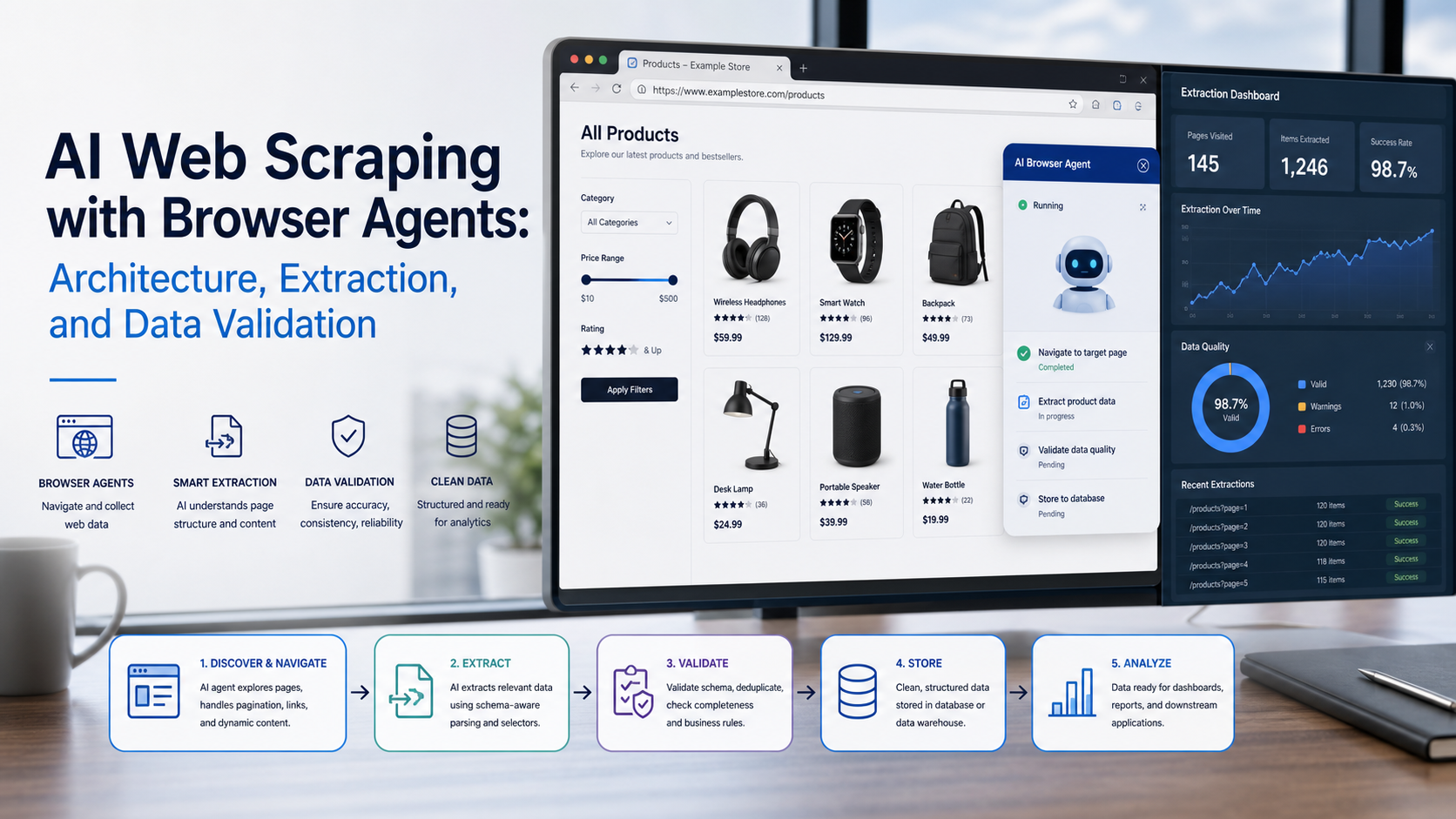
AI Web Scraping with Browser Agents: Architecture, Extraction, and Data Validation
AI web scraping uses AI to help discover, navigate, interpret, or extract information from websites. Browser agents are one implementation option when page interaction, rendering, or layout variation makes a simple scraper too brittle, but the agent should not become the entire data pipeline.
View Details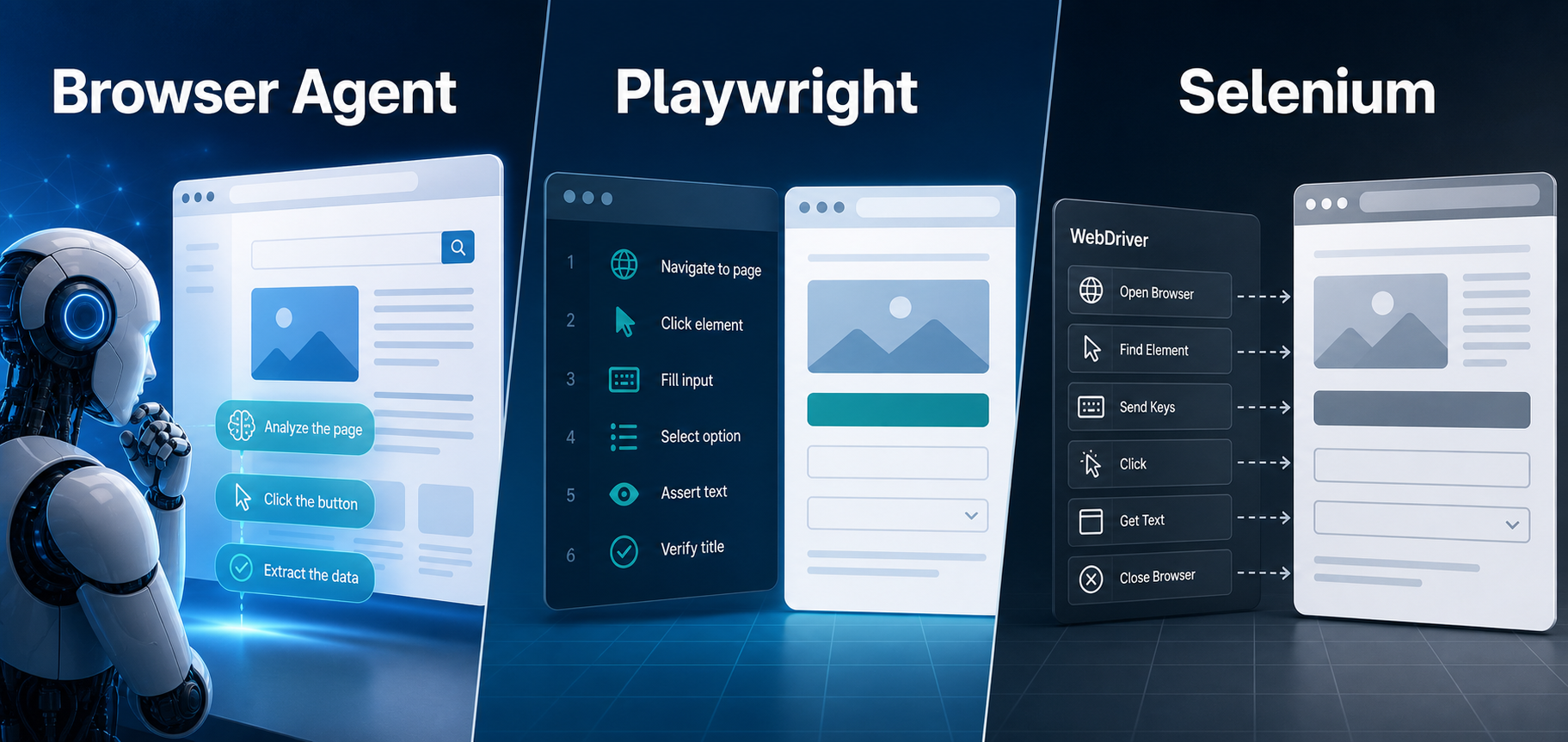
AI Browser Automation: Browser Agents vs Playwright vs Selenium
A browser agent interprets a goal and decides what browser action to take next. Playwright and Selenium can execute explicit, testable browser logic defined by developers. In 2026, however, Playwright also provides official MCP and agent-oriented workflows, so Playwright is no longer just the deterministic alternative to agentic automation. It can also serve as the browser-control layer inside an agent system.
View Details
Agentic Browser Security: Prompt Injection, Permissions, and Safe Deployment
That combination creates risks that are different from ordinary browsing and traditional automation. The most important is indirect prompt injection, where hostile instructions hidden in web content attempt to redirect the agent away from the user's goal. Google describes indirect prompt injection as a primary new threat for agentic browsing and has introduced layered defenses that include origin constraints, independent action checks, threat detection, and user confirmation for sensitive actions. Google's Chrome security architecture is a useful reference for how browser-agent defenses are evolving.
View Details
How to Give AI Agents Reliable Real-Time Web Data
A production-ready solution therefore needs more than a web scraper. It needs a web data layer that connects acquisition, validation, storage, retrieval, security, and observability. This guide explains how to design that layer.
View Details