
The 10 Best ScrapeBox Alternatives in 2025: A Practical Guide for SEOs
The 10 Best ScrapeBox Alternatives in 2025: A Practical Guide for SEOs

For over a decade, ScrapeBox has been a legendary tool in the SEO's desktop arsenal. Its power for harvesting SERPs, building keyword lists, and checking backlinks is undeniable. However, in the cloud-native, API-driven world of 2025, many teams find themselves outgrowing its desktop bound limitations.
If your team needs modern scalability, seamless integrations, and robust anti-bot handling, it's time to consider a cloud-based alternative. As experts who provide the foundational proxy infrastructure for large-scale data collection, we at LycheeIP have created this definitive guide. It will help you evaluate the best ScrapeBox alternatives and understand the critical role that a high quality proxy network plays in your success.
Explore LycheeIP's Residential Proxies
What ScrapeBox Is (and Why Teams Are Moving to the Cloud)
First, let's acknowledge ScrapeBox's strengths. It is a powerful desktop SEO utility with a huge range of features and a one-time licensing fee. However, its limitations become clear when your team needs:
- Cloud Scale & Scheduling: The ability to run, schedule, and queue jobs without tying up a local machine.
- Native Integrations: The need to pipe data directly into BI tools, ETL workflows, or data warehouses.
- Modern Anti-Bot Handling: The capacity to deal with JavaScript rendering and sophisticated CAPTCHA challenges.
- Transparent Total Cost of Ownership: The one-time fee doesn't include the ongoing costs of proxies, plugins, and virtual machines.
For these reasons, many teams are migrating their SERP collection workflows to API-first or no-code cloud solutions.
The LycheeIP Framework for Evaluating ScrapeBox Alternatives
With dozens of SERP APIs on the market, how do you choose the right one? Our experts use the following checklist to evaluate and compare services.
- Search Engine Coverage: Does it only support Google, or does it also cover Bing, Baidu, Yandex, and other engines? Does it handle verticals like Shopping, Images, and Maps?
- Geo & Device Control: Can you target specific countries, cities, or ZIP codes? Can you request results as seen on a desktop vs. a mobile device?
- Resilience & Anti-Bot: Does the service have built-in headless browser rendering, automatic retries, and sophisticated CAPTCHA handling?
- Data Quality: Is the data delivered as clean, parsed JSON, or just raw HTML? Is the schema consistent over time?
- Scalability & Delivery: Does it support asynchronous jobs and webhooks for large-scale tasks? Can it deliver data to cloud storage like S3?
- Compliance & Sourcing: Does the vendor have a clear compliance posture and use ethically sourced proxies?
- Developer Experience (DX): How good are the API docs, SDKs, and code examples?
- Total Cost of Ownership (TCO): What is the true cost per 1,000 usable search results? This includes the API fee, any proxy costs, and your team's engineering time.
A Review of the 10 Best ScrapeBox Alternatives for 2025
To help you navigate the market, we've broken down the top 10 services into logical categories based on their primary function.
Comprehensive All-in-One Platforms
(These providers offer a full suite of tools for multiple search engines and verticals.)
- Bright Data: A market leader with broad SERP coverage (organic, shopping, maps, etc.), parsed outputs, and a no-code dashboard scraper. Ideal for teams wanting a wide range of plug-and-play APIs from a single vendor.
- Oxylabs: An enterprise-grade provider with mature e-commerce and SERP APIs. It excels at batch jobs and can deliver parsed data directly to your cloud storage.
- Smartproxy: A user-friendly option that integrates its SERP scraper API with its popular proxy services. It provides a good balance of features, geo-granularity, and accessible pricing.
- WebScrapingAPI: A versatile provider that supports Google, Bing, and Yandex, making it a good choice for teams that need multi-engine data from a single vendor.
Google-Focused SERP APIs
(These providers specialize in delivering high-quality, parsed data specifically from Google.)
- SerpApi: A long-standing and highly respected Google SERP API known for its extensive SDK library, real-browser execution, and strong legal safeguards.
- ScrapingBee: A developer-friendly service that focuses on providing clean, simple Google SERP extraction (organic, ads, and local pack) with managed headless browsing.
- NetNut: An enterprise-oriented service with a focus on high-volume Google SERP pipelines, backed by strong support from solution engineers.
Budget-Friendly & Lightweight Options
(These providers offer simple, cost-effective endpoints for teams with smaller needs.)
- Scrapingdog: A great starting point for budget-conscious teams, offering lightweight and scalable SERP and reviews APIs with simple pagination.
- ScraperAPI: A developer-friendly option that offers both a general scraping API and specific SERP endpoints, with easy-to-use schedulers and webhooks.
- Infatica: Provides a straightforward SERP scraper API with JS rendering and built-in rotation, ideal for simple programmatic data pulls.
View our Residential and Mobile proxy plans
The Proxy Layer: How to Pair Any Alternative with LycheeIP
Even the best SERP API is dependent on the quality of its underlying proxy network. While many services bundle proxies, using your own provider like LycheeIP gives you greater control over your geo-targeting, IP quality, and costs.
It's a simple, three-step process:
- Pick the Right LycheeIP Proxy Type:Residential (Rotating): The most resilient and versatile choice for general SERP discovery.ISP (Static): Ideal for tasks that require a stable, logged-in session (e.g., checking Google Ads dashboards).Mobile: Essential for verifying mobile-first rankings and ads.
- Wire up LycheeIP in Minutes: Most tools that support "Bring Your Own" (BYO) proxies will ask for a proxy URL. Simply input your LycheeIP credentials.
- Tune Your Rotation & Headers: Use per-request rotation for keyword discovery and 5–15 minute sticky sessions for checking pagination and rank positions.
View our Residential and Mobile proxy plans
Migration Cheatsheet: From ScrapeBox to the Cloud
Ready to make the switch? Here’s your high-level plan.
- Replace Desktop Tasks with API Jobs: Instead of manually harvesting URLs, set up API calls to get back parsed JSON data.
- Automate Your Workflow: Use cron jobs or cloud functions to schedule your API calls and deliver the results to a database, S3 bucket, or webhook.
- Normalize Your Data: Define a consistent schema for your data (e.g., rank, title, URL, snippet) to ensure quality.
- Integrate Your Proxies: Swap in your LycheeIP proxy credentials and set up rotation profiles based on your job type.
Power your new workflow with LycheeIP
Frequently Asked Questions (FAQ)
Is ScrapeBox still worth it in 2025?
For individual power users on a desktop, ScrapeBox remains a powerful and cost-effective tool. However, teams that need automation, cloud-based scheduling, and seamless data integration will find that a modern SERP API is a more scalable solution.
What proxy type should I use for scraping SERPs?
Our experts recommend starting with Rotating Residential proxies for their high success rate. If you are specifically checking mobile results, you must use Mobile proxies.
Can I still use ScrapeBox but with better proxies?
Absolutely. Many users upgrade their ScrapeBox performance by adding a high-quality proxy provider like LycheeIP. This can significantly improve the stability and success rate of your existing workflows.

Recommended Articles
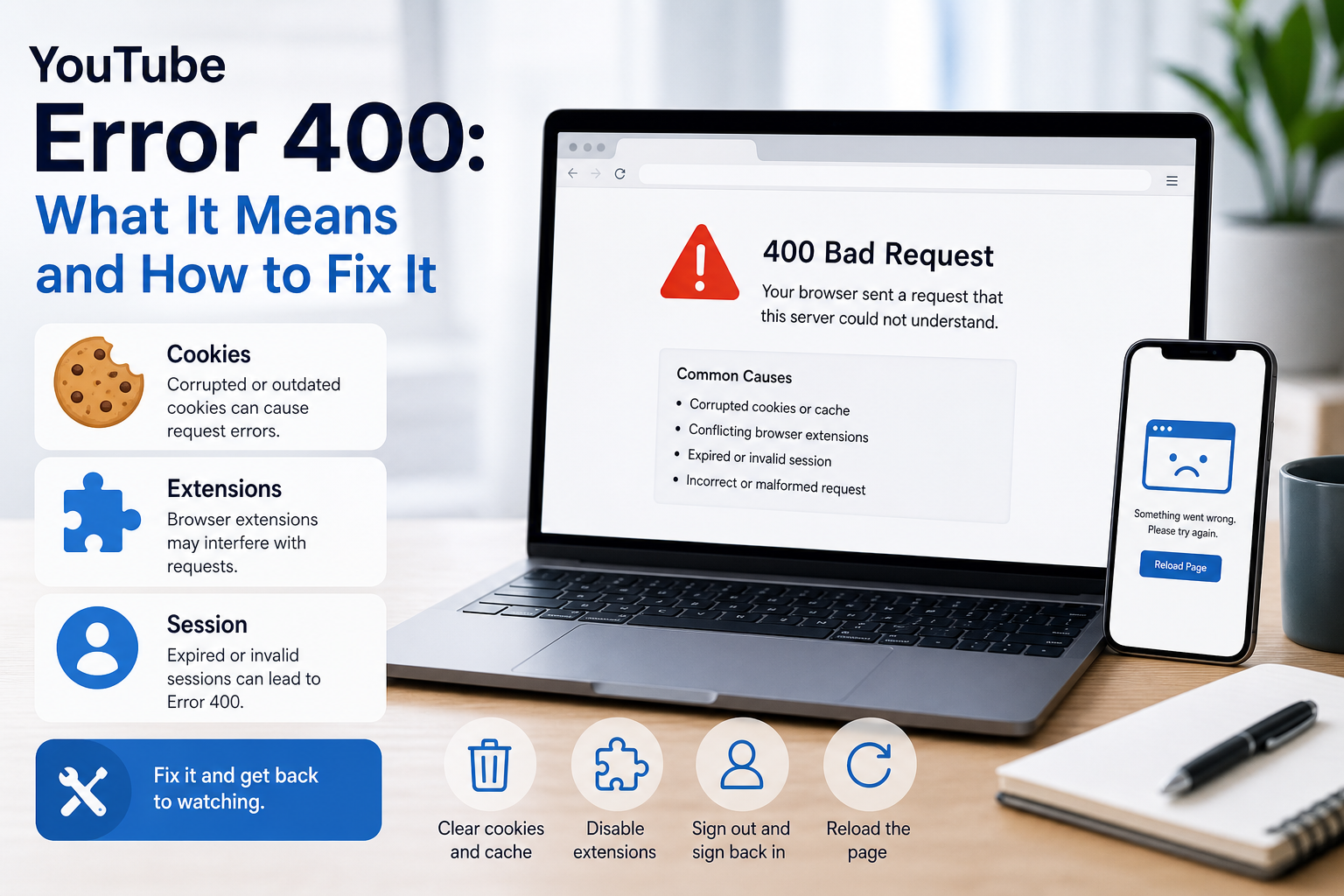
YouTube Error 400: What It Means and How to Fix It
In HTTP terminology, a 400 Bad Request is a client-error response. MDN explains that servers commonly return 400 when they consider the request malformed, incorrectly framed, or deceptively routed. The important troubleshooting clue is that repeating the exact same request without changing anything is expected to fail again.
View Details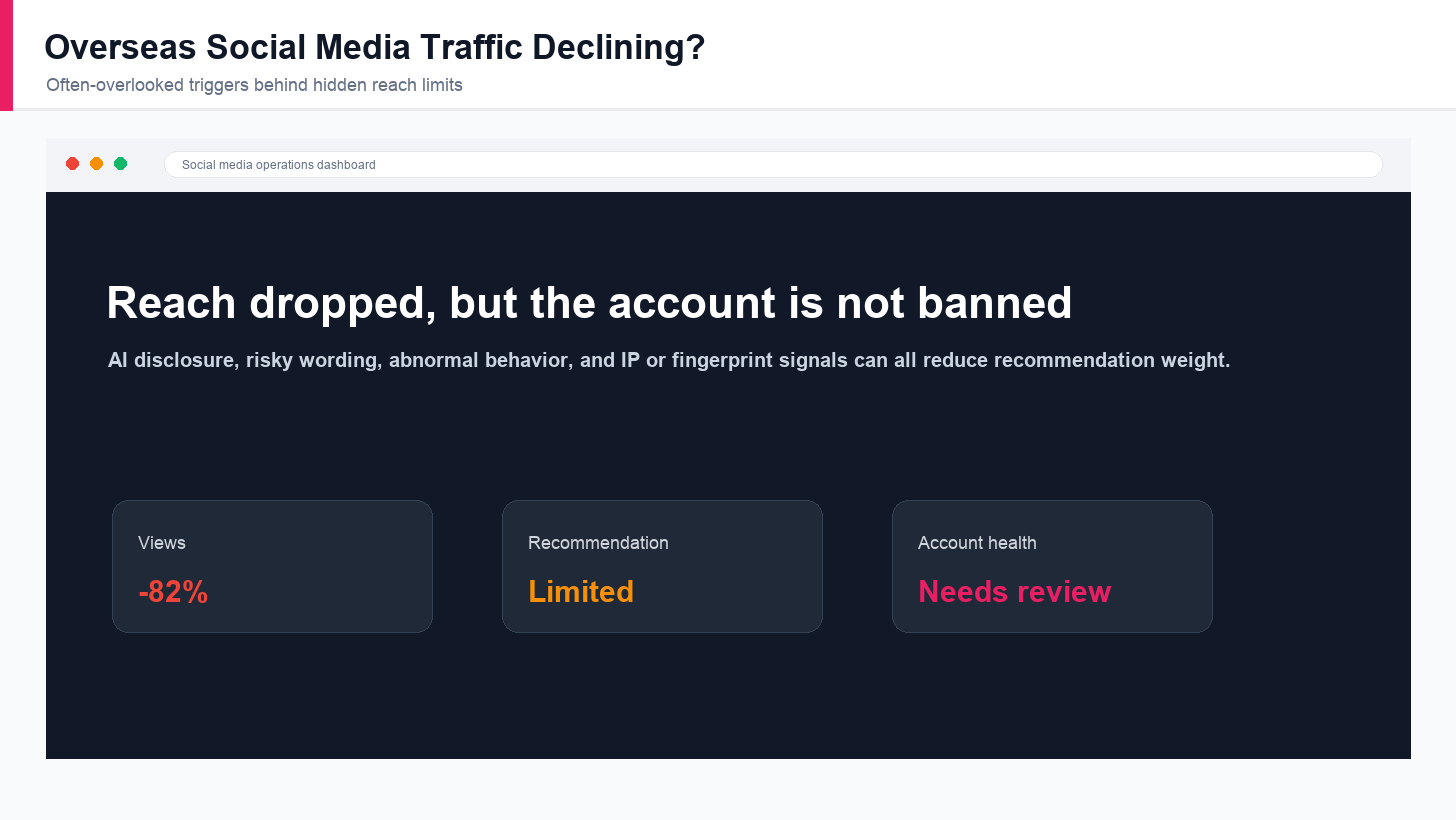
Overseas Social Media Traffic Declining? These Reach-Limiting Triggers Are Often Overlooked
A practical guide to overlooked overseas social media reach drops, covering AI content disclosure, risky wording, abnormal account behavior, hidden reach-limiting signals, and account environment checks.
View Details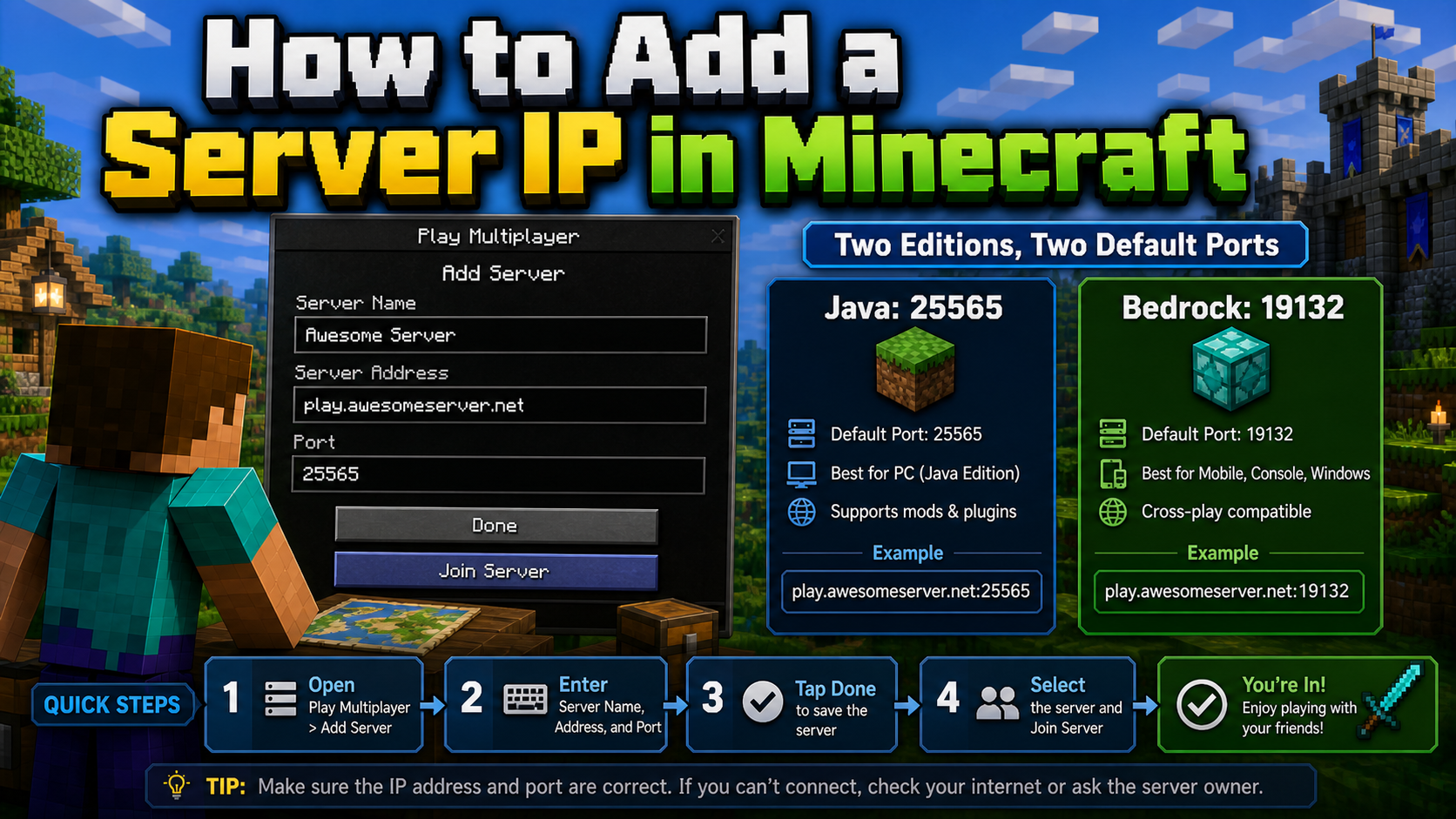
How to Add a Server IP in Minecraft Step by Step
Learn exactly where to enter a Minecraft server IP in Java, Bedrock, and Pocket Edition, plus how to fix common connection errors, ports, and edition mismatches.
View Details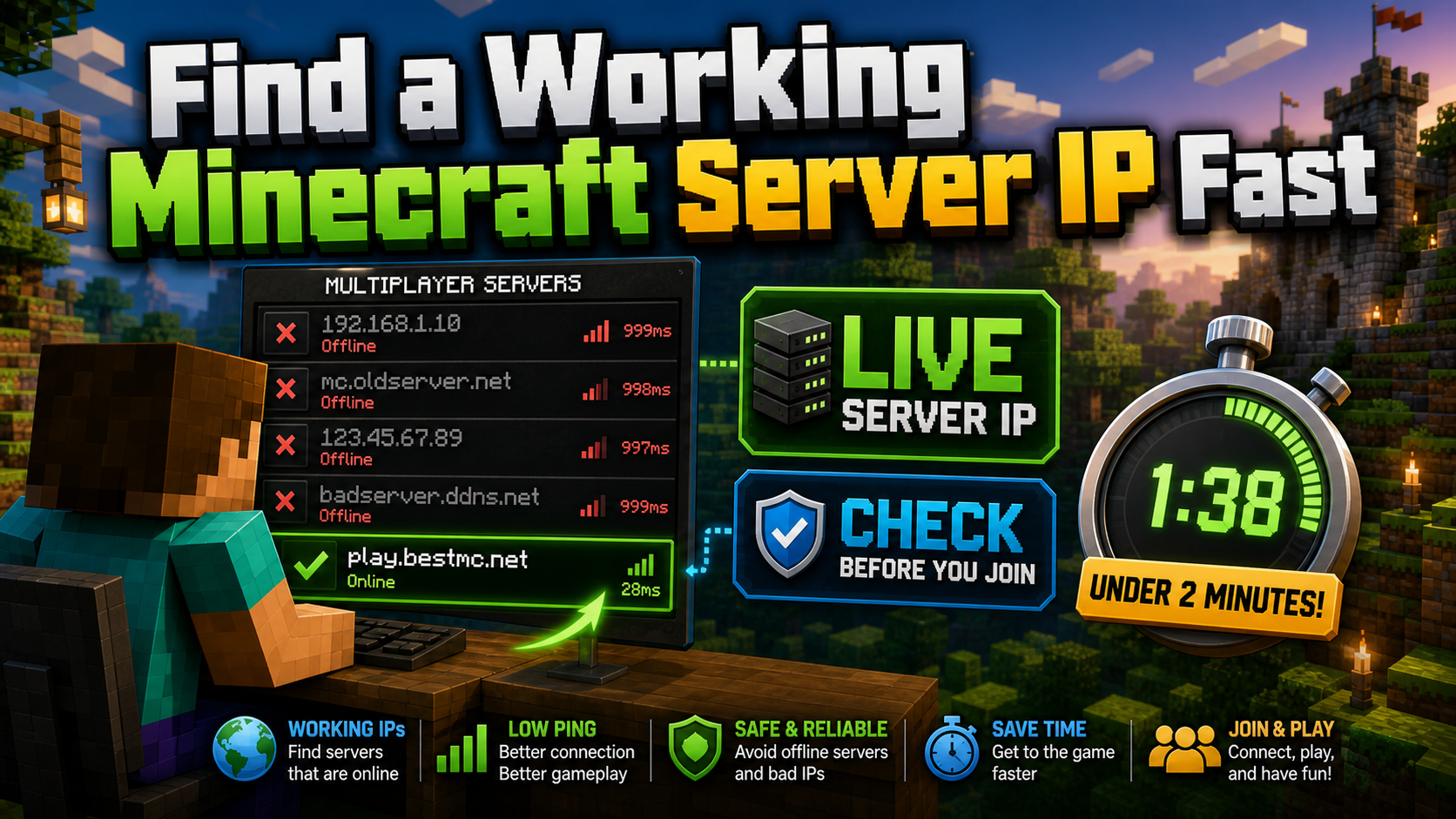
How to Find a Working Minecraft Server IP Fast
Stop wasting time on dead Minecraft server IPs. Learn how to verify live servers quickly, read status icons, check ports, and source updated server addresses.
View Details
Best 24/7 Online Minecraft Server IPs — No Downtime
Find reliable 24/7 Minecraft server IPs for Java and Bedrock, plus uptime checks, port basics, ping guidance, crossplay notes, and network stability tips.
View Details