
Is LinkedIn's In-App Browser Spying on You?
Every link you click inside LinkedIn is being loaded in LinkedIn's own browser — not yours. Here's why that matters.
If you are a developer, growth marketer, or technical operator scrolling LinkedIn daily, you have likely tapped a link to a GitHub repository, a competitor's pricing page, or an industry report without thinking twice. What you likely didn't realize is that you never actually left LinkedIn. That page loaded inside LinkedIn's in-app browser—a hidden, embedded software layer sitting between you and the open web.
From a technical perspective, that distinction is far more significant than a mere UX choice. It alters the fundamental architecture of how web pages are rendered and monitored.
Test Smarter With LycheeIP
Your Browser vs. Their Browser
Your default mobile browser—whether that is Chrome, Safari, Firefox, or Brave—is an application you control. It enforces your configured privacy settings, runs your ad blockers, manages your encrypted credentials, and frequently receives security patches designed to protect you from Cross-Site Scripting (XSS) and tracking.
An in-app browser is something else entirely. When applications like LinkedIn, Instagram, or TikTok open web links inside the app rather than handing the HTTP request off to your default browser, they are utilizing an embedded, app-controlled WebView (or WKWebView on iOS). Think of it as a headless browser that the host application built, owns, and—critically—can manipulate.
This architecture is not automatically malicious. In-app browsers reduce friction, keeping the user engaged inside the host application's ecosystem. However, this architecture introduces a severe privacy vulnerability: the host application possesses the technical capability to inject arbitrary JavaScript into any webpage you visit before it renders on your screen.
How the Tracking Actually Works
The technical reality of this vulnerability became highly publicized in 2022. Security researcher Felix Krause published findings—quickly dubbed "Browsergate"—demonstrating that several major social applications were leveraging their custom WKWebView instances to inject JavaScript into third-party DOMs.
The Mechanics of JavaScript Injection
When an application injects JavaScript into a rendering webpage, it can insert its own executable code alongside the website's native scripts. According to standard web security principles, such as those outlined by the OWASP Foundation, unauthorized script injection is generally classified as a security threat. In the context of an in-app browser, these injected instructions can:
- Keylog your inputs: Monitor what you type, including passwords, search queries, and form entries.
- Track interactions: Record every tap, click, and scroll position.
- Monitor focus states: Observe which specific DOM elements you hover over.
- Profile behavior: Build a highly detailed behavioral profile of your activity across disparate external domains.
Krause's analysis confirmed that LinkedIn was injecting custom JavaScript into external pages loaded via its iOS in-app browser. LinkedIn publicly acknowledged the behavior, stating the code was strictly utilized for accessibility features and internal performance telemetry—not malicious data harvesting or credential theft.
However, the company did not deny that the technical capability to monitor user inputs exists.
In cybersecurity and data infrastructure, intent does not eliminate risk. Whether the telemetry collected today is benign says nothing about how it could be monetized tomorrow, or what zero-day vulnerabilities that injected code might inadvertently expose. When a third-party website's DOM is mutated by LinkedIn's code without the site owner's knowledge or the user's explicit consent, the fundamental trust model of the web is broken.
For technical professionals, the stakes are exceptionally high. Developers click through to proprietary documentation; founders research competitors; operators access internal company dashboards. Browsing behavior paints an intimate portrait of professional strategy and corporate vulnerabilities.
Test Smarter With LycheeIP
The Fix Is Simple — Use It
The good news is that securing your mobile browsing sessions requires only a minor change to your workflow.
1. The Immediate Override
When a link opens inside the LinkedIn app, look for the option to export the session to your external browser.
- On iOS: Tap the three-dot menu (•••) in the top corner of the in-app browser and select "Open in Browser." * On Android: Look for a similar menu or the native browser icon.
2. The Permanent Fix
In LinkedIn's app settings, you can often disable the in-app browser entirely, forcing all outgoing HTTP requests to open in your default browser natively.
- Navigate to Settings & Privacy → Browsing and disable the in-app web viewer.
3. Harden Your Default Browser
When links execute externally, ensure they are routing to a hardened environment. Browsers like Firefox Focus or Brave offer robust tracker blocking and strict script controls that neutralize unauthorized telemetry.
The broader takeaway is this: in-app browsers represent a structural privacy gap that most users do not know exists. LinkedIn is not uniquely malevolent here; utilizing WebView telemetry is an industry-wide practice. However, LinkedIn is uniquely positioned to aggregate highly sensitive professional and corporate data, which raises the risk profile considerably.
You built your network. You earned your professional reputation. Do not let your localized browsing habits become someone else's training data.
LycheeIP (Developer-First Proxy Infrastructure)
For technical teams evaluating how third-party platforms handle their content, understanding how in-app browsers mutate web pages is critical. LycheeIP is a developer-first proxy and data infrastructure provider designed to help engineering and QA teams securely analyze web traffic, bypass localized restrictions, and conduct automated testing without exposing their primary network identity.
When developers need to verify how their applications render inside various mobile in-app browsers (like LinkedIn's or TikTok's), they must simulate traffic from multiple geographic regions and device types. By integrating a stable proxy network into your automated mobile testing suites, QA teams can reliably monitor how external applications inject scripts into their domains globally. For teams building data scrapers to monitor competitor activity on social platforms, high-performance datacenter proxies provide the necessary speed and uptime. Conversely, for testing highly sensitive mobile ad-tech flows that require authentic residential IP addresses, dynamic IP routing ensures your automated requests appear organic and bypass aggressive anti-bot firewalls. By utilizing a professional data infrastructure provider, technical operators can maintain strict control over their testing environments and safeguard their corporate data from unauthorized tracking.
The Open Web Standard
The internet's architecture was built on a foundational premise, formally documented in IETF RFCs regarding HTTP semantics: when you request a webpage, your client communicates directly with that server. You are not supposed to be communicating through a corporate middleman with the power to mutate the payload.
Keep it that way. Force the link out of the app.
Test Smarter With LycheeIP
Frequently Asked Questions
Q: What is an in-app browser and is it inherently dangerous?
A: An in-app browser is an embedded web viewer (WebView) inside a mobile application that loads web pages without launching your default browser. While not inherently "dangerous," it is structurally risky. It grants the host application the technical capability to inject JavaScript, monitor behavior, and collect telemetry without your explicit knowledge or consent.
Q: Is LinkedIn actually spying on my passwords through its in-app browser?
A: There is no evidence LinkedIn is stealing passwords. LinkedIn acknowledged injecting JavaScript into pages loaded through its iOS app, but stated it was strictly for accessibility and performance metrics. However, independent analysis proved the capability to track keystrokes and clicks exists, which is a structural security concern.
Q: What was 'Browsergate'?
A: Browsergate refers to the 2022 findings published by security researcher Felix Krause. He developed a tool to analyze in-app browser behavior and revealed that major apps—including LinkedIn, Instagram, and TikTok—were injecting custom JavaScript into external webpages, sparking widespread debate about privacy and user consent.
Q: How do I stop LinkedIn from using its in-app browser?
A: On mobile, whenever a link opens inside LinkedIn, tap the menu (usually three dots in the corner) and select 'Open in Browser.' To make this permanent, navigate to LinkedIn's Settings & Privacy > Browsing and disable the in-app browser entirely.
Q: Why should technical professionals specifically be concerned about this?
A: Developers, founders, and IT professionals frequently browse highly sensitive content—competitor intelligence, proprietary documentation, financial dashboards, and enterprise tools—while navigating from LinkedIn. This behavior creates a detailed profile of corporate strategy and technical vulnerabilities. Allowing a third-party application to monitor this traffic via injected scripts introduces an unnecessary attack vector.

Recommended Articles
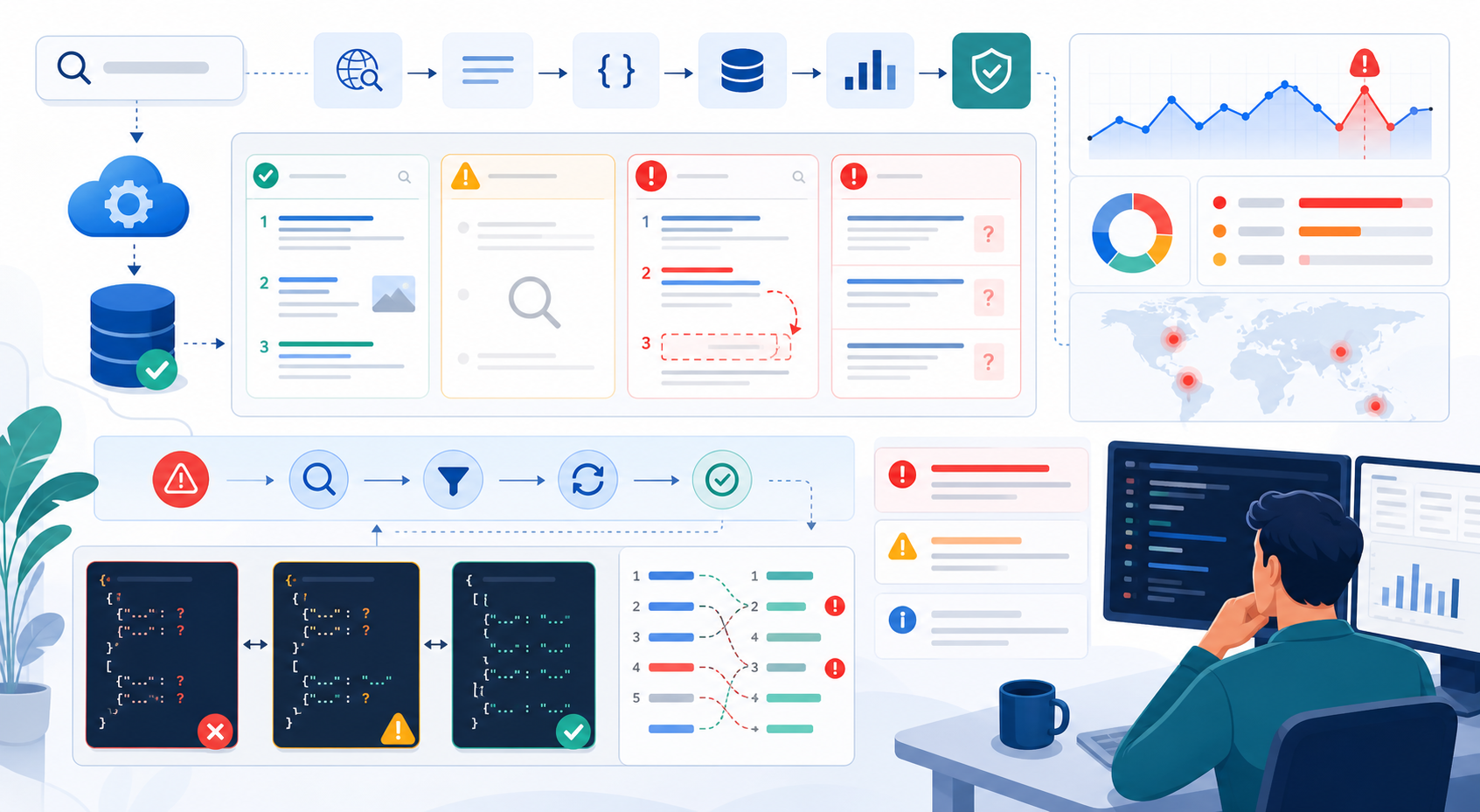
SERP API Troubleshooting: Fix Empty, Wrong, or Inconsistent Search Results
SERP API failures are not limited to obvious HTTP errors. A request can return successfully and still produce empty, incomplete, geographically wrong, duplicated, or misinterpreted search data. Production troubleshooting therefore has to separate transport problems from provider processing, SERP differences, and downstream parsing errors.
View Details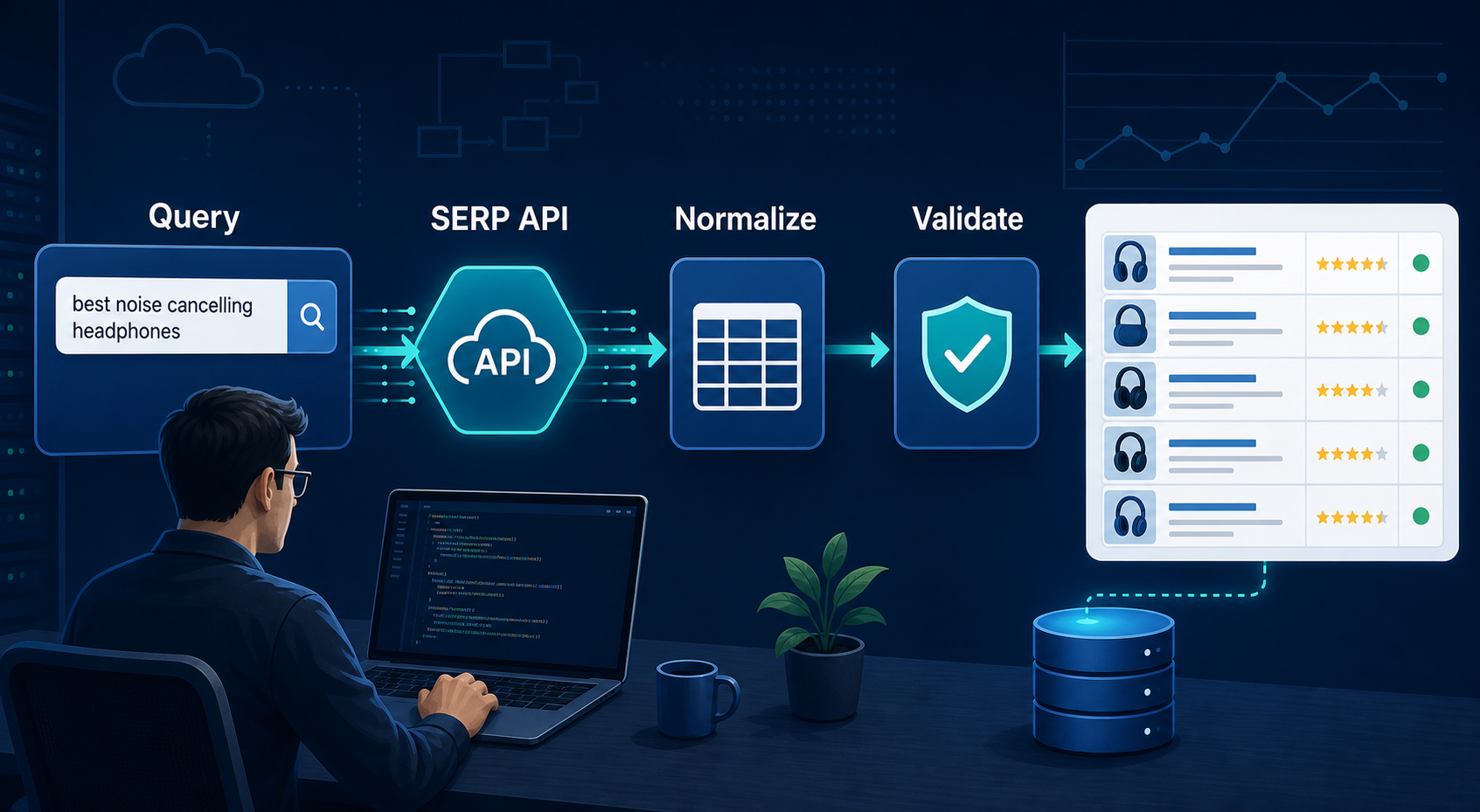
SERP API Python: How to Build a Reliable Search Data Pipeline
This guide shows a provider-neutral workflow for building that pipeline. It does not rank SERP API vendors. Instead, it focuses on the implementation choices that make a Python integration easier to operate, test, and migrate.
View Details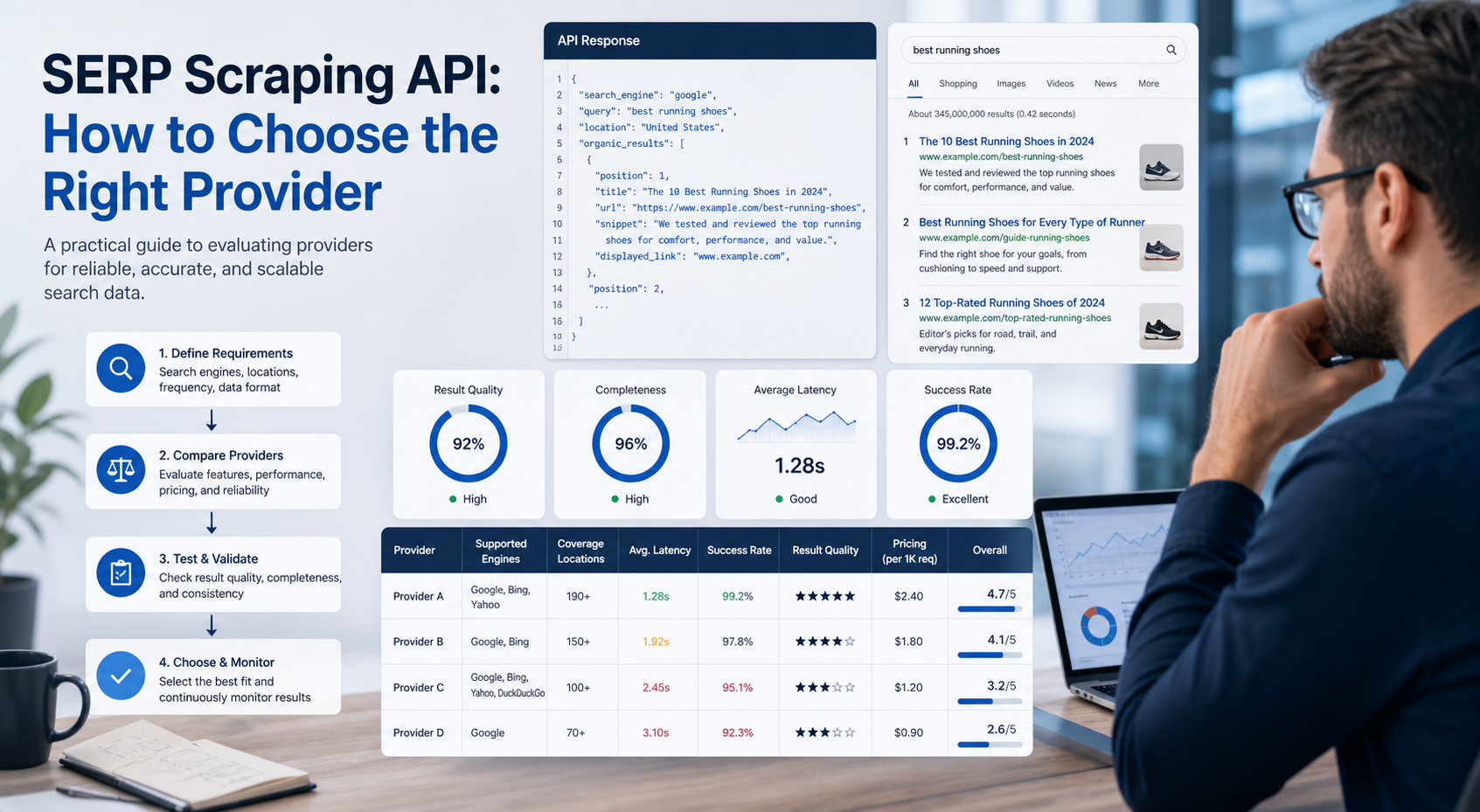
SERP Scraping API: How to Choose the Right Provider
Recommended Meta Description: Compare SERP scraping APIs by data coverage, localization, reliability, workflow fit, and cost structure, then choose and validate the right provider.
View Details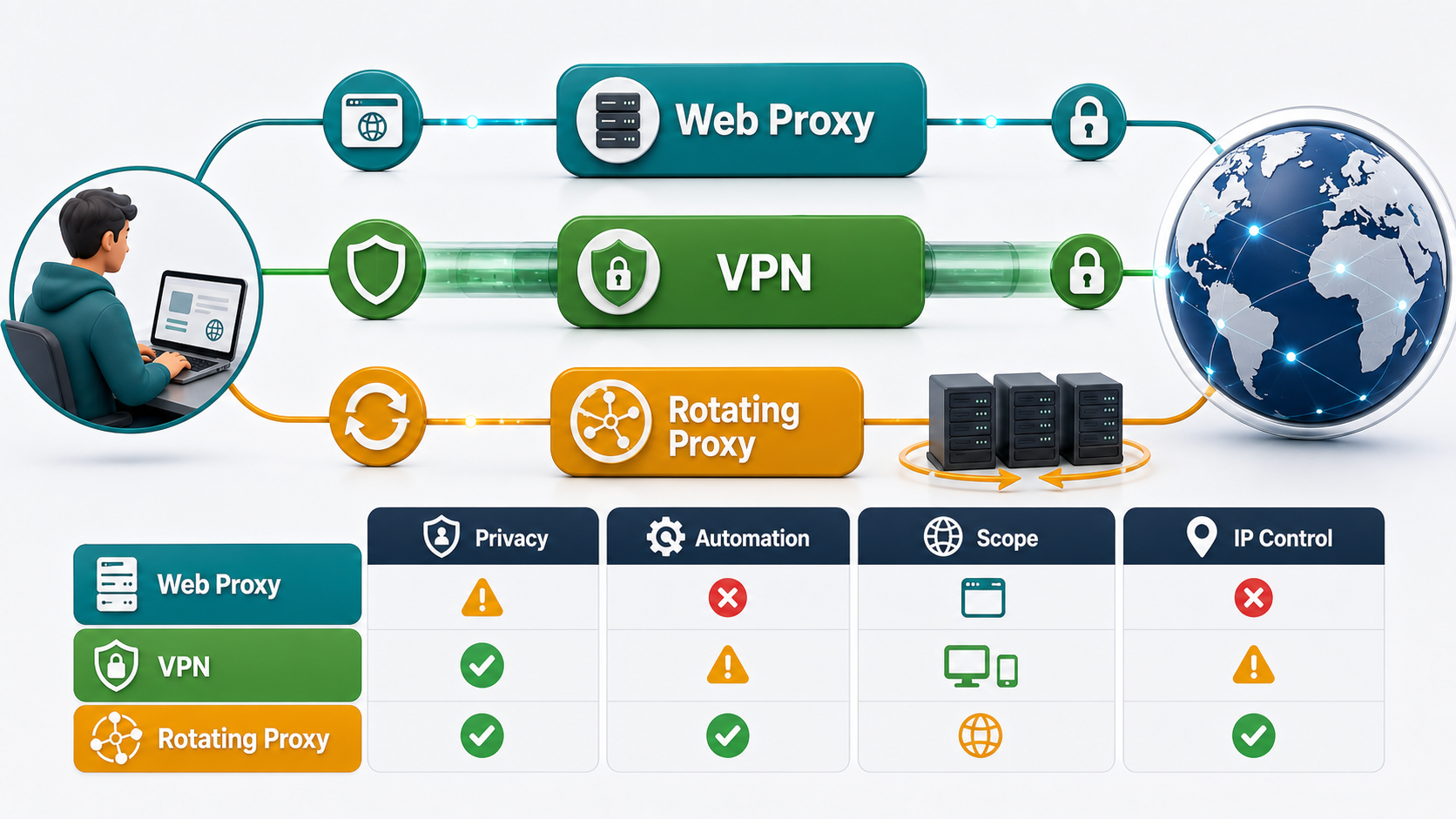
Free Web Proxy vs VPN vs Rotating Proxy: Which Should You Use?
Compare free web proxies, VPNs, rotating proxies, static proxies, and datacenter proxies by scope, encryption, IP control, automation, streaming, and account workflows.
View Details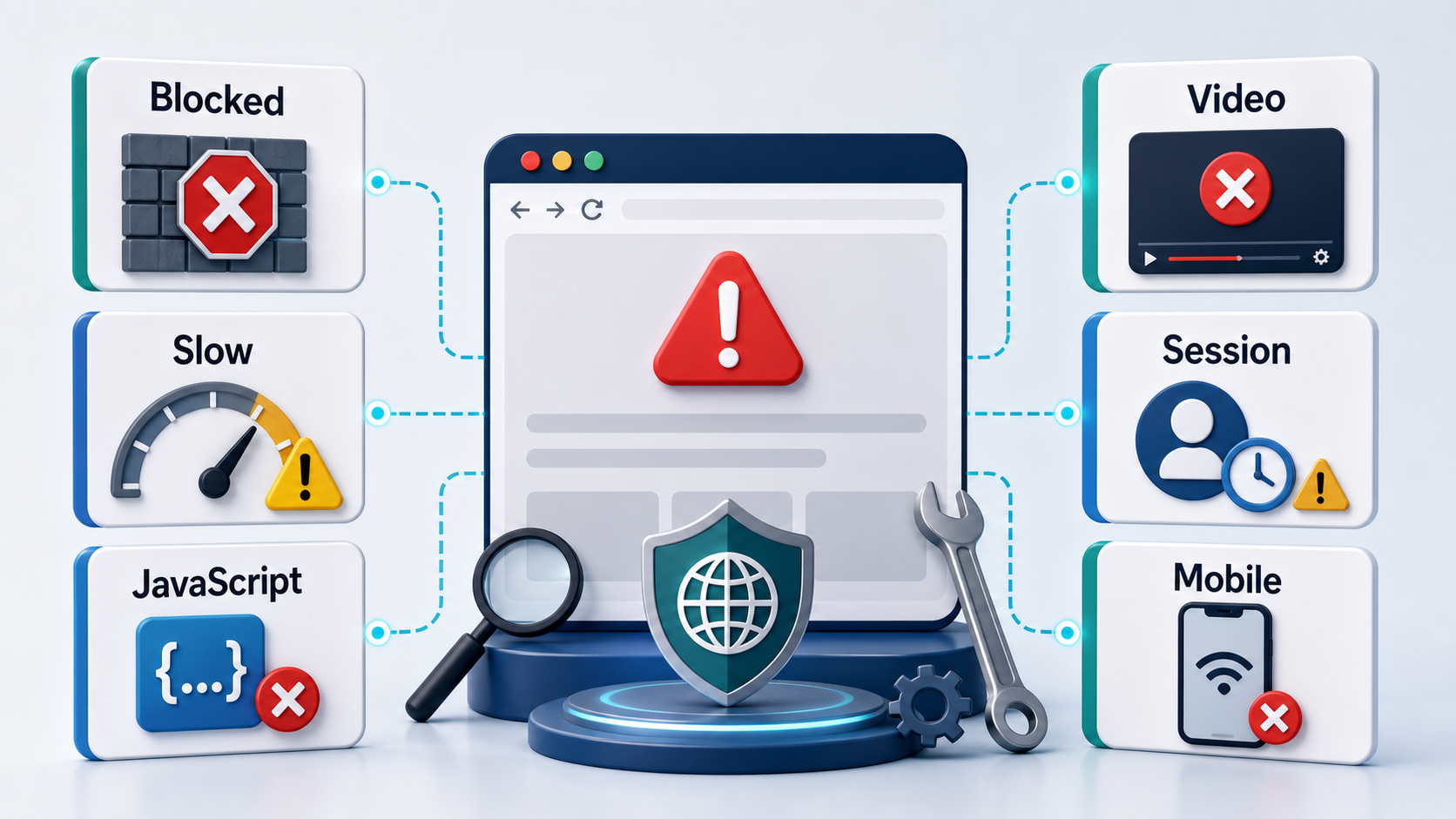
BlockAway Not Working? Fix Common Proxy, Video, and Access Problems
Troubleshoot BlockAway when pages are blocked, YouTube fails, JavaScript breaks, speed drops, sessions expire, or mobile access behaves differently.
View Details