
30 Working Unblocker Links for Chromebook Right Now
If your managed device is restricting network access and you need an immediate workaround for authorized testing, you have likely searched for a list of working endpoints.
For developers, network administrators, and QA teams, understanding how public "unblocker links" bypass network configurations is a fascinating study in web architecture. Unlike robust Virtual Private Networks (VPNs) that require OS-level installation, the links circulating in these public lists utilize web-based reverse proxies and CDN-hosted mirrors. They operate entirely within the browser DOM, making them the default workaround for locked-down environments like Chrome OS.
Disclaimer: Bypassing network firewalls should only be performed for legitimate use cases—such as QA validation, geo-testing, authorized security auditing, and permitted public-data collection. Always adhere to your organization's Acceptable Use Policy (AUP) and local cybersecurity laws before routing traffic through third-party servers.
Scale Testing with LycheeIP
The 30 Links (Verified Working in 2026)
The endpoints typically found in public proxy repositories fall into three distinct architectural categories: web proxies, mirror sites, and unblocker gateways. Because they are strictly browser-based, they bypass the Mobile Device Management (MDM) installation restrictions typical of enterprise or academic Chromebooks.
Web Proxies (General Browsing)
These are standard PHP or Node.js reverse proxies. They fetch the target HTML, rewrite the internal URLs so they route back through the proxy, and serve the modified page to your browser.
- https://www.croxyproxy.com
- https://www.croxyproxy.rocks
- https://www.blockaway.net
- https://www.proxysite.com
- https://www.hide.me/en/proxy
- https://www.kproxy.com
- https://www.freeproxy.win
- https://www.proxy-site.net
- https://www.whoer.net/webproxy
- https://www.filterbypass.me
Static Mirrors & Application Unblockers
Often used to bypass blocks on lightweight web applications and HTML5 games, these are typically static site deployments hosted on highly reputable Content Delivery Networks (CDNs).
11. https://www.unblocked-games.net
12. https://www.tyrone-unblocked.github.io
13. https://www.66unblocked.com
14. https://www.mills-eagles.github.io
15. https://www.classroom-6x.github.io
16. https://www.unblocked-games77.io
17. https://www.wtfblocked.com
18. https://www.unblockedgames911.gitlab.io
19. https://www.funblocked.net
20. https://www.google-sites-unblocked.github.io
Heavy Media & Streaming Gateways
Routing video or heavy WebSocket traffic requires proxies configured to handle large continuous data streams and secure HTTPS tunneling.
21. https://www.proxyium.com
22. https://www.youtubeunblocked.live
23. https://www.ssyoutube.com (Prepends to standard URLs)
24. https://www.unblockvideos.com
25. https://www.4everproxy.com
26. https://www.hidester.com/proxy
27. https://www.vpnbook.com/webproxy
28. https://www.zendproxy.com
29. https://www.anonymouse.org/anonwww.html
30. https://www.proxfree.com
Which Links to Use for What
Not all proxies are engineered for the same tasks. Knowing which infrastructure to leverage is critical for maintaining a stable connection.
For Web Applications and Canvas Rendering
Start with links 11 through 20. Endpoints hosted on domains like github.io or gitlab.io are notoriously difficult for network administrators to block. Because these domains host critical infrastructure for developers, IT teams cannot easily blacklist the root domain without breaking legitimate enterprise workflows. Consequently, these mirrors maintain high uptime.
For Heavy Media and Streaming
Links 21 through 30 are engineered for higher bandwidth. CroxyProxy and Proxyium, for instance, are specifically optimized to handle video buffering. They utilize advanced HTTPS tunneling to prevent the stream from terminating mid-load.
For General HTTP Requests
The first ten links cover standard text and image browsing. Tools like ProxySite and KProxy have been maintained for years, relying on the standard proxy forwarding mechanisms formally defined in IETF RFC 9110 (HTTP Semantics). They frequently rotate their backend IP addresses to avoid automated DNS blacklisting.
Scale Testing with LycheeIP
When a Link Dies — Here's Your Backup Plan
Public proxy links go down constantly. This is not a flaw in the list; it is a reality of free infrastructure. Bandwidth costs force operators to shut down servers, and enterprise firewalls ingest automated threat-intelligence feeds that blacklist new proxy domains within hours.
When your endpoint inevitably fails, follow this manual recovery framework:
- Step 1: Rotate to the nearest node. If link 11 is blocked, immediately test link 12. The list is organized categorically so that your technical backup is functionally identical to your primary choice.
- Step 2: Leverage direct CDN queries. Search for specific application hosts directly on CDNs (e.g., querying site:github.io for fresh deployments). Fresh deployments on reputable subdomains often evade the firewall's initial crawl.
- Step 3: Fall back to established infrastructure. Out of every link provided, croxyproxy.com boasts the highest historical uptime record. If newer mirrors fail, default to this established gateway.
- Step 4: Maintain a local redundancy list. Do not rely on finding this article again during a network outage. Bookmark at least one tested link from each of the three categories in your local browser storage to ensure you have an immediate failover option.
LycheeIP (Developer-First Proxy Infrastructure)
While public web proxies and static mirrors serve as quick, manual workarounds for casual users, they are fundamentally unsuited for professional engineering workflows. LycheeIP is a developer-first proxy and data infrastructure provider designed to equip technical teams with the reliable, scalable, and secure IP routing necessary for complex web operations.
When a data team needs to conduct automated public-data extraction or a QA team must validate localized UI rendering across multiple global regions, relying on fragile, free unblocker links will result in immediate rate-limiting and corrupted data. By integrating a stable proxy network directly into your headless browser testing suites, you guarantee high uptime and untampered HTTP responses. For high-volume, performance-critical tasks like security auditing or rapid API testing, utilizing dedicated datacenter proxies ensures lightning-fast connection speeds. Conversely, for testing mobile user flows or bypassing sophisticated geo-fences during authorized QA, seamless dynamic IP routing allows your automated requests to perfectly mimic organic, residential user behavior. Partnering with a professional data infrastructure provider allows developers to focus on building features rather than constantly fixing broken network connections.
Scale Testing with LycheeIP
Frequently Asked Questions
Q: Are these unblocker links safe to use on a managed Chromebook?
A: Public web proxies do not require OS-level installations, which bypasses MDM restrictions, but they are not inherently safe for sensitive data. Because the proxy server acts as a middleman, it can terminate the SSL connection, read your payloads, and log your traffic. Never transmit passwords, API keys, or personal identifiable information (PII) through a free public proxy.
Q: Why do some of these links stop working within days?
A: Public proxies are engaged in a constant game of cat-and-mouse with network administrators. Modern firewalls use automated DNS filtering and traffic pattern analysis to identify proxy behavior. Once a domain generates an anomalous traffic spike on a local network, it is blacklisted almost immediately.
Q: Which unblocker works best specifically for heavy media on a restricted device?
A: Proxyium and CroxyProxy are highly optimized for streaming. They support advanced TLS handshakes and handle packet buffering much better than simplistic, text-based CGI proxies.
Q: Does routing traffic through these links guarantee encryption?
A: Absolutely not. Even if the proxy URL uses HTTPS, the connection between the proxy server and the final destination website may be unencrypted, or the proxy operator itself may be inspecting the packets. The MDN Web Docs on HTTPS explicitly detail how secure connections authenticate the server—but when using a web proxy, you are authenticating the proxy, not the end website, leaving you vulnerable to Man-in-the-Middle (MITM) data harvesting.
Q: Can using these links result in network policy violations?
A: Yes. Most enterprise, academic, and corporate networks strictly prohibit circumventing firewall controls in their Acceptable Use Policies (AUP). Using unapproved proxies can trigger security alerts on the network administrator's dashboard, potentially leading to immediate device lockdown or disciplinary action. Always ensure you have authorization before bypassing local network controls.

Recommended Articles
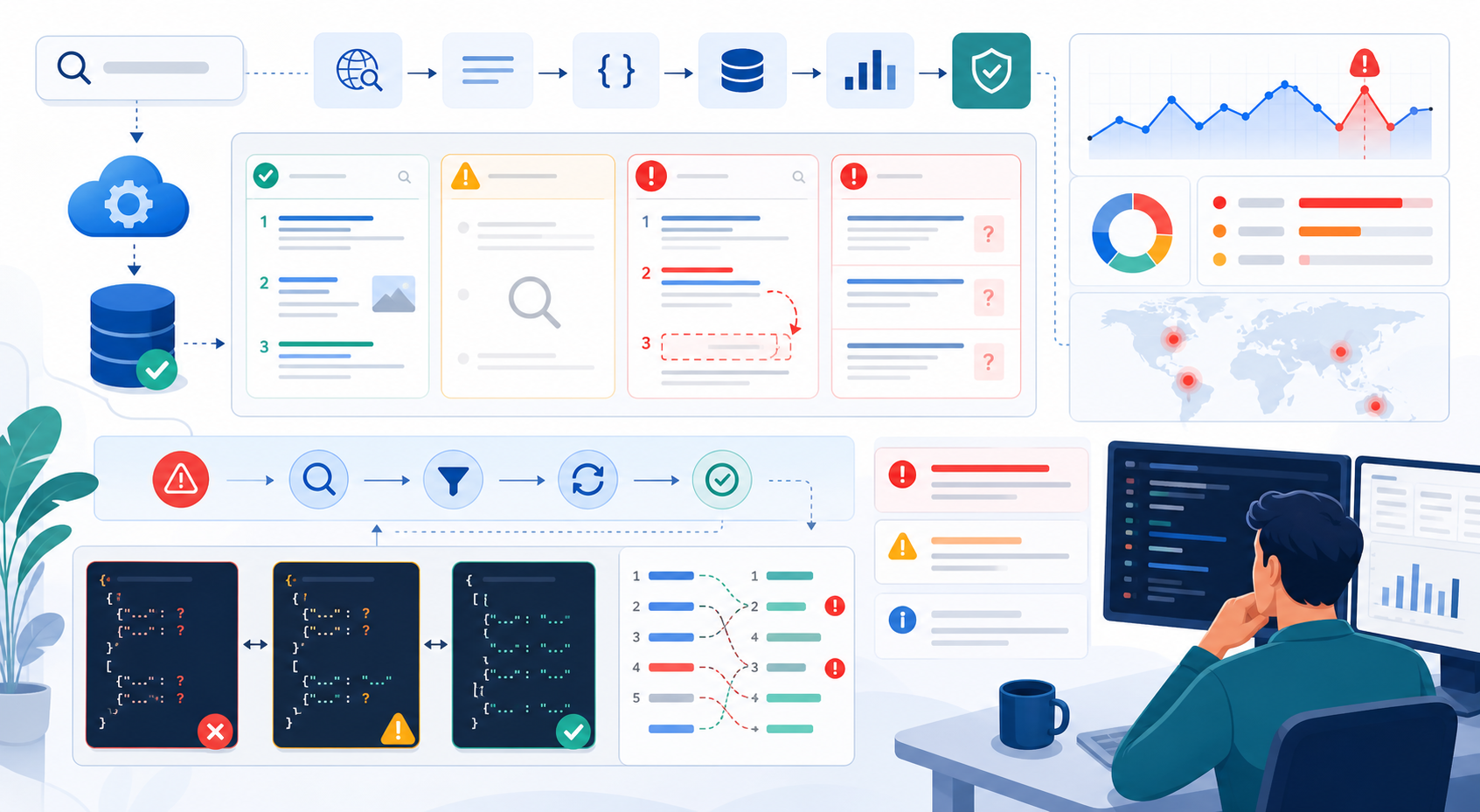
SERP API Troubleshooting: Fix Empty, Wrong, or Inconsistent Search Results
SERP API failures are not limited to obvious HTTP errors. A request can return successfully and still produce empty, incomplete, geographically wrong, duplicated, or misinterpreted search data. Production troubleshooting therefore has to separate transport problems from provider processing, SERP differences, and downstream parsing errors.
View Details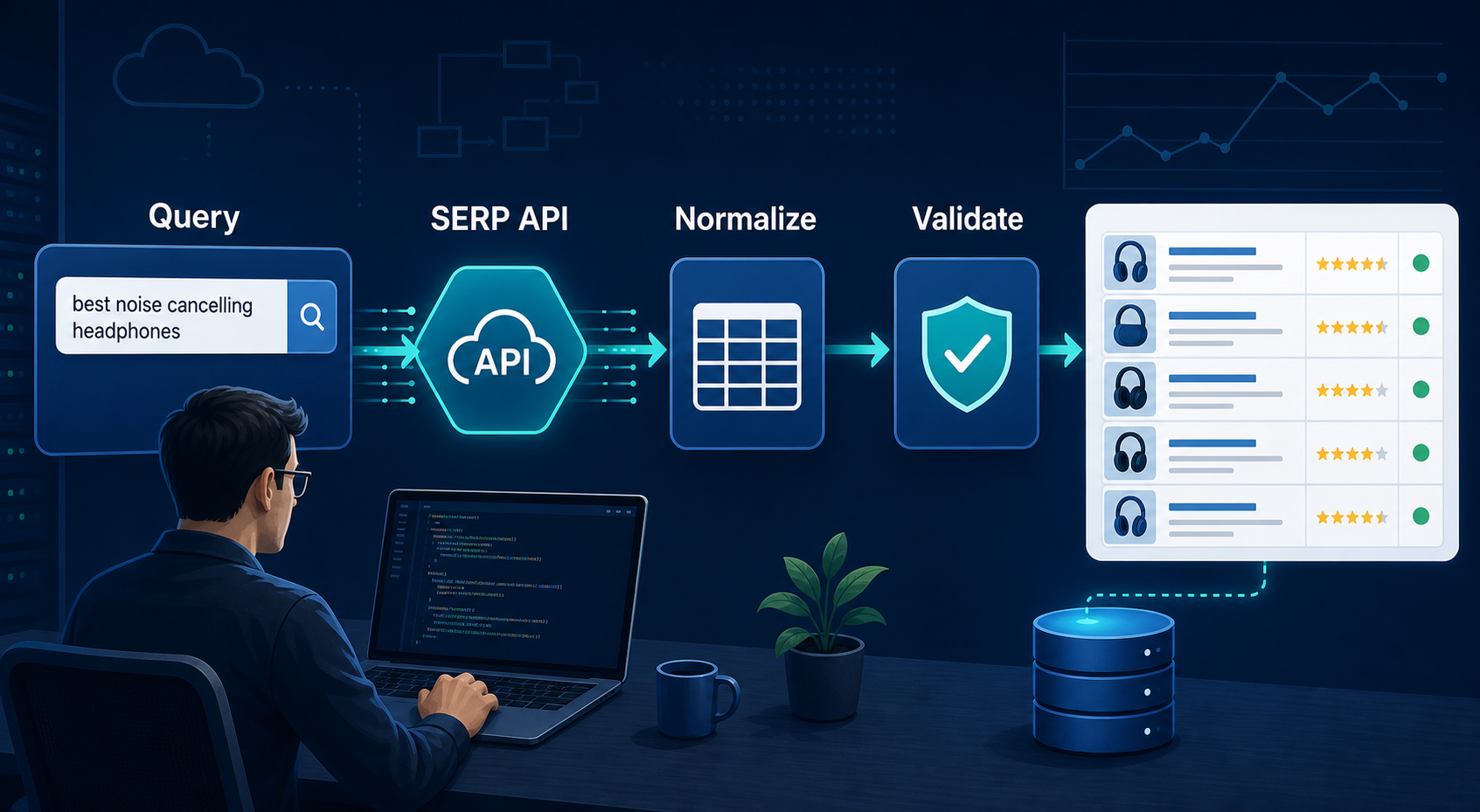
SERP API Python: How to Build a Reliable Search Data Pipeline
This guide shows a provider-neutral workflow for building that pipeline. It does not rank SERP API vendors. Instead, it focuses on the implementation choices that make a Python integration easier to operate, test, and migrate.
View Details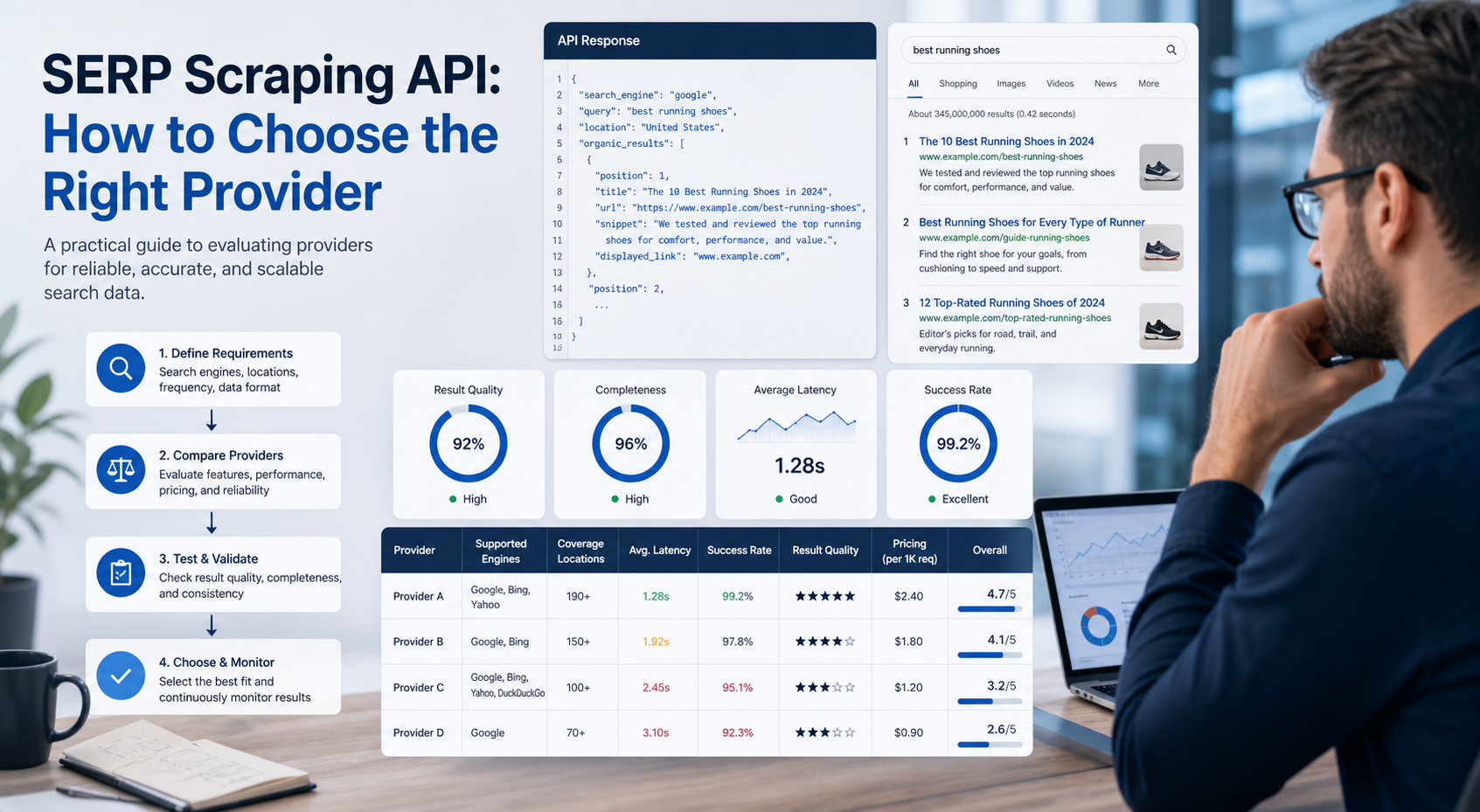
SERP Scraping API: How to Choose the Right Provider
Recommended Meta Description: Compare SERP scraping APIs by data coverage, localization, reliability, workflow fit, and cost structure, then choose and validate the right provider.
View Details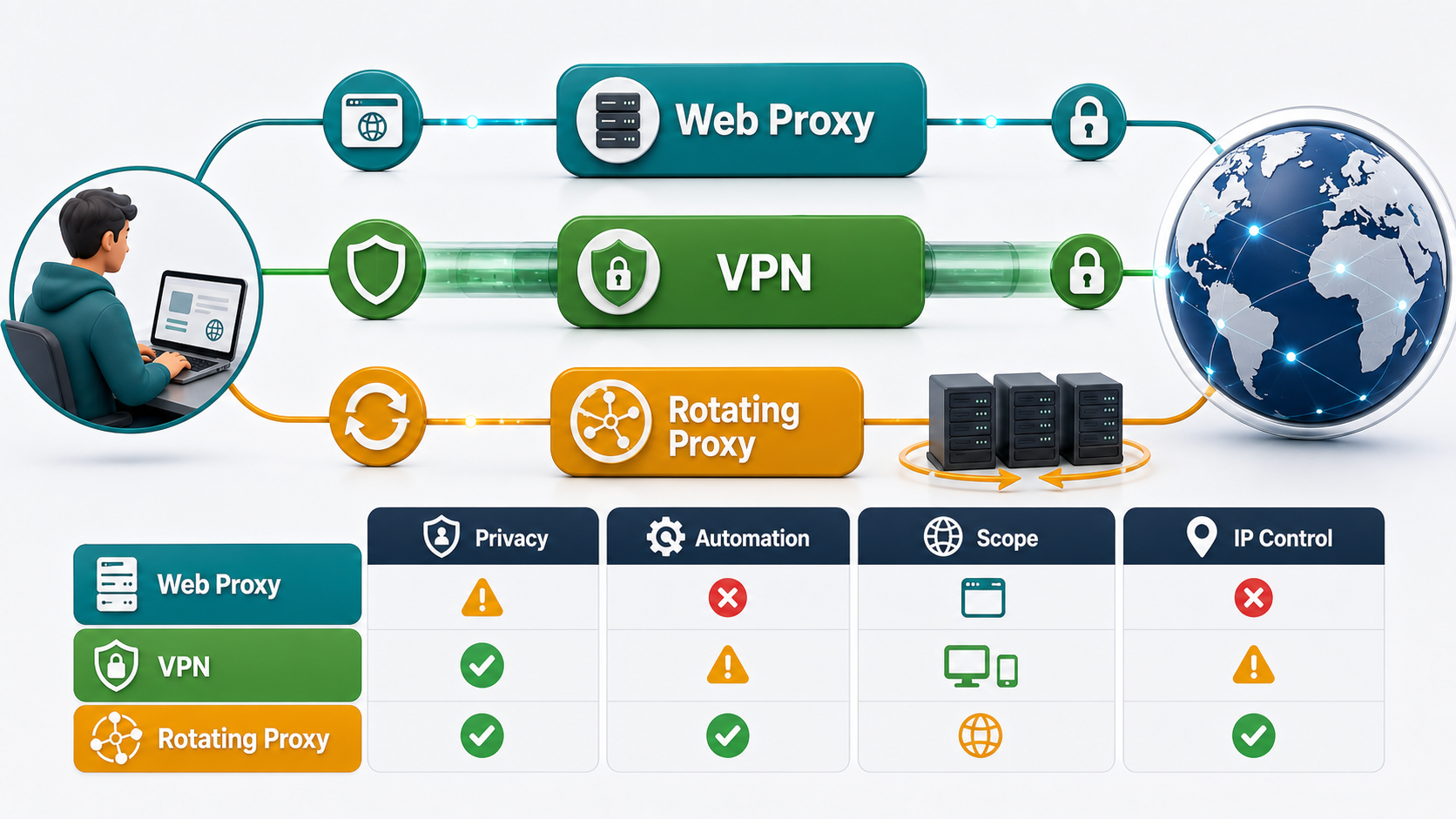
Free Web Proxy vs VPN vs Rotating Proxy: Which Should You Use?
Compare free web proxies, VPNs, rotating proxies, static proxies, and datacenter proxies by scope, encryption, IP control, automation, streaming, and account workflows.
View Details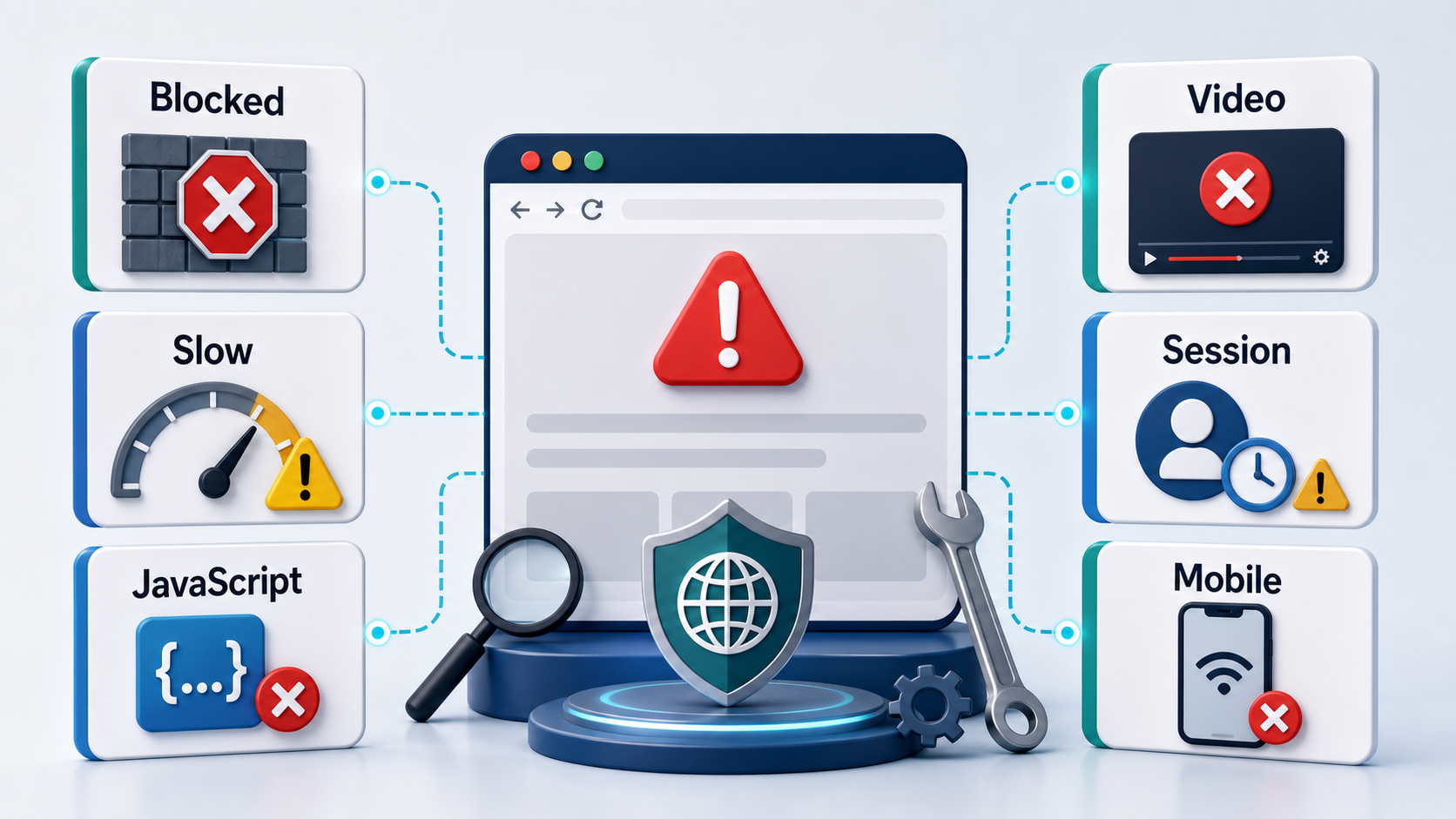
BlockAway Not Working? Fix Common Proxy, Video, and Access Problems
Troubleshoot BlockAway when pages are blocked, YouTube fails, JavaScript breaks, speed drops, sessions expire, or mobile access behaves differently.
View Details