
Choosing Between Hydraproxy Mobile Ports and Residential Data in 2026
Hydraproxy Pricing Explained (2026): Mobile Ports vs. Residential GB
What are you paying for with Hydraproxy pricing?
Hydraproxy pricing is divided into two primary models: Time-based access for mobile ports and Consumption-based billing for residential traffic. Understanding this distinction is the first step in avoiding overspending on your 2026 data budget.
“Per-port” vs. “per-GB” in plain language
· Per-Port (Mobile): You pay for a "lane" (port) that stays open for a fixed time (1, 3, 7, or 30 days). You get unlimited data through that lane, but only one IP session at a time.
· Per-GB (Residential): You pay for the total amount of data you move. You can use 1,000 IPs simultaneously, but every byte you download or upload deducts from your purchased balance.
Why rotation options affect outcomes
In 2026, rotation isn't just a feature; it’s a cost-management tool. Hydraproxy offers intervals ranging from 5 minutes to 6 hours. Frequent rotation (Premium) is more expensive but reduces the likelihood of an IP being "burned" or rate-limited, which can save money on retries.
Cut proxy costs with LycheeIP
Which Hydraproxy plan variables matter most for real work?
Beyond the price tag, three technical variables determine if a plan is "cheap" or "expensive" in practice.
· Duration: Longer commitments (30 days) offer lower daily rates but higher upfront risk if the pool quality decays.
· Concurrency: Mobile plans allow unlimited concurrency on a single port, while Residential plans allow unlimited concurrency across the entire 5M+ IP pool.
· Rotation: Standard plans limit you to 30-minute rotations; Premium plans unlock 5-minute and 10-minute intervals for higher-intensity tasks.
Premium vs. Standard: Control vs. Simplicity
| Feature | Standard Plan | Premium Plan |
| Rotation Speed | Fixed at 30 minutes | 5, 10, or 30 minutes |
| Price Point | ~25-30% lower | Market standard |
| Best For | Casual browsing, light QA | High-velocity scraping, automation |
How do you choose between mobile proxies and residential traffic plans?
Choosing the wrong plan type is the fastest way to drain your budget.
· Use Mobile Ports when you need to set up the Hydraproxy Chrome extension step-by-step for manual testing. Because data is unlimited, you won't be penalized for high-bandwidth tasks like image-heavy ad verification or video testing.
· Use Residential GB for large-scale, automated data collection where you need thousands of different locations simultaneously and the total data payload is relatively small.
Which plan should you buy for these four common jobs?
1. Stable Sessions for Logins: Choose Mobile Static or Static ISP plans ($3.00/day). These provide a consistent IP that won't change mid-action.
2. Rotation for Wide Coverage: Choose Residential Starter ($5.00/GB). This gives you access to the full global pool with pay-as-you-go flexibility.
3. Fast Browser Testing: Choose USA Mobile 1-Day Standard ($2.95). It's the cheapest way to verify a localized site experience without a monthly commitment.
4. Team Access Without Chaos: Choose Agency Residential (150GB+). Bulk GB plans allow you to generate multiple sub-users and track usage across your team.
What does a 7-day evaluation budget look like in practice?
Before moving a production workload, run a 7-day test. A typical evaluation budget for Hydraproxy in 2026 is roughly $15.95 to $21.95 per port.
7-Day Cost Evaluation Worksheet
Use these inputs to find your "True Cost Per Successful Request":
· (A) Initial Purchase Price: $_______
· (B) Total Data Consumed (GB): _______
· (C) Total Requests Made: _______
· (D) Success Rate (%): _______
Formula: $A \div (C \times D) = \text{Cost per Success}$
Three metrics for measuring value
To see if your value is improving or decaying, track these metrics (and learn [how to measure timeouts, blocks, and retry rate correctly] in our diagnostics guide):
1. Retry Rate: If you have to try 5 times to get 1 success, your $5/GB plan is effectively $25/GB.
2. Latency (ms): Slow proxies cost money in developer hours.
3. IP Churn: How often does a "sticky" session drop before the timer expires?
Cut proxy costs with LycheeIP
What pricing traps should buyers avoid?
· The Unlimited Data Trap: Unlimited data on a mobile port is only "unlimited" if the speed is high enough to use it. If the port is congested, your throughput will be low regardless of the plan.
· The "Cheapest GB" Mirage: Buying 1TB to get the $2.00/GB rate is a mistake if the pool reputation decays after 48 hours. Always scale based on observed performance, not theoretical discounts.
When should you consider switching providers instead of upgrading?
If you are constantly upgrading to "Premium" ports but still facing 403 blocks and high retry rates, the issue may be pool hygiene, not your plan level.
Decision Triggers for Switching:
· Support Lag: If 24/7 support takes 12 hours to replace a dead port.
· High Collision Rate: If you frequently get "Rate Limited" on targets despite using fresh IPs.
· Opaque Sourcing: If the provider cannot confirm the "cooling period" of their IPs.
When these triggers appear, use the Hydraproxy vs LycheeIP comparison checklist to evaluate if move to a developer-first provider is necessary. LycheeIP, for instance, focuses on clean IP pools with a 6-month cooling period, ensuring that the price you pay translates to a higher success rate out of the box.
Comparison: Hydraproxy Pricing vs. LycheeIP (Developer Tier)
| Metric | Hydraproxy (Typical) | LycheeIP (Standard) |
| Residential GB | $5.00/GB (Starter) | $5.00/GB (10GB+ Tier) |
| Static IP | $3.00/Day (Mobile) | $9.00/Month (Residential) |
| IP Quality Control | Multi-filtering | >6-month cooling period |
| Availability SLA | Not stated | 99.8% (Dynamic Residential) |
Cut proxy costs with LycheeIP
Frequently Asked Questions:
1. Is there a Hydraproxy free trial?
Hydraproxy generally does not offer a free trial, but they do provide a 24-hour money-back guarantee for initial testing.
2. Does Hydraproxy offer monthly discounts?
Yes, 30-day plans (like the $59.95 Standard Mobile plan) offer a significant discount over buying thirty individual 1-day passes.
3. What is the "Plus" vs "Agency" residential tier?
These tiers are based on volume. "Plus" starts at 50GB ($4/GB), while "Agency" starts at 150GB ($3/GB).
4. Can I pay for Hydraproxy with crypto?
Hydraproxy typically accepts multiple payment methods; check the Hydraproxy app dashboard for the latest supported currencies in 2026.
5. Does rotation cost extra?
Rotation is included in the base price, but the frequency of rotation (e.g., 5-minute intervals) is restricted to "Premium" priced tiers.
6. Are there hidden fees for SOCKS5?
No, both HTTP/S and SOCKS5 protocols are included in the standard pricing for all mobile and residential plans.

Recommended Articles
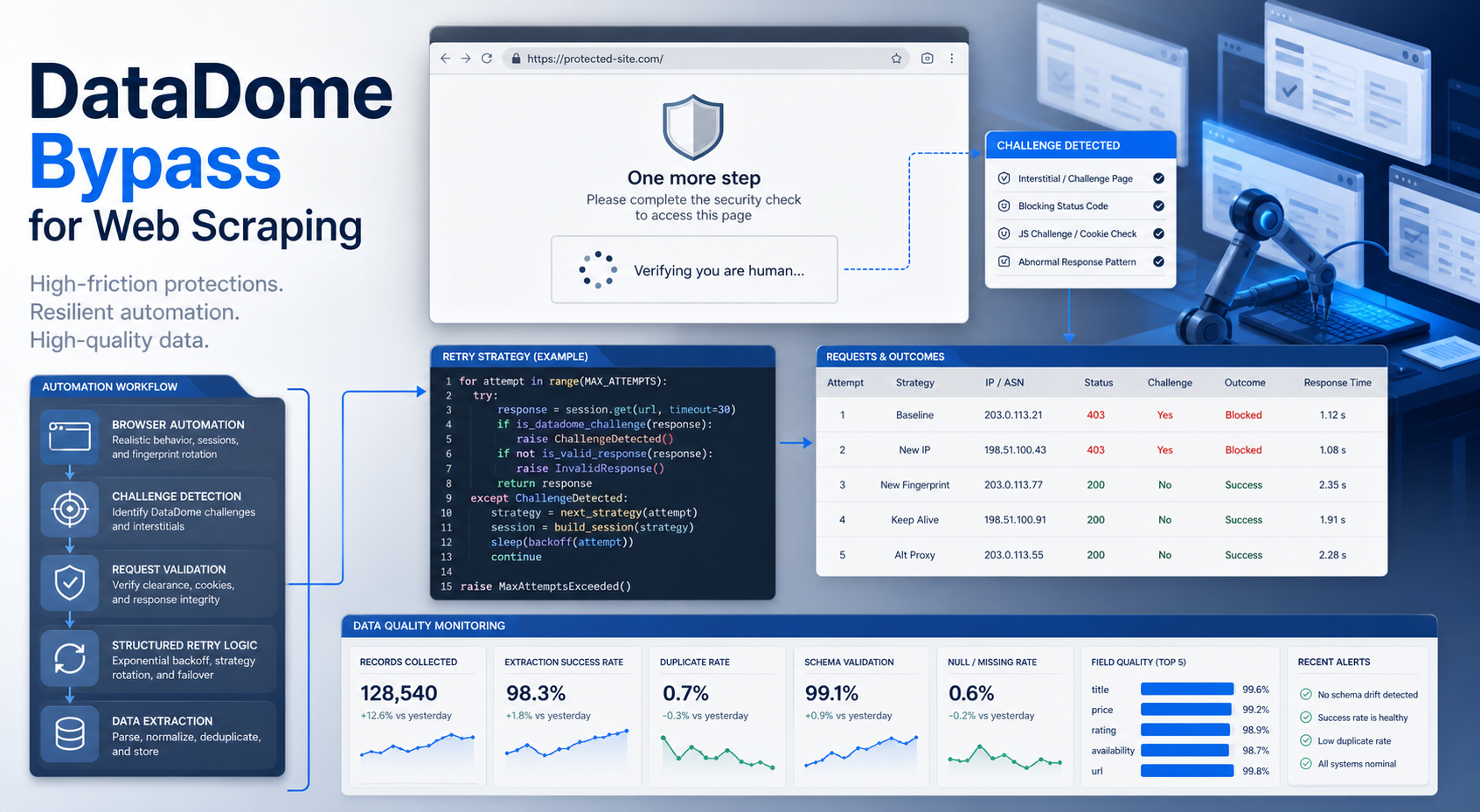
DataDome Bypass for Web Scraping
DataDome Bypass for Web Scraping
View Details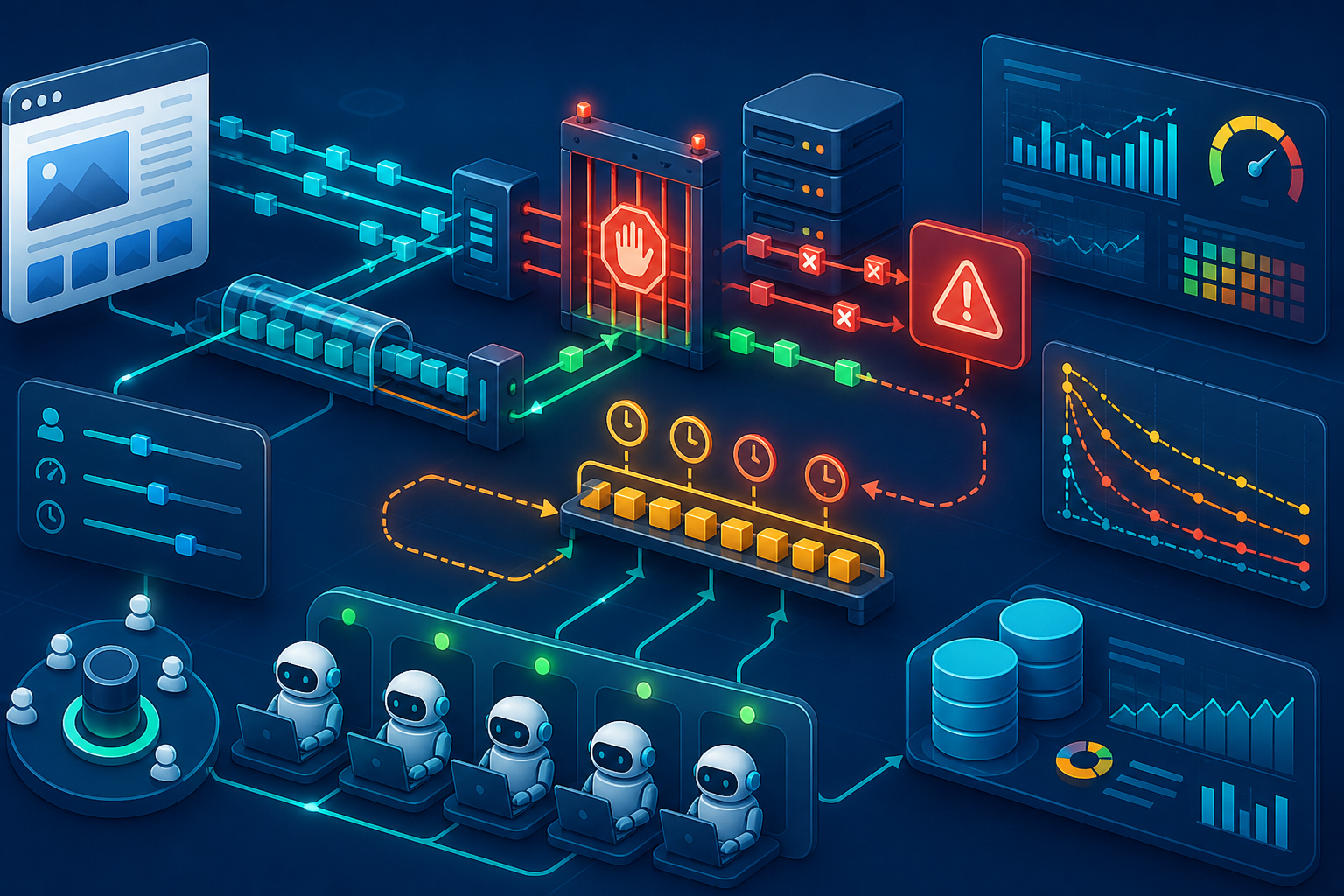
Web Scraping Rate Limiting: How to Handle 429s, Backoff, and Concurrency
Web scraping rate limiting is the engineering discipline of keeping an authorized collection workload inside a target service's acceptable request envelope. When that envelope is exceeded, a server may respond with HTTP 429 Too Many Requests, delay responses, or apply other controls.
View Details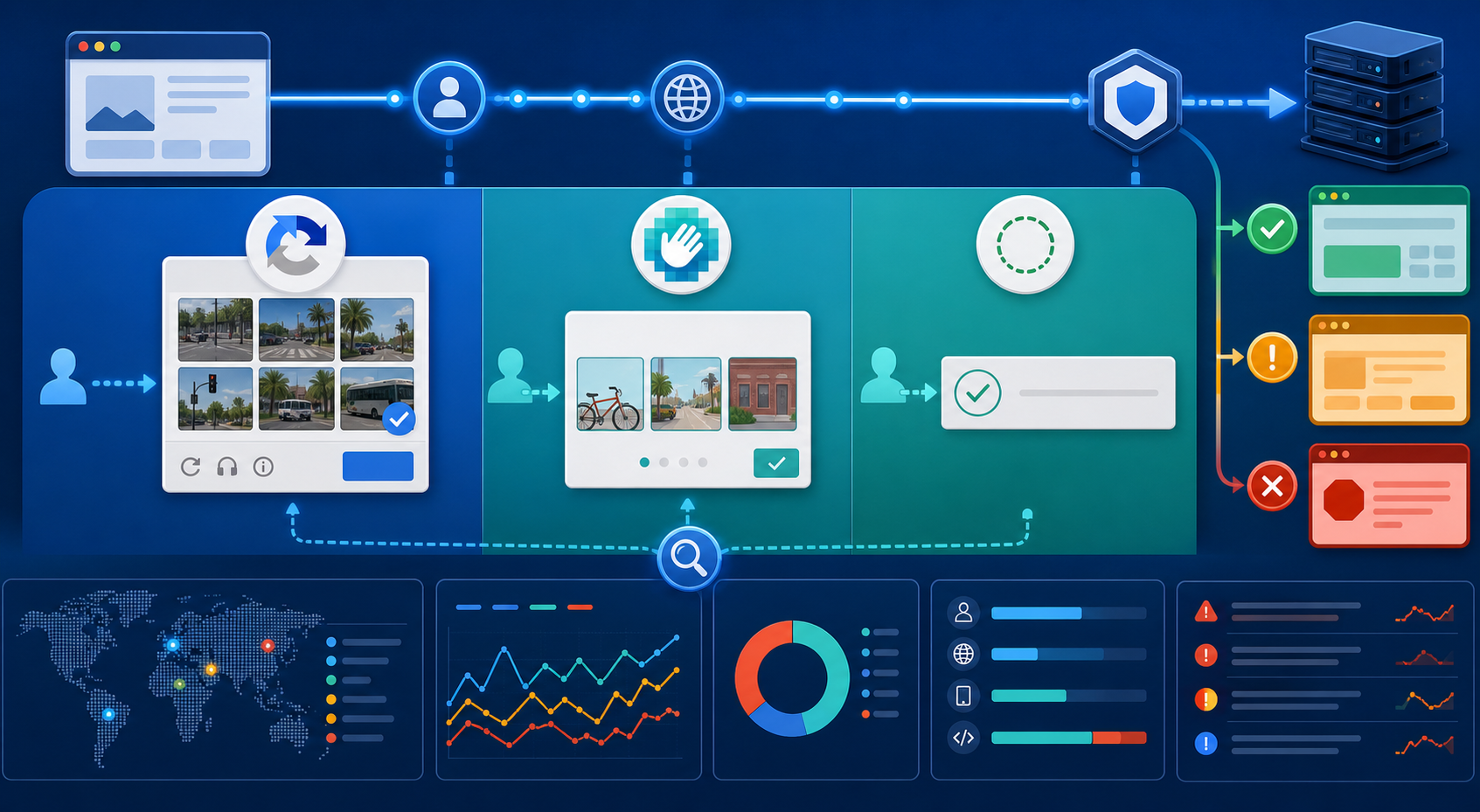
reCAPTCHA vs hCaptcha vs Cloudflare Turnstile: What Scraping Teams Need to Know
If an authorized data-collection workflow suddenly stops at a verification screen, identifying the protection system matters before you change code, browser settings, or proxy infrastructure. reCAPTCHA vs hCaptcha vs Turnstile is not simply a branding comparison. The three systems can expose different browser flows, token models, risk decisions, and failure symptoms.
View Details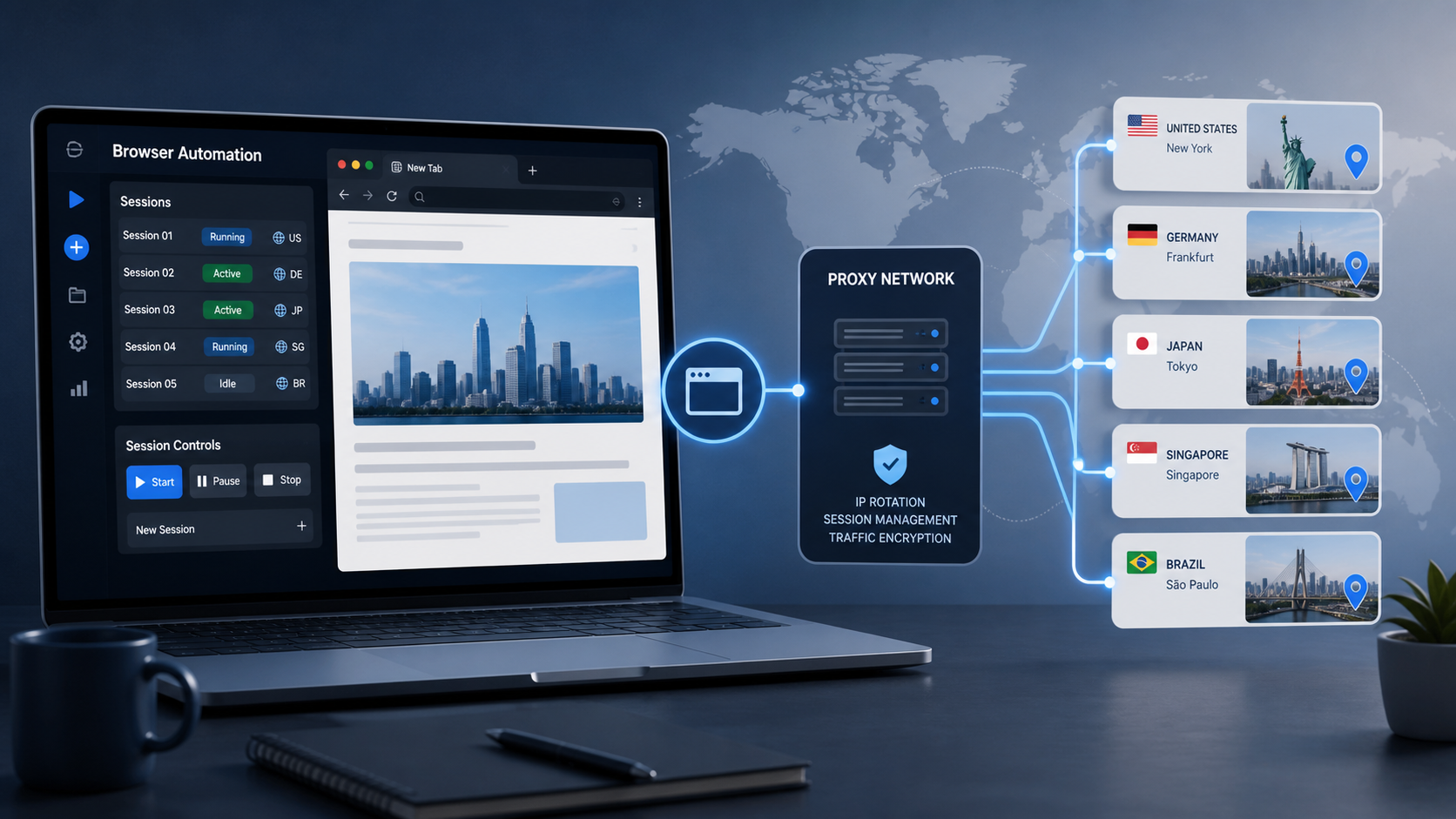
Browser Automation Proxies: IPs, Geo-Targeting, Sessions, and AI Agents
A browser automation proxy belongs to the network layer of Playwright, Selenium, cloud-browser, and AI-agent workflows. It changes how browser traffic is routed and can affect the source IP address, geographic egress, and session continuity seen by a destination site. It does not improve an AI model's reasoning, repair browser logic, or guarantee that a website will accept the session.
View Details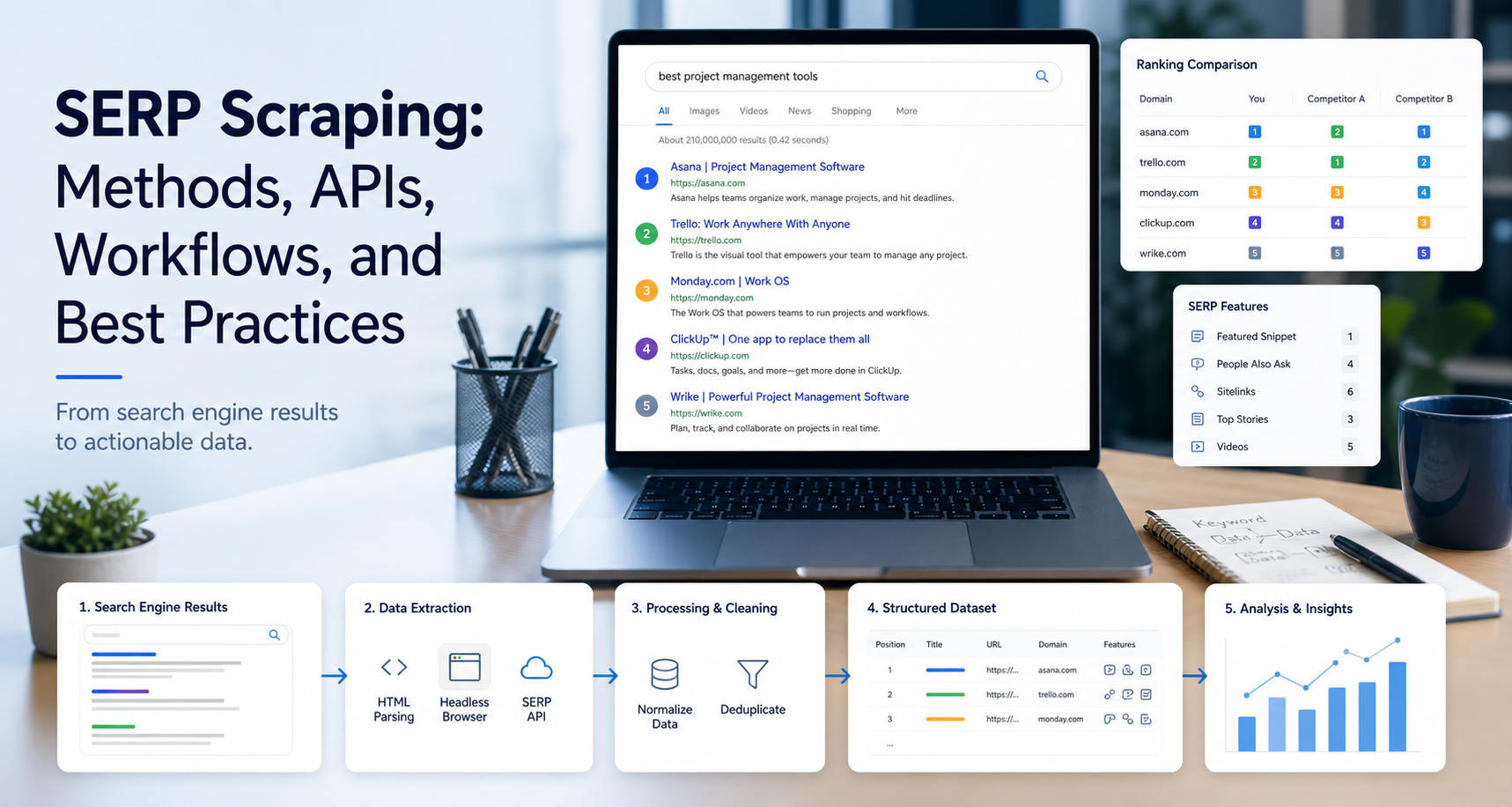
SERP Scraping: Methods, APIs, Workflows, and Best Practices
SERP scraping is the automated collection of information from search engine results pages. A SERP scraper can capture organic rankings, advertisements, featured snippets, People Also Ask questions, local results, shopping listings, images, and other search features, then convert them into structured data for analysis.
View Details