
How to Start a Web Scraping Service with AI on a Small Budget
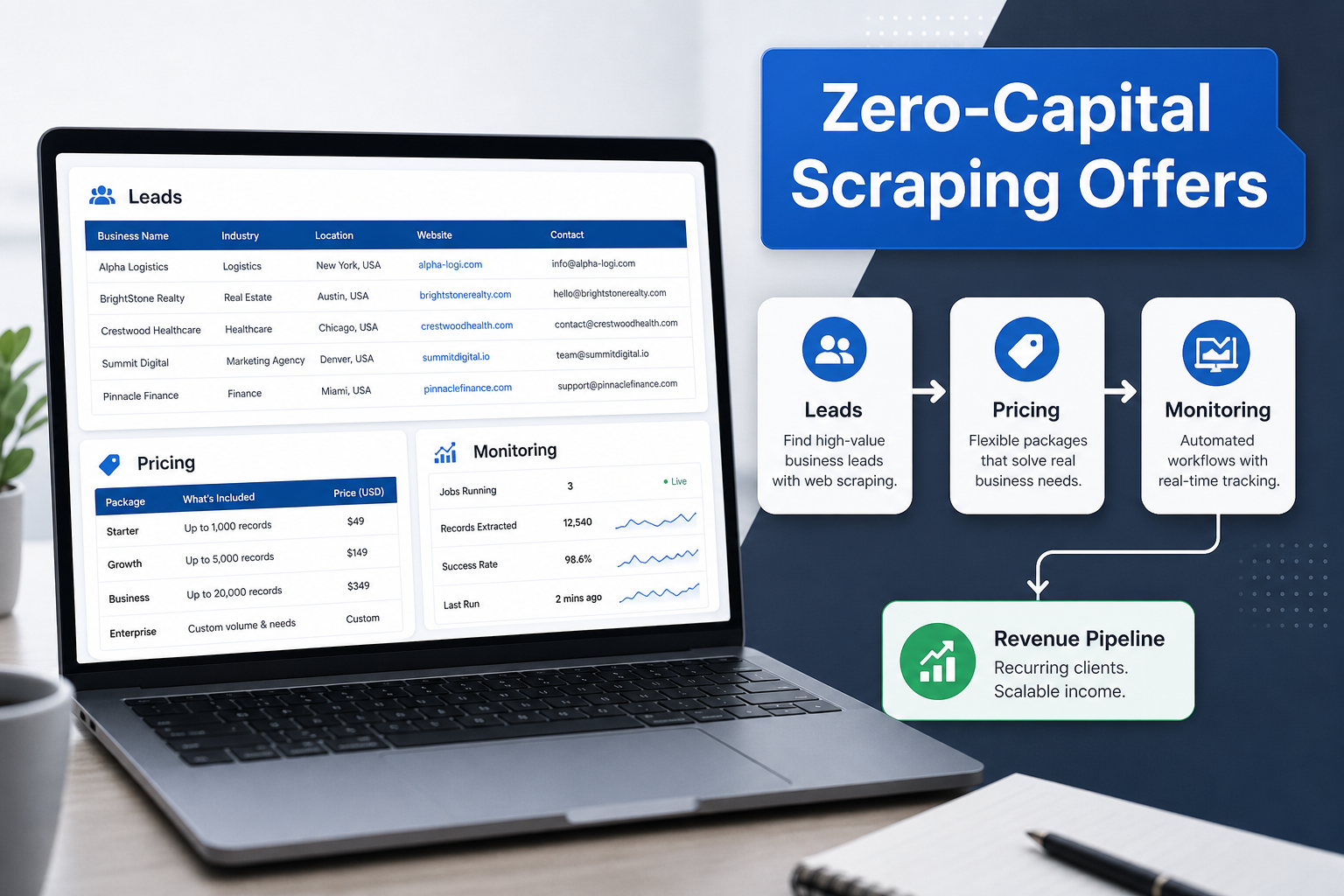
A small-budget scraping service works when you sell outcomes, not raw scripts.
You do not need a heavy stack to start. You need a narrow service offer, a clean delivery workflow, and enough operational discipline to collect public data reliably.
For collection jobs that touch public websites at scale, stable proxy infrastructure helps keep request quality, retries, and geographic targeting predictable.
What Clients Actually Pay For
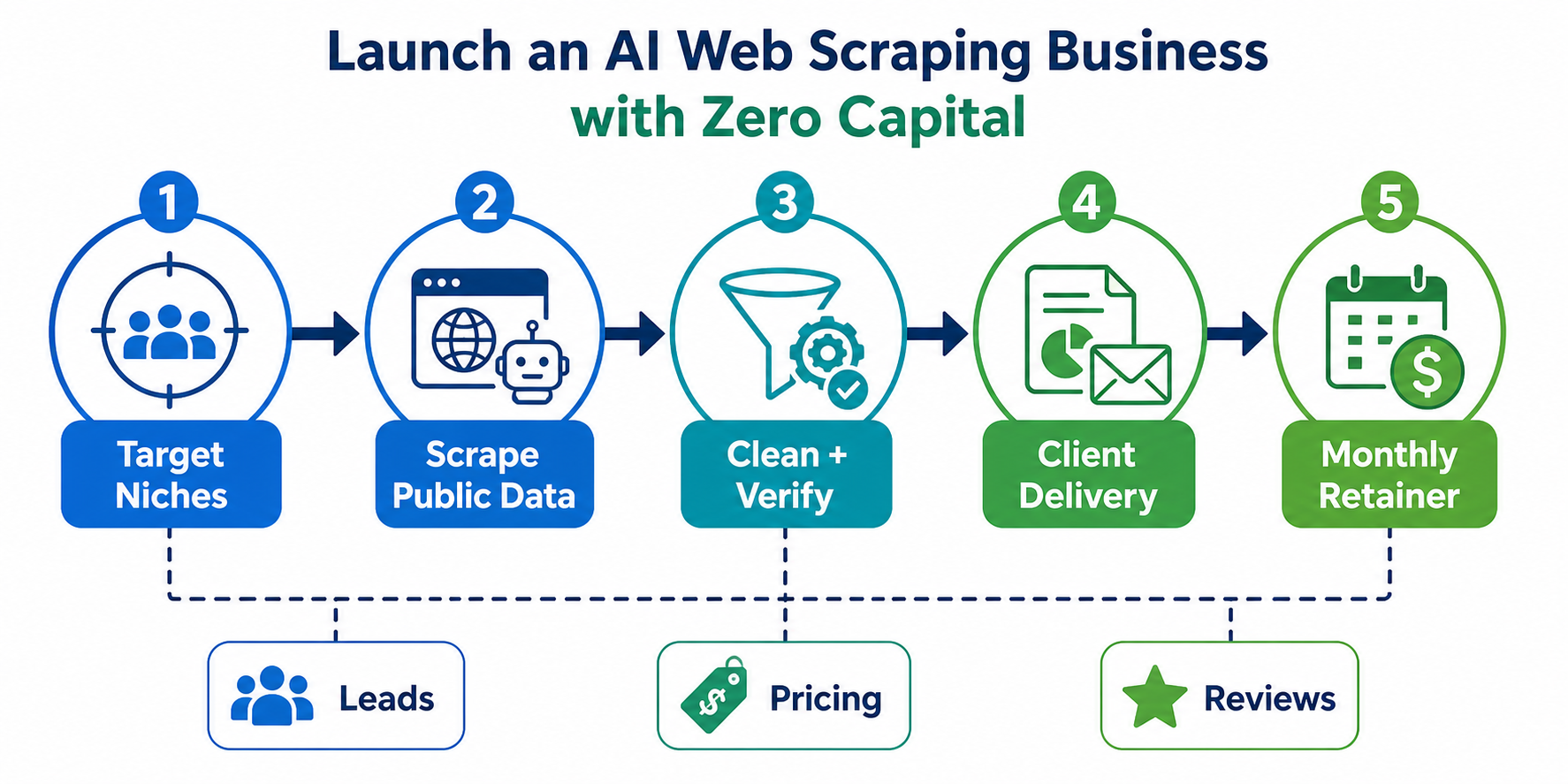
Clients pay for lead lists, price monitoring, structured market research, review aggregation, and repeatable reporting. They do not buy raw scraping code. They buy a useful business deliverable.
- Lead discovery for niche B2B outreach
- Competitor pricing snapshots with change alerts
- Marketplace or directory research with weekly exports
- Review and sentiment rollups for recurring reporting
A Safe Starting Offer
Start with one repeatable package that you can explain in one sentence. For example: collect public company contacts in one region, verify the formatting, and deliver a clean spreadsheet each week.
That is easier to sell than a generic promise to scrape anything. It also gives you a cleaner path to pricing, QA, and support.
A Practical Delivery Workflow
A reliable beginner workflow is narrow: define the target source, apply a small set of filters, collect public fields, clean the output, and ship a readable spreadsheet or CSV.
{
  "target": "public business directory",
  "output": "csv",
  "filters": ["industry", "location", "company_size"],
  "delivery": {
    "frequency": "weekly",
    "format": "google-sheet-and-csv"
  },
  "ops": {
    "rate_limit_per_second": 1,
    "retry_policy": "exponential_backoff",
    "proxy_pool": "residential_only"
  }
}
The important part is not the exact tooling. It is that every run has rate limits, retries, source notes, and a consistent delivery format.
Tools That Keep Upfront Cost Low
Use free or low-cost building blocks first: Python for extraction, browser automation only where needed, and spreadsheet delivery for the client. You can add heavier infrastructure later when volume justifies it.
- Python libraries for HTTP collection and parsing
- A browser runner only for pages that truly require JavaScript
- Simple reporting through CSV or Google Sheets exports
- Static residential proxies or rotating residential proxies when request quality matters
Pricing Without Overcomplication
Begin with one-time dataset delivery or a weekly monitoring retainer. Quote by business value, source difficulty, and delivery frequency instead of vague hourly effort.
- One-time dataset delivery for an initial proof-of-value engagement
- Weekly or daily monitoring retainers for repeated reporting
- Setup fee plus lighter recurring maintenance for stable client accounts
Where Video Guidance Fits
If you are new to service design, watch a workflow example before you build the offer. It is easier to see how niche research, scraping, and client delivery fit together when the service is shown end to end.
Responsible Public Data Collection
Stay on public pages, keep request rates conservative, and document your sources. Respect site load, be explicit about what you collect, and avoid creating a brittle system that only works under ideal conditions.
When volume grows, move from ad hoc retries to a real operational stack with logs, retry windows, and proxy health monitoring.
Scaling the Service
As the workload grows, the work stops being about writing selectors and starts being about reliability. That includes retries, formatting checks, duplicate removal, and region-aware access patterns.
That is the point where LycheeIP proxy infrastructure becomes operationally useful instead of theoretical: the service stays deliverable as request volume and target diversity increase.
Conclusion
A web scraping service is viable when you keep the offer narrow, the deliverable obvious, and the operations disciplined. Start small, prove that a client will pay for the output, then add infrastructure only where it improves delivery quality.
Explore LycheeIP Proxy Infrastructure
Frequently Asked Questions
What is the easiest first scraping service to sell?
Lead discovery, pricing snapshots, and simple market monitoring are usually easier to sell first because the deliverables are easy to understand.
Do I need browser automation for every job?
No. Use it only when the target page requires JavaScript or interaction. Simpler collection paths are cheaper to maintain.
When do proxies become necessary?
They become necessary when target reliability, geographic access, or request distribution starts affecting delivery quality.
Related LycheeIP Guides and Resources

Recommended Articles
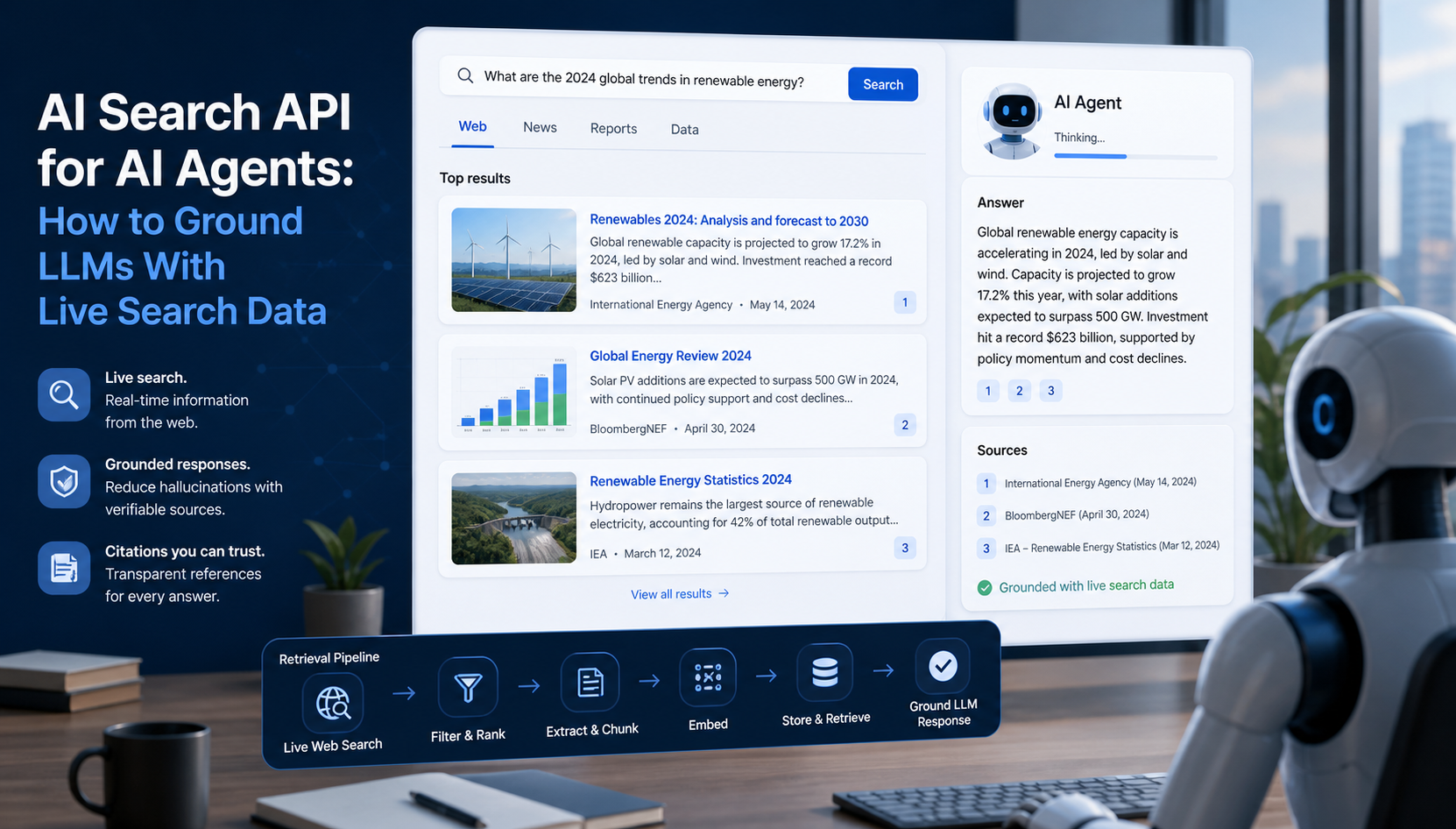
AI Search API for AI Agents: How to Ground LLMs With Live Search Data
An AI search API gives an application or agent programmatic access to current search results. Its most useful role is discovery: the agent can find candidate sources, identify fresh information, and decide what to retrieve next instead of relying only on model memory.
View Details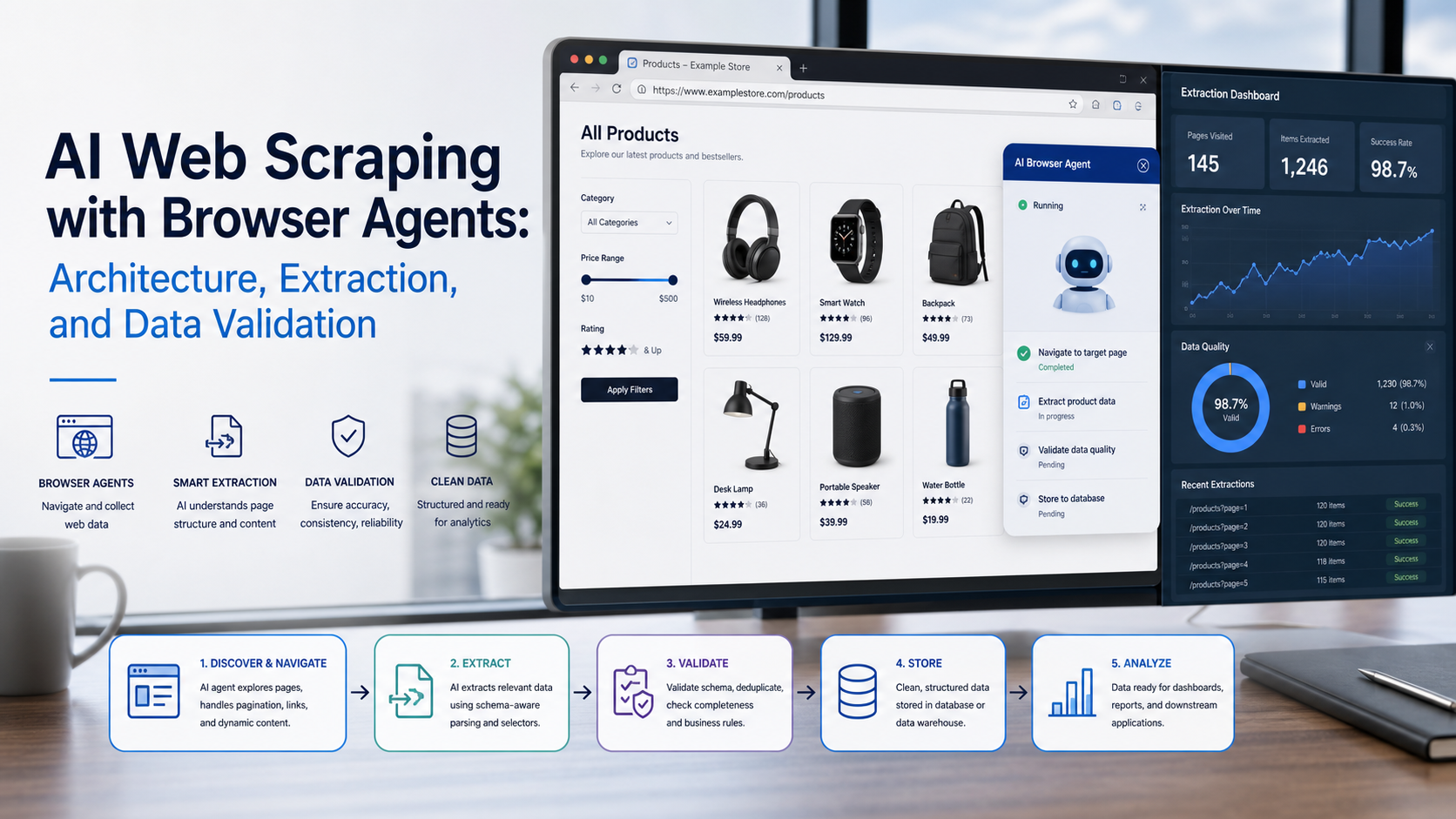
AI Web Scraping with Browser Agents: Architecture, Extraction, and Data Validation
AI web scraping uses AI to help discover, navigate, interpret, or extract information from websites. Browser agents are one implementation option when page interaction, rendering, or layout variation makes a simple scraper too brittle, but the agent should not become the entire data pipeline.
View Details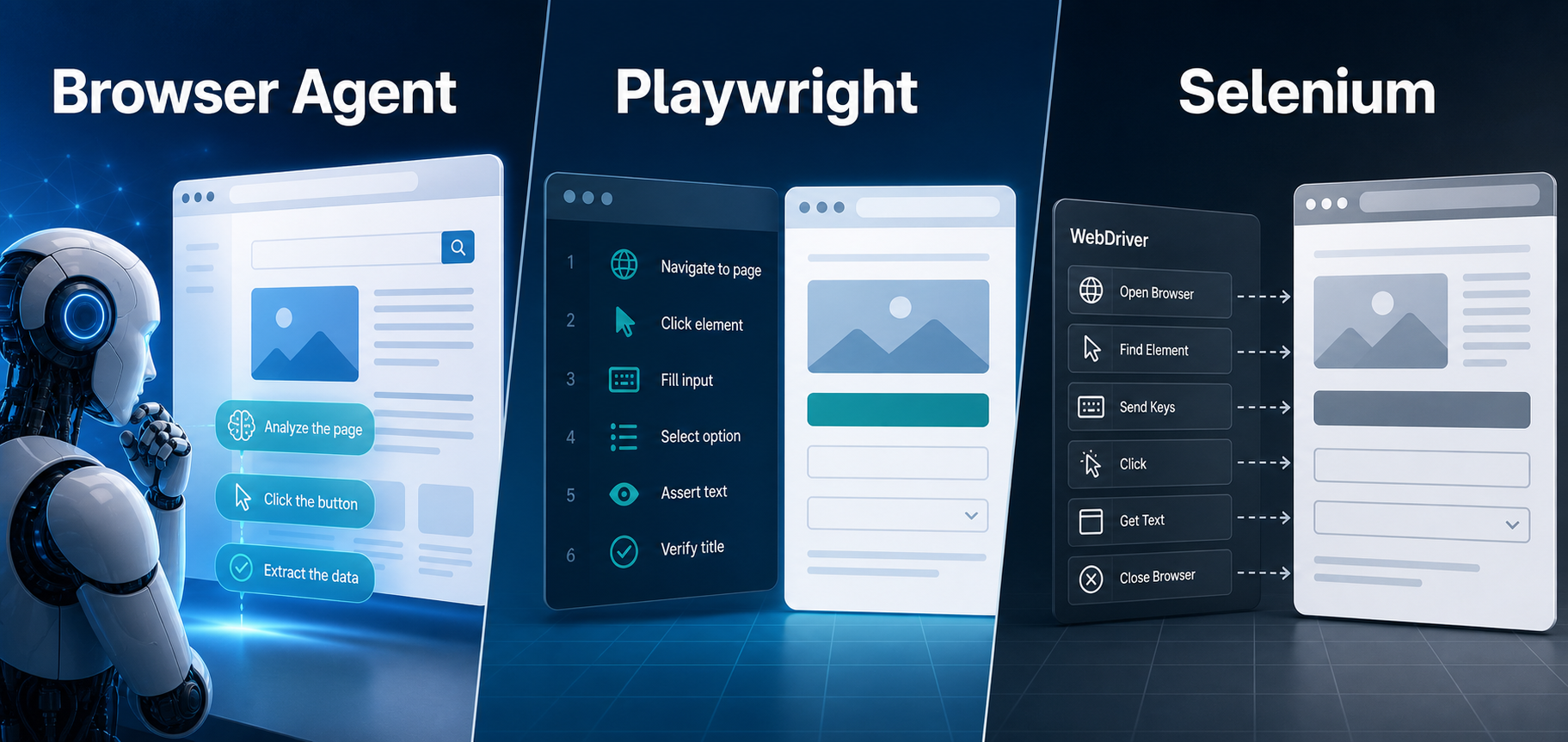
AI Browser Automation: Browser Agents vs Playwright vs Selenium
A browser agent interprets a goal and decides what browser action to take next. Playwright and Selenium can execute explicit, testable browser logic defined by developers. In 2026, however, Playwright also provides official MCP and agent-oriented workflows, so Playwright is no longer just the deterministic alternative to agentic automation. It can also serve as the browser-control layer inside an agent system.
View Details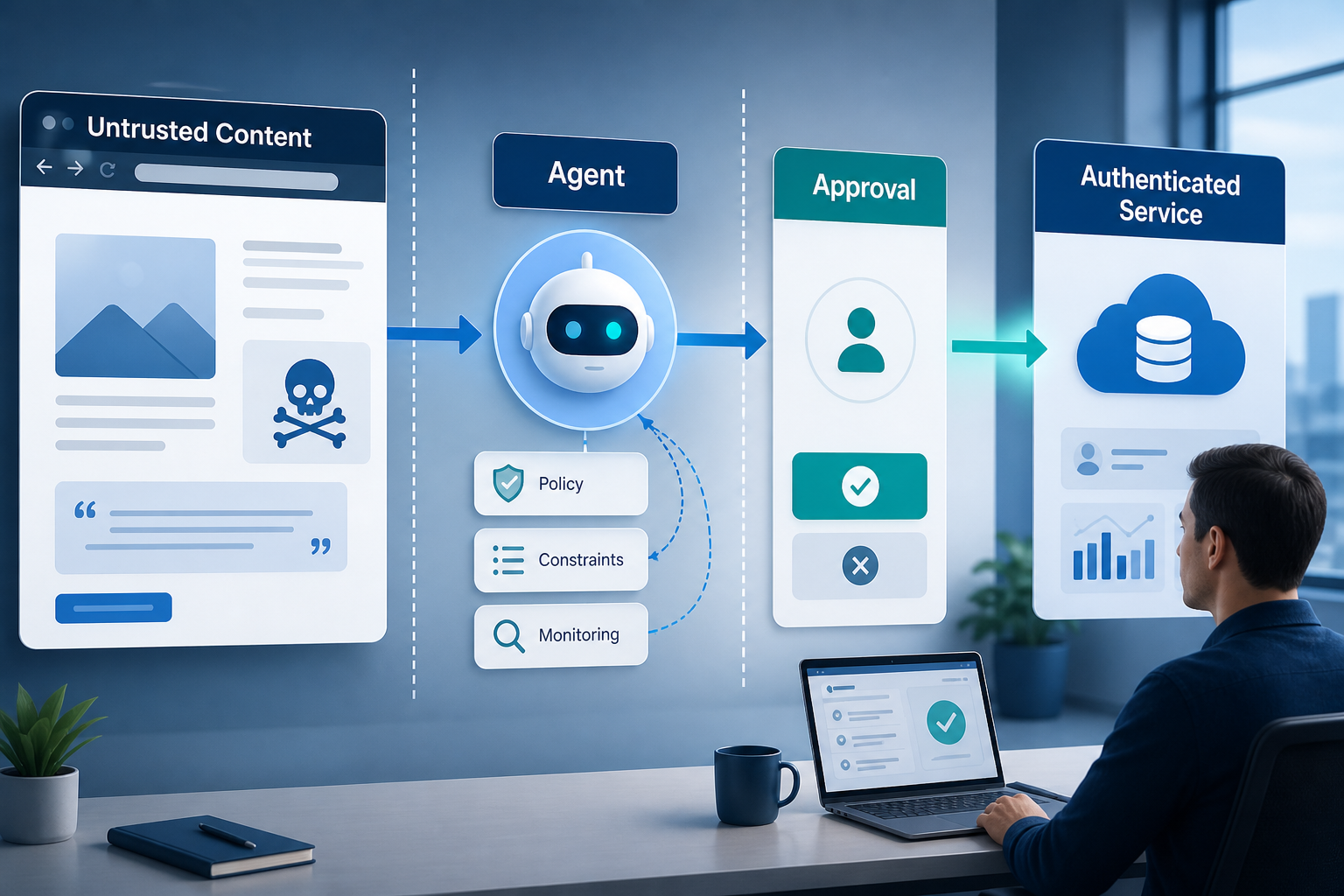
Agentic Browser Security: Prompt Injection, Permissions, and Safe Deployment
That combination creates risks that are different from ordinary browsing and traditional automation. The most important is indirect prompt injection, where hostile instructions hidden in web content attempt to redirect the agent away from the user's goal. Google describes indirect prompt injection as a primary new threat for agentic browsing and has introduced layered defenses that include origin constraints, independent action checks, threat detection, and user confirmation for sensitive actions. Google's Chrome security architecture is a useful reference for how browser-agent defenses are evolving.
View Details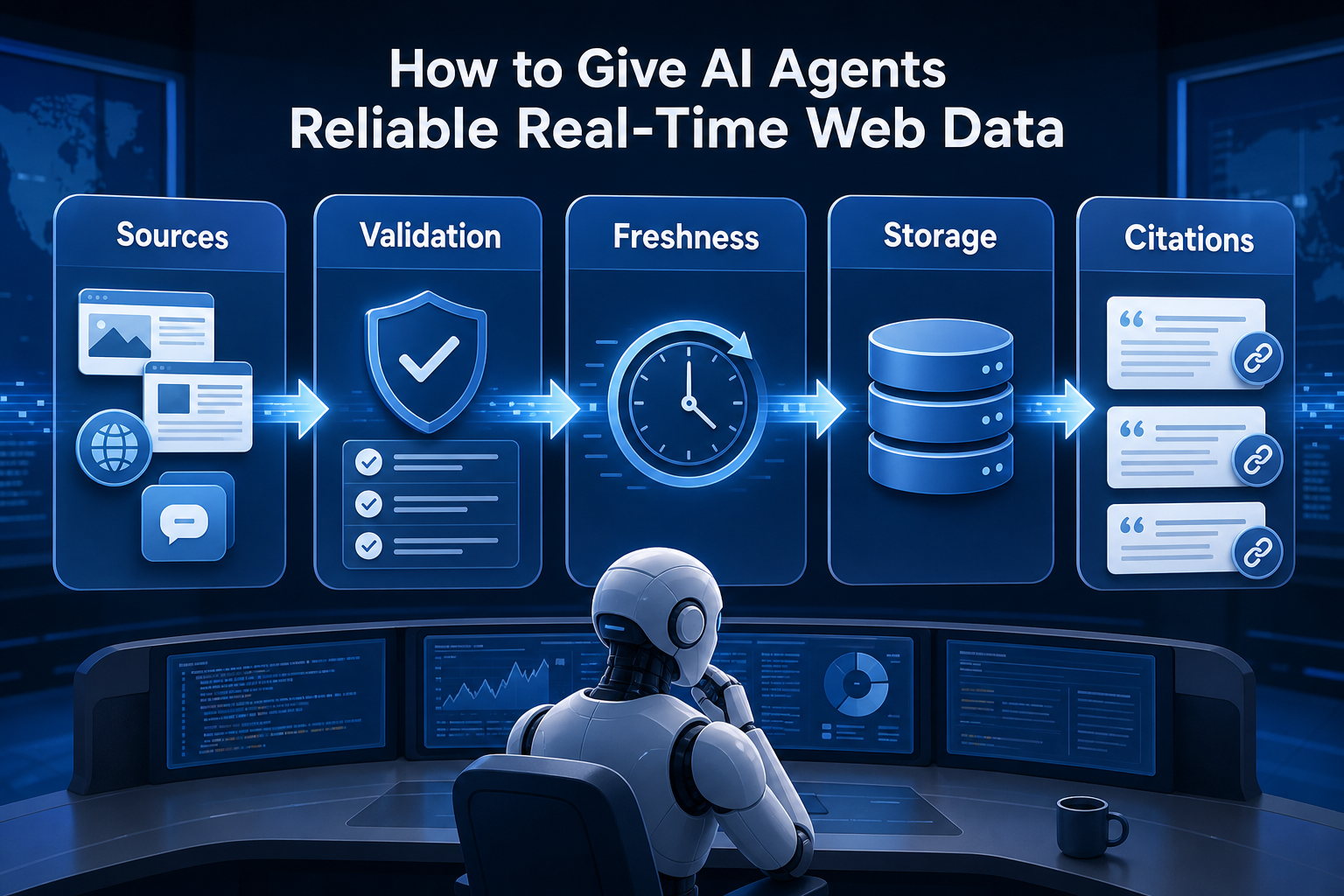
How to Give AI Agents Reliable Real-Time Web Data
A production-ready solution therefore needs more than a web scraper. It needs a web data layer that connects acquisition, validation, storage, retrieval, security, and observability. This guide explains how to design that layer.
View Details