
How to Hide Your IP Address in 2025: 5 Safe & Legit Ways
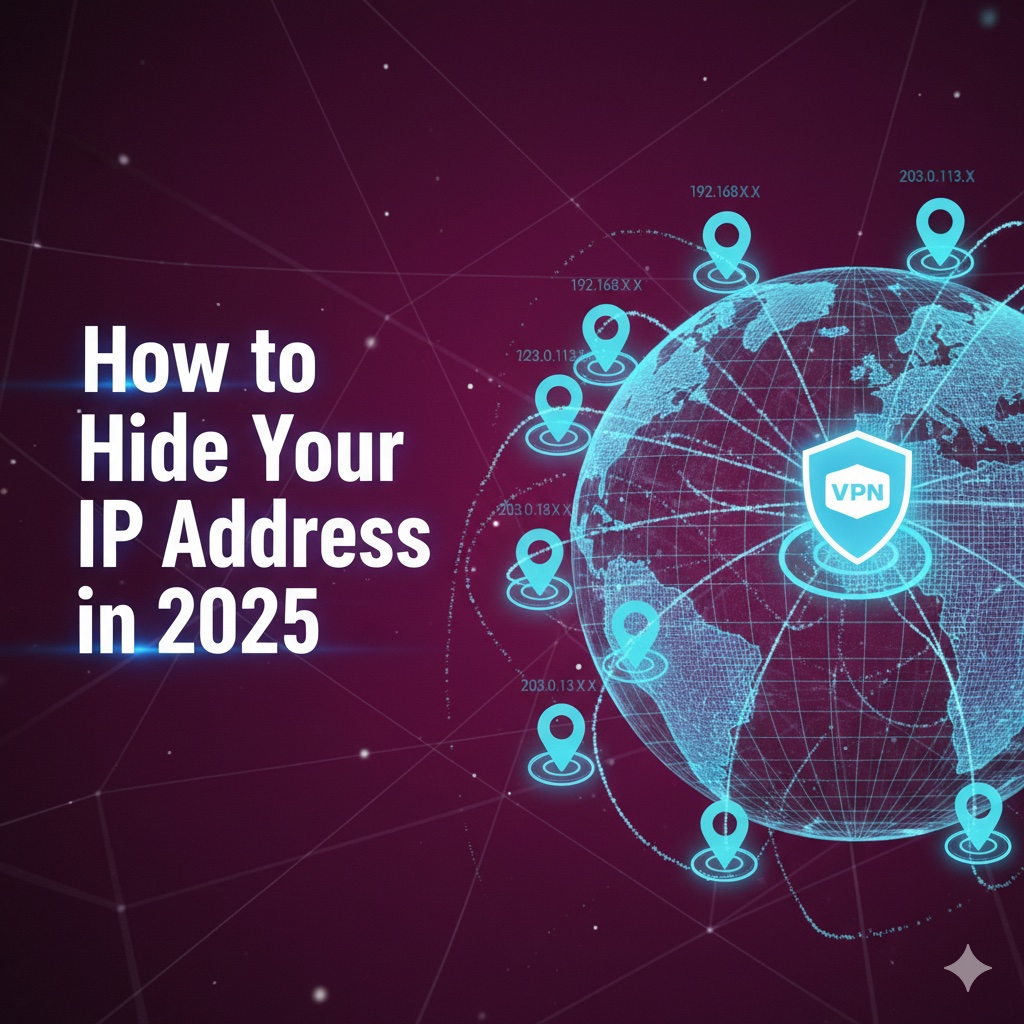
Every device connected to the internet uses an IP address. That number lets websites and apps know where to send data, just like a mailing address for packets. The trade-off is visibility: your IP can hint at your approximate location, internet provider, and more. In this guide, you’ll learn what an IP address reveals and five safe, legitimate ways to hide it, plus which option fits business use cases such as QA, ad verification, price monitoring, and compliant data collection.
At LycheeIP, we believe that understanding and managing your digital identity starts with your IP address. Every device connected to the internet has one, acting like a digital mailing address that tells websites and apps where to send data. While essential for connectivity, this visibility means your IP can also hint at your approximate location and internet provider.
In this expert guide, we'll explain what an IP address reveals and walk you through five safe, legitimate ways to hide it. More importantly, we'll help you understand which option is best suited for professional use cases like quality assurance, ad verification, and compliant data collection.
Use LycheeIP's High Performance Network Now
What Is an IP Address?
An Internet Protocol (IP) address is a unique numeric label assigned to your device by your Internet Service Provider (ISP) or local network. It is the fundamental component that allows your device to communicate with other computers and servers online.
- IPv4: The long-standing format (e.g., 203.0.113.5).
- IPv6: The newer format (e.g., 2001:db8::1), which provides a much larger address space for the growing number of internet-connected devices.
Think of it as the return address on a letter; without it, the internet wouldn’t know where to send the data packets you request.
What Your IP Address Can Reveal
While your IP address doesn’t expose your name or exact street address, it can often indicate:
- Your Internet Service Provider (ISP).
- Your approximate geographic location (country, region, and city).
- The hostname associated with your IP.
When combined with other data like browser cookies and account logins, this information can be used to build a profile of your activity or to block/allow requests from your device.
5 Ways to Hide Your IP Address
Given this visibility, both individuals and businesses often need ways to manage their public IP. Each of the following methods involves a trade-off between anonymity, speed, and convenience.
1. Use a Proxy (Residential, Mobile, or Datacenter)
A proxy server acts as an intermediary between you and the websites you visit. The website sees the proxy's IP address, not yours. For business use, this is the most flexible and scalable method.
- Residential and Mobile proxies use real consumer IP addresses, making them ideal for geo-testing and compliance checks where you need to appear as a normal user.
- Datacenter proxies are faster and cheaper but can be easier for some sophisticated websites to identify.
- Best for: Geo-testing, ad verification, brand QA, and compliant web automation at scale.
- Pros: Granular geo-targeting, rotating IP pools, precise session control.
- Cons: Requires some configuration; traffic is not encrypted by default (always use an HTTPS connection).
2. Use a VPN (Virtual Private Network)
A VPN creates an encrypted tunnel for all your device's internet traffic, routing it through a server in a location of your choice. Websites will see the VPN server's IP, not your real one.
- Best for: General online privacy and securing your connection on public Wi-Fi.
- Pros: Encrypts all your traffic, very easy to use via simple apps.
- Cons: The shared IPs of popular VPN servers can sometimes be flagged or blocked; less flexible and scalable than proxies for automation tasks.
3. Use the Tor Browser
Tor provides the highest level of anonymity by routing your traffic through multiple volunteer-run relays, making it extremely difficult to trace the origin.
- Best for: High-anonymity browsing where speed is not a critical factor.
- Pros: Multi-layered privacy; free to use.
- Cons: It is very slow and therefore not suitable for media streaming or large-scale automation. Some websites also block traffic from known Tor exit nodes.
4. Switch to Mobile Data
A simple way to get a new IP address is to turn off your Wi-Fi and switch to your phone's cellular data connection. This assigns you a different, carrier-provided IP.
- Best for: A quick IP refresh if your home IP has been temporarily rate-limited.
- Pros: Instant and easy to do.
- Cons: Limited by your mobile data plan; does not encrypt your traffic.
5. Use Public Wi-Fi (With Caution)
Connecting to the internet at a café, airport, or hotel will mask your home IP address, but it comes with significant security risks.
- Best for: Occasional use when no other option is available.
- Pros: Free and provides a different IP.
- Cons: Highly insecure unless paired with a VPN; inconsistent speeds and not suitable for business use.
Use LycheeIP's High Performance Network Now
Methods Compared: Which Tool is Right for You?
When making a decision, the choice often comes down to proxies vs. VPNs vs. Tor, as the other methods are more situational. Here's how our experts see the head-to-head comparison:
- For Overall Privacy and Encryption, the VPN is the clear winner. Its primary purpose is to encrypt all of your device's traffic, making it the best choice for securing your connection on untrusted networks.
- For Scalability and Business Use Cases, Proxies are far superior. They offer granular control over location (down to the city level), session type (static vs. rotating), and IP type (residential, mobile, datacenter), which is essential for professional testing and data collection.
- For Maximum Anonymity, Tor provides the strongest protection by design. However, this comes at a significant cost to speed, making it impractical for most day-to-day or business activities.
Should Businesses Hide Their IPs?
The need to hide an IP address depends entirely on the workflow.
- For inbound traffic (customers visiting your website), businesses typically use a CDN or reverse proxy. This is done for performance and security, as it masks the origin server's IP.
- For outbound tasks like QA testing, ad verification, or compliant data collection—teams almost always use Residential or Mobile proxies. This allows them to view their own or competitor websites exactly as a real user would in a specific location, without exposing their office IPs to being blocked.
Quick Setup: Using LycheeIP Proxies
For business users who need the flexibility and control of proxies, getting started is simple. Here are a few examples using LycheeIP.
- For Browsers (System-wide Setup):macOS: System Settings → Network → Details → Proxies.Windows: Settings → Network & Internet → Proxy.In each, enable the HTTP(S) Proxy and enter the host, port, and authentication details provided by LycheeIP.
For Code (Python Example):Pythonimport requests proxies = { "http": "http://USERNAME:PASSWORD@PROXY_HOST:PROXY_PORT", "https": "http://USERNAME:PASSWORD@PROXY_HOST:PROXY_PORT", } # This request will be routed through your LycheeIP proxy response = requests.get("https://httpbin.org/ip", proxies=proxies) print(response.text)
Use LycheeIP's High Performance Network Now
Frequently Asked Questions
Is it possible to hide my IP without a VPN?
Yes. Proxies are the most flexible alternative, especially for business use cases that require rotation and specific geo-targeting. Tor also hides your IP but is much slower.
Can I hide my IP address on my phone?
Yes. You can use a mobile VPN app, switch to your cellular data connection, or configure a proxy in your device’s Wi-Fi settings.
Can I hide my IP from my Internet Provider (ISP)?
Not completely. Your ISP assigns you an IP address, so they will always know your connection's origin. However, using a VPN prevents your ISP from seeing the specific websites you visit; they will only see encrypted traffic going to the VPN server.
Is using a proxy or VPN legal?
Yes, in most countries, the tools themselves are legal. Legality depends on how you use them. Always comply with local laws, website terms of service, and privacy regulations.

Recommended Articles
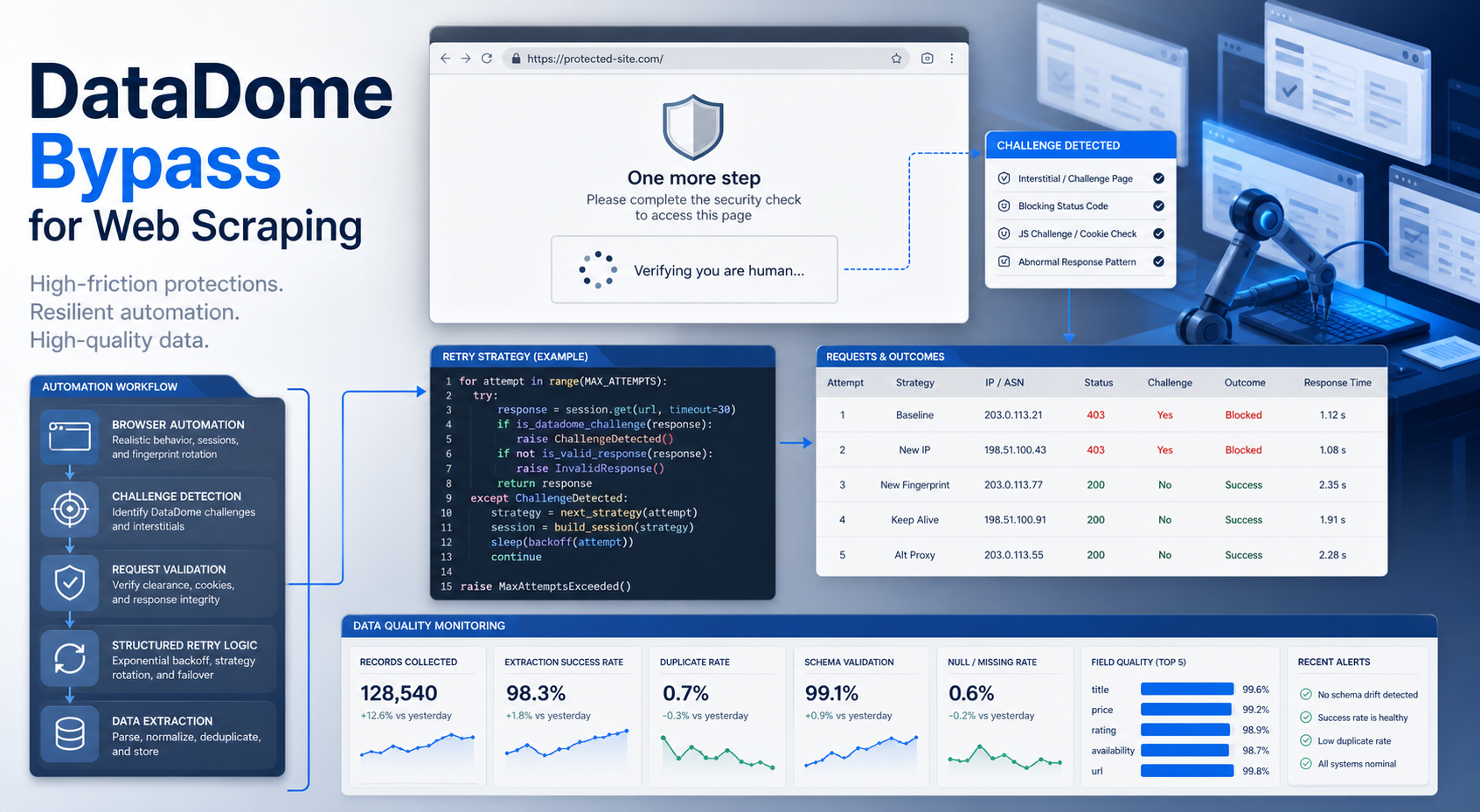
DataDome Bypass for Web Scraping
DataDome Bypass for Web Scraping
View Details
Web Scraping Rate Limiting: How to Handle 429s, Backoff, and Concurrency
Web scraping rate limiting is the engineering discipline of keeping an authorized collection workload inside a target service's acceptable request envelope. When that envelope is exceeded, a server may respond with HTTP 429 Too Many Requests, delay responses, or apply other controls.
View Details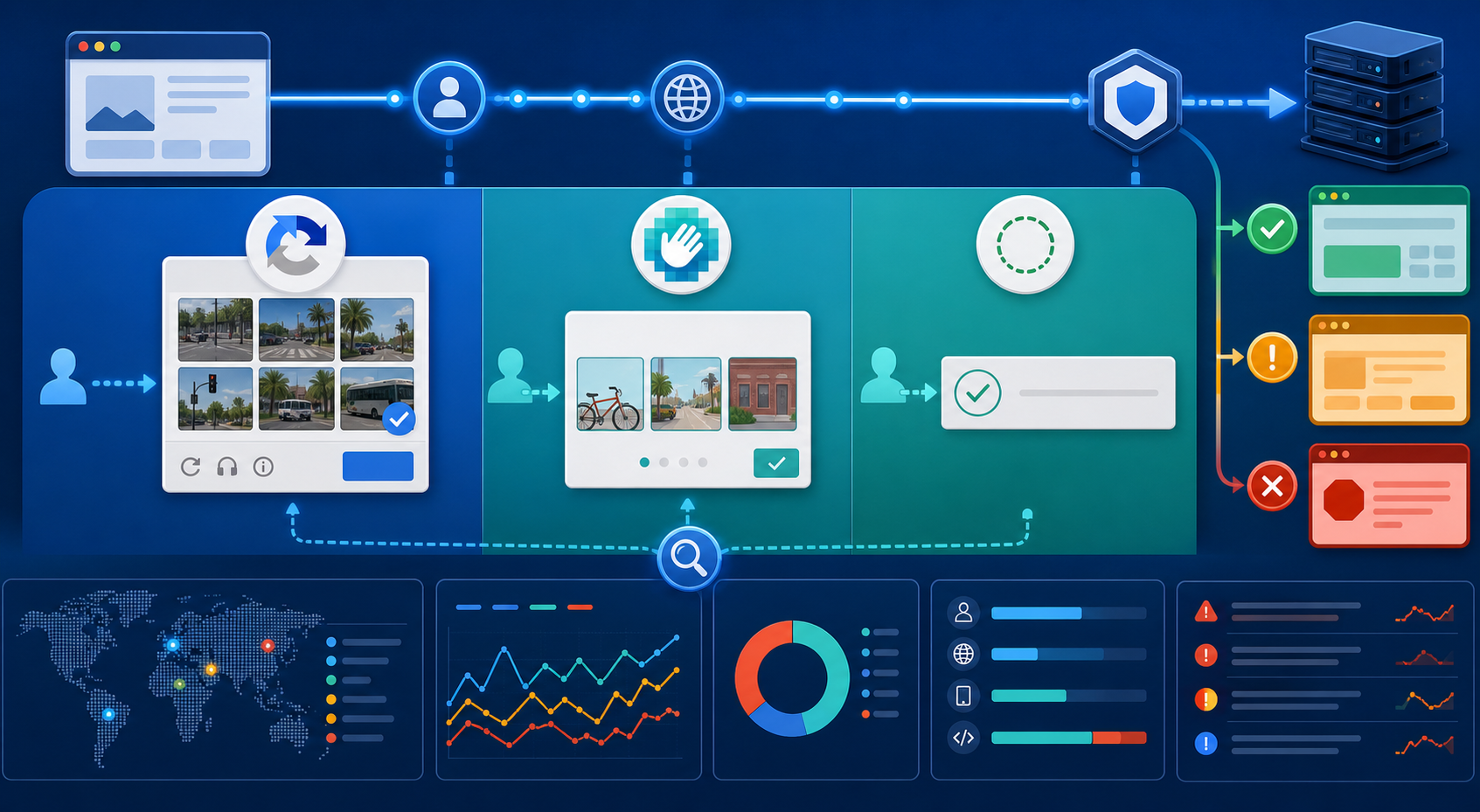
reCAPTCHA vs hCaptcha vs Cloudflare Turnstile: What Scraping Teams Need to Know
If an authorized data-collection workflow suddenly stops at a verification screen, identifying the protection system matters before you change code, browser settings, or proxy infrastructure. reCAPTCHA vs hCaptcha vs Turnstile is not simply a branding comparison. The three systems can expose different browser flows, token models, risk decisions, and failure symptoms.
View Details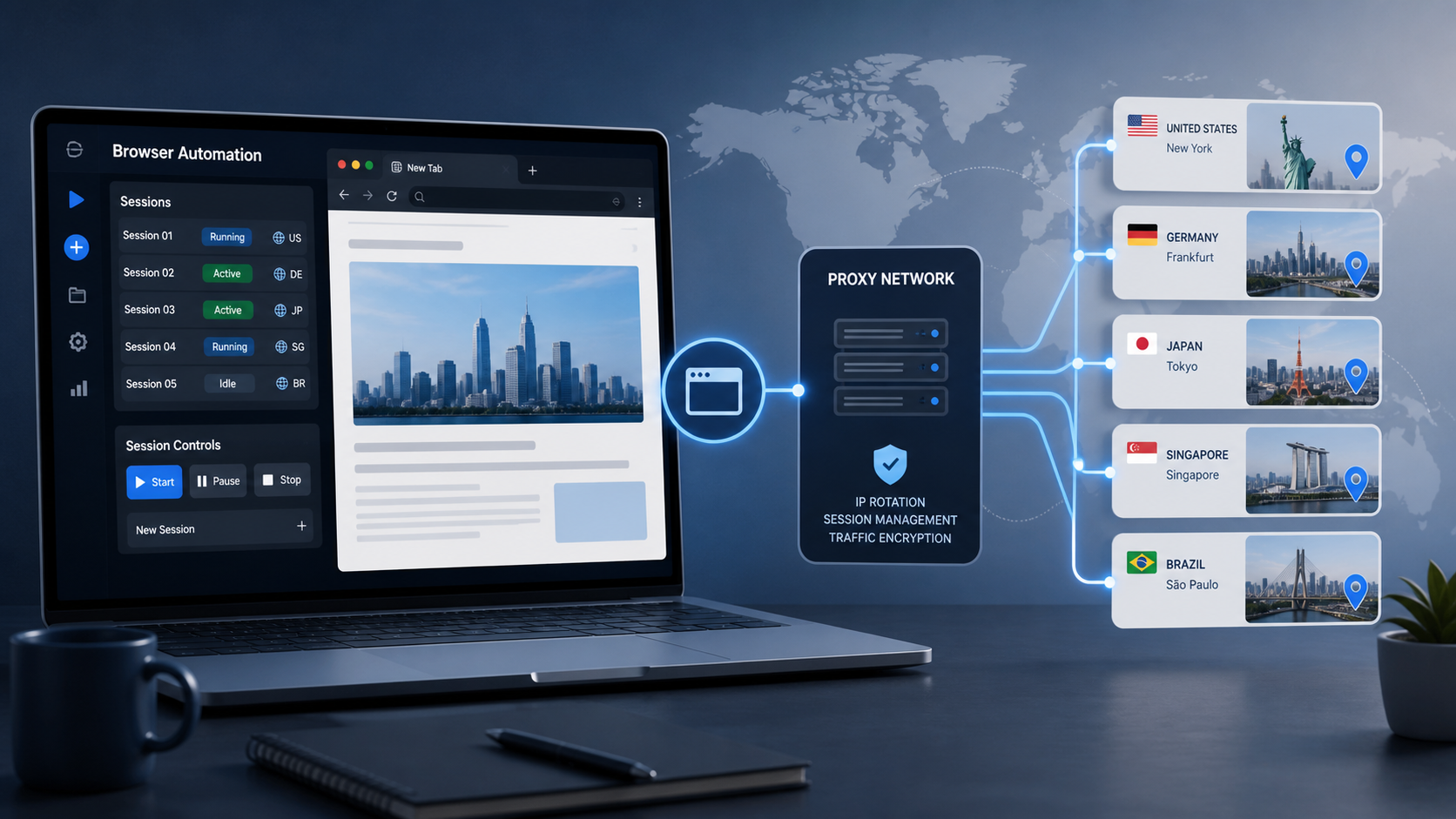
Browser Automation Proxies: IPs, Geo-Targeting, Sessions, and AI Agents
A browser automation proxy belongs to the network layer of Playwright, Selenium, cloud-browser, and AI-agent workflows. It changes how browser traffic is routed and can affect the source IP address, geographic egress, and session continuity seen by a destination site. It does not improve an AI model's reasoning, repair browser logic, or guarantee that a website will accept the session.
View Details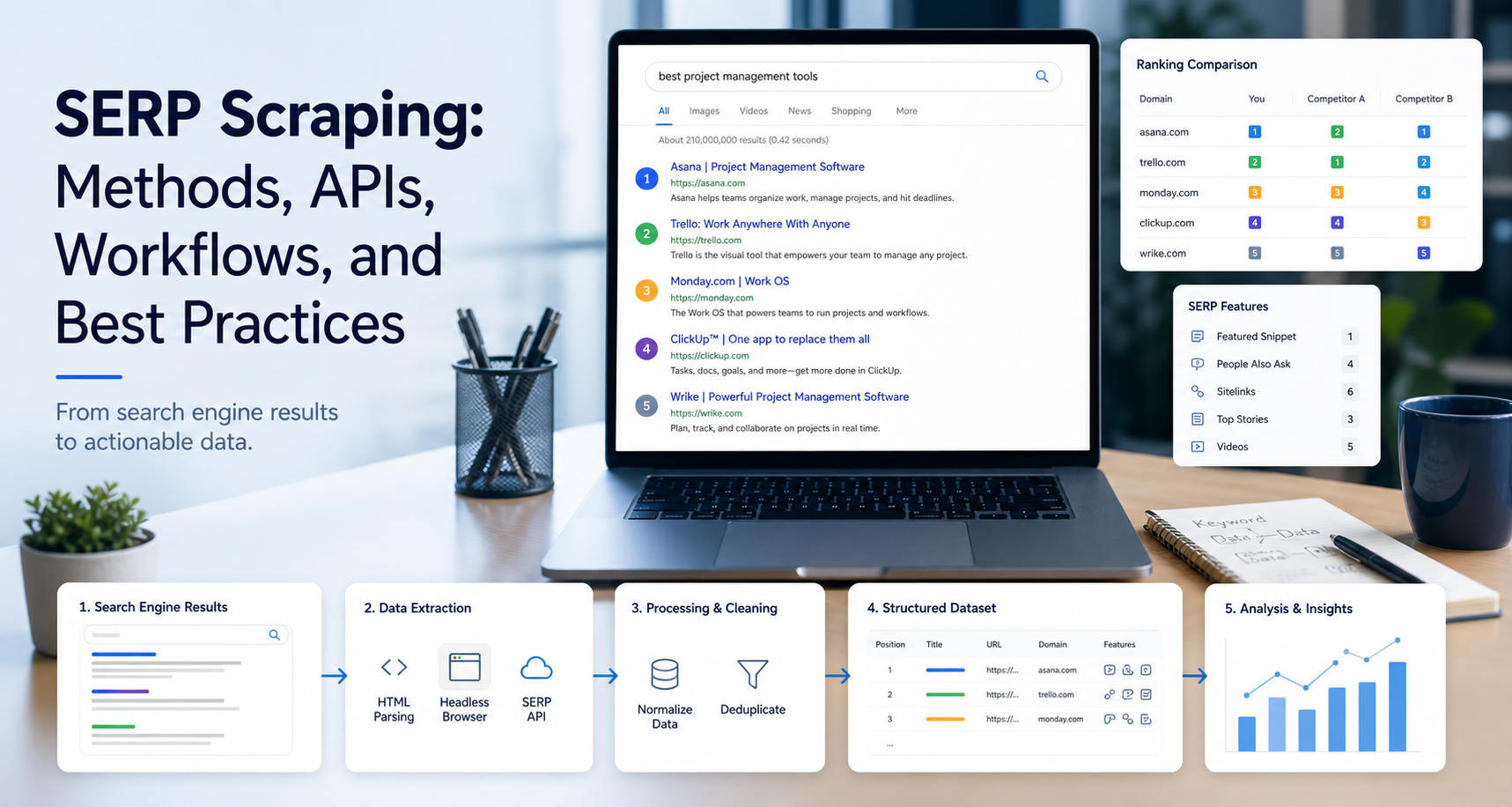
SERP Scraping: Methods, APIs, Workflows, and Best Practices
SERP scraping is the automated collection of information from search engine results pages. A SERP scraper can capture organic rankings, advertisements, featured snippets, People Also Ask questions, local results, shopping listings, images, and other search features, then convert them into structured data for analysis.
View Details