
Why Websites Trust 4G and 5G Mobile Proxies
How 4G & 5G Mobile Proxies Actually Work: CGNAT, Carrier NAT, and Trust Signals
To most users, a mobile proxy feels like a "cheat code" for web scraping. You plug it in, and suddenly, blocks vanish. But how do mobile proxies actually work under the hood? It isn’t magic, it’s a byproduct of how cellular carriers manage limited IP addresses.
Understanding the mechanics of CGNAT mobile proxies and carrier infrastructure is the only way to build a resilient automation stack in 2026.
Get transparent proxies with LycheeIP
What is a mobile proxy, in plain English?
A mobile proxy is an intermediary server that routes your internet traffic through a cellular network (3G, 4G, or 5G). When the target website receives your request, it sees a mobile carrier’s IP address instead of your server’s IP.
What you rent (a port) vs. what changes (the exit IP)
When you buy a mobile proxy, you usually rent a port (a static entry point like us.proxy-provider.com:8080). Your software stays connected to this port, but the provider frequently swaps the exit IP (the address the website sees). To configure HTTP/SOCKS5 correctly, you must understand that the "address" in your code doesn't change, even when the IP does.
Why “mobile” is about the carrier network, not your device
A "mobile" proxy doesn't necessarily run on a phone. It simply means the IP belongs to a mobile carrier (like AT&T or Verizon). The physical hardware could be a smartphone in a cradle, a 4G dongle in a server rack, or a direct enterprise line into a carrier’s gateway.
How does CGNAT change how websites treat mobile IPs?
The secret sauce of mobile proxies is Carrier-Grade NAT (CGNAT). Because there aren't enough IPv4 addresses for every smartphone on earth, carriers use Carrier NAT to assign one public IP to thousands of different users simultaneously.
Why shared IP ranges reduce aggressive blocking
Because thousands of real people share one IP, websites like Google or Instagram cannot easily block that IP. If they did, they would accidentally block thousands of legitimate, paying customers along with your one bot. This creates a "shield of legitimacy" for your traffic.
What “collateral damage risk” means for platforms
Platforms face a "collateral damage" dilemma. If an IP at a Starbucks (residential) looks suspicious, they might block it. If an IP belonging to a T-Mobile tower in NYC (mobile) looks suspicious, they usually just issue a CAPTCHA. The mobile IP reputation is protected by the sheer volume of human traffic surrounding your bot.
What are the common mobile proxy architectures providers use?
Not all 4G mobile proxies are built the same. The architecture determines your speed and stability.
SIM/modem bank model vs. carrier gateway model
· SIM/Modem Banks: The provider has racks of physical USB modems or phones with SIM cards. When you request a rotation, the modem literally disconnects and reconnects to the tower. This is authentic but can be slower.
· Carrier Gateway: The provider has a direct virtual connection to the carrier's core network. This is often faster and supports higher concurrency but can sometimes feel less "organic" if not managed correctly.
What “port contention” is and why it matters
In cheaper "shared" plans, multiple users might be using the same physical modem. This is called port contention. If another user is streaming 4K video on "your" modem, your scraping speed will crawl, regardless of whether it's a 5G mobile proxy or 4G.
Get transparent proxies with LycheeIP
What do 4G vs. 5G labels actually imply for proxies?
In 2026, the "5G" label is often more about marketing than performance.
· Radio Speed vs. Response Time: 5G has massive bandwidth, but proxies involve extra "hops" (your server → proxy server → mobile network → website). These hops often negate the 5G speed advantage.
· Stability: In many regions, 4G is actually more stable because the towers have better "penetration" and fewer hand-off issues than high-frequency 5G. Test 4G vs 5G performance correctly before committing to a premium 5G plan.
How LycheeIP handles high-trust infrastructure
At LycheeIP, we bridge the gap between "raw" mobile trust and developer-grade stability.
· Carrier-Direct Sourcing: We prioritize clean IP pools that aren't over-saturated by millions of "free" users.
· Near Real-Time Stats: Our API allows you to monitor exactly when an IP rotates, ensuring you don't lose session data.
· 6-Month IP Cooling: We ensure every IP in our dynamic pools has been "inactive" for at least half a year before it hits your port, maximizing mobile IP reputation.
· Global Diversity: With coverage in 200+ regions, we provide the geo-granularity needed for complex ad verification and scraping jobs.
What do mobile proxies NOT fix?
A mobile IP is not a "get out of jail free" card. Even with mobile proxy rotation, you can be caught if your other signals are "leaky."
Fingerprints, cookies, and velocity
Websites look at more than just your IP. They check:
· Canvas Fingerprinting: Does your browser "draw" like a bot?
· WebRTC Leaks: Is your real IP leaking through the browser?
· Velocity: Are you performing 500 actions per minute? No human is that fast.
To stay safe, especially on social media, you need an Instagram-safe session strategy that combines mobile IPs with high-quality browser profiles.
Get transparent proxies with LycheeIP
What safety and ethics checks should buyers apply?
Before choosing among mobile proxy providers 2026, use this "Trust Checklist":
1. Logging Policy: Does the provider store your data? (LycheeIP prioritizes transparency and security).
2. Replacement Policy: If a port goes "dead," how fast is it replaced?
3. Sourcing: Are the IPs ethically sourced from real carriers, or are they hijacked "zombie" devices?
4. Protocols: Do they support SOCKS5? (Essential for mobile app automation).
Comparison: Proxy Architecture vs. Performance
| Feature | Modem Bank (Physical) | Carrier Gateway (Virtual) |
| Trust Signal | 10/10 (Real Device) | 8/10 (Clean but Virtual) |
| Rotation Speed | 5–15 Seconds | <1 Second |
| Concurrency | Low (Per modem) | High |
| Best For | Social Media, Apps | High-Volume Scraping |
Troubleshooting: Mobile Proxy Failures
· IP Not Changing: Your provider may have run out of IPs in that specific tower’s pool. Wait 5 minutes and try again.
· High Latency: This is normal for mobile networks ($>200ms$). If it's $>1000ms$, you likely have "port contention."
· 403 Forbidden: The website has flagged your browser fingerprint, not your IP. Change your User-Agent.
Get transparent proxies with LycheeIP
Frequently Asked Questions:
1. How do mobile proxies actually work?
They act as a bridge. Your request goes to a proxy server, which forwards it through a cellular connection (SIM card), making you look like a phone user.
2. What is CGNAT in mobile proxies?
CGNAT is "Carrier-Grade NAT," a system where carriers share one IP among many users. This makes mobile IPs very hard for websites to ban.
3. Are 5G mobile proxies better than 4G?
For most scraping, no. 4G is often more stable and cheaper, while 5G is only better for very high-bandwidth tasks like video streaming.
4. Is mobile proxy rotation automatic?
It depends on the plan. Some rotate on a timer, while others offer an "API link" you can click to change the IP instantly.
5. Do mobile proxies hide my location?
Yes, the website sees the location of the cellular tower, not your actual physical location.

Recommended Articles
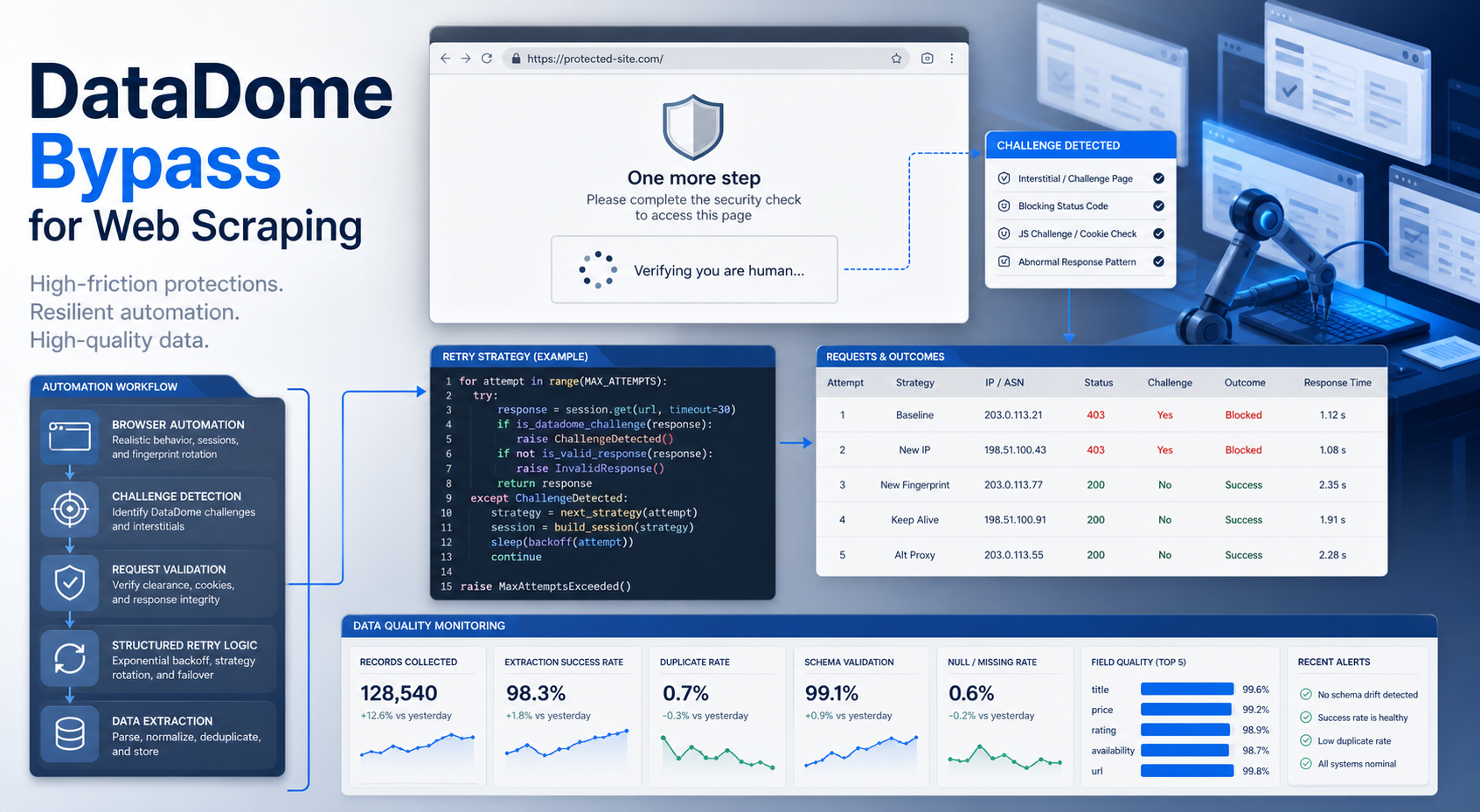
DataDome Bypass for Web Scraping
DataDome Bypass for Web Scraping
View Details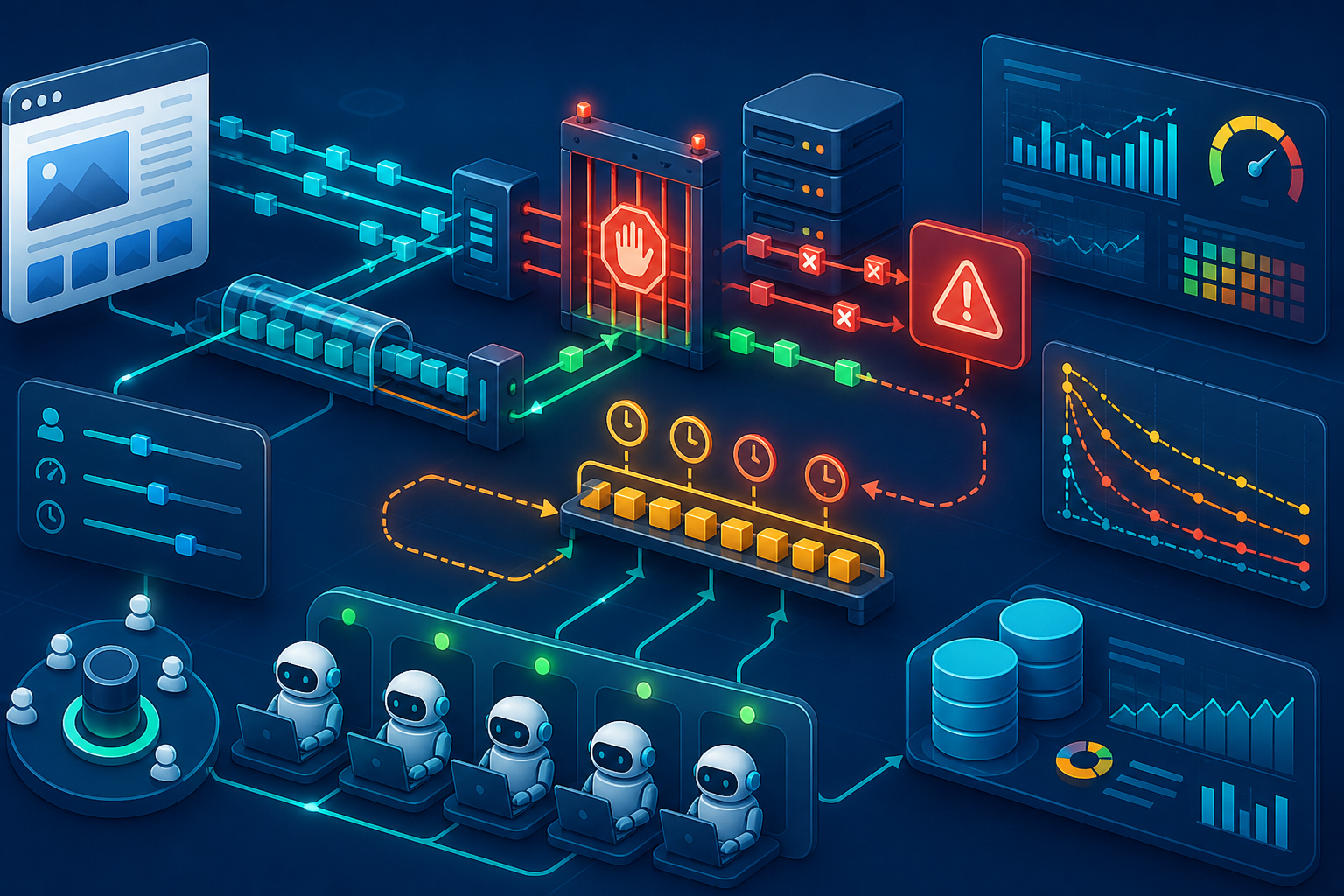
Web Scraping Rate Limiting: How to Handle 429s, Backoff, and Concurrency
Web scraping rate limiting is the engineering discipline of keeping an authorized collection workload inside a target service's acceptable request envelope. When that envelope is exceeded, a server may respond with HTTP 429 Too Many Requests, delay responses, or apply other controls.
View Details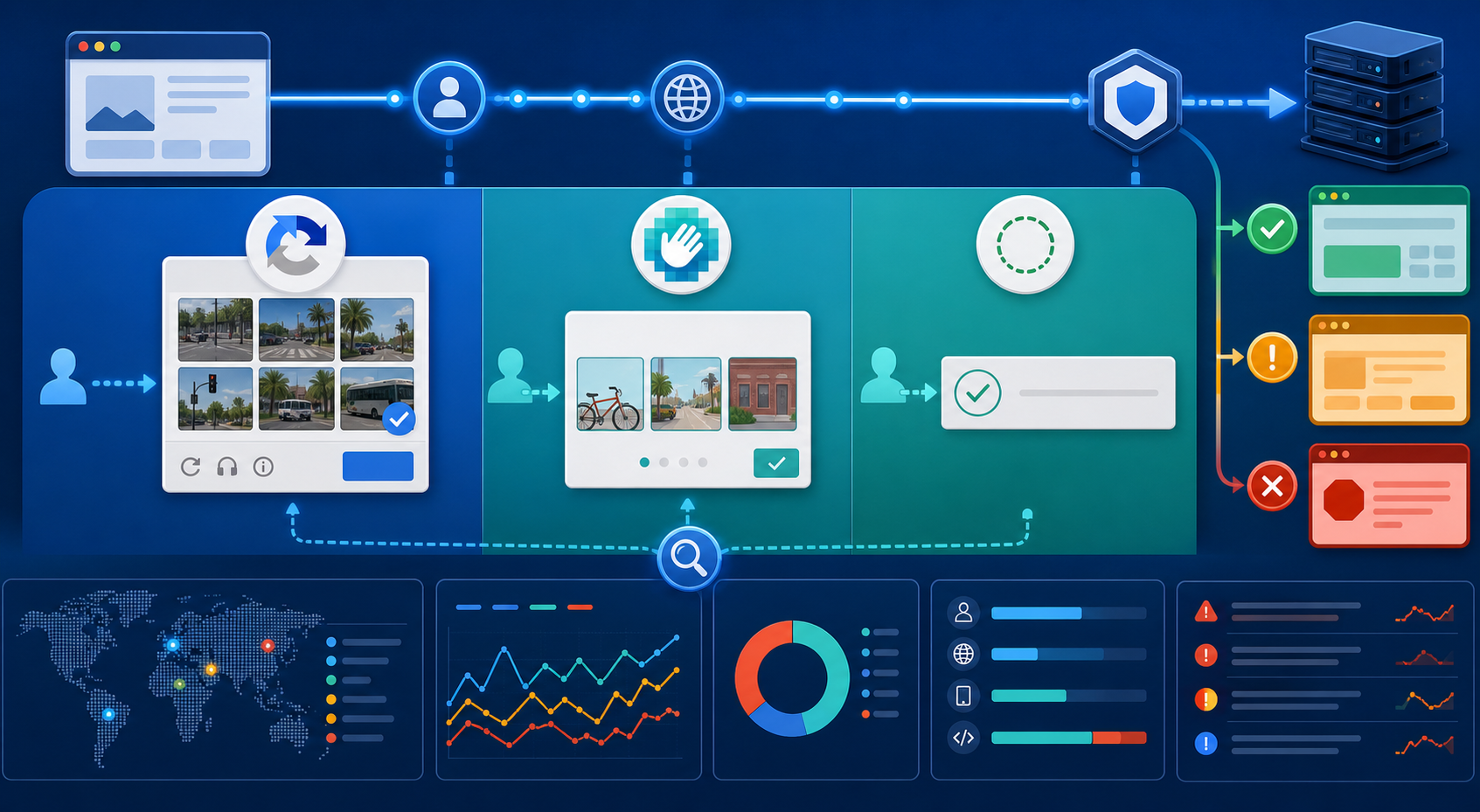
reCAPTCHA vs hCaptcha vs Cloudflare Turnstile: What Scraping Teams Need to Know
If an authorized data-collection workflow suddenly stops at a verification screen, identifying the protection system matters before you change code, browser settings, or proxy infrastructure. reCAPTCHA vs hCaptcha vs Turnstile is not simply a branding comparison. The three systems can expose different browser flows, token models, risk decisions, and failure symptoms.
View Details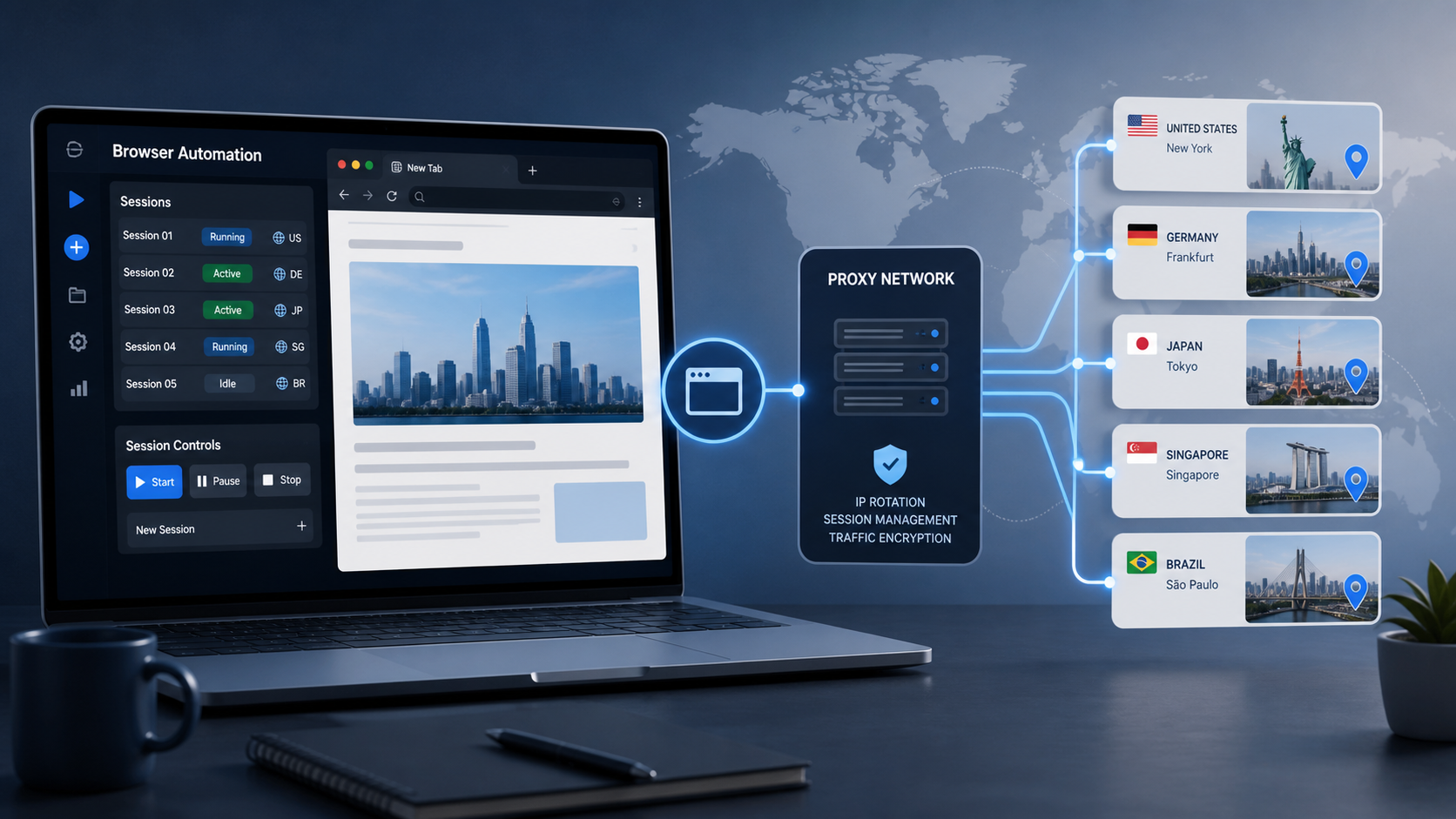
Browser Automation Proxies: IPs, Geo-Targeting, Sessions, and AI Agents
A browser automation proxy belongs to the network layer of Playwright, Selenium, cloud-browser, and AI-agent workflows. It changes how browser traffic is routed and can affect the source IP address, geographic egress, and session continuity seen by a destination site. It does not improve an AI model's reasoning, repair browser logic, or guarantee that a website will accept the session.
View Details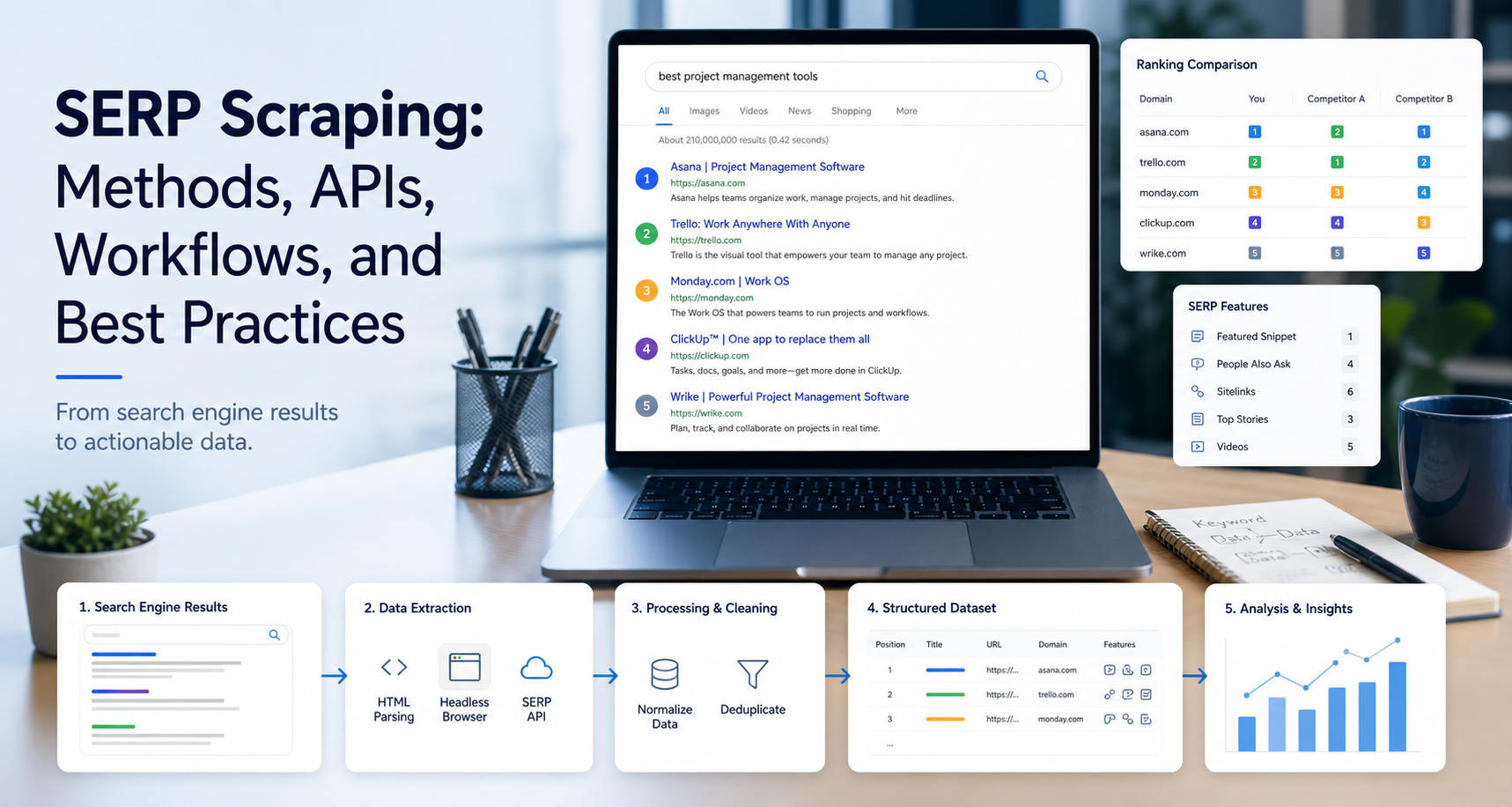
SERP Scraping: Methods, APIs, Workflows, and Best Practices
SERP scraping is the automated collection of information from search engine results pages. A SERP scraper can capture organic rankings, advertisements, featured snippets, People Also Ask questions, local results, shopping listings, images, and other search features, then convert them into structured data for analysis.
View Details