
Cybersecurity Career Roadmap from Zero to Hired
Cybersecurity Career Roadmap from Zero to Hired
The exact roadmap I wish I had when starting cybersecurity.
Breaking into cybersecurity feels like standing at the base of a mountain with a hundred different trails leading up, and no map. You're bombarded with acronyms (CISSP, CEH, OSCP), told to master Python, learn penetration testing, study malware analysis, and somehow build a home lab, all while everyone on LinkedIn seems to have already landed their dream SOC analyst job.
The truth? Most beginners waste months (sometimes years) jumping between random YouTube tutorials, certification boot camps, and hacking tools they don't understand, only to realize they're missing the foundational knowledge that actually gets you hired.
This article is the clear, step-by-step roadmap I wish someone had handed me on day one. Whether you're a career changer, a college student, or teaching yourself from scratch, this guide will show you exactly what to learn, in what order, and how to position yourself for your first cybersecurity role.
Explore LycheeIP cybersecurity resources
Act 1: Why Networking and Linux Come Before Hacking Tools
The Foundations Problem
Here's the biggest mistake aspiring cybersecurity professionals make: they download Kali Linux, fire up Metasploit, and try to "hack" things before understanding how computers actually communicate.
It's like trying to become a mechanic by only learning how to use a wrench, without understanding how an engine works.
Why networking fundamentals matter:
Cybersecurity is fundamentally about protecting networks, data in transit, and communication protocols. You can't defend (or ethically attack) something you don't understand. When you grasp how TCP/IP works, what happens during a three-way handshake, or how DNS resolution functions, suddenly attacks like ARP spoofing, DNS poisoning, and packet sniffing make perfect sense.
Without this foundation, you're just copy-pasting commands from tutorials without understanding why they work, or worse, why they fail.
Why Linux mastery is non-negotiable:
The majority of servers, security tools, and enterprise infrastructure run on Linux. SOC analysts use Linux-based SIEM platforms. Penetration testers live in Kali Linux. Cloud security engineers work with Ubuntu and Red Hat instances daily.
You don't need to be a Linux kernel developer, but you must be comfortable navigating the command line, understanding file permissions, managing processes, and writing basic bash scripts. When you're troubleshooting a compromised server at 2 AM, you can't afford to Google "how to check running processes in Linux."
The Right Learning Sequence
Think of your cybersecurity education like building a house:
- Foundation: Networking + Linux
- Framing: Security concepts (CIA triad, cryptography, access control)
- Walls & Roof: Hands-on attack/defense skills
- Finishing touches: Certifications, portfolio projects, job applications
Skip the foundation, and everything else crumbles.
Act 2: Building a Structured Learning Plan
Here's your six-phase roadmap, designed to take you from complete beginner to job-ready in 6-12 months (depending on your time commitment).
Phase 1: Networking Fundamentals (4-6 weeks)
What to learn:
- The OSI model and TCP/IP stack (not just memorization, understand how data moves)
- IP addressing, subnetting, and CIDR notation
- Key protocols: HTTP/HTTPS, DNS, DHCP, FTP, SSH, SMTP
- How routers, switches, and firewalls function
Resources:
- Professor Messer's free Network+ videos (YouTube)
- Practical Networking YouTube channel
- "Computer Networking: A Top-Down Approach" (book)
- Wireshark practice: capture and analyze your own network traffic
Milestone: Be able to explain in plain English what happens when you type "google.com" into your browser and hit enter.
Phase 2: Linux Command Line Mastery (3-4 weeks)
What to learn:
- File system navigation (cd, ls, pwd, find, grep)
- File permissions and ownership (chmod, chown)
- Process management (ps, top, kill)
- Package management (apt, yum)
- Basic bash scripting
Resources:
- OverTheWire Bandit wargames (gamified Linux practice)
- Linux Journey (interactive tutorials)
- Set up a Ubuntu VM in VirtualBox and use it as your daily driver
Milestone: Build a bash script that automates a system task (e.g., backup script, log analyzer).
Phase 3: Security Fundamentals (4-6 weeks)
What to learn:
- CIA Triad (Confidentiality, Integrity, Availability)
- Authentication vs. authorization
- Symmetric vs. asymmetric cryptography
- Hashing and digital signatures
- Common vulnerabilities (OWASP Top 10)
- Defense-in-depth principles
Resources:
- Cybrary's free Security+ course
- "The Web Application Hacker's Handbook" (book)
- OWASP documentation
Milestone: Explain how HTTPS works end-to-end, including certificate validation.
Phase 4: Hands-On Practice (8-12 weeks)
This is where theory meets practice.
Platforms:
- TryHackMe: Start here. Guided learning paths with gamification. Begin with the "Complete Beginner" path.
- HackTheBox: More challenging. Move here once you're comfortable with basics.
- PentesterLab: Great for web application security.
- Blue Team Labs Online: If you're more interested in defense/SOC work.
What to build:
- A home lab (VirtualBox with VMs: Kali Linux, Metasploitable, Windows Server)
- Attack a vulnerable web app (DVWA, WebGoat)
- Analyze malware in a sandbox environment
- Practice log analysis and incident response scenarios
Milestone: Complete 20+ TryHackMe rooms and 5 HackTheBox machines, documenting your methodology.
Phase 5: Certification Strategy (Timeline varies)
Certifications aren't everything, but they open doors, especially for your first role.
Recommended path:
1. CompTIA Security+ (Entry-level, HR-friendly, covers foundations)
2. One of these, based on your interest:
- Blue Team (Defense): CySA+, BTL1 (Blue Team Level 1)
- Red Team (Offense): eJPT (eLearnSecurity Junior Penetration Tester), then OSCP
- Cloud Security: AWS Certified Security - Specialty
Reality check: Don't collect certifications like Pokémon. Get Security+ to check the HR box, then choose one that aligns with your target role.
Phase 6: Build Your Public Presence (Ongoing)
GitHub portfolio:
- Upload your scripts (password crackers, network scanners, automation tools)
- Document your CTF writeups
- Contribute to open-source security projects
LinkedIn + Twitter:
- Share what you're learning ("Today I learned about...")
- Engage with the cybersecurity community
- Follow industry leaders and companies you want to work for
Blog (optional but powerful):
- Write walkthroughs of vulnerable machines you've solved
- Explain complex concepts in simple terms
- This demonstrates communication skills, critical for any security role
Explore LycheeIP cybersecurity resources
Act 3: The Most Common Cyber Attacks You Must Understand
Employers don't expect you to be an expert in every attack vector, but you must understand the fundamentals of these common threats:
1. Phishing and Social Engineering
The #1 initial attack vector. Understand how attackers craft convincing emails, exploit human psychology, and bypass technical controls. Study real-world campaigns (Business Email Compromise, spear phishing).
Why it matters: Every security role, from SOC analyst to CISO, deals with phishing daily.
2. SQL Injection (SQLi)
Attackers manipulate database queries through unsanitized user input. This remains one of the most critical web vulnerabilities.
Lab practice: Exploit SQLi in DVWA, then learn how to prevent it (parameterized queries, input validation).
3. Cross-Site Scripting (XSS)
Injecting malicious JavaScript into web pages viewed by other users. Comes in three flavors: reflected, stored, and DOM-based.
Why it matters: Understanding XSS teaches you how browsers handle code execution, essential for any web security role.
4. Man-in-the-Middle (MitM) Attacks
Intercepting communication between two parties. Classic examples: ARP spoofing, SSL stripping, evil twin Wi-Fi attacks.
Lab practice: Use Ettercap or Bettercap in your home lab to perform ARP poisoning (ethically, on your own network).
5. Malware Analysis Basics
You don't need to reverse-engineer APTs on day one, but understand:
- Types of malware (ransomware, trojans, worms, rootkits)
- How to safely analyze suspicious files (sandboxing, static vs. dynamic analysis)
- Indicators of Compromise (IOCs)
Why it matters: SOC analysts and incident responders deal with malware alerts constantly.
The Attack-Defense Duality
Here's the key insight: understanding attacks makes you a better defender, and vice versa. When you know how SQL injection works, you can better design secure database interactions. When you've analyzed phishing emails, you can train users more effectively.
This is why hands-on practice with both offensive and defensive techniques is crucial.
Landing Your First Cybersecurity Job
Target These Entry-Level Roles:
- SOC Analyst (Tier 1): Monitor security alerts, triage incidents
- IT Security Analyst: Vulnerability management, patch management
- Junior Penetration Tester: Requires more skills but possible with OSCP
- Security Engineer (Junior): Implement security controls, assist with projects
- GRC Analyst: Governance, Risk, and Compliance (less technical, still valuable)
Resume Strategy:
- Skills section: List specific tools (Wireshark, Burp Suite, Splunk, Nmap)
- Projects section: Highlight home lab, CTF achievements, GitHub portfolio
- Certifications: Put Security+ front and center
- Tailor for ATS: Use keywords from job descriptions
Networking (The Human Kind):
- Attend local cybersecurity meetups and conferences (BSides, OWASP chapters)
- Join Discord servers (TryHackMe, HackTheBox communities)
- Connect with SOC managers and recruiters on LinkedIn
- Ask for informational interviews
Interview Preparation:
- Technical questions: Explain the CIA triad, describe the OSI model, walk through how you'd investigate a phishing alert
- Behavioral questions: Demonstrate curiosity, problem-solving, and continuous learning
- Hands-on tests: Some companies give practical scenarios (analyze logs, identify vulnerabilities)
Your Roadmap Recap
1. Weeks 1-6: Master networking fundamentals
2. Weeks 7-10: Achieve Linux command-line proficiency
3. Weeks 11-16: Study security concepts and cryptography
4. Weeks 17-28: Hands-on practice (TryHackMe, HackTheBox, home lab)
5. Weeks 29-36: Earn Security+ certification
6. Ongoing: Build GitHub portfolio, network, apply for jobs
How LycheeIP Fits Your Advanced Security Home Lab
Integrating professional data infrastructure elevates your home lab from a basic sandbox to a realistic threat simulation environment. While local virtual machines are excellent for learning the absolute basics, modern security roles require you to understand how traffic behaves across the global internet.
When you transition to testing external systems (such as participating in authorized bug bounty programs or simulating global threat actors in a red team lab), your local IP address is a massive limitation. Modern Web Application Firewalls (WAFs) will instantly drop automated traffic originating from a standard home network or a known cloud provider.
How LycheeIP fits (when you need more than a basic unblocker)
- Residential IP Authenticity: LycheeIP provides dynamic and static residential proxies that appear as legitimate home users, allowing your security tools to bypass basic reputation filters during authorized external audits.
- Global Threat Simulation: With coverage across 200+ countries and regions, you can test how your defensive logging systems react to traffic originating from high-risk geographic locations.
- Purity and Baseline Accuracy: Standard proxy networks often recycle IPs rapidly, leaving you with blacklisted addresses. LycheeIP enforces a strict cooling period of more than six months before reusing an IP, ensuring your security research is not skewed by previously flagged infrastructure.
- Protocol Support: Full support for SOCKS5 and HTTP/HTTPS ensures seamless integration with command-line security tools, Python automation scripts, and intercepting proxies like Burp Suite.
- API-Driven Automation: The near real-time API allows you to programmatically rotate IPs within your custom scanning scripts, teaching you how modern adversaries automate their infrastructure.
Conclusion
Building a sustainable career in information security does not happen overnight. By following a structured cybersecurity career roadmap, you avoid the common trap of relying on automated tools without understanding the underlying network architecture.
Start by mastering the flow of data through networking and Linux. Move intentionally into security fundamentals, and then apply that theory in a practical, hands-on home lab. As your skills advance from local virtual machines to complex, external threat simulations, integrating professional infrastructure like LycheeIP ensures your environments mirror the reality of the modern internet. Focus on consistency over intensity, document your learning publicly, and the path from zero to hired becomes a matter of when, not if.
This isn't a sprint, it's a marathon. Some will move faster, others slower. The key is consistency over intensity. Daily practice beats weekend binges.
Cybersecurity is one of the few fields where self-taught professionals can compete with (and often outperform) traditional computer science grads, if you follow a structured path and put in the work.
The roadmap is clear. The resources are mostly free. The demand is real.
Now it's your turn to start climbing.
Explore LycheeIP cybersecurity resources
Frequently Asked Questions
Q: Do I need a computer science degree to get into cybersecurity?
A: No, a CS degree is not required. Many successful cybersecurity professionals come from non-technical backgrounds or are completely self-taught. What matters more is demonstrable skills (portfolio, certifications, hands-on experience) and the ability to prove you can solve security problems. That said, understanding programming fundamentals and networking is essential, regardless of how you learn them.
Q: How long does it realistically take to get job-ready in cybersecurity?
A: If you're starting from zero and studying consistently (10-15 hours/week), expect 6-12 months to become job-ready for entry-level positions like SOC Analyst or Junior Security Analyst. If you can dedicate more time (20+ hours/week), you might land a role in 4-6 months. The timeline varies based on your prior IT experience, learning pace, and target role.
Q: Should I focus on offensive (red team) or defensive (blue team) security?
A: For beginners, start with defensive/blue team skills. Entry-level jobs are far more abundant in SOC analysis, security monitoring, and incident response. These roles build foundational knowledge that later supports red team work. Once you understand how to defend systems, offensive security (penetration testing, ethical hacking) becomes easier to learn. Many professionals eventually do both.
Q: Which certification should I get first: Security+, CEH, or OSCP?
A: Start with CompTIA Security+. It's the most widely recognized entry-level certification, covers essential fundamentals, and is often required by HR departments for baseline security roles. CEH is more expensive and less hands-on. OSCP is excellent but very challenging, save it for after you have Security+ and 6-12 months of practical experience. Security+ opens doors; OSCP kicks them down.
Q: Is learning Python mandatory for cybersecurity?
A: Not mandatory for entry-level roles, but highly valuable. Many SOC analyst positions don't require programming, but scripting skills (Python or Bash) make you far more competitive. You can automate repetitive tasks, parse logs, and build custom tools. Learn networking and Linux first, then add Python as you progress. Start with basic scripting and gradually tackle security-specific libraries (Scapy, Requests, Paramiko).

Recommended Articles
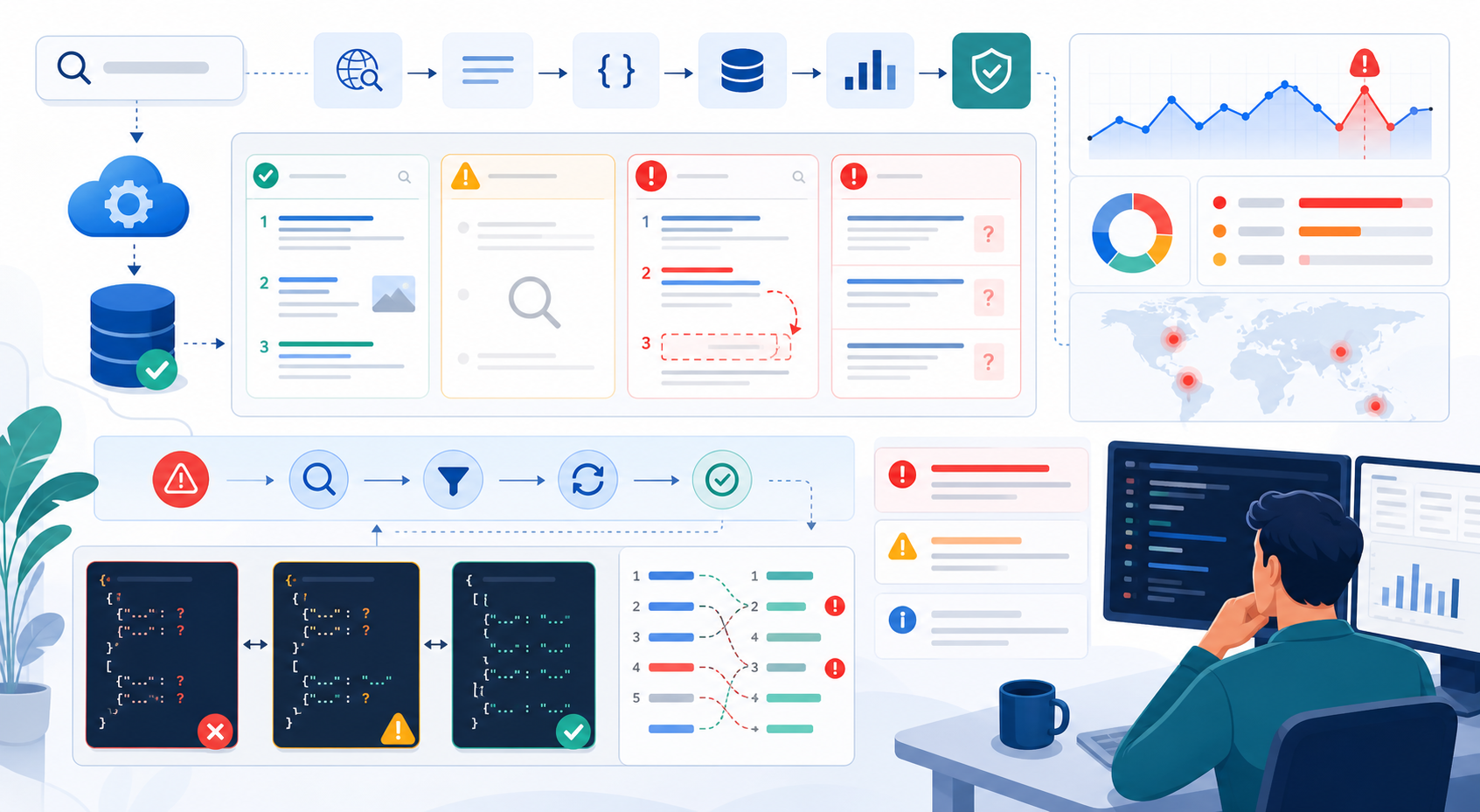
SERP API Troubleshooting: Fix Empty, Wrong, or Inconsistent Search Results
SERP API failures are not limited to obvious HTTP errors. A request can return successfully and still produce empty, incomplete, geographically wrong, duplicated, or misinterpreted search data. Production troubleshooting therefore has to separate transport problems from provider processing, SERP differences, and downstream parsing errors.
View Details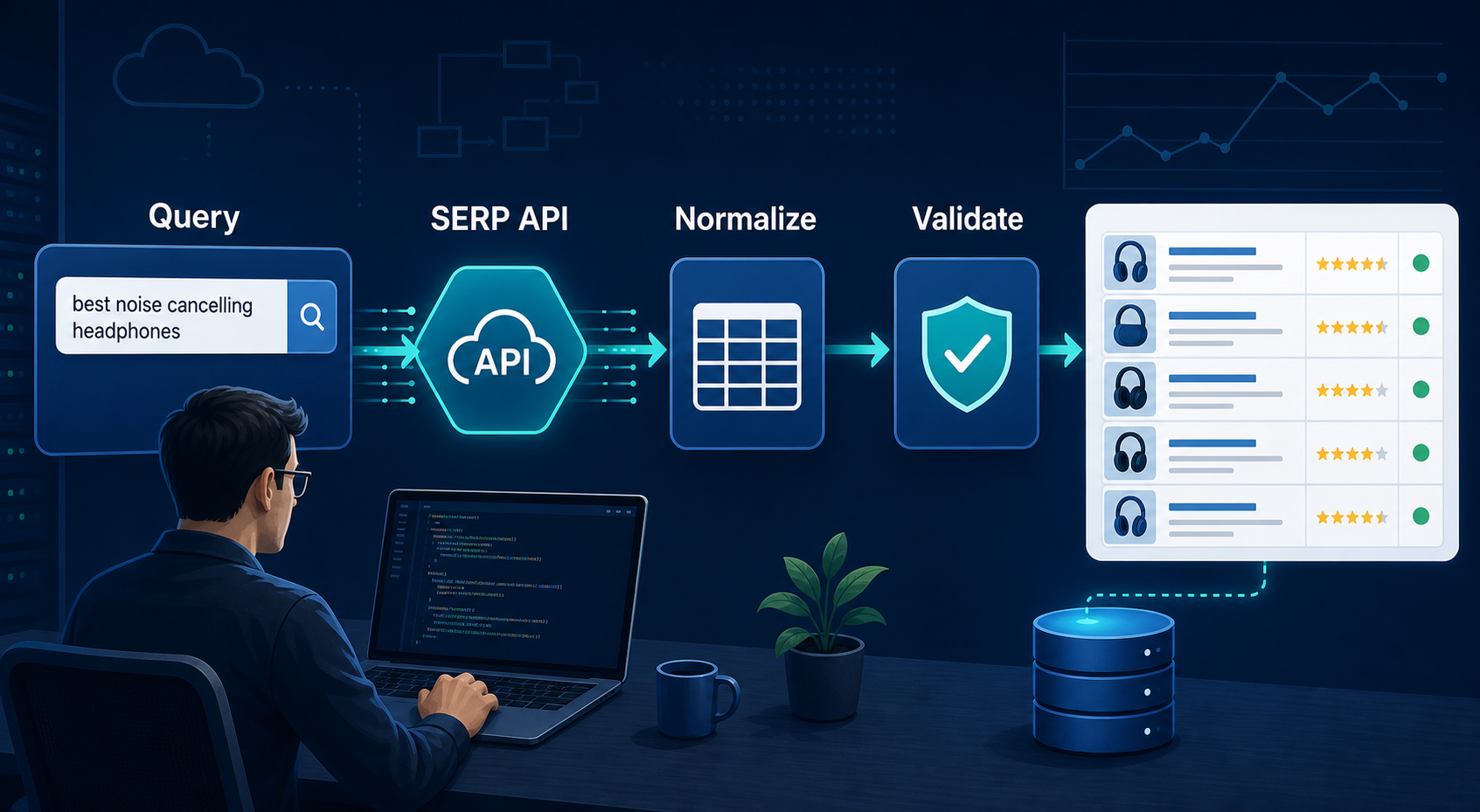
SERP API Python: How to Build a Reliable Search Data Pipeline
This guide shows a provider-neutral workflow for building that pipeline. It does not rank SERP API vendors. Instead, it focuses on the implementation choices that make a Python integration easier to operate, test, and migrate.
View Details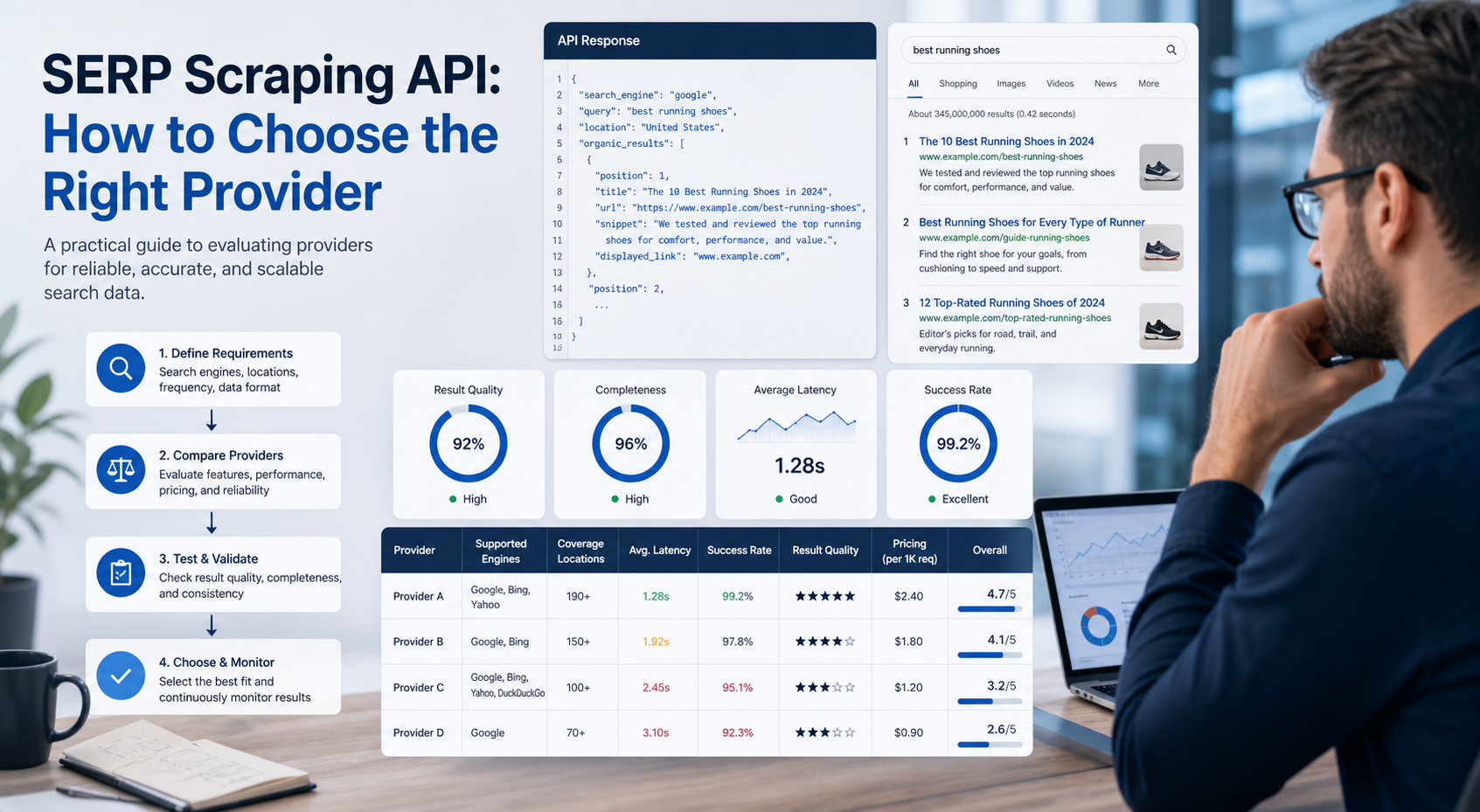
SERP Scraping API: How to Choose the Right Provider
Recommended Meta Description: Compare SERP scraping APIs by data coverage, localization, reliability, workflow fit, and cost structure, then choose and validate the right provider.
View Details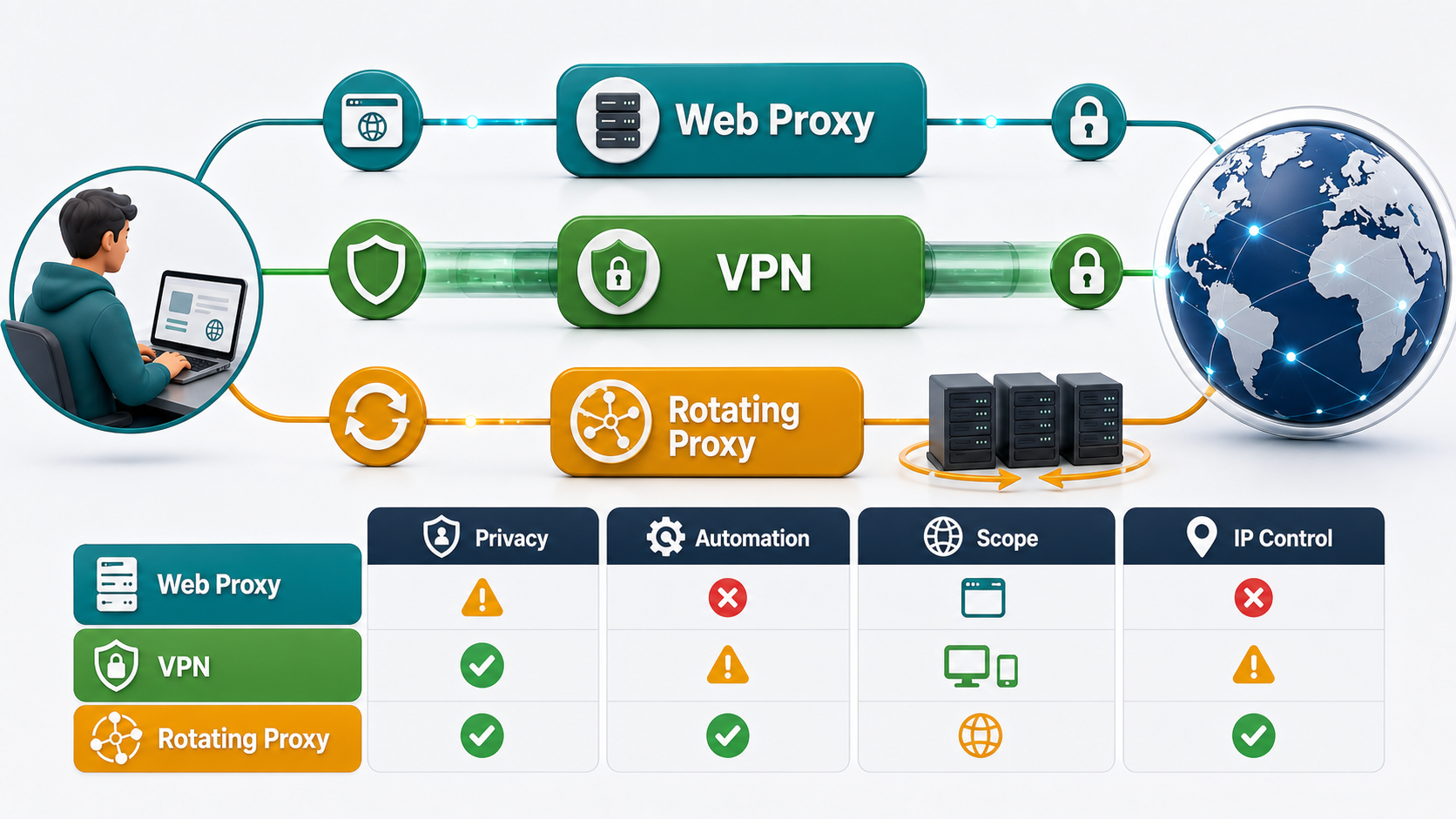
Free Web Proxy vs VPN vs Rotating Proxy: Which Should You Use?
Compare free web proxies, VPNs, rotating proxies, static proxies, and datacenter proxies by scope, encryption, IP control, automation, streaming, and account workflows.
View Details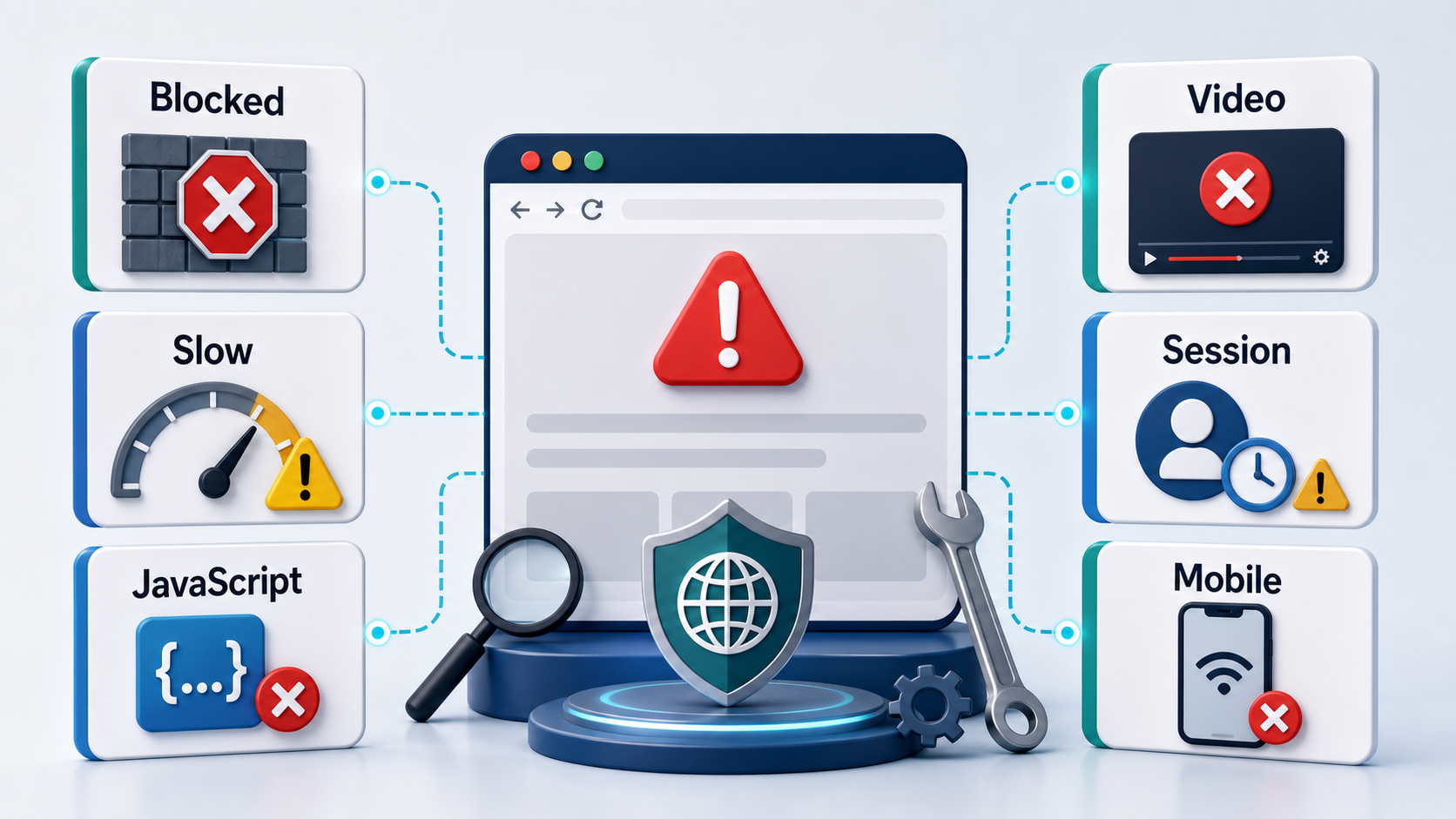
BlockAway Not Working? Fix Common Proxy, Video, and Access Problems
Troubleshoot BlockAway when pages are blocked, YouTube fails, JavaScript breaks, speed drops, sessions expire, or mobile access behaves differently.
View Details