
Ethical Hacking Tools Every Beginner Should Master
Ethical Hacking Tools Every Beginner Should Master
Master these 5 tools before touching any other hacking software.
If you've just installed Kali Linux and opened the applications menu, you've probably felt overwhelmed. With over 600 pre-installed security tools, knowing where to start can feel impossible. New learners don't know which penetration testing tools to prioritize for building foundational skills, and this confusion often leads to scattered learning, wasted time, and frustration.
The truth is, you don't need to master hundreds of tools. You need to deeply understand five essential ones that form the backbone of every professional penetration test. These tools aren't just software, they're fundamental concepts that will shape how you think about network security, web vulnerabilities, and system exploitation.
In this comprehensive guide, we'll break down the exact toolkit that every ethical hacker should master first, how these tools work together in real-world scenarios, and most importantly, how to practice legally and ethically.
Explore LycheeIP security resources
Act 1: Why Nmap is the Foundation of Network Security Assessment
The Reconnaissance Swiss Army Knife
Nmap (Network Mapper) isn't just the first tool you should learn, it's arguably the most important skill in your entire ethical hacking journey. Every penetration test begins with reconnaissance, and Nmap is the industry-standard tool for network discovery and security auditing.
Think of Nmap as your digital radar. Before you can exploit vulnerabilities, you need to know what exists on a network: which devices are online, what services they're running, which ports are open, and what operating systems they use. Nmap provides all this critical intelligence.
Core Nmap Techniques You Must Know
Basic Host Discovery:
```
nmap -sn 192.168.1.0/24
```
This simple command performs a ping sweep to identify live hosts on a network—essential for mapping your target environment.
Service and Version Detection:
```
nmap -sV -p- 192.168.1.100
```
This scans all 65,535 ports and attempts to identify exactly what service and version is running. This information is gold for finding exploitable vulnerabilities.
Operating System Fingerprinting:
```
nmap -O 192.168.1.100
```
Knowing whether your target is running Windows Server 2019 or Ubuntu 20.04 dramatically changes your attack strategy.
Why Nmap Matters for Career Development
Every cybersecurity certification, from CompTIA Security+ to Offensive Security Certified Professional (OSCP), expects you to demonstrate Nmap proficiency. More importantly, understanding Nmap teaches you fundamental networking concepts: how TCP/IP works, what ports represent, how services communicate, and how firewalls filter traffic.
Spend at least two weeks exclusively with Nmap before moving to other tools. Scan your home network (legally!), analyze the results, and understand what every piece of output means. This foundation will make every subsequent tool easier to master.
Explore LycheeIP security resources
Act 2: Building Real-World Penetration Testing Workflows with Kali Linux
Professional penetration testing isn't about using random tools, it's about following systematic workflows. Here are the four additional tools that, combined with Nmap, create a complete beginner's toolkit.
Tool #2: Burp Suite - Web Application Security Testing
While Nmap handles network-level reconnaissance, Burp Suite dominates web application testing. Over 80% of modern applications are web-based, making Burp Suite an absolutely essential skill.
What makes Burp Suite powerful:
- Intercepting Proxy: Capture and modify HTTP/HTTPS requests in real-time
- Spider/Crawler: Automatically map entire web applications
- Repeater: Manually test how applications respond to modified inputs
- Intruder: Automated attacks for finding vulnerabilities like SQL injection
Beginner Practice Exercise:
Use Burp Suite on deliberately vulnerable applications like DVWA (Damn Vulnerable Web Application) or WebGoat. Configure your browser to route traffic through Burp's proxy (default: 127.0.0.1:8080), then browse a web application and observe how data flows between client and server.
Understanding Burp Suite teaches you how modern web applications work, how authentication happens, where session tokens are stored, and where injection vulnerabilities hide.
Tool #3: Metasploit Framework - Exploitation Engine
Metasploit is the world's most popular penetration testing framework, containing thousands of exploit modules, payloads, and auxiliary tools. While it seems intimidating, beginners should focus on understanding the exploitation lifecycle rather than memorizing specific exploits.
The Metasploit Workflow:
1. Search for exploits: `search type:exploit platform:windows`
2. Select a module: `use exploit/windows/smb/ms17_010_eternalblue`
3. Configure options: `set RHOSTS 192.168.1.100`
4. Choose payload: `set PAYLOAD windows/meterpreter/reverse_tcp`
5. Execute: `exploit`
Why This Matters:
Metasploit teaches you the critical difference between vulnerability identification and exploitation. You'll learn about payloads, reverse shells, privilege escalation, and post-exploitation techniques. Start with intentionally vulnerable VMs like Metasploitable 2 to safely practice these concepts.
Tool #4: Wireshark - Network Protocol Analyzer
Wireshark lets you see network traffic at the packet level, the digital equivalent of reading raw data flowing through network cables. This tool is essential for understanding exactly how protocols work and identifying security issues invisible to other tools.
Key Use Cases:
- Analyzing unencrypted credentials transmitted over HTTP
- Understanding TCP handshakes and connection states
- Detecting suspicious network activity
- Troubleshooting application communication issues
- Identifying malware communication patterns
Beginner Exercise:
Capture your own web browsing session and filter for HTTP traffic (`http` in the filter bar). You'll be shocked to see exactly what data applications transmit—often including sensitive information in plain text.
Wireshark develops your understanding of how the internet actually works at a fundamental level, which is crucial for both offensive and defensive security roles.
Tool #5: John the Ripper - Password Cracking
Password security remains one of the weakest links in cybersecurity. John the Ripper (often just called "John") is the standard tool for testing password strength through various cracking techniques.
Learning Objectives:
- Understanding hash functions (MD5, SHA-1, bcrypt)
- Dictionary attacks vs. brute force attacks
- Wordlist optimization
- Rainbow table concepts
Basic Usage:
```
john --wordlist=/usr/share/wordlists/rockyou.txt hashes.txt
```
Practicing with John teaches you why password policies matter, why salting is critical, and how attackers actually compromise credentials in real breaches.
How These Tools Work Together in Kali Linux
Professional penetration tests follow a methodology:
1. Reconnaissance (Nmap): Identify live hosts, open ports, and services
2. Enumeration (Nmap + Burp Suite): Gather detailed information about discovered services
3. Vulnerability Analysis (Burp Suite + Metasploit): Identify exploitable weaknesses
4. Exploitation (Metasploit): Gain unauthorized access
5. Post-Exploitation (Metasploit): Escalate privileges, maintain access
6. Analysis (Wireshark + John): Understand traffic patterns, crack credentials
7. Reporting: Document findings and recommendations
Kali Linux provides all these tools pre-installed and pre-configured to work together seamlessly. This is why it's the industry-standard distribution for penetration testing.
Act 3: How to Practice Vulnerability Assessment Without Breaking the Law
Here's the critical truth every beginner must understand: unauthorized access to computer systems is illegal in virtually every country. Using these tools against systems you don't own or have explicit permission to test is a federal crime in the United States (Computer Fraud and Abuse Act) and carries severe penalties.
However, there are completely legal ways to build real-world skills.
Legal Practice Platforms
HackTheBox (hackthebox.eu)
An online platform with vulnerable machines specifically designed for penetration testing practice. Free tier available, with VIP access providing more machines and better bandwidth.
TryHackMe (tryhackme.com)
Beginner-friendly platform with guided learning paths, starting from absolute basics to advanced exploitation. Excellent structured curriculum.
VulnHub (vulnhub.com)
Free downloadable vulnerable virtual machines you can run on your own computer. Perfect for offline practice.
PentesterLab (pentesterlab.com)
Focused specifically on web application vulnerabilities with hands-on exercises.
Setting Up Your Home Lab
Building a personal lab is the best long-term investment:
1. Virtualization Software: Install VirtualBox or VMware Workstation Player (both free)
2. Attack Machine: Set up Kali Linux as a VM
3. Target Machines: Download vulnerable VMs like Metasploitable 2, DVWA, or WebGoat
4. Isolated Network: Configure VMs on a host-only network to prevent accidental external scanning
This setup lets you practice 24/7 without legal concerns or internet requirements.
Getting Proper Authorization
If you want to test real systems:
- Never scan or test systems without explicit written permission
- Use bug bounty platforms like HackerOne or Bugcrowd, which provide legal authorization
- Get written authorization for any professional penetration test
- Understand the scope and rules of engagement before touching any system
Certification Paths
Once you've mastered these five tools, consider these certifications:
- CompTIA Security+: Foundation-level security certification
- CEH (Certified Ethical Hacker): Broad coverage of hacking techniques
- eJPT (eLearnSecurity Junior Penetration Tester): Affordable, practical certification
- OSCP (Offensive Security Certified Professional): The gold standard, extremely challenging
Explore LycheeIP security resources
Strategic Infrastructure: How LycheeIP Completes the Hacking Stack
Local virtual machines are perfect for learning the absolute basics. However, professional penetration testing requires you to audit external, internet-facing assets. Modern enterprises use intelligent Web Application Firewalls (WAFs) and geo-fencing to block automated scanning traffic originating from known data centers or suspicious locations.
To test these defenses realistically, you must manage your network identity. This is the exact outline of how specialized data infrastructure elevates your testing environment.
- Simulating Realistic Threat ActorsTarget systems drop traffic from cloud hosting providers automatically. Using residential proxies ensures your vulnerability scans look like legitimate user traffic.
- How LycheeIP fits (when you need more than a basic unblocker) LycheeIP provides 100% exclusive global proxy IP services, giving your security tools a reliable and clean connection. Resources are allocated directly from underlying operators to ensure high throughput and low latency. Each IP goes through a cooling period of more than six months before use, preventing you from inheriting blacklisted IPs for your security audits.The dynamic residential proxies offer unlimited concurrency, which is critical when running intensive enumeration tasks. SOCKS5 protocol support means tools like Nmap and Burp Suite integrate seamlessly via standard proxychains configurations.
- Validating Geographic Security RulesTesting geo-blocking requires routing traffic through specific countries. Access to 200+ regions allows you to verify if regional access controls are actually functioning.
Assumptions & Limitations
- Tools do not replace methodology: Memorizing commands in Metasploit does not make someone a competent security professional. True expertise comes from understanding the underlying protocols.
- Constant updates: The syntax and capabilities of these ethical hacking tools change regularly. Always refer to official documentation for the most accurate usage.
- Hardware constraints: Running multiple virtual machines and intensive scans requires a computer with at least 16GB of RAM and a modern multi-core processor.
- False positives: Automated modules in Metasploit or active scans in Nmap will frequently report vulnerabilities that do not actually exist or cannot be exploited in that specific environment.
Comparison: Method vs When to Use
| Ethical Hacking Tool | Primary Phase | Best Used For | Tradeoffs |
| Nmap | Reconnaissance | Discovering open ports, services, and OS types. | Aggressive scans are noisy and easily detected by intrusion prevention systems. |
| Burp Suite | Vulnerability Analysis | Intercepting HTTP traffic and testing web inputs. | Community edition restricts the speed of automated intruder attacks. |
| Metasploit | Exploitation | Delivering payloads to vulnerable remote services. | Relies heavily on known vulnerabilities rather than finding zero-day flaws. |
| Wireshark | Analysis | Capturing raw packets for deep protocol inspection. | Can quickly generate massive file sizes on busy networks. |
| John the Ripper | Post-Exploitation | Offline password hash cracking. | Highly dependent on the quality of your custom wordlists and available CPU power. |
Troubleshooting Common Lab Setup Failures
- Failure: Nmap reports "Operation not permitted" during an OS scan.Likely Cause: Operating system fingerprinting requires raw packet privileges.Fix: Run the Nmap command with sudo privileges.
- Failure: Burp Suite displays an "Insecure Connection" warning on HTTPS sites.Likely Cause: The browser does not trust the Burp Suite proxy certificate.Fix: Download the CA certificate from http://burp and install it in your browser's trusted root authority store.
- Failure: Virtual machines cannot communicate with each other.
Likely Cause: Network adapters are misconfigured in the hypervisor.Fix: Ensure all lab virtual machines are set to the same "Host-Only" or "Internal" network adapter.
- Failure: External scans are immediately dropped or show no open ports.
Likely Cause: Your IP address is blocked by the target's Web Application Firewall.Fix: Route your traffic through a clean residential proxy to bypass standard datacenter IP blocks.
Conclusion: Your 90-Day Mastery Roadmap
Don't try to learn everything at once. Here's your focused progression:
Days 1-30: Nmap exclusively. Scan everything in your legal environment. Read the official documentation. Complete Nmap challenges on platforms like OverTheWire.
Days 31-50: Add Burp Suite. Practice on DVWA and WebGoat. Learn to intercept, modify, and replay requests.
Days 51-70: Introduce Metasploit. Exploit Metasploitable 2 using documented vulnerabilities. Understand the exploitation lifecycle.
Days 71-80: Add Wireshark. Capture and analyze traffic from your other tool usage. Understand protocols at the packet level.
Days 81-90: Incorporate John the Ripper. Practice cracking hashes from CTF challenges or test systems.
By day 90, you'll have deeper knowledge of five tools than most people have of fifty. This focused mastery will prepare you for advanced certifications, bug bounty hunting, or professional penetration testing roles.
Remember: ethical hacking isn't about knowing every exploit, it's about understanding systems deeply enough to find weaknesses others miss. Master these five foundational tools, practice legally and consistently, and you'll build skills that last a career.
Start today. Install Kali Linux, spin up a vulnerable VM, and run your first Nmap scan. The cybersecurity community needs more skilled ethical hackers, and your journey begins with mastering these essential tools.
Explore LycheeIP security resources
Frequently Asked Questions
Q: Is it legal to download and use Kali Linux?
A: Yes, downloading and using Kali Linux is completely legal. Kali Linux is an open-source operating system designed for legitimate security testing. However, what you DO with those tools determines legality. Only scan and test systems you own or have explicit written permission to test. Unauthorized access to computer systems is illegal regardless of the tools you use.
Q: Do I need to know programming to use these ethical hacking tools?
A: No, you don't need programming skills to start learning these five tools. They all have command-line interfaces with well-documented syntax. However, as you advance, learning Python or Bash scripting will significantly enhance your capabilities, especially for automating tasks and customizing exploits. Start with the tools first, then gradually add programming skills.
Q: How long does it take to become proficient with these penetration testing tools?
A: With dedicated daily practice, you can develop functional proficiency in 3-6 months. Basic competency with each individual tool takes 2-4 weeks. However, true expertise, understanding when and how to use each tool in complex scenarios, develops over 1-2 years of consistent practice. The key is focused, deliberate practice on vulnerable lab environments rather than trying to learn everything at once.
Q: Can I practice ethical hacking on my own home network?
A: Yes, you can legally practice on devices you own on your home network. However, be cautious: don't scan your ISP's equipment (modem/router they own), don't attack your neighbors' networks, and be aware that some aggressive scanning might trigger security alerts with your internet provider. The safest approach is setting up isolated virtual machines in VirtualBox or VMware that cannot accidentally affect external systems.
Q: What's the difference between Kali Linux and other Linux distributions?
A: Kali Linux is specifically designed for penetration testing and security auditing, with over 600 security tools pre-installed and pre-configured. Regular Linux distributions like Ubuntu or Fedora are general-purpose operating systems. While you can install security tools on any Linux distribution, Kali saves time by providing everything configured and optimized for security testing. It's built by Offensive Security, the same organization behind the OSCP certification.

Recommended Articles
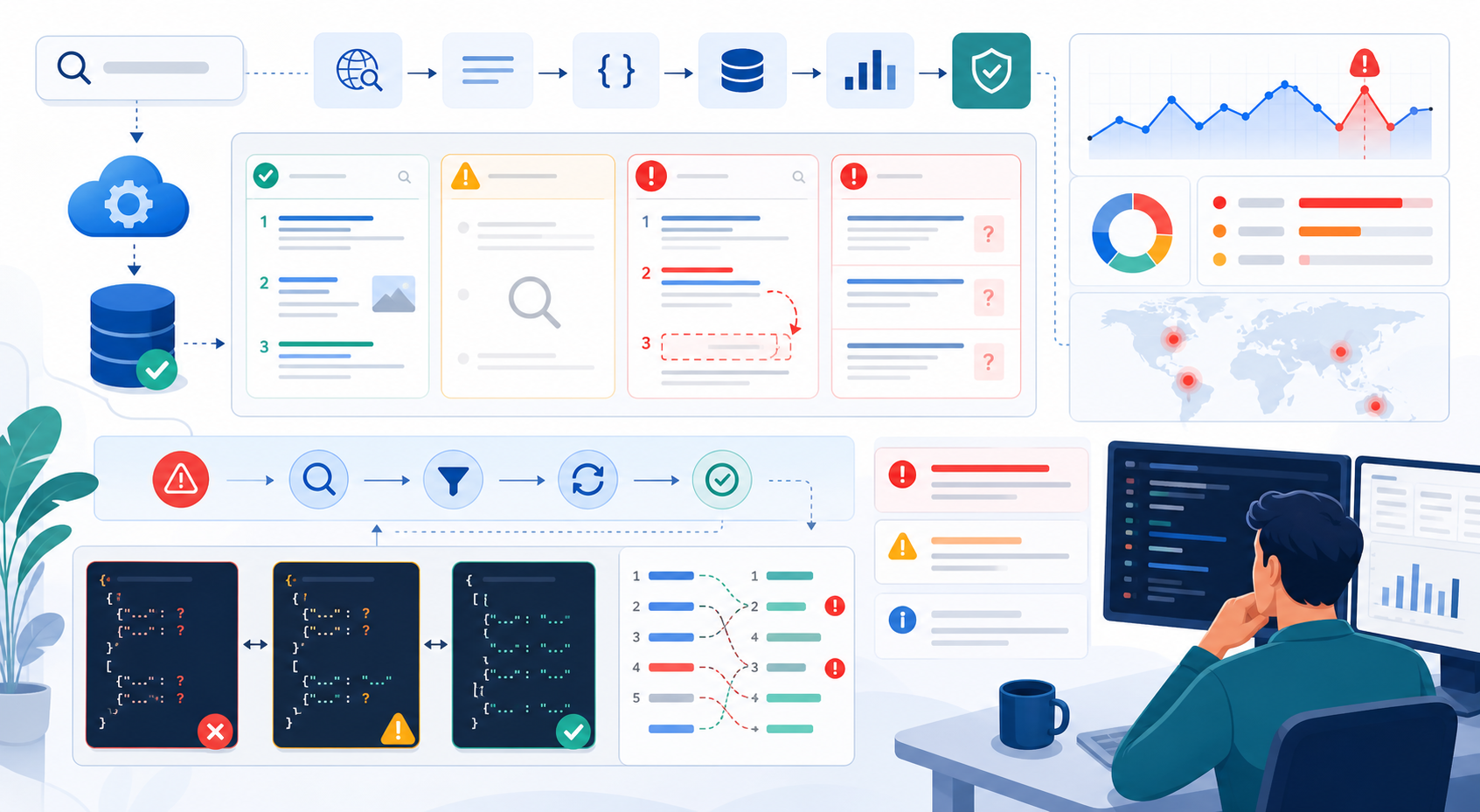
SERP API Troubleshooting: Fix Empty, Wrong, or Inconsistent Search Results
SERP API failures are not limited to obvious HTTP errors. A request can return successfully and still produce empty, incomplete, geographically wrong, duplicated, or misinterpreted search data. Production troubleshooting therefore has to separate transport problems from provider processing, SERP differences, and downstream parsing errors.
View Details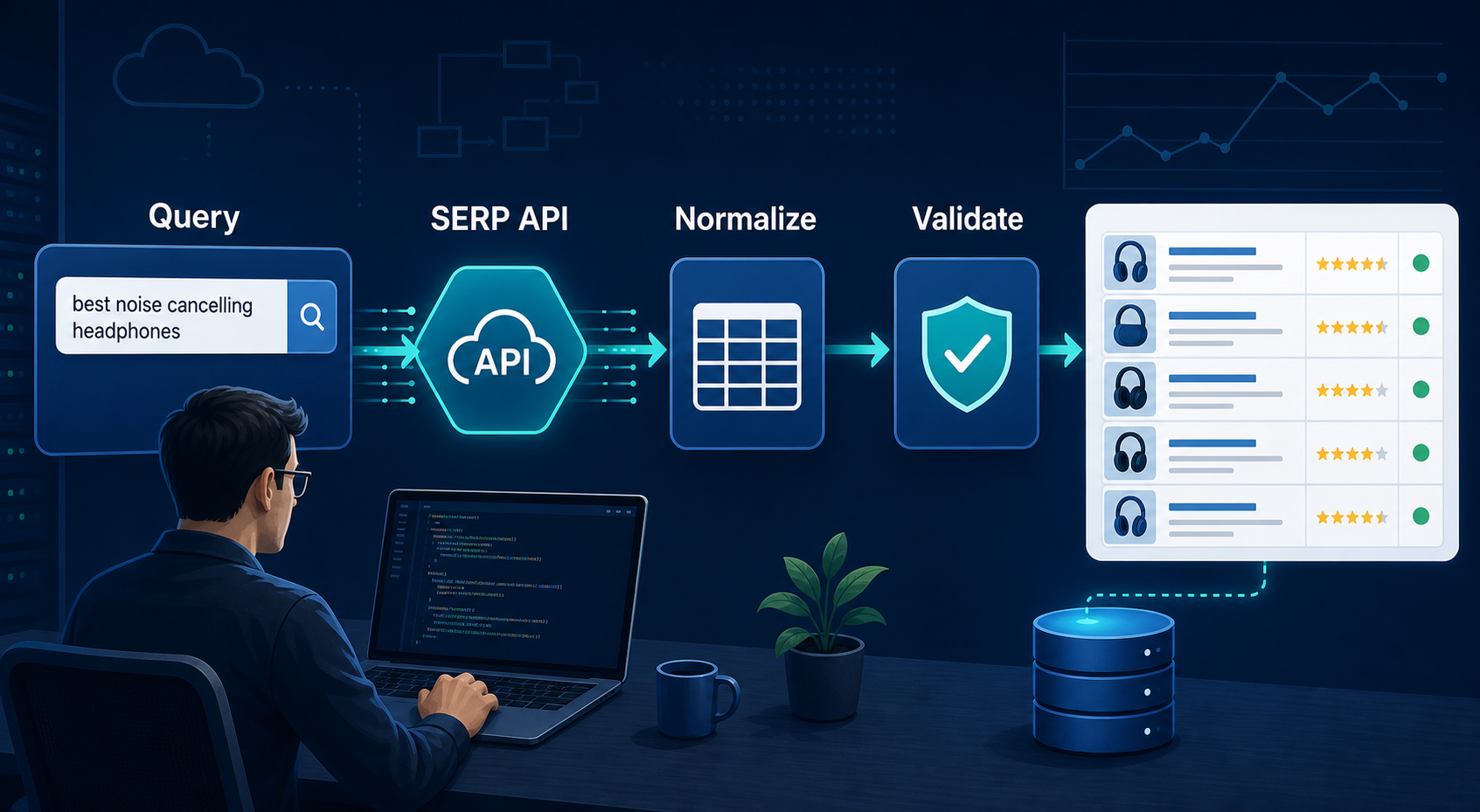
SERP API Python: How to Build a Reliable Search Data Pipeline
This guide shows a provider-neutral workflow for building that pipeline. It does not rank SERP API vendors. Instead, it focuses on the implementation choices that make a Python integration easier to operate, test, and migrate.
View Details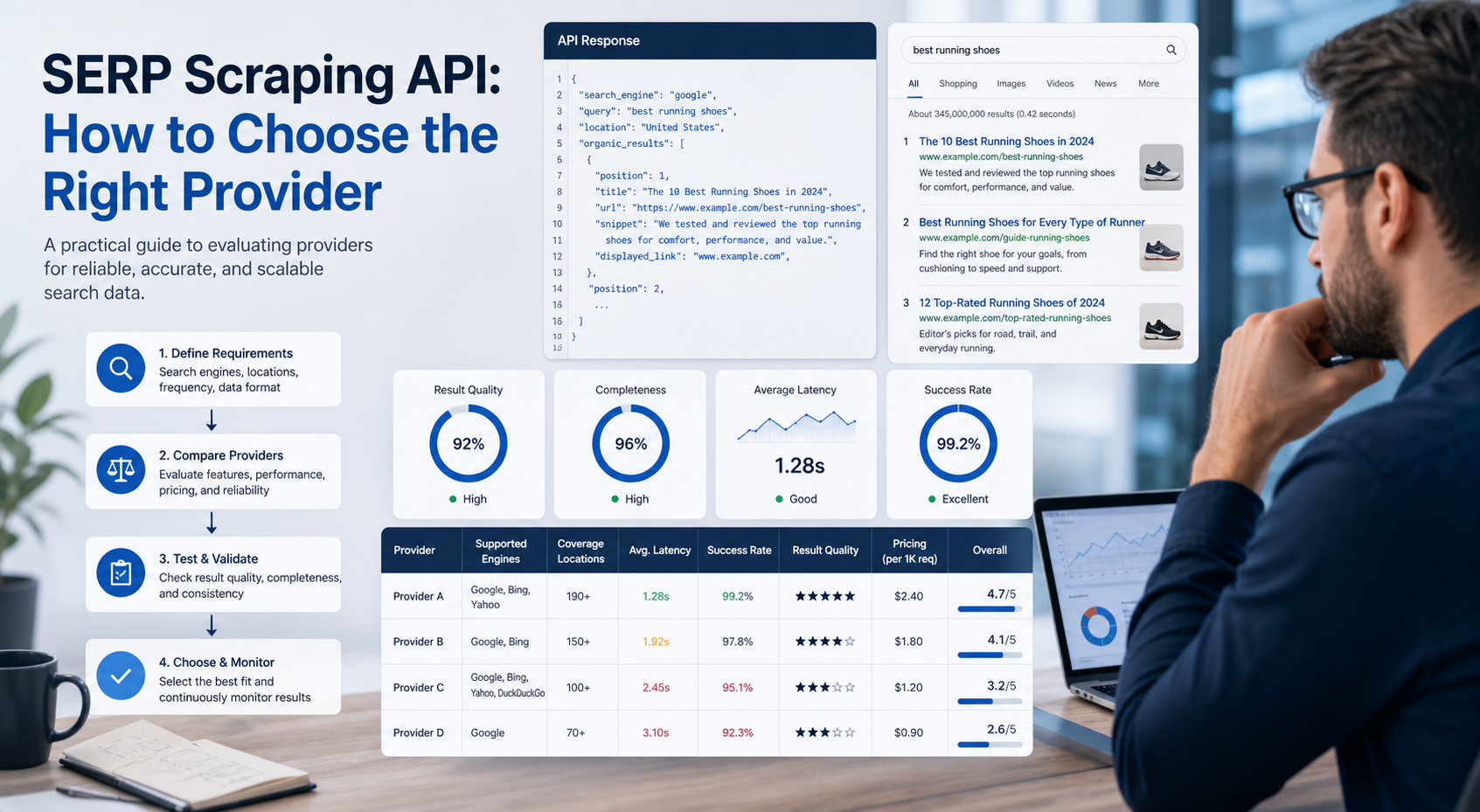
SERP Scraping API: How to Choose the Right Provider
Recommended Meta Description: Compare SERP scraping APIs by data coverage, localization, reliability, workflow fit, and cost structure, then choose and validate the right provider.
View Details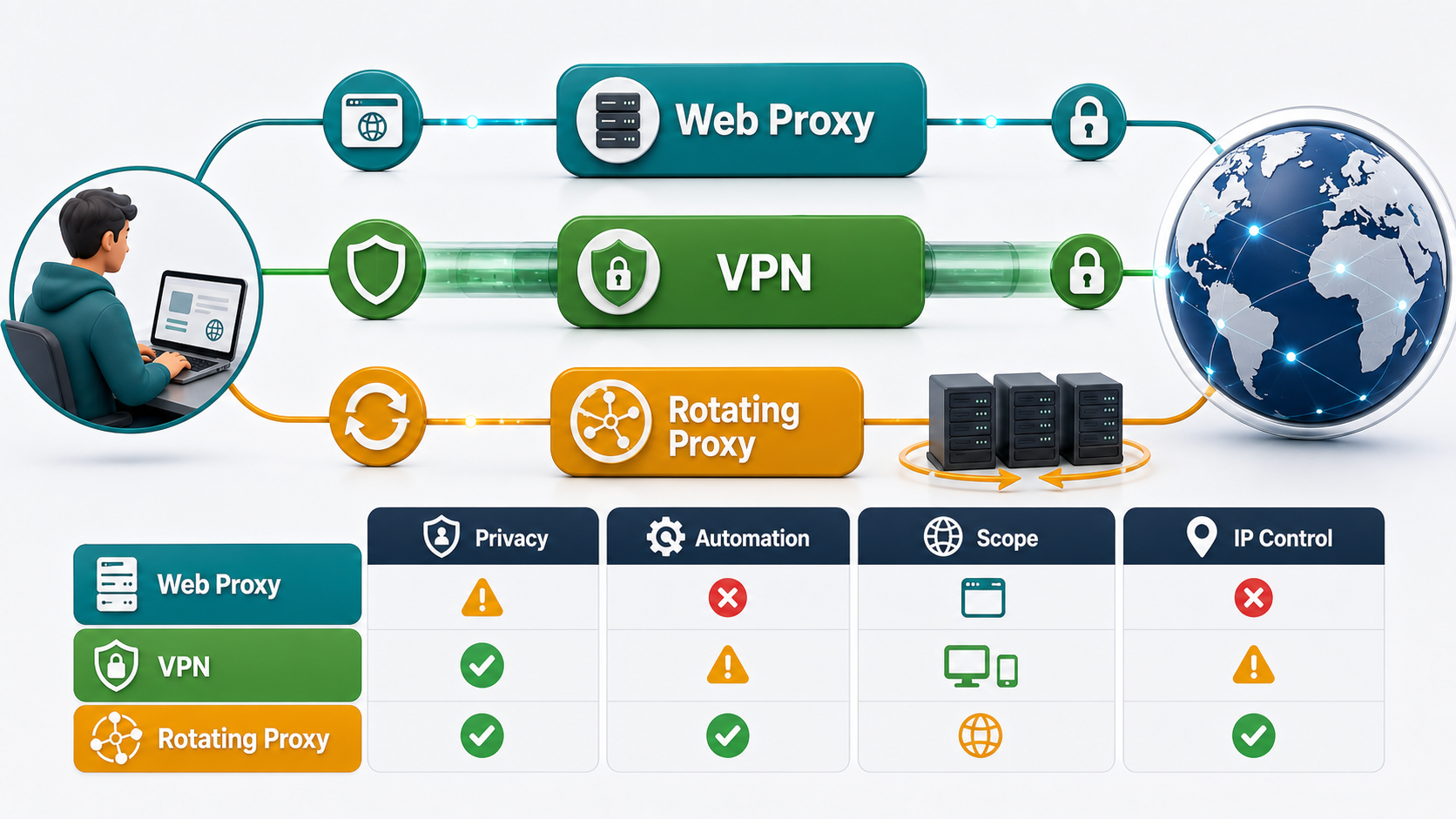
Free Web Proxy vs VPN vs Rotating Proxy: Which Should You Use?
Compare free web proxies, VPNs, rotating proxies, static proxies, and datacenter proxies by scope, encryption, IP control, automation, streaming, and account workflows.
View Details
BlockAway Not Working? Fix Common Proxy, Video, and Access Problems
Troubleshoot BlockAway when pages are blocked, YouTube fails, JavaScript breaks, speed drops, sessions expire, or mobile access behaves differently.
View Details