
Remote Control Security: Claude Code's New Feature Risk
Claude Code now lets you control your laptop from your phone. But should you?
As development workflows become increasingly mobile, this new capability raises critical security questions that every organization needs to answer before enabling remote access. For developers, the appeal is obvious: reviewing pull requests, approving AI-generated code, or kicking off a build pipeline while away from the keyboard. However, for security engineers and IT administrators, bridging a highly secure development environment with a mobile device introduces a myriad of vulnerabilities.
Understanding the underlying architecture, the expanded attack surface, and the necessary guardrails is essential before your team adopts this feature.
Secure remote workflows with LycheeIP
How Remote Control Works
The remote control feature establishes a persistent connection between your mobile device and an active Claude Code session running on your desktop or laptop. Authentication typically occurs through QR code scanning or session token exchange, creating an encrypted communication channel between the two devices.
Once paired, your phone effectively becomes a remote terminal. You can initiate commands, review complex code suggestions, approve local file changes, and manage ongoing AI-assisted development tasks. The system maintains session state across both devices, syncing in near real-time over secure WebSocket connections.
From an architectural standpoint, this functionality requires:
- Active session persistence on the primary host device.
- Cloud-mediated communication between devices (traffic does not route strictly over your Local Area Network).
- Credential and token storage on the mobile client.
- Command relay infrastructure running through Anthropic's external servers.
This multi-device, cloud-mediated topology fundamentally expands your attack surface.
Attack Vectors You Need to Consider
1. Mobile Device Compromise
Your phone is now a highly privileged credential repository. If your mobile device is lost, stolen, or compromised through malicious apps, an attacker gains a direct, authenticated pathway into your core development environment. Unlike corporate laptops—which are heavily managed by IT and protected by strict disk encryption—phones frequently have much weaker security postures, especially if users disable biometric locks for convenience.
2. Man-in-the-Middle (MITM) Opportunities
While the WebSocket connections are encrypted, the initial QR code pairing process creates a brief but critical window of vulnerability. An attacker with physical proximity or network access during the initial pairing could potentially intercept session tokens. Attempting to pair devices over untrusted public WiFi networks exponentially increases this risk.
3. Session Persistence Threats
Traditional remote desktop protocols (like RDP or SSH) usually enforce strict, configurable timeout policies. Mobile-linked AI sessions, however, are designed for user convenience and may maintain long-lived authentication tokens. Extended session lifetimes mean that if a token is extracted from the mobile device, it remains valuable to an attacker for a much longer period.
4. Cloud Infrastructure Dependencies
Your local code execution commands now route through third-party infrastructure. While Anthropic implements robust enterprise security, this inherently introduces external dependencies outside your corporate security perimeter. For organizations with strict data residency requirements, or those operating in air-gapped environments, this architectural shift likely violates fundamental compliance policies.
5. Insider Threat Amplification
Remote control makes it frictionless for authorized users to access systems from unauthorized locations. An employee could legitimately pair their phone in the office, then access highly sensitive codebases from outside secure facilities, drastically increasing the risk of intellectual property exfiltration or accidental exposure.
Secure remote workflows with LycheeIP
Security Best Practices
If your organization decides the productivity benefits of mobile AI workflows outweigh the inherent risks, you must implement strict, defense-in-depth controls.
Implement Strict Device Authentication
- Mandate Biometrics: Require FaceID or fingerprint authentication to open the mobile application.
- Enforce Encryption: Ensure full-device encryption is active on any phone permitted to pair with a workstation.
- Asset Tracking: Maintain a strict inventory of authorized mobile devices.
- Deploy MDM: Utilize Mobile Device Management (MDM) solutions to containerize the application and enable remote wipe capabilities.
Network-Level Restrictions
- Restrict Pairing Environments: Configure firewalls to allow pairing only when both devices are on the corporate corporate network or VPN.
- Block Public Traffic: Prevent remote control functionality from operating over public WiFi IP ranges.
- Monitor Geolocation: Implement alerting for unusual geographic access patterns (e.g., a laptop in New York receiving commands from a phone in London).
Session Management Controls
- Aggressive Timeouts: Configure session timeouts to a maximum of 15 to 30 minutes of inactivity.
- Step-Up Authentication: Require re-authentication (like an MFA prompt) on the mobile device before executing highly sensitive operations, such as pushing to the main branch or accessing environment variables.
- Host-Sync Disconnect: Implement automatic mobile disconnection the moment the primary laptop goes to sleep or locks.
Enterprise Policy Enforcement
For organizations handling sensitive codebases, policy is just as important as technical controls.
The Remote Access Policy Checklist:
- Create a clear Acceptable Use Policy (AUP) specifically addressing mobile AI control.
- Require explicit Security team approval (via ticketing) before an engineer can enable remote access.
- Conduct monthly audits of active mobile pairings.
- Train developers on the physical security requirements of paired mobile devices.
When to Disable It Entirely
Some scenarios absolutely require disabling the remote control feature at the organizational level:
- Regulated Data Environments: Development involving HIPAA, PCI-DSS, or GDPR-sensitive datasets.
- Classified Projects: Work involving government clearance, trade secrets, or unreleased financials.
- Air-Gapped Networks: Environments with strict, physical network isolation requirements.
LycheeIP (Developer-First Proxy Infrastructure)
As development teams embrace remote and mobile workflows, testing how applications behave across different networks and geographic locations becomes critical. LycheeIP is a developer-first proxy and data infrastructure platform that helps engineering teams reliably route and scale their network requests. When developers are building location-aware applications or testing mobile API endpoints, they need to verify functionality from various global vantage points without triggering internal security blocks.
By integrating a developer-first proxy infrastructure, QA teams can safely simulate remote mobile access to staging environments. Utilizing dynamic IP networks allows automated testing scripts to smoothly rotate connections, ensuring that mobile application features perform correctly under diverse network conditions. Conversely, for infrastructure teams that need to maintain highly secure, persistent connections for remote administration tools, datacenter IP solutions provide the dedicated bandwidth and stability required. Ultimately, securing mobile developer workflows requires robust network control, and LycheeIP provides the infrastructure to test and manage those connections safely.
The Verdict
Remote control is a convenience feature that directly trades security for mobility.
For individual developers working on personal side projects, the risk may be acceptable provided they maintain good device security hygiene. However, for enterprise environments, the expanded attack surface and complex compliance implications require careful, deliberate evaluation.
The question isn't whether the feature has security risks—it objectively does. The question is whether your current security posture, controls, and monitoring capabilities can absorb those risks while maintaining your organization's threat tolerance.
Before enabling mobile control, ask your team: What is the worst-case scenario if this specific phone is compromised? If the answer involves exposed customer data, compromised proprietary algorithms, or regulatory fines, the feature should remain firmly disabled. Security is about understanding tradeoffs; make this decision with your eyes wide open.
Secure remote workflows with LycheeIP
Frequently Asked Questions
Q: Can someone access my code if they steal my phone?
A: Yes. If your phone is unlocked or lacks biometric protection, a stolen mobile device with an active Claude Code session provides direct, authenticated access to your development environment. Always enable device encryption and biometric app locks. If a device is lost, immediately revoke all active sessions through your desktop account settings.
Q: Is the connection between my phone and laptop encrypted?
A: Yes, Claude Code uses encrypted WebSocket connections for remote control. However, encryption only protects data in transit. It does not prevent access if your phone is physically compromised, if credentials are stolen during the initial pairing process, or if the mobile operating system itself contains malware. Encryption is necessary, but it is not sufficient for complete security.
Q: Should I enable remote control on corporate laptops?
A: Only with explicit IT approval and after reviewing your corporate security policies. Many organizations strictly prohibit features that expand attack surfaces or route sensitive local execution commands through external, third-party infrastructure. Check with your security or DevSecOps team before enabling remote control on any work-issued device.
Q: How do I revoke remote access if my phone is compromised?
A: Log into your Claude account from a secure, separate device, navigate to your security settings, and explicitly disconnect all mobile sessions. Then, immediately change your account password. If you are using an enterprise account, contact your IT administrator to ensure the compromised device token is fully de-authorized from all SSO systems.
Q: What is the absolute biggest security risk with this feature?
A: The expanded attack surface. You are bridging a highly secure environment (your laptop) with a secondary device (your phone) that typically has significantly weaker security controls. Mobile devices are easily lost, often lack strict disk encryption, connect to untrusted networks, and may run outdated software—all of which create lucrative new entry points for attackers.

Recommended Articles
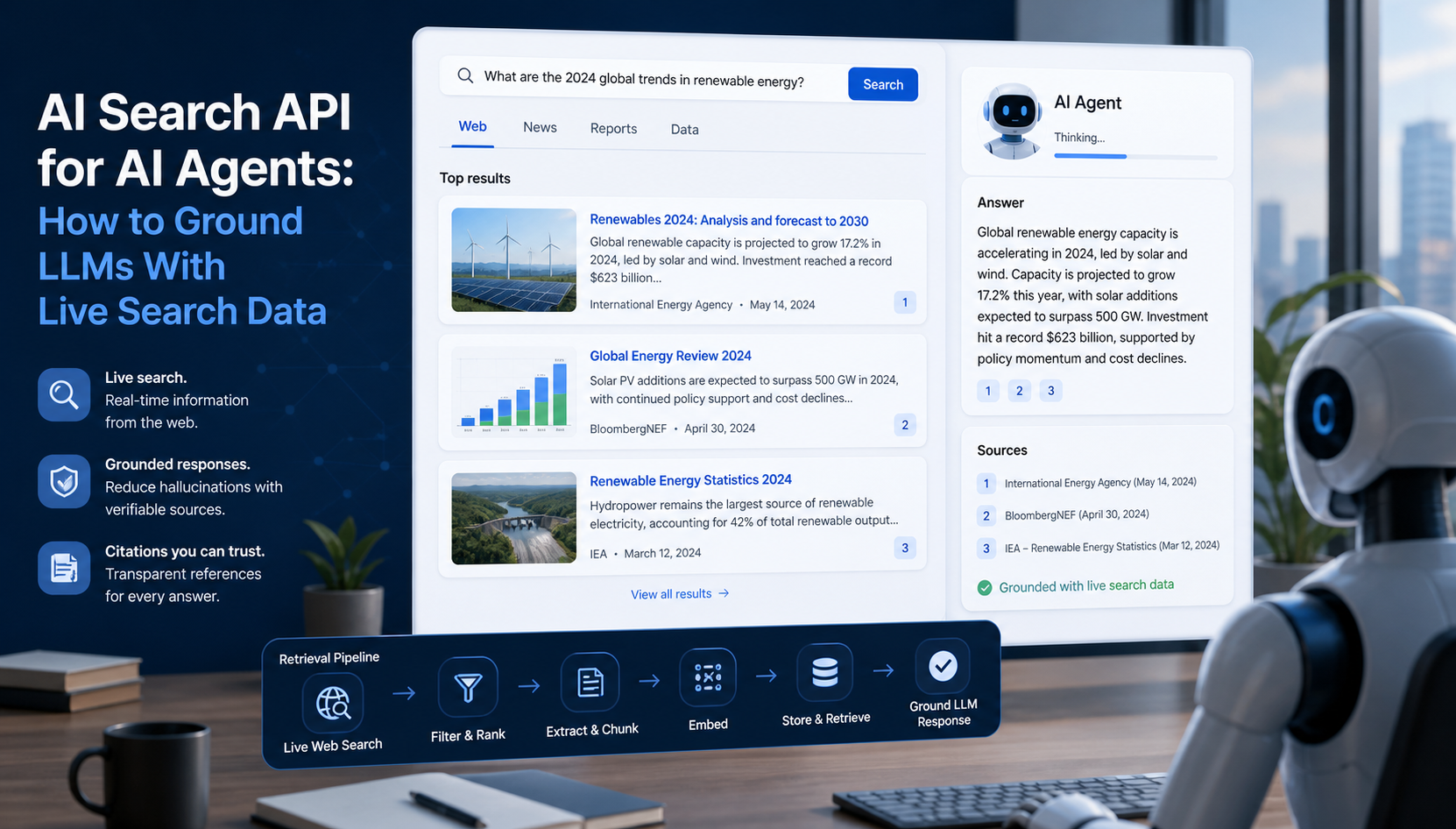
AI Search API for AI Agents: How to Ground LLMs With Live Search Data
An AI search API gives an application or agent programmatic access to current search results. Its most useful role is discovery: the agent can find candidate sources, identify fresh information, and decide what to retrieve next instead of relying only on model memory.
View Details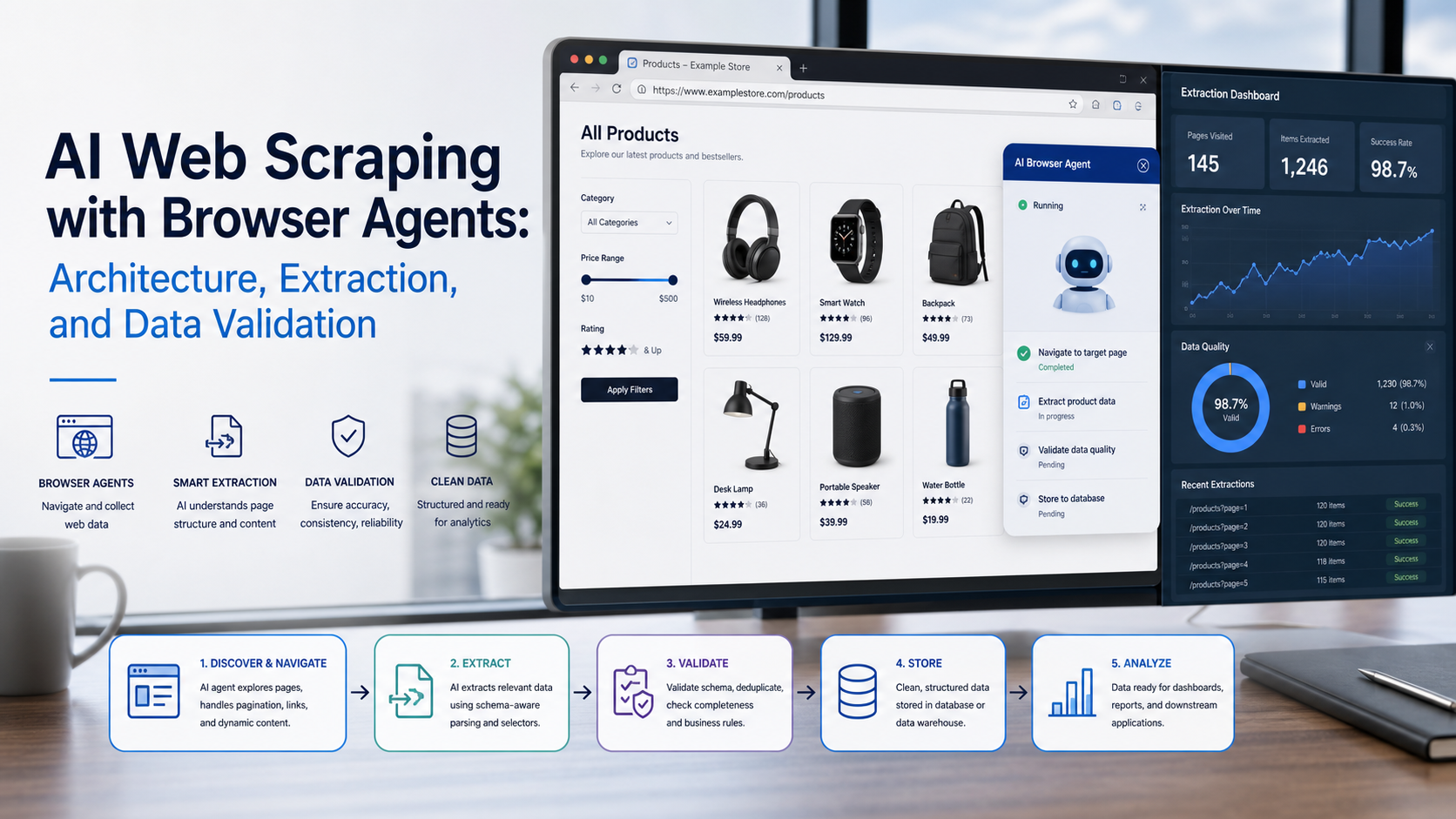
AI Web Scraping with Browser Agents: Architecture, Extraction, and Data Validation
AI web scraping uses AI to help discover, navigate, interpret, or extract information from websites. Browser agents are one implementation option when page interaction, rendering, or layout variation makes a simple scraper too brittle, but the agent should not become the entire data pipeline.
View Details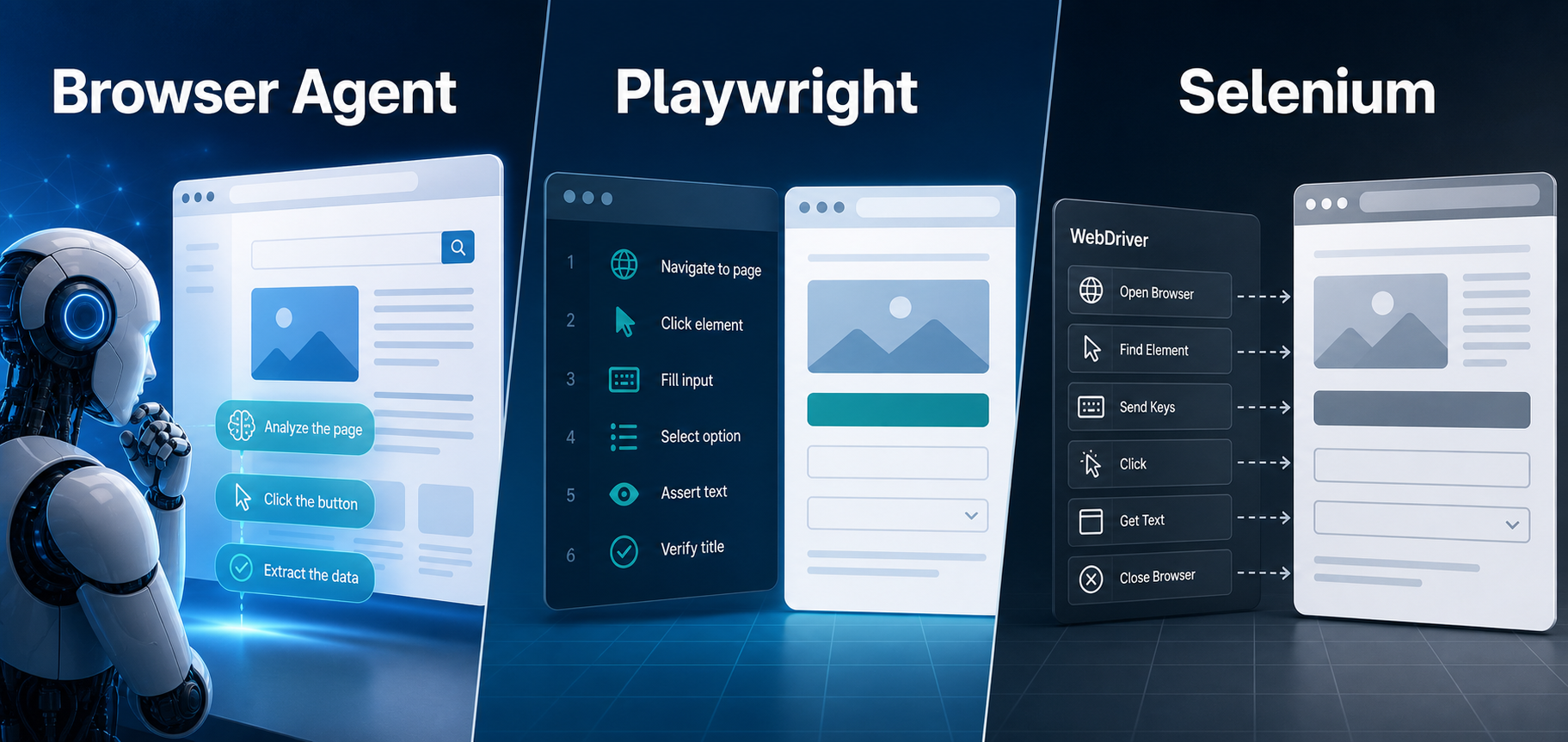
AI Browser Automation: Browser Agents vs Playwright vs Selenium
A browser agent interprets a goal and decides what browser action to take next. Playwright and Selenium can execute explicit, testable browser logic defined by developers. In 2026, however, Playwright also provides official MCP and agent-oriented workflows, so Playwright is no longer just the deterministic alternative to agentic automation. It can also serve as the browser-control layer inside an agent system.
View Details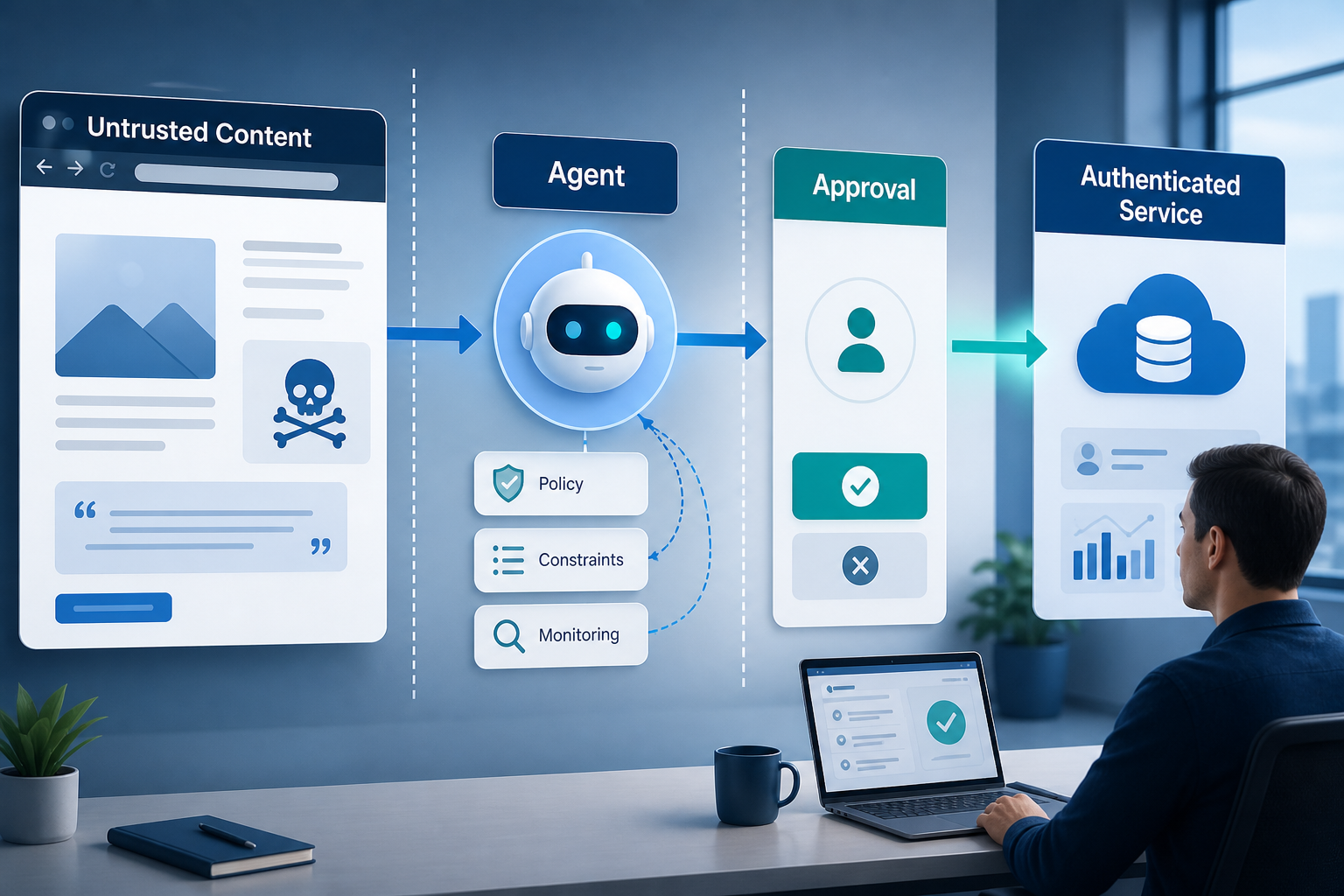
Agentic Browser Security: Prompt Injection, Permissions, and Safe Deployment
That combination creates risks that are different from ordinary browsing and traditional automation. The most important is indirect prompt injection, where hostile instructions hidden in web content attempt to redirect the agent away from the user's goal. Google describes indirect prompt injection as a primary new threat for agentic browsing and has introduced layered defenses that include origin constraints, independent action checks, threat detection, and user confirmation for sensitive actions. Google's Chrome security architecture is a useful reference for how browser-agent defenses are evolving.
View Details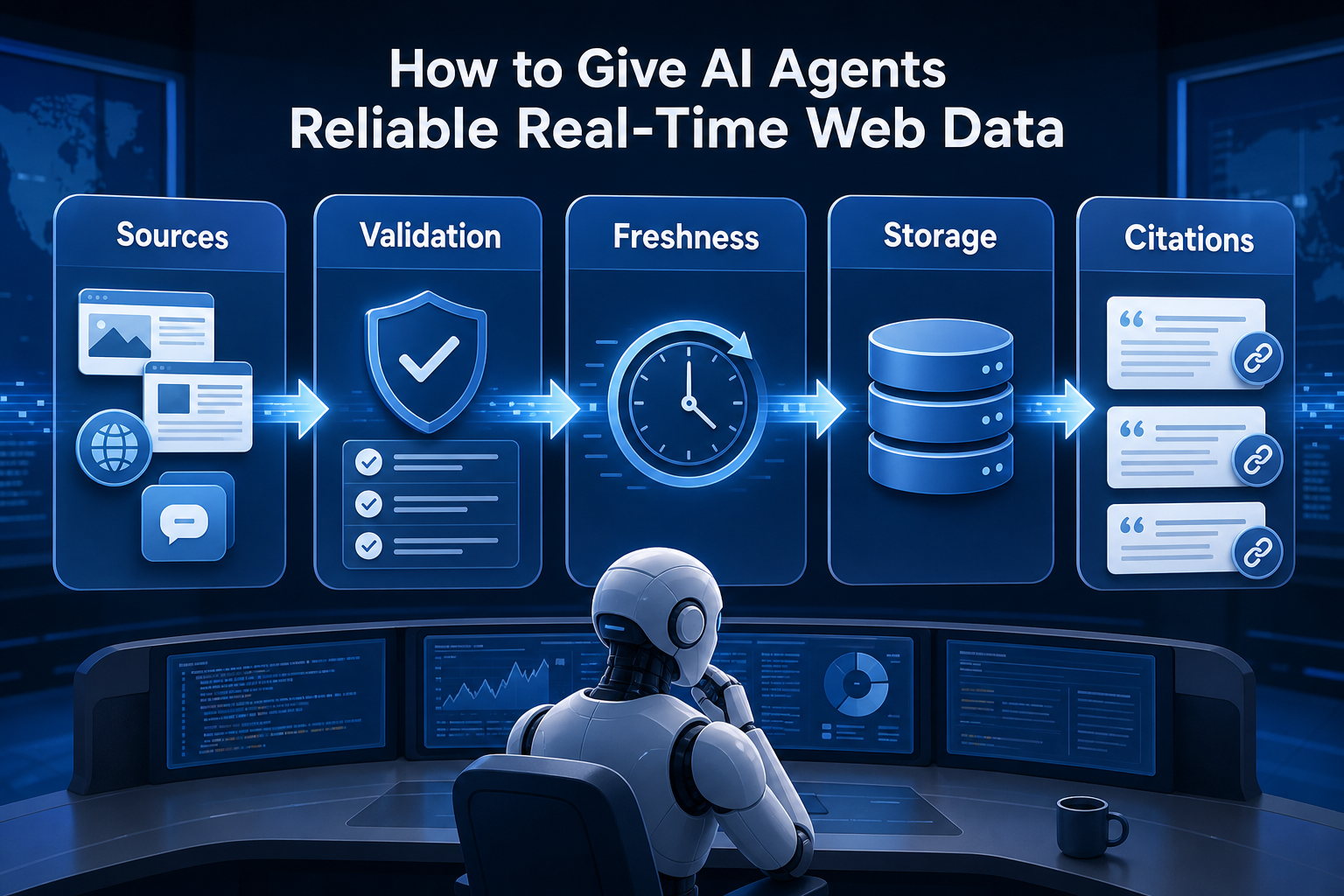
How to Give AI Agents Reliable Real-Time Web Data
A production-ready solution therefore needs more than a web scraper. It needs a web data layer that connects acquisition, validation, storage, retrieval, security, and observability. This guide explains how to design that layer.
View Details