
What Convincing AI Attacks Look Like in 2026
Can you spot the difference between a real email and an AI-generated phishing attack? If you're struggling to answer confidently, you're not alone. By 2026, artificial intelligence has transformed phishing from clumsy Nigerian prince scams into surgical strikes that fool even highly trained security professionals.
With recent industry data revealing that over 82% of modern phishing emails now utilize AI components, yielding 60% higher click rates than traditional lures, the era of easily detectable scams is officially over.
Use LycheeIP for safer OSINT
How AI Creates Personalized, Context-Aware Phishing
Modern AI-powered phishing operates on a fundamentally different level than traditional attacks. Where legacy phishing relied on mass "spray-and-pray" tactics, today's threats leverage Large Language Models (LLMs) trained on billions of communications to craft messages indistinguishable from legitimate corporate correspondence.
- Context Harvesting (OSINT): This is the first weapon in the AI attacker's arsenal. Sophisticated campaigns autonomously scrape public data from LinkedIn, company websites, press releases, and dark web data breaches to build detailed organizational maps. An AI system doesn't just know your CFO's name—it understands your company's acquisition timeline, recent leadership changes, and which specific SaaS vendors you've recently engaged.
- Hyper-Targeted Delivery: The result? Emails that reference real projects, use company-specific terminology, and arrive with perfect timing. An accounts payable clerk receives an invoice from a known vendor, formatted exactly like previous legitimate invoices, sent during normal business hours on a Tuesday morning when such requests typically arrive.
- Language Perfection: Gone are the telltale grammatical errors and awkward phrasing that once flagged suspicious emails. AI generates prose that perfectly matches the communication style of the person it is impersonating—whether that's your CEO's terse, bullet-point updates or your IT department's formal tone laced with heavy technical jargon.
- Polymorphic Content Generation: These attacks easily bypass traditional email filters. Because each phishing email is dynamically generated and unique, legacy signature-based detection is rendered useless. AI systems can generate thousands of variations on the same social engineering techniques, continuously testing and adapting to evade modern spam filters in real-time.
Red Flags to Watch For
Despite their high sophistication, AI-generated attacks still contain detectable behavioral patterns if you know exactly what to look for:
- Urgency Without Precedent: While legitimate urgent requests happen, AI attacks manufacture artificial, high-stakes time pressure: "Wire transfer needed before markets close" or "Security breach requires immediate password reset." Before acting, pause and ask yourself if this level of urgency aligns with standard operating procedure.
- Verification Resistance: Attackers will proactively discourage out-of-band verification with phrases like "Don't use the number on the website, it's outdated" or "I'm in a dead zone, reply to this email directly." Legitimate requesters welcome verification through established channels.
- Subtle Sender Inconsistencies: An email from john.smith@companyname.com might actually come from a spoofed domain like john.smith@companyname.co or use a homoglyph lookalike domain (using an "rn" instead of an "m"). Always expand the sender details and scrutinize the routing headers.
- Context Mismatches: While rare in advanced AI attacks, models occasionally hallucinate. An email referencing a "Teams call yesterday" when you actually met in person, or slightly misnaming an internal project code, is a massive red flag. AI assembles context from available data—gaps in that data create visible inconsistencies.
- Unexpected Authentication Channels: Your bank will not text you a bit.ly link to verify your account. Your IT department will not DM you on LinkedIn asking for a password reset confirmation. Legitimate organizations rely exclusively on documented, internal systems for authentication.
Use LycheeIP for safer OSINT
Training Employees for 2026's Threat Landscape
The sophistication of AI-powered attacks requires a fundamental shift in Security Operations (SecOps) and awareness training. Relying on outdated advice like "look for spelling mistakes" is a recipe for a breach.
- Make Verification Reflexive: Train employees to verify any request involving money, credentials, or sensitive data through a secondary communication channel—calling a known number, walking to a colleague's desk, or pinging them on Slack. Make verification the default corporate culture, not the exception.
- Deploy Realistic Simulations: Generic "You've won a prize!" phishing tests no longer prepare employees for reality. Partner with internal red teams to create AI-generated training simulations that mirror actual threat sophistication, referencing real projects and authentic communication patterns.
- Implement Technological Safeguards: Human awareness must be backed by technical guardrails. Enforce strict DMARC authentication policies to prevent domain spoofing, mandate hardware-based Multi-Factor Authentication (MFA), and utilize AI-powered anomaly detection on your mail servers. No single layer will catch everything, but defense-in-depth forces attackers to clear significantly more hurdles.
- Foster a "Report, Don't Blame" Culture: When AI can fool seasoned security professionals, shaming employees for falling victim creates a toxic environment where active breaches go unreported. Celebrate employees who report suspicious emails; even false positives demonstrate a vigilant workforce.
- Update Training Quarterly: AI capabilities evolve at breakneck speed. What seemed like cutting-edge malware six months ago is now commodity software. Brief, frequent training updates keep pace with the threat landscape far better than an annual marathon session.
LycheeIP (Developer-First Proxy Infrastructure)
As organizations fight back against AI-powered phishing, security engineering teams must proactively map their own external attack surface. To do this effectively, threat intelligence and red teams deploy automated OSINT scrapers to see exactly what employee data is publicly exposed and vulnerable to harvesting. LycheeIP is a developer-first proxy and data infrastructure platform designed to help technical teams reliably route and scale their network requests.
When scanning global public databases, social platforms, or dark web forums, integrating a developer-first proxy infrastructure ensures your automated requests aren't prematurely blocked by strict rate limiters. Red teams frequently leverage dynamic IP networks to smoothly rotate connections during intensive scraping operations, while security operations centers (SOCs) might utilize high-speed datacenter IP solutions to maintain persistent, stable connections to external threat intelligence feeds. By securing reliable data access with LycheeIP, defenders can identify and scrub exposed organizational data before an adversary's AI can weaponize it.
Use LycheeIP for safer OSINT
Frequently Asked Questions
Q: Can AI detection tools reliably identify AI-generated phishing emails?
A: Not consistently. While AI detection tools are improving, they face the same challenges as traditional antivirus software—attackers can test their payloads against detection systems before sending them, modifying their approaches until they bypass the filter. Detection tools should be one layer in a robust defense-in-depth strategy, not relied upon exclusively.
Q: How are AI phishing attacks different from traditional spear phishing?A: AI phishing operates at immense scale with a level of personalization that previously required hours of human intelligence gathering. A traditional spear phishing campaign might target a dozen executives with manually crafted messages. AI can generate thousands of personalized, context-aware messages across an entire organization in minutes, each flawlessly tailored to the recipient's exact role and current projects.
Q: What's the most effective single defense against AI-powered phishing?
A: Out-of-band verification. Always verify requests for sensitive actions (wire transfers, credential changes, data sharing) through a separate, trusted communication channel. Call the person using a number from your internal company directory, not one provided in the suspicious message. This simple step halts the vast majority of social engineering attacks, regardless of their technological sophistication.
Q: Should we ban AI tools to prevent employees from accidentally helping attackers?
A: No. Banning AI tools puts your organization at a massive productivity disadvantage while doing little to prevent external attacks. Instead, establish clear data loss prevention (DLP) policies on what proprietary information can be shared with public AI systems, and train employees on the risks of over-sharing organizational details on public platforms that attackers might harvest.

Recommended Articles
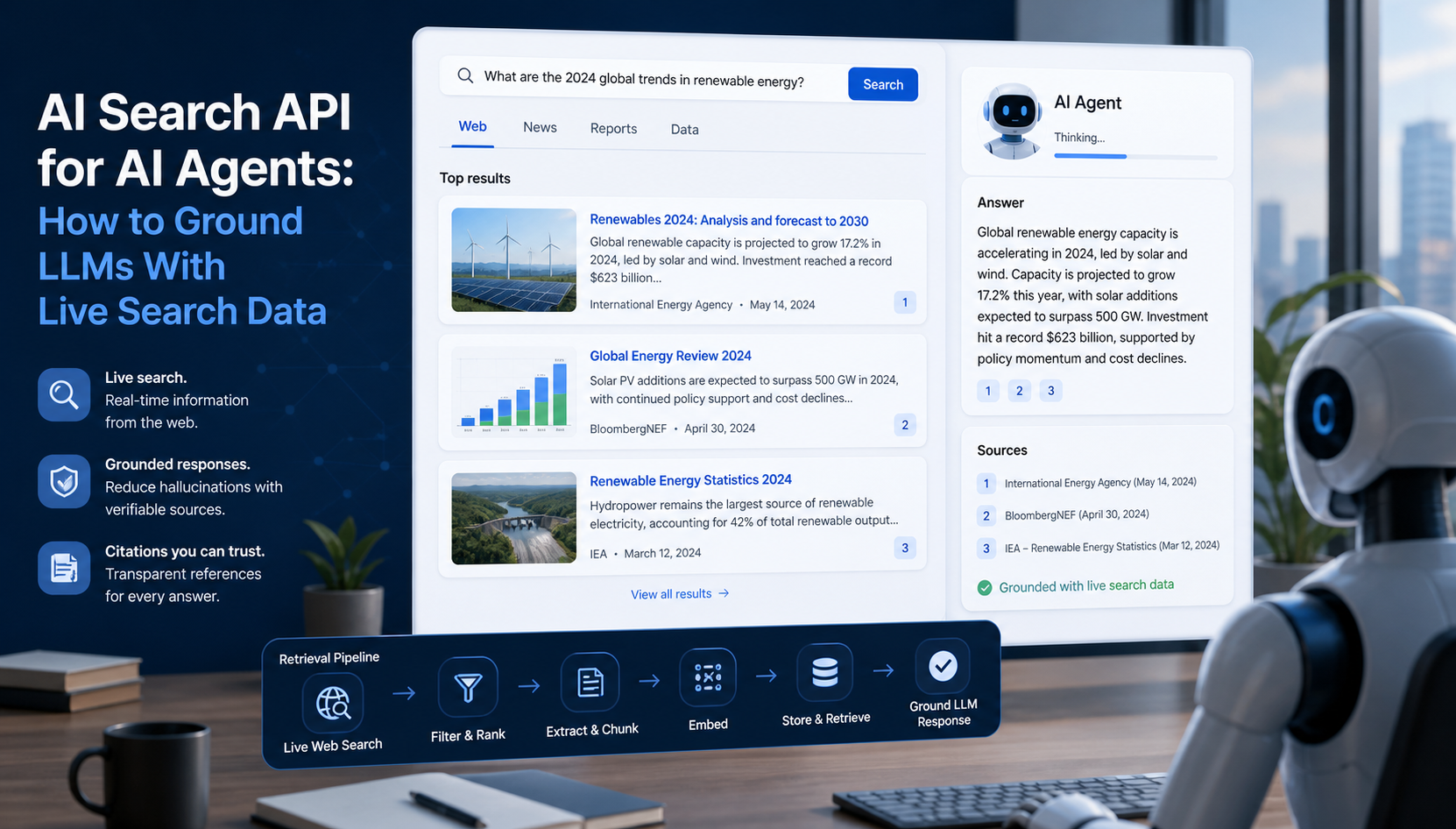
AI Search API for AI Agents: How to Ground LLMs With Live Search Data
An AI search API gives an application or agent programmatic access to current search results. Its most useful role is discovery: the agent can find candidate sources, identify fresh information, and decide what to retrieve next instead of relying only on model memory.
View Details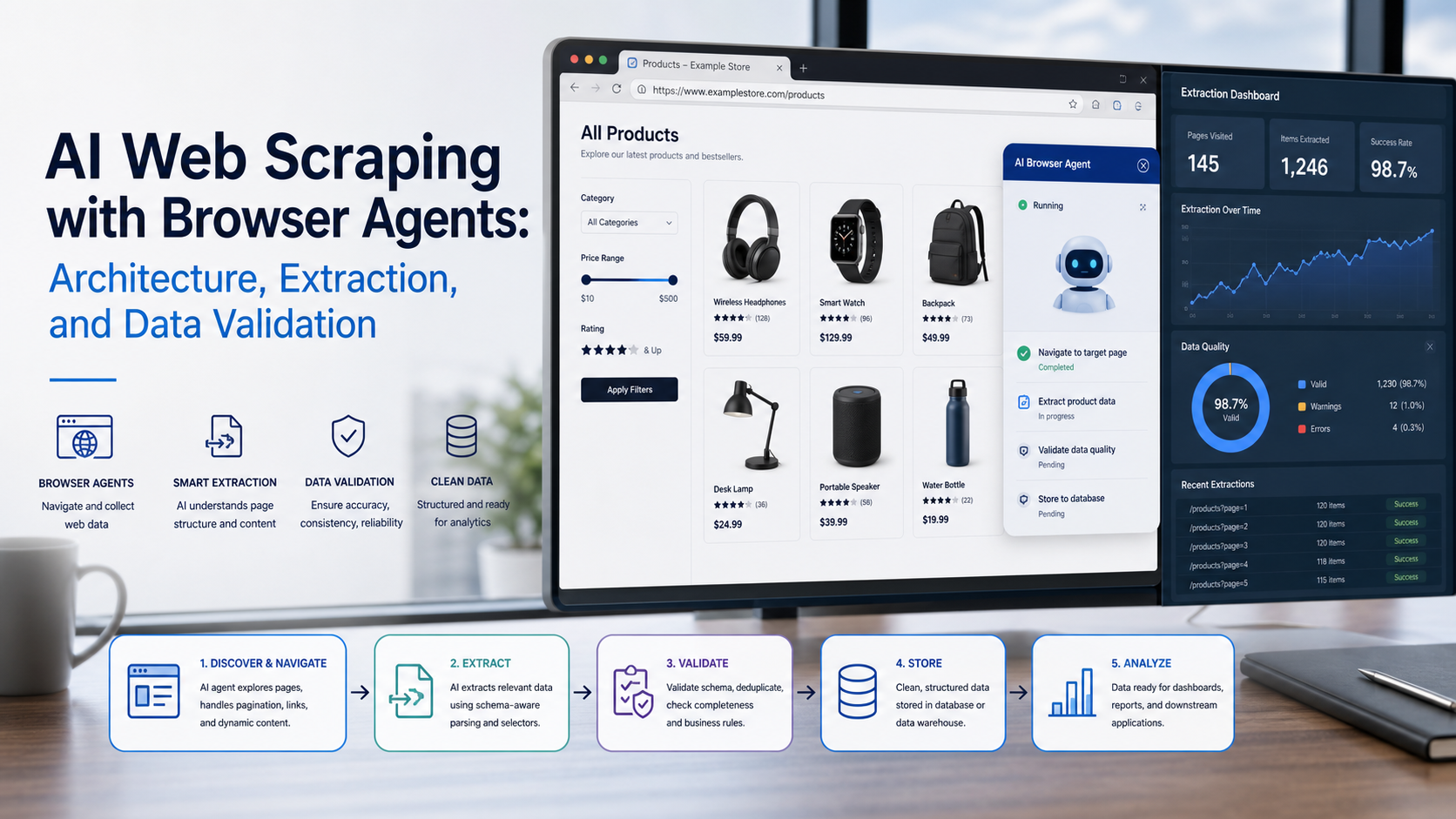
AI Web Scraping with Browser Agents: Architecture, Extraction, and Data Validation
AI web scraping uses AI to help discover, navigate, interpret, or extract information from websites. Browser agents are one implementation option when page interaction, rendering, or layout variation makes a simple scraper too brittle, but the agent should not become the entire data pipeline.
View Details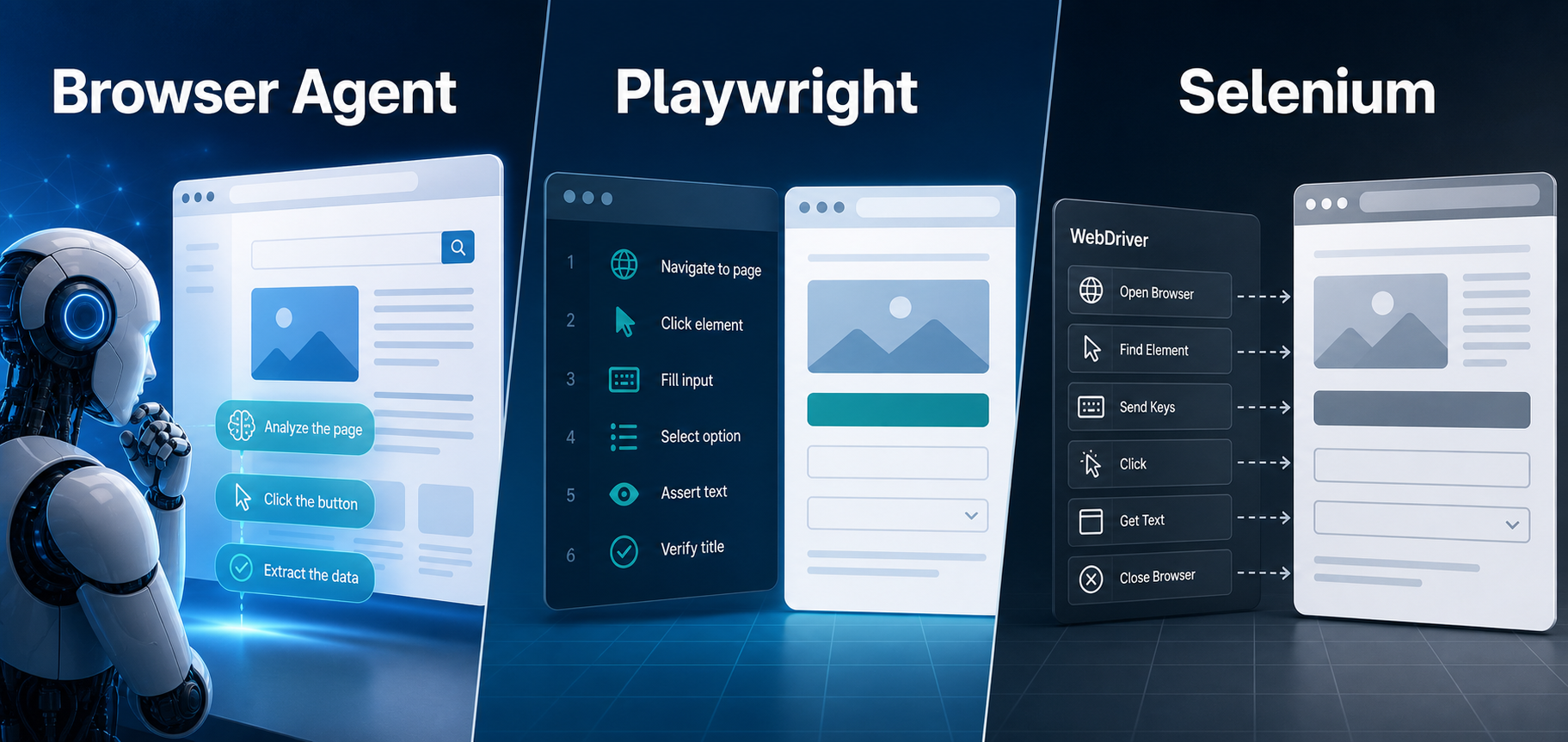
AI Browser Automation: Browser Agents vs Playwright vs Selenium
A browser agent interprets a goal and decides what browser action to take next. Playwright and Selenium can execute explicit, testable browser logic defined by developers. In 2026, however, Playwright also provides official MCP and agent-oriented workflows, so Playwright is no longer just the deterministic alternative to agentic automation. It can also serve as the browser-control layer inside an agent system.
View Details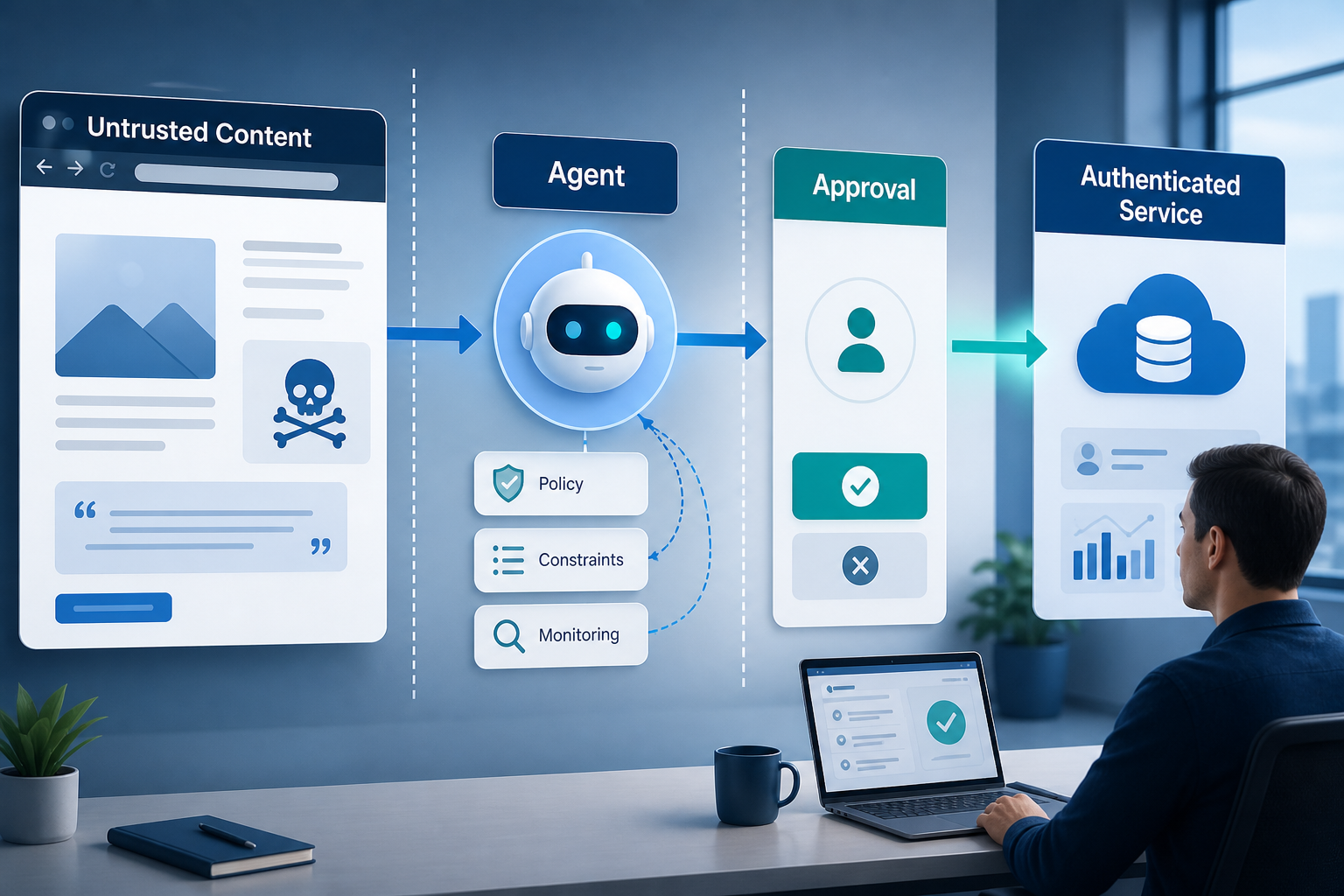
Agentic Browser Security: Prompt Injection, Permissions, and Safe Deployment
That combination creates risks that are different from ordinary browsing and traditional automation. The most important is indirect prompt injection, where hostile instructions hidden in web content attempt to redirect the agent away from the user's goal. Google describes indirect prompt injection as a primary new threat for agentic browsing and has introduced layered defenses that include origin constraints, independent action checks, threat detection, and user confirmation for sensitive actions. Google's Chrome security architecture is a useful reference for how browser-agent defenses are evolving.
View Details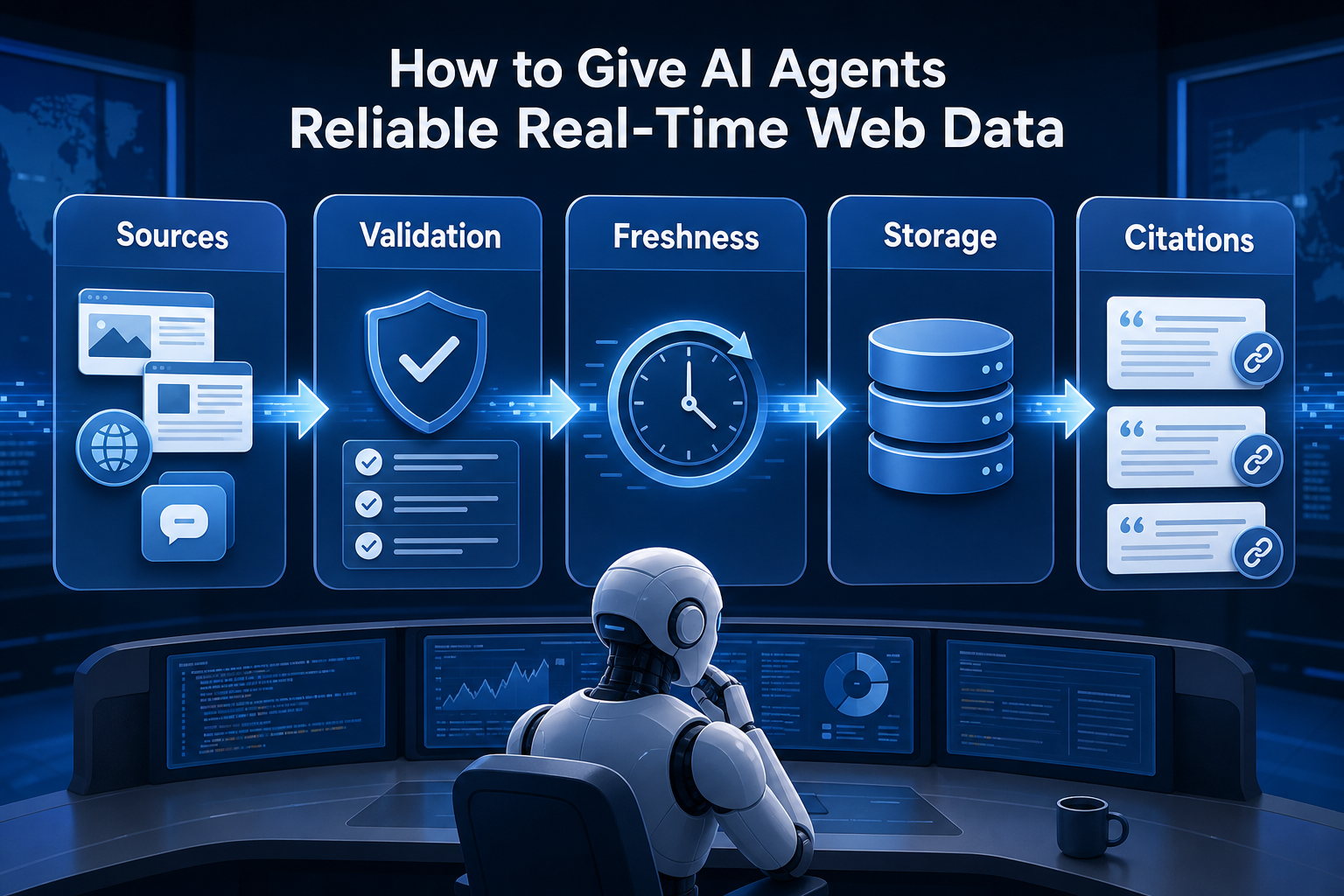
How to Give AI Agents Reliable Real-Time Web Data
A production-ready solution therefore needs more than a web scraper. It needs a web data layer that connects acquisition, validation, storage, retrieval, security, and observability. This guide explains how to design that layer.
View Details