
Bypass CAPTCHA: Legal Risks and Smarter Alternatives for Data Collection
Bypass CAPTCHA: Legal Risks and Smarter Alternatives for Data Collection
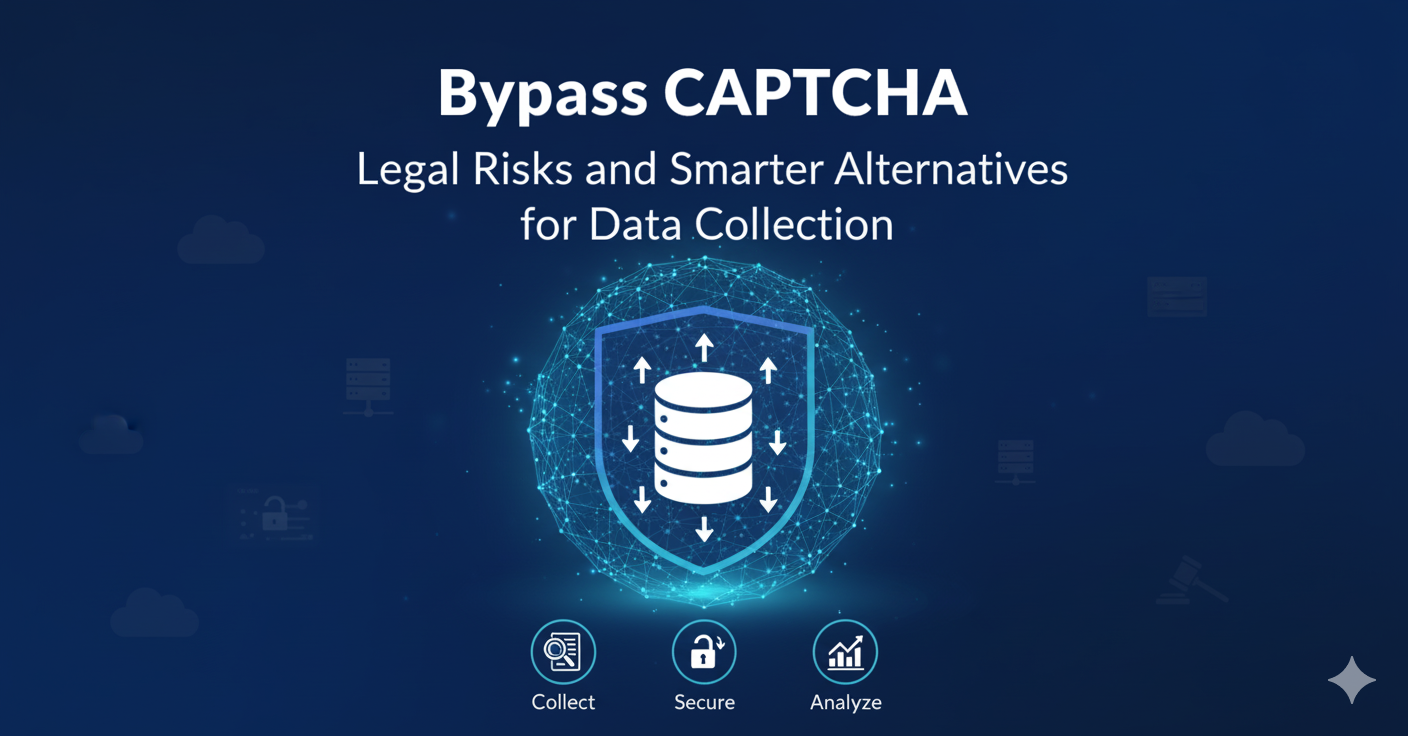
For developers and data teams, CAPTCHA challenges are more than a minor annoyance, they are a direct obstacle to critical workflows. The temptation to find a quick way to bypass CAPTCHA is understandable, but it's a strategy fraught with legal, ethical, and technical risks. A more sustainable approach involves understanding why these challenges appear and using smarter, compliant methods to prevent them in the first place.
Instead of fighting against verification systems, the goal should be to send signals of legitimacy. This guide explains the risks of attempting to bypass CAPTCHA and details more reliable alternatives, including how a robust proxy infrastructure is fundamental to successful data collection.
Explore LycheeIP Proxy Plans to Reduce CAPTCHAs
What Does It Mean to Bypass CAPTCHA?
Bypassing CAPTCHA means using automated methods to circumvent a website's human verification tests without authorization. These "Completely Automated Public Turing tests to tell Computers and Humans Apart" are designed as a security checkpoint. Any attempt to illegitimately get around them, whether through scripts or third-party solving services, constitutes a bypass.
Why is Trying to Bypass CAPTCHA a High-Risk Strategy?
Attempting to bypass CAPTCHA exposes your project to significant legal, technical, and reputational damage.
Legal and Compliance Risks
Violating a website's Terms of Service (TOS) by circumventing security measures can have serious consequences. While scraping publicly available data has seen nuanced legal interpretations, actively breaking a technical barrier like CAPTCHA is often viewed more critically and can increase your legal exposure under statutes like the Computer Fraud and Abuse Act (CFAA).
Technical Instability and Blockades
Methods to bypass CAPTCHA are brittle and unreliable. Websites constantly update their security logic, meaning a bypass that works today will likely fail tomorrow, breaking your data pipeline without warning. This leads to wasted engineering hours, incomplete data, and a reactive, unstable workflow. Worse, repeated attempts can lead to permanent IP bans.
How Do Websites Trigger CAPTCHA Challenges?
Websites trigger CAPTCHAs based on traffic signals that suggest automated, non-human behavior. Common triggers include:
- Low IP Reputation: An IP address associated with previous spam or bot-like activity is a major red flag. This is common with overloaded or low-quality datacenter proxies.
- Unusual Request Velocity: A single IP making hundreds of requests per minute is not human behavior.
- Inconsistent Headers: Mismatched or missing browser headers can signal an automated script.
- Geographic Mismatch: An IP address from a location that doesn't align with the user's language or timezone settings can seem suspicious.
Understanding these triggers is the first step to avoiding CAPTCHAs, not trying to bypass CAPTCHA after the fact.
Which Safer Alternatives Replace CAPTCHA Evasion?
Use legitimate, privacy-respecting verification methods and data sources instead of attempting to bypass CAPTCHA.
These compliant methods offer stability and respect user experience, making them far superior for professional data operations.
| Alternative Method | Primary Use Case | Key Benefit |
| Official APIs | Structured data access | Guaranteed, legal access to data without scraping. |
| Data Licensing | Large-scale data acquisition | Removes the need to interact with the frontend at all. |
| Cloudflare Turnstile | Website security (for site owners) | A privacy-first, invisible check that rarely shows a puzzle. |
| reCAPTCHA v3 | Website security (for site owners) | Assigns a risk score to interactions, reducing user friction. |
Explore LycheeIP Proxy Plans to Reduce CAPTCHAs
How Do Quality Proxies Help Reduce CAPTCHA Encounters?
High-quality proxies reduce CAPTCHA triggers by providing clean, reputable IP addresses that mimic real-user traffic patterns. This is the core of a preventative strategy, making attempts to bypass CAPTCHA unnecessary. A developer-first provider like LycheeIP helps by offering:
- Clean, Rotating Residential IPs: Using IP addresses from real internet service providers makes your requests appear as genuine user traffic. Rotating them ensures that request velocity from any single IP remains low, avoiding detection.
- Ethically Sourced IP Pools: LycheeIP ensures its IP pools are clean and have a high reputation, drastically lowering the chance of your requests being flagged.
- Precise Geotargeting: Matching your proxy's location to your target's region helps your requests blend in seamlessly with local traffic.
- Experience in Practice: Imagine scraping 5,000 product pages. Sending all requests from one datacenter IP is a guaranteed way to get blocked by a CAPTCHA. Instead, routing those requests through a pool of 5,000 LycheeIP residential proxies makes each request appear to come from a different, legitimate user, dramatically reducing CAPTCHA encounters.
Explore LycheeIP Proxy Plans to Reduce CAPTCHAs
What Are the Best Practices for Ethically Managing CAPTCHAs?
Adopt a strategy of prevention and respect for website terms rather than attempting to bypass CAPTCHA.
- Always Check robots.txt: Respect the site's stated rules for automated access.
- Use Official APIs First: If a site offers an API, it is always the preferred method for data access.
- Throttle Your Requests: Even with good proxies, maintain a respectful request rate to avoid overloading servers.
- Prioritize High-Reputation Proxies: Invest in a clean proxy infrastructure to avoid being flagged as a bot. This is far more effective than trying to bypass CAPTCHA systems.
By focusing on making legitimate-looking requests, you can build more robust and ethical data collection workflows that stand the test of time.
Explore LycheeIP Proxy Plans to Reduce CAPTCHAs
Frequently Asked Questions
1. Is it illegal to bypass CAPTCHA?
It is legally risky. While laws vary, actively circumventing a security measure like CAPTCHA can violate a website's Terms of Service and potentially laws like the CFAA, increasing your legal liability. It is always safer to use compliant alternatives.
2. How can I get past human verification CAPTCHA?
Instead of trying to get past it, focus on preventing it. Using high-quality residential proxies makes your automated requests appear like genuine human traffic, significantly reducing the chance of a CAPTCHA challenge appearing in the first place.
3. Why do I get so many CAPTCHA challenges when scraping?
This is likely due to your IP address having a low reputation or your request patterns appearing automated. Using shared datacenter proxies or sending requests too quickly are common triggers for frequent CAPTCHA challenges.
4. Can AI be used to bypass CAPTCHA?
While AI models can solve some CAPTCHAs, security systems are also using AI to become more sophisticated at detection. Relying on this approach creates an unstable cat-and-mouse game; a preventative proxy strategy is more reliable for long-term projects.
5. What is the best CAPTCHA alternative for a website owner?
For website owners, modern systems like Cloudflare Turnstile or Google's reCAPTCHA v3 are excellent alternatives. They verify users through passive, background checks, greatly improving user experience without compromising on security.
6. Do rotating proxies guarantee I won't see a CAPTCHA?
While no method is a 100% guarantee, using a clean, ethically sourced pool of rotating residential or mobile proxies is the single most effective way to minimize CAPTCHA encounters during data collection tasks.

Recommended Articles
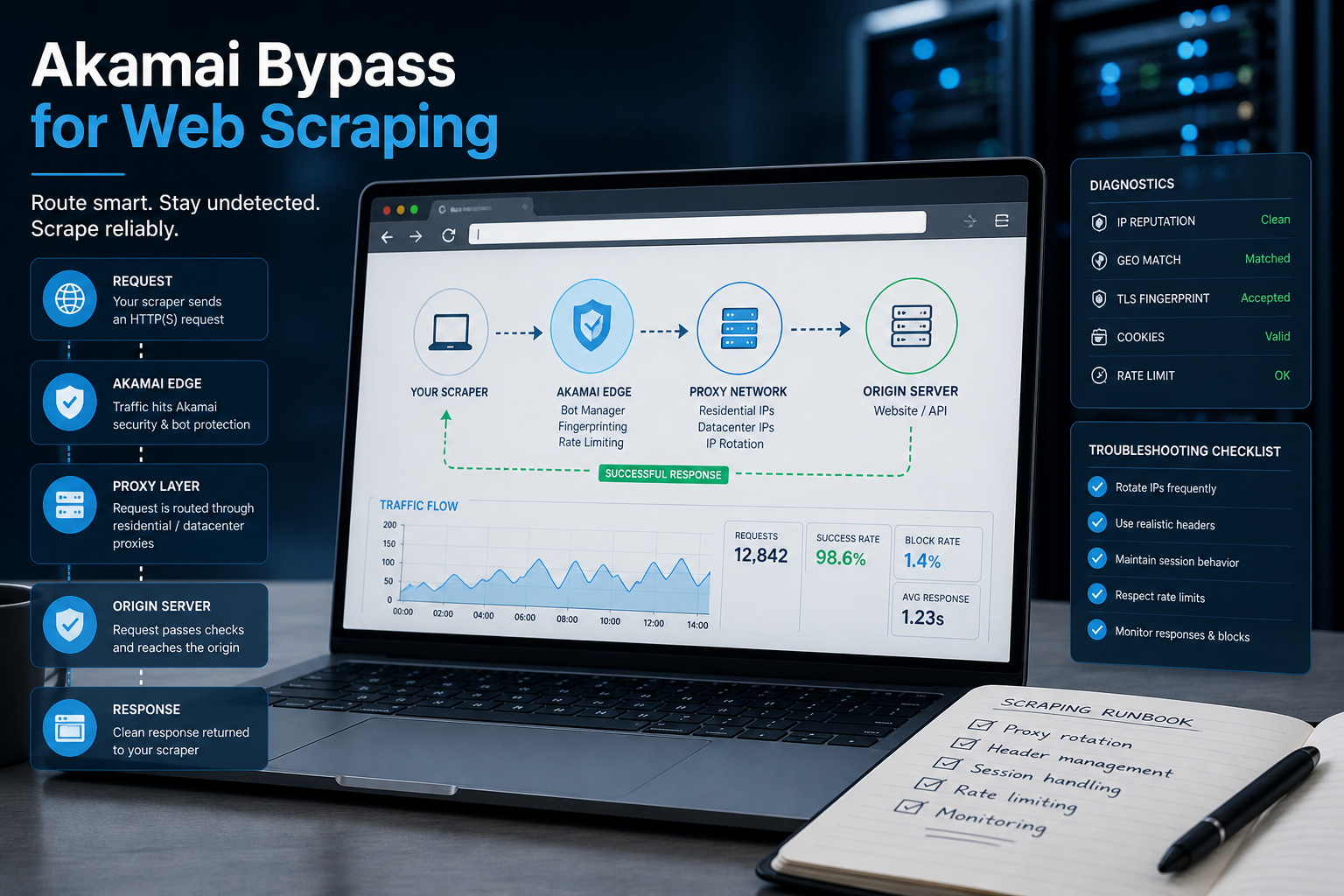
Akamai Bypass for Web Scraping
Akamai Bypass for Web Scraping
View Details
Browser Security Settings Most Users Never Touch
Stop leaving your personal data wide open. We reveal the crucial security toggles buried in your browser that instantly lock down your passwords and hide your daily web traffic.
View Details
Stop Saving Passwords in Your Browser
Letting Chrome or Safari remember your passwords feels incredibly convenient, but it is a massive security risk. Discover the hidden dangers of browser autofill and exactly what you should be using instead.
View Details
Should You Pay for a Browser? The Case For and Against
Are you currently paying for your free browser with your personal data? Discover if upgrading to a paid tool like Brave Origin is the ultimate privacy hack or just a complete waste of your cash.
View Details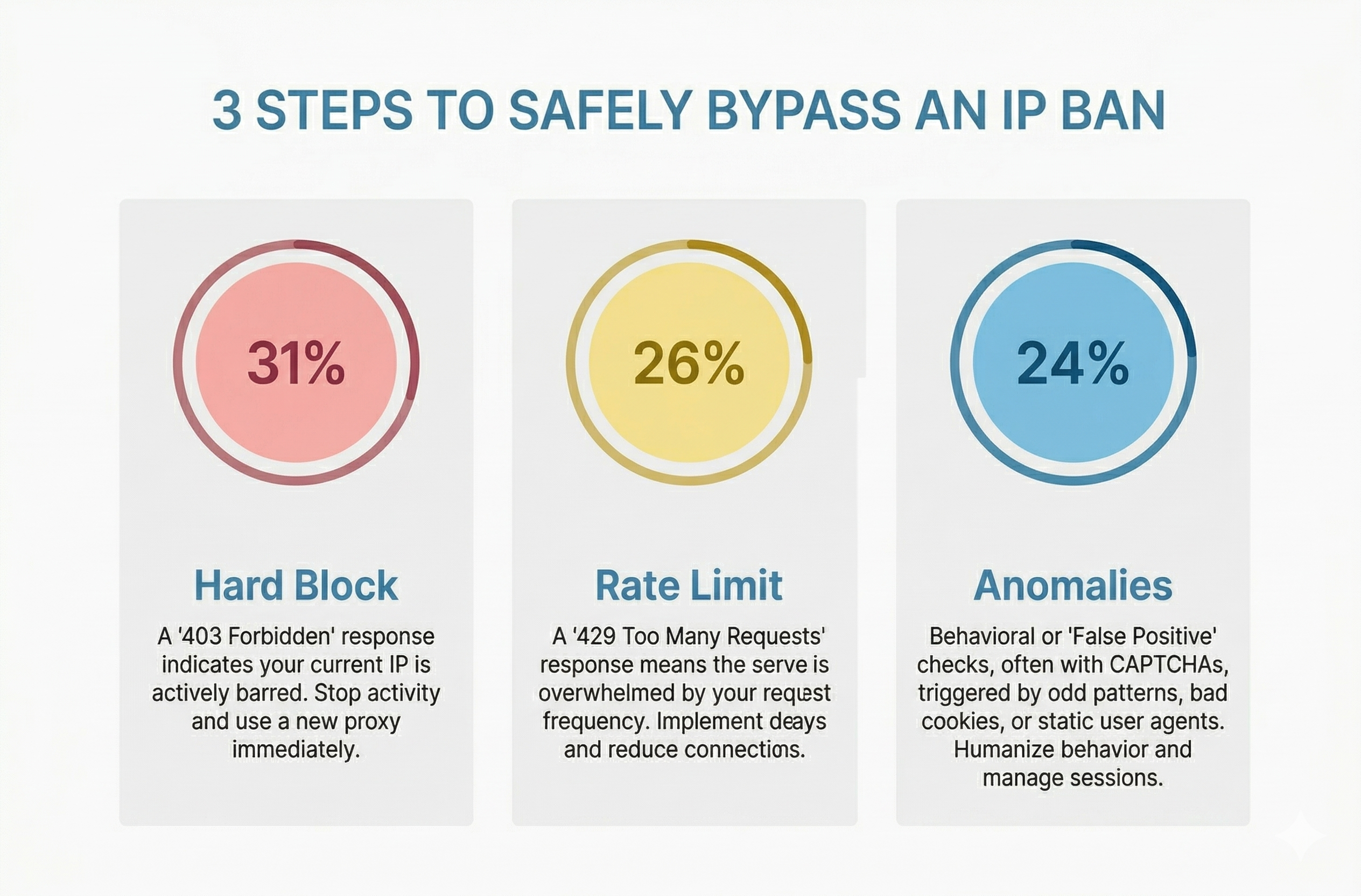
How to Bypass an IP Ban Safely by Diagnosing 403s, 429s, and False Positives
Diagnose 403s, 429s, and false positives quickly. Use this technical checklist to recover network access, reduce blocks, and scale data pipelines safely.
View Details