
Build a Money-Making AI Agent from Scratch: A Step-by-Step Business Plan
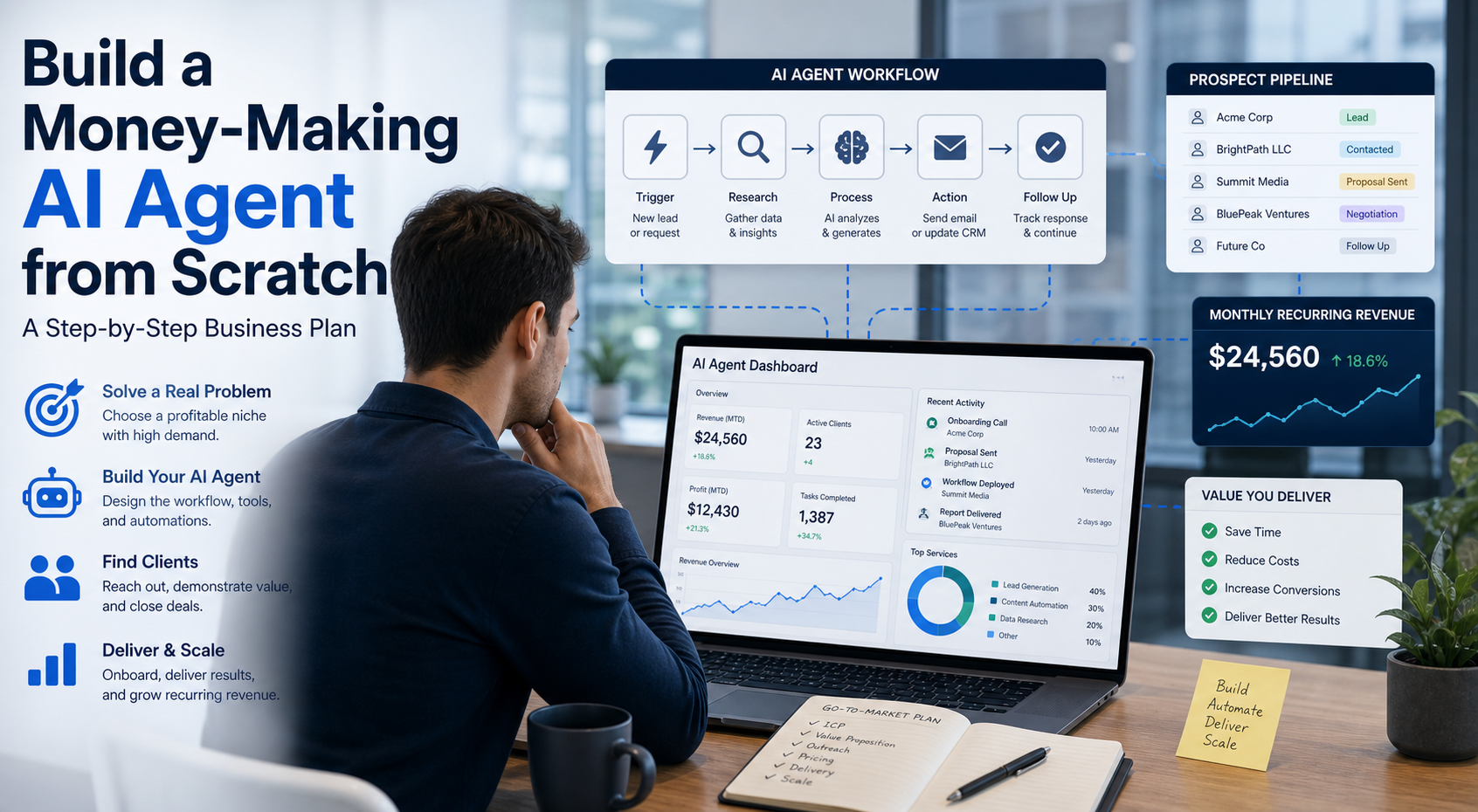
The AI Agent Monetization Opportunity
I gave an AI agent one task: make money. Here's what happened.
Most people don't know how to monetize AI agent capabilities. They understand AI can automate tasks, scrape websites, and process data, but translating those capabilities into billable services remains unclear. The gap between technical possibility and practical business model stops entrepreneurs and freelancers from capturing what could be a significant revenue stream.
This article provides a step-by-step business plan for launching AI agent services. We'll examine real business models, explore how to package web scraping agents as client offerings, and walk through the complete workflow from initial idea to profitable operation. By the end, you'll understand exactly how to build, position, and sell AI agent services that solve real problems for paying clients.
Real Business Models Using AI Agents for Data Collection and Automation
AI agents that collect and process data represent one of the most immediately monetizable applications. Several proven business models have emerged around these capabilities.
For the LycheeIP implementation details behind this step, review LycheeIP proxy infrastructure.
For the LycheeIP implementation details behind this step, review AI-powered browser automation hub.
For the official technical reference behind this point, see Anthropic documentation.
E-Commerce Intelligence Services
Retailers and brands need continuous competitor monitoring. An AI agent that tracks competitor pricing, inventory levels, product descriptions, and promotional strategies across multiple platforms creates immediate business value. Clients pay monthly retainers ranging from $500 to $5,000 depending on the number of competitors monitored, data frequency, and reporting depth.
The agent scrapes product pages, extracts structured data, identifies price changes, and alerts clients to competitive moves. Advanced implementations include sentiment analysis of product reviews, stock availability tracking, and promotional pattern recognition.
Lead Generation and Prospecting Automation
B2B companies continuously need qualified leads. AI agents can monitor job postings, company news, funding announcements, technology stack changes, and hiring patterns to identify prospects at exactly the right buying moment. Services typically charge per qualified lead delivered or monthly subscriptions based on lead volume.
These agents combine public data collection from multiple sources with AI-powered qualification scoring. The automation removes manual prospecting work while improving lead quality through consistent criteria application.
For the LycheeIP implementation details behind this step, review scaling lead scraping with n8n.
Market Research and Trend Analysis
Consulting firms, investment funds, and corporate strategy teams need market intelligence. AI agents that monitor industry news, social media conversations, patent filings, regulatory changes, and competitor announcements deliver ongoing market awareness. Clients pay for synthesized intelligence reports rather than raw data.
The business model charges for insight delivery, typically $2,000 to $20,000 monthly depending on industry coverage breadth and analysis depth. The agent handles data collection across dozens of sources while AI processing identifies patterns, emerging trends, and strategic implications.
Content Aggregation and Curation Services
Media companies, newsletters, and content platforms need relevant content discovery. AI agents that monitor specific topic areas, extract key information, and rank content by relevance enable content teams to focus on creation rather than research. Pricing models include per-article fees or monthly subscriptions.
These agents filter thousands of potential sources, extract clean content, remove duplicates, and apply custom relevance scoring. The service saves hours of manual monitoring while ensuring comprehensive coverage.
Ad Verification and Brand Safety Monitoring
Advertisers need confirmation their ads appear correctly and in brand-safe environments. AI agents that verify ad placement, check for fraud indicators, and monitor brand mentions across websites provide compliance documentation. Services charge based on monitoring volume and verification frequency.
The agent checks ad rendering, tracks competitor ad strategies, and identifies brand safety violations before they become problems.
Real Estate and Property Data Services
Real estate investors, brokers, and developers need property data aggregation. AI agents that monitor listing sites, extract property details, track price changes, and identify investment opportunities create decision-making advantages. Services charge per market monitored or per property data point delivered.
These agents handle multiple listing formats, normalize data across sources, and maintain historical tracking for price trend analysis.
How to Package Web Scraping Agents as Client Services
Transforming technical capability into sellable service requires strategic packaging. Clients buy outcomes, not technology. Your positioning determines pricing power and client acquisition success.
For the LycheeIP implementation details behind this step, review rotating residential proxies.
For the official technical reference behind this point, see MDN HTTP overview.
Define the Business Outcome, Not the Technical Process
Avoid positioning your service as "web scraping" or "data extraction." Instead, describe the business problem solved. "Competitor price monitoring that protects your margins" sells better than "automated e-commerce scraping." "Lead intelligence that identifies buyers before your competitors" resonates more than "B2B data collection."
Your service description should focus entirely on client benefits: time saved, revenue protected, opportunities identified, risks mitigated, or decisions improved.
Create Productized Service Tiers
Custom project work creates operational complexity. Productized tiers with fixed scope and pricing enable efficient delivery at scale. Consider this structure:
Starter Tier: Monitor 5-10 sources, daily updates, basic dashboard, email alerts. Price at $500-$1,000 monthly.
Professional Tier: Monitor 25-50 sources, hourly updates, advanced analytics, API access, custom alerts. Price at $2,000-$5,000 monthly.
Enterprise Tier: Unlimited sources, real-time monitoring, dedicated support, custom integrations, SLA guarantees. Price at $10,000+ monthly.
Fixed tiers create predictable revenue while allowing clients to self-select based on needs.
Build Compelling Delivery Mechanisms
Raw data dumps don't justify premium pricing. Your delivery mechanism should make insights immediately actionable:
Interactive Dashboards: Visual representations of collected data with filtering, comparison tools, and trend visualization. Clients should understand key insights within 30 seconds of opening the dashboard.
Automated Reports: Scheduled PDF or email reports highlighting significant changes, emerging patterns, and recommended actions. Reports should tell a story, not just present tables.
Alert Systems: Real-time notifications when monitored data crosses defined thresholds. Alerts should be configurable by client and include context explaining significance.
API Access: For technical clients who want to integrate collected data into their own systems. API documentation and support become service differentiators.
Integration Connectors: Pre-built connections to common business tools like Slack, CRM systems, analytics platforms, and business intelligence tools. Eliminating integration friction increases perceived value.
Establish Clear Data Refresh Expectations
Clients need to understand data freshness. Set explicit expectations: "Pricing data updated every 6 hours," "News monitoring checked every 15 minutes," "Social media tracking runs continuously." Data latency directly impacts pricing tiers.
More frequent updates require more infrastructure, higher proxy costs, and increased processing. Align refresh rates with actual client decision-making cycles to optimize cost versus value.
Create Proof of Concept Offers
Reduce buying friction with limited proof-of-concept engagements. Offer "14-day trial monitoring 3 competitors" or "One-week market scan with summary report." POC pricing should be low enough to eliminate budget approval barriers while demonstrating clear value.
Successful POCs convert to ongoing services at much higher rates than cold sales. The trial period lets clients experience value before committing to monthly payments.
Address Legal and Ethical Positioning
Position your service around public data collection for legitimate business purposes. Your terms should clearly state that clients are responsible for ensuring their monitoring use cases comply with applicable terms of service and legal requirements. Include language about respecting robots.txt files, avoiding overload on target systems, and collecting only publicly available information.
This positioning protects your business while setting appropriate client expectations about responsible data collection practices.
Setup Workflow from Idea to Profitable AI Agent Business
Launching an AI agent service requires systematic execution across technical setup, client acquisition, and operational delivery.
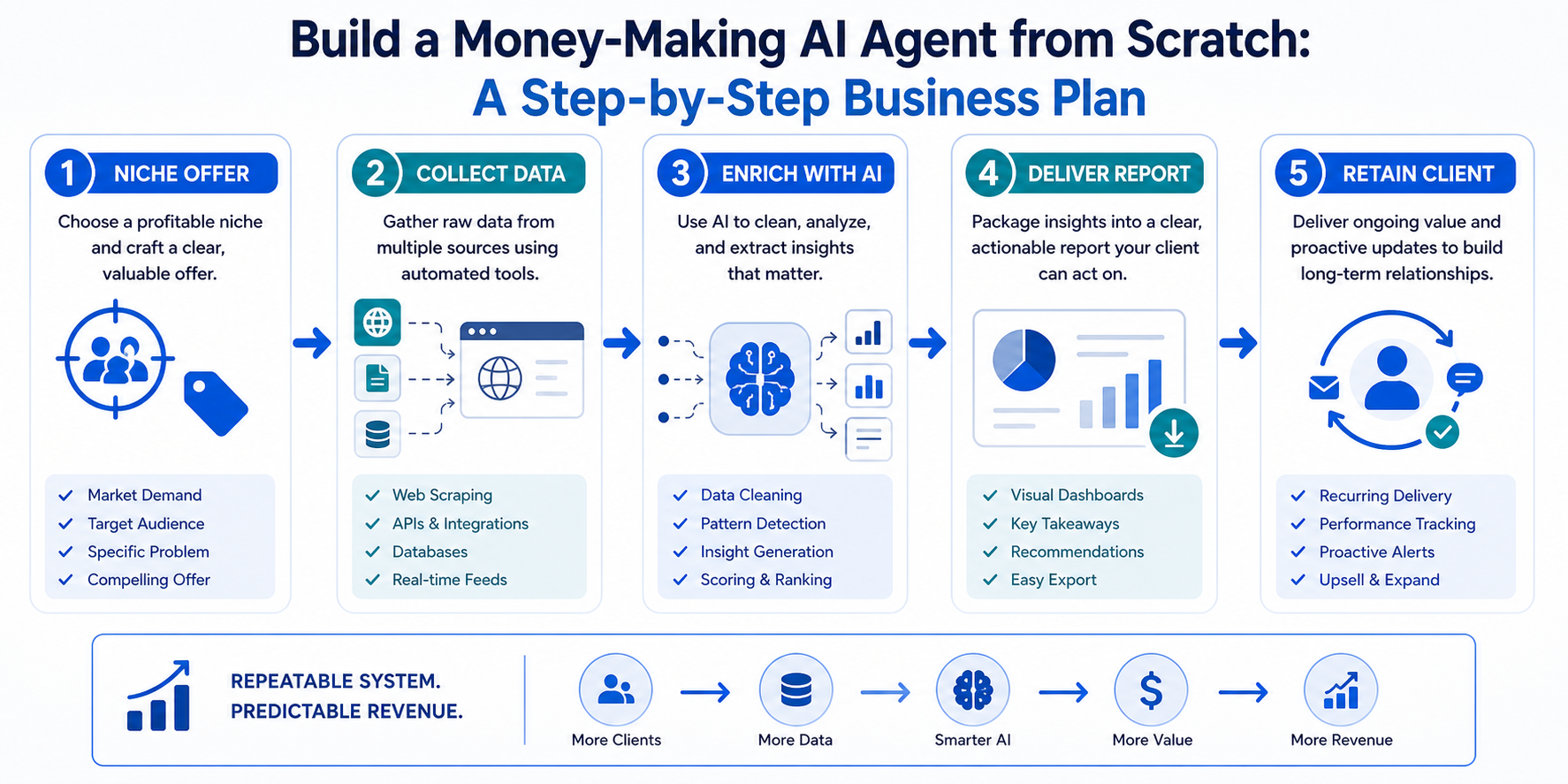
Step 1: Identify a Specific High-Value Use Case
General-purpose AI agents are difficult to sell. Instead, identify a narrow use case where data collection creates immediate business value. Validate demand before building.
Talk to 10-15 potential clients in your target industry. Ask: "What competitor information do you wish you had continuously?" "What manual research tasks consume your team's time?" "What market changes do you need to catch early?"
Look for consistent pain points mentioned by multiple prospects. A use case is validated when prospects say they would pay for a solution and can describe exactly how they would use the data.
Step 2: Build the Minimum Viable Agent
Start with focused functionality that delivers core value. Your first version should:
- Collect data from 3-5 sources relevant to your use case
- Extract the 5-10 most critical data points
- Store results in a simple database
- Provide basic visualization or reporting
- Run on a reliable schedule
Use Python with libraries like BeautifulSoup, Scrapy, or Playwright for data collection. For AI processing, leverage OpenAI API, Anthropic Claude, or open-source models for text analysis, categorization, and insight extraction.
Keep infrastructure simple initially. A single server or cloud function can handle early clients. Over-engineering before product-market fit wastes time and capital.
Step 3: Establish Reliable Infrastructure
As you move beyond testing, infrastructure reliability becomes critical. Two components require particular attention: proxy infrastructure and data storage.
Proxy Infrastructure: Web scraping at scale requires rotating IP addresses to avoid blocks and access geo-restricted content. Residential proxies provide the most reliable access by routing requests through real user devices. Datacenter proxies offer lower cost but face higher block rates on sophisticated websites.
For client services, reliability matters more than cost savings. A single day of downtime can destroy client trust. Evaluate proxy providers based on uptime guarantees, IP pool size for your target geographies, and response time.
Services like LycheeIP provide proxy infrastructure specifically designed for data collection workflows, with options for residential, datacenter, and static residential proxies depending on your target websites and required reliability levels.
Data Storage and Processing: Structure your data storage for both immediate access and historical analysis. Use PostgreSQL or MongoDB for structured data storage, implement regular backups, and design your schema to accommodate new data fields as client needs evolve.
Set up monitoring for your agent's operation. You need alerts when scraping fails, when data quality degrades, or when processing falls behind schedule.
Step 4: Create Your Initial Service Package
Design your first productized offering with fixed scope and clear deliverables:
- Define exactly which sources you monitor
- Specify data refresh frequency
- Describe the dashboard or reporting mechanism
- Set explicit response time for support questions
- Clarify what happens if a data source changes or blocks access
Create simple pricing: one tier, one price, clear monthly subscription. Complexity kills early sales. You can add sophistication after proving the core concept.
Build a landing page that explains the business problem, describes your solution, shows example outputs, and provides clear pricing. Include a free consultation call to book link.
Step 5: Acquire Your First Five Clients
First clients rarely come from passive marketing. Use direct outreach:
LinkedIn Direct Messages: Identify decision-makers in your target industry. Send personalized messages explaining the specific problem you solve and offering a free trial or discounted first month.
Industry Slack/Discord Communities: Participate genuinely in relevant communities. When appropriate, mention your service as a solution to problems members discuss.
Cold Email Campaigns: Build targeted lists of potential clients. Send personalized emails with specific examples of insights they could gain from your service.
Your Existing Network: Tell everyone you know about your new service. Existing relationships convert at much higher rates than cold outreach.
Offer aggressive early customer incentives: 50% off the first three months, free setup, or custom feature additions. Your goal is to prove value and build case studies, not maximize immediate revenue.
Step 6: Operationalize Delivery and Support
With paying clients, operational excellence becomes critical. Create systems for:
Client Onboarding: Documented process for new client setup, including data source configuration, dashboard access, and initial training call.
Ongoing Monitoring: Daily checks that your agent is running correctly, data quality is maintained, and no sources have broken.
Client Communication: Weekly or monthly summary emails highlighting key insights from collected data. Proactive communication builds retention.
Support Response: Clear process for handling client questions and requests. Set and meet response time expectations.
Billing and Renewals: Automated billing through Stripe or similar platforms. Clear renewal notices and easy upgrade paths.
Document everything. Operational consistency enables scaling beyond your personal involvement.
Step 7: Refine Based on Client Feedback
Your first five clients will reveal which features matter and which were wasted effort. Schedule monthly feedback calls. Ask specific questions: "Which insights do you use most?" "What information is missing?" "How could the dashboard be more useful?"
Iterate rapidly on high-impact improvements. Ignore requests that only benefit a single client unless they pay for custom development.
Track which features correlate with retention and client satisfaction. Build more of what keeps clients subscribed.
Step 8: Scale Operations and Client Acquisition
After proving value with initial clients, focus on scalable growth:
Content Marketing: Publish articles, case studies, and industry insights that demonstrate your expertise and attract organic search traffic.
Paid Advertising: Once you have proven unit economics, invest in targeted LinkedIn, Google, or industry publication advertising.
Partnership Channels: Identify complementary service providers who serve your target clients. Create referral arrangements or white-label partnerships.
Team Expansion: Hire for client success, technical maintenance, and sales as volume justifies. Document processes before hiring to enable effective training.
Maintain quality obsessively. Rapid growth that degrades service quality destroys the business you built.
Infrastructure Requirements: Proxies, Storage, and Scaling
As your AI agent business grows, infrastructure decisions directly impact profitability and reliability.
Proxy Selection and Management
Your proxy infrastructure represents a recurring cost that scales with client volume. Choose providers based on:
Reliability: Uptime and success rates matter more than price. Calculate the cost of client churn from service disruptions versus paying more for reliable proxies.
Geographic Coverage: If clients need data from specific countries or regions, verify your proxy provider offers sufficient IP coverage in those locations.
IP Rotation Methods: Some use cases need sticky sessions that maintain the same IP for extended periods. Others require rotation on every request. Match proxy type to your use case.
Concurrent Connection Limits: Understand how many simultaneous requests your plan supports. Underestimating this creates scaling bottlenecks.
Support Quality: When scraping breaks at 2 AM, responsive support saves client relationships.
Monitor your proxy costs per client to ensure unit economics remain healthy as you scale. Consider volume discounts or custom plans once you reach significant usage levels.
Data Storage Architecture
Start with simple storage but plan for scale:
Relational Databases: PostgreSQL handles structured data with excellent query performance. Use for client configuration, user management, and normalized data storage.
Document Stores: MongoDB or similar handle semi-structured scraped data where schema varies by source.
Object Storage: Amazon S3 or equivalent for storing large files, historical snapshots, and backups. Much cheaper than database storage for archival data.
Caching Layers: Redis or Memcached reduce database load for frequently accessed data like dashboard displays.
Implement data retention policies. Storing years of historical data becomes expensive. Define what needs permanent retention versus what can be aggregated and archived.
Processing Infrastructure
Separate data collection from data processing:
Collection Workers: Dedicated processes that scrape sources and write raw data to storage. These should be horizontally scalable as client volume grows.
Processing Pipeline: Asynchronous jobs that clean, normalize, and analyze collected data. Use queuing systems like Celery, Bull, or AWS SQS to manage workload.
AI Analysis: LLM API calls for text analysis, classification, and insight generation. Monitor API costs carefully as they scale with data volume.
Monitoring and Alerting: Implement comprehensive monitoring using tools like Datadog, New Relic, or Prometheus to catch failures before clients notice.
Common Mistakes When Launching AI Agent Services
Avoid these pitfalls that kill profitability and growth:
Building for Yourself Instead of Clients
Technical founders often build fascinating systems that don't solve actual business problems. Validate client need before writing code. Features that impress you but don't impact client decisions waste resources.
Underpricing Due to Imposter Syndrome
Freelancers and entrepreneurs often price far below market value. Calculate your actual costs including infrastructure, time, and support. Add healthy margin. If your service saves a client $10,000 monthly, charging $2,000 is reasonable. Don't charge $200 because you feel uncertain.
Accepting Endless Custom Requests
Every client will want custom features. Saying yes to everything prevents productization and destroys margins. Create clear policies about what's included versus what requires custom development fees.
Ignoring Data Quality from the Start
Bad data destroys client trust immediately. Implement validation, error detection, and quality monitoring from your first client. Catching and fixing issues proactively maintains credibility.
Scaling Infrastructure Too Early
Don't build for 1,000 clients when you have 5. Premature scaling wastes money and distracts from client acquisition. Simple infrastructure that handles current load is correct. Upgrade as growth demands.
Forgetting About Website Terms of Service
Collecting public data is generally legal, but violating website terms of service can create legal risk. Review robots.txt files, implement reasonable rate limiting, and focus on publicly available information. Position your service for legitimate business use cases.
Poor Client Communication
Silent services get canceled. Regular communication about insights discovered, system improvements, and industry trends keeps clients engaged. Proactive outreach builds relationships that survive occasional technical issues.
The LycheeIP Context for AI Agent Infrastructure
AI agent businesses that rely on web data collection require robust proxy infrastructure. As your client base grows, proxy reliability, performance, and cost management become critical operational factors.
LycheeIP provides proxy infrastructure designed for data collection workflows, offering residential proxies for accessing sophisticated websites with anti-bot protections, datacenter proxies for high-volume collection with lower costs, and static residential proxies for use cases requiring consistent IP addresses over time.
When evaluating proxy providers for your AI agent service, consider how proxy performance directly impacts your service reliability. Blocked requests mean missing data. Missing data means incomplete client insights. Incomplete insights mean churn. The proxy infrastructure you choose becomes part of your service quality, not just a backend technical detail.
For businesses scaling beyond initial clients, working with proxy providers that understand data collection use cases and can support growing volume requirements helps avoid infrastructure becoming a bottleneck to revenue growth.
Conclusion: Your Roadmap to AI Agent Revenue
Building a money-making AI agent business comes down to connecting technical capability with real business problems. The opportunity is substantial because many companies need continuous data collection and analysis but lack the technical resources to build solutions themselves.
Explore LycheeIP Infrastructure for AI Agent Services
Your path forward:
- Validate a specific use case with real prospects
- Build focused MVP that delivers core value
- Establish reliable infrastructure with quality proxy services
- Package as a productized offering with clear outcomes
- Acquire first clients through direct outreach
- Operationalize delivery and support
- Refine based on feedback
- Scale systematically
The difference between technically impressive agents and profitable agent businesses is ruthless focus on client value. Every feature, every hour spent, and every infrastructure decision should connect directly to client outcomes that justify their subscription.
Start small, prove value, and scale methodically. The AI agent opportunity is real, but success requires treating it as a service business first and a technical project second.
Frequently Asked Questions
How much can I realistically earn from an AI agent service?
Initial services typically generate $2,000-$10,000 monthly from 5-10 clients at $500-$1,000 per month each. As you refine your offering and move upmarket, individual clients can pay $5,000-$20,000 monthly for comprehensive monitoring. Established AI agent businesses with 50+ clients often generate $100,000+ monthly recurring revenue. Your earnings depend on pricing strategy, client segment, and service sophistication.
What technical skills do I need to build an AI agent service?
Core skills include Python programming, web scraping using libraries like BeautifulSoup or Scrapy, basic database management with PostgreSQL or MongoDB, and API integration for AI services like OpenAI. You don't need to be an expert in all areas initially. Many successful AI agent businesses start with moderate technical skills and improve through building. If you can write Python scripts and understand HTTP requests, you have enough to start.
Is web scraping legal for commercial services?
Collecting publicly available data is generally legal in most jurisdictions, but you must respect website terms of service, robots.txt files, and avoid overloading target systems. Focus on legitimate business use cases like market research, competitor monitoring, and public data aggregation. Position your service around public data collection for lawful business purposes, and advise clients to ensure their specific use cases comply with applicable laws and terms.
How do I handle websites that block my scraping agents?
Website blocks are managed through quality proxy infrastructure, request rate limiting, and user-agent rotation. Residential proxies from providers like LycheeIP provide the most reliable access by routing through real user IP addresses. Implement delays between requests, randomize request timing, and respect robots.txt directives. For sophisticated websites with strong anti-bot protections, use browser automation tools like Playwright that appear more like real user behavior.
Should I offer custom projects or only productized services?
Start with productized services using fixed tiers and pricing. Productized offerings scale efficiently and create predictable revenue. Accept custom projects only when they pay significantly more (typically 3-5x your standard pricing) or when they help you develop new productized offerings. Too many custom projects prevent you from building a scalable business and keep you trapped in one-off consulting work.
How long does it take to acquire the first paying client?
With focused outreach to validated prospects, you can land your first client within 2-4 weeks. Offer aggressive first-customer incentives like 50% off for three months or free trial periods to reduce buying friction. Your goal initially is proving value and building case studies, not maximizing revenue. Most successful AI agent businesses acquire their first five clients within 2-3 months through direct LinkedIn outreach, network referrals, and targeted cold email.
What are the monthly infrastructure costs for running an AI agent service?
Initial costs typically range from $200-$500 monthly including basic server hosting ($50-$100), proxy services ($100-$300 depending on volume), database hosting ($20-$50), and AI API calls ($30-$100). As you add clients, proxy and AI processing costs scale roughly linearly while infrastructure costs grow more slowly. At 20 clients, expect $800-$1,500 monthly infrastructure costs. Monitor unit economics to ensure costs per client remain below 30% of revenue.
How do I price my AI agent service competitively?
Price based on client value, not your costs. If your service saves a client 20 hours monthly of manual work, that's worth $2,000-$4,000 at typical knowledge worker rates. If you help them identify revenue opportunities or protect margins, value is even higher. Start at $500-$1,000 monthly for basic tiers and test pricing upward. You can always reduce prices but raising them on existing clients is difficult. Most AI agent services undercharge initially.
What happens if a website I'm monitoring changes its structure?
Website changes are inevitable and should be planned for in your service delivery. Implement monitoring that alerts you when scraping patterns break. Build client expectations that occasional source disruptions occur and you have processes to resolve them quickly. Most successful services fix broken scrapers within 24-48 hours. Consider this part of your ongoing service maintenance and factor it into pricing rather than treating each fix as a separate project.
Can I run an AI agent service as a solo founder?
Yes, many AI agent services operate successfully with solo founders serving 10-20 clients. Focus on productized offerings that don't require constant customization. Automate monitoring, reporting, and billing. Plan for 10-15 hours weekly on maintenance and client support once operational systems are built. Solo operations work best with monthly recurring revenue of $10,000-$30,000. Beyond that level, consider hiring for client success or technical operations to maintain quality as you scale.
Related LycheeIP Guides and Resources

Recommended Articles
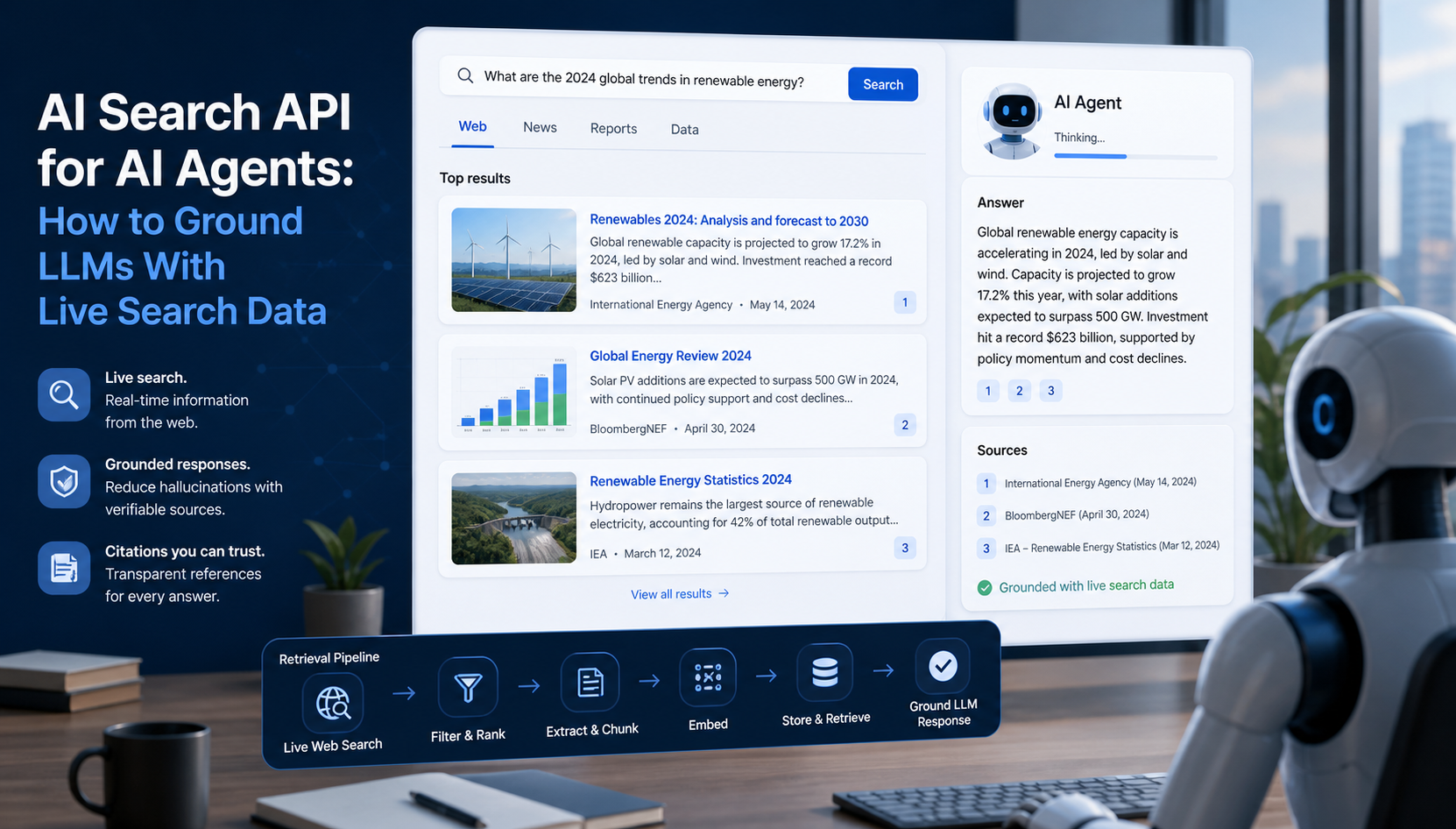
AI Search API for AI Agents: How to Ground LLMs With Live Search Data
An AI search API gives an application or agent programmatic access to current search results. Its most useful role is discovery: the agent can find candidate sources, identify fresh information, and decide what to retrieve next instead of relying only on model memory.
View Details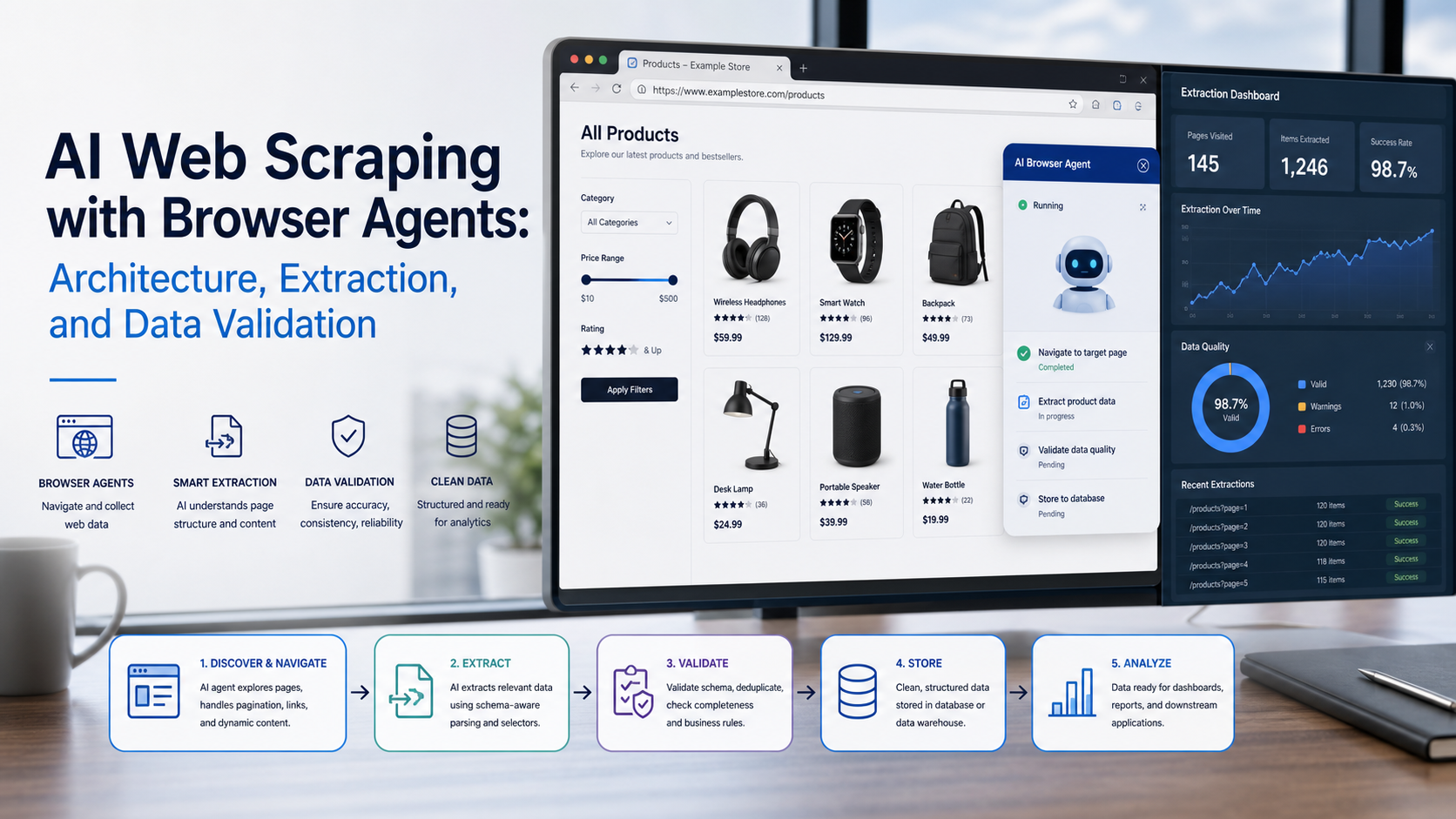
AI Web Scraping with Browser Agents: Architecture, Extraction, and Data Validation
AI web scraping uses AI to help discover, navigate, interpret, or extract information from websites. Browser agents are one implementation option when page interaction, rendering, or layout variation makes a simple scraper too brittle, but the agent should not become the entire data pipeline.
View Details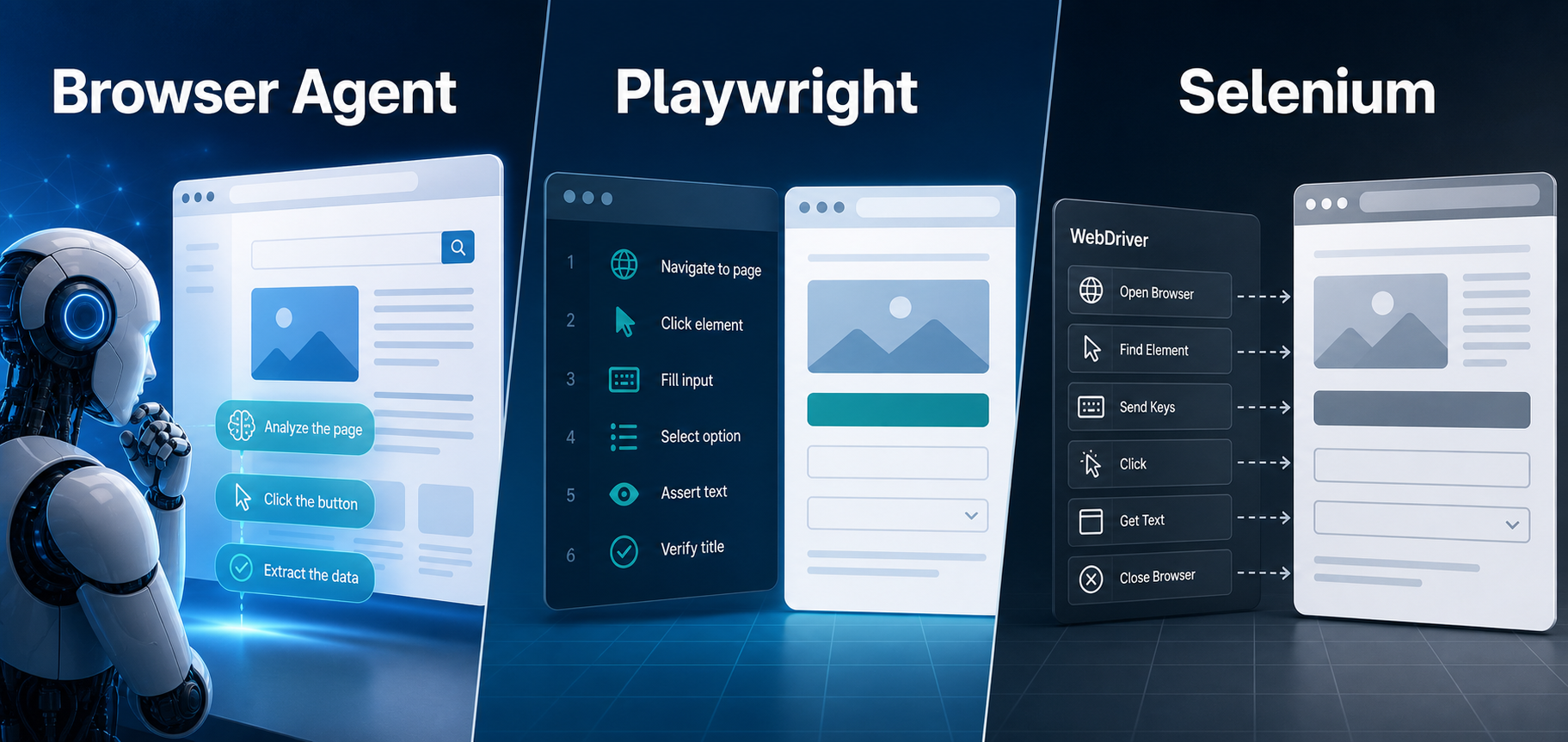
AI Browser Automation: Browser Agents vs Playwright vs Selenium
A browser agent interprets a goal and decides what browser action to take next. Playwright and Selenium can execute explicit, testable browser logic defined by developers. In 2026, however, Playwright also provides official MCP and agent-oriented workflows, so Playwright is no longer just the deterministic alternative to agentic automation. It can also serve as the browser-control layer inside an agent system.
View Details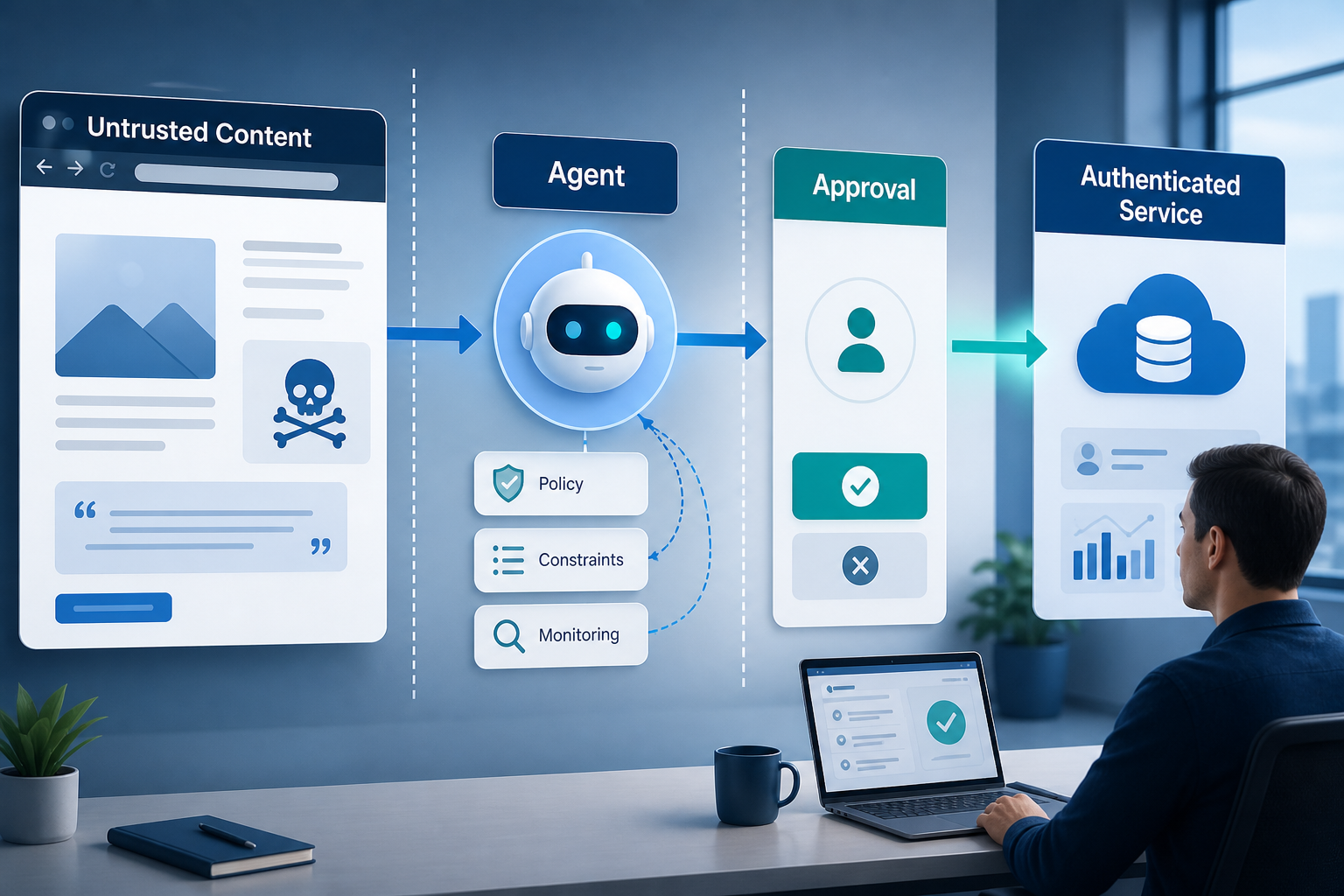
Agentic Browser Security: Prompt Injection, Permissions, and Safe Deployment
That combination creates risks that are different from ordinary browsing and traditional automation. The most important is indirect prompt injection, where hostile instructions hidden in web content attempt to redirect the agent away from the user's goal. Google describes indirect prompt injection as a primary new threat for agentic browsing and has introduced layered defenses that include origin constraints, independent action checks, threat detection, and user confirmation for sensitive actions. Google's Chrome security architecture is a useful reference for how browser-agent defenses are evolving.
View Details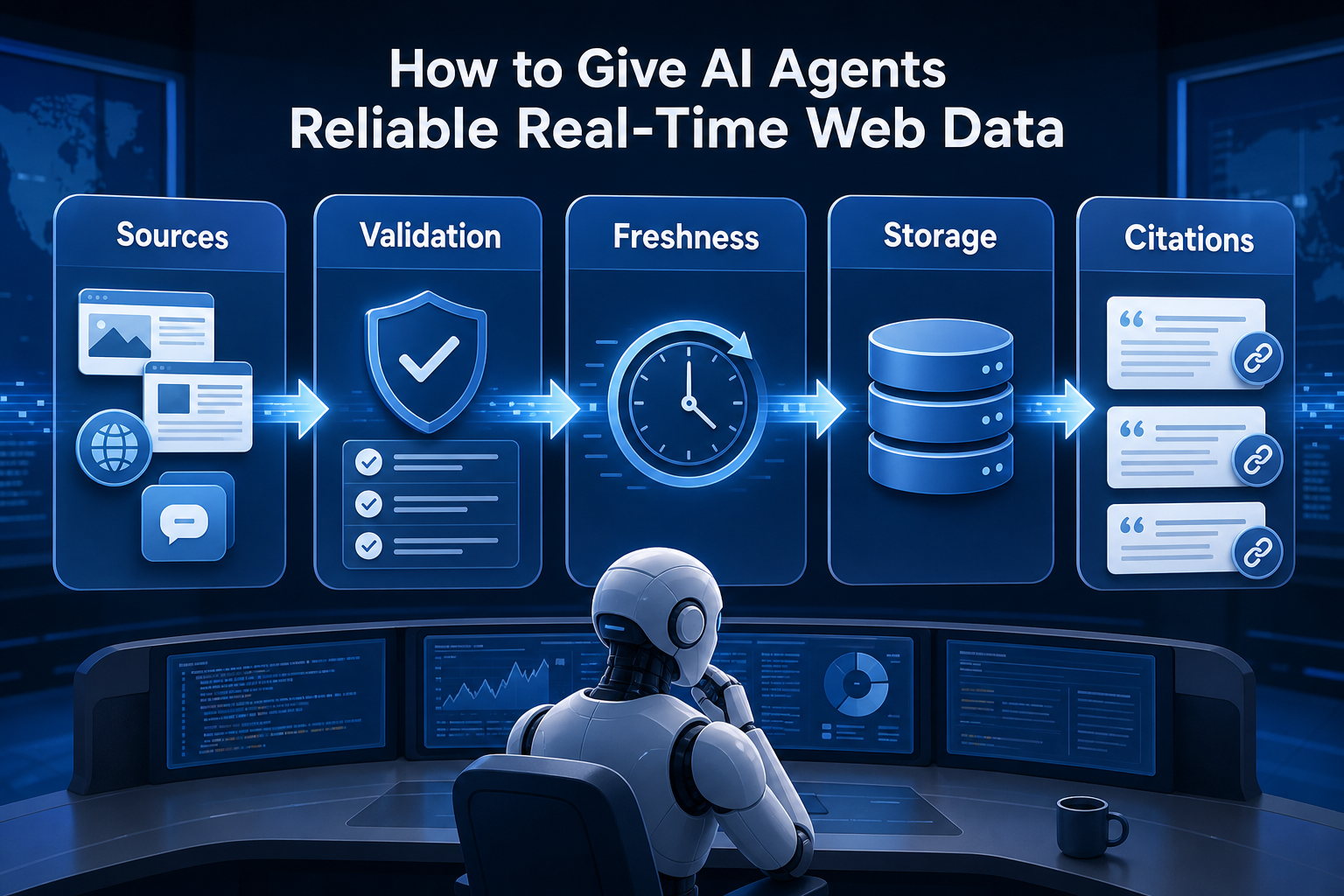
How to Give AI Agents Reliable Real-Time Web Data
A production-ready solution therefore needs more than a web scraper. It needs a web data layer that connects acquisition, validation, storage, retrieval, security, and observability. This guide explains how to design that layer.
View Details