
Automated Threat Hunting: AI That Never Sleeps
AI monitors your network while your team sleeps. This isn't science fiction, it's the operational reality transforming security operations centers (SOCs) worldwide.
While your analysts clock out after their shift, automated threat hunting systems continue scanning terabytes of log data, correlating anomalies, and flagging potential breaches with machine precision. For SOC managers facing the impossible mandate of 24/7 protection with finite human resources, AI-driven threat hunting represents not just an efficiency gain, but a fundamental shift in how continuous security monitoring operates.
The challenge is straightforward: threats don't take weekends off, but your security team must. Adversaries deliberately launch attacks at 3 AM precisely because they know human attention wanes during off-hours. Alert fatigue compounds the problem, when analysts face thousands of daily alerts, critical signals drown in the noise.
Automated threat hunting addresses both the temporal gap (continuous coverage) and the cognitive gap (processing scale) that plague traditional SOC operations. This article examines how AI-powered automation delivers machine-speed detection, compresses mean time to detection, and integrates seamlessly with your existing security infrastructure.
Scale Threat Hunting with LycheeIP
Machine-Speed Threat Detection and Analysis
The velocity advantage of automated threat hunting becomes apparent when you examine the raw numbers. A skilled security analyst might manually review 50 to 100 alerts per hour, correlating them against known threat indicators and investigating anomalies. An AI-driven system, however, processes millions of events per second, applying complex behavioral models across your entire attack surface simultaneously.
This isn't about replacing human judgment; it's about operating at a scale and speed that human cognition simply cannot match.
Pattern Recognition at Enterprise Scale
Modern threat hunting AI leverages machine learning models trained on billions of security events. These systems establish baseline behaviors for every user, device, and application in your environment, then flag deviations that might indicate compromise.
When a service account suddenly accesses databases it has never touched before, or an employee's laptop begins port scanning the internal network at 2 AM, automated systems detect these anomalies in real-time—not during next week's log review.
The true sophistication lies in contextual correlation. While legacy rule-based systems trigger on individual, isolated events (e.g., a failed login, elevated privileges, unusual file access), AI models connect seemingly unrelated activities across time and systems.
The Automated Kill Chain Detection Process:
- Reconnaissance: An external IP scans your perimeter.
- Initial Access: Hours later, a successful phishing payload is executed.
- Lateral Movement: The compromised account attempts to access internal file shares.
Automated threat hunting identifies this progression as it unfolds, interceding before data exfiltration occurs.
Behavioral Analysis Beyond Signatures
Signature-based detection remains valuable for known threats, but Advanced Persistent Threats (APTs) and zero-day exploits require behavioral analysis. AI models learn what "normal" looks like for your specific environment—not a generic baseline, but the unique heartbeat of your infrastructure.
This adaptive approach catches novel attack techniques that signature databases haven't cataloged yet. When attackers use "living-off-the-land" techniques (leveraging legitimate system administration tools to conduct malicious activity, as documented in the MITRE ATT&CK framework), traditional detection often fails. Automated threat hunting identifies the anomalous sequence: running PowerShell is normal, but PowerShell downloading encrypted payloads from a newly registered domain at midnight is a severe red flag.
Real-Time Threat Correlation
Human analysts excel at deep, contextual investigations but struggle with simultaneous correlation across dozens of distinct data silos. AI systems natively ingest feeds from:
- Endpoint Detection and Response (EDR)
- Network Traffic Analysis (NTA)
- Identity and Access Management (IAM)
- Cloud Security Posture Management (CSPM)
- External Threat Intelligence Platforms
When a threat intelligence feed reports a new command-and-control (C2) server IP, automated systems immediately scan all historical and real-time network traffic for connections to that IP. If found, they pivot to investigating the source device, analyzing recent file modifications, and mapping lateral movement attempts—all in milliseconds.
Reducing Mean Time to Detection (MTTD)
Mean Time to Detection (MTTD) measures the critical gap between when a security incident occurs and when your team actually identifies it. Industry research consistently highlights this metric as a primary predictor of breach impact. For instance, IBM's Cost of a Data Breach Report regularly illustrates that compressing the detection lifecycle saves organizations millions of dollars. The longer attackers dwell undetected in your environment, the more damage they inflict.
From Days to Minutes
Traditional threat detection often operates on analyst availability and manual alert prioritization. An anomalous event logged at 11 PM might not receive investigation until the morning shift, creating an 8-to-10 hour detection window. If the event occurs on a Friday night, that window extends to Monday morning.
Automated systems eliminate this delay entirely. Detection occurs within seconds of the triggering event, regardless of the time or day.
A Practical Scenario:
An attacker compromises credentials through a successful phishing campaign on Friday afternoon. They deliberately wait until Saturday at 2 AM to begin lateral movement, betting on reduced SOC staffing. With manual monitoring, this activity goes unnoticed for 60+ hours. Automated threat hunting immediately flags the suspicious authentication pattern and unusual access times, instantly escalating the incident to on-call responders with fully contextualized threat intelligence.
The Detection-to-Containment Pipeline
Reducing MTTD creates a cascade effect on your entire incident response timeline, naturally lowering your Mean Time to Contain (MTTC). Faster detection enables faster containment, limiting the blast radius before attackers achieve their ultimate objectives.
Modern automated platforms integrate tightly with Security Orchestration, Automation, and Response (SOAR) solutions to execute defensive actions automatically. Upon detecting a ransomware encryption pattern, the system can autonomously:
- Isolate the affected device from the network.
- Disable the compromised user account in Active Directory.
- Snapshot the system state for forensic analysis.
Operational Impact and ROI
Faster detection means fewer analyst hours spent on each incident. When automated systems handle initial triage, log correlation, and evidence collection, analysts receive comprehensive "incident packages" rather than ambiguous, single-line alerts.
SOC managers report that this automation dramatically reduces analyst burnout by eliminating the most tedious aspects of security monitoring. By handling high-volume, low-complexity tasks, AI frees senior analysts for complex threat investigations that require human intuition and creativity.
Scale Threat Hunting with LycheeIP
Integration with Existing SIEM Platforms
The practical reality for most security teams is that a wholesale replacement of existing infrastructure is neither feasible nor desirable. You've invested heavily in your SIEM platform, customized threat intelligence feeds, and specialized security tools. Automated threat hunting succeeds when it augments these investments rather than requiring their replacement.
SIEM Enhancement, Not Replacement
Leading automated threat hunting solutions integrate with major SIEM platforms—Splunk, IBM QRadar, Microsoft Sentinel, Elastic Security—through secure APIs and native connectors.
Rather than creating a disjointed parallel security stack, these systems act as an advanced analytics layer positioned directly above your SIEM. The SIEM continues doing what it does best (aggregating and normalizing log data), while the AI layer applies machine learning models and automated playbooks. High-fidelity detections are then fed back into your SIEM as enriched alerts, preserving your existing dashboard workflows while drastically improving signal-to-noise ratios.
API-Driven Integration Strategies
Modern cloud-native architectures enable highly flexible integration approaches. RESTful APIs allow automated threat hunting platforms to query your SIEM data and retrieve context without requiring massive, expensive data replication.
For organizations managing hybrid or multi-cloud environments, automated threat hunting provides unified visibility. By integrating with cloud-native security services (like AWS GuardDuty or Azure Defender) alongside on-premises SIEM platforms, these systems create a single pane of glass for threat detection.
Integration Readiness Checklist
Before integrating AI threat hunting with your SIEM, verify these operational prerequisites:
- Data Hygiene: Ensure logs are properly formatted, time-synced, and normalized.
- API Accessibility: Confirm your SIEM supports bidirectional API communication with adequate rate limits.
- Response Playbooks: Document your standard operating procedures so they can be translated into automated SOAR responses.
- Scope Definition: Clearly define which assets are authorized for automated containment versus manual review.
The Human-AI Partnership Model
The most successful deployments view automated threat hunting as a force multiplier for human analysts. AI excels at speed, scale, and consistency; human analysts excel at contextual judgment, creative investigation, and adapting to completely novel situations.
The optimal workflow leverages both:
- Tier 1 (AI): Handles initial triage, eliminates false positives, and correlates evidence. High-confidence detections trigger automated containment.
- Tier 2/3 (Human): Medium-confidence findings are escalated to human analysts, who receive full context (logs, baselines, and suggested investigation paths) to make the final call.
LycheeIP (Developer-First Proxy Infrastructure)
LycheeIP is a developer-first proxy and data infrastructure platform designed to help technical teams reliably route and scale their network requests. When training AI threat detection models, organizations often need to simulate adversary reconnaissance or gather global threat intelligence from public sources to establish accurate baselines. By leveraging a developer-first proxy infrastructure, security and data teams can safely collect necessary public threat data without hitting localized rate limits or triggering automated blocks. Whether your methodology requires dynamic IP networks to emulate distributed, geo-diverse attack patterns for testing your AI's response, or high-bandwidth datacenter IP solutions to maintain persistent connections to external threat feeds, a robust network backbone ensures your automated systems have the data they need to stay accurate. Learn more about optimizing your data collection workflows at LycheeIP.
Scale Threat Hunting with LycheeIP
Frequently Asked Questions
Q: Will automated threat hunting replace our security analysts?
A: No. Automated threat hunting augments analysts rather than replacing them. AI systems excel at continuous monitoring, pattern recognition, and rapid correlation across millions of events—tasks that cause alert fatigue. However, complex investigations, nuanced contextual judgment, and strategic threat analysis still require human expertise. The optimal model positions AI to handle tier-1 triage, freeing your team for high-value security work.
Q: How long does it take for automated threat hunting systems to become effective in our environment?
A: Most organizations see initial value within the first week, but optimal performance typically requires 30 to 60 days of baseline learning. During this period, the AI models establish normal behavior patterns specific to your network. It is recommended to start in "detection-only" mode while the system learns, gradually enabling automated containment actions as you validate the accuracy of the alerts.
Q: Can automated threat hunting integrate with our existing SIEM and security tools?
A: Yes. Leading platforms offer native integrations and API connectivity with major SIEM solutions and existing security tools (EDR, NDR, SOAR). The typical architecture positions the AI as an analytics enhancement layer that consumes your SIEM data and feeds enriched, contextualized detections back into your existing workflows.
Q: What measurable improvements can we expect in our security operations?
A: Organizations typically see a 60-80% reduction in Mean Time to Detection (MTTD), compressing discovery windows from days to minutes. False positive rates usually decrease by 40-70% as the AI learns to distinguish genuine threats from benign anomalies. This drastically improves analyst efficiency, allowing teams to spend 50-60% less time on initial triage.

Recommended Articles
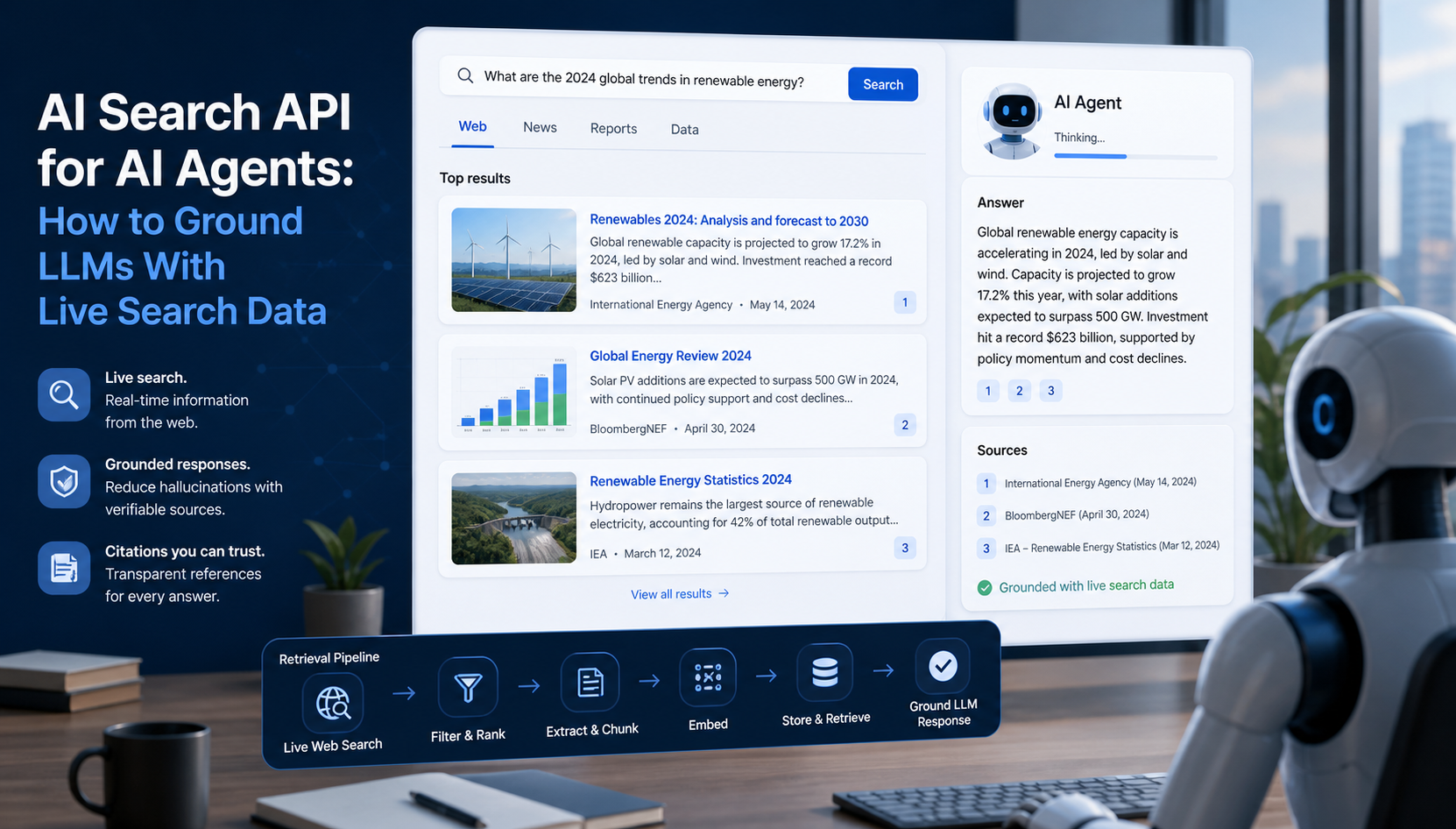
AI Search API for AI Agents: How to Ground LLMs With Live Search Data
An AI search API gives an application or agent programmatic access to current search results. Its most useful role is discovery: the agent can find candidate sources, identify fresh information, and decide what to retrieve next instead of relying only on model memory.
View Details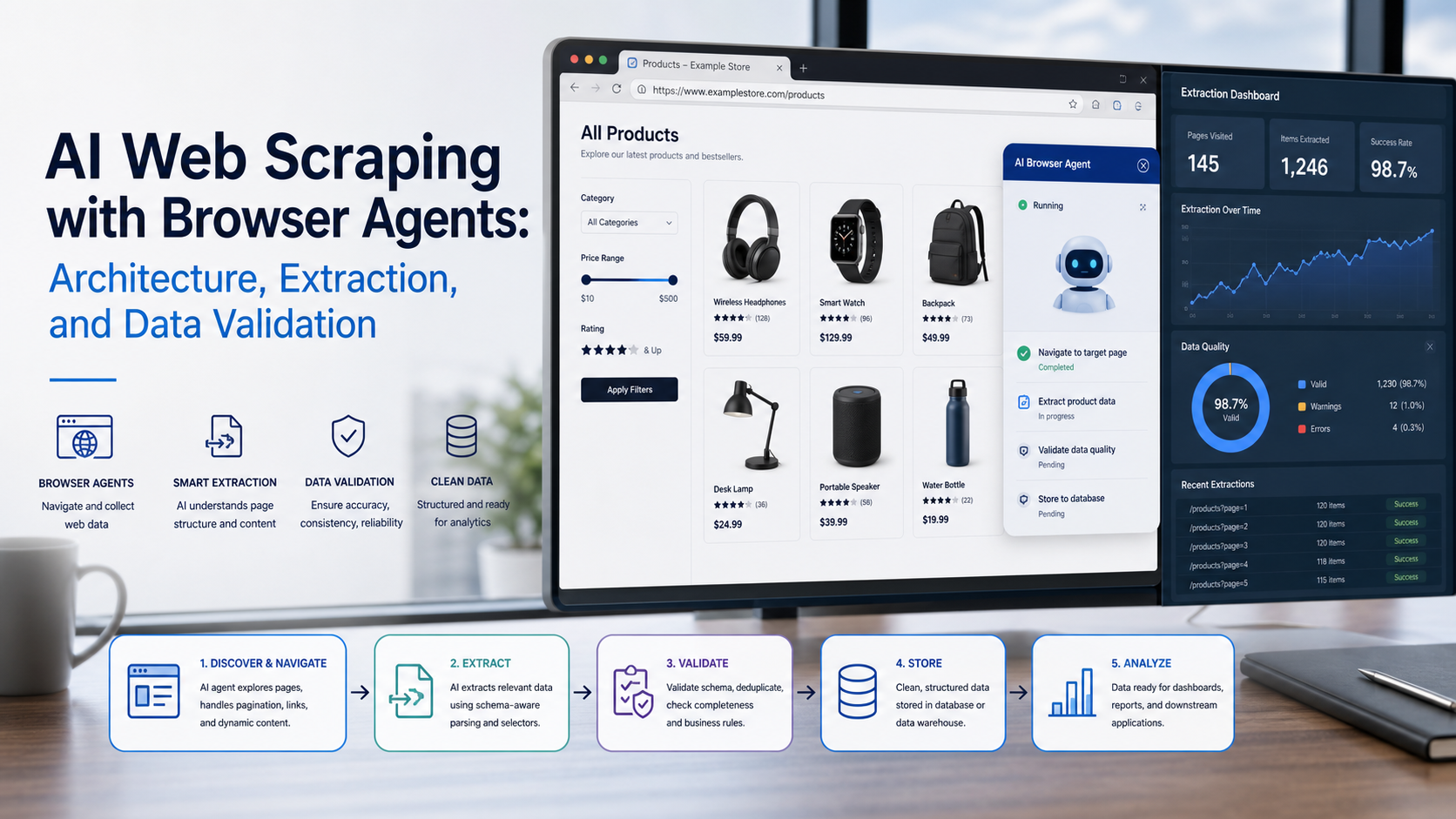
AI Web Scraping with Browser Agents: Architecture, Extraction, and Data Validation
AI web scraping uses AI to help discover, navigate, interpret, or extract information from websites. Browser agents are one implementation option when page interaction, rendering, or layout variation makes a simple scraper too brittle, but the agent should not become the entire data pipeline.
View Details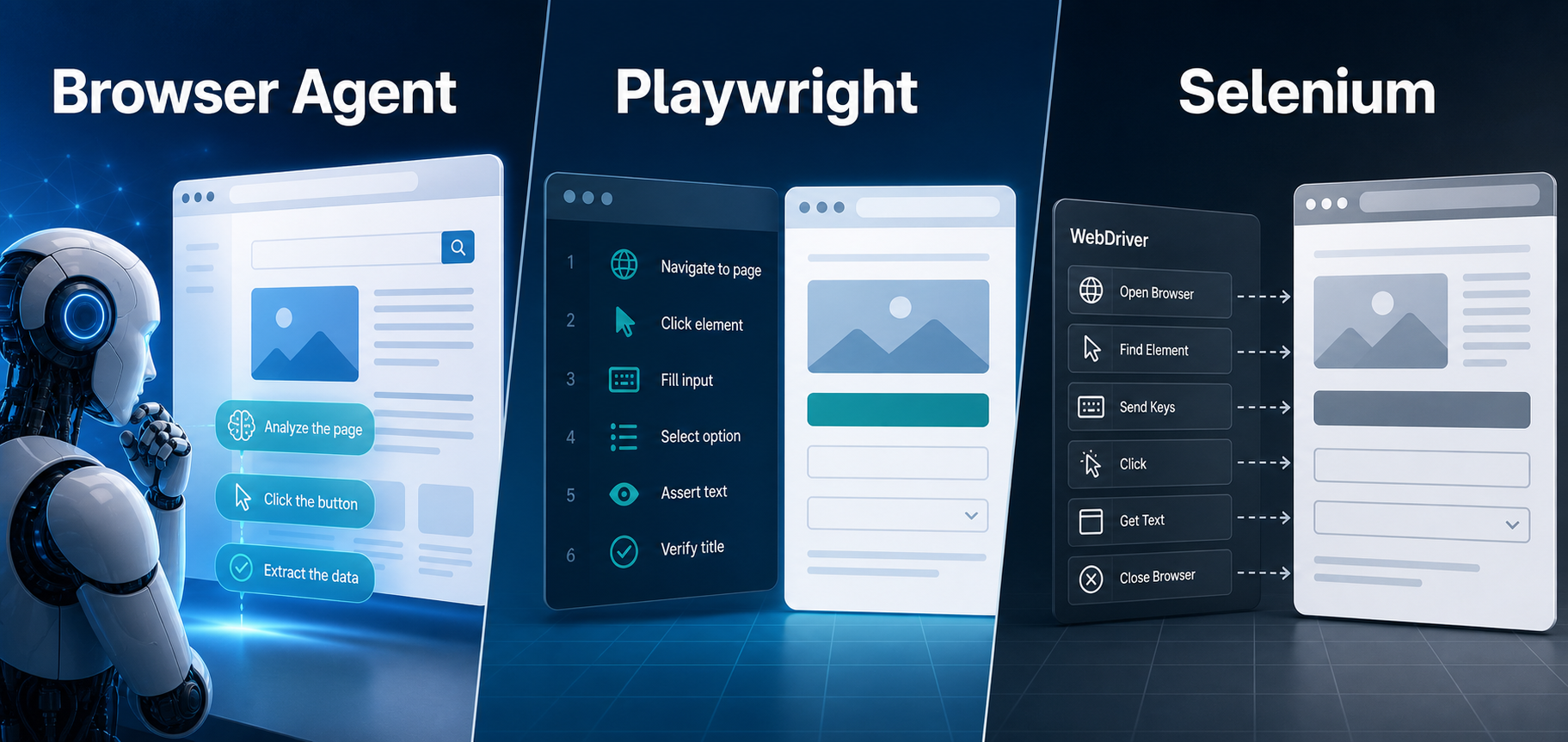
AI Browser Automation: Browser Agents vs Playwright vs Selenium
A browser agent interprets a goal and decides what browser action to take next. Playwright and Selenium can execute explicit, testable browser logic defined by developers. In 2026, however, Playwright also provides official MCP and agent-oriented workflows, so Playwright is no longer just the deterministic alternative to agentic automation. It can also serve as the browser-control layer inside an agent system.
View Details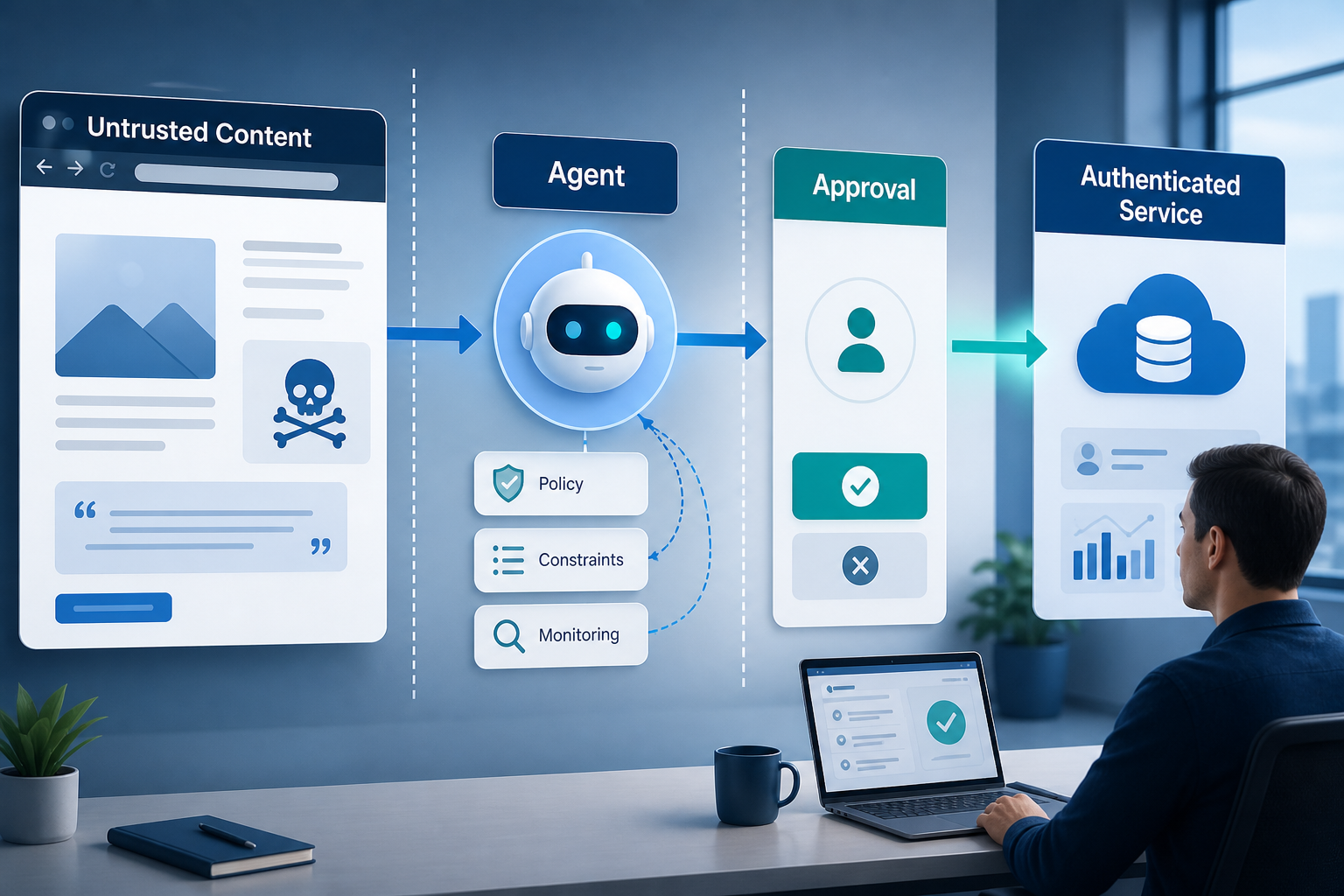
Agentic Browser Security: Prompt Injection, Permissions, and Safe Deployment
That combination creates risks that are different from ordinary browsing and traditional automation. The most important is indirect prompt injection, where hostile instructions hidden in web content attempt to redirect the agent away from the user's goal. Google describes indirect prompt injection as a primary new threat for agentic browsing and has introduced layered defenses that include origin constraints, independent action checks, threat detection, and user confirmation for sensitive actions. Google's Chrome security architecture is a useful reference for how browser-agent defenses are evolving.
View Details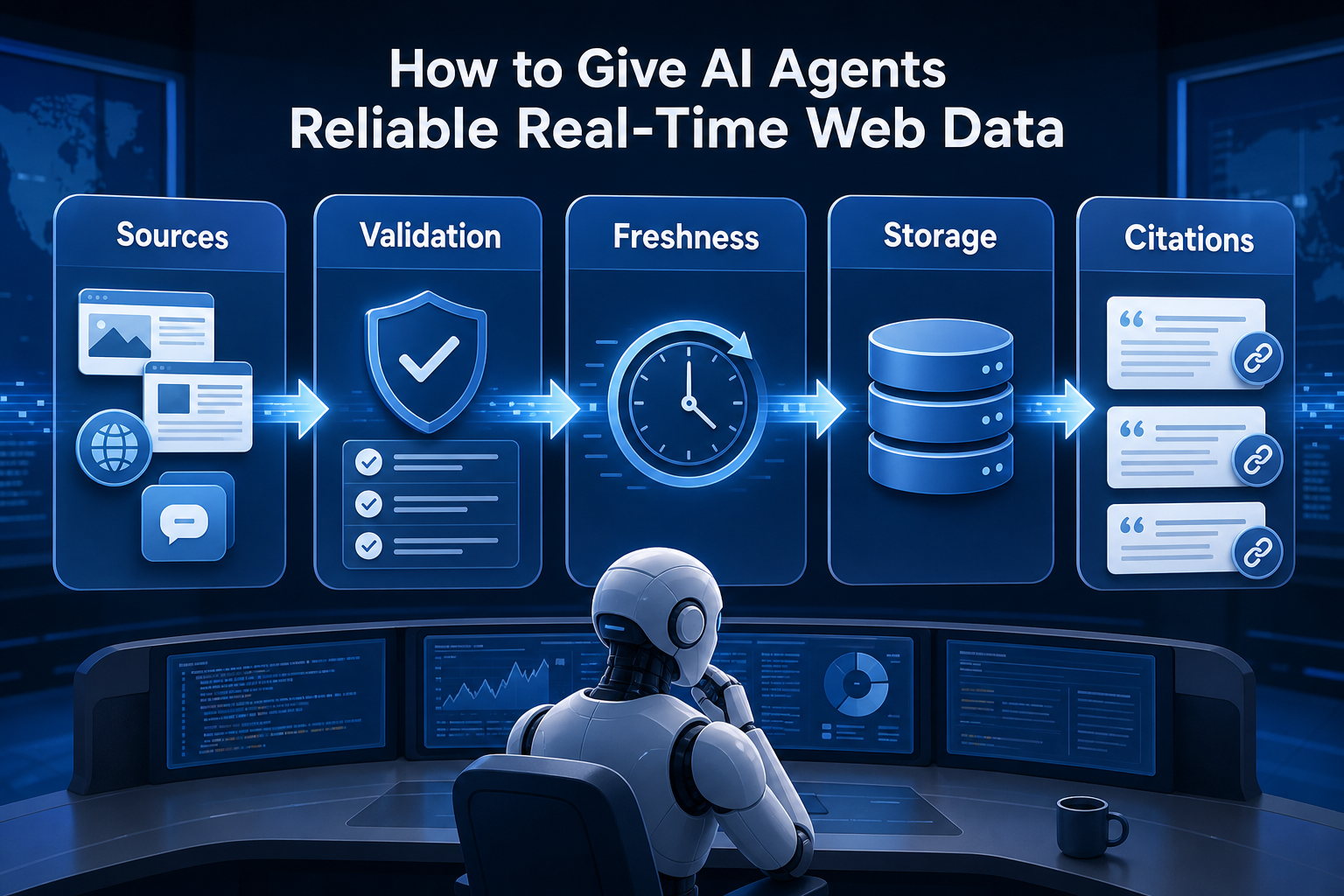
How to Give AI Agents Reliable Real-Time Web Data
A production-ready solution therefore needs more than a web scraper. It needs a web data layer that connects acquisition, validation, storage, retrieval, security, and observability. This guide explains how to design that layer.
View Details