
Claude AI Integration in Kali Linux for Pen Testing
Run Nmap scans with natural language commands. This seemingly futuristic capability is now a practical reality for penetration testers and ethical hackers, thanks to the integration of Claude AI with Kali Linux through the Model Context Protocol (MCP).
The traditional penetration testing workflow demands memorizing complex command syntax, chaining multiple tools, and constantly referencing documentation. What if you could simply tell your terminal to "scan this target for common web vulnerabilities" and have the AI translate that into the precise Nmap, Gobuster, or Nikto commands needed?
This integration addresses a core challenge in modern security testing: maximizing workflow efficiency without sacrificing precision. While pen testers pride themselves on technical mastery, the cognitive overhead of remembering every flag, option, and syntax variation across dozens of tools creates friction. Claude AI acts as an intelligent intermediary, translating natural language security objectives into executable terminal commands while maintaining the strict control and auditability that security professionals demand.
Explore LycheeIP proxy infrastructure
Model Context Protocol for Security Automation
The Model Context Protocol (MCP) represents a paradigm shift in how AI assistants interact with local system resources. Unlike simple web-based chatbots that only output text, MCP enables Claude to establish secure, bidirectional communication with your Kali Linux environment.
This architecture creates a direct bridge between conversational AI and command-line execution, allowing the AI to understand your local context, draft the appropriate command, and crucially wait for your authorization before touching the underlying system.
How MCP Works in Security Contexts
MCP operates through a structured client-server model where Claude acts as the intelligent client and your local Kali system hosts the MCP server. When you issue a natural language request like "enumerate subdomains for example.com," the protocol handles the process in five distinct phases:
- Intent Recognition: Claude parses your objective and identifies the most appropriate tool for the job (e.g., subfinder, amass, or sublist3r).
- Parameter Extraction: Critical data points such as target domains, desired output formats, and scope limitations are isolated.
- Command Generation: The AI constructs the syntactically correct command, applying the necessary flags based on context.
- Execution Request: Through the MCP bridge, the drafted command is sent to your local terminal, awaiting your approval.
- Output Interpretation: Once executed, the raw terminal results are parsed and presented back to you in a clean, human-readable format.
Setting Up MCP in Kali Linux
The installation process is straightforward but requires Node.js and the MCP server package. On a fresh Kali Linux installation, you can initialize the environment with:
Bash
sudo apt update && sudo apt install nodejs npm -y
npm install -g @modelcontextprotocol/server-cli
The Isolation Checklist
For security testing environments, operational isolation is critical. To prevent potential command injection or unintended system modifications, adhere to these setup guidelines:
- Containerize: Run the MCP server in a dedicated virtual environment or Docker container with restricted network access.
- Implement Whitelists: Configure the MCP server to allow only specific, approved security tools.
- Enforce Approvals: Never bypass the confirmation step.
Here is an example of a secure configuration file:
JSON
{
"allowedCommands": ["nmap", "gobuster", "nikto", "sqlmap", "hydra"],
"restrictPaths": ["/home/kali/pentest"],
"requireConfirmation": true
}
The requireConfirmation flag is your primary safeguard. It ensures you manually review every generated command before execution—an absolute necessity when handling potentially destructive security tools.
Natural Language to Terminal Command Translation
The true power of Claude AI integration emerges in command translation. Traditional pen testing requires constant context-switching between planning (what you want to achieve) and execution (how to achieve it syntactically). AI integration collapses this gap, allowing you to operate entirely in the planning mindset.
Translation Example 1: Network Scanning
Natural Language: "Perform a SYN scan on 192.168.1.0/24 for the top 1000 ports and save the results"
Generated Command:
Bash
nmap -sS -T4 --top-ports 1000 192.168.1.0/24 -oN syn_scan_results.txt
How it works: Claude interprets "SYN scan" as requiring the -sS flag, infers aggressive timing (-T4) from the context of standard testing, and automatically structures the output command with proper file naming conventions.
Translation Example 2: Web Directory Bruteforcing
Natural Language: "Find all directories on example.com using common wordlists, show me status codes"
Generated Command:
Bash
gobuster dir -u https://example.com -w /usr/share/wordlists/dirb/common.txt -s "200,204,301,302,307,401,403"
How it works: The AI recognizes that directory enumeration requires Gobuster's dir mode, selects the appropriate default wordlist location built into Kali Linux, and includes relevant HTTP status codes to filter for meaningful web application responses.
Explore LycheeIP proxy infrastructure
Workflow Efficiency Gains
The productivity improvements from this integration manifest in several tangible ways for security operators:
- Reduced Cognitive Load: There is no longer a need to memorize that -sV enables version detection or that -p- scans all 65,535 ports.
- Faster Iteration: You can modify running scans simply by describing the changes, rather than navigating back through complex command strings to edit a single typo.
- Automated Documentation: Your natural language queries act as a self-documenting audit trail, perfectly detailing your testing methodology for client reports.
- Syntax Error Reduction: The AI validates syntax before execution, catching incompatible flag combinations that would normally waste valuable assessment time.
One pen tester reported reducing their reconnaissance phase time by 35% simply by using natural language commands for repetitive, high-volume tasks like subdomain enumeration and service fingerprinting.
Practical Examples: Gobuster and Vulnerability Scanning
Let's walk through realistic penetration testing scenarios where Claude AI integration demonstrates tangible value in the field. (Note: All examples assume you have explicit, documented authorization to test the target systems).
Example 1: Multi-Stage Nmap Reconnaissance
Scenario: You're testing a web application and need to conduct a broad port scan, followed by targeted service enumeration.
Natural Language Workflow:
- "Quick scan to find open ports on 10.10.10.50"
- Bash
nmap -T4 -F 10.10.10.50
- "Now do a detailed service and version scan on ports 22, 80, and 443"
- Bash
nmap -sV -sC -p 22,80,443 10.10.10.50 -oA detailed_scan
- "Check if port 80 is running any known vulnerable services"
- Bash
nmap -sV --script=vuln -p 80 10.10.10.50
Claude maintains context across the conversation. It understands that "ports 22, 80, and 443" in step two refers directly to the findings from the initial discovery scan, making the progression from discovery to assessment flow naturally.
Example 2: Directory Enumeration with Gobuster
Scenario: You've identified a web server and need to discover hidden administrative directories and backup files.
Natural Language Request: "Enumerate directories on http://target.local using the medium wordlist, look for PHP files, and use 50 threads"
Generated Command:
Bash
gobuster dir -u http://target.local -w /usr/share/wordlists/dirbuster/directory-list-2.3-medium.txt -x php -t 50 -o gobuster_results.txt
Claude translates "medium wordlist" to the exact file path in Kali's default directory, interprets "PHP files" as requiring the -x php extension flag, and sets the threading.
Follow-up: "Focus only on the /admin path we found and look for backup files"
Generated Command:
Bash
gobuster dir -u http://target.local/admin -w /usr/share/wordlists/dirbuster/directory-list-2.3-medium.txt -x bak,old,backup,zip -t 50
The AI demonstrates contextual awareness by modifying the base URL and adjusting the file extensions to common backup formats without needing explicit definitions.
Example 3: Chaining Tools for Web Application Testing
Natural Language Request: "Test http://webapp.com for SQL injection in login forms, then scan for XSS vulnerabilities"
Claude breaks this complex request into multiple, sequential tool invocations:
Bash
# SQL injection testing with sqlmap
sqlmap -u "http://webapp.com/login" --forms --batch --risk=1 --level=1

# XSS scanning after SQL testing completes
nmap -sV --script=http-csrf,http-stored-xss,http-dombased-xss -p 80,443 webapp.com
The AI correctly maps the request to the right tools, utilizing sqlmap for database flaws and Nmap's NSE scripts to scan for common Cross Site Scripting (XSS) vulnerabilities, applying conservative risk levels suitable for initial probing.
Error Handling and Refinement
When commands inevitably fail due to environmental quirks, Claude can interpret the raw error messages and suggest immediate corrections:
User: "The Gobuster scan failed"
Claude: "Let me check the error. It appears the wordlist path was incorrect. Try this:"
Bash
gobuster dir -u http://target.local -w /usr/share/seclists/Discovery/Web-Content/common.txt -t 50
This iterative refinement mimics how experienced pen testers troubleshoot their tools, but significantly accelerated through AI assistance.
Best Practices and Security Considerations
To get the most out of AI-assisted testing while maintaining operational security, adopt a framework that divides tasks between the AI and the human operator.
When to Use AI Assistance
- Repetitive Reconnaissance: Subdomain enumeration, baseline port scanning, and directory bruteforcing.
- Complex Command Construction: Drafting queries for tools with dense flag ecosystems, like Nmap or sqlmap.
- Tool Discovery: Using natural language queries to learn the capabilities of unfamiliar packages in the Kali repository.
When to Rely on Manual Execution
- Novel Attack Vectors: Executing highly specific, zero-day techniques not present in Claude's training data.
- Evasion Tactics: Fine-tuning requests where millisecond-level timing control is required to bypass a WAF.
- Air-Gapped Environments: Operating in highly secure offline networks where API connectivity is impossible.
Security and Audit Implications
Always maintain comprehensive logs of all AI-generated commands to ensure compliance with your Rules of Engagement:
Bash
# Log all commands to audit file
script -a pentest_audit_$(date +%Y%m%d).log
Never expose your MCP server to untrusted networks. The ability to execute terminal commands makes it a prime target for attackers. Rely exclusively on localhost binding and secure SSH tunneling for remote access.
The Future of AI in Penetration Testing
Claude AI integration represents just the first wave of AI-augmented security testing. Future developments are likely to include:
- Autonomous Reconnaissance: AI that intelligently chains tools based dynamically on the discovered attack surface.
- Exploit Translation: Natural language queries that bridge the gap between finding a CVE and executing the proof-of-concept.
- Real-time Report Generation: Converting raw tool outputs into client-ready findings complete with remediation guidance.
- Multi-Agent Collaboration: Systems where different AI models specialize in discrete areas like web apps, network security, or social engineering.
However, the human element remains irreplaceable. Security testing requires creativity, deep contextual understanding, and strict ethical judgment that AI cannot fully replicate. The optimal approach combines the relentless efficiency of AI with nuanced human expertise.
LycheeIP (Developer-First Proxy Infrastructure)
When conducting authorized, large-scale security assessments or gathering public threat intelligence, restrictive rate limits and IP bans can stall your automated AI workflows. LycheeIP is a proxy and data infrastructure provider designed specifically to help engineering and security teams route their traffic reliably at scale. If your methodology requires distributed geographic testing or high-volume reconnaissance across global assets, integrating a developer-first proxy infrastructure ensures your requests behave like localized traffic and don't trigger premature blocks. Teams often leverage dynamic IP networks to smoothly rotate connections during intensive directory bruteforcing or vulnerability scanning. Alternatively, when you need high-speed, persistent connections for verifying specific regional configurations or testing API endpoints, datacenter IP solutions provide the dedicated bandwidth required without compromising your tool's performance.
Conclusion
Integrating Claude AI with Kali Linux through the Model Context Protocol transforms penetration testing from a syntax-heavy technical exercise into a more strategic, objective-focused practice. By translating natural language into precise tool commands, AI integration reduces cognitive overhead, accelerates workflows, and removes friction from security testing.
The practical examples with Nmap, Gobuster, and vulnerability scanners demonstrate real productivity gains—but the technology requires thoughtful, secure implementation. Security professionals must balance efficiency with safety, maintaining strict audit trails and human oversight while leveraging AI capabilities.
Start experimenting with Claude AI integration in isolated lab environments. Test the workflow against practice targets like HackTheBox or locally hosted vulnerable machines before deploying in production assessments. As you build confidence in AI-generated commands, you'll develop an intuition for when to rely on AI assistance and when manual control is essential.
The future of penetration testing isn't replacing human testers with AI—it's empowering security professionals to focus on high-value analysis and creative problem-solving while AI handles the repetitive command-line heavy lifting. Run your first Nmap scan with a natural language command today, and experience the efficiency gains firsthand.
Explore LycheeIP proxy infrastructure
Frequently Asked Questions
Q: Is it safe to let AI execute security tools automatically in Kali Linux?
A: Safety entirely depends on your implementation. Always use confirmation prompts before command execution, whitelist allowed tools, restrict file system access, and run the MCP server in isolated environments. Never allow blind command execution without human review, especially for highly active tools like sqlmap or Metasploit.
Q: Can Claude AI replace manual penetration testing skills?
A: No. Claude AI enhances efficiency in command generation and tool chaining but cannot replace the creative thinking, ethical judgment, and contextual analysis that skilled penetration testers provide. Use AI to reduce repetitive syntax work while focusing your expertise on strategy and complex exploitation techniques.
Q: What are the main advantages of using natural language commands for tools like Nmap and Gobuster?
A: The primary benefits include drastically reduced cognitive load, faster iteration during active testing, automated self-documentation for client reports, and syntax error reduction. This is especially valuable for complex tools with dozens of obscure options.
Q: How do I ensure AI-generated commands comply with penetration testing scope and legal boundaries?
A: Implement a strict review workflow where all AI-generated commands require explicit human approval before execution. Maintain comprehensive logs, configure hard scope restrictions in your MCP server settings, and manually validate that generated IP targets match your authorized Rules of Engagement. The AI is a syntax assistant, not a replacement for professional judgment.
Q: What tools work best with Claude AI integration in Kali Linux?
A: Tools with complex syntax, extensive flag ecosystems, and steep learning curves benefit the most. Examples include Nmap, Gobuster, sqlmap, Hydra, Burp Suite CLI, Metasploit, and Nikto. Modern reconnaissance tools like subfinder, amass, and theHarvester also chain beautifully with AI. Simple, single-purpose tools (like ping or whois) show less tangible benefit from AI integration.

Recommended Articles
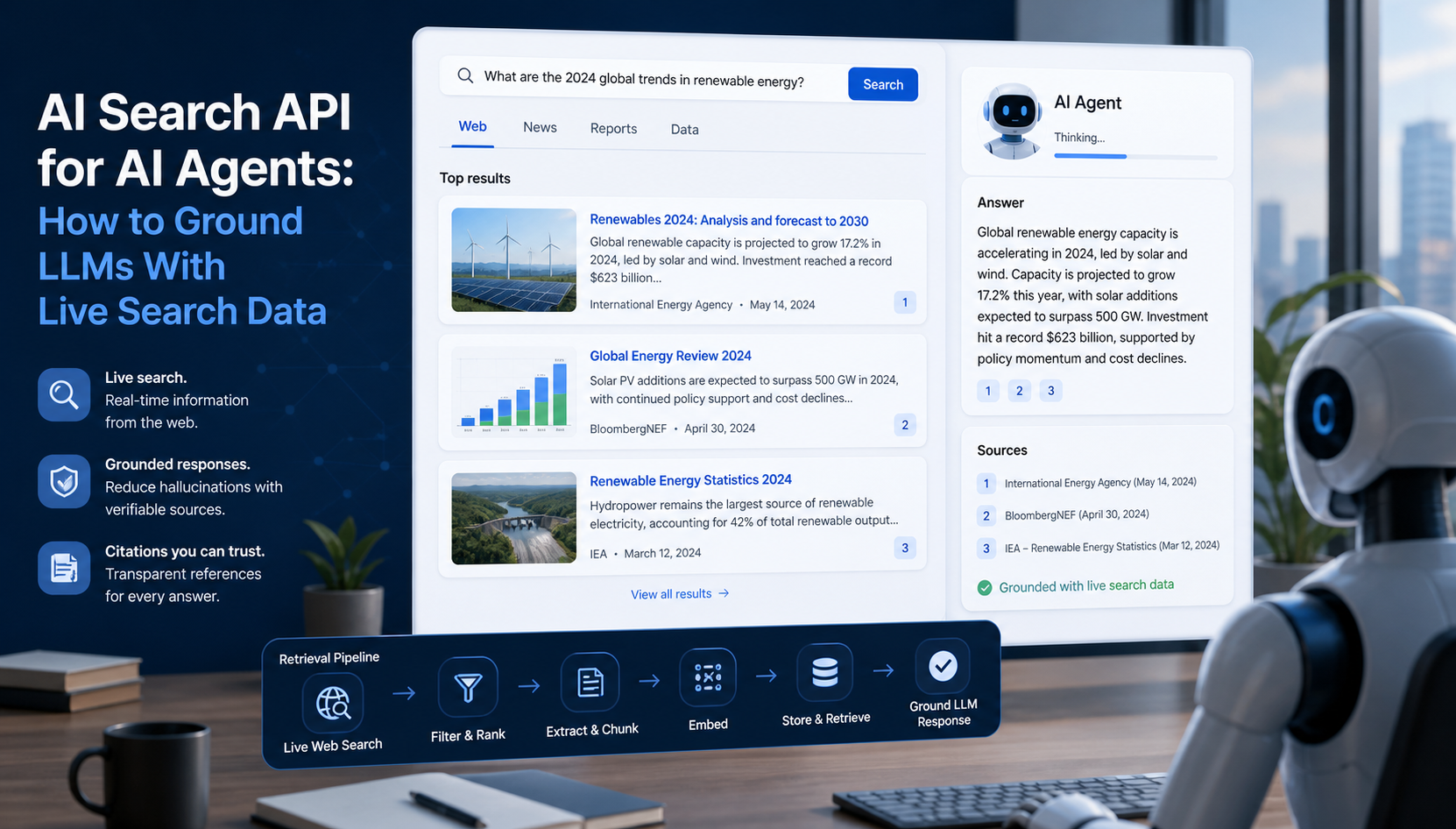
AI Search API for AI Agents: How to Ground LLMs With Live Search Data
An AI search API gives an application or agent programmatic access to current search results. Its most useful role is discovery: the agent can find candidate sources, identify fresh information, and decide what to retrieve next instead of relying only on model memory.
View Details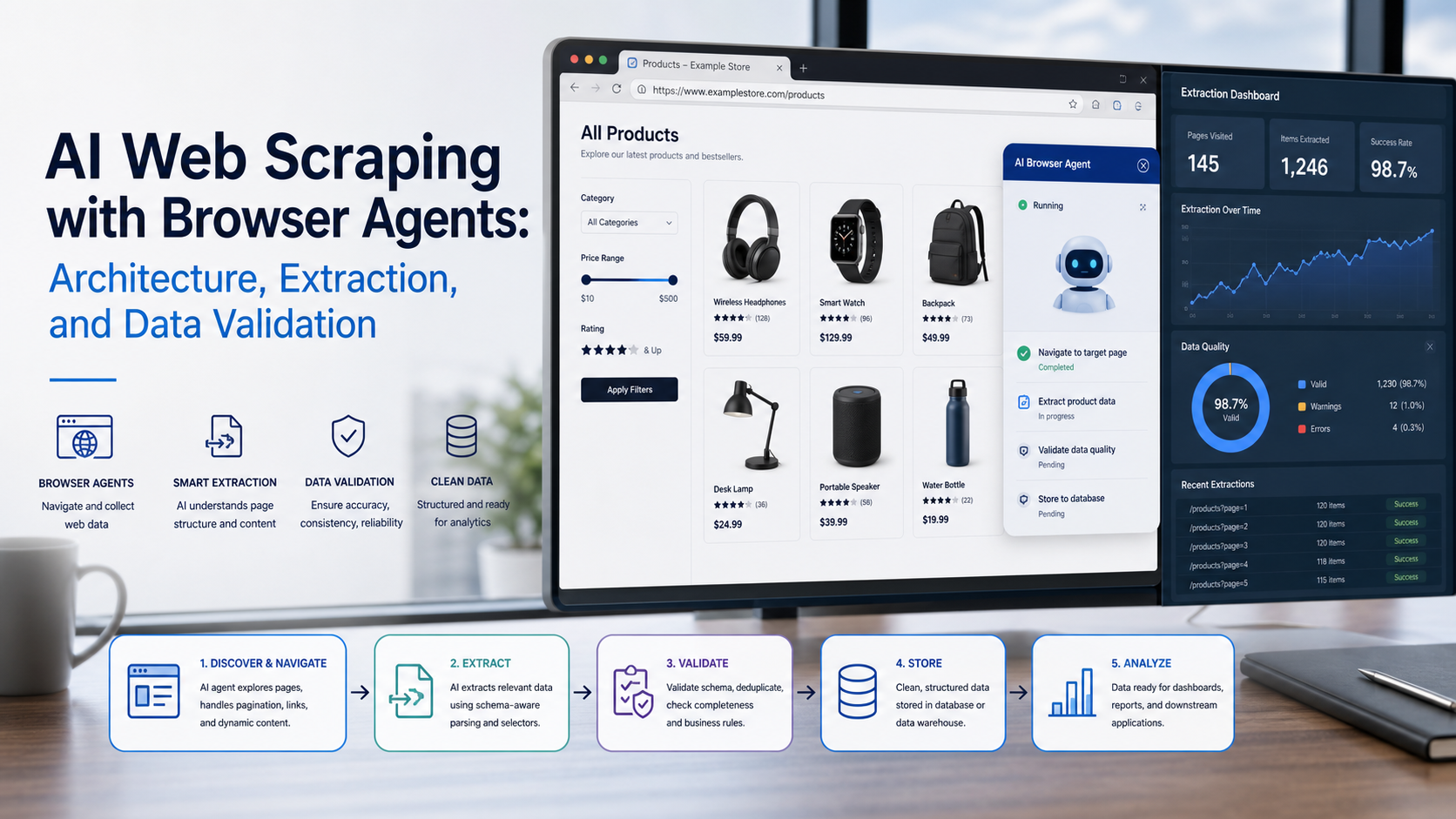
AI Web Scraping with Browser Agents: Architecture, Extraction, and Data Validation
AI web scraping uses AI to help discover, navigate, interpret, or extract information from websites. Browser agents are one implementation option when page interaction, rendering, or layout variation makes a simple scraper too brittle, but the agent should not become the entire data pipeline.
View Details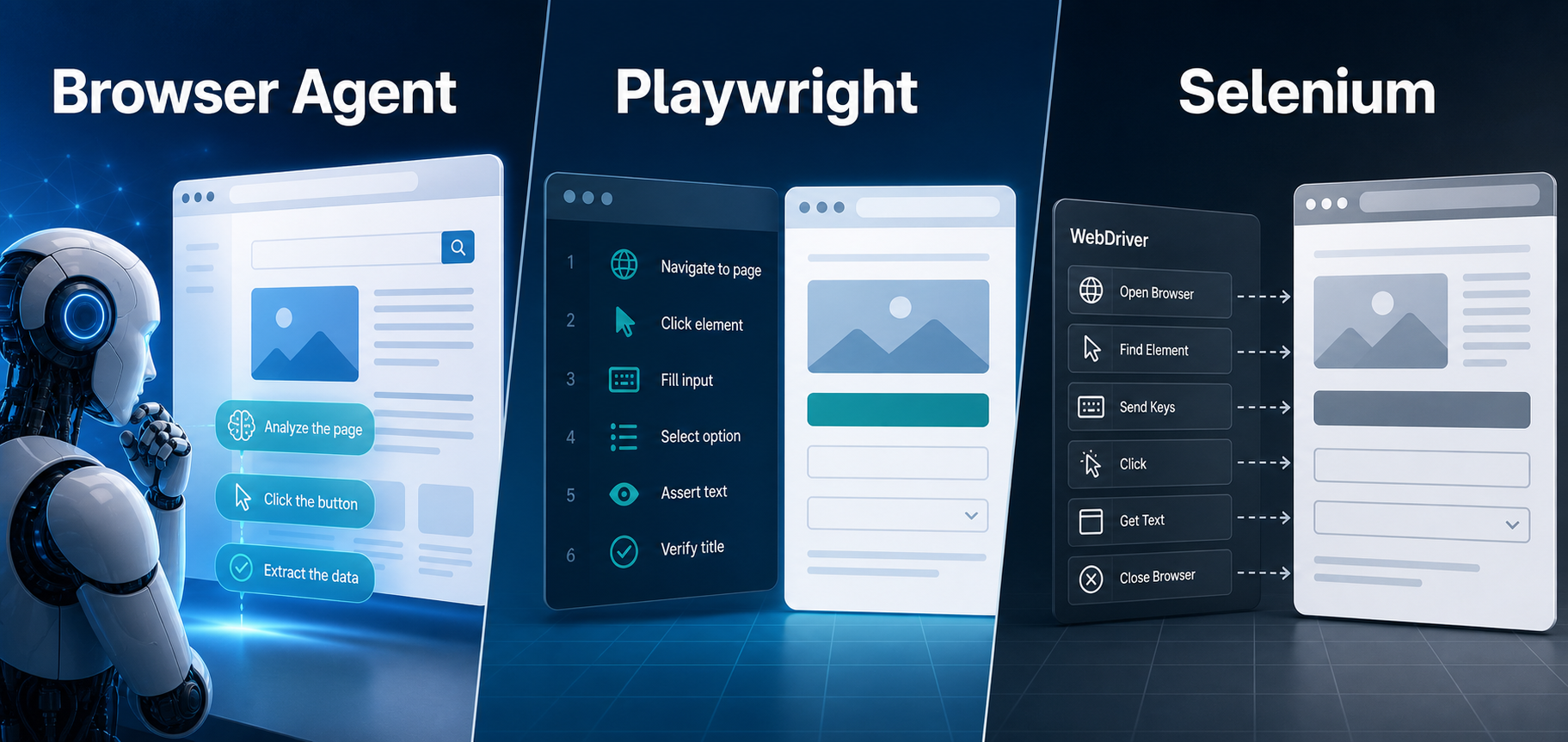
AI Browser Automation: Browser Agents vs Playwright vs Selenium
A browser agent interprets a goal and decides what browser action to take next. Playwright and Selenium can execute explicit, testable browser logic defined by developers. In 2026, however, Playwright also provides official MCP and agent-oriented workflows, so Playwright is no longer just the deterministic alternative to agentic automation. It can also serve as the browser-control layer inside an agent system.
View Details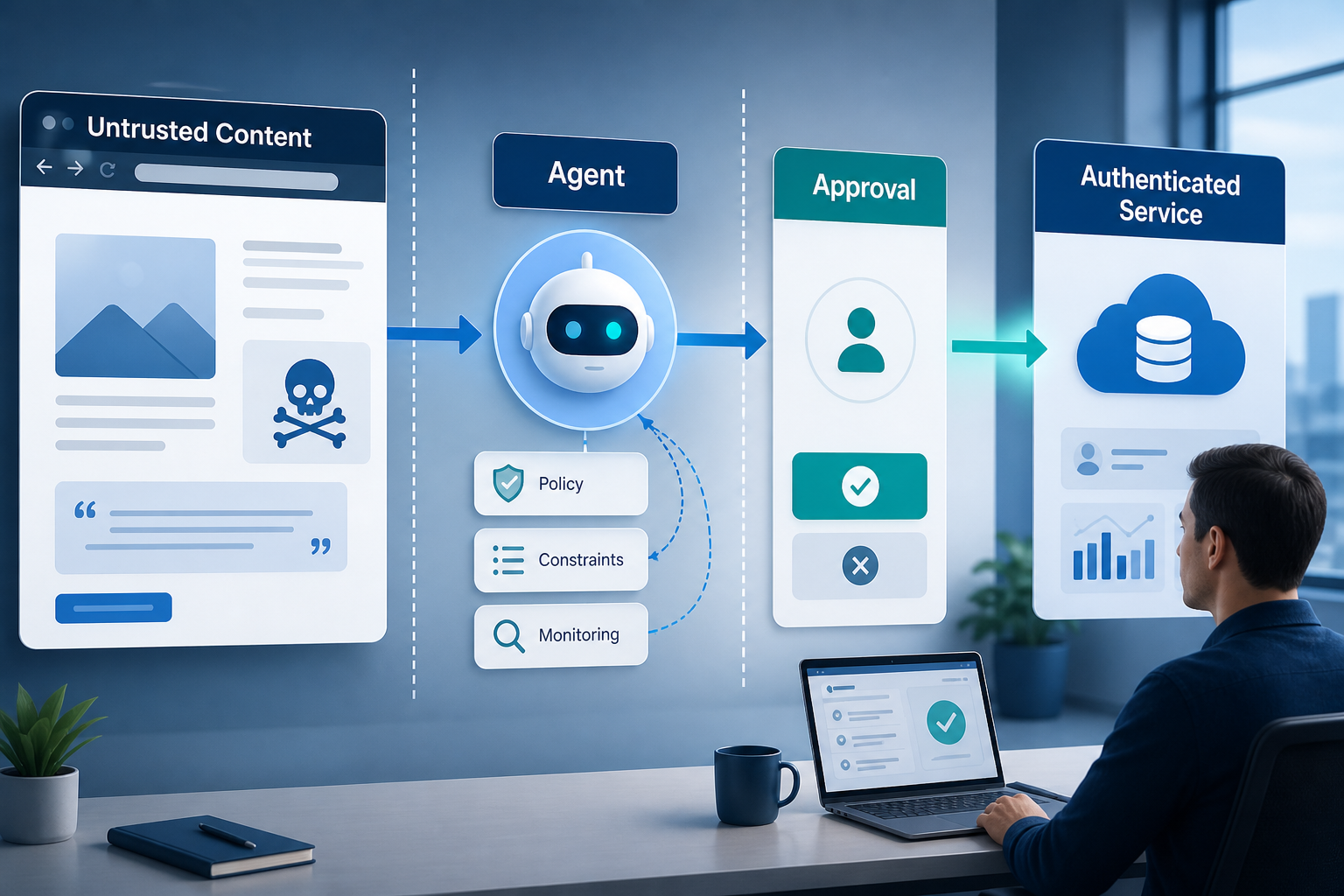
Agentic Browser Security: Prompt Injection, Permissions, and Safe Deployment
That combination creates risks that are different from ordinary browsing and traditional automation. The most important is indirect prompt injection, where hostile instructions hidden in web content attempt to redirect the agent away from the user's goal. Google describes indirect prompt injection as a primary new threat for agentic browsing and has introduced layered defenses that include origin constraints, independent action checks, threat detection, and user confirmation for sensitive actions. Google's Chrome security architecture is a useful reference for how browser-agent defenses are evolving.
View Details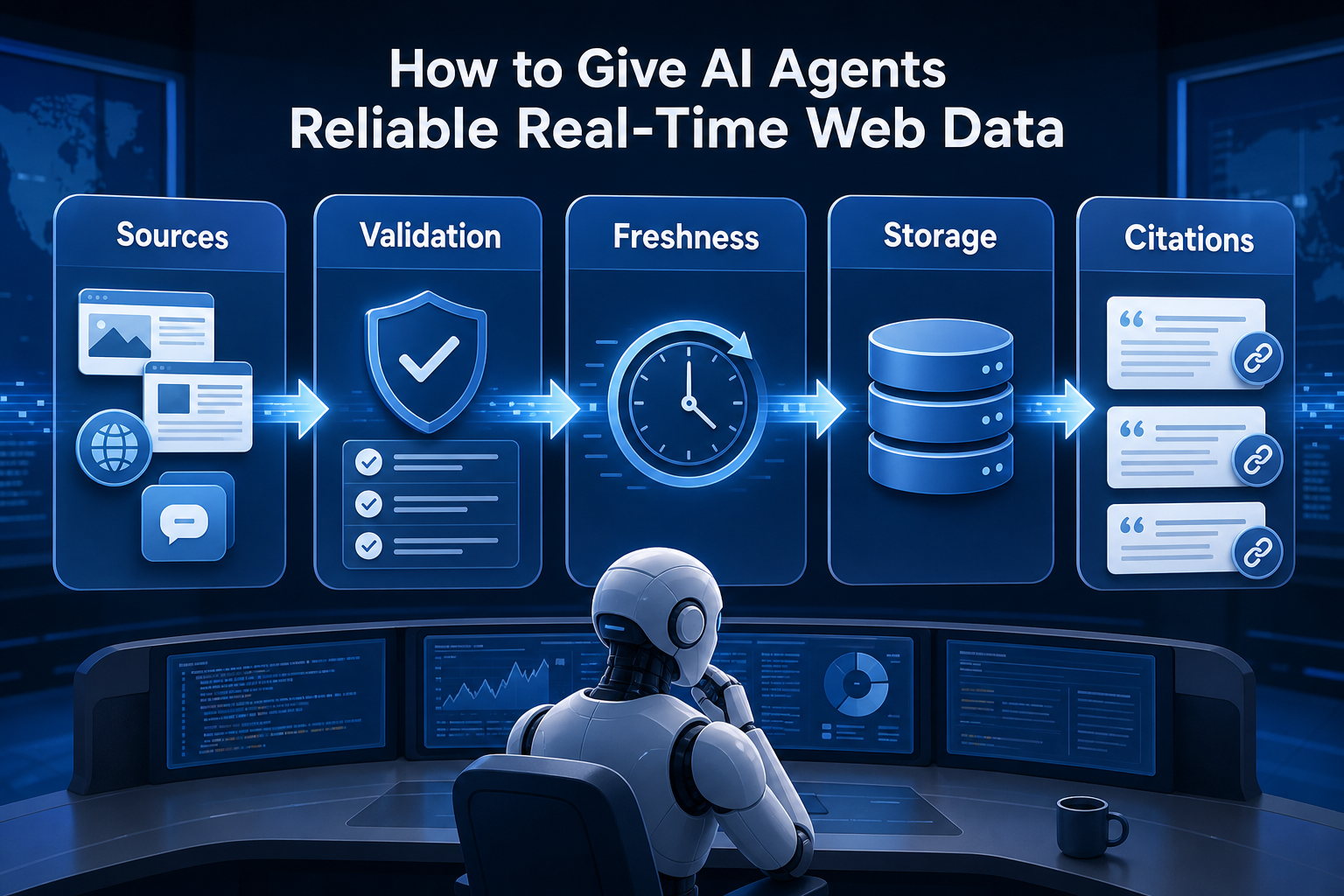
How to Give AI Agents Reliable Real-Time Web Data
A production-ready solution therefore needs more than a web scraper. It needs a web data layer that connects acquisition, validation, storage, retrieval, security, and observability. This guide explains how to design that layer.
View Details