
Zero-Day Detection Using AI: Implementation Guide
Stop waiting for signatures, use AI to catch zero-days in real-time.
Traditional signature-based detection systems leave security teams perpetually one step behind threat actors, waiting for known patterns to emerge before they can defend their networks. Zero-day vulnerabilities, by definition, exploit unknown weaknesses, rendering conventional detection approaches completely ineffective.
Artificial intelligence offers a paradigm shift from reactive to proactive threat detection. By enabling security operations to identify malicious activity based on behavioral anomalies rather than known signatures, AI levels the playing field. For technical operators and security engineers, this guide breaks down exactly how to implement AI-driven zero-day detection into your existing architecture.
Scale Security Data with LycheeIP
The Challenge of Zero-Day Detection
Security teams face a fundamental timing problem: traditional defenses require prior knowledge of attack vectors. By the time endpoint detection tools update their signature databases, attackers have already exploited vulnerable systems. The average time between vulnerability discovery and widespread exploitation has decreased dramatically, with some zero-days weaponized within hours of becoming active in the wild.
AI-powered detection addresses this critical gap by analyzing behavior, system context, and mathematical anomalies. This approach enables the detection of novel attack techniques, polymorphic malware variants, and sophisticated adversary tactics that easily bypass conventional security controls.
Machine Learning Models for Unknown Exploit Patterns
Behavioral Analysis Fundamentals
The foundation of AI-driven zero-day detection lies in understanding normal system behavior and identifying deviations that indicate potential threats. Machine learning models establish strict baselines of legitimate activity across three primary dimensions:
- Process Behavior Analysis: Models learn typical process execution patterns, parent-child process relationships, standard command-line arguments, and normal resource consumption profiles. When a process exhibits anomalous behavior—such as a PDF reader suddenly spawning PowerShell to establish outbound network connections—the system immediately flags the deviation.
- Network Traffic Patterns: AI models analyze communication patterns, protocol usage, data transfer volumes, and connection timing. Zero-day exploits often create distinctive network signatures (like unexpected data exfiltration patterns or DNS beaconing) even when the exploit code itself has never been seen before.
- User Behavior Analytics (UBA): Machine learning establishes individual and peer-group baselines for user activities. Credential theft—a common objective of zero-day exploits—manifests as behavioral anomalies, such as unusual access times or geographic impossibilities.
Supervised vs. Unsupervised Learning Approaches
Implementing zero-day detection requires selecting appropriate machine learning methodologies based on your available data and operational goals.
Supervised Learning: These models train on massive, labeled datasets of known malicious and benign activities. While this seems contradictory for unknown zero-day detection, supervised models excel at identifying the tactics and techniques that persist across different vulnerabilities.
- Example: Techniques like privilege escalation or lateral movement follow recognizable mathematical patterns regardless of the initial zero-day exploit used to gain access. Random forests and gradient boosting machines are excellent for this classification.
Unsupervised Learning: These models identify anomalies without requiring historically labeled training data.
- Example: Clustering algorithms (like K-means or DBSCAN) and isolation forests detect outliers in normal activity patterns. Autoencoders—neural networks trained to reconstruct normal inputs—fail to accurately reconstruct anomalous activity, creating a strong detection signal.
The takeaway: Unsupervised approaches excel at detecting truly novel attack patterns but generate higher false-positive rates. The optimal implementation combines both methodologies into an ensemble model.
Feature Engineering for Exploit Detection
Effective AI models require thoughtful feature selection. If you feed the model garbage data, you will get garbage detections. Focus your engineering on:
- Temporal Features: Time-series analysis of activity patterns and event sequences.
- Graph Features: Network topology analysis and entity relationship mapping.
- Entropy Measurements: Detecting randomness in file contents or network payloads, which heavily indicates malicious obfuscation or ransomware encryption.
- Contextual Features: Merging environmental context, asset criticality, and external threat intelligence.
Scale Security Data with LycheeIP
Integrating AI-Powered Detection into Existing Security Infrastructure
Architecture and Deployment Models
Successful implementation requires integrating AI capabilities without disrupting current SOC workflows. Choose your deployment model carefully:
- Edge Deployment: Deploy lightweight AI models directly on endpoints or network sensors. Pros: Near-zero latency real-time detection. Cons: Limited model complexity due to CPU/memory constraints on the endpoint.
- Centralized Analysis: Aggregate telemetry data in a central cloud platform (or data lake) where massive, sophisticated models perform deep analysis. Pros: Incredible correlation capabilities. Cons: Introduces network latency and requires robust data engineering pipelines.
- Hybrid Architecture: The gold standard. Combine edge-based models for initial, high-speed triage with centralized deep analysis for complex correlation and continuous model training.
SIEM and SOAR Platform Integration
AI-powered detection must plug cleanly into your existing Security Information and Event Management (SIEM) and Security Orchestration, Automation, and Response (SOAR) systems.
- Alert Enrichment: Do not allow your AI to generate net-new, standalone alerts that crowd the SOC dashboard. Instead, configure the AI to enrich existing SIEM alerts with confidence scores, behavioral context, and mapped MITRE ATT&CK tactics.
- API Integration: Implement RESTful APIs enabling your SOAR platform to query AI models for real-time risk assessments during automated incident response playbooks.
Data Pipeline Engineering
Your AI model's effectiveness depends entirely on data quality. To catch zero-days, your pipeline must handle:
- Comprehensive Collection: Endpoints (registry changes, process execution), network infrastructure (DNS queries, NetFlow), and cloud environments (API calls).
- Streaming Architecture: Real-time zero-day detection requires streaming data architectures using platforms like Apache Kafka or Apache Flink. Batch processing is too slow for detection, though it remains useful for historical model training.
Reducing False Positives While Improving Zero-Day Catch Rates
The Precision-Recall Tradeoff
Zero-day detection faces an inherent mathematical tension. Aggressive detection (High Recall) catches more hidden threats but generates exhausting false positives. Conservative thresholds (High Precision) reduce false positives but risk missing a genuine zero-day.
Security teams must find the optimal balance based on asset criticality. A public-facing web server might require high precision to avoid alert fatigue, while a database housing highly regulated financial data requires maximum recall.
Model Tuning Strategies
To improve the precision-recall balance, implement these engineering strategies:
- Ensemble Methods: Combine multiple models with different strengths. Use a voting mechanism where meta-models learn the optimal weighting of base model predictions to suppress false positives.
- Contextual Scoring: The same statistical anomaly score carries different weight depending on context. A weird PowerShell script on a developer's laptop might be a false positive; that exact same script on a domain controller is a critical emergency.
- Temporal Correlation: Single anomalous events often represent benign edge cases. Implement correlation engines that connect related events across time to confirm genuine threat chains.
Analyst Feedback Loops
AI cannot operate in a vacuum; human expertise remains essential.
Implement strict Alert Disposition Tracking. Capture analyst verdicts on every AI-generated alert—True Positive, False Positive, or Benign Positive (unusual but legitimate business activity). Feed this labeled data directly back into supervised model retraining pipelines to create a continuous improvement loop.
LycheeIP (Developer-First Proxy Infrastructure)
When building, training, and testing these complex AI detection models, security engineering teams must frequently simulate adversary behavior or gather massive amounts of external threat intelligence to establish accurate baselines. LycheeIP is a developer-first proxy and data infrastructure platform that enables teams to reliably route this high-volume network traffic. For example, if your team is conducting authorized external attack surface monitoring or testing how your new AI model responds to distributed geographic attacks, leveraging a developer-first proxy infrastructure ensures your requests mimic real-world traffic patterns without triggering immediate, artificial IP bans. Utilizing dynamic IP networks allows your automated security tools to smoothly rotate connections during intensive vulnerability scanning or data scraping. Conversely, when your AI data pipelines require continuous, high-speed ingestion of external threat feeds, datacenter IP solutions provide the dedicated bandwidth and persistence necessary to keep your central analysis engines fed.
Conclusion
AI-powered zero-day detection represents a fundamental evolution in security operations, shifting the industry from reactive signature matching to proactive behavioral analysis. While implementation requires significant upfront investment in data infrastructure, model development, and pipeline engineering, the capability to detect unknown threats in real-time provides a decisive advantage.
Success requires balancing technical sophistication with operational practicality. The most effective implementations combine supervised and unsupervised AI techniques, integrate seamlessly with existing SIEM/SOAR workflows, and rely heavily on continuous human analyst feedback. Security teams that successfully deploy these capabilities gain the ability to stop zero-day exploits before widespread damage occurs—finally transforming the economics of cybersecurity in the defender's favor.
Scale Security Data with LycheeIP
Frequently Asked Questions
Q: What types of machine learning models work best for zero-day detection?
A: The most effective approach is an "ensemble method" that combines multiple model types. Use unsupervised models (like isolation forests or autoencoders) to detect truly novel mathematical anomalies, supervised models (like random forests) to identify known attack techniques applied in new ways, and deep learning models (like LSTMs) to analyze complex sequential network patterns.
Q: How much training data is needed to implement AI-based threat detection?
A: For baseline establishment, aim for at least 30 to 90 days of normal operational data covering diverse business scenarios. Supervised models require thousands of labeled examples. However, you can begin with unsupervised anomaly detection using smaller datasets in "monitoring mode," then progressively improve the models as you accumulate more data and analyst feedback.
Q: How do you prevent adversaries from evading AI detection through adversarial machine learning?
A: Implement layered defenses. Use ensemble models that are mathematically harder to reverse-engineer, incorporate adversarial training (where models learn from intentionally crafted evasion attempts), and combine AI detection with traditional rule-based controls.
Q: What infrastructure is required to deploy AI detection at enterprise scale?
A: Requirements include comprehensive telemetry collection (EDR, NDR, Cloud logs), streaming data pipelines (like Apache Kafka) capable of processing millions of events per second, GPU-accelerated computational resources for deep learning inference, and robust API integrations connecting the AI to your existing SIEM and SOAR platforms.
Q: How long does it typically take to see ROI from AI-based zero-day detection?
A: Initial value appears within 3 to 6 months as unsupervised models begin identifying subtle anomalies that human analysts miss. Measurable ROI typically emerges at the 6 to 12-month mark, when validated models successfully reduce analyst workload through accurate automated triage.

Recommended Articles

AI Search API for AI Agents: How to Ground LLMs With Live Search Data
An AI search API gives an application or agent programmatic access to current search results. Its most useful role is discovery: the agent can find candidate sources, identify fresh information, and decide what to retrieve next instead of relying only on model memory.
View Details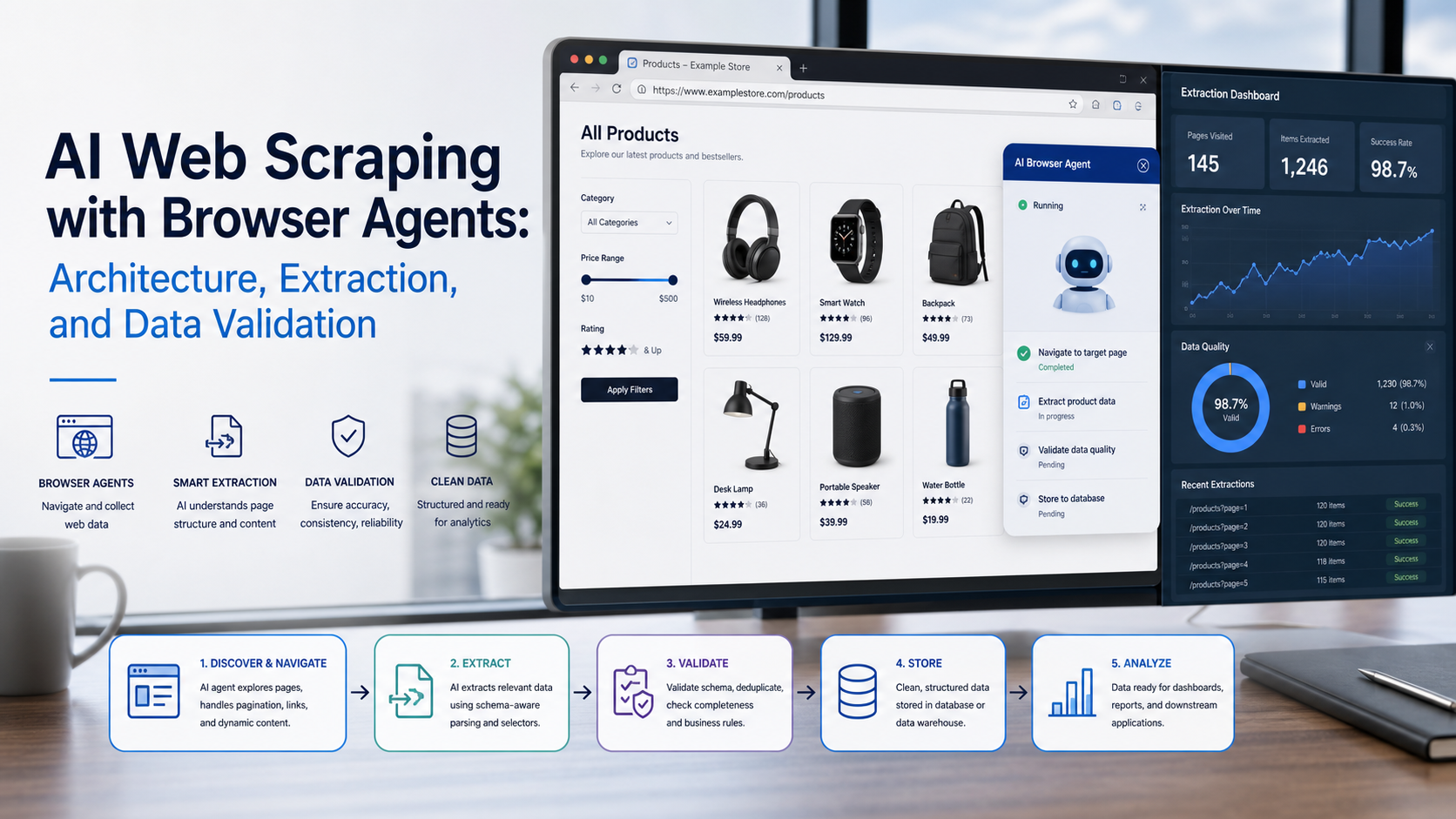
AI Web Scraping with Browser Agents: Architecture, Extraction, and Data Validation
AI web scraping uses AI to help discover, navigate, interpret, or extract information from websites. Browser agents are one implementation option when page interaction, rendering, or layout variation makes a simple scraper too brittle, but the agent should not become the entire data pipeline.
View Details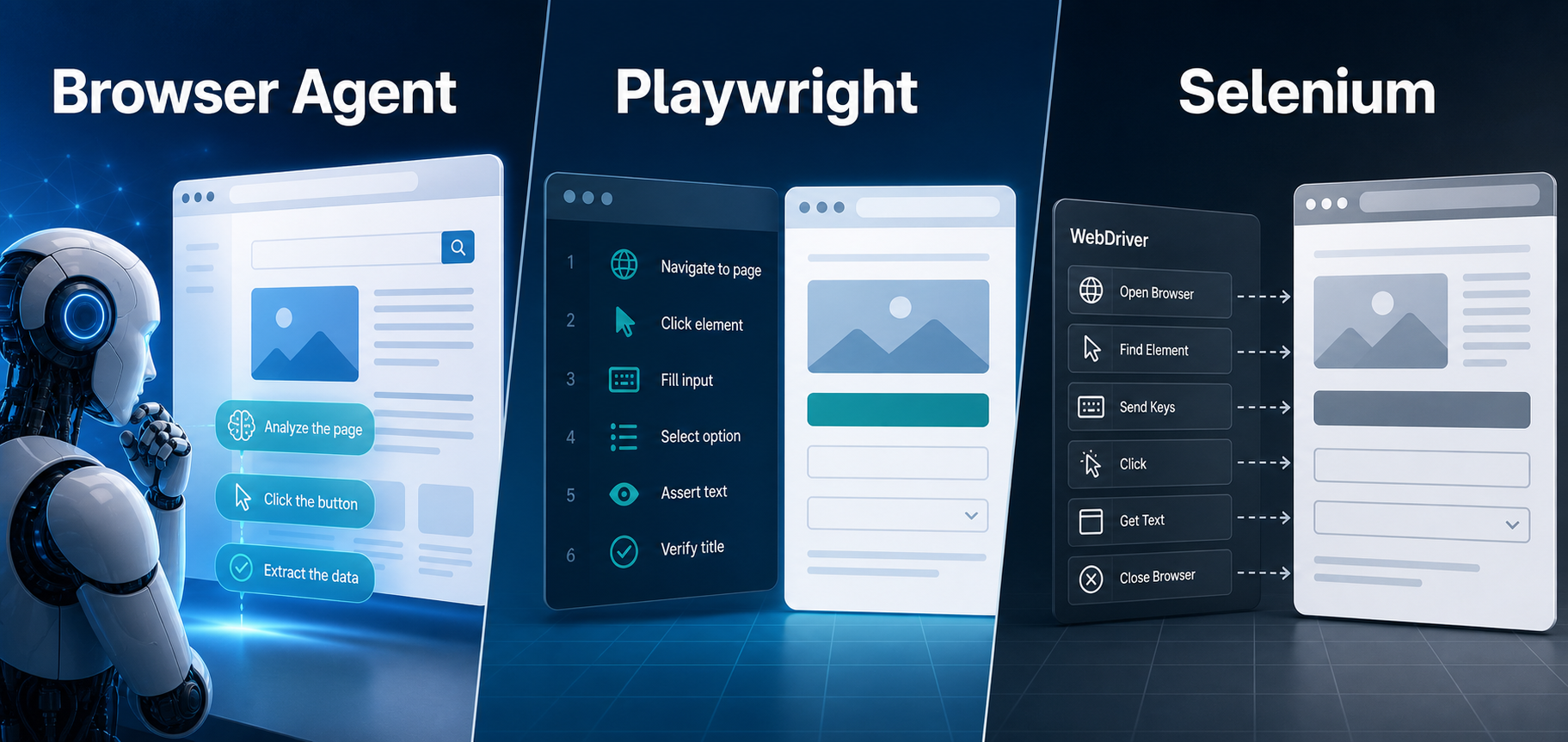
AI Browser Automation: Browser Agents vs Playwright vs Selenium
A browser agent interprets a goal and decides what browser action to take next. Playwright and Selenium can execute explicit, testable browser logic defined by developers. In 2026, however, Playwright also provides official MCP and agent-oriented workflows, so Playwright is no longer just the deterministic alternative to agentic automation. It can also serve as the browser-control layer inside an agent system.
View Details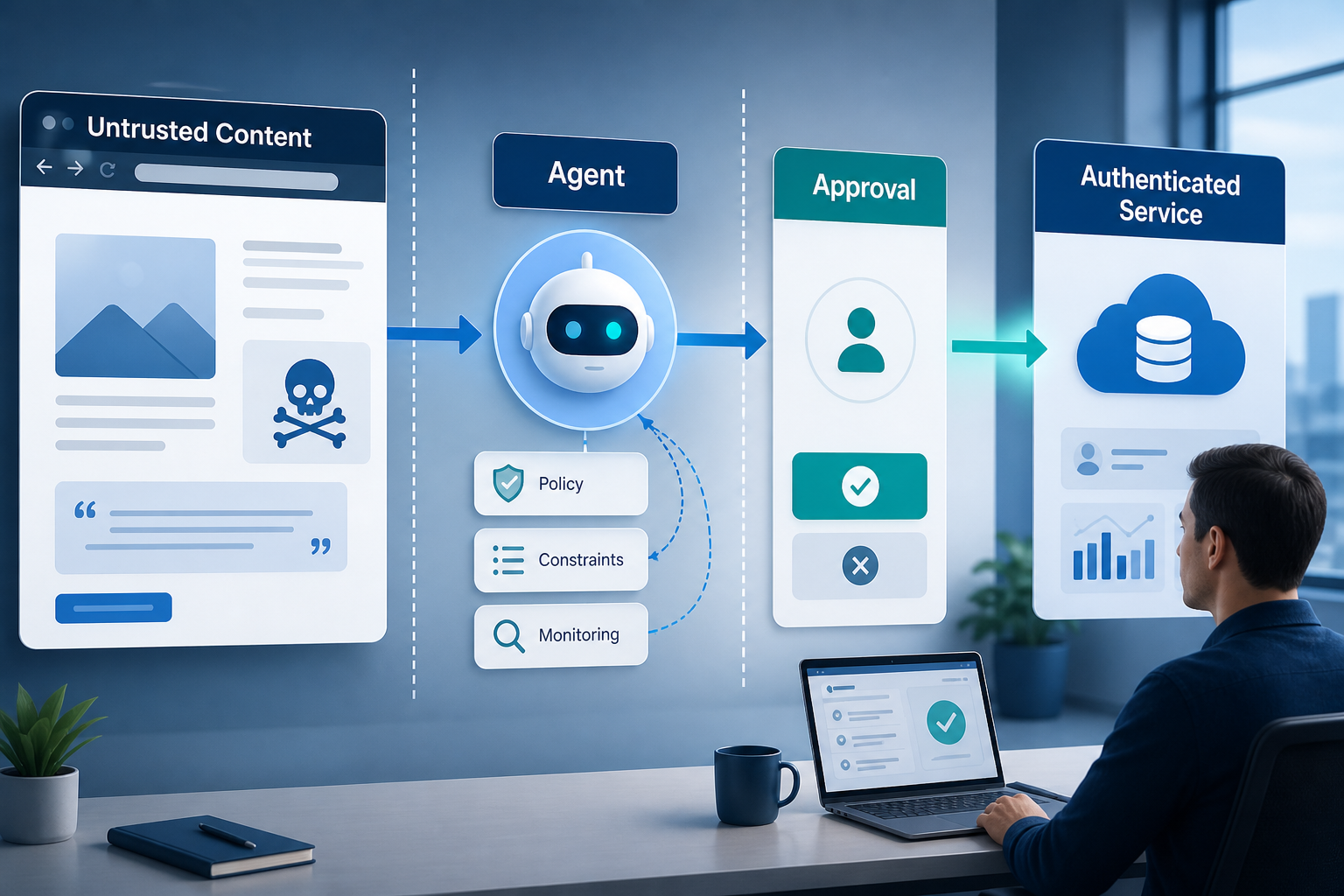
Agentic Browser Security: Prompt Injection, Permissions, and Safe Deployment
That combination creates risks that are different from ordinary browsing and traditional automation. The most important is indirect prompt injection, where hostile instructions hidden in web content attempt to redirect the agent away from the user's goal. Google describes indirect prompt injection as a primary new threat for agentic browsing and has introduced layered defenses that include origin constraints, independent action checks, threat detection, and user confirmation for sensitive actions. Google's Chrome security architecture is a useful reference for how browser-agent defenses are evolving.
View Details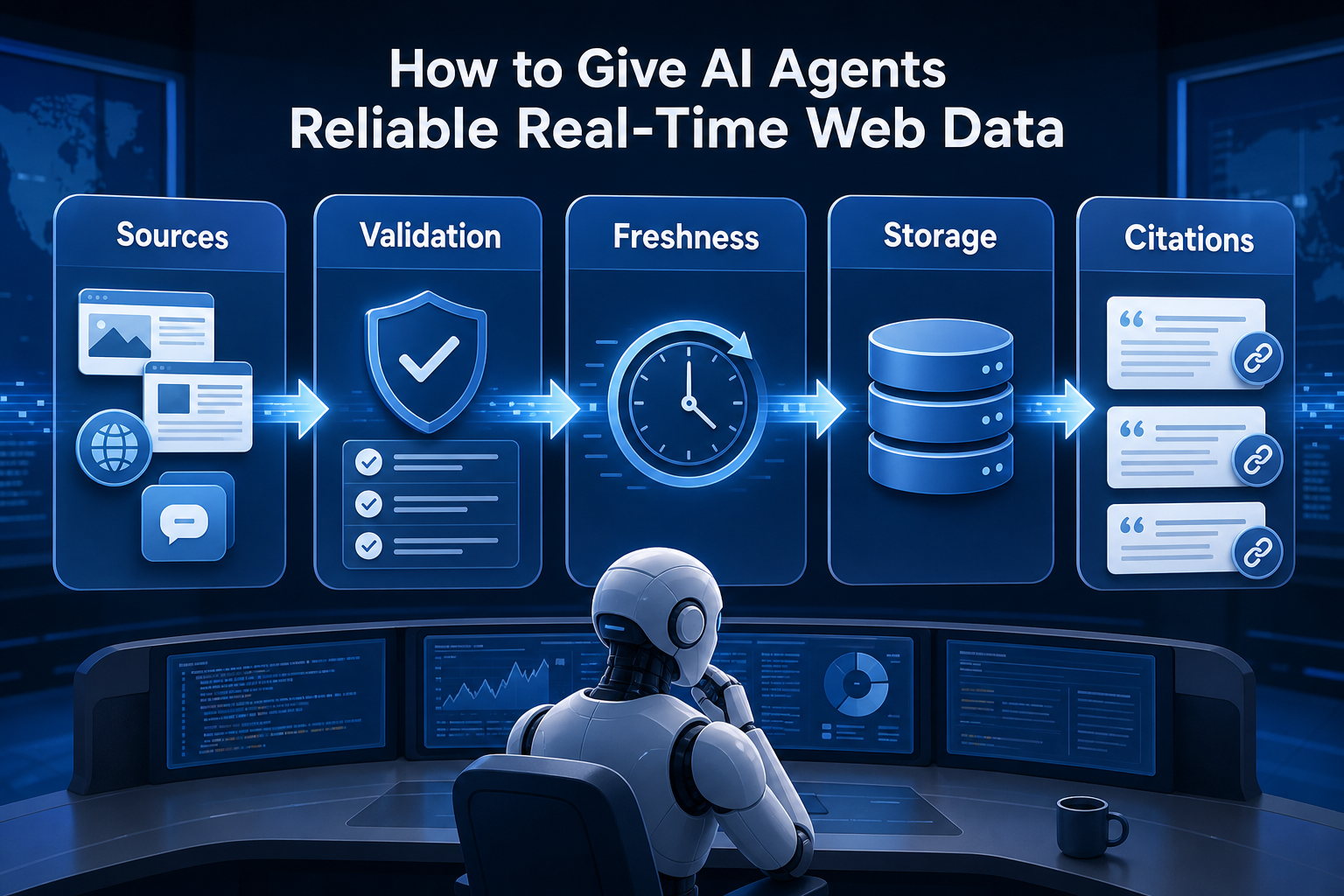
How to Give AI Agents Reliable Real-Time Web Data
A production-ready solution therefore needs more than a web scraper. It needs a web data layer that connects acquisition, validation, storage, retrieval, security, and observability. This guide explains how to design that layer.
View Details