
AI-Powered Social Engineering: The New Phishing
AI crafts phishing emails indistinguishable from real ones—and the implications for enterprise cybersecurity are staggering.
Traditional phishing attacks relied on a "spray-and-pray" methodology, utilizing generic templates riddled with spelling errors, urgent but vague requests, and obvious red flags. Today's AI-powered social engineering represents an evolutionary leap. By leveraging large language models (LLMs) and deep learning algorithms, threat actors can now automate the analysis of targets and generate hyper-personalized attacks at scale. These modern campaigns are so contextually accurate that even highly trained, security-conscious operators struggle to detect them.
For developers, security teams, and IT administrators, understanding how these automated systems profile targets and execute attacks is the first step in defending the perimeter.
Secure Data Pipelines with LycheeIP
How AI Analyzes Targets for Personalized Attacks
The foundation of modern, AI-powered phishing lies in automated data aggregation and pattern recognition. Attackers deploy machine learning scripts to conduct Open Source Intelligence (OSINT) gathering at a speed and scale no human could match.
These systems scrape publicly available information from LinkedIn profiles, GitHub commit histories, corporate blog posts, and dark web data breaches. However, they don't just collect raw data—they synthesize it to map out communication patterns, job responsibilities, reporting structures, and even individual writing styles.
The Automated OSINT Pipeline
A sophisticated AI phishing system operates through a highly systematic pipeline:
- Identity Mapping: Determines exactly who you report to and maps your organization's hierarchy based on public social graphs.
- Context Extraction: Scrapes your recent LinkedIn updates, public pull requests, or conference appearances to understand your current projects.
- Style Mimicry: Analyzes leaked emails or public blog posts to mimic the exact corporate jargon, formatting, and tone your organization uses.
The resulting payload doesn't feel like a phishing attempt—it feels like a standard Tuesday morning request. Large language models excel at generating contextually appropriate messages. A finance employee might receive an urgent thread about "Q4 budget reconciliation" that perfectly aligns with the company's fiscal calendar. A DevOps engineer might receive a highly technical GitHub security alert formatted identically to legitimate infrastructure notifications. The AI ensures the tone, urgency, and technical accuracy align perfectly with the target's expectations.
Real-world examples demonstrate the maturity of this threat. Security researchers have documented AI-generated spear-phishing campaigns achieving a 60% higher success rate than traditional methods. The attacks succeeded because they seamlessly incorporated genuine project names, accurate organizational hierarchies, and timely references to industry events.
Deepfake Audio and Video in Social Engineering
While AI-powered text generation reshapes email threats, deepfake technology extends social engineering into real-time multimedia domains. Powered by Generative Adversarial Networks (GANs), voice cloning now requires as little as three seconds of clean audio to generate convincing, dynamic speech. Attackers harvest these voice samples from conference presentations, podcast interviews, earnings calls, or corporate social media videos.
The Rise of Vishing and Whaling
The most dangerous application of this technology is "vishing" (voice phishing) targeting high-value financial transactions. In a widely documented 2020 case, cybercriminals used AI-generated voice cloning to impersonate a CEO, successfully convincing a UK energy company executive to wire $243,000 to a fraudulent account. The victim noted that the voice sounded identical to their boss, perfectly replicating specific speech patterns and a slight German accent.
Deepfake video introduces an even more sophisticated dimension to CEO fraud and "whaling" attacks (targeting high-level executives). Attackers can now hijack video calls, presenting real-time visual and audio facsimiles of executives requesting urgent wire transfers or emergency credential sharing.
The Psychological Bypass: The true danger of multimedia deepfakes is psychological. Humans are biologically wired to trust what they see and hear far more than what they read. A written urgent request triggers skepticism; a video call from a panicked CFO triggers immediate compliance. While current deepfake video technology still exhibits subtle artifacting—such as unnatural blinking or blurring around the edges of the face—continuous improvements are making real-time detection increasingly difficult.
Secure Data Pipelines with LycheeIP
Detection Techniques and User Education
Combating AI-powered social engineering requires an aggressive update to both technical detection strategies and organizational security culture.
Technical Detection Methods
- Strict Email Authentication: Implement and strictly enforce DMARC, SPF, and DKIM protocols to cryptographically validate sender domains and prevent spoofing.
- Behavioral Analytics: Deploy anomaly detection systems that flag unusual requests—such as sudden changes in communication frequency or unusual financial routing—regardless of the apparent sender's identity.
- Multi-Factor Verification: Require hardware-backed multi-factor authentication (MFA) and secondary out-of-band confirmation channels for all sensitive network requests.
- Synthetic Media Scanners: Employ defensive AI-powered systems designed specifically to identify the digital artifacts left behind by deepfake generation tools.
The most effective countermeasure to AI-powered social engineering is human-centric: establishing a rigid verification culture. Organizations must normalize the practice of double-checking unusual requests through alternative communication channels. If an email requests a wire transfer, the recipient must call the sender using an internally verified phone number—never the number provided in the suspicious message.
Security awareness training must evolve far beyond the outdated "spot the typo" approach. Modern training frameworks should emphasize:
- Professionalism is not Proof: Recognizing that perfectly formatted, highly professional emails can still be malicious.
- OSINT Awareness: Understanding how personal social media information becomes weaponized as an attack vector.
- Fearless Verification: Practicing strict verification protocols without the fear of seeming paranoid or insubordinate to leadership.
The Defensive Checklist
- Establish Verification Keywords: Implement pre-arranged, internal challenge phrases for confirming identity during unusual or high-stress requests.
- Audit Public Information: Actively reduce the data available for AI analysis by regularly reviewing employee social media privacy settings and pruning overly detailed corporate website directories.
- Mandate Cooling-Off Periods: AI-powered attacks rely on artificial urgency. Security policies should mandate strict cooling-off periods and multi-person sign-offs for significant financial or access-level actions.
- Create Rapid Feedback Loops: Establish frictionless reporting systems for suspected AI-powered attacks, allowing security operations to quickly analyze new threat patterns.
LycheeIP (Developer-First Proxy Infrastructure)
LycheeIP is a developer-first proxy and data infrastructure platform that helps engineering and security teams reliably route their network traffic at scale. As threat actors automate their OSINT gathering to fuel AI phishing campaigns, corporate security teams must fight fire with fire by proactively scanning the web for leaked credentials, exposed infrastructure, and brand impersonation. When threat intelligence teams and authorized red teams scrape public data to map their organization's exposure, they require highly reliable network routing to prevent their automated scanners from being blocked.
Leveraging datacenter IP solutions allows security teams to maintain the persistent, high-speed connections necessary for monitoring malicious domains and analyzing threat actor infrastructure. Meanwhile, utilizing dynamic IP networks enables red teams to emulate distributed external attacks or scrape public breach data without triggering restrictive rate limits. For organizations building their own defensive AI models to counter automated phishing, utilizing a robust developer-first proxy infrastructure ensures continuous, anonymous access to the global threat data required for accurate training. Learn more about securing and scaling your data-gathering pipelines at LycheeIP.
The AI-powered social engineering threat will only intensify as generative models and synthetic media technologies continue to advance. Organizations and individuals who adapt their security postures today—by emphasizing a verification culture, maintaining healthy skepticism, and enforcing multi-channel authentication—will be best equipped to navigate this evolving landscape.
The era of trusting what appears legitimate has ended. The era of verifying everything has begun.
Secure Data Pipelines with LycheeIP
Frequently Asked Questions
Q: How can I tell if an email is an AI-generated phishing attempt?
A: AI-generated phishing emails are typically grammatically flawless and highly personalized, rendering traditional red flags (like typos or broken English) obsolete. Instead of looking for spelling errors, look for behavioral anomalies. Verify highly urgent requests through alternative communication channels, scrutinize the requested action (e.g., bypassing standard financial procedures), and remain highly suspicious of links requesting credential verification—even when the context seems perfectly aligned with your current projects.
Q: Can deepfake voice technology really fool people in real-time phone conversations?
A: Yes. Modern voice cloning (Vishing) can create highly convincing, real-time audio with minimal source material. However, current deepfakes can occasionally struggle with rapid, unexpected questions or highly nuanced, extended conversations. Always verify sensitive requests by hanging up and calling the person back using an internally verified corporate phone number.
Q: What technical protocols should organizations implement to protect against AI-powered social engineering?
A: Organizations must enforce strict email authentication protocols (DMARC, SPF, DKIM) to prevent domain spoofing. Additionally, deploying hardware-based multi-factor authentication (MFA), adopting behavioral anomaly detection on the network, and enforcing policies that mandate cooling-off periods for urgent financial requests drastically reduce the success rate of automated social engineering.
Q: Is AI-powered phishing measurably more effective than traditional phishing?
A: Yes. Security research indicates that AI-generated spear-phishing campaigns achieve significantly higher success rates—often up to 60% more effective than traditional templates. The combination of hyper-personalization, contextual accuracy, and flawless professional presentation makes these attacks incredibly convincing, allowing them to bypass the psychological defenses of even highly security-aware users.

Recommended Articles
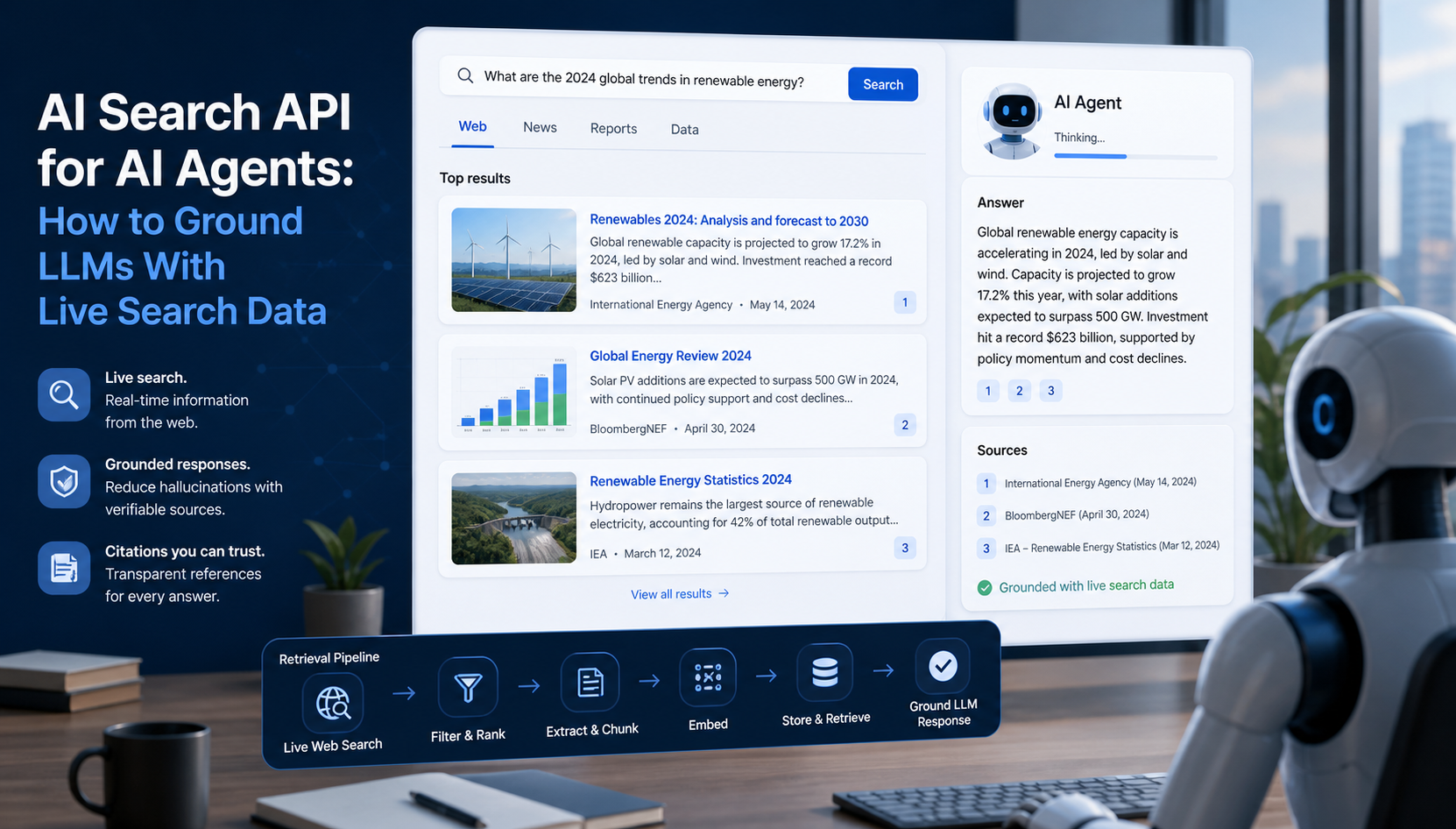
AI Search API for AI Agents: How to Ground LLMs With Live Search Data
An AI search API gives an application or agent programmatic access to current search results. Its most useful role is discovery: the agent can find candidate sources, identify fresh information, and decide what to retrieve next instead of relying only on model memory.
View Details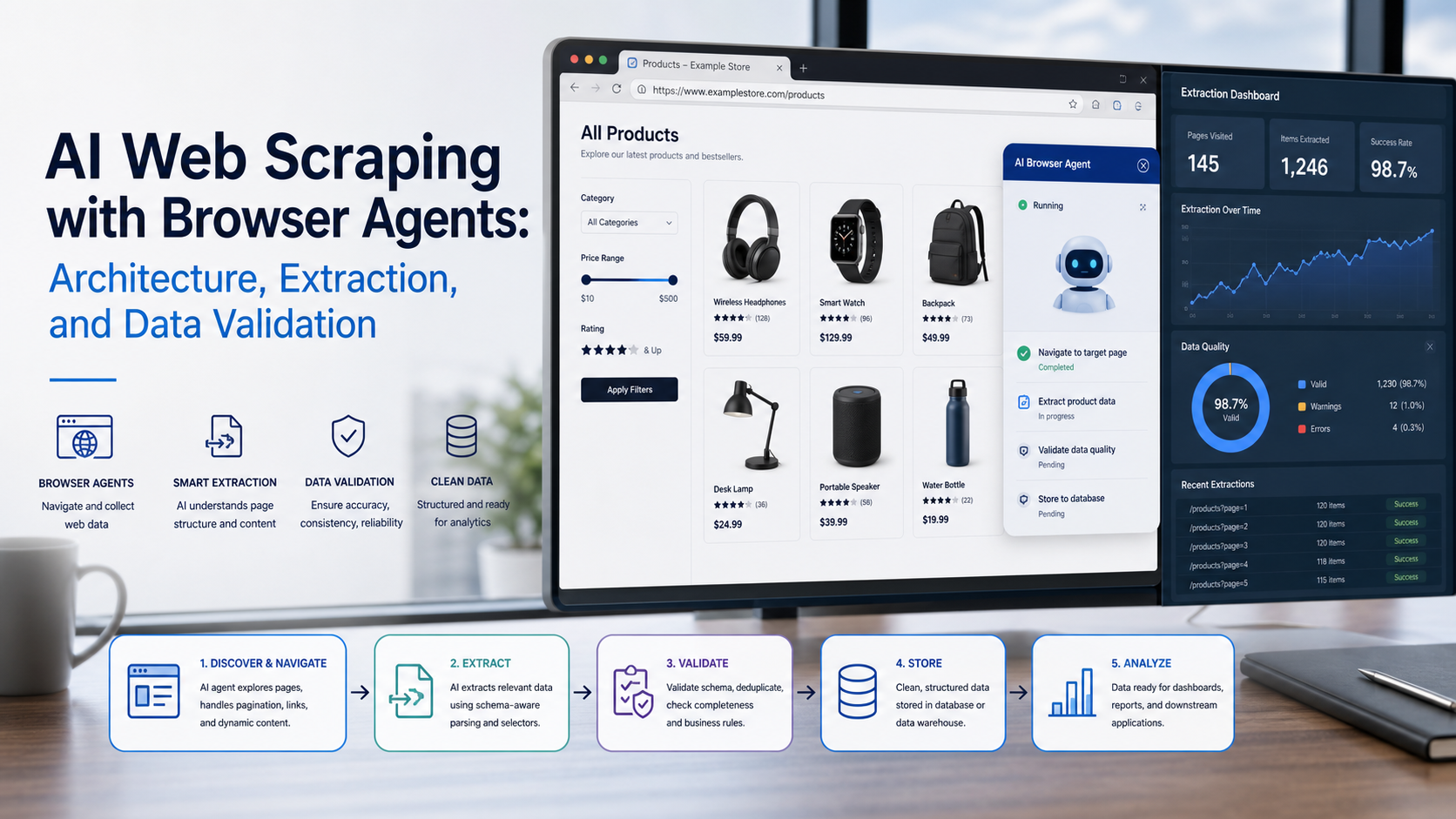
AI Web Scraping with Browser Agents: Architecture, Extraction, and Data Validation
AI web scraping uses AI to help discover, navigate, interpret, or extract information from websites. Browser agents are one implementation option when page interaction, rendering, or layout variation makes a simple scraper too brittle, but the agent should not become the entire data pipeline.
View Details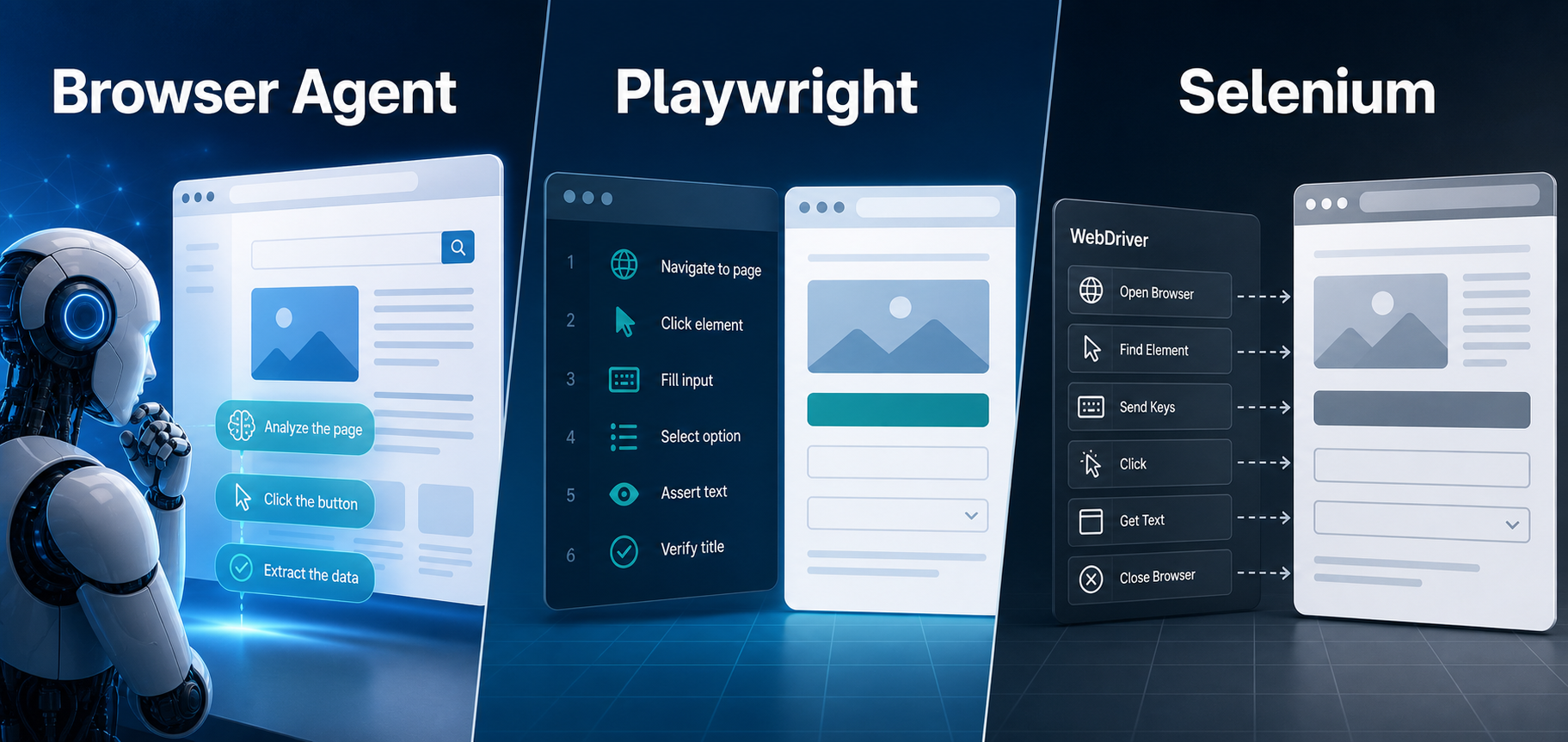
AI Browser Automation: Browser Agents vs Playwright vs Selenium
A browser agent interprets a goal and decides what browser action to take next. Playwright and Selenium can execute explicit, testable browser logic defined by developers. In 2026, however, Playwright also provides official MCP and agent-oriented workflows, so Playwright is no longer just the deterministic alternative to agentic automation. It can also serve as the browser-control layer inside an agent system.
View Details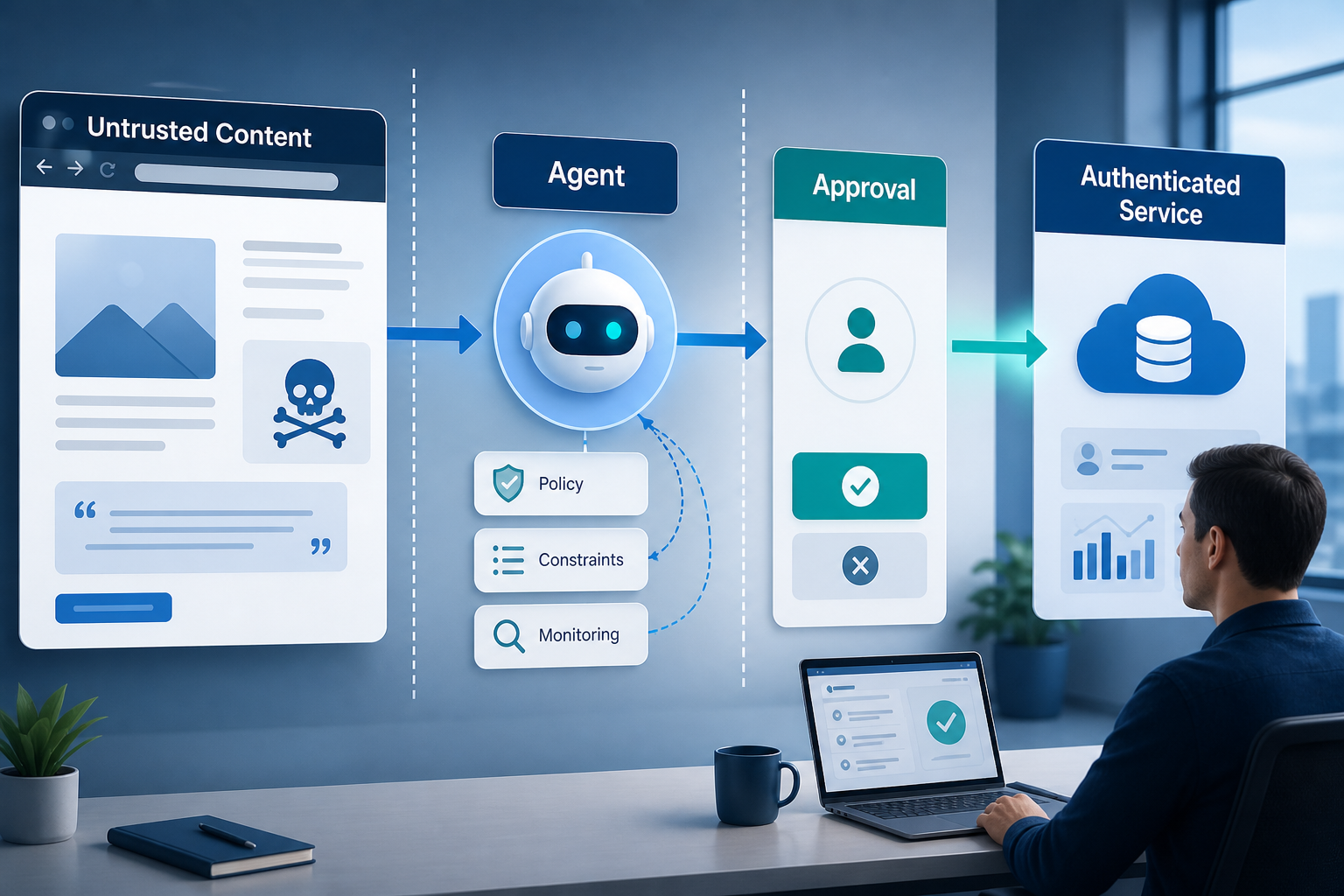
Agentic Browser Security: Prompt Injection, Permissions, and Safe Deployment
That combination creates risks that are different from ordinary browsing and traditional automation. The most important is indirect prompt injection, where hostile instructions hidden in web content attempt to redirect the agent away from the user's goal. Google describes indirect prompt injection as a primary new threat for agentic browsing and has introduced layered defenses that include origin constraints, independent action checks, threat detection, and user confirmation for sensitive actions. Google's Chrome security architecture is a useful reference for how browser-agent defenses are evolving.
View Details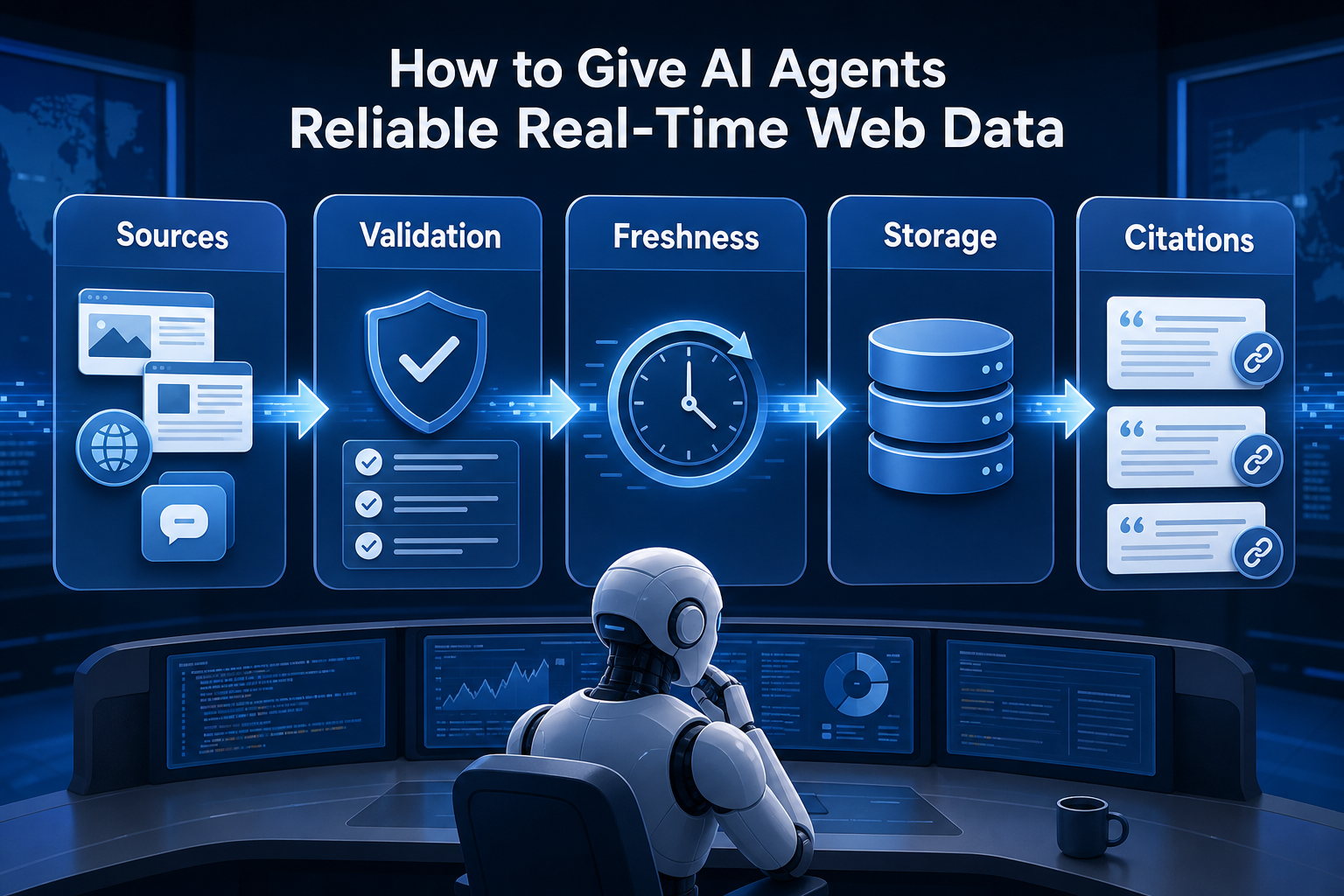
How to Give AI Agents Reliable Real-Time Web Data
A production-ready solution therefore needs more than a web scraper. It needs a web data layer that connects acquisition, validation, storage, retrieval, security, and observability. This guide explains how to design that layer.
View Details