
How Hackers Weaponize AI to Launch Attacks in 2026
A real hacker reveals exactly how AI has changed the game for cybercriminals.
In a dimly lit Discord channel frequented by threat actors, a veteran hacker who goes by the handle "NullVector" answers a pressing question: How has artificial intelligence transformed your operations over the past few years? Their response is chilling: "What used to take a team of five people three months to execute, I can now do alone in three days. AI isn't just a tool, it's a force multiplier that's rewritten the economics of cybercrime."
This isn't hyperbole. As we navigate through 2026, artificial intelligence has fundamentally altered the landscape of cyber warfare. The democratization of AI tools. once the exclusive domain of nation-states and well-funded Advanced Persistent Threat (APT) groups, has placed extraordinary offensive capabilities directly into the hands of ordinary criminals. For context, industry data now reveals that the average cost of an AI-powered data breach has climbed to $5.72 million.
Understanding how attackers leverage these tools is no longer optional for security professionals; it's existential.
Explore LycheeIP Proxy Infrastructure
When Machines Attack at Machine Speed
The most profound shift AI has brought to offensive security operations is automation at scale. Traditional hacking required significant manual effort: reconnaissance, target profiling, exploit customization, and payload delivery all demanded human attention and expertise. AI has collapsed these timelines and eliminated the traditional skill barriers.
Automated Reconnaissance and Target Selection
Modern threat actors deploy AI-powered reconnaissance frameworks that continuously scan the internet for vulnerable assets. These aren't simple, noisy port scanners—they are sophisticated data-aggregation systems that:
- Correlate data across silos: Merging information from WHOIS databases, public GitHub repositories, LinkedIn profiles, and dark web breach databases to build comprehensive target profiles.
- Identify high-value targets algorithmically: Machine learning models trained on successful breaches predict which organizations are most likely to pay ransoms or possess valuable intellectual property.
- Adapt search patterns dynamically: Unlike static scanning tools, AI systems learn which reconnaissance techniques avoid triggering automated firewall bans and evolve their approach.
According to NullVector, "I feed my AI agent a target vertical—say, mid-sized healthcare providers—and it comes back with a ranked list of vulnerable organizations, complete with technology stacks, key personnel, and likely attack vectors. The entire process is autonomous."
Vulnerability Discovery and Exploit Generation
Perhaps most concerning is AI's capability in vulnerability research. Large language models (LLMs) fine-tuned on exploit databases and vulnerability disclosures can process information at an unprecedented rate. Security teams must now defend against AI that can:
- Analyze massive codebases for obscure logic flaws faster than human auditors.
- Generate functional exploit proofs-of-concept (PoCs) from simple vulnerability descriptions.
- Create polymorphic variants of existing exploits that easily bypass signature-based detection.
In early 2026, researchers documented underground models trained specifically on the OWASP Top 10 for Large Language Model Applications and CVE databases. These models generate working exploits in minutes, drastically shortening the window between a vulnerability's public disclosure and its active exploitation in the wild.
The Speed Advantage
The automation advantage isn't just about doing things faster; it's about operating at a pace human defenders cannot match. When an AI system can test thousands of credential combinations per second and adapt to defensive responses in real-time, the traditional "detect and respond" security model breaks down.
AI in Action—The Attacks That Keep CISOs Awake
Theory is one thing; seeing AI weaponization in practice is another. Let's examine real-world attack scenarios where artificial intelligence has become the attacker's most powerful weapon.
Hyper-Personalized Phishing Campaigns
Phishing has always been a numbers game, but AI has transformed it from spray-and-pray to surgical precision. Current threat intelligence indicates that a staggering 82.6% of phishing emails now utilize AI language models in their creation.
Modern AI-powered phishing campaigns feature:
- Content Generation at Scale: LLMs create thousands of unique, contextually relevant phishing emails that completely bypass duplicate-content detection filters.
- Deepfake Audio and Video: In notable recent incidents, attackers used AI-generated voice cloning to impersonate C-suite executives, successfully authorizing multi-million dollar wire transfers. Deepfake incidents have surged over 2,000% since 2022.
- Behavioral Analysis: AI systems scrape targets' social media and out-of-office replies to perfectly mimic trusted contacts.
A cybersecurity analyst at a Fortune 500 company shared: "We caught a phishing campaign where every email was unique. The AI had scraped our org chart, recent press releases, and employee LinkedIn posts. Our traditional secure email gateways didn't catch a single one."
Industrial-Scale Credential Stuffing
Credential stuffing—using leaked username/password combinations to access accounts—has been supercharged by AI:
- Intelligent Password Variation: Rather than just trying exact leaked passwords, AI models accurately predict likely variations (e.g., swapping "2025!" for "2026!").
- Bot Behavior Mimicry: AI-powered bots simulate exact human behavior patterns, including imperfect typing cadences and mouse movements, to defeat CAPTCHAs.
- Distributed Coordination: Machine learning orchestrates attacks across thousands of residential proxies, adapting the assault based on real-time success rates.
Next-Generation Social Engineering
AI has elevated social engineering from a dark art to an exact science. Advanced threat actors now employ real-time conversational agents capable of building rapport and trust over weeks of interaction before ever dropping a malicious payload.
The AI Social Engineering Attack Flow:
- Psychological Profiling: Scraping public data to identify targets under high stress (e.g., recent layoffs at a company).
- Multi-Channel Orchestration: Coordinating the same pretext across LinkedIn, SMS, and email.
- Automated Engagement: Using ChatGPT-style bots to handle back-and-forth dialogue until the target clicks the link.
Adaptive Malware and Evasion
Malware development has entered a new era. AI generates polymorphic code—functionally identical but structurally unique variants for each infection.
Furthermore, malware now uses machine learning to detect sandbox analysis environments. If it notices it is being watched by security researchers, it remains dormant. Once it confirms it is in a production environment, it maps to the MITRE ATT&CK framework to autonomously execute lateral movement, escalate privileges, and exfiltrate data without a human operator.
Explore LycheeIP Proxy Infrastructure
The AI Arms Race—Defense in the Age of Intelligent Attacks
The emergence of AI-powered attacks has triggered an arms race between offensive and defensive artificial intelligence. The question isn't whether AI will dominate cybersecurity, but which side will wield it more effectively.
Defensive AI: Fighting Fire with Fire
Security vendors have rushed to deploy AI-powered defensive tools:
- Behavioral Analytics: Establishing baselines of normal user behavior to detect anomalies instantly.
- Automated Threat Hunting: Continuously searching network logs for subtle indicators of compromise (IoCs) humans miss.
- AI-Generated Deception: Deploying dynamic honeypots that adapt to attacker behavior, wasting their compute resources and gathering intelligence.
The Economics Favor Attackers
Perhaps most troubling is the economic asymmetry AI creates. Attackers need only one success; defenders must prevent all attacks. AI tools lower the cost of launching an attack dramatically, while defensive AI remains expensive to implement and requires highly skilled operators. Furthermore, attack AI operates 24/7 without fatigue—security analysts do not.
The Defender's Playbook
While the threat landscape is daunting, organizations must take concrete steps to defend against AI-powered attacks.
The 2026 AI Defense Checklist:
- [ ] Assume Breach & Baseline AI: Treat AI-powered attacks as the baseline threat. Deploy machine learning-based endpoint detection.
- [ ] Enforce Zero-Trust Architecture: Limit lateral movement capabilities immediately.
- [ ] Upgrade Identity Access Management (IAM): Mandate phishing-resistant Multi-Factor Authentication (MFA), such as FIDO2 hardware keys.
- [ ] Implement Out-of-Band Verification: Require manual, secondary-channel verification (like a physical phone call to a known number) for sensitive wire transfers to defeat audio deepfakes.
- [ ] Share Threat Intelligence: Participate in ISACs to stay current on evolving adversarial AI tactics.
As NullVector concluded: "The AI genie is out of the bottle. Security teams that don't adapt to this reality will become victims of it. The technology itself is neutral—it's the arms race that determines who survives."
LycheeIP (Developer-First Proxy Infrastructure)
LycheeIP is a developer-first proxy and data infrastructure platform that empowers engineering and security teams to route network traffic reliably at scale. As organizations build defensive AI models or conduct authorized red-team engagements to simulate the automated attacks described above, they require diverse network routing to avoid IP bans and rate limits. By integrating a developer-first proxy infrastructure, security teams can safely scrape global threat intelligence feeds or validate geographic application firewalls without interruption. When executing high-volume penetration tests (always with explicit authorization), utilizing dynamic IP networks ensures that automated reconnaissance scripts don't trigger premature blocks from standard perimeter defenses. For continuous, high-bandwidth data collection—such as feeding machine learning models with real-time threat data—teams often rely on datacenter IP solutions to maintain persistent, high-speed connections. Ultimately, LycheeIP provides the invisible backbone required to effectively train and operate the next generation of defensive security tools.
Explore LycheeIP Proxy Infrastructure
Frequently Asked Questions
Q: Can AI really create phishing emails that bypass traditional filters?
A: Yes. Modern large language models generate unique, contextually relevant phishing content at scale. In 2026, roughly 82.6% of phishing emails utilize AI. Because each email is grammatically perfect and tailored to the recipient, simple keyword filtering and duplicate-content detection are entirely ineffective.
Q: How do hackers use AI for credential stuffing attacks?
A: AI enhances credential stuffing by predicting password variations based on human psychological patterns. It also orchestrates attacks across thousands of IP addresses to avoid rate limiting and perfectly mimics human mouse movements and typing cadences to bypass bot detection software.
Q: Are deepfake attacks really a serious threat to businesses?
A: Absolutely. Deepfake incidents have surged exponentially, resulting in multi-million-dollar financial fraud. Because modern AI can convincingly clone an executive's voice or face in real-time video calls, organizations can no longer rely on visual or audio recognition alone for high-risk transactions.
Q: Can defensive AI keep up with AI-powered attacks?
A: It is a continuous arms race. Defensive AI offers significant advantages in behavioral analysis and rapid anomaly detection. However, attackers hold the economic advantage. The most effective defense combines AI-powered detection tools with strict zero-trust architecture and human verification for critical actions.
Q: Do I need to be a large enterprise to be targeted by AI-powered attacks?
A: No. AI has democratized advanced cyberattacks, making them cheap and accessible to low-skill criminals. Small and medium businesses are heavily targeted because they often lack the budget for enterprise-grade defensive AI systems.
Q: What's the single most important defense against AI-powered attacks?
A: Implementing robust Identity and Access Management (IAM) with phishing-resistant Multi-Factor Authentication (MFA). Because AI accelerates credential theft and social engineering, locking down human identity and strictly verifying authorization is the strongest foundation for modern security.

Recommended Articles
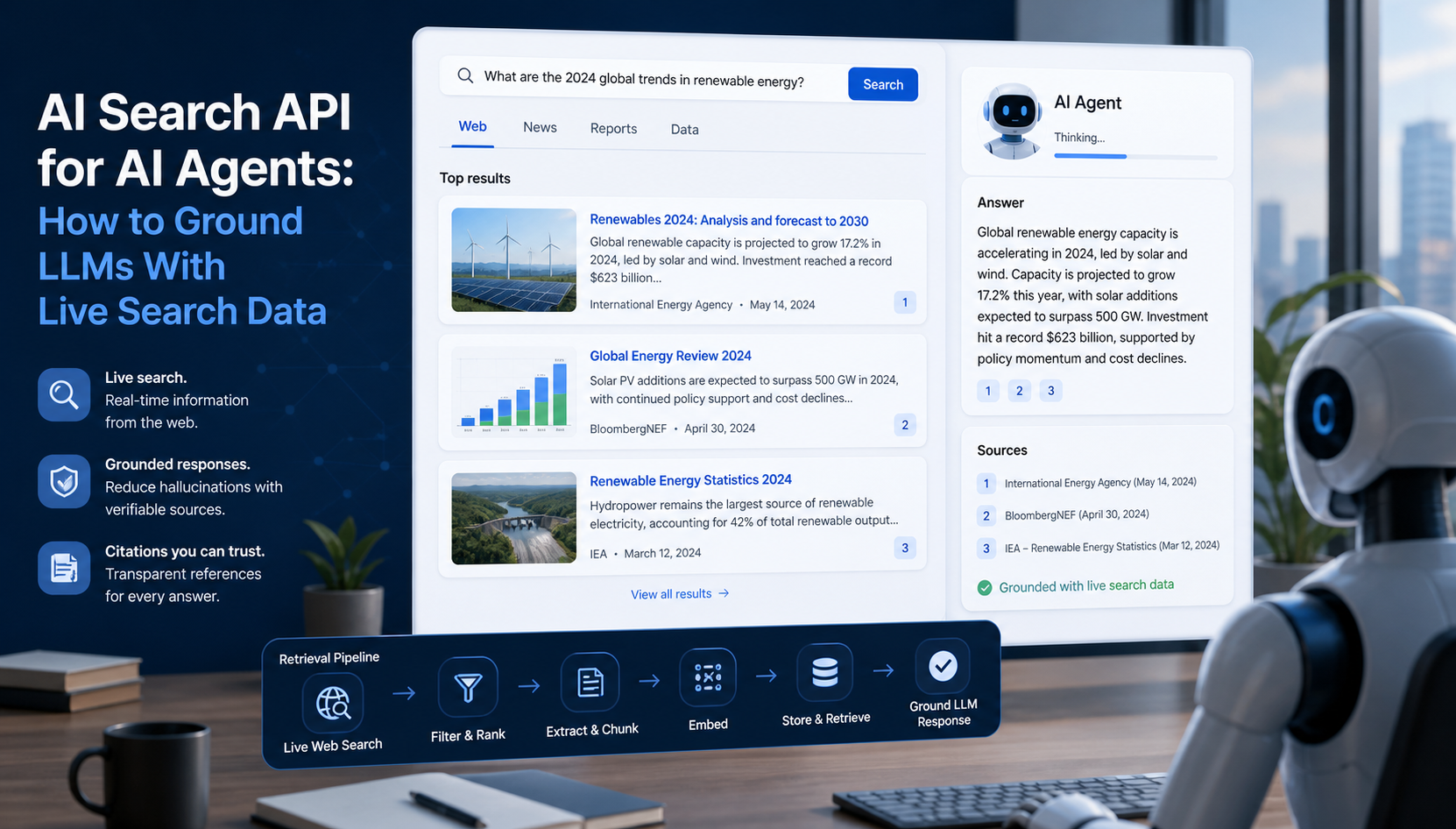
AI Search API for AI Agents: How to Ground LLMs With Live Search Data
An AI search API gives an application or agent programmatic access to current search results. Its most useful role is discovery: the agent can find candidate sources, identify fresh information, and decide what to retrieve next instead of relying only on model memory.
View Details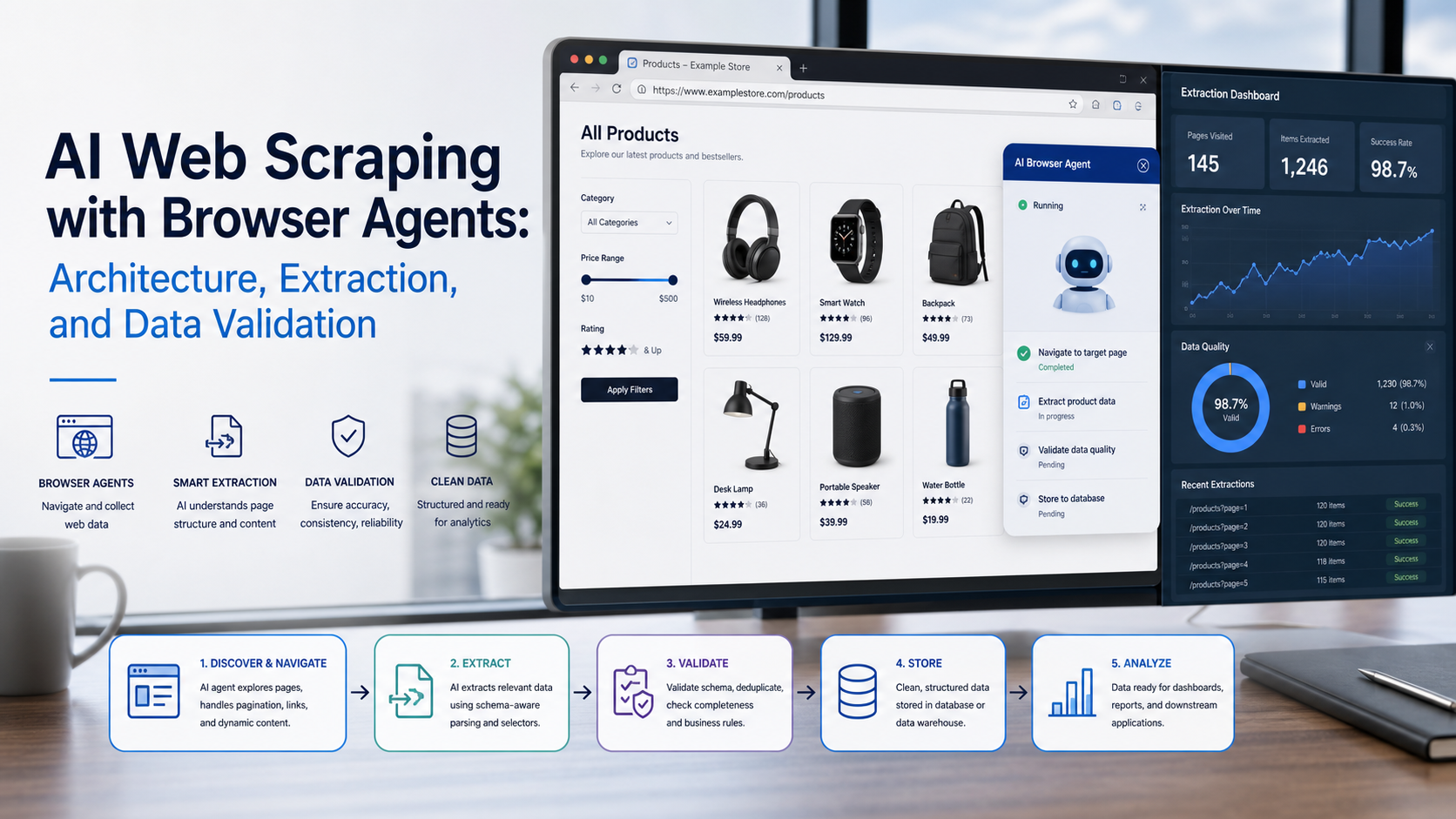
AI Web Scraping with Browser Agents: Architecture, Extraction, and Data Validation
AI web scraping uses AI to help discover, navigate, interpret, or extract information from websites. Browser agents are one implementation option when page interaction, rendering, or layout variation makes a simple scraper too brittle, but the agent should not become the entire data pipeline.
View Details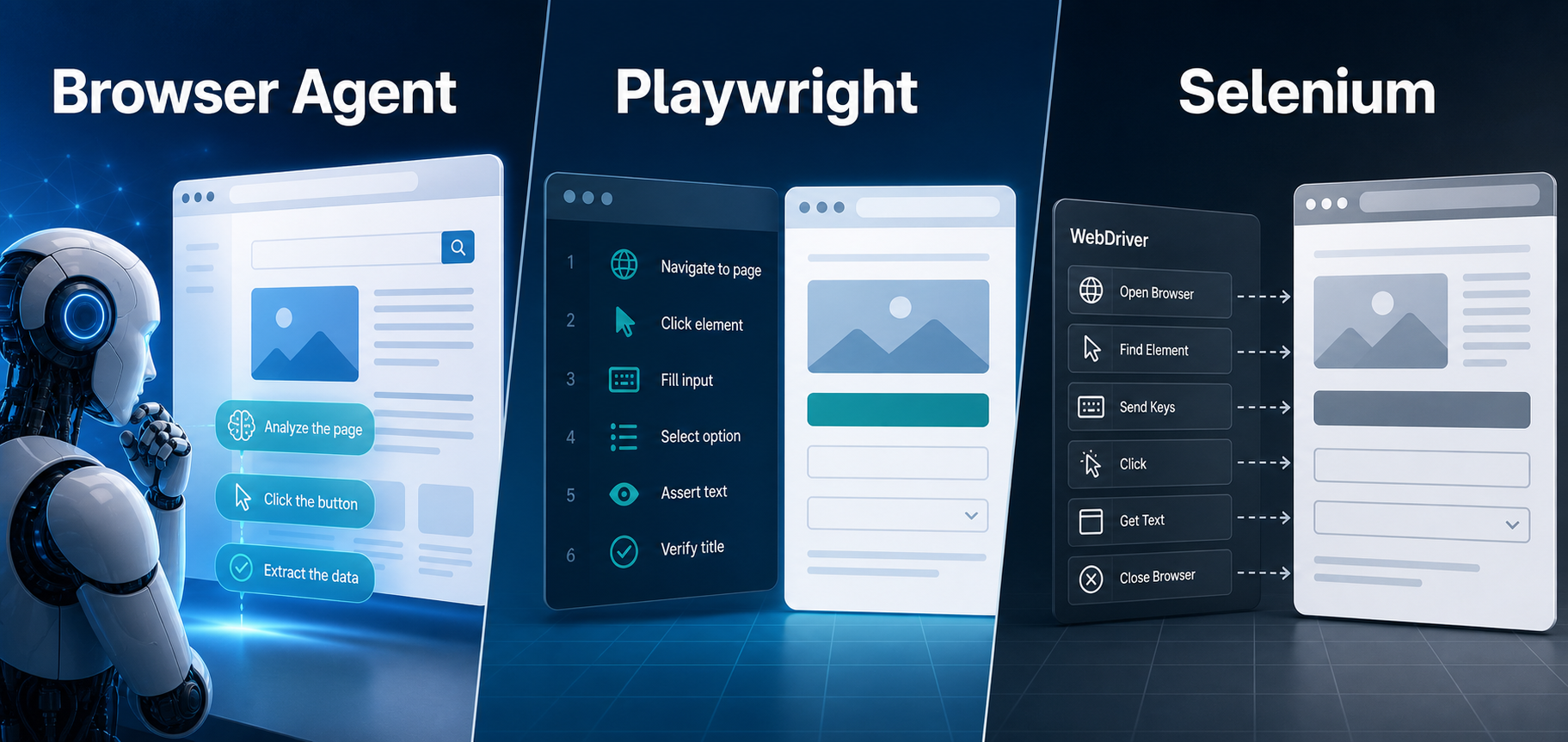
AI Browser Automation: Browser Agents vs Playwright vs Selenium
A browser agent interprets a goal and decides what browser action to take next. Playwright and Selenium can execute explicit, testable browser logic defined by developers. In 2026, however, Playwright also provides official MCP and agent-oriented workflows, so Playwright is no longer just the deterministic alternative to agentic automation. It can also serve as the browser-control layer inside an agent system.
View Details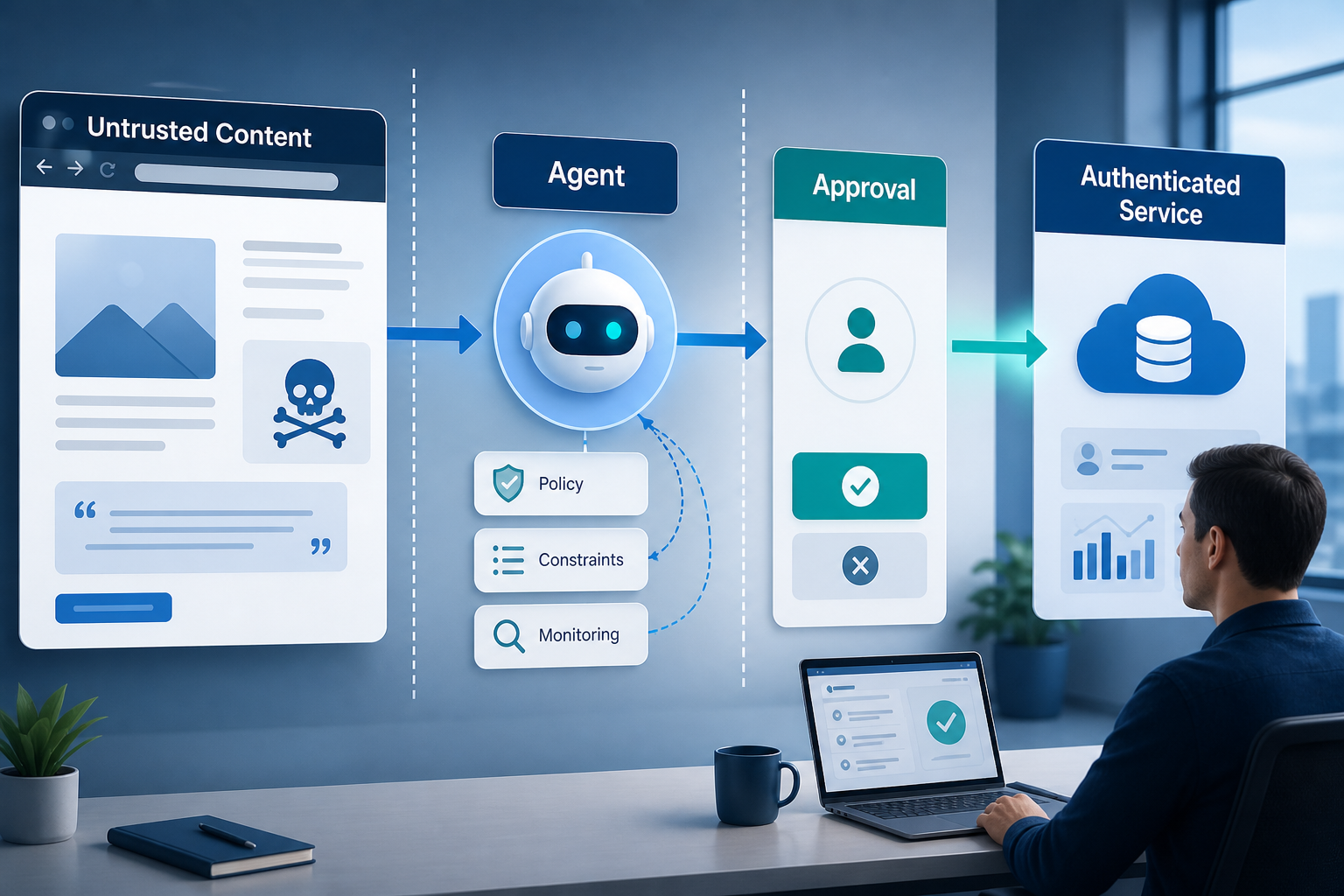
Agentic Browser Security: Prompt Injection, Permissions, and Safe Deployment
That combination creates risks that are different from ordinary browsing and traditional automation. The most important is indirect prompt injection, where hostile instructions hidden in web content attempt to redirect the agent away from the user's goal. Google describes indirect prompt injection as a primary new threat for agentic browsing and has introduced layered defenses that include origin constraints, independent action checks, threat detection, and user confirmation for sensitive actions. Google's Chrome security architecture is a useful reference for how browser-agent defenses are evolving.
View Details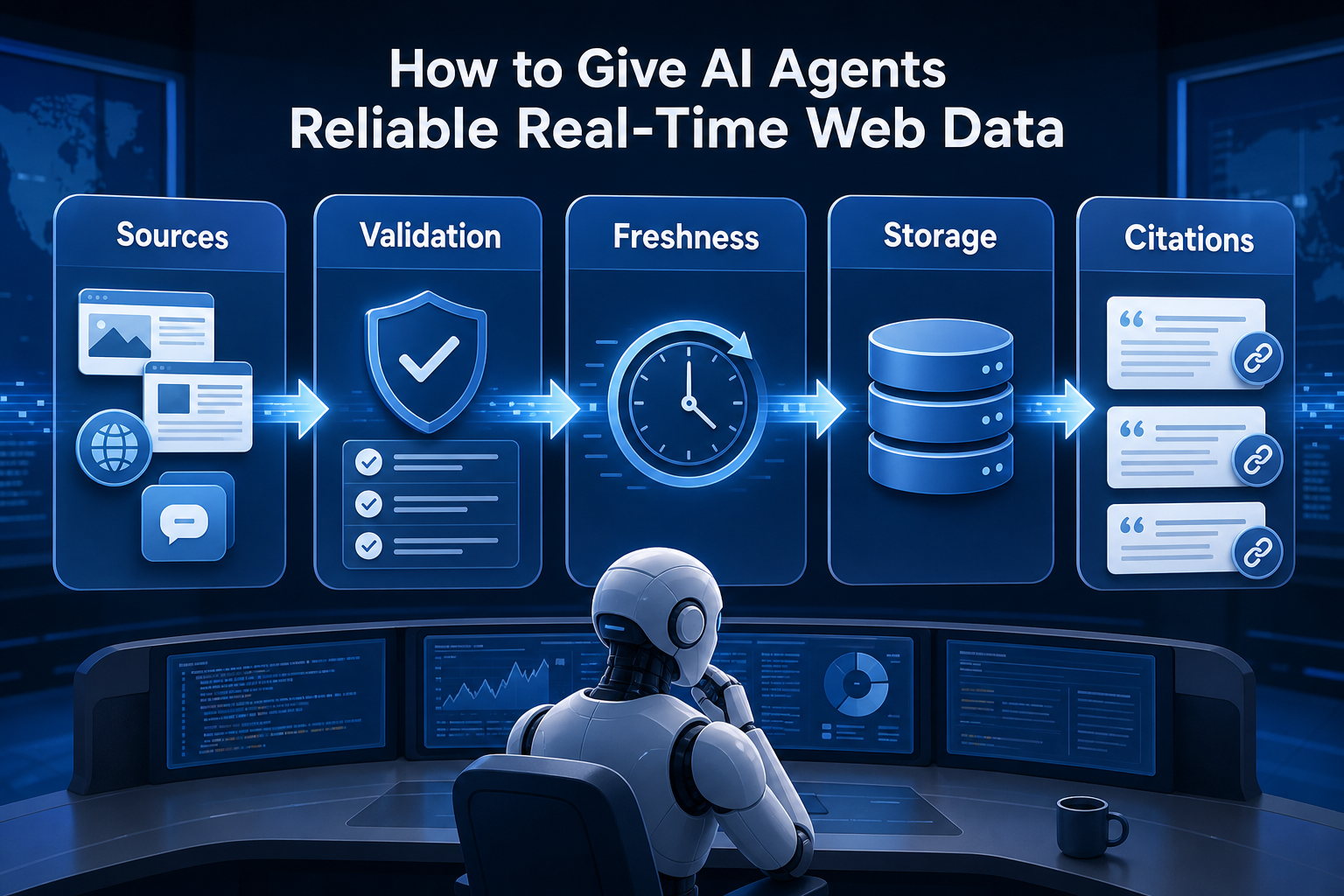
How to Give AI Agents Reliable Real-Time Web Data
A production-ready solution therefore needs more than a web scraper. It needs a web data layer that connects acquisition, validation, storage, retrieval, security, and observability. This guide explains how to design that layer.
View Details