
Comparing 5G and 4G Mobile Proxy Performance in the USA
5G vs 4G Mobile Proxies in 2026: USA Speed and Block-Rate Benchmarks
In 2026, the choice between 5G vs 4G mobile proxies often comes down to a marketing label versus technical reality. While 5G promises "lightning speed," your actual scraping success depends more on routing stability and IP reputation than the radio generation.
This guide provides a repeatable benchmarking system to help you evaluate mobile proxies USA using evidence, not hype.
Start testing with LycheeIP today
Which metrics actually decide proxy performance?
If you only look at "Mbps," you are missing the data that matters for automation. In proxying, "speed" is a three-dimensional metric.
Response time vs. throughput vs. success rate
· Response Time (Latency): The milliseconds ($ms$) it takes for your request to reach the target and return. 5G SA (Standalone) networks in 2026 can hit $<15ms$, while 4G LTE typically hovers between $30ms$ and $60ms$.
· Throughput: The volume of data transferred per second. This matters for video ads but is rarely the bottleneck for JSON scraping.
· Success Rate: The percentage of requests that return a 200 OK without a CAPTCHA. High speed is useless if your success rate is below 95%.
Time-to-First-Byte (TTFB) vs. full page load
For scraping, TTFB is the critical stat. It measures the "snappiness" of the proxy. A 5G proxy might have a great full-page load time but a slow TTFB because of the underlying architecture and CGNAT routing.
What is a fair test setup for mobile proxies USA?
To get an objective best 4g & 5g mobile proxy (testing) result, you must isolate the variables.
Standardizing targets and payloads
Don't just test against google.com. Test against your actual target (e.g., Instagram, Amazon, or a fintech API).
· Payload: Use a consistent request size (e.g., a 100KB JSON fetch).
· Concurrency: Test with 1, 10, and 50 concurrent threads to see where the port bottlenecks.
Use setup scripts and validation steps to clear headers and disable caching on every request. Run your tests at both "Peak" (2 PM EST) and "Off-Peak" (2 AM EST) to account for USA cellular tower congestion.
How should you compare 4G and 5G ports without fooling yourself?
Ensure you are comparing "apples to apples":
1. Same Region: Test a NY-based 4G port against a NY-based 5G port.
2. Same Carrier: A T-Mobile 5G port might outperform an AT&T 4G port simply because of local tower density.
3. Session Mode: Test mobile proxy rotation separately from sticky sessions. A "sticky" 5G session that drops every 2 minutes is less valuable than a stable 4G connection.
Start testing with LycheeIP today
How LycheeIP addresses performance bottlenecks
We design our infrastructure to minimize the "proxy tax" on latency.
· High-Performance Backhaul: We use 1Gbps+ IDC connections to ensure our gateway doesn't bottleneck your mobile exit IP.
· Real-Time Monitoring: View near real-time statistics via our API to see if a specific port is underperforming.
· Exclusive Resources: We allocate resources directly from underlying operators to ensure you aren't sharing bandwidth with thousands of other "budget" users.
· Low-Latency Marking: Our static datacenter proxies (often used in hybrid stacks) are explicitly marked for $<50ms$ latency.
Which workloads tend to favor 4G, and which favor 5G?
Social media and sensitive logins
For tasks involving Instagram rotation and warm-up rules, 4G mobile proxies are often the steadier choice. The 4G infrastructure is mature, and the IPs have a long-standing reputation history.
Bandwidth-heavy scraping vs. latency-sensitive automation
· Favor 5G: When downloading large media files or running high-concurrency "burst" tasks where you need to move $1GB+$ in minutes.
· Favor 4G: For long-running browser automation where session stability and cost-efficiency are more important than peak throughput.
What decision rule should you use to pick a plan?
Use this weighted scorecard to evaluate mobile proxy providers 2026:
| Metric | Weight (Scraping) | Weight (Social Ops) | 4G Typical | 5G Typical |
| Success Rate | 50% | 60% | 98%+ | 99%+ |
| Response Time | 30% | 10% | $45ms$ | $15ms$ |
| Price per GB | 20% | 10% | Lower | Higher |
| IP Pool Freshness | N/A | 20% | High | Highest |
The Decision Rule: If your success rate on 4G is $>97\%$, the extra cost of 5G is likely a luxury. If you are seeing "Connection Reset" or timeouts on 4G, the lower jitter of 5G is worth the upgrade.
Red flags: How to spot an underperforming provider
· "Unlimited" everything: True mobile proxies USA have physical hardware limits. If a provider claims unlimited concurrency and unlimited data for $20, it’s likely a saturated "SIM farm" with poor uptime.
· Unstable Ports: If your connection drops during rotation, the provider's API is poorly implemented.
· Lack of Carrier Choice: If you can't pick between major USA carriers, the provider is likely reselling a single, limited pool.
USA Mobile Proxy Benchmark (Sample)
| Carrier (USA) | Type | Avg Response | Avg Success | Block Rate (IG) |
| T-Mobile | 5G | $18ms$ | 99.4% | <1% |
| AT&T | 5G | $22ms$ | 99.1% | <1% |
| Verizon | 4G | $42ms$ | 98.8% | 1.2% |
| Generic/MVNO | 4G | $65ms$ | 94.2% | 4.5% |
Troubleshooting: Speed Issues
· "Glacial" Speeds: Check if your provider has a "fair use" throttle. Many mobile proxy providers 2026 cap speed after $10GB$.
· High Latency in USA: Ensure your server is physically located in the USA. Running a USA proxy from a Frankfurt server adds a $100ms+$ "speed of light" penalty.
· Frequent Blocks: This is rarely a "speed" issue; it’s usually an IP reputation issue or a fingerprint leak.
Start testing with LycheeIP today
Frequently Asked Questions:
1. Are 5G mobile proxies really worth the extra cost?
Only if your task is latency-sensitive (like high-frequency trading or real-time bidding) or bandwidth-heavy. For basic web scraping, 4G is usually more cost-effective.
2. What is a good response time for a mobile proxy?
In the USA, anything under $100ms$ is considered good for 4G. For 5G, you should expect under $40ms$.
3. Which USA carrier has the best mobile proxies?
T-Mobile and Verizon generally have the largest and "cleanest" IP pools for proxying in 2026.
4. Can I use 5G proxies for Instagram?
Yes, and they are excellent for avoiding blocks, but 4G is often just as effective for a lower price.
5. How do I benchmark my own proxies?
Use a script to make 100 requests to your target site, recording the time-to-first-byte and the HTTP status code for each.

Recommended Articles
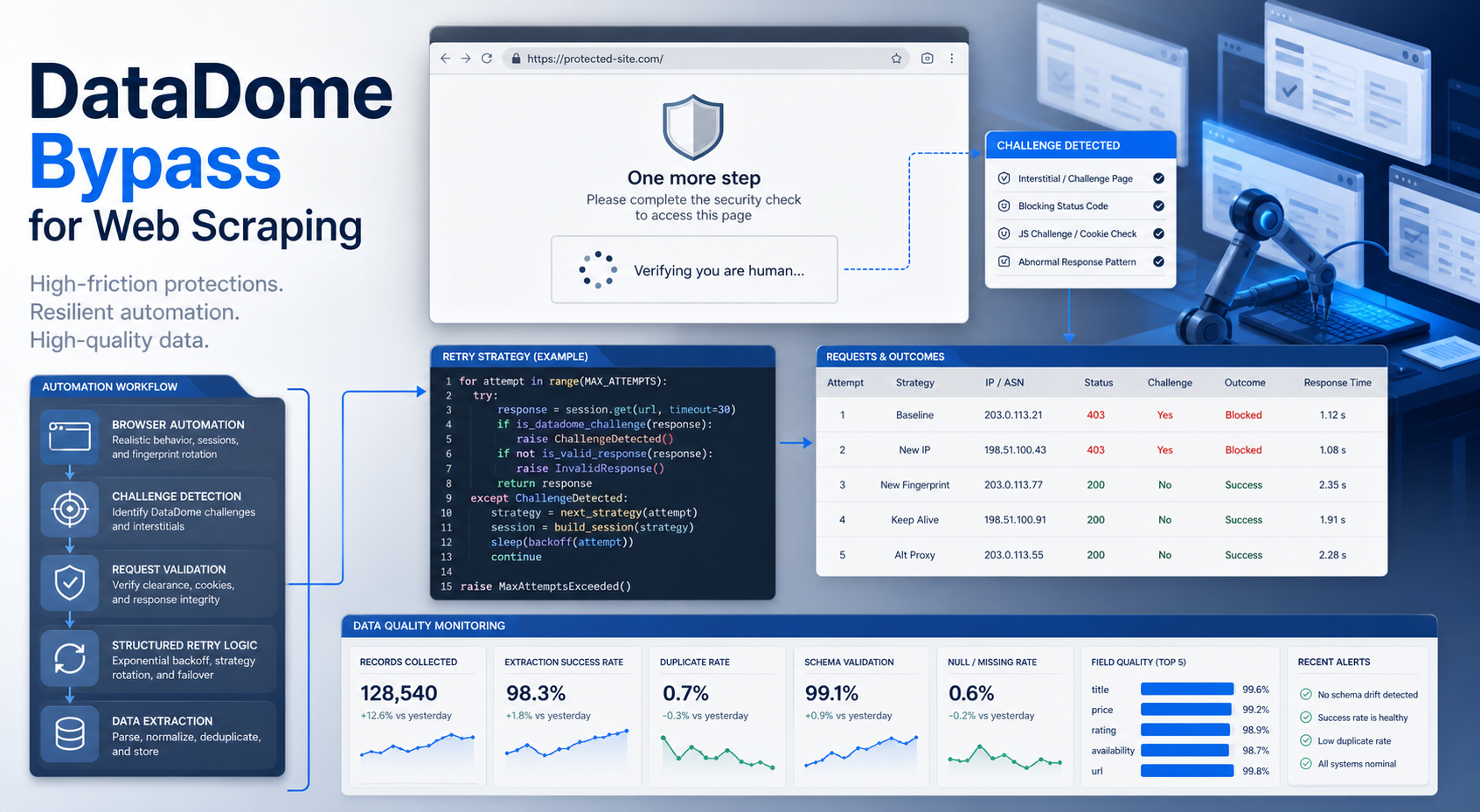
DataDome Bypass for Web Scraping
DataDome Bypass for Web Scraping
View Details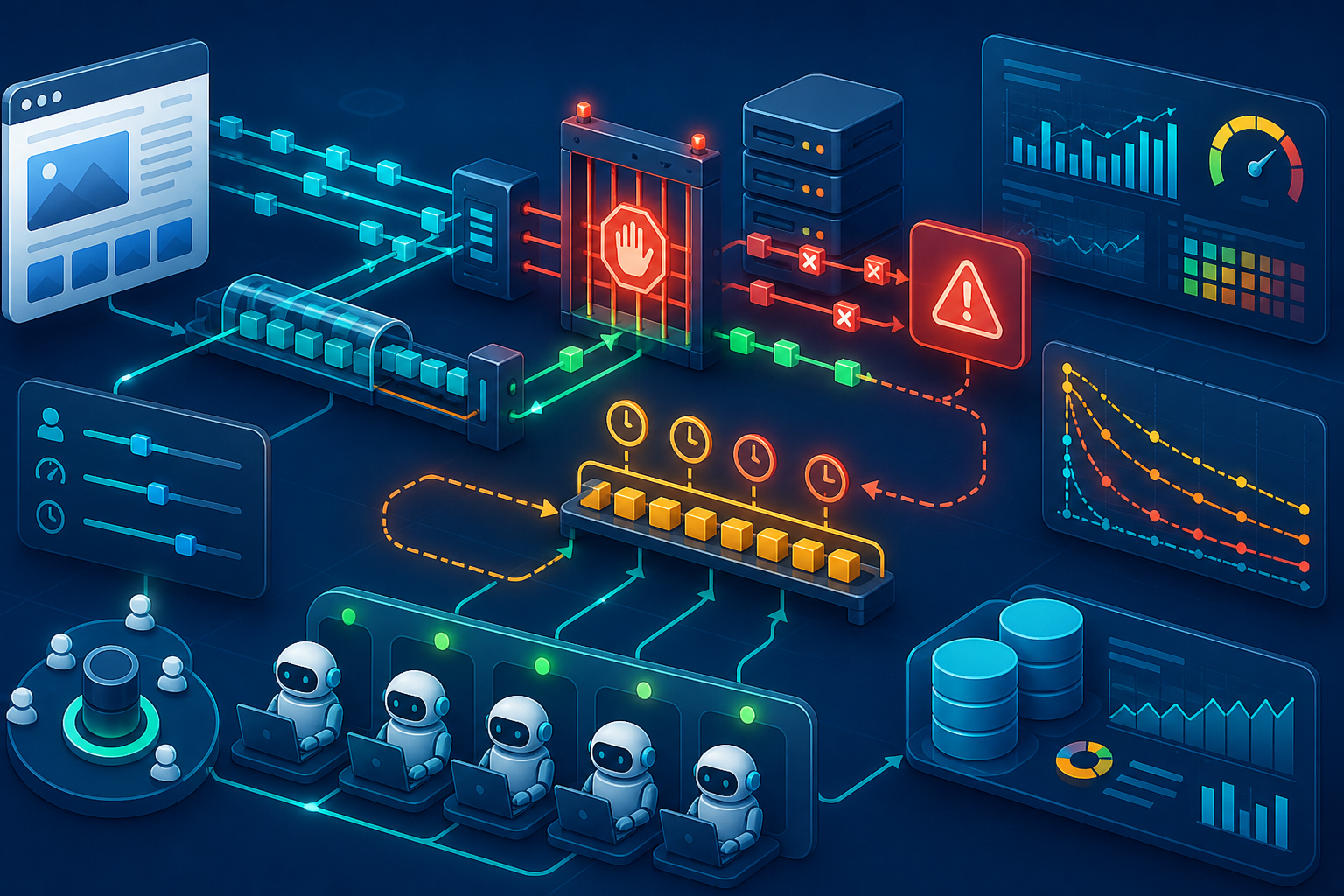
Web Scraping Rate Limiting: How to Handle 429s, Backoff, and Concurrency
Web scraping rate limiting is the engineering discipline of keeping an authorized collection workload inside a target service's acceptable request envelope. When that envelope is exceeded, a server may respond with HTTP 429 Too Many Requests, delay responses, or apply other controls.
View Details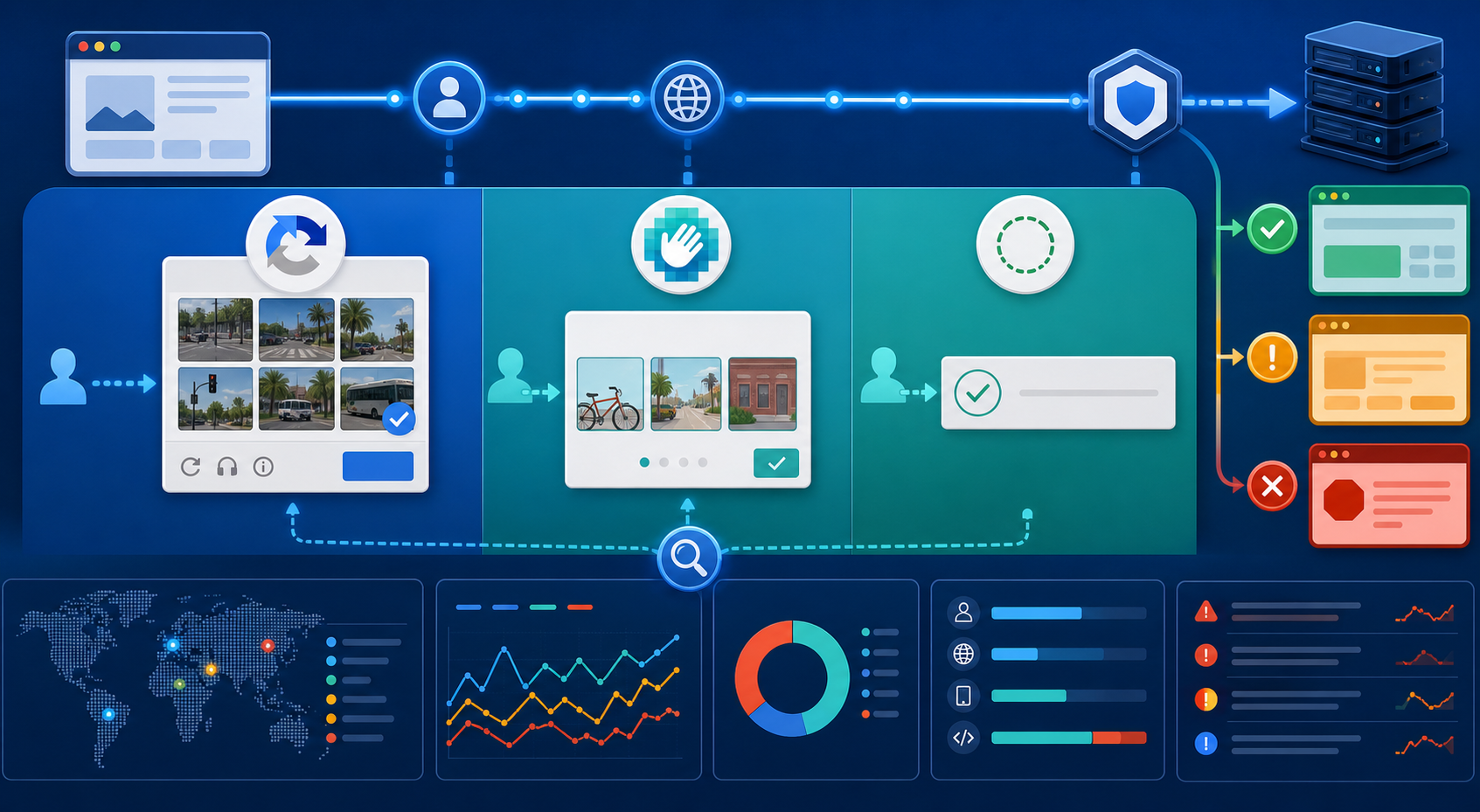
reCAPTCHA vs hCaptcha vs Cloudflare Turnstile: What Scraping Teams Need to Know
If an authorized data-collection workflow suddenly stops at a verification screen, identifying the protection system matters before you change code, browser settings, or proxy infrastructure. reCAPTCHA vs hCaptcha vs Turnstile is not simply a branding comparison. The three systems can expose different browser flows, token models, risk decisions, and failure symptoms.
View Details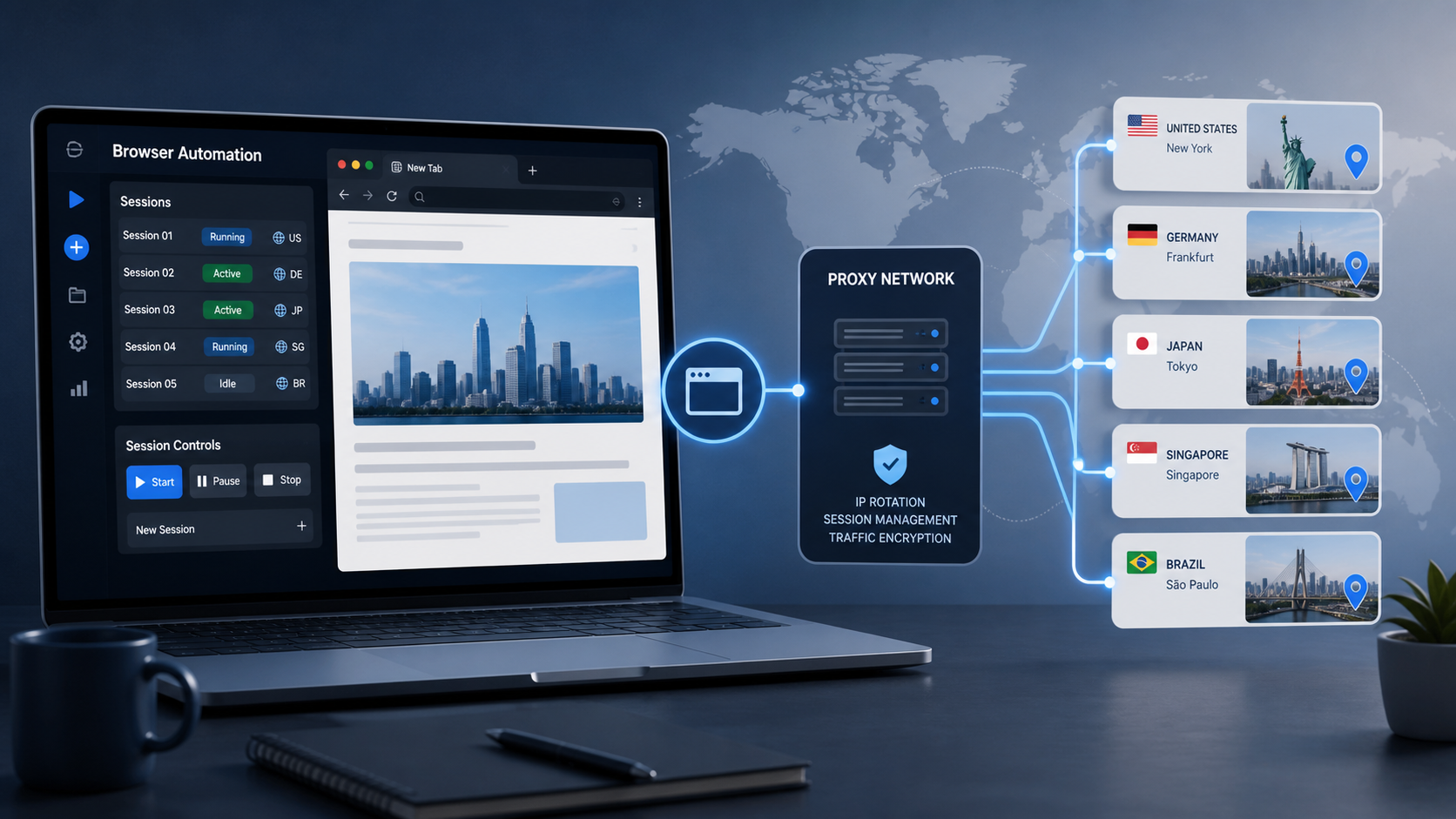
Browser Automation Proxies: IPs, Geo-Targeting, Sessions, and AI Agents
A browser automation proxy belongs to the network layer of Playwright, Selenium, cloud-browser, and AI-agent workflows. It changes how browser traffic is routed and can affect the source IP address, geographic egress, and session continuity seen by a destination site. It does not improve an AI model's reasoning, repair browser logic, or guarantee that a website will accept the session.
View Details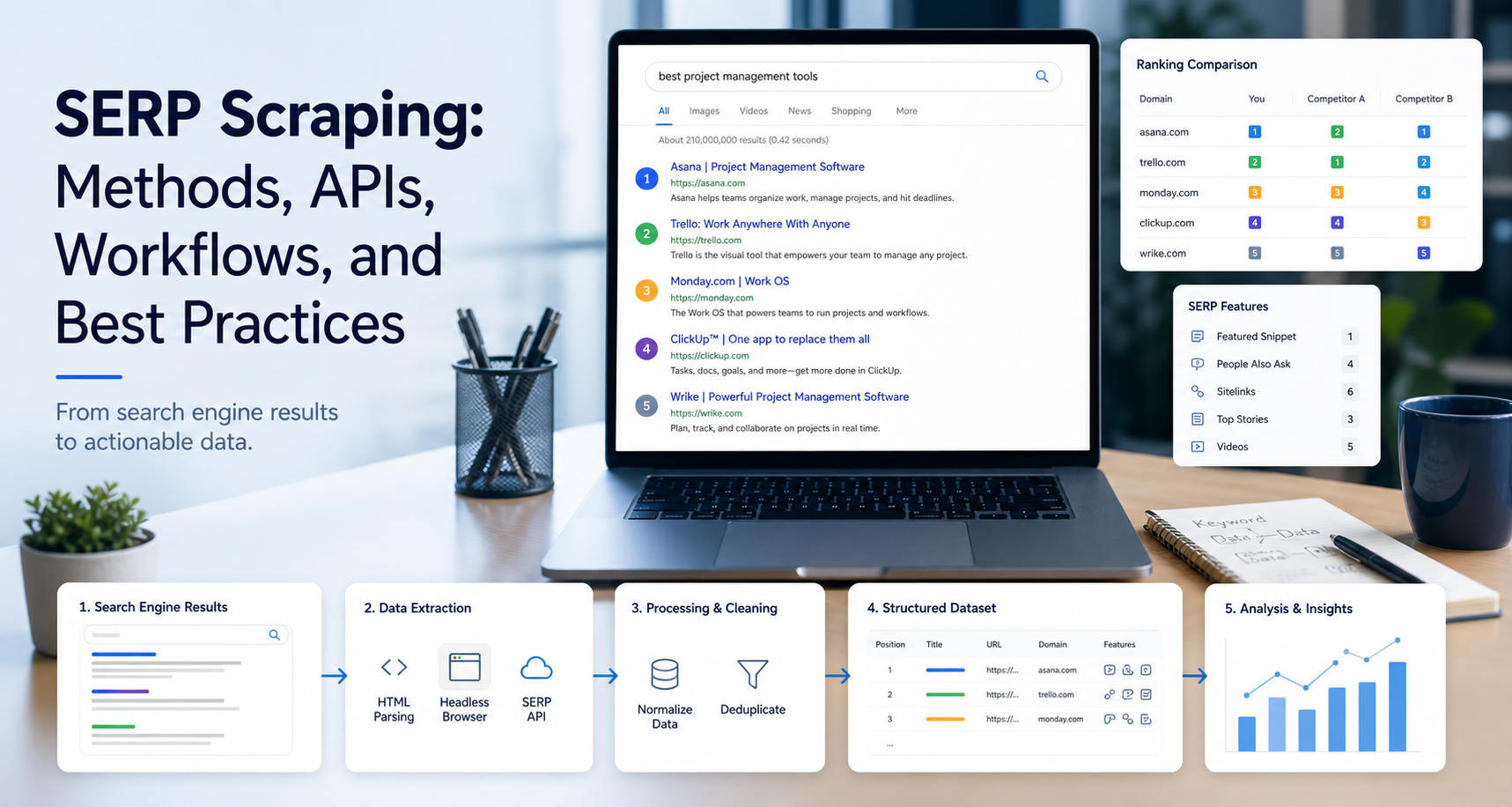
SERP Scraping: Methods, APIs, Workflows, and Best Practices
SERP scraping is the automated collection of information from search engine results pages. A SERP scraper can capture organic rankings, advertisements, featured snippets, People Also Ask questions, local results, shopping listings, images, and other search features, then convert them into structured data for analysis.
View Details