
The Best Browser in 2026 That Nobody Talks About
I switched my default browser and I'm not going back. Here's exactly why.
For most people, choosing a browser is not really a choice at all. Chrome comes pre-installed on Android devices and Chromebooks. Safari greets every iPhone and Mac user the moment they turn the device on. Firefox has been the "I care about the open web" option for over a decade. And so millions of people, including developers, data engineers, and technical operators never pause to ask whether any of these browsers actually serve their daily workflows well in 2026, or whether something better has quietly arrived.
Something better has quietly arrived.
The browser I am talking about is Zen Browser, a Firefox-based, open-source project that has been steadily building a devoted following since its public release in late 2024. It does not have a billion-dollar marketing budget. It does not come pre-installed on anything. And yet, after three months of daily use, I have fully replaced Chrome, a browser I had been using since 2011, with Zen.
This article is about why.
Test Globally with LycheeIP
What Makes a Browser Worth Switching To in 2026?
Before we dive into Zen specifically, we need to establish what "worth switching" even means anymore. In 2018, the answer was simple: Chrome was fast and everything else was catching up. By 2022, Firefox had largely closed the performance gap. By 2026, raw page-rendering speed is almost a solved problem across every major browser.
So, what actually differentiates browsers for power users today? There are three real axes of competition:
1. Privacy and Tracking Protection
Google's advertising business model means Chrome has a structural incentive to know as much about your browsing behavior as possible. The company spent years promising to replace third-party cookies with the Privacy Sandbox—a system that still allows interest-based targeting, just with Google as the gatekeeper rather than third-party trackers. Critics have argued this trades one privacy problem for another. Whatever your view, the fundamental tension between Chrome's business model and user privacy remains.
Firefox, backed by the Mozilla Foundation, has a much cleaner privacy story. Its Enhanced Tracking Protection blocks social media trackers, cross-site cookies, and fingerprinting scripts by default. However, Firefox's financial dependency on Google creates an awkward dynamic.
Zen Browser takes a more aggressive stance. Built on Firefox's Gecko engine, it inherits Mozilla's robust privacy architecture but adds rigid tracker blocking right out of the box. uBlock Origin comes pre-configured, alongside an additional layer of DNS-level filtering options like DNS over HTTPS (RFC 8484), ensuring your ISP cannot casually monitor your DNS requests. Because there is no advertising business model funding its development, Zen’s privacy story is exceptionally clean.
2. Performance Under Real Conditions
Synthetic benchmarks are nearly meaningless for modern workflows. What matters is how a browser performs when you have 30 tabs open—three of which are streaming video, two are web IDEs, and one is an unoptimized internal company tool.
This is where Chrome's memory consumption continues to haunt it. Chrome's multi-process architecture isolates tabs from each other. While great for stability, it means each tab carries a massive memory footprint. On a machine with 8GB of RAM, a typical Chrome session with 20+ tabs regularly consumes 3–4GB of memory. On older hardware, it is genuinely crippling. Modern browsers must manage resources actively, not just hoard them.
3. Interface and Workflow Design
This category gets the least attention but matters the most for daily satisfaction. The browser is the frame through which technical operators experience the internet for eight or more hours a day.
- Chrome's interface has barely evolved in years.
- Firefox has modernized, but its tab management remains stubbornly horizontal.
- Zen Browser was designed from the ground up with vertical tabs as the primary interface.
Vertical tabs respect modern widescreen displays, support deep context switching, and keep your workflow organized.
Side-by-Side in Real Daily Use
I ran Chrome, Firefox, and Zen Browser in parallel for two weeks before committing to a switch. Here is how they stacked up across five categories that reflect actual developer and power-user workflows.
Memory Usage
With an identical set of 25 tabs open (news sites, cloud consoles, YouTube, and project management tools), I measured RAM consumption using Activity Monitor on macOS Sequoia:
- Chrome: 3.8GB RAM
- Firefox: 2.1GB RAM
- Zen Browser: 1.9GB RAM
Zen's slight edge over Firefox reflects thoughtful tab-sleeping behavior that kicks in after a configurable idle period. Suspended tabs consume almost zero memory, keeping your system agile during long sessions.
Page Load and Rendering
All three browsers performed within milliseconds of each other on standard page loads over a fast connection. On slower, throttled networks, Zen's built-in resource blocking gave it a tangible real-world advantage on ad-heavy sites because it was simply downloading fewer assets.
For highly complex, JavaScript-heavy web applications, Chrome still holds a marginal technical lead thanks to its V8 engine. However, for general browsing and standard development work, the difference is imperceptible.
Tracking and Ad Blocking
I used the Electronic Frontier Foundation's Cover Your Tracks tool to test fingerprinting defenses.
- Chrome (Default): Performed poorly, allowing significant tracking.
- Firefox (Default): Performed well, blocking standard trackers.
- Zen Browser (Default): Blocked the most tracking attempts and returned the most randomized fingerprinting results, severely limiting a website's ability to uniquely identify the testing device.
Extension Compatibility
Because Zen runs on the Firefox engine, it natively supports extensions from the Mozilla Add-ons store. This covers almost all essential tools for developers and growth teams: password managers, API testing clients, and ad blockers. You will only miss out on strictly Chrome-exclusive extensions, which is rarely a dealbreaker for modern workflows.
Cross-Device Sync
This is the one area where Zen is still maturing. Chrome's sync ecosystem is class-leading and deeply integrated with mobile. Zen's sync is currently in active development; it is functional but lacks the enterprise-grade polish of the Google ecosystem. If seamless mobile-to-desktop syncing is mission-critical for you, you will notice this gap.
Test Globally with LycheeIP
The Feature That Sealed the Deal
Everything above is reason enough to try Zen Browser. But the reason I switched permanently comes down to one feature: Workspaces.
Zen Browser's Workspaces feature allows you to group tabs into distinct, named environments (e.g., Frontend Dev, Personal, Client A, Research) and switch between them instantly. Each workspace has its own dedicated tab strip in the vertical sidebar. Tabs in inactive workspaces are automatically suspended.
Why this matters:
For anyone who context-switches throughout the day, the mental overhead of managing 40 undifferentiated tabs in a horizontal strip is quietly exhausting. Workspaces make the browser behave the way your brain actually wants to work: one context at a time, with other contexts safely tucked away but instantly accessible.
Chrome and Firefox have tab groups, but neither implementation comes close to the elegance, visual clarity, or friction-free switching of Zen's Workspaces.
How to Set Up Zen Browser in Under Five Minutes
Ready to test it out? Here is a quick checklist to get up and running smoothly:
- Step 1: Download Zen Browser from its official site. It is natively available for macOS, Windows, and Linux.
- Step 2: On first launch, accept the prompt to import your bookmarks, passwords, and extensions from your current browser. It takes less than 60 seconds.
- Step 3: Right-click the left sidebar to create your first Workspace. Name it "Work" or "Dev," then create a second for "Personal." Drag and drop your tabs into their respective homes.
- Step 4: Navigate to Settings → Privacy. Confirm that Enhanced Tracking Protection is set to Strict mode.
- Step 5: Set Zen as your default browser in your OS settings.
LycheeIP (Developer-First Proxy Infrastructure)
While Zen Browser excels at optimizing your local workspace and privacy, technical teams often need to go beyond their local network environment to accurately test localized content, run QA on geo-restricted applications, or securely collect public web data. LycheeIP is a developer-first proxy and data infrastructure provider designed to seamlessly route your web traffic for these exact use cases.
When a growth or data team needs to verify how a web app performs across different global regions, simply tweaking browser settings isn't enough; you need reliable routing capabilities. By integrating a robust proxy network directly into your testing environment or browser, developers can accurately perform ad verification, international user flow QA, and authorized security testing. For example, testing a region-specific checkout flow might require dynamic IP routing to simulate real, distributed user sessions. Conversely, maintaining long-term, stable QA infrastructure is often best achieved using high-performance datacenter proxies. Ultimately, pairing a highly customized browser with developer-first data infrastructure ensures your team experiences the web exactly as your global users do.
Final Verdict
In 2026, the browser market has matured to the point where the "best" browser is no longer just the fastest or most private in isolation—it is the one that best supports how you actually think and work. Chrome wins on ecosystem integration. Firefox wins on values alignment. Zen Browser wins on daily, practical experience.
If you are a power user, a privacy-conscious operator, or simply someone who has ever looked at 47 open tabs and felt a quiet despair, Zen Browser is the answer you did not know you were looking for. The community is active, development is rapid, and the tool is tangibly better at managing cognitive load than its major competitors.
I switched my default browser and I am not going back. Now you know exactly why—and exactly how to do it yourself.
Test Globally with LycheeIP
Frequently Asked Questions
Q: Is Zen Browser safe to use as a daily driver in 2026?
A: Yes. Zen Browser is built on Mozilla's Firefox Gecko engine, meaning it inherits Firefox's well-tested security architecture and receives regular security updates. It is fully open-source, allowing anyone to audit the code, and is considered highly stable for everyday use.
Q: Does Zen Browser work with Chrome extensions?
A: No. Zen uses the Firefox extension ecosystem. You can install tools from Mozilla's Add-ons store, which includes major password managers, developer utilities, and ad blockers. Chrome-exclusive extensions are not supported.
Q: How does Zen Browser's privacy protection compare to using a VPN?
A: They address completely different threats. Zen Browser prevents advertisers from tracking you via scripts and browser fingerprinting—a technique used to identify you based on your device's unique hardware and software configuration. A VPN, on the other hand, encrypts your network traffic and masks your IP address from your ISP. For maximum security, utilizing both is ideal.
Q: Can I sync Zen Browser across my phone and desktop?
A: Zen's sync feature is available for desktop platforms and is actively being refined. Mobile support is currently a work in progress. If deep smartphone-to-desktop syncing is vital to your workflow, keep an eye on their roadmap.
Q: What is the difference between Zen Browser's Workspaces and Chrome's Tab Groups?
A: Chrome's Tab Groups color-code tabs within a single horizontal strip, which organizes them but fails to reduce visual clutter. Zen's Workspaces act as completely isolated vertical environments; switching between them instantly hides the inactive tabs, giving you the focus of a brand-new window without the operating system overhead.
Q: Does Zen Browser slow down on older computers?
A: No, it often performs better. Because of its aggressive tab-sleeping behavior, inactive tabs are automatically suspended. On machines with 8GB of RAM or less, users typically see a noticeable improvement in system responsiveness compared to Chrome.
Q: Is Zen Browser free, and who develops it?
A: Yes, it is 100% free and open-source. It is maintained by an independent community of developers, funded through contributions rather than corporate data monetization.

Recommended Articles
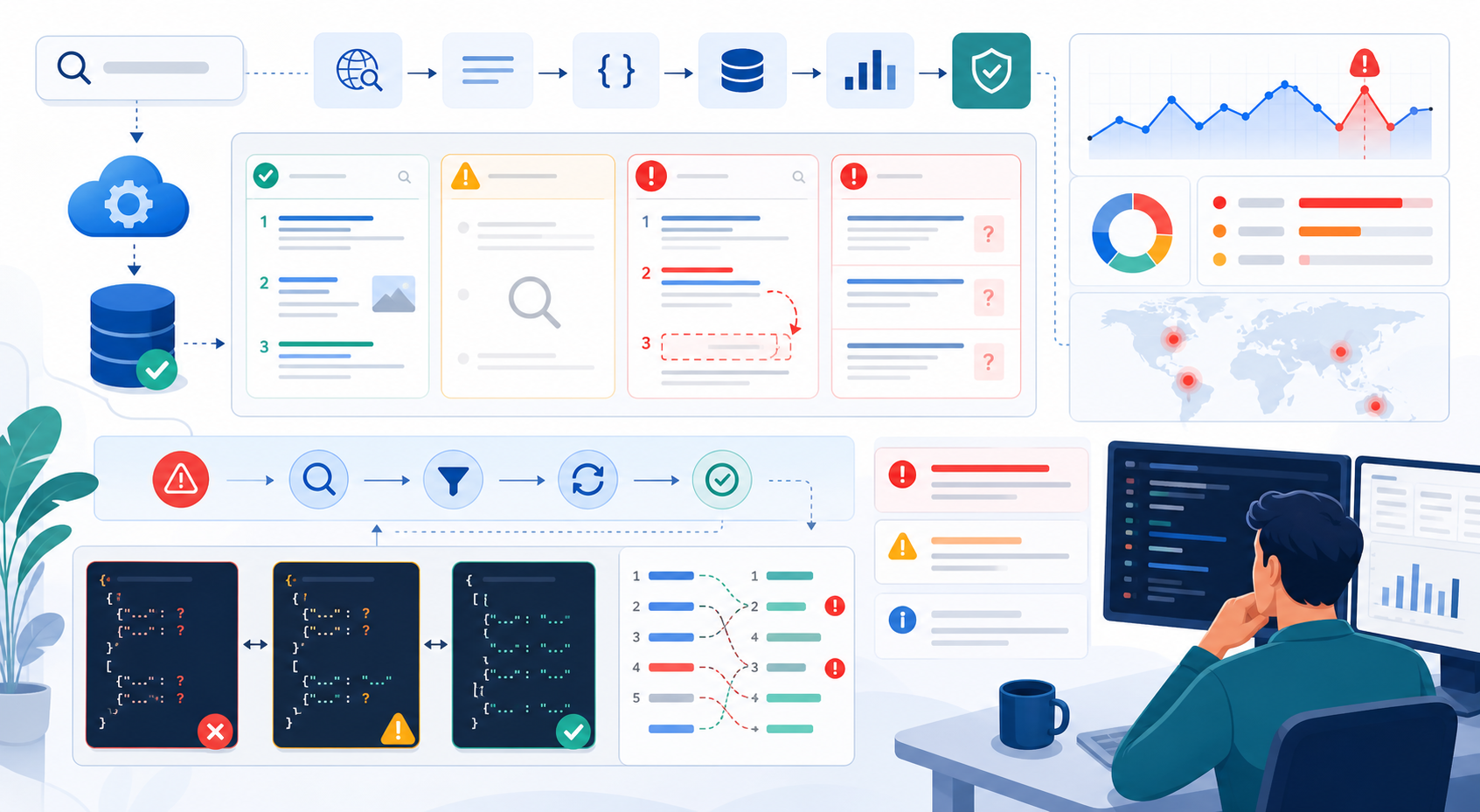
SERP API Troubleshooting: Fix Empty, Wrong, or Inconsistent Search Results
SERP API failures are not limited to obvious HTTP errors. A request can return successfully and still produce empty, incomplete, geographically wrong, duplicated, or misinterpreted search data. Production troubleshooting therefore has to separate transport problems from provider processing, SERP differences, and downstream parsing errors.
View Details
SERP API Python: How to Build a Reliable Search Data Pipeline
This guide shows a provider-neutral workflow for building that pipeline. It does not rank SERP API vendors. Instead, it focuses on the implementation choices that make a Python integration easier to operate, test, and migrate.
View Details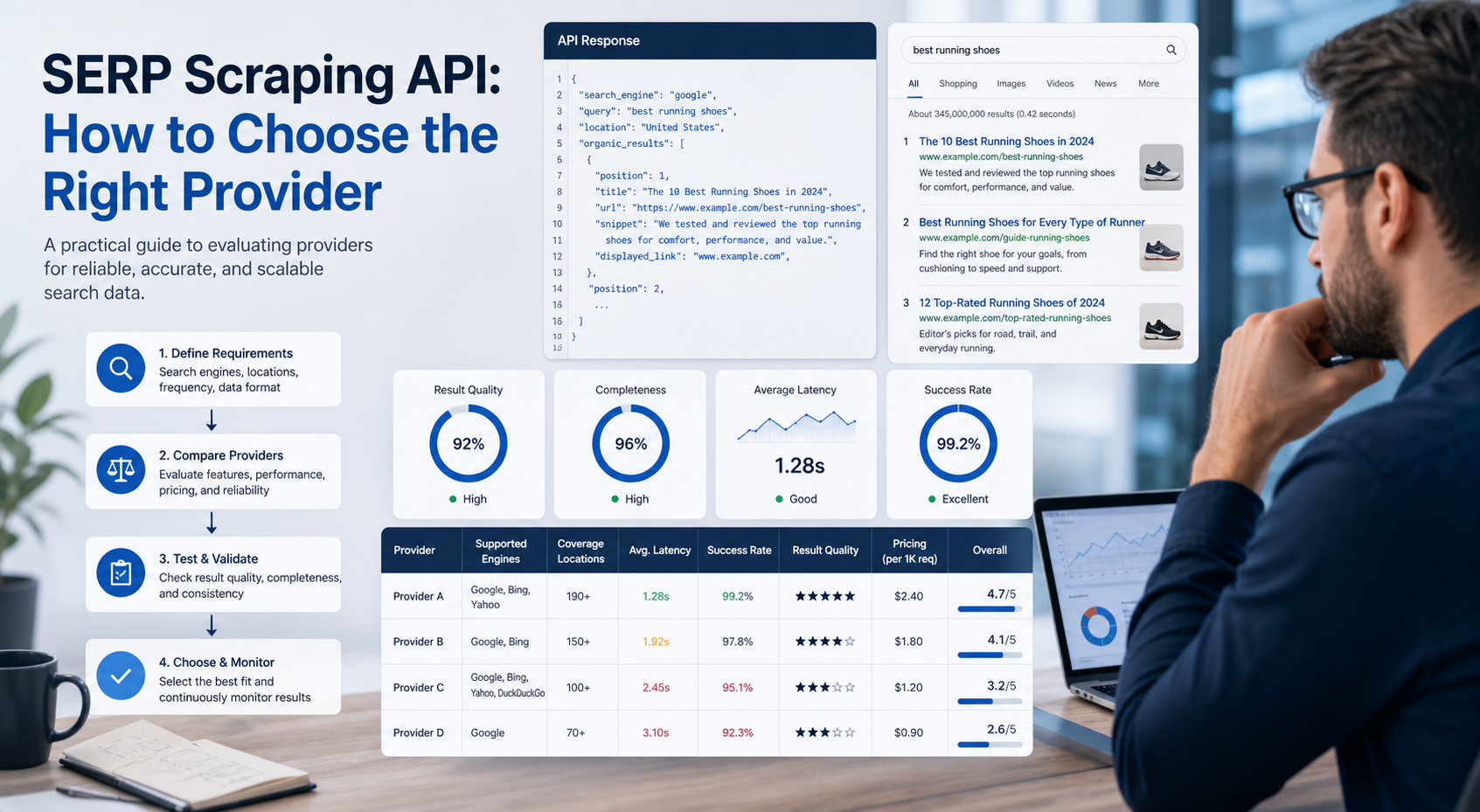
SERP Scraping API: How to Choose the Right Provider
Recommended Meta Description: Compare SERP scraping APIs by data coverage, localization, reliability, workflow fit, and cost structure, then choose and validate the right provider.
View Details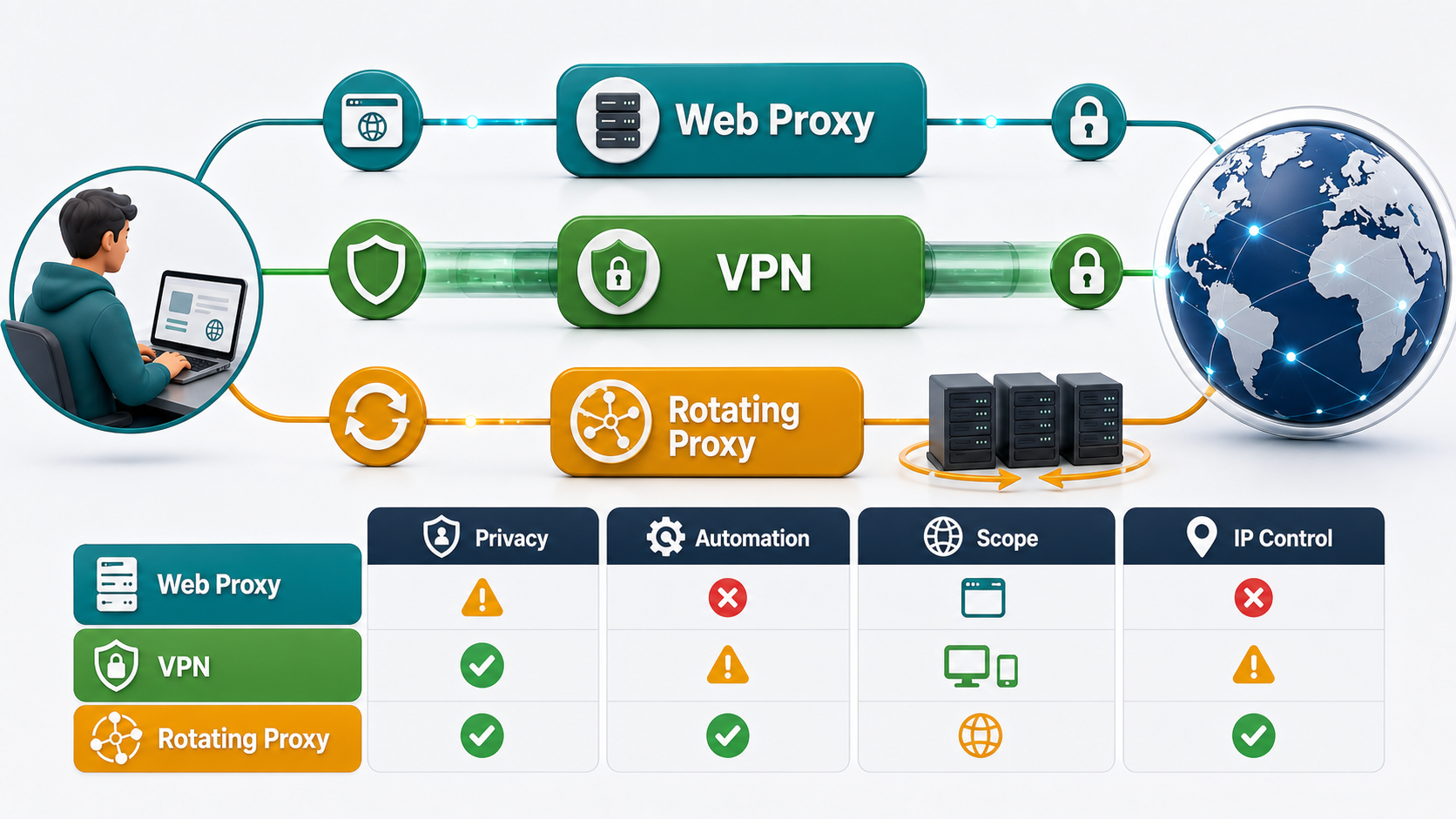
Free Web Proxy vs VPN vs Rotating Proxy: Which Should You Use?
Compare free web proxies, VPNs, rotating proxies, static proxies, and datacenter proxies by scope, encryption, IP control, automation, streaming, and account workflows.
View Details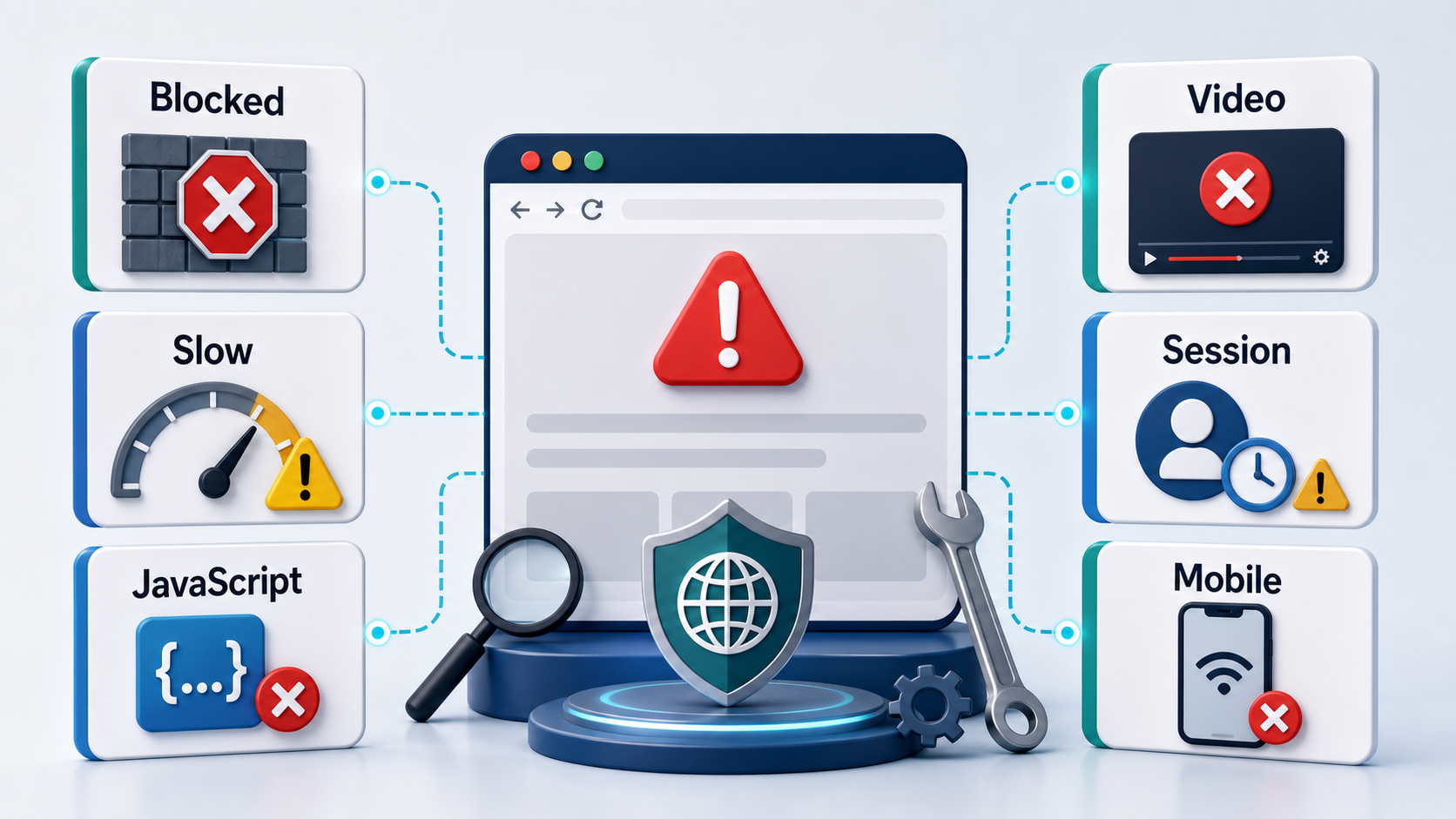
BlockAway Not Working? Fix Common Proxy, Video, and Access Problems
Troubleshoot BlockAway when pages are blocked, YouTube fails, JavaScript breaks, speed drops, sessions expire, or mobile access behaves differently.
View Details