
What Is an MCP Server and Why Devs Care Now
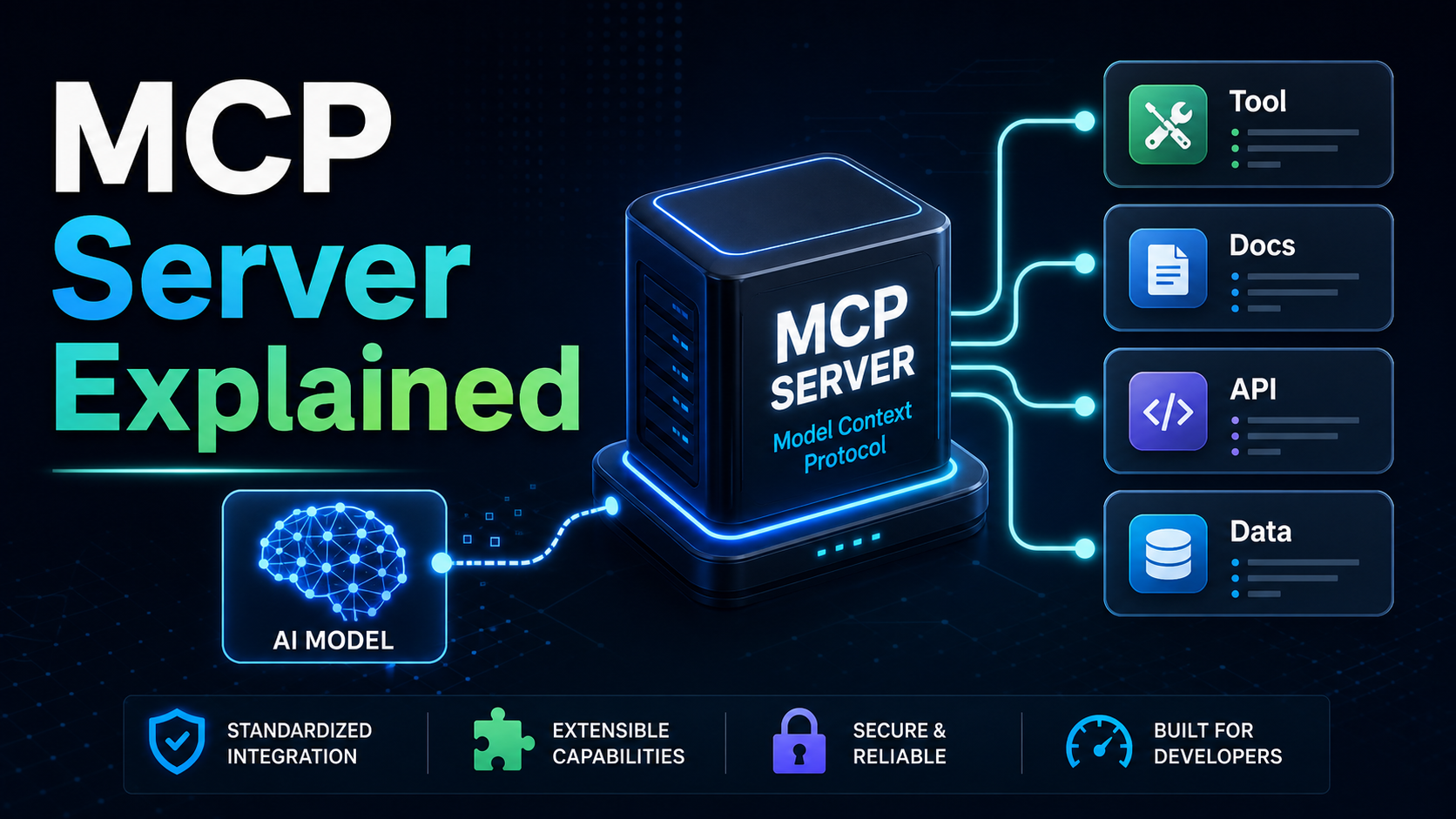
Every AI tooling stack seems to be talking about MCP servers. Here is what they actually are, why developers care, and where proxy infrastructure fits when agents touch public web data.
If you have spent time in AI agent tooling recently, you have probably seen MCP show up in changelogs, Discord threads, IDE integrations, and product announcements. Most developers know it connects AI models to tools. The useful question is what it standardizes, what an MCP server actually exposes, and why that matters now.
The short version: an MCP server is a lightweight service that gives an AI client a standard way to discover and use external capabilities. Instead of hand-building a separate integration for every model-tool pair, the tool exposes itself through Model Context Protocol and compatible AI clients can use it.
What MCP Actually Does and Why It Exists
The Problem Before MCP
Before MCP, connecting an AI model to an external tool meant writing custom glue code again and again. Want a model to read a repository issue, search documentation, query a database, or call an internal API? Each connection needed its own authentication logic, request format, response parsing, and error handling.
That is manageable for one demo. It becomes painful when an AI agent needs to interact with dozens of tools dynamically. The integration layer turns brittle, security reviews become inconsistent, and developers keep rebuilding the same patterns.
What MCP Is
MCP stands for Model Context Protocol. The official documentation describes it as an open protocol for connecting AI applications to external systems, and its MCP introduction frames the problem as giving models a consistent way to access context and tools.
Think of MCP as a standard connector for AI tooling. A model or AI application can ask an MCP server what it provides, inspect schemas, and call tools or read resources during a task. The model does not need to have those tools baked into training. It discovers them at runtime.
What MCP Replaces
- Custom authentication logic for every model-tool integration.
- Custom parsing for every API response.
- Manual glue code that breaks when APIs change.
- One-off tool descriptions that are hard to reuse across AI clients.
With MCP, each tool can maintain an MCP server. Any compatible AI client can connect to that server and use its capabilities with less custom integration work.
What an MCP Server Exposes
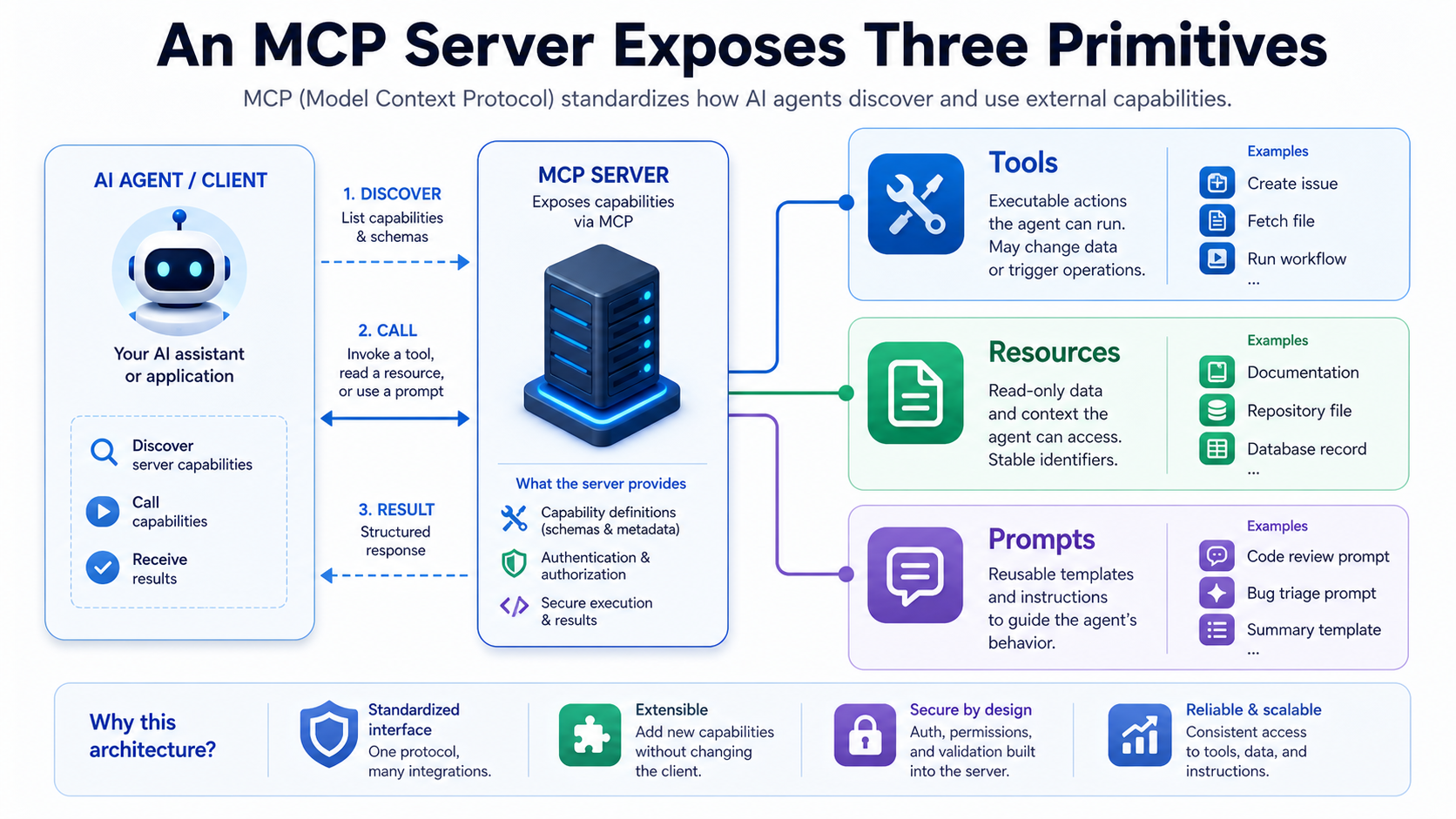
At a basic level, an MCP server exposes three kinds of primitives. These primitives tell the AI client what it can do, what it can read, and which reusable prompt patterns are available.
| Primitive | What It Does | Example |
|---|---|---|
| Tools | Executable actions the model can call | Create an issue, fetch a file, run a workflow |
| Resources | Data the model can read as context | Repository files, documentation, database records |
| Prompts | Reusable prompt templates or instructions | Code review prompt, bug triage prompt, support response template |
The important part is that this happens while the agent is working. The client discovers the server capabilities, chooses the right primitive, sends structured input, and receives structured output.
Real Examples of MCP in Action
Developer Repositories and Issues
A coding assistant connected to a repository MCP server can inspect files, review issues, compare branches, and propose changes using live project context. Instead of pasting code into a chat window, the developer lets the assistant work from the actual source of truth.
Project Management Workflows
With a project-management MCP server, an agent can read open issues, check priorities, summarize status, or draft updates based on code changes. The value is not only automation; it is orchestration across tools that previously needed separate integrations.
Documentation Servers
Documentation MCP servers reduce hallucination risk by letting agents retrieve current reference material before producing code or implementation guidance. This is especially useful for internal APIs, fast-changing SDKs, and private platform documentation.
Why MCP Is Becoming a Default Pattern
One Protocol, Many Tools
The reason MCP is gaining traction is simple: every team building serious agents runs into the same tool-connectivity problem. If every tool requires custom integration, agents do not scale. MCP moves the repeatable interface work into a standard protocol.
An Open Protocol
Anthropic introduced MCP as an open standard, and its launch announcement describes MCP as a way to connect AI assistants to the systems where data lives. You can read the original Anthropic MCP announcement for the ecosystem framing.
What This Means for Developers
- Less glue code: one MCP server can serve multiple compatible AI clients.
- More composable agents: capabilities can be added without rewriting the model layer.
- Cleaner debugging: standardized calls make tool behavior easier to inspect.
- Faster ecosystem growth: tools that publish MCP servers become easier for agents to use.
Where Proxy Infrastructure Fits
MCP is a protocol for model-tool connectivity, but many tool workflows involve public web data, APIs, localization checks, SERP monitoring, price tracking, and ad verification. When an MCP-connected agent makes web requests for legitimate data workflows, IP routing starts to matter.
That is where LycheeIP fits naturally. Agent teams that need region-aware access can pair their MCP-connected tools with dynamic proxy IPs, static proxy IPs, or datacenter proxy infrastructure, depending on whether the workflow needs rotation, session stability, or speed.
For example, an MCP tool that checks localized search results might route requests through regional IPs. A monitoring workflow might prefer stable static IP behavior. A high-volume public data workflow might need controlled rotation. The agent calls the MCP tool; the tool controls the network path behind the scenes.
Responsible use still matters. MCP does not remove the need to respect site terms, robots.txt where applicable, rate limits, and target-system availability. LycheeIP proxy services should be configured for legitimate workflows such as public data research, localization testing, automation QA, and monitoring.
Suggested Video: MCP Explained
For a quick visual companion, this explainer walks through why MCP matters for agents that need to connect with databases, APIs, and external systems.
Common Mistakes and Considerations
Treating MCP as a Replacement for All API Work
MCP is a connectivity layer, not a magic replacement for understanding an API. You still need clear tool design, correct schemas, and reliable implementation on the server side.
Skipping Authentication Design
An MCP server that exposes sensitive tools without access controls is a real risk. Limit permissions, scope credentials, and audit what agent-connected tools are allowed to do.
Assuming Every Model Supports MCP
MCP support is growing, but it is not universal. Check your specific AI client, IDE, runtime, or agent framework before designing everything around MCP.
Exposing Too Many Tools at Once
A server that exposes hundreds of tools can overwhelm context and degrade tool selection. Design smaller, focused MCP servers around clear workflow boundaries.
Ignoring Network and Data-Collection Controls
If MCP-connected tools collect public data, treat IP routing as part of the system design. Rotating proxies can support distributed access, while static proxies support session-dependent workflows.
Conclusion
MCP solves a real developer problem: AI models need a standard way to connect to external tools without custom glue code for every integration. An MCP server exposes tools, resources, and prompts so compatible AI clients can discover and use them at runtime.
That makes agents more composable, integrations easier to maintain, and tool ecosystems easier to scale. As more development tools publish MCP servers, understanding MCP becomes part of the practical AI engineering toolkit.
For teams building agents that interact with live web data, the MCP layer is only one part of the architecture. The network layer matters too. LycheeIP datacenter proxies, static proxy options, and dynamic IP pools help teams choose the right routing behavior for the job.
Frequently Asked Questions
What does MCP stand for?
MCP stands for Model Context Protocol. It is an open protocol for connecting AI applications to tools, data sources, and external systems.
What is an MCP server?
An MCP server is a lightweight process that exposes tools, resources, or prompts through the MCP protocol so an AI client can discover and use them.
How is MCP different from a regular API integration?
A regular API integration is usually custom-built for one tool and one application. MCP standardizes the interface so compatible clients can reuse the same tool server.
Is MCP only useful for coding tasks?
No. Coding tools are common examples, but MCP can apply to documentation retrieval, project management, database access, support workflows, analytics, and data operations.
Do I need to know the MCP spec to use MCP servers?
If you are using an existing MCP server, usually no. If you are building your own server, you should read the spec and design clean schemas, permissions, and error handling.
What are the main MCP security concerns?
Access control, credential scope, tool permissions, auditability, and data exposure are the main concerns. Never expose sensitive operations without proper authorization.
How does MCP relate to proxy infrastructure?
MCP can connect an AI agent to a data-collection or monitoring tool. If that tool makes web requests, proxy infrastructure can control region, session stability, and IP rotation.
Should every agent workflow use MCP?
Not necessarily. MCP is valuable when an agent needs reusable external capabilities. For a small one-off script, direct API calls may still be simpler.
What primitives does an MCP server expose?
The core primitives are tools for actions, resources for readable context, and prompts for reusable instruction templates.
Why are developers paying attention now?
Because AI agents are moving from demos to real workflows. MCP gives those agents a cleaner, reusable way to connect to the tools developers already use.

Recommended Articles
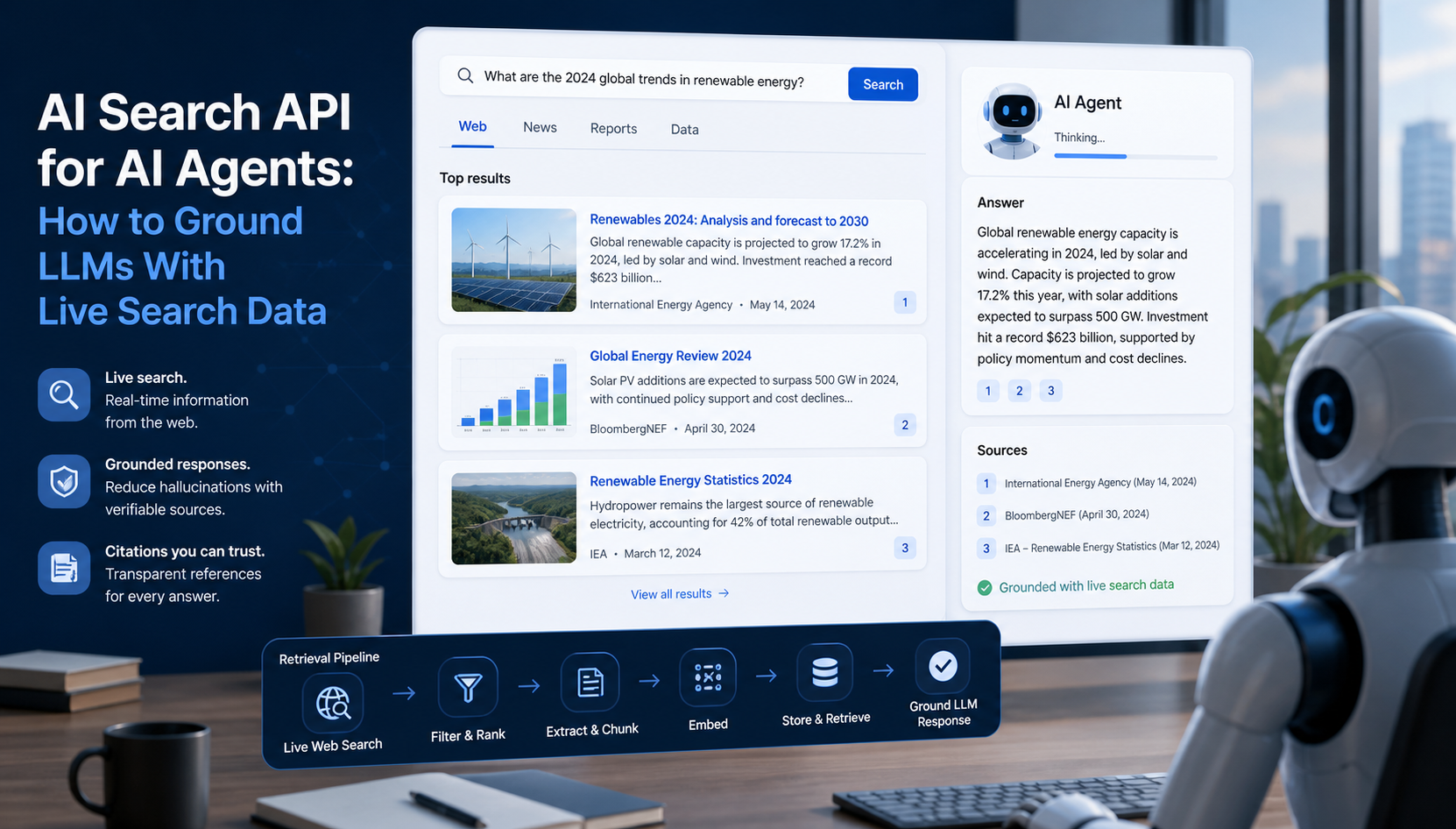
AI Search API for AI Agents: How to Ground LLMs With Live Search Data
An AI search API gives an application or agent programmatic access to current search results. Its most useful role is discovery: the agent can find candidate sources, identify fresh information, and decide what to retrieve next instead of relying only on model memory.
View Details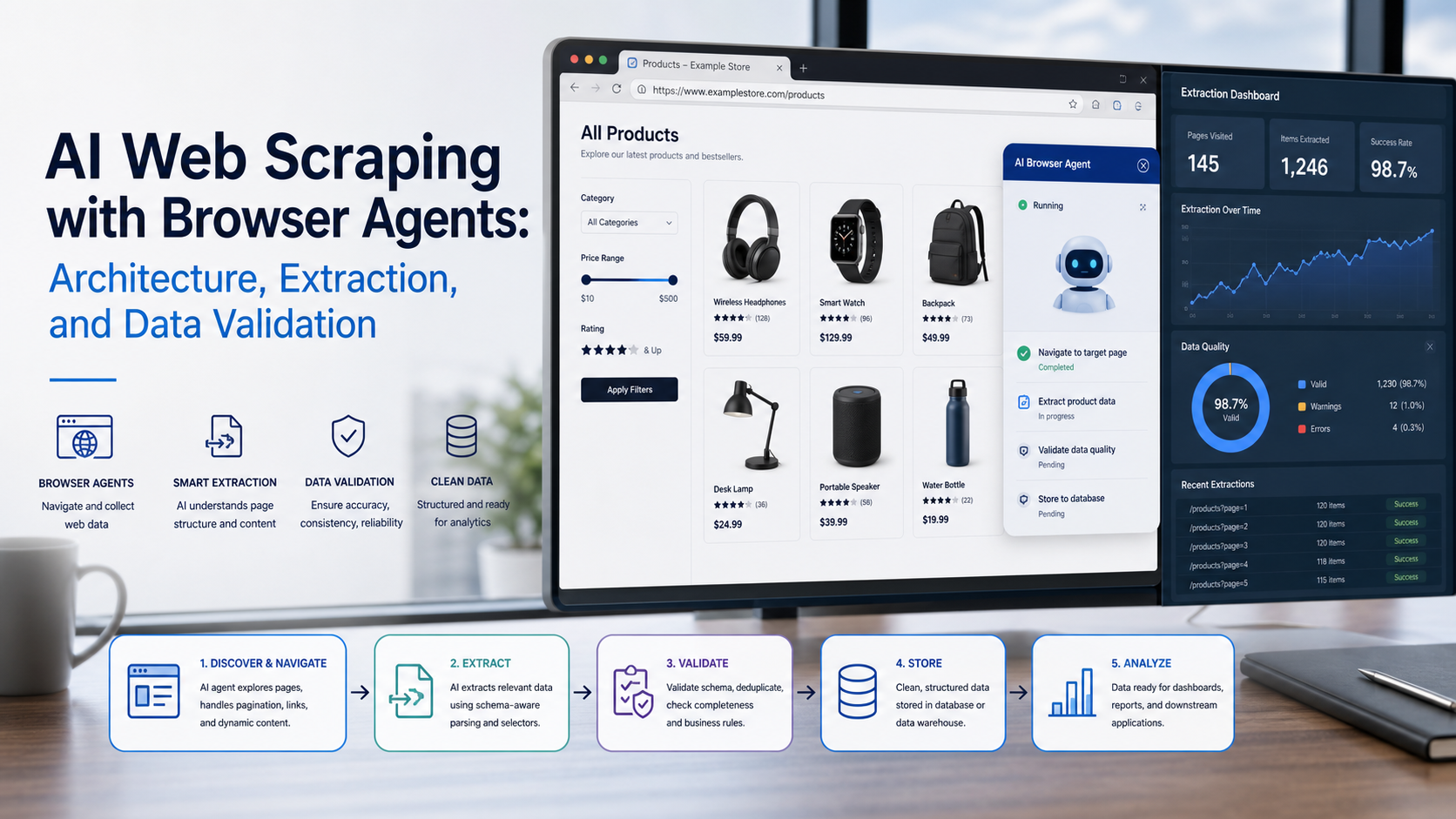
AI Web Scraping with Browser Agents: Architecture, Extraction, and Data Validation
AI web scraping uses AI to help discover, navigate, interpret, or extract information from websites. Browser agents are one implementation option when page interaction, rendering, or layout variation makes a simple scraper too brittle, but the agent should not become the entire data pipeline.
View Details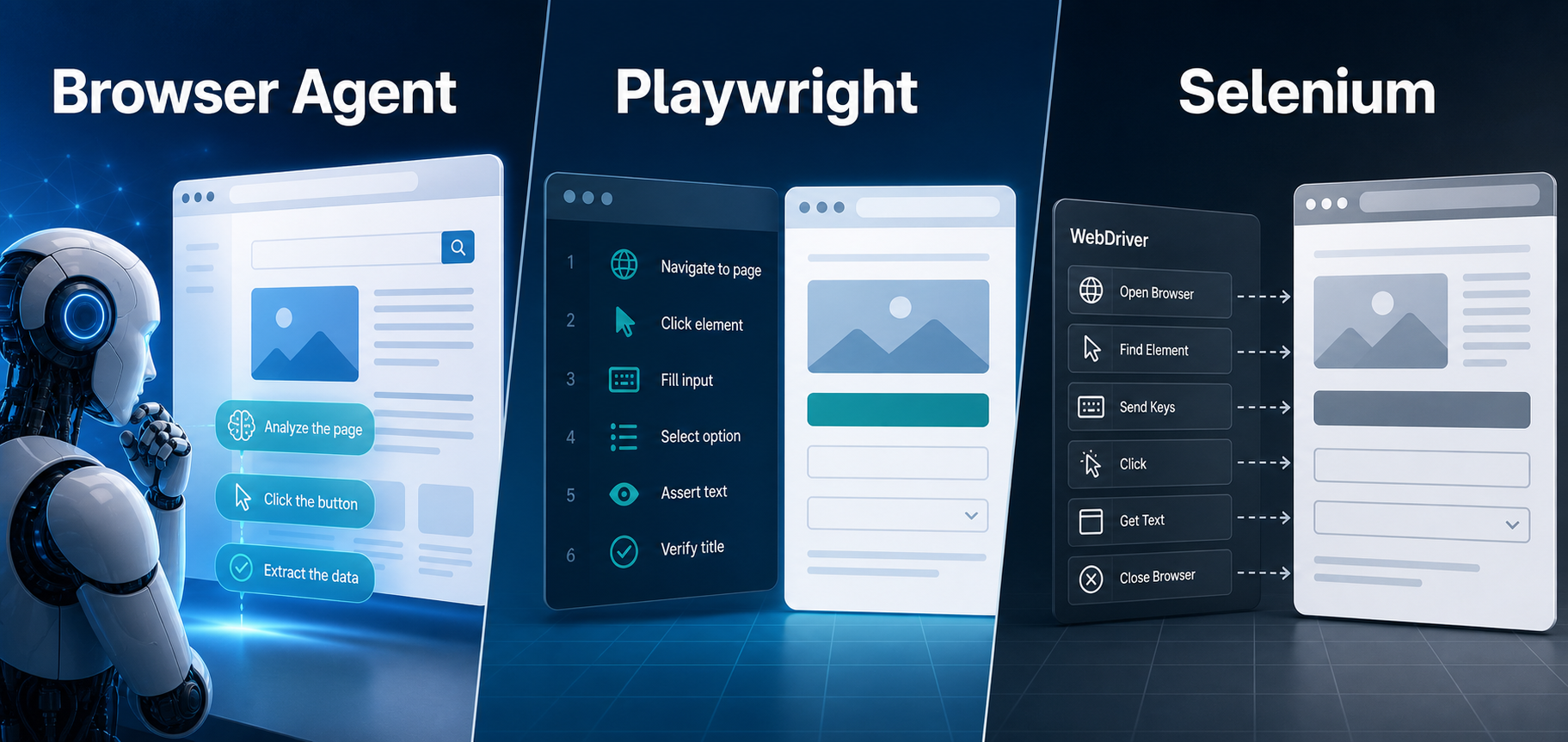
AI Browser Automation: Browser Agents vs Playwright vs Selenium
A browser agent interprets a goal and decides what browser action to take next. Playwright and Selenium can execute explicit, testable browser logic defined by developers. In 2026, however, Playwright also provides official MCP and agent-oriented workflows, so Playwright is no longer just the deterministic alternative to agentic automation. It can also serve as the browser-control layer inside an agent system.
View Details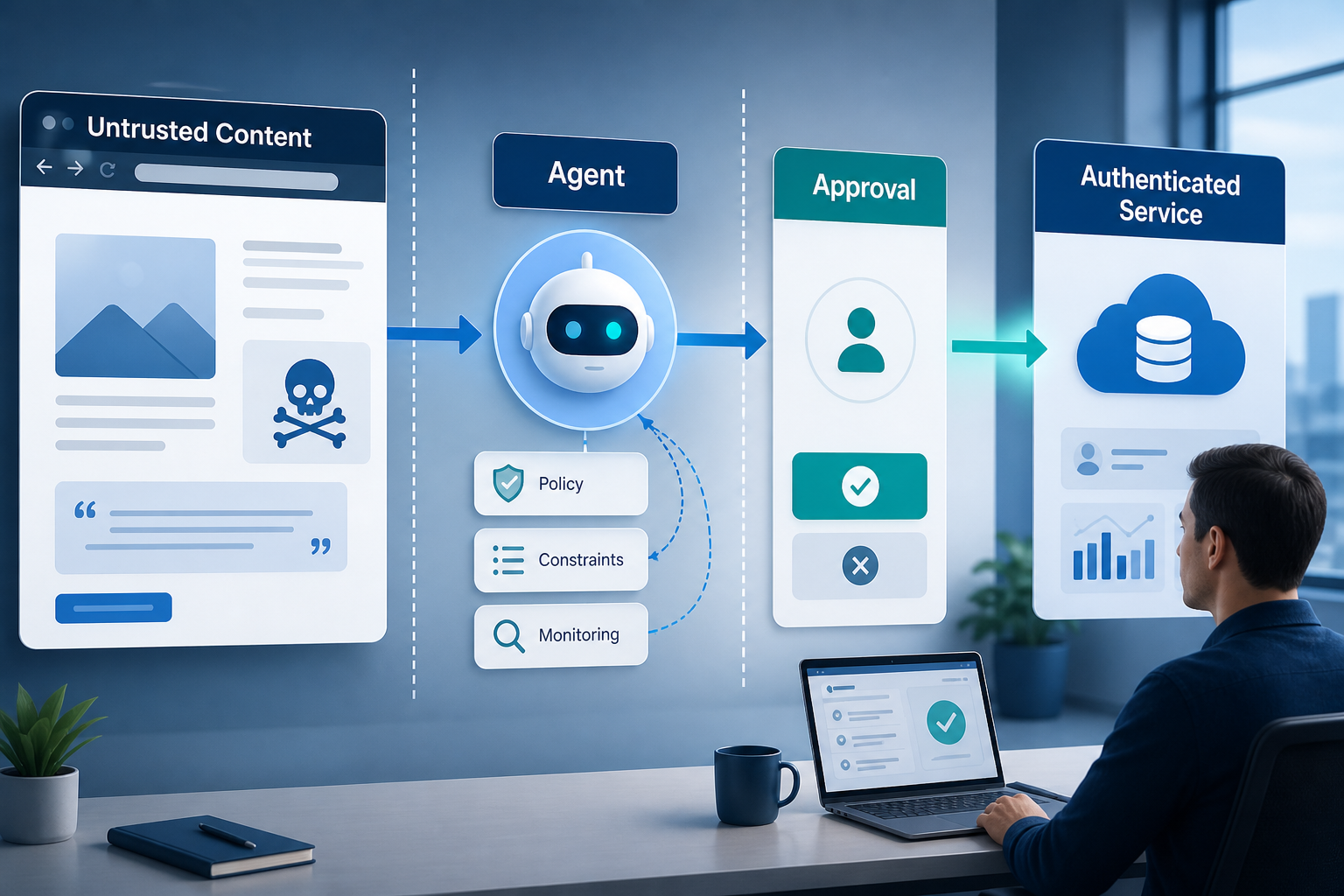
Agentic Browser Security: Prompt Injection, Permissions, and Safe Deployment
That combination creates risks that are different from ordinary browsing and traditional automation. The most important is indirect prompt injection, where hostile instructions hidden in web content attempt to redirect the agent away from the user's goal. Google describes indirect prompt injection as a primary new threat for agentic browsing and has introduced layered defenses that include origin constraints, independent action checks, threat detection, and user confirmation for sensitive actions. Google's Chrome security architecture is a useful reference for how browser-agent defenses are evolving.
View Details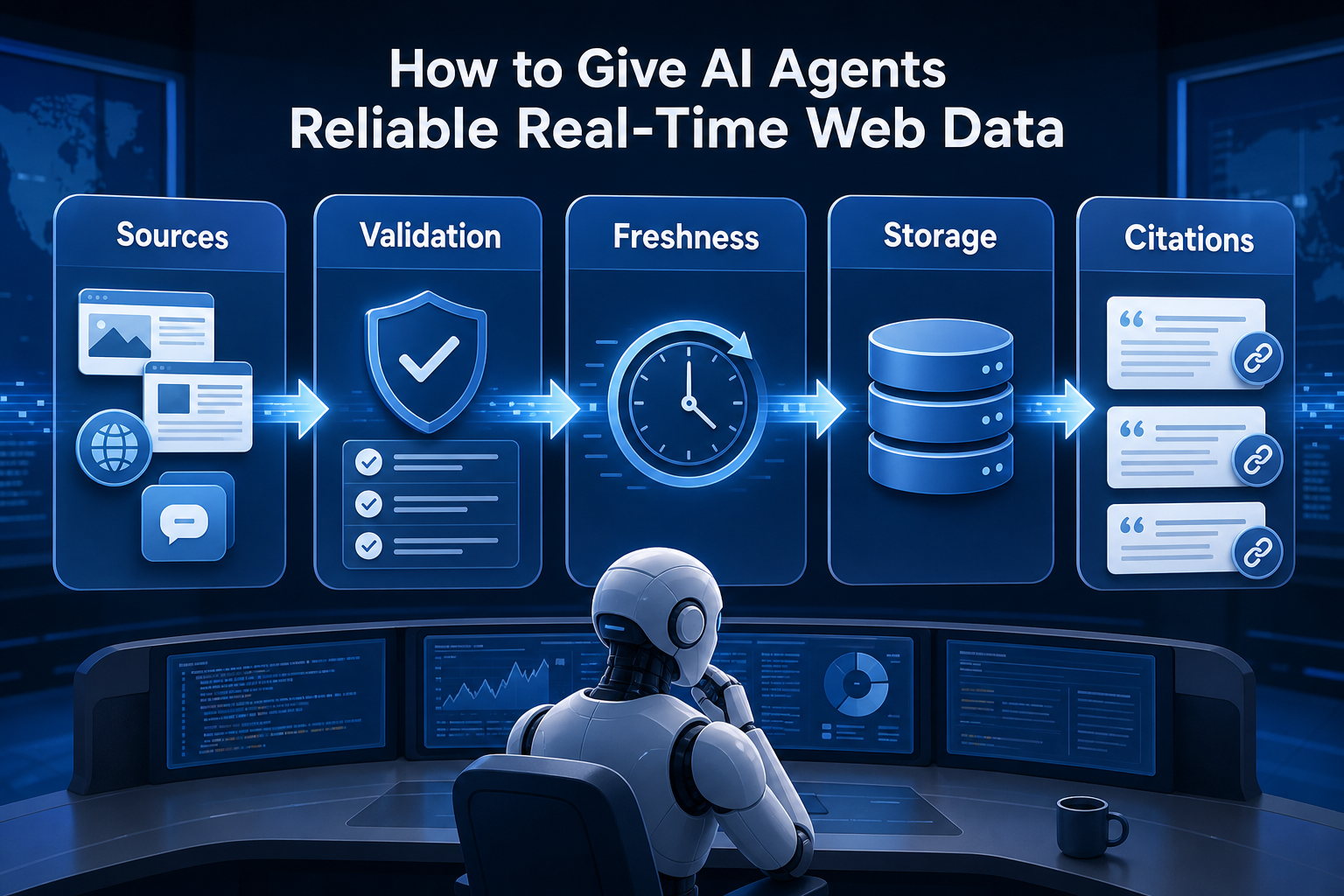
How to Give AI Agents Reliable Real-Time Web Data
A production-ready solution therefore needs more than a web scraper. It needs a web data layer that connects acquisition, validation, storage, retrieval, security, and observability. This guide explains how to design that layer.
View Details