
What Is a Dataset? Meaning, Types and Why It Matters in AI
If you are asking what is a dataset, the fastest correct answer is this. A dataset is a collection of related data organized for a specific purpose, such as analysis, reporting, search, or machine learning. A dataset might be a simple spreadsheet, a JSON export, a folder of labeled images, or a collection of raw files that belong together.
Understanding exactly what is a dataset helps teams build better pipelines and train more accurate models. This guide covers the main types of datasets, how they fuel artificial intelligence, and how to evaluate their quality before you put them into production.
Explore stable proxy with LycheeIP
What is a dataset?
A dataset is a usable collection of related information that has enough structure, consistency, and context to support a specific task. It is not just random information. It is data grouped and prepared so a person, application, or model can actually use it.
For example, a customer list can be a dataset. A fraud log used by security operations can be a dataset. A folder of product images with labels is an image dataset. Modern AI systems often require combining multiple data types, which means a dataset definition must expand beyond simple rows and columns.
How does a dataset vs database compare?
A dataset is the actual body of data you use for analysis or training, while a database is the infrastructure system that stores and manages that data. Confusing these terms leads to poor architecture decisions.
You can export a single dataset from a large database. You can also store one massive dataset across many database tables. Think of the database as the filing cabinet and the query engine, while the dataset is the specific folder of related documents you pull out to work on.
Which types of datasets are most common?
The most useful way to classify the different types of datasets is by their structure and their content type.
By structure, data engineers usually deal with three categories. Structured datasets include tables and clean SQL exports. Semi-structured datasets include JSON files or event logs. Unstructured datasets include raw documents, images, audio, and video files.
By content type, teams frequently work with an audio dataset, a video dataset, time-series data, or geospatial data. Furthermore, multimodal datasets are becoming standard. Multimodal datasets combine text, images, and audio into one workflow, which is essential for training advanced generative AI models.
Why is a dataset for AI and machine learning so critical?
A dataset in machine learning dictates the ceiling of your model performance because AI learns from examples rather than explicit programming instructions. If your training data is weak, mislabeled, or outdated, the artificial intelligence model simply inherits and amplifies those flaws.
This matters deeply across different industries. Here are a few practical use cases.
- Scraping teams: E-commerce scrapers need highly accurate pricing datasets to fuel dynamic pricing algorithms.
- Fraud operations: Security teams need historical transaction datasets to train anomaly detection models that flag suspicious logins.
- Fintech ops: Financial platforms rely on alternative credit datasets to evaluate loan risks in real time.
For supervised machine learning, human or automated labeling becomes a core part of the dataset itself. Good labeling improves accuracy. Poor labeling creates model bias. As noted by documentation from Hugging Face, transparent dataset cards are essential to track these labeling decisions and prevent downstream errors.
How do you build a dataset from scratch?
You build a dataset by starting with a clear objective before you ever start collecting data. The fastest way to build a useless dataset is to scrape the web without defining your schema first.
Follow this practical workflow to build a dataset.
- Define the exact decision or AI task the data must support.
- Decide what a single complete record looks like.
- Define the fields, labels, and acceptable edge cases.
- Choose your source, whether that is internal logs, public repositories, or a web scraping dataset.
- Collect a small pilot sample first.
- Clean out duplicates, null values, and bad formats.
- Document the schema and intended use.
- Validate the data on a small task before scaling your extraction pipeline.
If you are building a web scraping dataset, infrastructure reliability is paramount. You need stable proxy access to ensure you can collect complete records without getting blocked mid-extraction.
Which format is best for your data?
The best format for your dataset depends entirely on how you plan to store, query, move, and consume the information. A dataset can be packaged as CSV, JSON, SQL records, or raw files. Do not force deeply nested data into a flat CSV format just because it feels familiar.
Method vs When to Use (Dataset Formats)
| Format | Best used for | Major tradeoffs |
| CSV | Simple tabular data exchange, quick analysis, and spreadsheet workflows. | Weak support for nested data, frequent delimiter issues, and schema drift. |
| JSON / JSONL | APIs, event logging, and semi-structured data with variable nesting. | Larger payload sizes and higher friction for simple ad hoc analysis. |
| SQL Exports | Frequent querying, joining multiple entities, and controlled updates. | Requires environment dependencies and has higher export friction. |
| Raw Files + Metadata | Creating an image dataset, video dataset, or audio dataset. | Requires strict versioning and complex file-to-metadata alignment. |
Explore stable proxy with LycheeIP
How can you evaluate dataset quality before scaling?
You can evaluate dataset quality by running a fit-for-use review that checks the scope, origin, and cleanliness of the data. Knowing what is a dataset is only half the battle. Knowing if it is reliable is what actually matters for production.
Use these criteria to judge data quality.
- Scope: Does the data actually match the real-world problem you are solving?
- Origin: Do you know exactly where the data came from and how it was collected?
- Representativeness: Does the dataset reflect all the scenarios and edge cases your model will encounter?
- Cleanliness: Are duplicates, missing values, and formatting errors properly managed?
Assumptions and limitations for data quality
- Quality thresholds vary heavily by use case. A marketing analytics dashboard can tolerate more noise than a medical imaging AI.
- Bigger is not automatically better. A massive dataset full of duplicate records is worse than a small, highly curated dataset.
- Public availability does not automatically grant commercial reuse rights.
The research guidelines from Utrecht University strongly recommend documenting your data provenance and ethical considerations, especially when dealing with personally identifiable information.
When should you use public datasets vs synthetic data vs real data?
You should choose your data source based on your requirements for speed, uniqueness, compliance, and freshness.
Public datasets for machine learning are excellent for establishing baselines and benchmarking models quickly. However, they lack proprietary signals. If your competitors have access to the exact same public data, it offers no competitive business advantage.
Synthetic data vs real data is an ongoing debate. Synthetic data is generated artificially by algorithms. It is highly useful when real data is scarce, expensive to collect, or restricted by privacy laws. Organizations like IBM frequently highlight synthetic data for expanding test scenarios. However, synthetic data must always be validated against real-world benchmarks to ensure it does not create false realism.
Web scraping datasets offer maximum freshness and external market visibility. They are ideal for tracking competitor pricing or aggregating public sentiment.
What are common dataset mistakes and how do you fix them?
Most dataset failures come from basic process errors rather than complex algorithmic limitations. Missing records, changing schemas, and stale data will break pipelines regardless of how advanced your AI model is.
Troubleshooting Common Dataset Failures
| Common Failure | Likely Cause | Recommended Fix |
| Duplicate leakage | Identical records exist in both the training data and test data. | Implement strict deduplication logic before splitting your dataset. |
| Schema drift | Upstream sources changed their field names or data types without warning. | Version your schemas and validate every new batch of data upon ingest. |
| Stale insights | The dataset no longer reflects current market reality. | Automate data refreshes on a schedule tied to your business volatility. |
| Connection blocks | Target servers block your web scrapers during dataset collection. | Route traffic through reliable dynamic residential proxies with high uptime. |
How LycheeIP fits into web scraping dataset pipelines
When teams build datasets by collecting public web data, they often face rate limits and IP bans. Many proxy providers obscure their IP origins or force clients into confusing subscription tiers, resulting in unpredictable scaling for data engineers.
LycheeIP provides developer-first proxy infrastructure that stabilizes web data collection. By offering transparent resources allocated directly from underlying operators, teams can build extensive scraping datasets without interruption.
- Stable collection: Access dynamic residential proxies with 99.8% uptime and unlimited concurrency.
- Clean IP pools: Every IP goes through a strict cooling period of more than six months before use.
- Clear pricing: Dynamic residential plans start at $5.00/GB after a 1 GB free test, while static datacenter proxies run at $0.80/IP/month.
- Developer control: Monitor usage and statistics in near real-time via a simple API or the web dashboard.
When should you avoid building your own dataset?
You should not build your own dataset from scratch when a highly trusted, commercially viable existing dataset already solves your problem. If the governance, labeling costs, and infrastructure overhead outweigh the business value, buy the data instead.
Do not build a dataset just because collecting data sounds strategic. Always start by searching for an existing public or internal dataset. Run a pilot project to validate your assumptions. Only invest the engineering hours to build a custom data pipeline when proprietary collection gives you a distinct advantage.
Explore stable proxy with LycheeIP
Frequently Asked Questions:
1. What is a dataset in simple terms?
A dataset is a structured collection of related data organized so people or systems can analyze it, search it, or use it to train machine learning models.
2. What is a dataset example?
Common examples include a spreadsheet of monthly sales, a SQL export of user logs, a JSON file containing product catalog details, or a folder of medical images annotated for AI training.
3. How are datasets used in AI?
Teams use datasets to train, validate, and test artificial intelligence. In supervised learning, the dataset includes labels that provide the necessary context for the model to identify patterns and make predictions.
4. What is a multimodal dataset?
A multimodal dataset contains multiple different types of data, such as text, images, and audio, combined into a single structured collection. These are crucial for training modern generative AI.
5. Can a dataset be a JSON or CSV file?
Yes. A dataset can absolutely be stored as a CSV, a JSON file, or SQL records. The correct format depends on whether your project requires simple tabular exchange or complex nested structures.
6. What is the difference between a dataset and a database?
A dataset is the specific collection of information you are analyzing or using for training. A database is the underlying software and storage infrastructure that holds and organizes the data.
7. How do engineers collect a web scraping dataset?
Engineers write code to request web pages, extract the target text or images, and save the output. This usually requires proxy infrastructure to bypass rate limits and ensure consistent collection.
8. Are public datasets safe for commercial use?
Not always. Public availability does not mean the data is free from copyright or privacy restrictions. You must always review the licensing and provenance before using public data in commercial products.

Recommended Articles
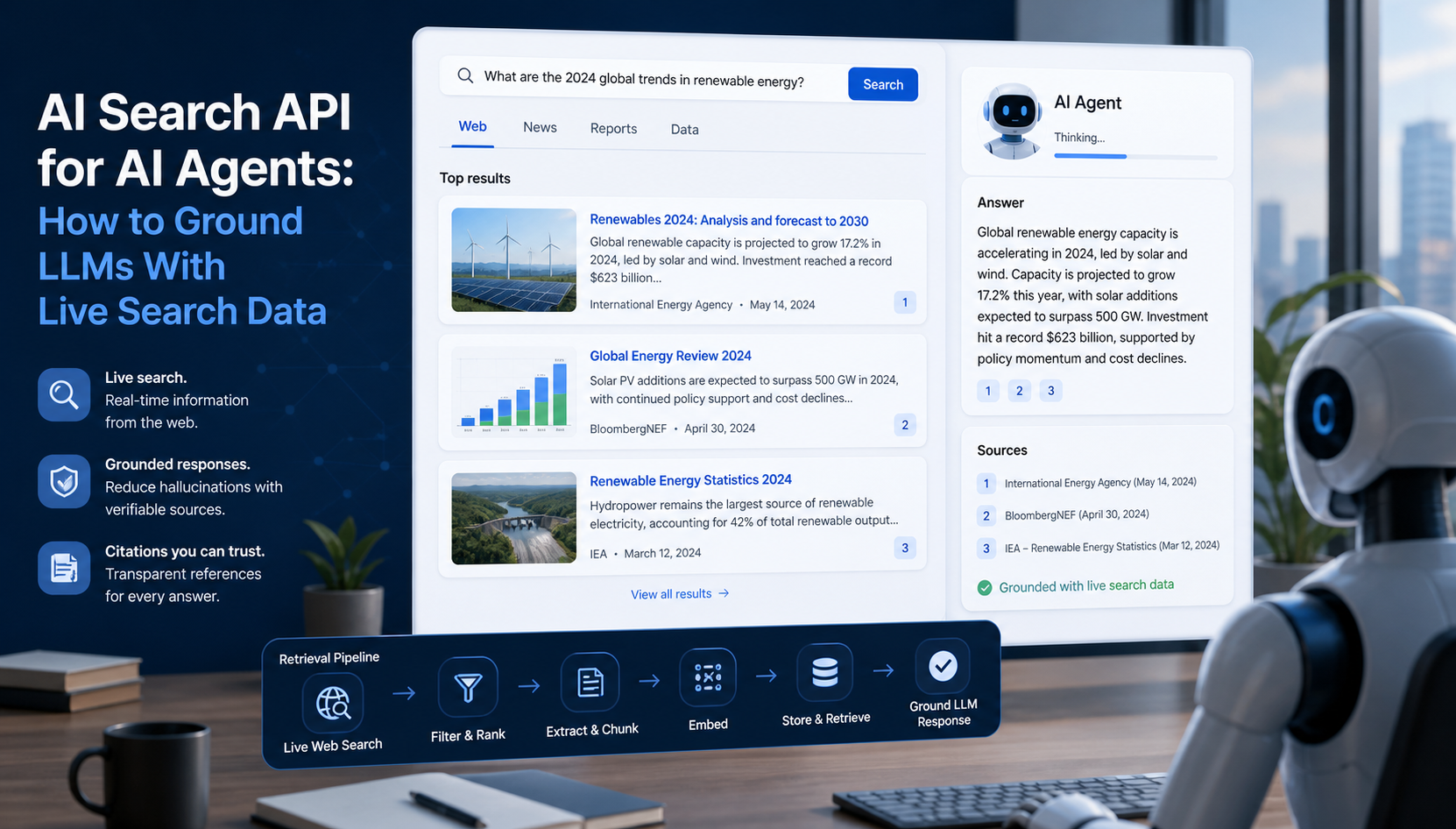
AI Search API for AI Agents: How to Ground LLMs With Live Search Data
An AI search API gives an application or agent programmatic access to current search results. Its most useful role is discovery: the agent can find candidate sources, identify fresh information, and decide what to retrieve next instead of relying only on model memory.
View Details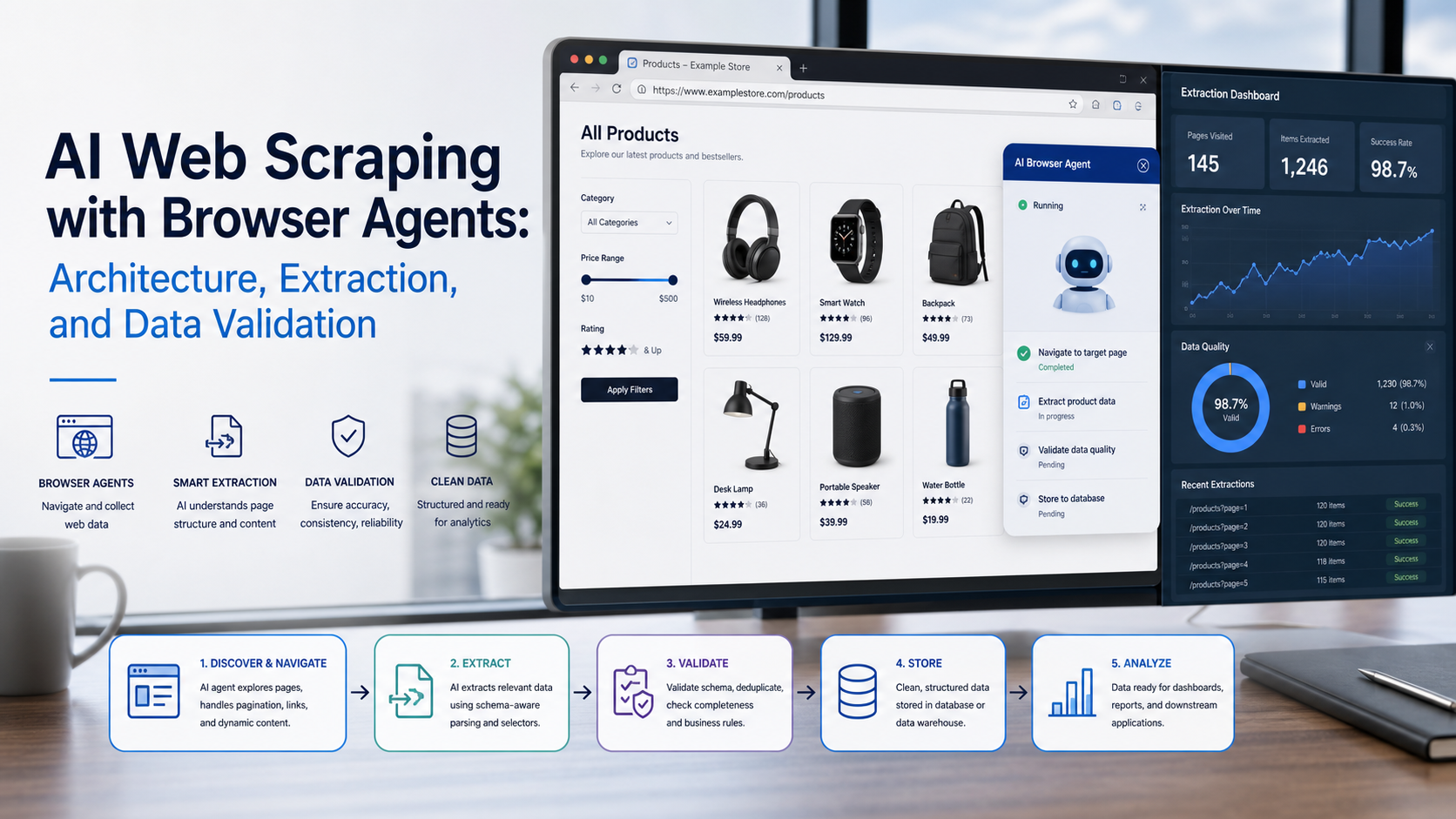
AI Web Scraping with Browser Agents: Architecture, Extraction, and Data Validation
AI web scraping uses AI to help discover, navigate, interpret, or extract information from websites. Browser agents are one implementation option when page interaction, rendering, or layout variation makes a simple scraper too brittle, but the agent should not become the entire data pipeline.
View Details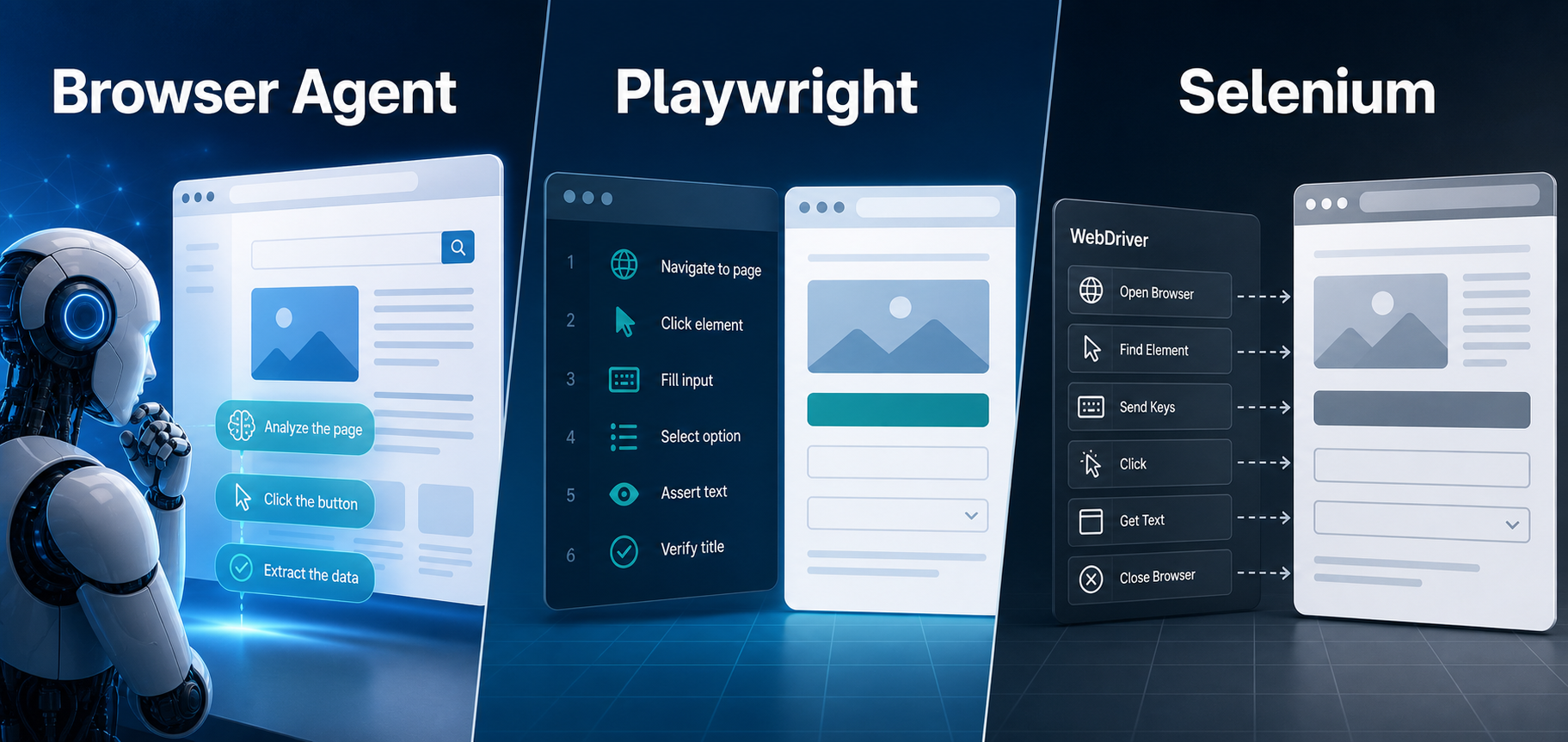
AI Browser Automation: Browser Agents vs Playwright vs Selenium
A browser agent interprets a goal and decides what browser action to take next. Playwright and Selenium can execute explicit, testable browser logic defined by developers. In 2026, however, Playwright also provides official MCP and agent-oriented workflows, so Playwright is no longer just the deterministic alternative to agentic automation. It can also serve as the browser-control layer inside an agent system.
View Details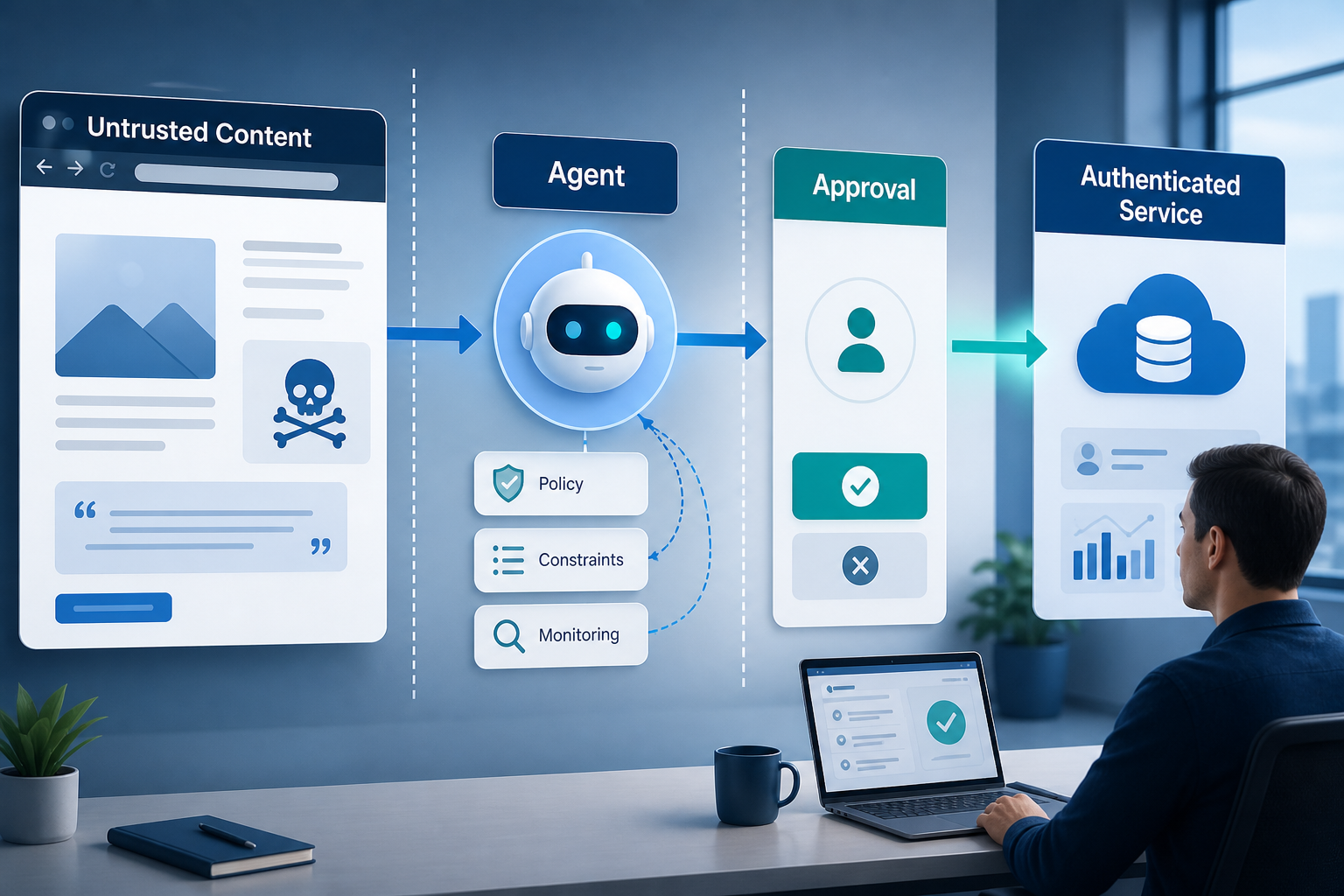
Agentic Browser Security: Prompt Injection, Permissions, and Safe Deployment
That combination creates risks that are different from ordinary browsing and traditional automation. The most important is indirect prompt injection, where hostile instructions hidden in web content attempt to redirect the agent away from the user's goal. Google describes indirect prompt injection as a primary new threat for agentic browsing and has introduced layered defenses that include origin constraints, independent action checks, threat detection, and user confirmation for sensitive actions. Google's Chrome security architecture is a useful reference for how browser-agent defenses are evolving.
View Details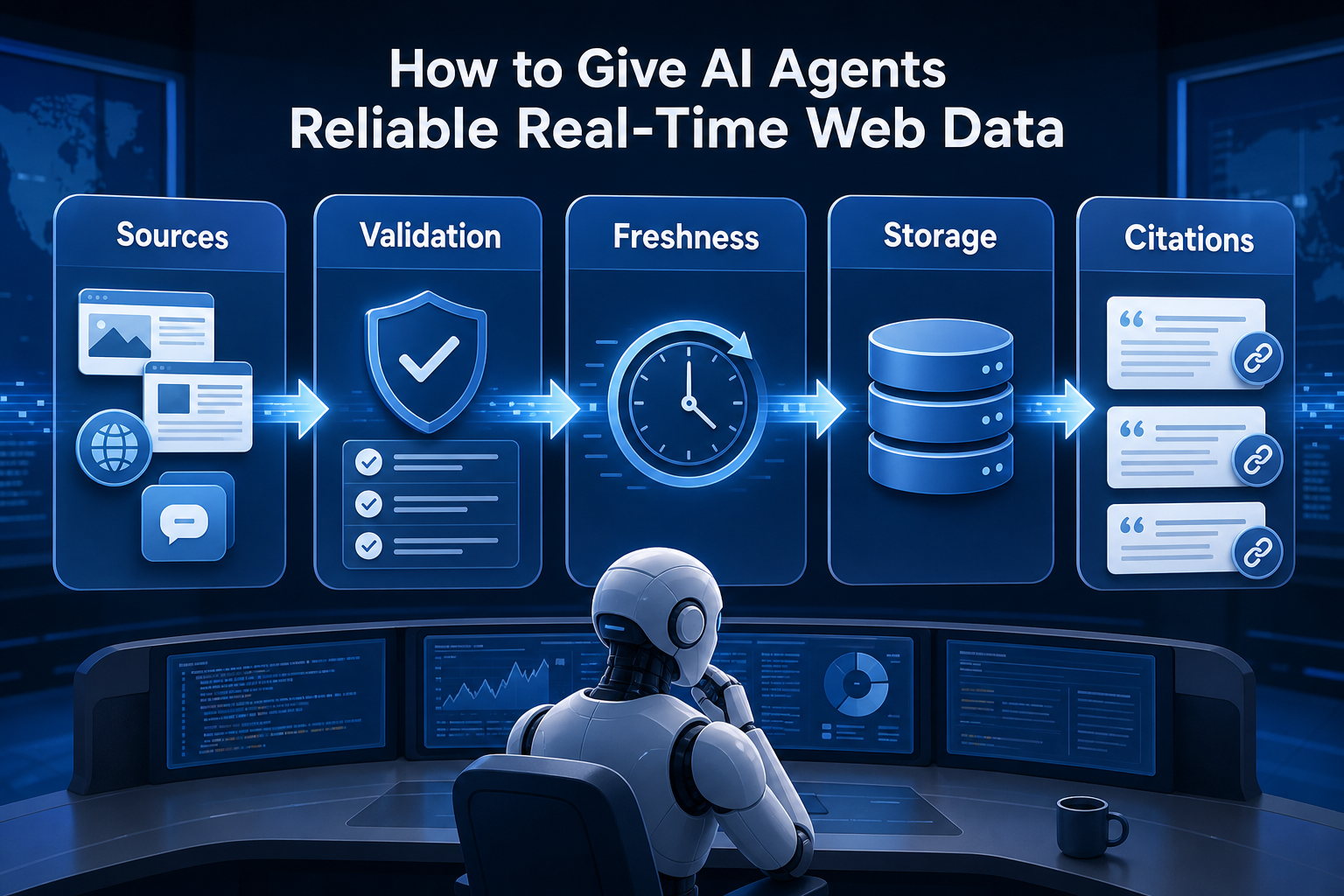
How to Give AI Agents Reliable Real-Time Web Data
A production-ready solution therefore needs more than a web scraper. It needs a web data layer that connects acquisition, validation, storage, retrieval, security, and observability. This guide explains how to design that layer.
View Details