
Web Scraping Without Getting Blocked in 2026

Your scraper died in 5 minutes? Here's why.
You've spent hours building the perfect scraper. Your code is clean, your selectors are precise, and your error handling is bulletproof. You fire it up, watch the first few successful requests roll in, and then—BAM. HTTP 403. IP blocked. Your scraper is dead before it even got warm.
This scenario isn't just frustrating; it's becoming the standard experience for data engineers and QA testers in 2026. Whether you are conducting automated geo-testing, performing authorized security audits, or aggregating public data, target servers are armed with sophisticated defenses. According to guidelines and frameworks like the , modern firewalls analyze much more than request volume. They look at behavioral biometrics, TLS handshakes, application-layer footprints, and the timing between clicks.
A single IP making 100 requests in 30 seconds? Flagged. The same User-Agent from different IPs at identical intervals? Blocked.
Let's break down how to build resilient, ethical scraping infrastructure that survives first contact, respects target boundaries, and scales reliably.
Try LycheeIP Today
What is Web Scraping?
Web scraping is the automated process of using bots to extract large amounts of structured or unstructured data from websites, typically converting HTML code into usable formats like CSV, JSON, or spreadsheets. It is widely used for price monitoring, lead generation, competitor analysis, and market research.
Residential Proxy Networks for Distributed Scraping
The days of relying entirely on a single type of IP address are over. While remain highly effective and lightning-fast for server-to-server tasks or accessing endpoints with relaxed security, they are easily fingerprinted by strict anti-bot systems. Most major websites maintain active blacklists of datacenter IP ranges from major cloud providers.
Residential proxies solve this visibility problem. These are IP addresses assigned to real homes and mobile devices by local Internet Service Providers (ISPs). When you route your extraction scripts through residential nodes, your requests look like they are coming from a standard user's laptop in Dallas, Mumbai, or São Paulo.
Why Residential Proxies Win in 2026
The advantage extends far beyond simply bypassing basic IP blacklists. Residential proxies provide a robust foundation for mimicking organic traffic:
- Geographic diversity: Distribute requests across specific countries, states, and cities to perform accurate localized testing and mimic regional user bases.
- ISP variety: Mix traffic across regional telecommunications providers (like Comcast, AT&T, or Vodafone) to avoid subnet pattern recognition.
- Lower block rates: Websites rarely ban residential IPs aggressively. Doing so risks generating false positives, which means inadvertently blocking legitimate, paying customers.
Implementation Best Practices
The key to residential proxy success is intelligent, programmatic rotation. Integrating requires strict adherence to these operational rules:
- Session Persistence (Sticky IPs): Don't rotate IPs mid-session. If you're scraping a multi-page product catalog or testing a checkout flow, use the same IP for the entire user journey. Switch IPs only when initiating a completely new session.
- Request Pacing: Introduce organic, randomized delays between requests (e.g., 2 to 8 seconds). Real users do not interact with web pages at metronome precision.
- Geographic Consistency: If you are targeting a US-only platform, don't abruptly bounce between US, UK, and Singapore IPs. Maintain strict regional consistency within the same session.
- Strict Concurrency Limits: Do not hammer endpoints with 100 parallel connections. Coordinated mass requests—even from disparate IPs—create highly suspicious, easily detectable traffic spikes. Cap concurrency at 10-20 threads maximum.
Here's a Python snippet showing smart rotation with session persistence:
Python
import requests
import random
import time
from itertools import cycle

proxy_pool = cycle([
    {'http': 'http://user:pass@residential-proxy-1:port'},
    {'http': 'http://user:pass@residential-proxy-2:port'},
    # ... more proxies
])

def scrape_with_rotation(urls):
    for url in urls:
        proxy = next(proxy_pool)
        delay = random.uniform(2, 8)
        time.sleep(delay)

        response = requests.get(url, proxies=proxy, timeout=10)
        # Process response
Try LycheeIP Today
Managed Unblocking vs Raw Proxy Approaches
Once you establish that distributed IPs are essential, you face a critical architectural fork in the road: do you build the infrastructure yourself using raw proxies, or do you pay a premium for managed unblocking services?
The Raw Proxy Approach
What you get: Access to a large pool of raw IP addresses. Your engineering team is entirely responsible for the scraping logic, retry mechanisms, header management, and browser fingerprinting.
Pros:
- Absolute control over request patterns, timing, and flow.
- Significantly lower per-request infrastructure cost when scraping at scale.
- Complete flexibility to customize headers, cookies, and headless browser profiles.
Cons:
- You must integrate and manage your own CAPTCHA-solving solutions.
- Rendering JavaScript requires configuring your own headless browser clusters.
- No automated fingerprint rotation (requires maintaining external plugins).
- High maintenance overhead when target sites update their security protocols.
Best for: Data engineering teams with dedicated scraping expertise, predictable high-volume needs (500K+ requests/month), and strict custom infrastructure requirements.
The Managed Unblocking Approach
What you get: An API endpoint that handles the proxy rotation, JavaScript rendering, CAPTCHA solving, and fingerprint management on your behalf. You simply send a standard HTTP request, and the service returns the HTML/JSON.
Pros:
- Near-zero infrastructure management.
- Automated browser fingerprint rotation and CAPTCHA solving included out-of-the-box.
- Drastically faster time-to-production (hours instead of weeks).
- The vendor absorbs the engineering burden when target defenses evolve.
Cons:
- Much higher per-request costs (often 10-50x more than raw proxies).
- Loss of granular, low-level control over network timing and headers.
- Strict rate limits, particularly on lower-tier pricing plans.
- Potential vendor lock-in.
Best for: Lean startups, growth teams without dedicated data engineers, or projects with highly unpredictable data extraction volumes.
Cost-Benefit Analysis
Let's look at a concrete benchmark. Assuming you need to extract data from 1 million pages per month:
Raw Proxy Approach:
- Residential proxy bandwidth (3GB-5GB): $300 - $500/month
- Supplemental CAPTCHA solving service: $100 - $200/month
- Engineering time: ~40 hours initial setup + 10 hours/month ongoing maintenance
- Total: $400 - $700/month + significant engineering payroll
Managed Approach:
- Managed API Subscription (1M requests): $1,500 - $2,500/month
- Engineering time: ~5 hours setup + 2 hours/month maintenance
- Total: $1,500 - $2,500/month + minimal engineering payroll
The managed approach costs 3-5x more in direct infrastructure dollars but saves roughly 80% in ongoing engineering time. Your choice ultimately depends on whether your organization is optimizing for cash flow or headcount.
API Solutions for Complex Scraping Challenges
Sometimes, standard HTTP requests—even through pristine proxies—aren't enough. Modern web applications (think enterprise e-commerce platforms or professional networks) deploy multi-layered, client-side defenses:
- Behavioral analysis tracking mouse velocity and scroll depth.
- Canvas fingerprinting and WebGL analysis (leveraging hardware-level rendering APIs detailed in MDN Web Docs to identify headless browsers).
- TLS fingerprint matching (JA3/JA4 signatures).
- Invisible challenge-response systems that execute complex cryptographic math in the background.
When you hit these advanced walls, you must graduate to full browser automation APIs.
When to Use API Solutions
- JavaScript-Heavy SPAs: Sites built with React, Vue, or Angular where the actual data payload only loads dynamically after the initial page render.
- Authenticated Content: Scraping behind logins where you need to carefully maintain session state and secure cookies.
- Advanced Bot Management: Targets actively utilizing enterprise firewalls like DataDome, PerimeterX, or Cloudflare Bot Management.
- Visual Captures: When your pipeline requires full-page screenshots or PDF generation rather than raw HTML.
Try LycheeIP Today
Major Players
The market for complex browser automation has matured. Leading solutions offer cloud-hosted Chrome instances managed via Puppeteer, Playwright, or Selenium. These platforms automatically handle fingerprint randomization and localized unblocking, allowing you to focus purely on the extraction logic.
Integration Strategy
Here is a practical example of how to integrate browser automation via Playwright:
Python
from playwright.sync_api import sync_playwright

def scrape_with_managed_browser(url):
    with sync_playwright() as p:
        browser = p.chromium.connect_over_cdp(
            'wss://your-managed-browser-endpoint'
        )
        page = browser.new_page()

        # Managed service handles fingerprinting behind the scenes
        page.goto(url, wait_until='networkidle')

        # Extract structured data after JS finishes rendering
        data = page.evaluate('''
            () => {
                return Array.from(document.querySelectorAll('.product')).map(
                    el => ({
                        title: el.querySelector('h2').innerText,
                        price: el.querySelector('.price').innerText
                    })
                );
            }
        ''')

        browser.close()
        return data
By pointing your CDP (Chrome DevTools Protocol) connection to a managed endpoint, the vendor handles the cat-and-mouse game of browser fingerprinting.
Building Anti-Detection Into Your Scraping DNA
Beyond purchasing proxies and managed services, survival in 2026 requires embedding these fundamental operational practices into your team's workflows:
- Respect Boundaries (robots.txt & Rate Limits): Ethical scraping is sustainable scraping. Always review the target site's Terms of Service and robots.txt file. Aggressive, reckless scraping not only degrades target servers but introduces severe legal and compliance risks for your business.
- Randomize Your Footprint: Rotate User-Agents, randomize viewport sizes, shuffle Accept-Language headers, and ensure your error handling patterns don't give you away.
- Implement Aggressive Caching: Never re-scrape static pages you already have in your database. It wastes your proxy bandwidth and unnecessarily increases your ban risk.
- Establish Fallback Chains: If your primary extraction method fails, ensure your code automatically falls back to an alternative proxy pool or a heavier managed service.
- Monitor Success Rates: Track your HTTP status codes by IP subnet, by domain, and by time of day. Analytics will reveal exactly which patterns are triggering defenses.
The Verdict: Choosing Your Stack
There is no one-size-fits-all answer, but here is the blueprint for 2026:
- For production scale (1M+ pages/month): Use a robust raw proxy pool for 90% of requests, fallback to a managed browser automation API for JS-heavy pages, and deploy comprehensive internal monitoring.
- For mid-sized projects (under 500K pages/month): Invest in a managed unblocking API. The engineering time saved will heavily outweigh the premium cost per request.
- For lightweight QA or localized testing: A basic residential proxy rotation integrated directly into your testing suite will get you 80% of the way there.
LycheeIP (Developer-First Proxy Infrastructure)
LycheeIP provides developer-first proxy and data infrastructure designed to help engineering teams route requests reliably and scale their automated workflows without friction. Engineering and data teams typically consider when they have outgrown basic, unmanaged proxy lists and require programmatic, high-concurrency control over their IP rotation.
Whether your team is automating global QA tests, validating regional ad placements, or maintaining secure, long-lived sessions with a dedicated , the platform delivers the necessary building blocks. For developers looking to build sustainable data collection pipelines, integrating with a modern ensures you spend less time managing bans and more time building core product features.
Try LycheeIP Today
Frequently Asked Questions
Q: Why do residential proxies work better than datacenter proxies?
A: Residential proxies use IP addresses assigned to real homes and devices by ISPs, making your requests appear as legitimate user traffic. Datacenter proxies originate from hosting providers (like AWS or DigitalOcean) whose IP ranges are public knowledge and often pre-blocked by aggressive WAFs. Residential IPs are rarely blacklisted because doing so risks blocking actual human customers.
Q: How many proxies do I need for effective scraping?
A: This depends heavily on your target volume and the site's security posture. As a baseline, plan for 1 unique IP per 50-100 requests for moderately protected sites. For high-security environments, you may need to drop that to 1 IP per 10-20 requests. Rather than obsessing over absolute numbers, focus on partnering with a provider that handles massive rotation pools automatically.
Q: When should I use a managed scraping service versus building my own?
A: Use managed services when: (1) you are processing fewer than 500K pages/month and your engineering hours are expensive, (2) you need to extract data from JavaScript-heavy Single Page Applications without deep browser automation expertise, or (3) the target frequently updates its anti-bot logic. Build your own infrastructure when you have high volume (1M+ requests/month) and need ultimate granular control over your network requests.
Q: What's the most common mistake that gets scrapers blocked?
A: Predictable request patterns. Even with world-class IP rotation, hitting a server at exact intervals (e.g., exactly every 2.0 seconds), using identical HTTP headers, or sending massive bursts of parallel requests creates a behavioral fingerprint that anti-bot systems easily detect. Always add entropy to your delays, headers, and navigation paths.
Q: Can I avoid CAPTCHAs entirely with the right proxy setup?
A: Not entirely, but you can minimize them drastically. High-quality IP rotation combined with proper browser fingerprint management can reduce CAPTCHA presentation rates by 80-95%. For the unavoidable CAPTCHAs, you must integrate a dedicated solving service or utilize a managed scraping API that handles the challenges programmatically.

Recommended Articles
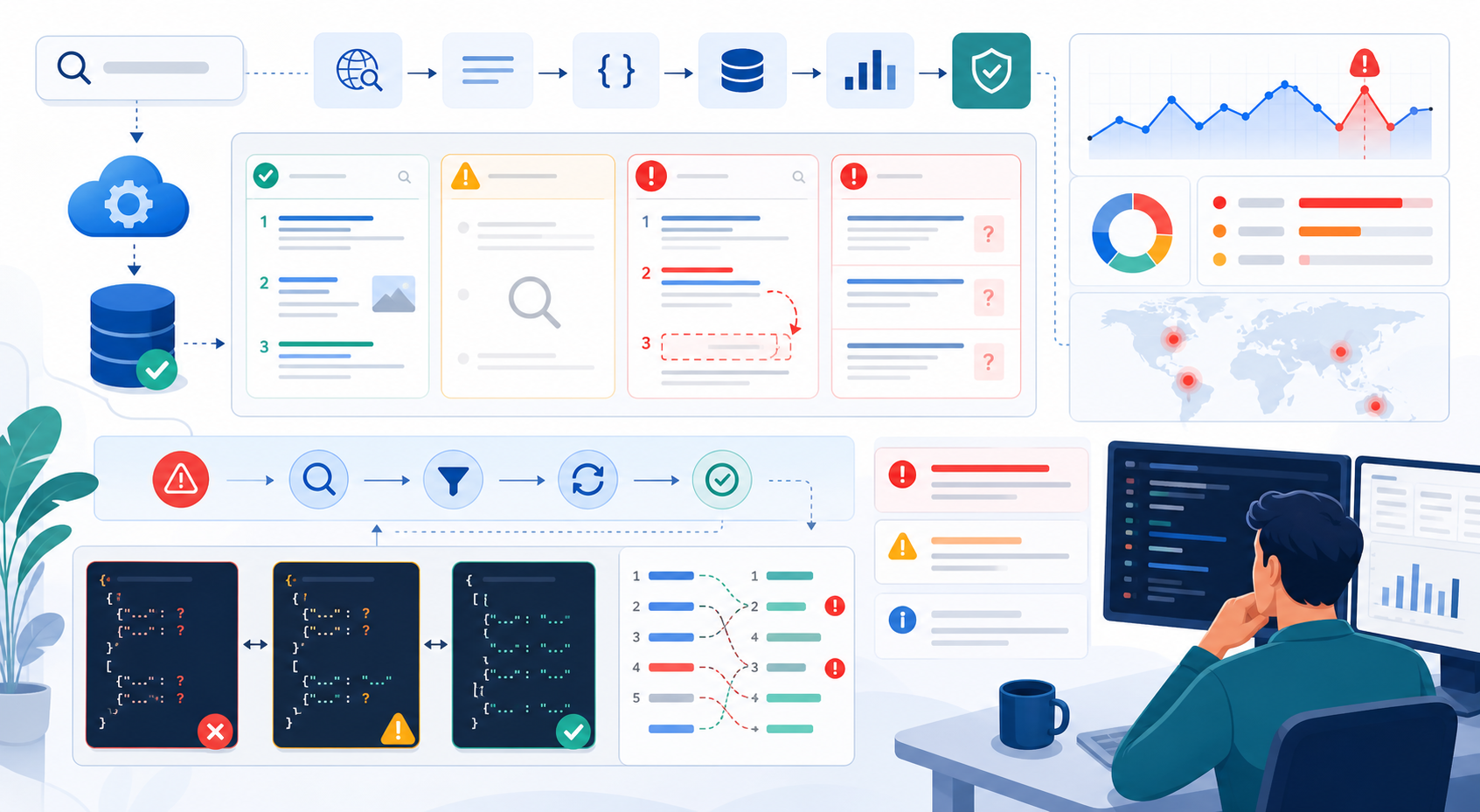
SERP API Troubleshooting: Fix Empty, Wrong, or Inconsistent Search Results
SERP API failures are not limited to obvious HTTP errors. A request can return successfully and still produce empty, incomplete, geographically wrong, duplicated, or misinterpreted search data. Production troubleshooting therefore has to separate transport problems from provider processing, SERP differences, and downstream parsing errors.
View Details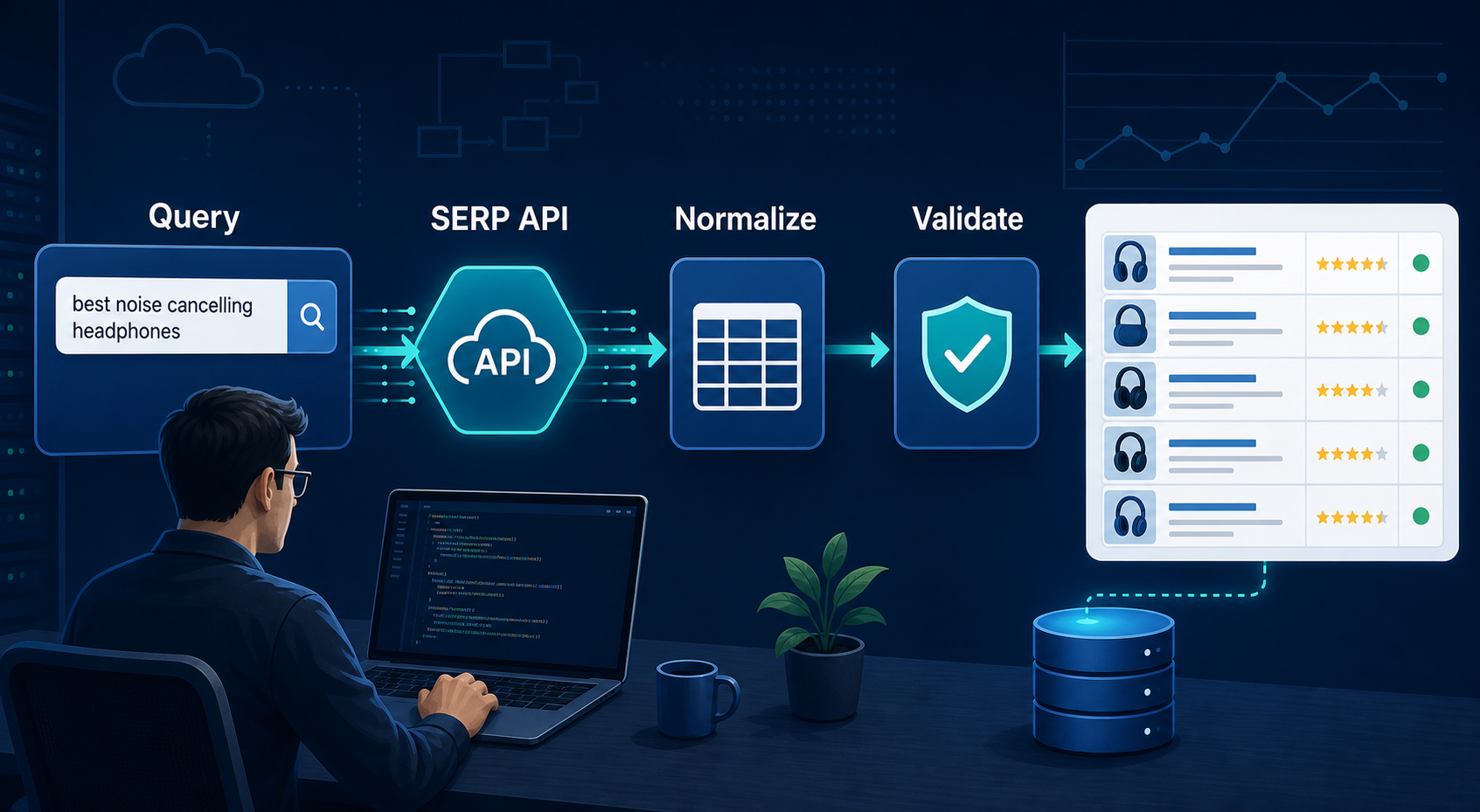
SERP API Python: How to Build a Reliable Search Data Pipeline
This guide shows a provider-neutral workflow for building that pipeline. It does not rank SERP API vendors. Instead, it focuses on the implementation choices that make a Python integration easier to operate, test, and migrate.
View Details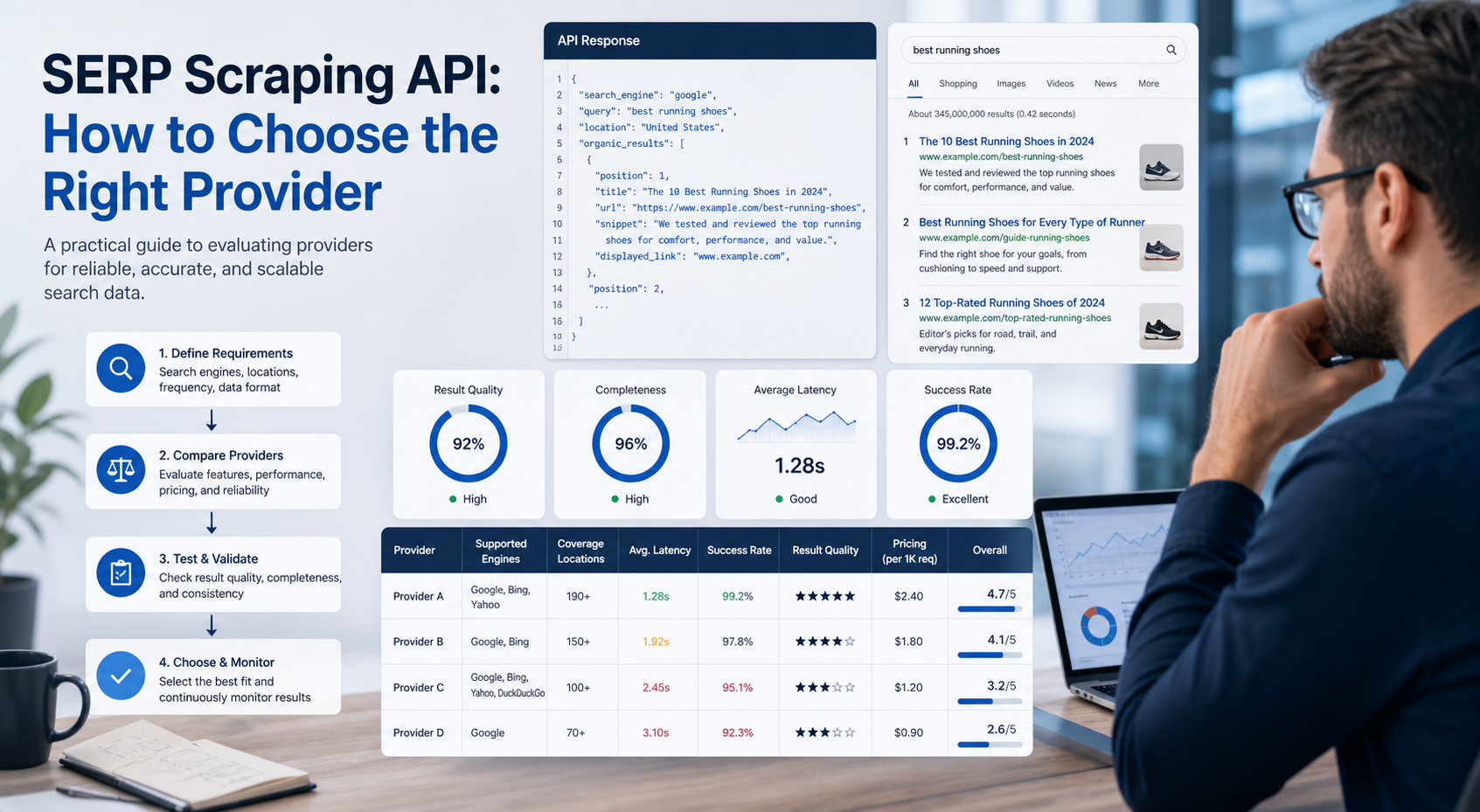
SERP Scraping API: How to Choose the Right Provider
Recommended Meta Description: Compare SERP scraping APIs by data coverage, localization, reliability, workflow fit, and cost structure, then choose and validate the right provider.
View Details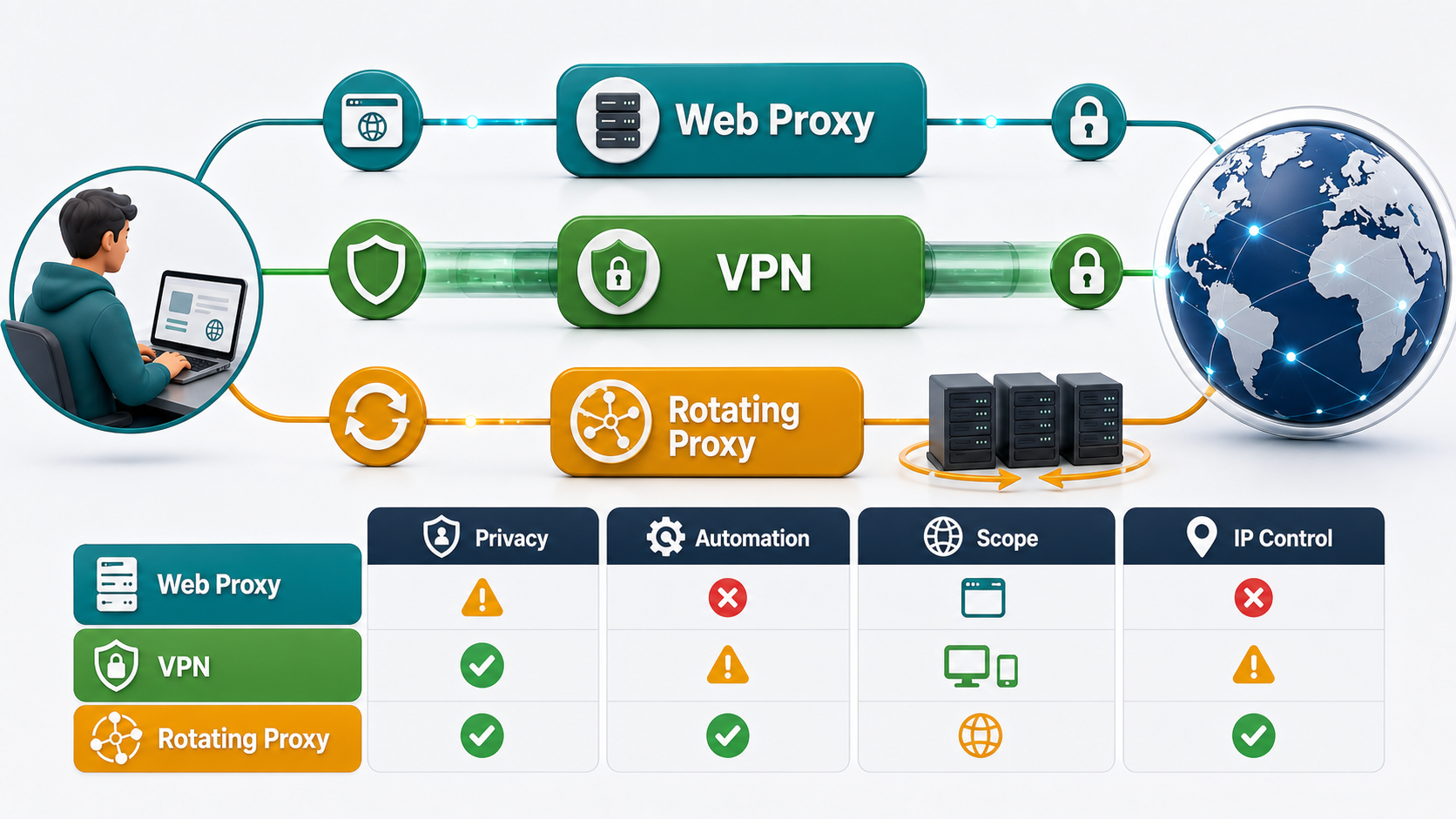
Free Web Proxy vs VPN vs Rotating Proxy: Which Should You Use?
Compare free web proxies, VPNs, rotating proxies, static proxies, and datacenter proxies by scope, encryption, IP control, automation, streaming, and account workflows.
View Details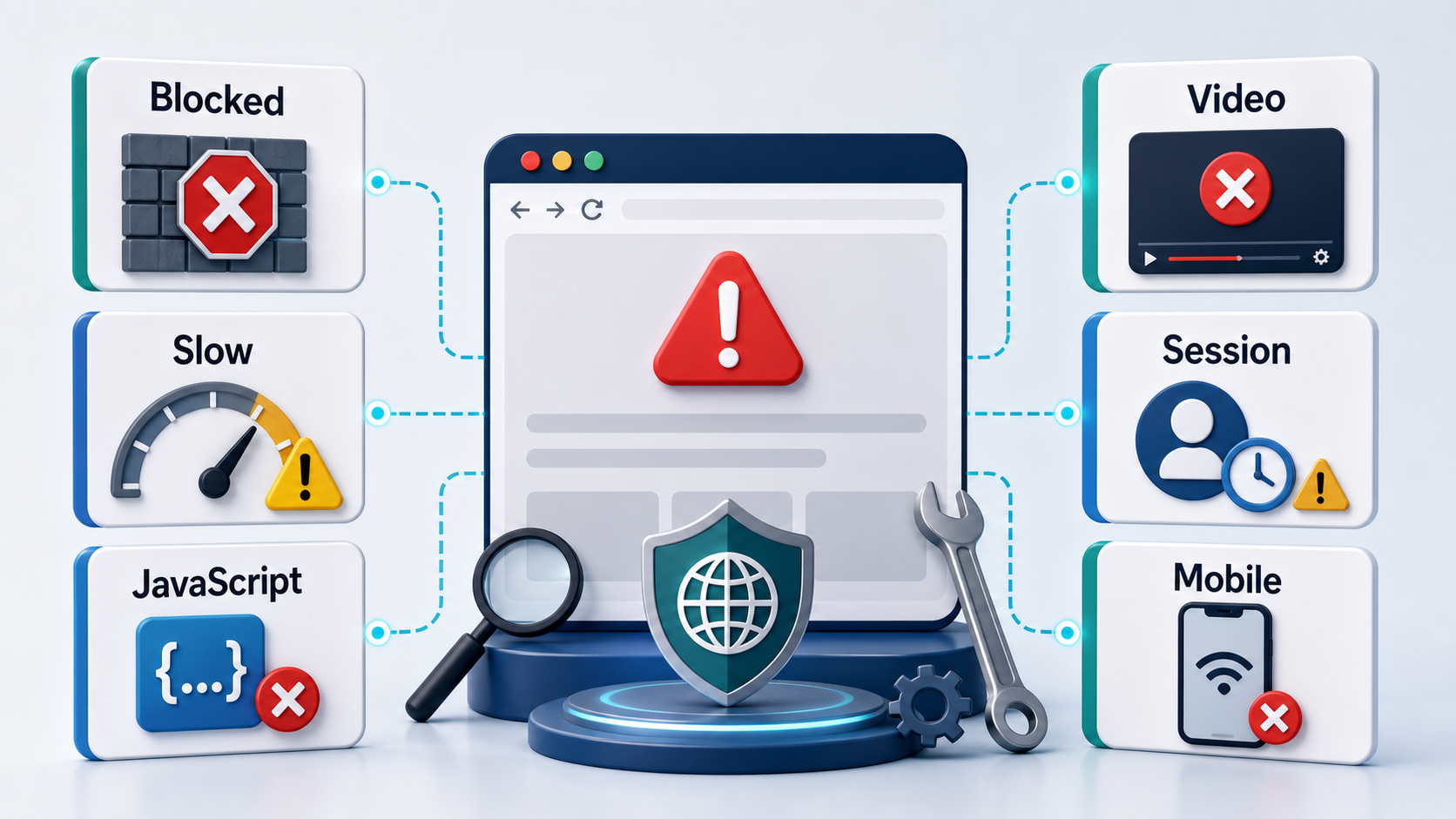
BlockAway Not Working? Fix Common Proxy, Video, and Access Problems
Troubleshoot BlockAway when pages are blocked, YouTube fails, JavaScript breaks, speed drops, sessions expire, or mobile access behaves differently.
View Details